Today’s Favorite Quote: The gem cannot be polished without friction nor man perfected without trials - Chinese Proverb
Happy Birthday to those who have passed on and to those great wrestlers still with us:
In Memoriam:
Judy Grable 1925
Dr. Ken Ramey 1951
Happy Birthday:
Keith Hart (73)
RIP Memorial: We stop & remember those who have passed on this day and gave themselves to the business for us, the fans. We salute you and thank you.
Buford Pusser 8-21-1974 at the age of 37
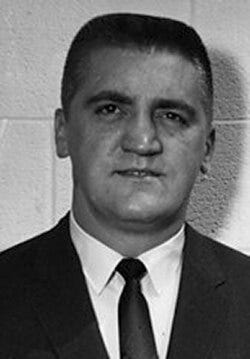
Bonnie Watson 8-21-2014 at the age of 82

Arturo Mendoza\Villano III at the age of 66

Significaant Debut:
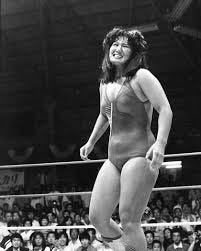
Devil Masami 8-21-1978 at the age of 16
The Life and Career of Skandor Akbar
Jimmy Saied Wehba, better known throughout the wrestling world as Skandor Akbar (Arabic for “Alexander the Great”), was one of the most effective and hated figures of the territorial era. Born September 29, 1934, in Wichita Falls, Texas, and raised in nearby Vernon, he combined authentic Middle Eastern heritage with a larger-than-life villainous persona that generated intense heat for more than three decades. As both a capable in-ring performer and, later, the cigar-chomping general of Devastation Inc., Akbar left a lasting mark on Mid-South Wrestling, World Class Championship Wrestling, and the broader NWA landscape before his death on August 19, 2010, in Garland, Texas, at age 75.
Wehba’s father, Saied, emigrated from Lebanon and worked as a grocer in the Texas Panhandle. His mother, Mary (of Syrian descent but Texas-born), raised Jimmy as the youngest of three children alongside two older sisters. From an early age he showed exceptional physical strength. A cousin who owned a gym introduced him to weightlifting as a preteen; promotional claims later held that he could bench-press 500 pounds. He worked as a bouncer and began refereeing matches after befriending promoters, studying the business from the apron before stepping into the ring himself.
Family connections also pulled him toward the profession. Two uncles had wrestled (one under a Sheik gimmick), and cousin Frankie Cain performed as the Great Mephisto. Wehba trained under figures including Lou Thesz and Jimmy Young. He debuted around 1962–1963 under his own name or as Wildman Wehba, working the usual territorial circuit of the era.
The Birth of Skandor Akbar
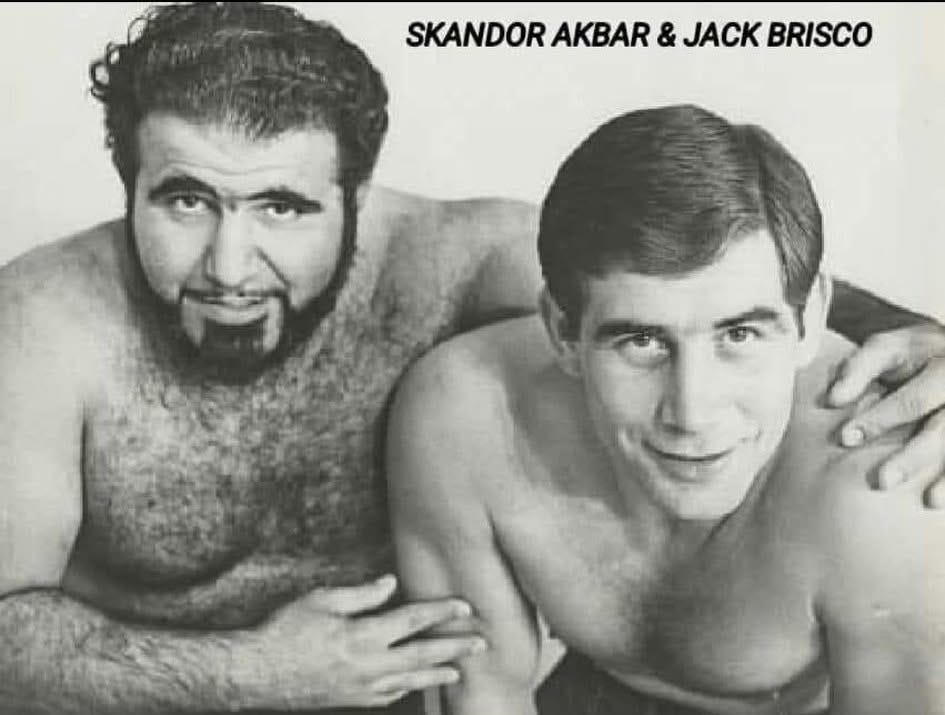
Pictured: A young Skandor Akbar (Jim Wehba) and a young Jack Brisco
In 1966 Fritz Von Erich, running the Dallas office, advised Wehba that a more Arabic-sounding name would better capitalize on his dark complexion and heritage. He chose Skandor Akbar. Billed from Lebanon, Syria, Saudi Arabia, or Egypt depending on the territory, he quickly settled into the role of a hated foreign heel. The name and presentation stuck for the rest of his career.
His most important early partnership came in the Tri-State territory (Oklahoma, Arkansas, Louisiana under Leroy McGuirk). Teaming with Olympic silver medalist and local hero Danny Hodge, Akbar captured the NWA United States Tag Team Championship (Tri-State version). The alliance did not last. Akbar turned on Hodge, launching a heated feud that drew strong heat and occasional real danger from fans who adored the babyface. The two men remained linked for years; their rivalry could still be revived on cards long after both had moved on.

Pictured: Skandor Akbar and a young Jim Ross as a referee in 1974
Akbar also held titles elsewhere. He won the NWA Tri-State North American Heavyweight Championship by defeating Arman Hussein in late 1974, a run that helped establish Hussein as a top babyface. In Georgia he teamed with Ox Baker to capture the NWA Georgia Tag Team Championship and earlier held the NWA Macon Tag Team titles with partners including Buddy Colt and Rocket Monroe. In Australia’s World Championship Wrestling territory in the mid-1970s he worked primarily as a face, capturing the NWA Austra-Asian Heavyweight Championship and the tag titles with George Gouliovas while feuding with The Great Mephisto. A brief late-1970s run in the WWWF saw him managed by Freddie Blassie and positioned as a contender, though larger storylines involving Bruno Sammartino limited his impact.
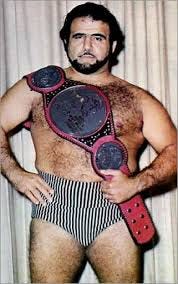
Pictured: Skandor Akbar, NWA North American Champion
He was never a pure technician or high-flyer. At a billed 6-foot-2 and around 230–250 pounds, Akbar relied on power, the Camel Clutch as a finishing hold, and a willingness to work stiff and bloody. Crowds responded to the intensity. He traveled constantly across the South, Midwest, and overseas (Singapore, New Zealand, Japan), absorbing the realities of territory life: long drives, shared hotel rooms, and the constant need to protect the business.
The General and Devastation Inc.
By 1977 Akbar had largely stepped away from full-time in-ring competition and reinvented himself as a manager. Adding the title “General,” he formed villainous stables that became his greatest contribution. In Bill Watts’s Mid-South Wrestling (later the Universal Wrestling Federation) the group was often called Akbar’s Army. In Fritz Von Erich’s World Class Championship Wrestling it was formalized as Devastation Inc.
Devastation Inc. functioned as a rotating stable of monsters and heels designed to generate heat against the territory’s babyfaces. Over the years the roster included Kamala, One Man Gang, The Missing Link, Killer Khan, Al Perez, the early Mick Foley as Cactus Jack, Greg Valentine, Nord the Barbarian, and many others. Akbar’s presentation was consistent: Middle Eastern attire, a perpetual cigar, arrogant promos, and a willingness to interfere with foreign objects or fireballs. One of the most infamous moments came when he burned Hacksaw Jim Duggan with a fireball in Mid-South, an angle that produced genuine heat and later required security measures, including a bulletproof vest for a Superdome appearance after death threats.
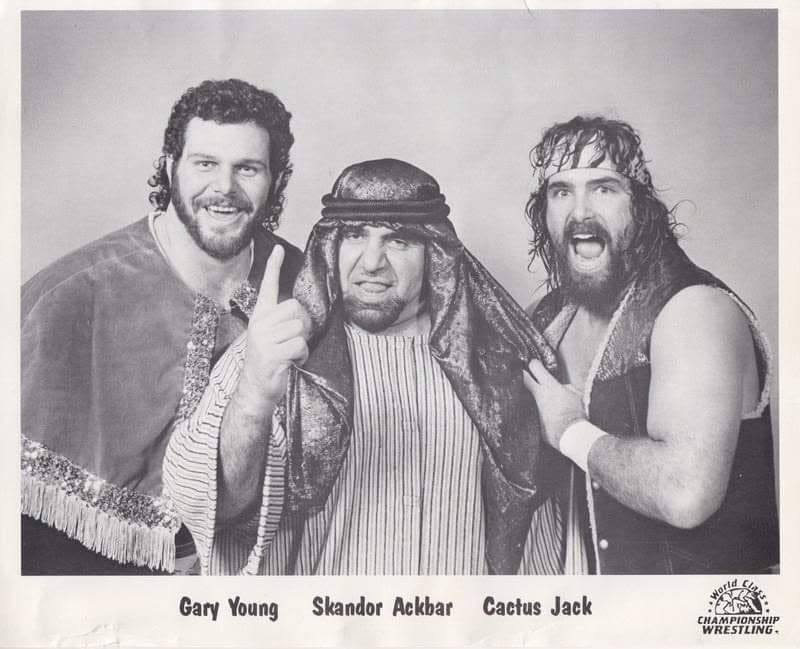
In World Class the stable clashed repeatedly with the Von Erichs at the Dallas Sportatorium and across Texas. Akbar’s presence helped elevate the promotion’s “good versus pure evil” storytelling. Fans hated him so thoroughly that even rival manager Gary Hart could briefly turn babyface by opposing him. The group moved fluidly between Mid-South/UWF and World Class as bookings and alliances shifted, always centered on Akbar’s ability to talk, scheme, and draw heat.
He continued managing into the 1990s in the Global Wrestling Federation and independent shows, briefly aligning with Kevin Von Erich before turning on him, and later guiding younger talent. Even in the late 2000s he still appeared on small Texas cards under the Devastation banner.
The Cost of Being the Villain
Akbar fully embraced the heat. He refused to break character in public, ate in restaurants rather than at home to avoid being followed to his family, and accepted the physical risks that came with the role. Fans threw rocks and sticks, smashed car windows, and chased him from arenas. A forehead scar from a cue-stick attack after the Hodge turn and other injuries marked the price of authenticity. He told interviewers that wrestling was about dragons and dragon-slayers, and that his job was to supply the dragons. The private cost was real: multiple marriages (including one that ended with his second wife’s death from kidney failure), limited time with his son Darryl, and a personal life subordinated to the character. Yet he expressed no major regrets, stating he would do it all again.
Later Years and Legacy
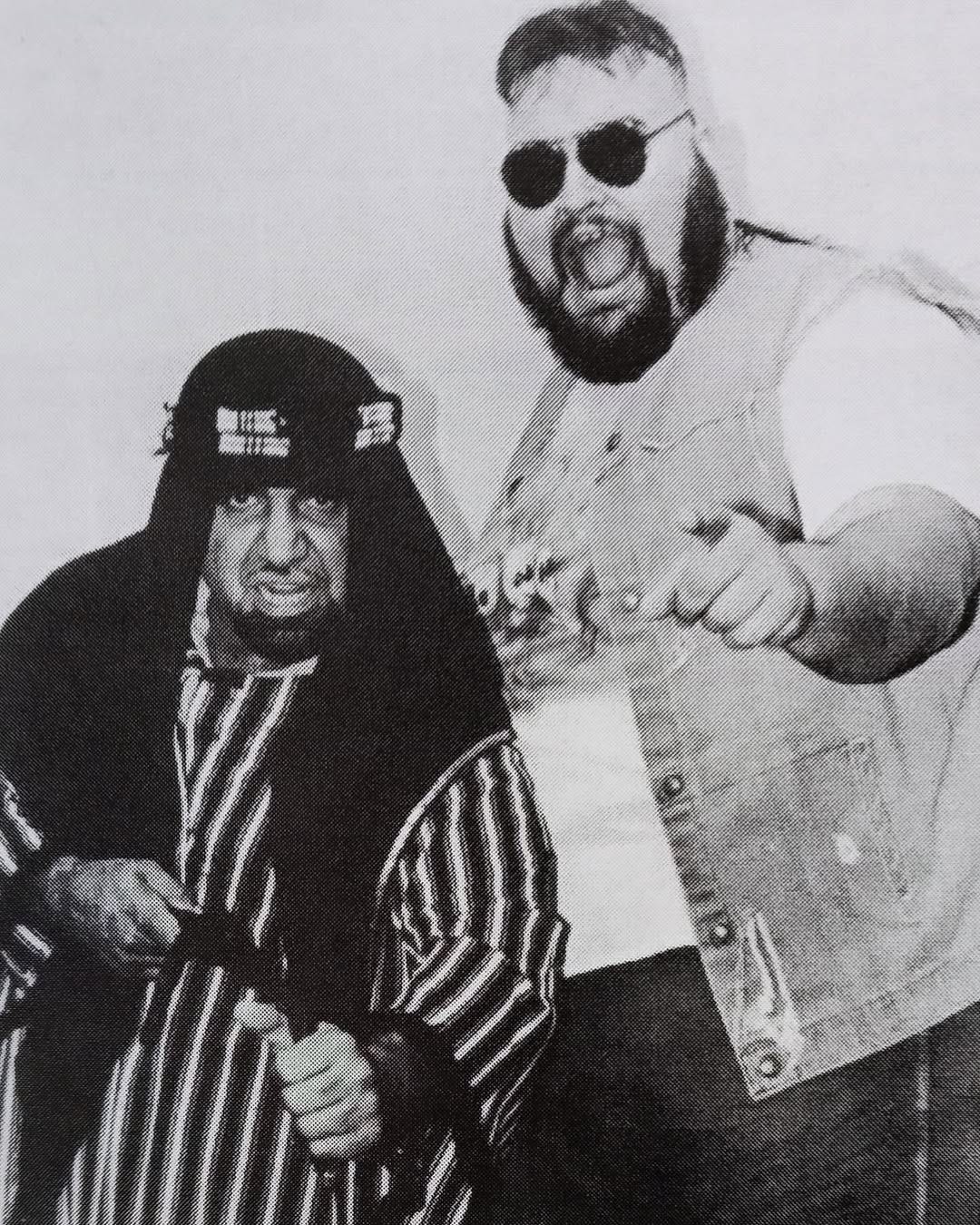
Pictured: Skandor Akbar and One Man Gang (George Gray)
After the major territories declined, Akbar promoted shows in East Texas, trained wrestlers at Doug’s Gym in Dallas, and remained a regular on the independent circuit. He appeared in the documentaries Heroes of World Class and Triumph and Tragedies of World Class. Mentors of a quieter sort also remembered him fondly. Jim Ross and a young Steve Austin both rode the roads with Akbar and absorbed old-school lessons on psychology, time management, and the business itself.
He died on August 19, 2010, after a battle with prostate cancer (reports also mentioned complications from a fall). He was survived by his son Darryl and extended family.
Skandor Akbar’s career spanned the classic territorial system from its robust middle years into its decline. As a wrestler he was a solid, heat-drawing heel who could hold titles and sell major programs. As a manager he became one of the definitive foreign-heel authorities of the 1980s, giving coherent identity and direction to a succession of monsters while protecting the integrity of the babyface heroes who defeated them. In an era that demanded clear moral lines and intense emotional investment from the audience, few did the villain’s work more completely or more effectively.
One Thing I Learned About Dick Hutton
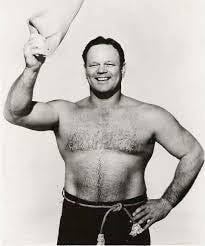
He was the first wrestler to claim both an NCAA title and the NWA World Heavyweight Championship. In the ring he was known for technical, relatively gimmick-free wrestling (including an open $1,000 challenge to audience members in some territories that no one ever collected), though he was sometimes criticized for lacking the flash to draw big crowds. After heart issues forced his retirement, he lived on a ranch raising cattle and horses.
Thank You for Watching and Listening
I’m Tony Richards, Pro Wrestling Historian, Author and Storyteller. I share pro wrestling historical items in each issue of the Time Tunnel Pro Wrestling History Newsletter and each episode of our podcast show. Thanks for your support! If you enjoy my information on select events, matches and insights, please share with folks you think might like to be a subscriber!
Remember, Premium subscribers get access to exclusive and special content such as some special issues including a multi-part deep dives on wrestling territories, wrestler bios and championship title histories, special audio and video interviews on territory pro wrestling and more available in the Pro Wrestling Time Tunnel for Premium Subscribers. Being a Premium Subscriber also means you support me in my efforts to document Pro Wrestling History through my research, writing, books, vidoes and podcasts. And…I have something very special planned for our Premium Subscribers on the Podcast side of things in 2026! Details soon here in the Pro Wrestling Time Tunnel.