Today’s Favorite Quote: To teach is to learn twice - Joseph Joubert
Happy Birthday to those who have passed on and to those great wrestlers still with us:
In Memoriam:
Ken Lucas 1940
Happy Birthday:
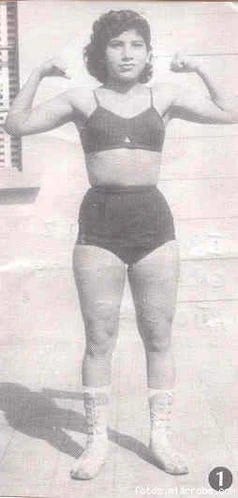
Irma Gonzalez (89)
Rip Morgan (68)
Bob Cook (62)
Duke Droese (59)
Byron Saxton (44)
Walter Hahn\Gunther (38)
RIP Memorial: We stop & remember those who have passed on this day and gave themselves to the business for us, the fans. We salute you and thank you.
Jerry London 8-20-1970 at the age of 4
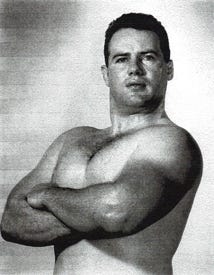
Marv Westenberg 8-20-1978 at the age of 68
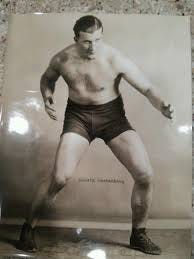
Sonny “Roughhouse” Fargo 8-20-2009 at the age of 80

Significant Debut:
8-20-1953: Irma Gonzalez made her pro wrestling debut on her 17th birthday.
The Life and Career of Sonny Fargo
Jack Lewis Faggart, better known to wrestling fans as Sonny Fargo and immortalized as “Roughhouse” or “Nuthouse” Fargo, occupied a rare and singular place in the territorial era. Born July 20, 1928, in Rowan County, North Carolina, to Lewis and Delma Swink Faggart, he grew up alongside his brother Henry (who would become the legendary Jackie Fargo) and sister Kathleen. The brothers entered professional wrestling in the early 1950s after training under Joe Marshall and Kenny Marshall. Sonny debuted in 1950 and spent the next three-plus decades carving out a career that was never conventional. He worked primarily across the Carolinas, Tennessee, and the Gulf Coast, yet his path split into two distinct lives that few performers ever managed so successfully: the reliable, understated referee of Jim Crockett Promotions in the Mid-Atlantic and the unhinged, crowd-drawing wildman who became a periodic phenomenon in the Memphis and Nashville territories.
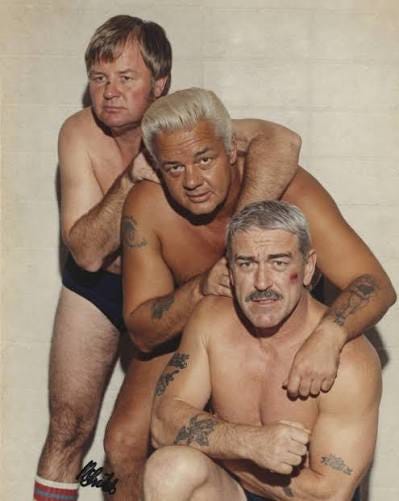
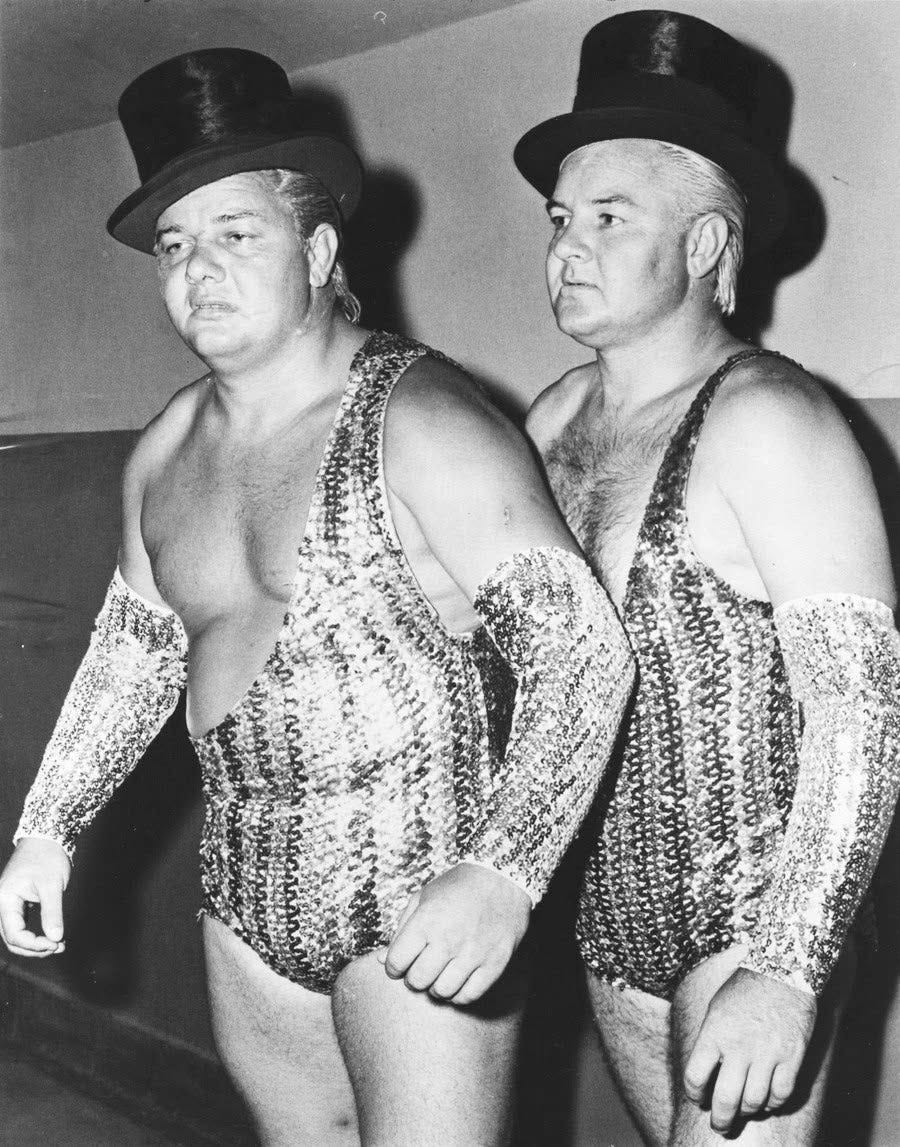
In the late 1950s Sonny’s connection to the Fabulous Fargos began outside the ring. Jackie and Don Fargo (Don Kalt) had already established themselves as one of the hottest tag teams in the country—bleached-blond, identically dressed, earring-wearing, strutting heels who sold out arenas from New York to Alabama. Their March 30, 1957, Madison Square Garden match against Antonino Rocca and Miguel Pérez drew a then-record 20,125 fans, the first 20,000-plus crowd for wrestling at the Garden. When the pair moved into the Nick Gulas–Roy Welch territory in 1957, Sonny, Jackie’s real-life brother, joined them as ringside support and second. He worked the corner, reinforced the family presentation, and provided backup during the wild brawls that defined the act.
That support role changed in late August 1957. On August 21 in Mobile, Alabama, all three Fargos appeared together in the ring for the first time. Six days later, on August 27 at the Nashville Hippodrome, they competed in a Texas Tornado Tag Match against Roy, Herb, and Lester Welch. It marked Sonny’s first appearance in the ring in Nashville and the first time the three Fargos wrestled together in that city. The card was one of eighteen consecutive sellouts at the Hippodrome that year, a testament to the explosive impact the flashy, arrogant Fargos had on the Tennessee market. The Welch family—deeply tied to the promotion through Roy Welch and established as popular babyfaces—provided the perfect opposition for the introduction of the third Fargo brother into active competition.
From that point Sonny became a regular part of the Fabulous Fargos whenever needed. He filled in when Don was unavailable, including after Don accidentally shot himself in the leg while practicing a quick-draw gimmick. The brothers captured regional gold, including Mid-America World Tag Team titles, and continued the flashy, rule-breaking style that set the template for every bleached-blond tag team that followed. Jackie would later team with a long list of partners and claim more than forty tag titles across his career, many of them with Don or Sonny. The Fargos’ willingness to brawl with chairs, tables, and anything else at hand helped popularize the wild, anything-goes matches that became a hallmark of Tennessee wrestling and later influenced the hardcore style.
By the early 1960s Sonny and Jackie were working Madison Square Garden dates together. Sonny also experimented with other roles, including a 1963 stint in Championship Wrestling from Florida as the silent, masked Assassins’ Valet, where he revived the team with an oxygen mask—once accidentally knocking Eddie Graham cold with the tank and nearly causing a riot. In early 1964 he worked under a mask as the Masked Rebel and briefly held the NWA Southern Tag Team Championship (Mid-America version) with Jackie before unmasking.
Around the same period Sonny began transitioning into a full-time refereeing role with Jim Crockett Promotions in the Carolinas. There he was the quiet, competent official who understood match psychology and knew when to insert himself or stay out of the way. He continued officiating major events into the 1980s, including multiple Starrcade cards from 1983 through 1986. Yet he never fully left the Tennessee scene. From the late 1960s onward he returned sporadically under a new and wildly effective persona: Roughhouse (sometimes Nuthouse) Fargo, the mentally unstable brother Jackie would check out of a psychiatric hospital when he needed help dealing with heels.
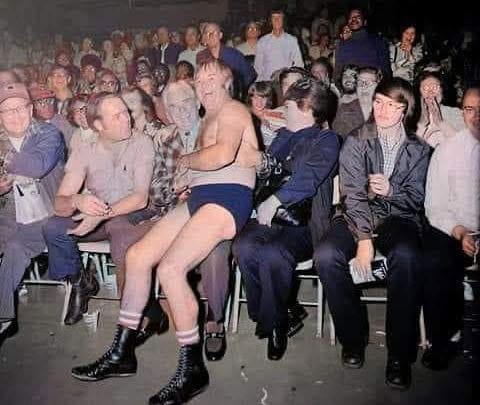
Clad in old tights and tiny boots, Sonny ate fans’ popcorn, delivered nonsensical promos, climbed into the crowd, and attacked opponents with ketchup bottles, ice cream cones, or anything else at hand. He would maul the heels, the referee, managers, and occasionally even Jackie himself. Fans believed the gimmick. Houses jumped whenever Roughhouse was booked. Jerry Jarrett later called him a huge box-office draw and one of the great people in the business.
The brothers teamed successfully throughout the early-to-mid 1970s, capturing the NWA Southern Tag Team Championship (Mid-America version) multiple times with each other and with partners such as Tojo Yamamoto and Rufus R. Jones. Feuds involved the Interns, the Von Brauners, the Garvin Brothers, the Bounty Hunters, and the Bicentennial Kings. Even after turning fifty Sonny continued to headline Tennessee cards while maintaining his referee duties in the Carolinas. The contrast was stark: the same man who looked like a mild-mannered desk clerk in one territory became an offbeat avenging angel in the other.
After NWA Mid-America wound down in the late 1970s, Sonny made occasional appearances for the Continental Wrestling Association. He retired from active competition around 1984 but continued refereeing for Jim Crockett Promotions. In later years diabetes took a severe toll; he became a double amputee and used a motorized chair. Those who visited him near the end of his life found the same good-natured personality intact. He had married Delores Tutherow Faggart, who predeceased him in 1999; they had a son, Obie, and a daughter, Debbie. Sonny died at home in China Grove, North Carolina, on August 20, 2008, at the age of eighty. In 2009 he was posthumously inducted into the NWA Wrestling Legends Hall of Heroes alongside Jackie and Don Fargo.
Sonny Fargo never became a national television star in the modern sense. His greatness lived in the specific texture of the territory system—the ability to begin as a ringside second, step into the ring for the first time alongside his brothers in a sold-out Nashville Tornado match against the Welch family in 1957, help define one of the era’s most influential tag teams, and then reinvent himself as both a trusted referee and a chaotic drawing card. The mild official of the Carolinas and the popcorn-eating madman of Memphis were the same man, and both versions remain fondly remembered by those who saw them. The Fabulous Fargos’ flash, heat, and brawling style, and Sonny’s unique dual career within and beside that legacy, still echo through Southern wrestling history.
One Thing I Learned About Jun Akiyama
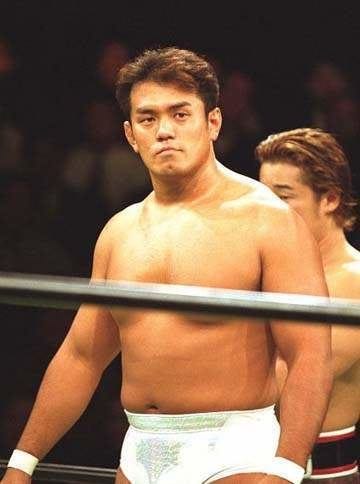
As a kindergarten-aged kid, he climbed up onto the large iron arch of a bridge spanning reclaimed land near the coast (a short bike ride from his home). He got stuck up there, had to be rescued by maritime security officers, and was thoroughly scolded by his parents afterward.
Thank You for Watching and Listening
I’m Tony Richards, Pro Wrestling Historian, Author and Storyteller. I share pro wrestling historical items in each issue of the Time Tunnel Pro Wrestling History Newsletter and each episode of our podcast show. Thanks for your support! If you enjoy my information on select events, matches and insights, please share with folks you think might like to be a subscriber!
Remember, Premium subscribers get access to exclusive and special content such as some special issues including a multi-part deep dives on wrestling territories, wrestler bios and championship title histories, special audio and video interviews on territory pro wrestling and more available in the Pro Wrestling Time Tunnel for Premium Subscribers. Being a Premium Subscriber also means you support me in my efforts to document Pro Wrestling History through my research, writing, books, vidoes and podcasts. And…I have something very special planned for our Premium Subscribers on the Podcast side of things in 2026! Details soon here in the Pro Wrestling Time Tunnel.