


Today’s Favorite Quote: A ship in a harbor is safe, but that’s not what ships are built for - John A. Shedd
Happy Birthday to those who have passed on and to those great wrestlers still with us:
In Memoriam:
(none)
Happy Birthday:
Shigeki Sato\Dick Togo (56)
RIP Memorial: We stop & remember those who have passed on this day and gave themselves to the business for us, the fans. We salute you and thank you.
(none)
7 Stages of the Territory Era
Stage 5: Consolidation
August 1966
By this point the post-war territorial system had matured into a stable, interlocking network of regional promotions bound by the National Wrestling Alliance. Local television had become a reliable weekly engine. World champions traveled constantly, lending prestige and drawing power without yet threatening the autonomy of individual offices. Business was strong in the key cities, the talent pool was deep, and the booking formulas that would carry the industry through the rest of the decade were fully operational. August 1966 did not produce a single earth-shaking title change or landmark stadium show, but it revealed the machinery of Stage 5 operating at full efficiency: a traveling world champion working multiple territories in a single month, regional stars defending their own titles, and houses that still filled when the right combination of names appeared.
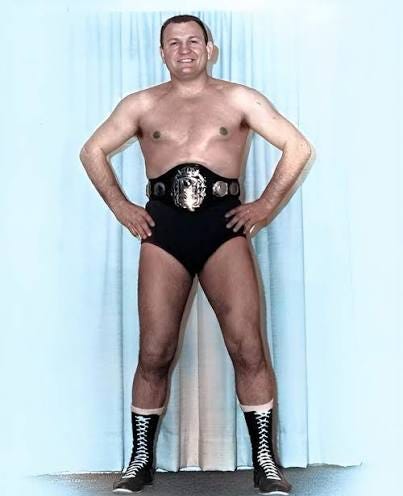
Gene Kiniski held the NWA World Heavyweight Championship. He had taken the belt from Lou Thesz in St. Louis on January 7 and was already deep into the classic traveling-champion grind that defined the era. In the first week of August alone Kiniski worked a dense Florida schedule that included title matches against Eddie Graham and Lou Thesz (both ending in double count-outs or disqualifications) and a successful defense against José Lothario. Later in the month he appeared in Houston, defeating Fritz Von Erich in a no-disqualification two-out-of-three-falls match, and in Dallas, where he retained against Waldo Von Erich by disqualification with Fritz at ringside. He also worked Indianapolis opposite Dick the Bruiser in a dual-title encounter that went to a time-limit draw, then headed into the Carolinas for tag and singles dates.
Kiniski’s schedule illustrates the Stage 5 model perfectly. The champion was a credible, physical heel who could work stiff matches, protect the title, and still leave local babyfaces looking strong enough to draw rematches. The NWA board had chosen a worker rather than a pure drawing-card celebrity, and the territories responded by booking him heavily.
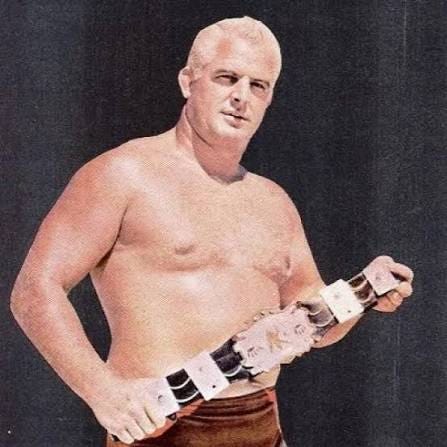
Pictured: Eddie Graham
Key Territory Snapshots
St. Louis
Sam Muchnick’s office remained the most important single city in the NWA. On August 20 the Kiel Auditorium drew a reported 12,205 for a card headlined by Lou Thesz versus Crusher Lisowski. Dory Funk Sr. wrestled Bob Geigel to a time-limit draw, Eddie Graham scored a win, and the undercard mixed local and traveling talent. The numbers confirm that St. Louis still functioned as the prestige house where world-title credibility and strong mid-card workers could pack a major arena on a regular Saturday night.
Texas
Fritz Von Erich was the dominant figure. He held the NWA Texas Heavyweight Championship for most of the month and was in the midst of a multi-week program with Kiniski. The Sportatorium in Dallas and the Houston Coliseum both featured Kiniski defenses against the Von Erich “brothers” (Fritz and the Canadian Waldo). These matches mixed legitimate heat with the family-versus-outsider storyline that would later become the foundation of the Dallas promotion. Secondary titles and undercard workers such as Ricky Romero, Nick Kozak, and Sonny Myers filled out the cards. The Texas office was healthy, self-contained, and already developing the intense local loyalty that would characterize it for the next two decades.
Championship Wrestling from Florida
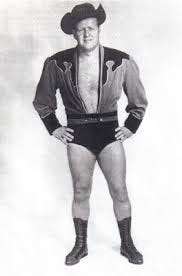
Pictured: Lester Welch
Eddie Graham’s territory hosted one of Kiniski’s densest runs of the summer. Title matches against Graham and Thesz, television tapings in Tampa, and house shows in Orlando, Sarasota, Jacksonville, and West Palm Beach kept the champion visible while giving Florida’s own stars (Sputnik Monroe, José Lothario, the Great Malenko) meaningful roles. On August 11 Lester Welch defeated Sputnik Monroe in a tournament final to claim the reactivated Florida Heavyweight Championship in Jacksonville, giving the territory a fresh local title picture. Florida in 1966 already possessed the ingredients that would make it one of the strongest offices of the 1970s: a reliable television program, a deep roster of workers who could main-event on their own, and the ability to bring the world champion in for short, high-impact runs.
American Wrestling Association
Verne Gagne’s Midwestern promotion continued its emphasis on tag-team wrestling and regional heroes. Crusher Lisowski and Dick the Bruiser held the AWA World Tag Team Championship. Mad Dog Vachon remained a top singles draw. Cards in Minneapolis featured double main events that mixed title defenses with high-profile non-title contests involving Gagne, Wilbur Snyder, Larry Hennig, and Killer Kowalski. The AWA operated with less reliance on the NWA World title than most Southern or Texas offices, yet still maintained the same Stage 5 characteristics: strong local television, a core of recognizable stars, and consistent mid-level houses.
World Wide Wrestling Federation

Pictured: Johnny Valentine, Bruno Sammartino and Argentina Apollo
Bruno Sammartino remained the unchallenged WWWF World Heavyweight Champion. His August itinerary was the usual Northeast grind: television tapings, secondary towns, and larger buildings. On August 20 at Forbes Field in Pittsburgh he retained against Johnny Valentine in the main event of a strong house show that also featured the usual supporting cast of Antonio Pugliese (Tony Parisi), Chief White Owl, and the midgets. Bruno’s reign was already into its third year; the formula of the invincible ethnic hero defending against a succession of imported heels was generating consistent gates without the need for constant title changes.
Other Offices
Mid-Atlantic booked Kiniski into Greenville and surrounding towns in late August. Toronto’s Maple Leaf Stadium shows under Frank Tunney featured the usual mix of Canadian stars and imported heels. The Western States (Amarillo) and Tri-State (Oklahoma/Louisiana) offices continued their weekly circuits with the Funk family and other regional talent. Across the board the pattern was the same: local television built the mid-card and secondary titles; the traveling world champion elevated the biggest houses; and the promotions protected their own identity.
The Atlanta Municipal Auditorium remained a reliable Friday-night house. On August 19 the card featured Buddy Fuller defending the NWA Georgia Heavyweight Championship against Butcher Vachon, plus a high-stakes NWA World Tag Team Title losers-leave-town match between the Infernos (with J.C. Dykes) and the Torres Brothers (Alberto and Enrique). These stipulation matches and local title defenses were typical of the Georgia office under Paul Jones — solid mid-level houses built around regional stars and clear storyline consequences rather than constant world-title appearances.
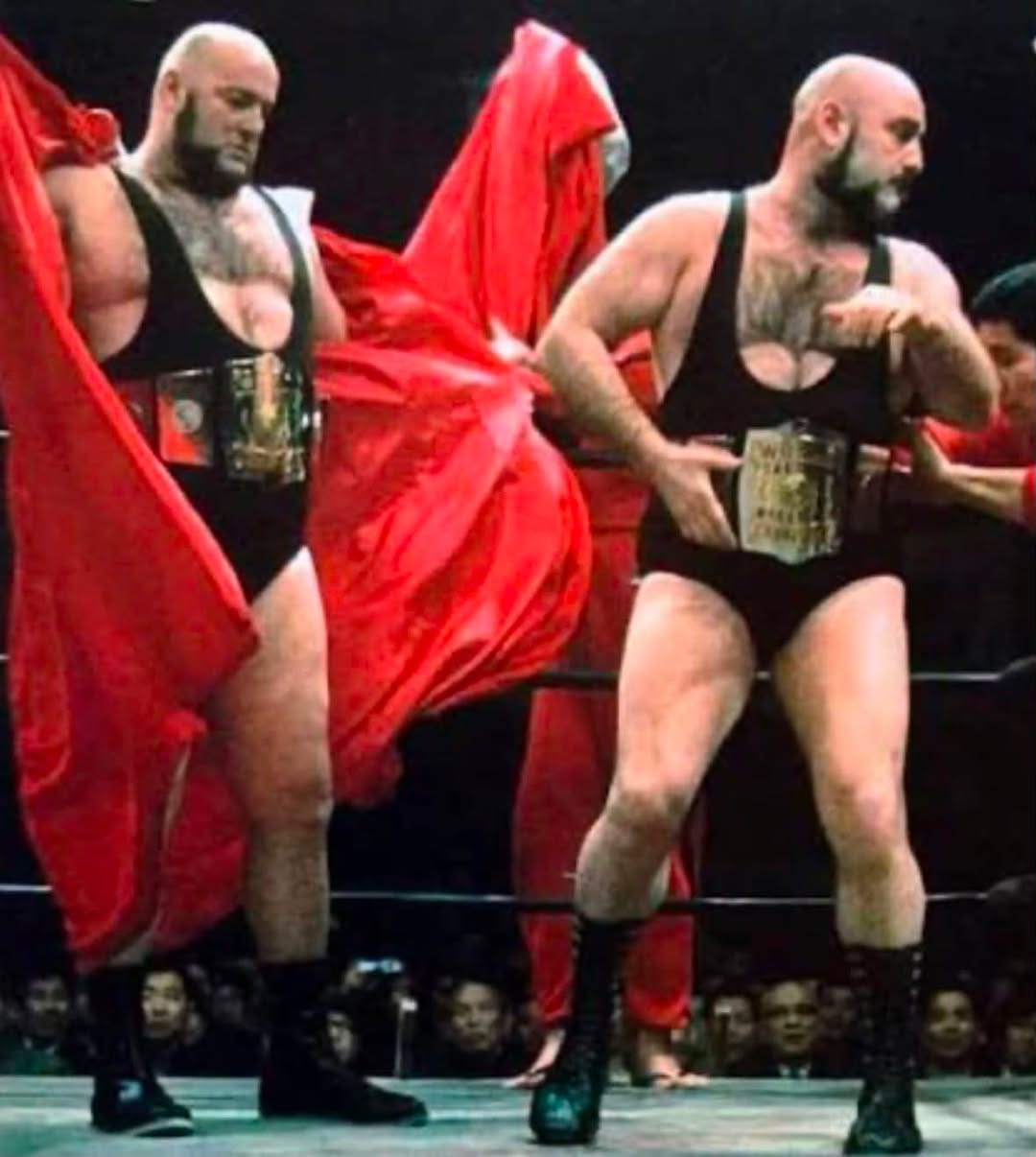
Pictured: The Vachon Brothers, Paul and Maurice, Butcher and Mad Dog
The Sheik’s promotion at Cobo Arena was in the middle of its classic hard-edged run. On August 6, Bill Miller and the Sheik defeated Bobo Brazil and Lord Layton by disqualification. Three weeks later (August 27) the same teams met in a no-disqualification match that ended in a no-contest. The Sheik held the Detroit version of the NWA United States Heavyweight Championship and was already establishing the violent, blood-and-fire style that would define the territory for years. Bobo Brazil remained the primary babyface foil. These were the kinds of heated, stipulation-driven programs that packed Cobo on a regular basis.
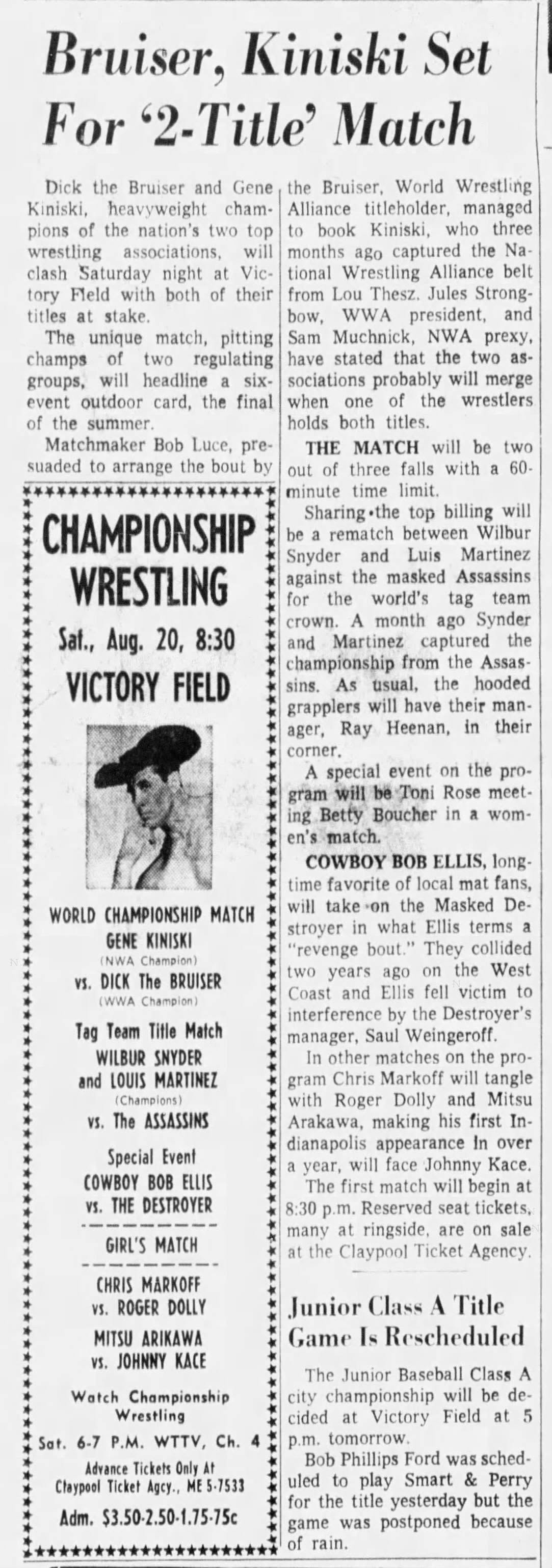
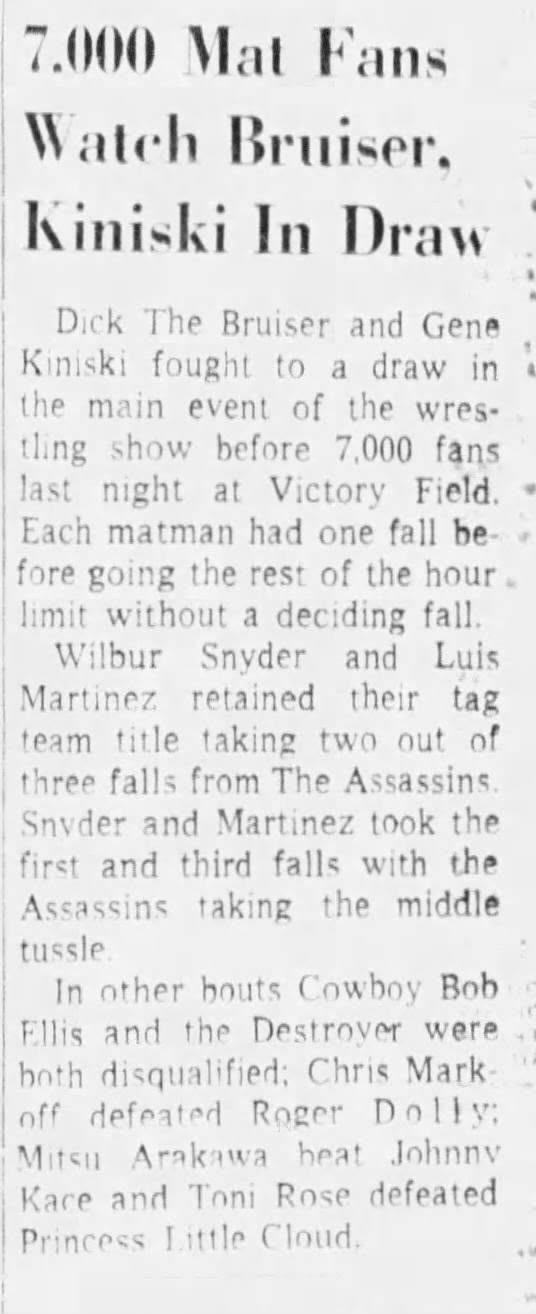
The standout event was August 20 at Victory Field. Dick the Bruiser (WWA World Heavyweight Champion) met Gene Kiniski (NWA World Heavyweight Champion) in a best-of-three-falls dual-title match that went to a 60-minute time-limit draw (one fall each). This was a classic Stage 5 interpromotional clash: two legitimate world champions from different promotions sharing a card, generating prestige for both offices without either side having to drop a title. The Bruiser’s WWA continued to run strong local programs built around him, Wilbur Snyder, the Assassins, and traveling talent.
The Olympic Auditorium produced one of the clearer title changes of the month. On August 5, Buddy Austin defeated Pedro Morales to capture the WWA World Heavyweight Championship in front of more than 10,000 fans. Two weeks later (August 19) the new champion went to a time-limit draw with Bobo Brazil after splitting falls in another sellout (reported around 10,400). The WWA was still operating independently of the NWA at this point, maintaining its own world title and a strong television presence. Austin’s short reign and the immediate Brazil program kept the main-event picture fresh while the undercard mixed local favorites and imports.
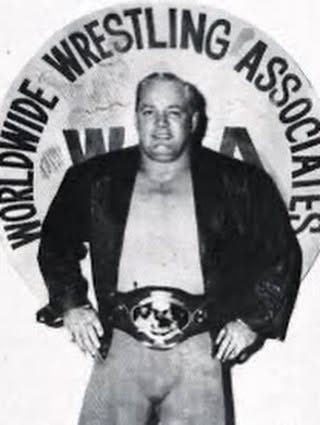
Pictured: Buddy Austin WWA World Heavyweight Champion
Giant Baba had emerged as the clear top star in the post-Rikidōzan era. The 8th Annual World League tournament had concluded earlier in 1966 with Baba as the winner. August itself was part of the regular touring schedule rather than a major tournament peak, but the office continued to feature foreign talent and build Baba as the national champion figure. The infrastructure and talent pipeline (including the still-young Antonio Inoki) remained intact, and the promotion continued to draw strong crowds for its major shows. International exchanges with American wrestlers were routine.
EMLL ran its usual dense schedule of Tuesday, Friday, and Sunday cards at Arena México and Arena Coliseo. On August 11, Chabela Romero regained the Mexican National Women’s Championship from Jarochita Rivero. The mid-card and main-event scenes featured established names such as Ray Mendoza, Espanto I, Alfonso Dantés, and others in multi-fall matches and tournament formats. The promotion was already building toward its major anniversary shows in September. Business remained steady and self-contained, with the classic lucha libre structure of regular weekly television and live events producing consistent results.
Jim Barnett’s Sydney-based promotion was in solid form. Mark Lewin held the IWA World Heavyweight Championship and defended it successfully against Professor Toru Tanaka on August 12 at Sydney Stadium. Cards throughout the month featured a strong mix of international talent — Bearcat Wright, Skull Murphy, Brute Bernard, Roy Heffernan, Vittorio Apollo, and others — in both singles and tag-team programs. The territory ran regular weekly shows with clear title focuses and reliable mid-card depth, typical of the better-run overseas offices that imported American and Japanese talent while developing local interest.
Wrestlers and Storylines
The month belonged to established names rather than new stars. Kiniski, Sammartino, Thesz, Fritz Von Erich, Eddie Graham, Vachon, the Crusher, and Bruiser were the primary drawing cards. Johnny Valentine worked both WWWF and other territories as a credible challenger. Dory Funk Sr. and Jr. appeared in St. Louis and Texas, continuing the family’s slow rise. Lou Thesz, though no longer champion, still commanded main-event positions and served as a living link to the previous generation.
Storylines remained straightforward and territory-specific. In Texas the Von Erichs versus the world champion. In Florida the Graham-Kiniski series and the reactivation of the Florida title. In the Northeast Bruno’s ongoing defenses against Valentine, Bill Miller, and the various heels of the week. In the AWA the perpetual tag-team wars and Vachon’s heel heat. There was little crossover booking beyond the champion’s tours; each office still told its own stories.
Business Analysis for Stage 5
August 1966 illustrates the economic strengths and structural limits of the mature territorial system.
Attendances in the major cities remained healthy: 12,000-plus in St. Louis, solid houses in Pittsburgh, Houston, and Minneapolis. Television contracts provided reliable weekly exposure and a base of advertising revenue that underwrote the live-event business. The NWA World title still functioned as a shared promotional asset rather than a weapon of expansion. Promoters could bring the champion in for a short run, take the gate bump, and return to their local programs without fear that the champion’s office would attempt to absorb the territory.
Talent costs were still manageable. Most workers were paid on a percentage of the gate or a modest guarantee. Travel was by car and regional airlines. The absence of national cable or closed-circuit events kept overhead low. The result was a business that generated steady profits for competent promoters while remaining largely invisible to the mainstream sports media outside the local papers.
The limitations of Stage 5 were also visible. No single promotion possessed the resources or ambition to expand aggressively beyond its traditional borders. The talent pool, while deep, was still regional; a star could be a main-event draw in one territory and a mid-card worker two states away. The system rewarded stability and local knowledge more than innovation or scale. Those characteristics would serve the industry well for another decade, but they also left it vulnerable once cable television and aggressive national expansion became possible.
A Closing of an Era
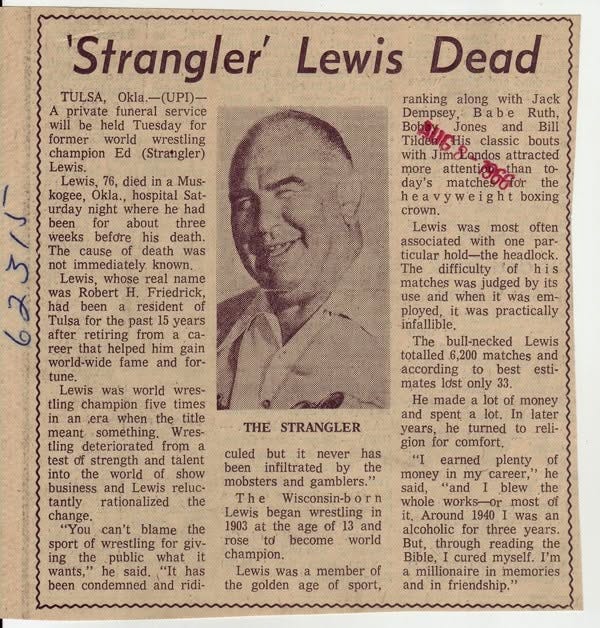
On August 8, Ed “Strangler” Lewis died in a Veterans Administration hospital in Oklahoma at age 75. Lewis had been one of the dominant figures of the 1920s and early 1930s, a multiple-time world champion whose headlock and toughness helped define the scientific, catch-as-catch-can style that still underpinned the business. His death received respectful notices in the wrestling press but little mainstream attention. It served as a quiet reminder that the men who had built the foundation of the modern territorial system were passing from the scene, even as the system itself remained robust.
August 1966 did not produce a single defining moment that later historians would isolate. Instead it offered a complete, working portrait of Stage 5: a network of strong regional promotions, a credible traveling world champion, reliable television, solid houses in the key cities, and a booking philosophy that valued continuity over constant revolution. The machinery was running smoothly. The next stages of the Territory Era would test whether that machinery could adapt when the external environment began to change.
Thank You for Watching and Listening
I’m Tony Richards, Pro Wrestling Historian, Author and Storyteller. I share pro wrestling historical items in each issue of the Time Tunnel Pro Wrestling History Newsletter and each episode of our podcast show. Thanks for your support! If you enjoy my information on select events, matches and insights, please share with folks you think might like to be a subscriber!
Remember, Premium subscribers get access to exclusive and special content such as some special issues including a multi-part deep dives on wrestling territories, wrestler bios and championship title histories, special audio and video interviews on territory pro wrestling and more available in the Pro Wrestling Time Tunnel for Premium Subscribers. Being a Premium Subscriber also means you support me in my efforts to document Pro Wrestling History through my research, writing, books, vidoes and podcasts. And…I have something very special planned for our Premium Subscribers on the Podcast side of things in 2026! Details soon here in the Pro Wrestling Time Tunnel.