


Today’s Favorite Quote: Dump the notion of work-life balance. Focus on work-self-life passion instead - Kevin Lawrence
Happy Birthday to those who have passed on and to those great wrestlers still with us:
In Memoriam:
Jack Adkisson\Fritz Von Erich 1929
Frank Hester\Masked Domino #2 1936
Stan Frazier 1937
Buck Ramstead 1943
Dick Murdoch 1946
Tarzan Goto 1963
Happy Birthday:
Colin Cassidy\Big Bill (35)
Cedric Alexander (37)
RIP Memorial: We stop & remember those who have passed on this day and gave themselves to the business for us, the fans. We salute you and thank you.
Sanakichi Matsuda 8-16-1891 at the age of 32

Pat O’Connor 8-16-1990 at the age of 65
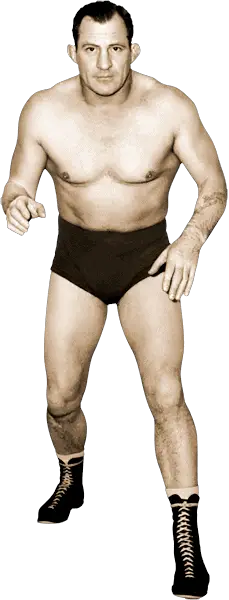
Dewey Robertson 8-16-2007 at the age of 68
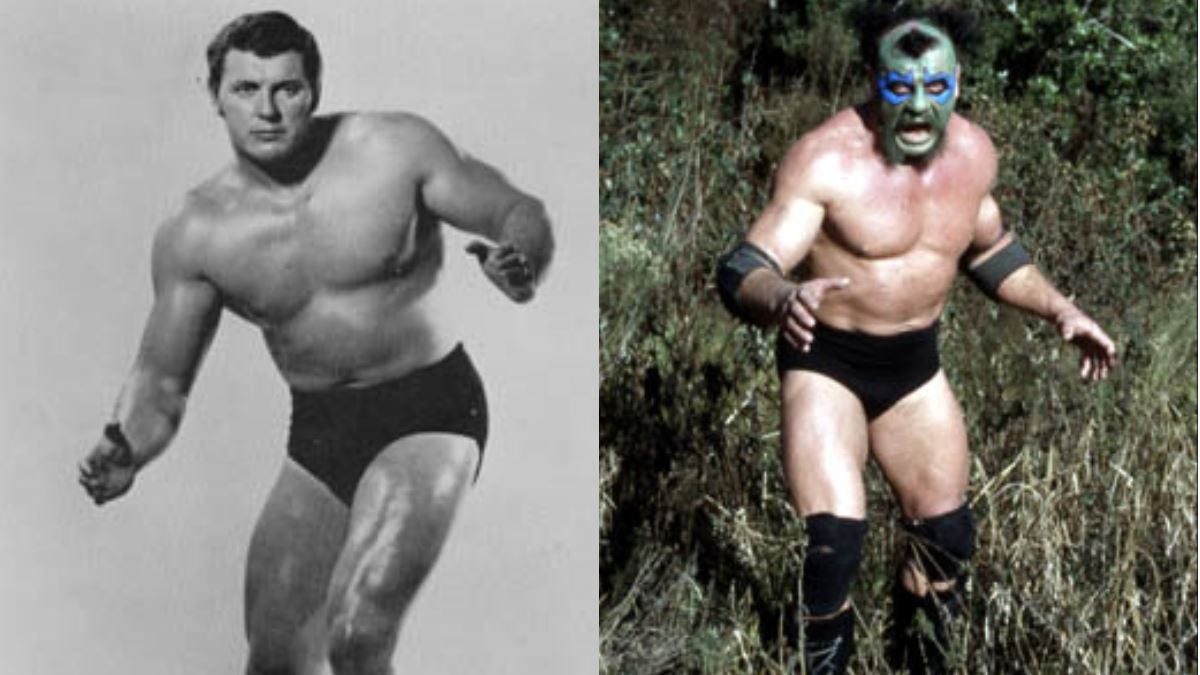
John Bedoya, Jr\Xavier 8-16-2020 at the age of 42

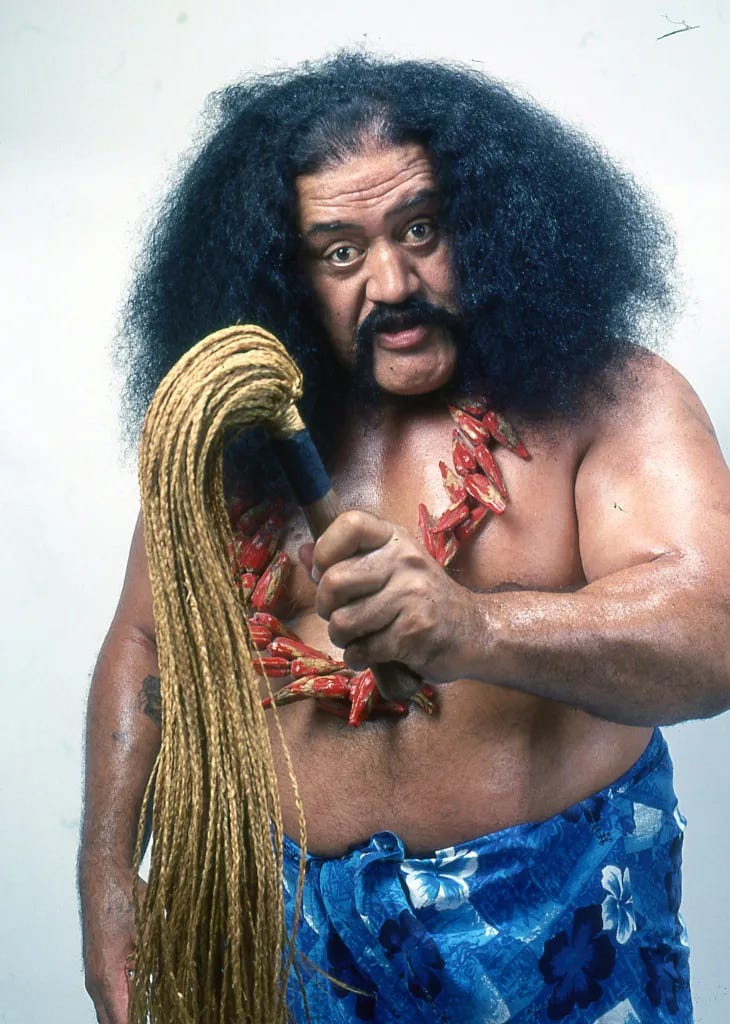
Arthur Afa Anoa’i 8-16-2024 at the age of 82
Flashback 1976
Q3 Analysis
July-September
Gulf Coast Championship Wrestling
Mobile, Alabama Office
In the summer of 1976, Gulf Coast Championship Wrestling under promoter Lee Fields continued as a classic mid-tier NWA territory covering southern Alabama, the western Florida Panhandle, and parts of Mississippi. Primary towns included Mobile (Expo Hall/Municipal Auditorium as the hub), Dothan, Pensacola, and Panama City, with additional stops when viable. Television consisted of edited house-show footage for the Mobile/Pensacola markets and a more traditional studio product out of Dothan. Booking on the Mobile end had shifted toward Rocky McGuire with significant input from Rip Tyler after Cowboy Bob Kelly’s earlier reduced role.
Business remained steady rather than explosive. Crowds supported consistent weekly cards built on blood, masks, hard rules matches, and local favorites, but 1976 overall was not one of the territory’s peak years. The Mississippi side had softened, larger NWA territories exerted gravitational pull on talent, and Fields himself was increasingly focused on other interests including the Mobile International Speedway. Still, the combination of veteran workhorses, rising heels like Sweet Daddy Banks, family acts, and classic Southern angles kept the product viable through the Bicentennial summer and into early fall.
July 1976
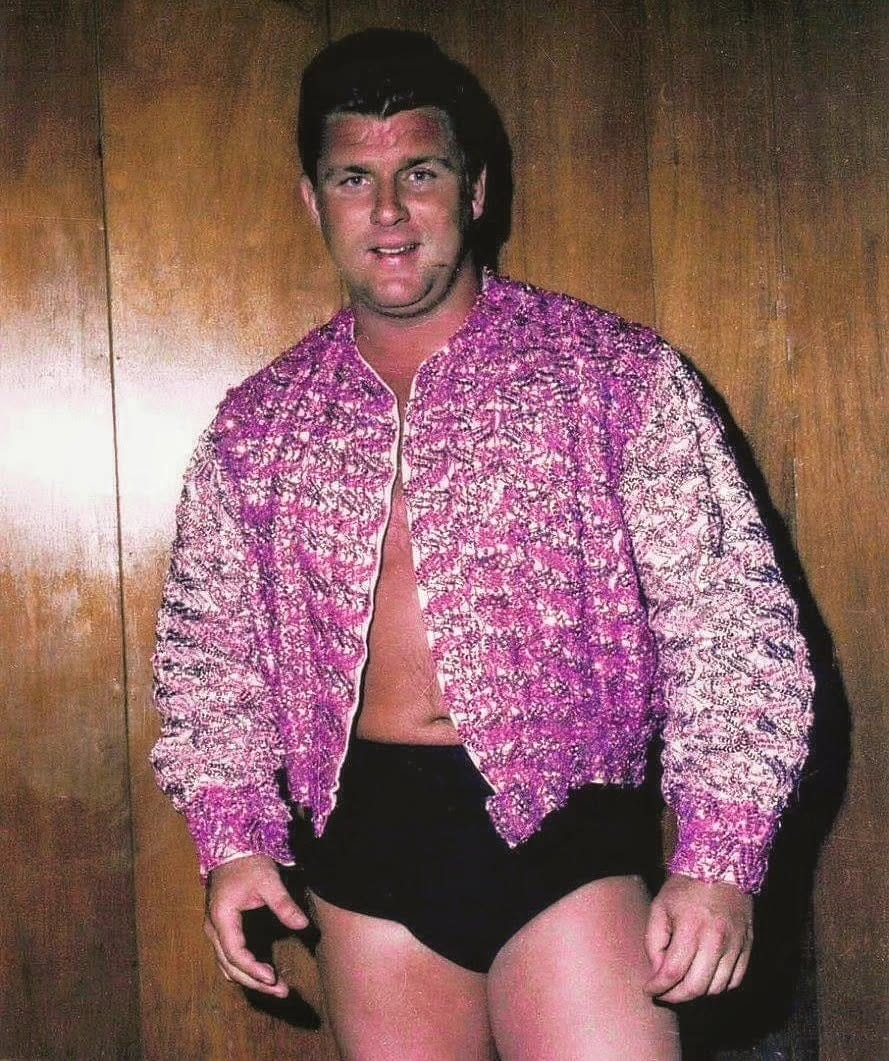
Pictured: NWA Ken Lucas multiple time Gulf Coast Heavyweight Champion
July centered on Eddie Sullivan’s determined campaign to regain the NWA Gulf Coast Heavyweight Championship from Ken Lucas. Sullivan, fresh from a brief Japan tour, challenged the popular scientific wrestler repeatedly. Non-title and title matches in Mobile and Dothan went Lucas’s way, including one in which Sullivan left Lucas a bloody mess yet still came up short. Promoter Lee Fields finally sanctioned an anything-goes contest (referee outside the ring) that served as Sullivan’s last shot. Sullivan took full advantage of the no-rules stipulation, administered a severe beating, and captured the title on July 13 in Mobile.
Sullivan immediately defended against the likes of Greg Peterson (double disqualification in Dothan) and worked tags with the ascending Sweet Daddy Banks against Peterson and Cowboy Bob Kelly. Those tags produced mixed results, including one in which Kelly and Peterson claimed held-up pay after a victory. Bob Kelly remained a reliable drawing presence and midcard-to-main-event fixture.
The Gulf Coast Tag Team titles stayed with the masked Challengers, who mixed successful defenses with disqualification losses and non-title setbacks. They defeated the Medics (George and Oscar Gonzales) and held off various combinations involving Big Red, Rip Tyler, and Leon Ogle, though they dropped a non-title bout to Tyler and newcomer Danny Little Bear before rebounding in a title match.
A parallel storyline involved The Intern (managed by Dr. Ken Ramey). Declaring that no other white-masked wrestlers would be tolerated, the Intern systematically defeated and unmasked a series of newcomers—The White Knight, The White Destroyer, and The White Tornado—without revealing their identities. He also injured Wrestling Pro #2 but failed to remove that mask. When the Intern and Ramey attacked referee Rueben Gibson in Dothan, it drew brother Rick Gibson into the fray. The Gibson brothers eventually defeated Ramey and the Intern in a tag match. Rick Gibson had returned from a shoulder injury and was again billed as Alabama State Champion.
Supporting talent included Bruce Langsford, Oki Shikina, Randy Oliver, Ray Valdez, Ricky Fields, and midget ladies such as Marie Laveau and Princess Little Dove. The month featured solid local cards built around title programs, unmasking heat, and physical rivalries rather than major outsider appearances.
August 1976
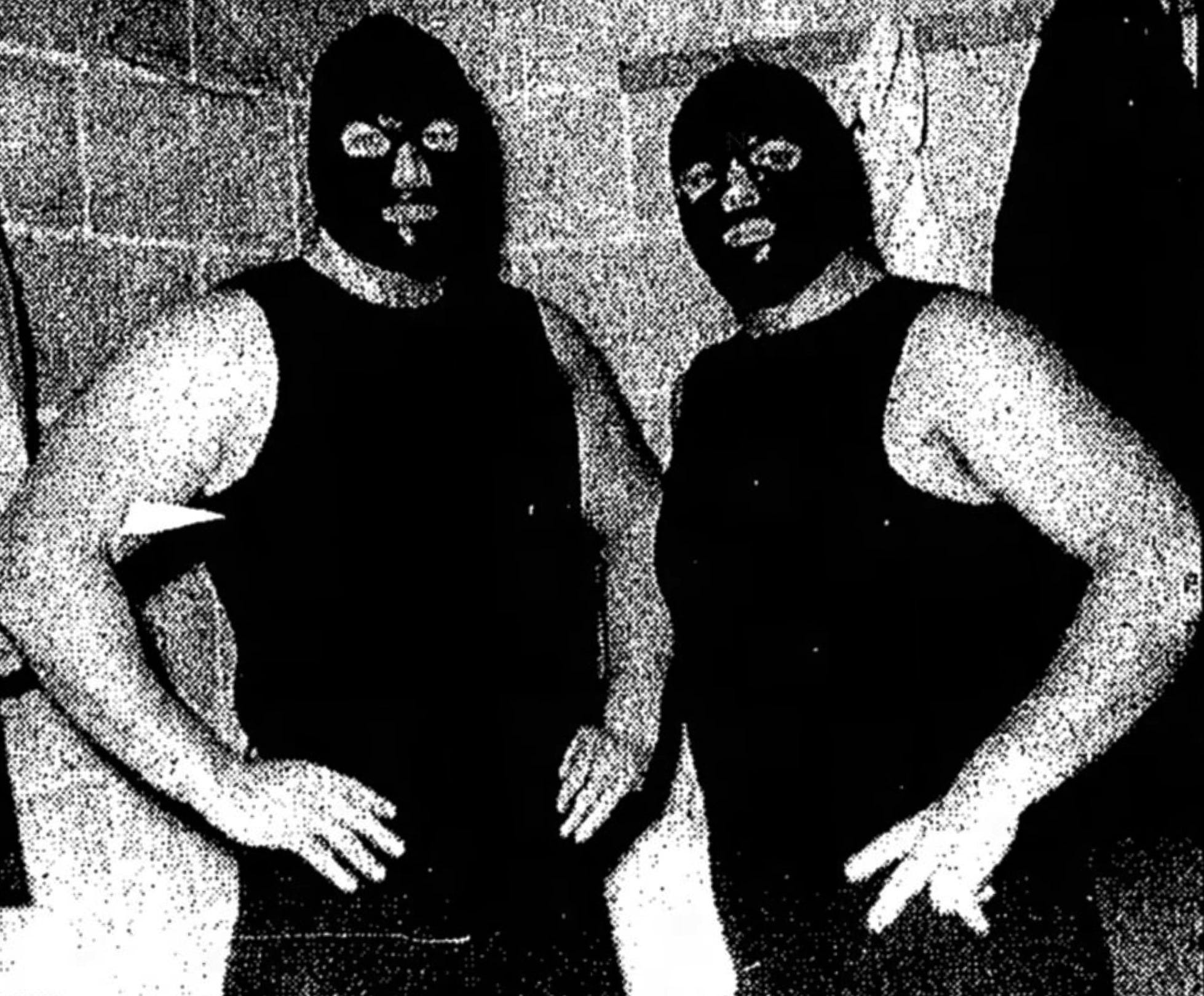
Pictured: The Challengers (which were really the mighty yankees in the same outfits under a different name)
August intensified several July threads while elevating tag-team drama and the Intern/Medic rivalry. Danny Little Bear challenged Sullivan for the Gulf Coast title after a prior slugfest. Their match became a wild brawl ending in double disqualification (both men fighting outside the ring, Little Bear bloody). Sullivan also retained cleanly against Greg Peterson in a Dothan rematch. Peterson, now Alabama champion, turned back Sweet Daddy Banks in a pair of defenses.
The Challengers remained central. They lost by disqualification to Little Bear and Ricky Fields, then battled Little Bear and the returning Dick Murdoch (absent since the late 1960s) to a double disqualification. Rip Tyler challenged Challenger #1 and was dominating until struck with the infamous loaded black glove, leaving him bleeding heavily. Eddie Sullivan rushed to his longtime partner’s aid, producing a free-for-all. Sullivan and Tyler then defeated the Challengers in a tag match (Sullivan even wearing a matching glove on his right hand for the occasion) and demanded a title shot. On August 24 in Mobile they battered the Challengers and captured the Gulf Coast Tag Team Championship for (at least) the second time as a unit.
Sullivan and Tyler further teamed with Dusty Rhodes in a six-man tag in Dothan, defeating the Challengers and the Intern. This marked a notable crossover appearance that added star power to the local product.
The white-mask angle exploded when original Mysterious Medic Tony Gonzales emerged from semi-retirement (he had been racing stock cars and training his sons). Offended by the Intern’s claims of exclusive rights to the white mask, Gonzales challenged and dominated the Intern until Sweet Daddy Banks interfered. This produced a series of increasingly chaotic tags and singles bouts involving Banks, Ramey, Greg Peterson, and others, frequently ending in disqualifications and multi-man melees. A Texas Death Match (loser unmasks) between the Intern and the Medic in Dothan degenerated into triple-teaming before Danny Little Bear intervened and the bout was thrown out. Luke Brown aligned with the Intern/Banks side, and the Super Assassin debuted as another ally of the heels.
Gene Lewis returned working a clean, rule-following style and drawing cheers. Cowboy Bob Kelly and Bobby Fields scored a victory over the Challengers in Dothan. Rick and Rueben Gibson finished a brief run by defeating Randy Oliver and Eric Spearman before departing. The month showcased the territory’s strength in layered, personal feuds and physicality while elevating Banks as a dangerous presence.
September 1976

Pictured: Bobby Fields
September brought major title changes and continued escalation. Eddie Sullivan’s Gulf Coast Heavyweight Championship reign faced mounting pressure from Sweet Daddy Banks. A Texas Death Match involving Sullivan and a Challenger saw interference (including Banks acting in a referee capacity at one point and the Super Assassin’s involvement) that led to Banks claiming he had effectively beaten the champion. A subsequent title match ended in double disqualification with the belt held up. In the decisive best-of-three-falls rematch, Banks dominated and pinned Sullivan with his suplex to become Gulf Coast Heavyweight Champion around mid-to-late September (sources vary slightly between the 14th and 21st) in Mobile.
On the tag side, Bobby and Ricky Fields defeated Rip Tyler and Eddie Sullivan for the Gulf Coast Tag Team titles in Panama City (mid-to-late September). Tyler and Sullivan later defeated a team including Roberto Soto and Ricky Steamboat to earn a rematch but dropped the return bout to the Fields brothers. The Fields successfully defended against the masked Commodores.
The Intern/Banks versus Medic/Little Bear war continued. After a melee, the Medic and Little Bear issued a handicap challenge and brought in Dick the Bruiser as their partner against Banks, the Intern, Ramey, and Luke Brown; Bruiser scored the decisive pin on Brown. Sullivan defended the (pre-loss) title against Gene Lewis and a Challenger. Banks won a nine-man battle royal for a $250 prize that included the Super Assassin, Gene Lewis, Lord John Raven, Dan Burdick, Greg Peterson, and others.
Danny Little Bear defeated Luke Brown in an Indian Strap match and drove him from the area; he also scored a win over Stan Stasiak in Dothan. Additional names active included Lord John Raven, Burrhead Jones, the Super Assassin, Gene Lewis, Jerry Usher, and others. A tournament in New Orleans on September 28 crowned “Irish” Pat Barrett the new NWA World Junior Heavyweight Champion, with the result announced in the territory.
Overall Business Assessment
The third quarter of 1976 illustrated both the strengths and limitations of Gulf Coast Championship Wrestling at this stage. Storytelling remained sharp: multi-week title programs with escalating stipulations, loaded-object heat, unmasking crusades, and family/tag continuity gave local fans consistent reasons to return. Sweet Daddy Banks’s rise from strong midcard presence to heavyweight champion added a fresh, hard-hitting heel threat. The Fields brothers provided reliable babyface tag champions with local roots. Veterans such as Sullivan, Tyler, Kelly, and Little Bear anchored the cards, while occasional names like Dusty Rhodes and Dick the Bruiser provided temporary lifts.
Business held without major peaks or collapses. The product relied on intimate venues where crowd heat for blood and personal grudges could be maximized, but the absence of sustained national-level drawing cards and the gradual weakening of peripheral towns pointed toward the challenges Fields would face later in the year. In actuality, the territory was dying a slow, painful death, being sustained by the most loyal fans in each town. By the end of September the titles sat with Banks (heavyweight) and the Fields brothers (tags), setting up clear programs heading into the fall. The territory still delivered the hard-edged, character-driven Southern wrestling that defined its identity even as the broader industry began shifting around it and each town’s crowds were withering down.
Thank You for Watching and Listening
I’m Tony Richards, Pro Wrestling Historian, Author and Storyteller. I share pro wrestling historical items in each issue of the Time Tunnel Pro Wrestling History Newsletter and each episode of our podcast show. Thanks for your support! If you enjoy my information on select events, matches and insights, please share with folks you think might like to be a subscriber!
Remember, Premium subscribers get access to exclusive and special content such as some special issues including a multi-part deep dives on wrestling territories, wrestler bios and championship title histories, special audio and video interviews on territory pro wrestling and more available in the Pro Wrestling Time Tunnel for Premium Subscribers. Being a Premium Subscriber also means you support me in my efforts to document Pro Wrestling History through my research, writing, books, vidoes and podcasts. And…I have something very special planned for our Premium Subscribers on the Podcast side of things in 2026! Details soon here in the Pro Wrestling Time Tunnel.