


Today’s Favorite Quote: We become what we think about most of the time, & that’s the strangest secret - Earl Nightengale
Happy Birthday to those who have passed on and to those great wrestlers still with us:
In Memoriam:
Charlie Rentrop 1888
Tom Packs 1894
Lee Henning 1913
Lucky Sumunovich 1919
Happy Birthday:
(none)
RIP Memorial: We stop & remember those who have passed on this day and gave themselves to the business for us, the fans. We salute you and thank you.
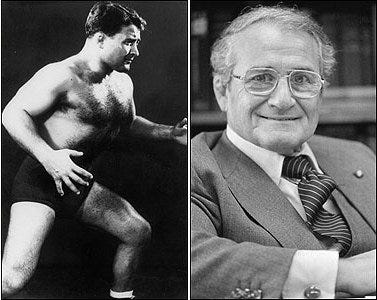
Tank Morgan 8-15-1991 at the age of 58
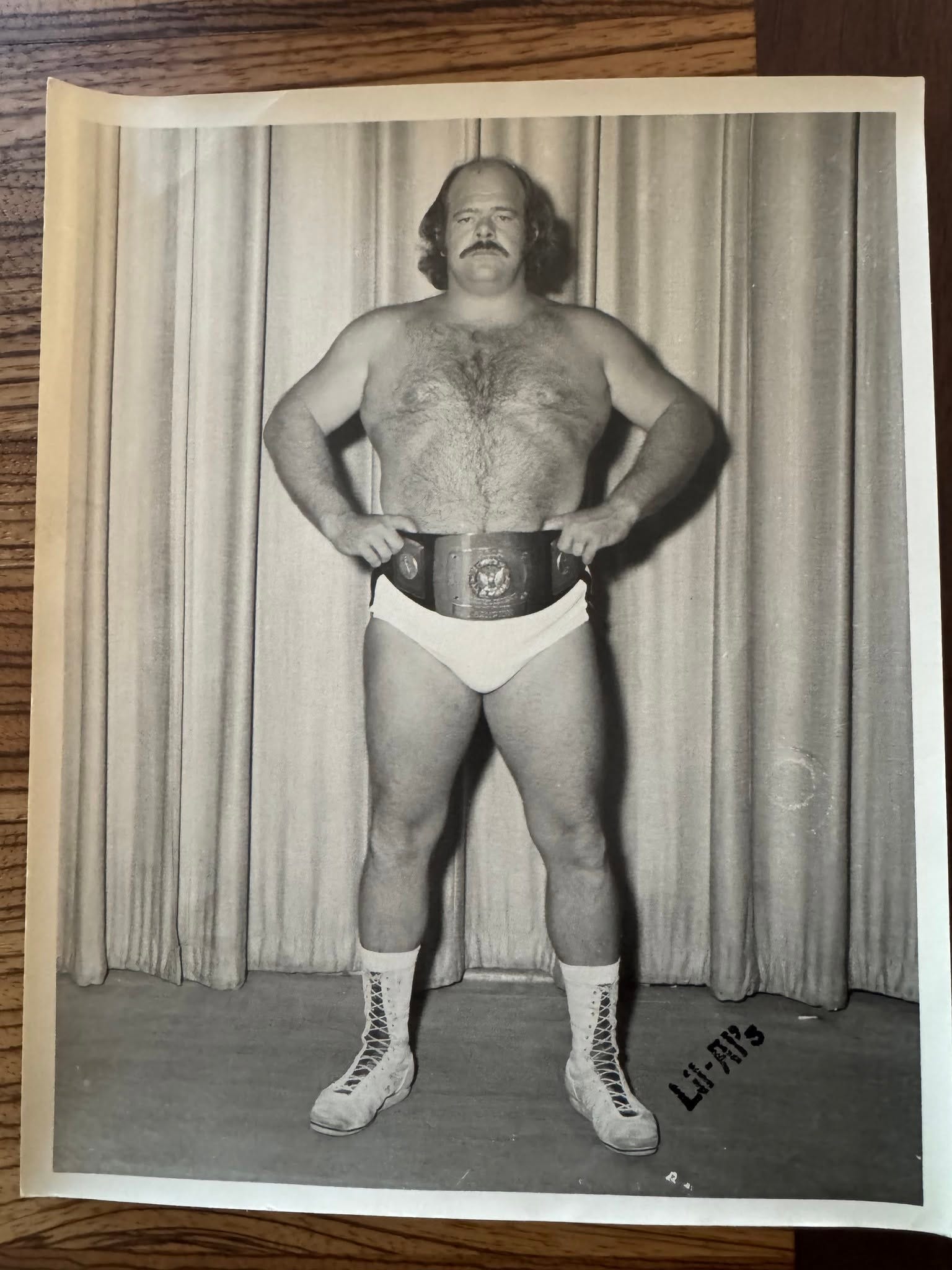
John Bonica 8-15-1994 at the age of 77
Marva Scott 8-15-2003 at the age of 65

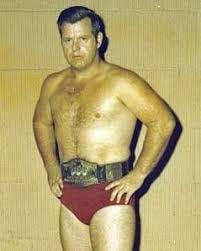
Eddie Marlin 8-15-2019 at the age of 89

Leon Baxter\The Wrestling Pro 8-15-2019 at the age of 81
The Life and Career of Penny Banner
Mary Ann Kostecki, known to the wrestling world as Penny Banner, was one of the defining figures of women’s professional wrestling during the territorial era. Born August 11, 1934, in St. Louis, Missouri, and deceased May 12, 2008, in Charlotte, North Carolina, she competed from 1954 to 1977. Banner combined genuine athletic ability rooted in judo with a hard-edged, crowd-engaging style. She became the first AWA World Women’s Champion, held the NWA Women’s World Tag Team Championship multiple times, and later served as a steward of the sport’s history as Commissioner of the Professional Girl Wrestling Association. Her life story—marked by hardship, resilience, territorial travel, and late-career recognition—mirrors the grit required of women wrestlers in an era when the business was dominated by men and opportunities were limited.
Kostecki grew up in working-class St. Louis during and after the Depression. Her father was of Polish descent and her mother German. The family faced severe instability; her parents’ difficulties led to a period in St. Vincent de Paul orphanage when she was around eleven. She helped care for younger siblings while her mother worked multiple jobs. Banner later recalled a childhood without television and an early admiration for country singer Hank Williams. She left high school at fifteen and took jobs as a waitress and nanny/governess.
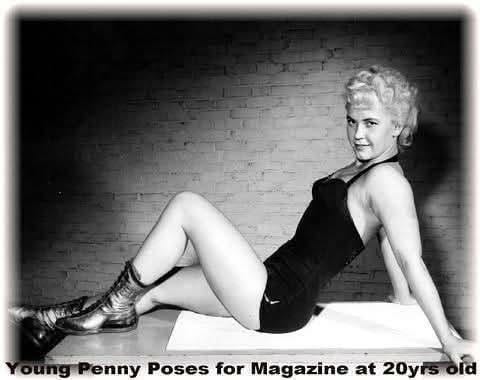
An attempted sexual assault prompted her to study judo and build strength through weight training and calisthenics. Her physical conditioning—famously including the ability to perform two hundred sit-ups—caught attention at a St. Louis lounge where she worked. Word reached Sam Muchnick, longtime president of the National Wrestling Alliance and the dominant St. Louis promoter. After a bet involving the sit-ups and further conversations, Muchnick arranged for her to train under Billy Wolfe in Columbus, Ohio. Wolfe, the influential (and controversial) manager/promoter of women’s wrestling and former husband of Mildred Burke, ran a demanding school that produced many of the era’s top female performers.
Kostecki debuted in July 1954 (sources commonly cite July 10 against Cathy/Kathy Branch) at age nineteen. She adopted the ring name Penny Banner: “Penny” reflected her sense of starting from nothing and feeling small in a new world, while “Banner” came from Charlton Heston’s character in the film Arrowhead. She bleached her hair and entered a business that was still rare for women and outright banned in some jurisdictions.
Building a Career in the Territories
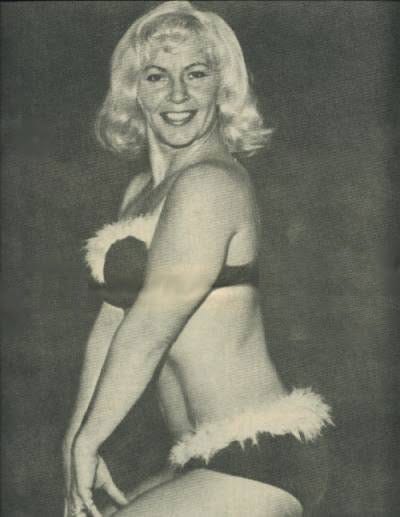
Banner quickly established herself as a skilled, versatile performer. Standing 5’8” and billed at around 165 pounds, she blended catch-as-catch-can wrestling, judo throws, dropkicks, small packages, and sunset flips with a willingness to work as a heel. She famously preferred “boos” to indifference, understanding that strong audience reaction was essential. Early opponents and partners included June Byers, Kay Noble, Theresa Theis, Nell Stewart, Betty Jo Hawkins, Bonnie Watson, and Lorraine Johnson.
She excelled in tag team competition. Banner held versions of the NWA Women’s World Tag Team Championship multiple times (accounts list three to five reigns) with partners including Bonnie Watson, Betty Jo Hawkins (twice in some records), and Lorraine Johnson. These titles were defended across the Midwest, South, and other NWA territories during the mid-to-late 1950s. She also worked Canadian and USA Women’s Tag Team titles. In Calgary she trained further under Stu Hart’s Stampede Wrestling and lived for a time with the Hart family, gaining experience in the rigorous Canadian style. She participated in Chicago’s first women’s tag team match and mixed-tag matches, including bouts alongside future husband Johnny Weaver.
Banner’s most significant early singles program was with NWA World Women’s Champion June Byers. Byers, a tough, experienced veteran who had taken the title from Mildred Burke under controversial circumstances in 1954, repeatedly defeated the younger Banner. In 1959 the two wrestled to a time-limit draw—an important moral victory for Banner that signaled she had closed the gap. The rivalry highlighted the physical, often shoot-oriented nature of many women’s matches of the period under Wolfe’s influence.
The Honey Bikini Blondes Tag Team
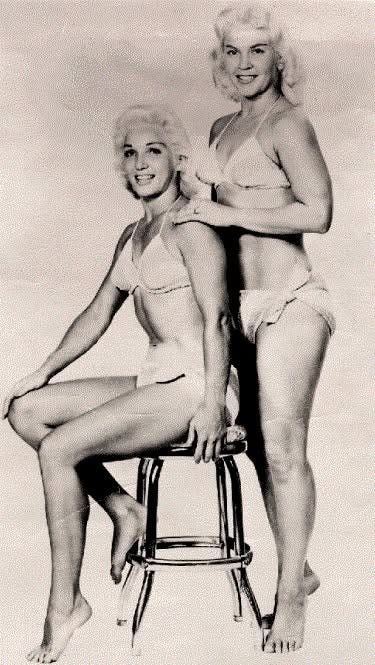
The partnership began after people repeatedly told Banner that she looked like Johnson. While working in Tennessee and unhappy there, Banner contacted Johnson and suggested they team up. Johnson agreed. The two women were frequently described as near look-alikes (dead-ringers for each other), which promoters used to strong effect. Johnson was roughly five years older than Banner, but the pair clicked well both in and out of the ring.
They won the NWA Women’s World Tag Team Championship (records vary slightly on exact counts, but multiple sources credit them with at least one and often two recognized reigns). One common account has them winning a tournament to claim the titles around 1955–1957 and holding them into 1959. They also held Canadian & USA Women’s Tag Team titles together in the 1958–59 period.
Documented defenses and matches include successful title defenses in Canada (notably Calgary’s Stampede Corral and other Alberta/Saskatchewan towns in July 1958 against teams featuring Laura Martinez and Jackie Hammond) and in the Midwest (including a 1958 win over Kay Noble and Laura Martinez, and another over Kathy Starr and Kay Noble in Minneapolis). They worked extensively across NWA territories and Canadian promotions during this run.
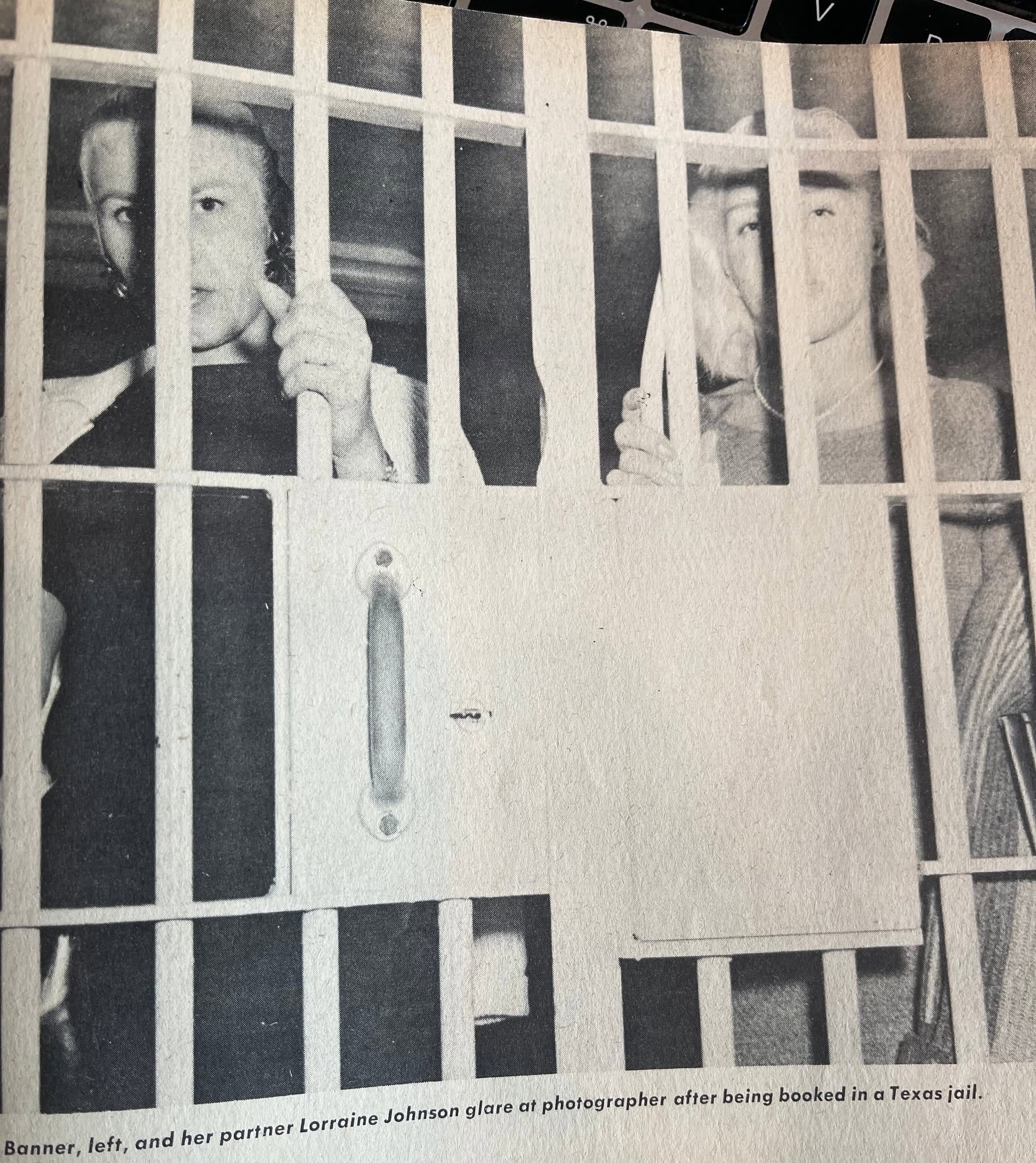
Pictured: Banner and Johnson held in jail in Amarillo, Texas for participating in a riot at the Sports Arena
Wrestling journalist Dave Meltzer has been cited as regarding Banner and Johnson as generally the best female tag team ever in North America. Banner herself later ranked the partnership highly, saying of her three main tag partners that with Johnson “we were awesome! BOTH EXPERIENCED AND GOOD.”
The team’s physical similarity, in-ring chemistry, and championship success made them a standout attraction in an era when women’s tag matches were still relatively rare and often had to overcome local restrictions or skepticism. Their association remained a point of pride years later—Johnson’s daughter, Nickla Roberts (better known as Baby Doll), inducted Banner into a wrestling hall of fame and specifically highlighted their tag-team history.
The AWA World Women’s Championship
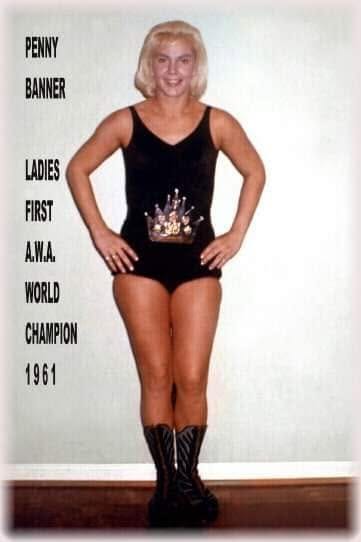
Banner’s signature achievement came on August 26, 1961, in Angola, Indiana. She was scheduled to face Byers for what was framed as an AWA (American Wrestling Alliance/Association) title opportunity under promoter Jim Barnett’s group. Byers no-showed. The card was reworked into a multi-woman battle royal; Banner won it and was recognized as the first AWA World Women’s Champion. She held the title until vacating it around 1963–1964 after moving to North Carolina with her family. (Note that the exact lineage and recognition of early AWA women’s titles involve the complex politics of the NWA split and competing claims by Byers, The Fabulous Moolah, and others.)
In 1963 she also captured the Texas Women’s title from Nell Stewart. Throughout the 1960s and into the 1970s Banner worked the Carolinas and other Southern territories, often in mixed tags or as a special attraction. Injuries accumulated—she suffered a badly torn nose and a dislocated elbow among other damage—yet she remained durable. By her own account she lost only twice in her final twenty years of active competition (to Moolah and Belle Starr, both times with questionable rope assistance).
Politics limited her opportunities later. Banner rarely worked with The Fabulous Moolah, whose control of the women’s division and training pipeline in many NWA territories (especially the Northeast and later nationally) restricted bookings for independent veterans. When Byers retired after a car accident and Moolah’s dominance solidified, opponents became scarce in the Carolinas. Banner retired in 1977.
Personal Life
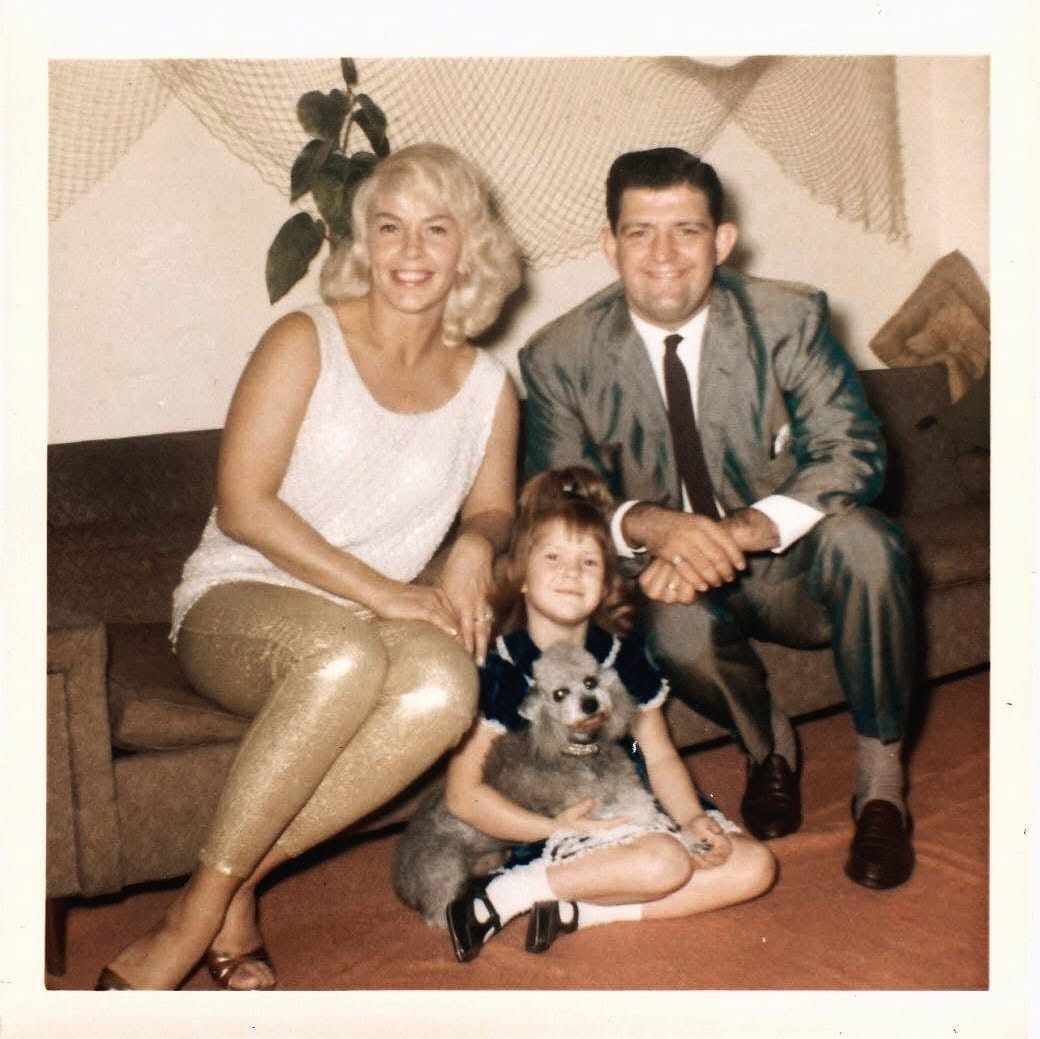
Pictured: Penny Banner, Johnny Weaver and daughter Wendy
Banner’s personal life was as eventful as her career. Between 1956 and 1958 she dated Elvis Presley on approximately five occasions. They met after a concert in St. Louis; Presley, a wrestling fan, later attended her matches in Memphis and invited her to Graceland. Their last meeting occurred roughly a week before he entered the Army. Banner described the relationship as friendly and affectionate rather than a serious romance; both were busy with their careers. Contemporary press and later accounts, including her autobiography, confirm the connection.
In April 1959 she married wrestler Johnny Weaver (also known as Johnny Ace or Johnny Spade in some contexts). Their daughter Wendi was born around 1959–1960. The couple settled in the Carolinas, where Weaver became a mainstay of the Mid-Atlantic territory. The marriage lasted thirty-five years and ended in divorce in 1994. In her 2004 autobiography Banner Days (co-written with Gerry Hostetler), Banner was candid about the relationship’s difficulties, describing emotional and physical abuse and the personal toll of the wrestling lifestyle. Her closest friend in the business for decades was tag partner Betty Jo Hawkins.
Post-Retirement Life and Legacy
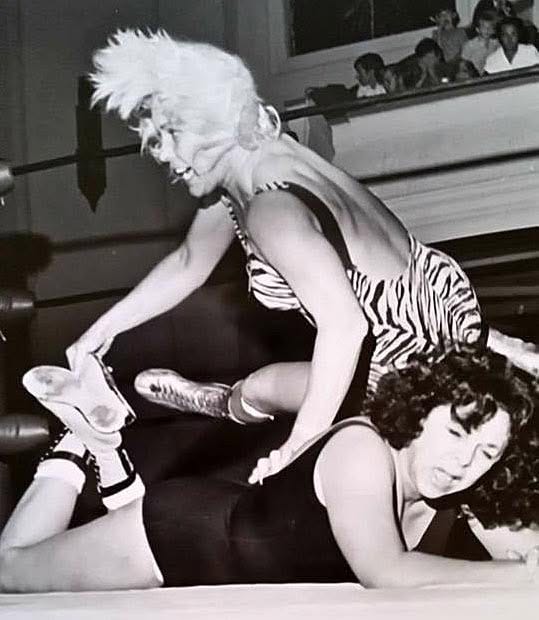
Pictured: Penny Banner with a step over toe hold on The Fabulous Moolah
After leaving the ring Banner built a real-estate business, remained active with horses and 4-H, and stayed physically competitive. Diagnosed with emphysema in 1990, she turned to swimming to quit smoking and later competed in the Senior Olympics, winning medals in the 50-meter backstroke (bronze), discus, shot put, and other events. She held records in North Carolina masters competition.
From 1992 until her death she served as Commissioner (and Champion Emeritus) of the Professional Girl Wrestling Association (PGWA), helping preserve and promote women’s wrestling history. She appeared at WCW’s Slamboree 1994 as a legend and was featured in the 2004 documentary Lipstick & Dynamite, Piss & Vinegar: The First Ladies of Wrestling. Her autobiography Banner Days offered one of the most detailed first-person accounts of women’s wrestling in the 1950s and 1960s.
Recognition arrived in her later years: induction into the Professional Wrestling Hall of Fame (2005), the St. Louis Wrestling Hall of Fame (2007, inaugural class), the Stampede Wrestling Hall of Fame (1995), and Cauliflower Alley Club honors including the Art Abrams Lifetime Achievement Award (1997). In 2008 she became the first woman to receive the Frank Gotch Award from the George Tragos/Lou Thesz Professional Wrestling Hall of Fame, recognizing her positive contributions to the sport’s image.
Diagnosed with cancer (believed to have originated in the fallopian tubes) in late 2005, she underwent surgery and chemotherapy. The disease initially responded, but subsequent complications including pneumonia and severe weight loss took their toll. She died in her sleep at her daughter Wendi’s home in Charlotte on May 12, 2008, at age 73. Her former husband Johnny Weaver had passed away only three months earlier.
Enduring Significance
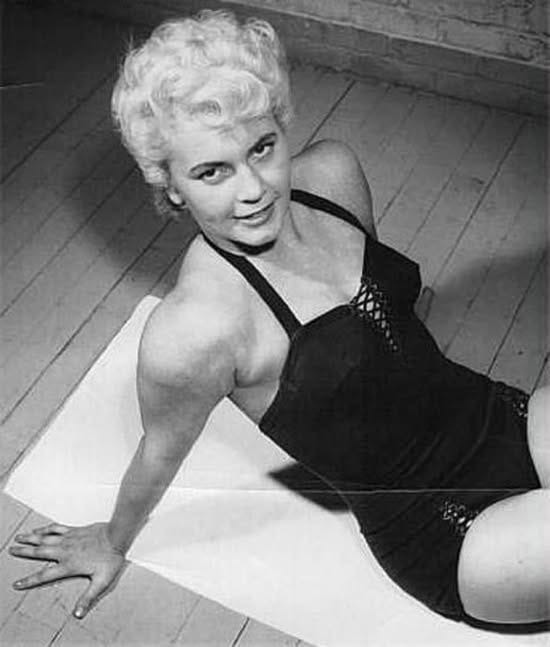
Penny Banner belonged to the generation that proved women’s matches could be legitimate athletic contests rather than mere novelty acts. She worked the hard roads of the territories when women were often paid less, booked less frequently, and restricted by local laws and promoter preferences. Her judo-based technical style, willingness to work as a heel, tag-team success, and the symbolic importance of the inaugural AWA women’s title place her among the most important performers of her era. Beyond the ring she modeled resilience—surviving a difficult childhood, the physical and emotional demands of the business, a troubled marriage, and late-life health challenges while remaining engaged with wrestling’s history and competitive athletics.
anner’s career illustrates both the opportunities and the structural barriers faced by women in the NWA system. Her autobiography and interviews remain valuable primary sources. She left the business better than she found it, and the honors that arrived near the end of her life correctly recognized a pioneer who helped build the foundation on which later generations of women’s wrestling would stand.
One Thing I Learned About Eddie Marlin

For nearly 13 years early in his career, he worked full-time by day at a rubber factory in Nashville while wrestling in the evenings on the territorial circuit.
This blue-collar dual life helped him connect strongly with the working-class fans in the Mid-South/Tennessee territories, even though he wasn’t the biggest or flashiest wrestler around.
Thank You for Watching and Listening
I’m Tony Richards, Pro Wrestling Historian, Author and Storyteller. I share pro wrestling historical items in each issue of the Time Tunnel Pro Wrestling History Newsletter and each episode of our podcast show. Thanks for your support! If you enjoy my information on select events, matches and insights, please share with folks you think might like to be a subscriber!
Remember, Premium subscribers get access to exclusive and special content such as some special issues including a multi-part deep dives on wrestling territories, wrestler bios and championship title histories, special audio and video interviews on territory pro wrestling and more available in the Pro Wrestling Time Tunnel for Premium Subscribers. Being a Premium Subscriber also means you support me in my efforts to document Pro Wrestling History through my research, writing, books, vidoes and podcasts. And…I have something very special planned for our Premium Subscribers on the Podcast side of things in 2026! Details soon here in the Pro Wrestling Time Tunnel.