Today’s Favorite Quote: If you have made mistakes, even serious ones, there is always another chance for you. What we call failure is not the falling down but the staying down - Mary Pickford
Happy Birthday to those who have passed on and to those great wrestlers still with us:
In Memoriam:
Wally Karbo 1915
Bobby Duncum 1944
Bobby Eaton 1958
Eddie Gilbert 1961
Buddy Landel 1961
Happy Birthday:
Bob Backlund (77)
Gran Markus, Jr (73)
Peter Miavia, Jr (61)
Kofi Kingston (45)
Johnny Gargano (39)
Simone Johnson\Ava Raine (25)
RIP Memorial: We stop & remember those who have passed on this day and gave themselves to the business for us, the fans. We salute you and thank you.
Lonnie “Moondog” Mayne 8-14-1978 at the age of 33
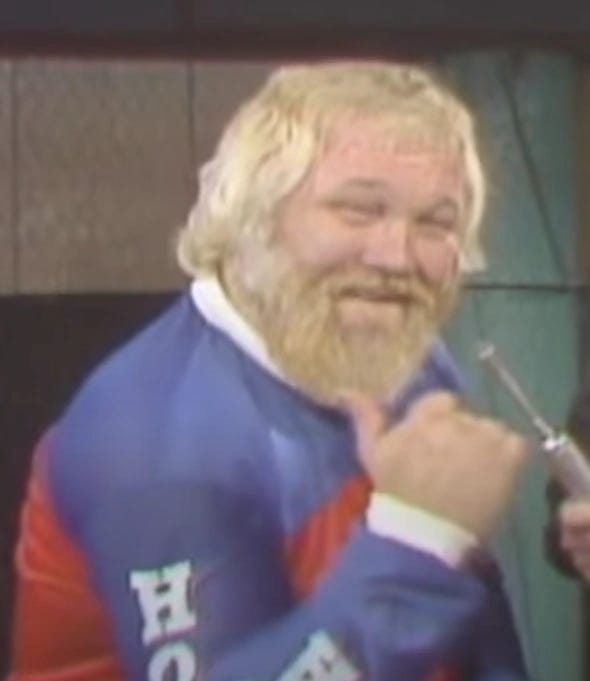
The Life and Career of Buddy Landel
A gifted athlete and natural talker with legitimate main-event charisma, he rose rapidly through the territories in the early-to-mid 1980s, challenged Ric Flair in a high-profile “Nature Boy vs. Nature Boy” program, captured the NWA National Heavyweight Championship at Starrcade ’85, and stood on the cusp of even greater success before personal demons derailed him.
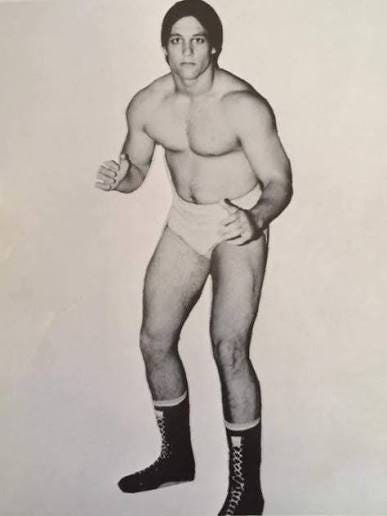
Born in Knoxville, Tennessee, Landel grew up a fan of the local wrestling scene. He was an amateur wrestler in high school and had received multiple college scholarship offers for football and baseball (including interest from the University of Tennessee). He dropped out during his junior year after football season to chase a professional wrestling career.
His sister Lou Anne was dating Barry Orton (Barry O) at the time. Through that connection, Landel met Bob Orton, Randy Savage, and trainer Boris Malenko. Malenko held tryouts; Landel was the only one among dozens of prospects who made the cut. He trained under Malenko, Bob Roop (the Olympic wrestler), and Bob Orton Jr., living for a time in an apartment with Roop. He debuted in 1979 at age 17–18.
Early stops included Angelo Poffo’s International Championship Wrestling (alongside the young Randy Savage and Lanny Poffo) and Bill Watts’s Mid-South Wrestling. He worked initially as a dark-haired babyface under variations of his name or as Buddy Roop. The territory grind was harsh; at one point he slept in the storefront window of Randy Savage’s gym in Lexington, Kentucky, to make ends meet.
The Birth of the Nature Boy

The transformation came in the early 1980s. Tom Renesto Sr. (one of the former Original Assassin)s tag team booked him for Puerto Rico’s World Wrestling Council and suggested bleaching his hair and working as a heel. Landel accepted. In WWC he captured the North American Heavyweight Championship in March 1983 by defeating Pierre Martel (losing it later to Pedro Morales). The heel work and blond look stuck.
Back in the Continental Wrestling Association (Memphis), Jerry Lawler gave him the “Nature Boy” moniker. Landel adopted the flamboyant robes, strut, and cocky persona that invited comparisons to both Buddy Rogers and Ric Flair. He was a natural on the microphone—Lawler and others later praised his gift of gab. In Memphis and Mid-South he held the NWA Mid-America Heavyweight Championship multiple times and the Mid-South Television Championship. He generated real heat; opponents described a cocky air that made people want to fight him, perfect for a heel.
In 1985 Landel arrived in Jim Crockett Promotions (Mid-Atlantic/NWA). Managed by James J. Dillon, he was positioned as a top contender. He challenged Magnum T.A. for the U.S. title and, more importantly, began a program with NWA World Heavyweight Champion Ric Flair. The “Nature Boy vs. Nature Boy” angle had genuine heat. A July 31, 1985, match in Raleigh’s Dorton Arena drew an overflow crowd; Landel long claimed it broke Elvis Presley’s attendance record at the building (this has never been independently confirmed, but the house was exceptionally strong).
At Starrcade ’85 in Greensboro, Landel defeated Terry Taylor to win the NWA National Heavyweight Championship with Dillon in his corner. He was being built as a legitimate threat to Flair. Contemporary accounts and later recollections (including Landel’s own and those of Arn Anderson and others) indicate that a title change was being discussed or prepared—Flair was due for time off, and the promotion was testing the waters for a full “Nature Boy” program. Landel later said the plan involved Baby Doll as his valet and a series of defenses before dropping the belt back to Flair.
The Fall: Addiction and the Missed Opportunity
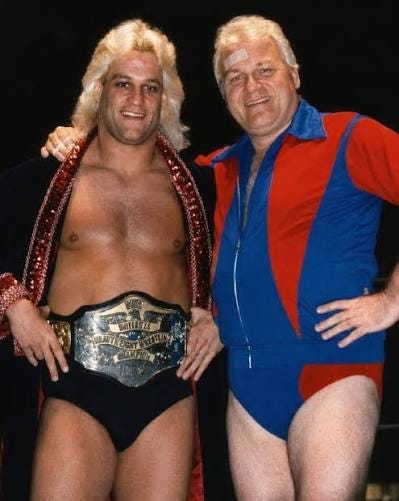
Pictured: Buddy Landel NWA National Heavyweight Champion with manager JJ Dillon
Landel’s addictive personality and substance use (pills, alcohol, and other drugs common in the era) made him unreliable. Bookers labeled him “No Show Budro.” The decisive moment came in late 1985. Landel was scheduled for a key TV taping that was supposed to advance the world-title angle. He partied the night before, overslept, hung up on Dusty Rhodes and Jim Crockett when they called, and refused to come in. J.J. Dillon was sent to get him; Landel still declined. Rhodes fired him on the spot and stripped him of the National title (a phantom switch to Rhodes was used on television).
Landel was 24 and, by his own later admission, “cocky and had a hundred grand in the bank.” He did not yet see the problem. The firing removed a potential long-term Flair rival at a moment when Crockett Promotions was expanding. Some observers have linked the vacancy and subsequent booking decisions to the eventual formation and elevation of the Four Horsemen. Landel himself later reflected that while he could have won the title and worked strong matches, he doubted he would have been a reliable champion without constant supervision.
Later Career and Intermittent Resurgences
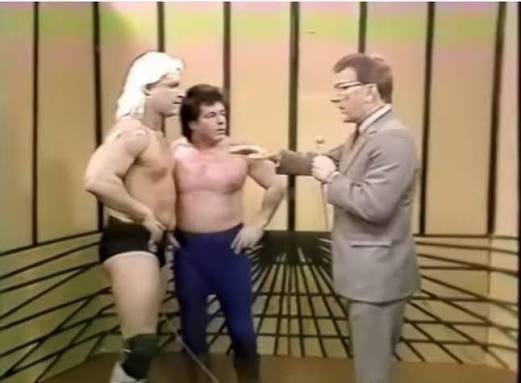
Pictured: Announcer Lane Russell admonishes Buddy Landel and Bill Dundee on television in Memphia, Tennessee at WMC-TV5
Landel returned to the Tennessee and Alabama territories. In 1986 he was part of the last sell-out at the Mid-South Coliseum in Memphis alongside Jerry Lawler, Bill Dundee, and Dutch Mantell. He worked Continental Championship Wrestling, had a stint in the Universal Wrestling Federation, appeared in All Japan, and bounced through various independents and smaller promotions. He held numerous regional titles, including multiple reigns with versions of the Southern/USWA Heavyweight Championship.
A more sustained revival came in Jim Cornette’s Smoky Mountain Wrestling in 1994–1995. Landel became a key member of Cornette’s Militia stable, captured the SMW Heavyweight Championship, and later turned babyface after being kicked out of the group. He and Shawn Michaels sold out the Knoxville Coliseum; their match at the SuperBowl of Wrestling (where Landel challenged for Michaels’s WWF Intercontinental Championship) was highly regarded.
A brief WWF run followed in late 1995–early 1996 (he debuted around the same time as Steve Austin’s Ringmaster character). He scored television wins but slipped on ice after only a few matches, tore a quadriceps, and was sidelined for months. He had scattered later appearances, including dark matches and independents, and continued working into the 2000s before retiring around 2010.
Personal Life, Redemption, and Death
Landel married Donna in 1981; they had children and remained together until his death. He later spoke candidly about his addiction, describing an addictive personality that could not do anything in moderation and the emptiness that followed the adulation of a live crowd. In later years he achieved sobriety, credited his wife, faith, and family, and reflected on his mistakes without self-pity. He worked as a reserve police officer for a period and was inducted into several regional halls of fame.
On June 21, 2015, Landel was involved in a car accident in the Chilhowie, Virginia, area. He was hospitalized, then checked himself out against medical advice and returned home. He died the next day at age 53 from complications related to the accident.
Buddy Landel had the look, the mouth, the work rate, and the ability to draw when he was present and focused. In the mid-1980s he was positioned as a legitimate foil to Ric Flair at a time when the NWA World title still carried enormous prestige across the territories. His self-sabotage prevented him from reaching the sustained stardom that his talent suggested. Yet those who worked with him—Lawler, Cornette, Taylor, and others—consistently remembered a gifted performer who could light up a building when he showed up. In the history of the territory era, he stands as a vivid example of both the opportunities the system could offer a young star and the personal cost of the lifestyle that accompanied it.
One Thing I Learned About Moondog Lonnie Mayne
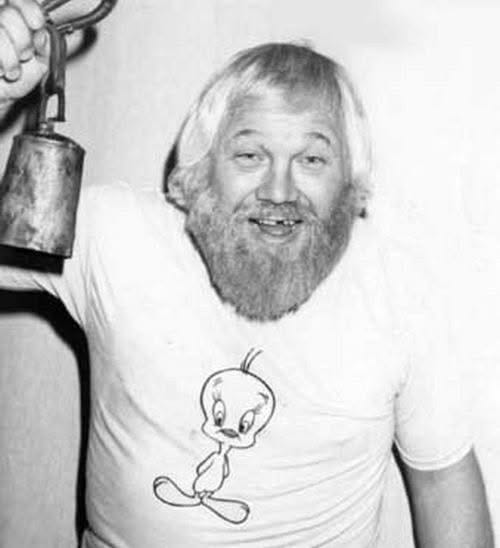
On the night of August 13, 1978, the 33-year-old Mayne was killed in a car accident on the Riverside Freeway in Southern California when his vehicle crossed the median and collided with an oncoming car. He was scheduled to appear at a television taping in Sacramento the next day (August 14).
News of his death had not yet reached the promoter, who assumed Mayne had simply no-showed. The announcer therefore improvised a cover story on the tape, claiming that Mayne was backstage but so enraged that he was refusing to come out and wrestle. The program did not air until several days later—by which time many fans already knew he had died nearly a week earlier. To make it even more awkward, a pre-taped interview with his scheduled future opponent Buddy Rose included Rose’s over-the-top threat that Mayne would be carried out of the ring by pallbearers. 
Mayne (real name Ronald Doyle “Lonnie” Mayne) was already a wild, larger-than-life character famous for eating glass, raw meat, and live goldfish, and for his chaotic lifestyle. That the territory kept kayfabe going even after he was gone fits the era perfectly.