


One Territory Era chapter every day: personalities, territories, towns & buildings that built pro wrestling
Today’s Favorite Quote: Only put off to tomorrow what you are willing to die having left undone - Pablo Picasso
Happy Birthday to those who have passed on and to those great wrestlers still with us:
In Memoriam:
Charlie Shironuhi\Mr Moto 1915
Shag Thomas 1924
Penny Banner 1934
Terry Bollea\Hulk Hogan 1953
Frederick Seawright\Brickhouse Brown 1960
Happy Birthday:
Bill Alfonso (69)
Kayleigh Kerr\Alba Fyre (34)
RIP Memorial: We stop & remember those who have passed on this day and gave themselves to the business for us, the fans. We salute you and thank you.
Mike Sharpe, Sr 8-11-1988 at the age of 66
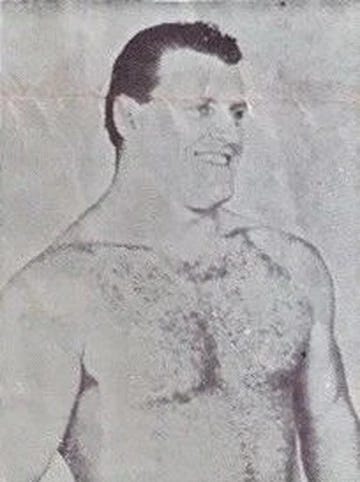
Bronko Lubich 8-11-2007 at the age of 81

Red Bastien 8-11-2010 at the age of 81

7 Stages of The Territory Era
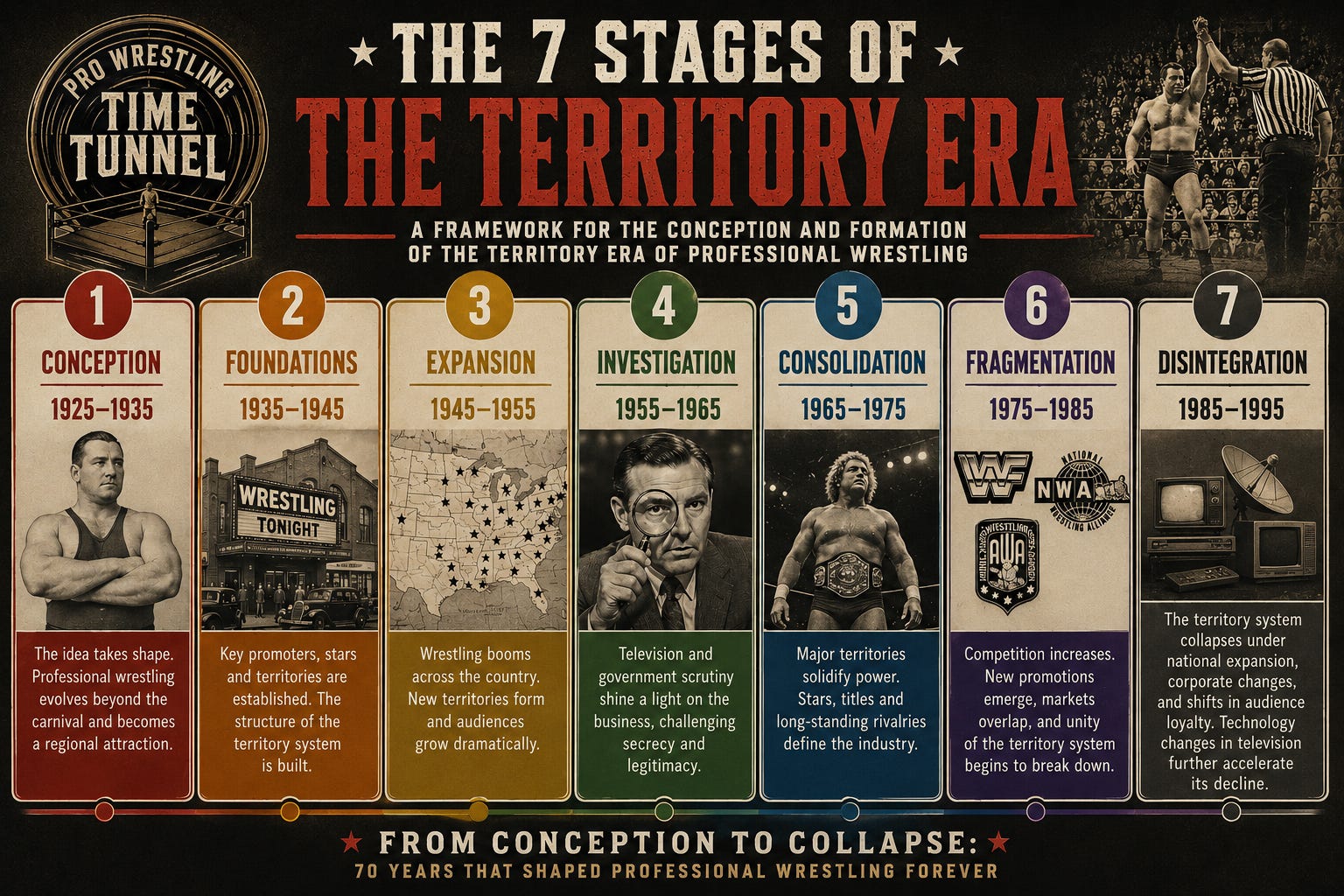
Stage 4: Investigation
August 1956
Year Two Month Eight
The August 1956 NWA Member Convention

The ninth annual National Wrestling Alliance convention convened at the Claridge Hotel in St. Louis, Missouri, on August 31 and September 1, 1956. Approximately thirty-six members comprised the Alliance at the time, with twenty-four promoters present in person. Additional members signed key documents by mail. Sam Muchnick of St. Louis continued as the central organizing force, hosting the gathering in his home city and guiding the proceedings as both president and secretary.
At the time of the ninth annual convention (August 31–September 1, 1956) in St. Louis, the National Wrestling Alliance had 36 members.
Here is a compiled roster of the booking-office owners affiliated around that meeting from membership records:
• Sam Muchnick (St. Louis) – President
• Frank Tunney (Toronto)
• Salvador Lutteroth (Mexico City)
• Sam Avey (Tulsa)
• Orville Brown / George Simpson (Kansas City)
• Pinkie George (Des Moines)
• Al Haft (Columbus, Ohio)
• Fred Kohler (Chicago)
• Max Clayton (Omaha)
• Harry Light (Detroit)
• Dennis Stecher (Minneapolis)
• Morris Sigel (Houston)
• Paul Bowser (Boston)
• Eddie Quinn (Montreal)
• Joe Malcewicz (San Francisco)
• Paul Jones (Atlanta)
• Al Karasick (Honolulu)
• Hugh Nichols (Hollywood)
• Roy Welch & Joe Gunther (Mid-South / Alabama area)
• Billy Wolfe (women’s wrestling booking agent)
• Dave Reynolds (Utah)
• Clarence “Cowboy” Luttrall (Tampa)
• Mike London (Colorado)
• Joseph “Toots” Mondt (New York)
• Rudy Dusek (New York)
• Karl Sarpolis (Amarillo)
• Tex Hager (Boise / Northwest)
• Don Owen (Eugene, Oregon)
• Jim Crockett (Charlotte)
• Bill Lewis (Richmond)
• Cliff Maupin (Toledo)
• Stu Hart (Calgary)
• Rod Fenton (Phoenix)
• Cal Eaton (Los Angeles)
• Pedro Martinez (Buffalo)
(Note: Slight variations appear in different contemporary lists; a few names such as Leroy McGuirk appear in officer roles, and some members like Cal Eaton and Rod Fenton faced later issues with dues and were dropped later in 1956. Billy Watson, though still the reigning world champion at the time of the convention, was no longer listed as an active booking-office member.)
This group of booking-office owners represented the high-water mark of the Alliance’s mid-1950s expansion in talent control and territorial coordination.
The following slate of officers were elected:
President & Secretary: Sam Muchnick (St. Louis)
1st Vice President: Frank Tunney (Toronto)
2nd Vice President: Leroy McGuirk (Tulsa / Oklahoma)
3rd Vice President: Salvador Lutteroth (Mexico City)
Treasurer: Sam Avey (Tulsa)
These positions carried over the structure from the prior year with only minor adjustments.
Key Committees
The most clearly documented committee from the 1956 meeting was the By-Laws Committee, formed specifically to revise the Alliance’s governing documents so they would conform to the Consent Decree.
Its members were:
• Frank Tunney
• Sam Avey
• Pinkie George
• Hugh Nichols
• Fred Kohler
• Karl “Doc” Sarpolis
• Morris Sigel
Earlier conventions had established standing committees that continued to operate in some form, including:
• Championship Committee (heavyweight title)
• World Junior Heavyweight Committee
• Membership Committee
• Grievance Committee
• Rules Committee
Exact 1956 chairmanships for all of these are less completely documented than the By-Laws group, but the pattern of the mid-1950s shows specialized committees handling title recognition, membership applications, and internal disputes.
Legal Representation
Harry N. Soffer was the longtime attorney for the National Wrestling Alliance, based in St. Louis.
He was a local lawyer whose office was at 1301 International Office Building, 722 Chestnut Street. Soffer first became involved with the Alliance around 1953. According to Sam Muchnick, Leonard Schwartz suggested the organization hire counsel to sit in on meetings for advice once antitrust concerns began to surface. Because Soffer had already handled some personal legal work for Muchnick, the membership agreed to retain him for the NWA.
Soffer played a central role in formalizing the Alliance’s bylaws and providing legal guidance during the Department of Justice investigation. At the 1955 St. Louis convention he addressed the membership, recommended changes to the bylaws intended to address monopoly allegations, and took questions from the floor. He continued advising the organization through the negotiations that produced the 1956 Consent Decree and remained the Alliance’s principal legal counsel for years afterward.
In short, he was the St. Louis attorney who served as the NWA’s primary legal advisor during the critical mid-1950s period of government scrutiny.
Leroy McGuirk and the World Junior Heavyweight Title
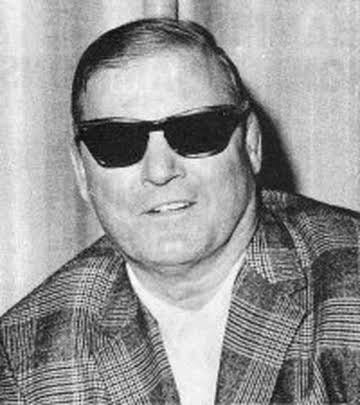
Leroy McGuirk remained the key figure associated with the NWA World Junior Heavyweight Championship. After his career-ending automobile accident in 1950, he stayed deeply involved as a booking-office owner and Alliance officer. He continued to function as the primary booker and coordinator for the junior heavyweight division, working out of the Tulsa office (in partnership with Sam Avey). The title was defended regularly in the Mid-South / Oklahoma region and surrounding territories under that office’s influence. McGuirk’s long-standing control of the junior division is why he held the 2nd Vice President post for much of the decade.
Salvador Lutteroth and Mexican Titles
Salvador Lutteroth, as 3rd Vice President and the dominant figure in Empresa Mexicana de Lucha Libre, oversaw the Mexican side of the Alliance relationship. The NWA recognized Lutteroth’s operation and the major Mexican titles operated under his promotional umbrella. His vice-presidential role gave formal representation to the Mexican offices within the Alliance’s leadership structure.
NWA World Light Heavyweight Title
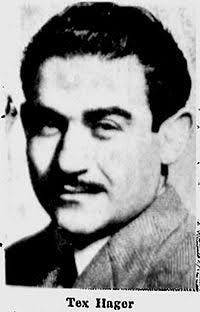
In addition to the major title committees that oversaw the heavyweight and junior heavyweight championships, the Alliance also maintained recognition of a World Light Heavyweight Championship, a division that had been formally sanctioned in the early 1950s. While Leroy McGuirk continued to exercise primary influence over the junior heavyweight title through the Tulsa office and Salvador Lutteroth held growing authority over the Mexican side of the lighter-weight rankings, the Intermountain territory under Tex Hager maintained a strong practical connection to that weight class. Operating from his Boise and later Spokane booking offices, Hager specialized in junior and light heavyweight talent and regularly featured regional titles in those divisions across Idaho, eastern Washington, and surrounding towns. During this period the light heavyweight ranks saw activity in the Northwest, including the lengthy reign associated with Frank Stojack, which overlapped with Hager’s geographic sphere. Formal control of the NWA World Light Heavyweight Championship itself would later consolidate more firmly under Lutteroth and the Mexican office, but in 1956 the division still reflected the broader pattern of specialized booking offices handling particular weight classes and regional styles within the Alliance structure.
Television and Territory Lines
A formal, standing “Television Committee” with a published roster for 1956 is not as clearly documented in surviving records as the By-Laws or Championship groups. However, television agreements were extremely important and were handled primarily at the individual booking-office level rather than through a single centralized NWA television board.
Major offices that controlled significant television outlets (Fred Kohler in Chicago with the DuMont/Marigold shows, the New York group around Toots Mondt and the emerging Capitol Wrestling interests, the Los Angeles offices, etc.) negotiated their own local and regional television contracts. These TV deals often reinforced or effectively defined territory lines because the stations that carried a particular office’s programming created natural geographic markets. Wrestlers appearing on a given television show were then booked into the live towns that the same office controlled. In that sense, television became one of the strongest practical tools for maintaining territorial boundaries even after the Consent Decree formally prohibited exclusive territorial recognition.
The combination of officer roles, specialized committees (especially the 1956 By-Laws Committee), and the practical control exercised by key booking offices over both titles and television is what held the Alliance’s structure together during this transitional year.
The Primary Issue Discussed At The 1956 Convention
The dominant issue confronting the assembled promoters was the formal resolution of the United States Department of Justice antitrust investigation. The Alliance had been under federal scrutiny for alleged monopolistic practices, including the division of territories, restrictions on talent bookings, and measures that limited competition from non-member promoters. Rather than face prolonged litigation that risked dissolving the organization, the membership moved to accept a consent decree. All twenty-four promoters in attendance signed the decree during the convention. Ten others had already signed by mail. Only two members—Joe Malcewicz of San Francisco and Rod Fenton of Phoenix—had not yet affixed their signatures. The document was scheduled for submission to federal court in Des Moines, Iowa, and failure to sign carried the explicit threat of expulsion from the Alliance.
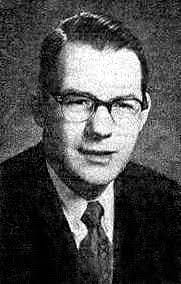
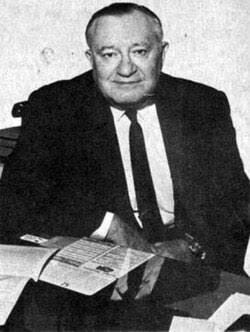
Pictured: Fred Kohler, Chicago Booking Office Owner
The consent decree required the NWA to cease certain restrictive practices while allowing the cooperative structure to continue. In response, the convention established a By-Laws Committee charged with revising the Alliance’s governing documents to conform to the new legal requirements. The committee included Frank Tunney, Sam Avey, Pinkie George, Fred Kohler, Karl Sarpolis, Morris Sigel, and Hugh Nichols. Their work was intended to bring internal rules into alignment with the decree and reduce the risk of further government action.
Officer elections produced continuity rather than upheaval. Sam Muchnick was re-elected president and secretary. Frank Tunney of Toronto remained first vice president. Leroy McGuirk held the second vice presidency, Salvador Lutteroth of Mexico the third, and Sam Avey of Tulsa continued as treasurer. These results confirmed Muchnick’s leadership at a moment when the organization needed a steady hand to navigate the legal settlement and reassure members that the territorial system could survive under modified rules.
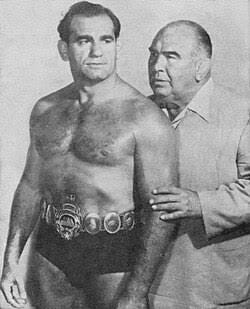
Pictured: NWA World Champion Lou Thesz and Ed “Strangler” Lewis
Practical business matters received attention as well. Twenty-four of the thirty-six members paid their annual dues of one hundred dollars. The membership agreed to continue financial support for Ed “Strangler” Lewis at the rate of seventy-five hundred dollars per year, even though he was no longer traveling regularly with the world champion. Leonard Schwartz and Whipper Billy Watson were no longer listed among the active promoter-members, reflecting changes in their promotional status even as Watson remained the reigning NWA World Heavyweight Champion.
The meeting took place against the backdrop of a functioning but watchful territorial system. Watson’s championship tour continued through major cities, local promotions filled arenas with weekly cards, and television was expanding the audience in key markets. Yet the consent decree and the accompanying bylaws revisions marked a formal acknowledgment that the Alliance’s traditional methods of controlling talent and territory had drawn federal attention. By accepting the decree and committing to internal reform, the promoters sought to preserve the cooperative framework that had defined professional wrestling since 1948 while adapting to external legal constraints.
In the broader context of Stage Four of the Territory Era, the August 1956 convention stands as a pivotal administrative moment. It was not a gathering of crisis or collapse, but one of calculated adjustment. The NWA emerged from St. Louis still intact, still led by Muchnick, and still capable of coordinating a traveling world champion and a network of regional promotions. The legal cloud of the antitrust investigation had been addressed through negotiation rather than dissolution, allowing the territorial system to continue operating under revised rules as the decade moved forward.
The Territorial Conflicts Addressed
The National Wrestling Alliance was built on the principle of territorial exclusivity. Booking-office owners agreed to respect one another’s geographic spheres, exchange talent cooperatively, and present a unified front against outsiders. In theory this reduced costly promotional wars and stabilized the business. In practice, disputes never fully disappeared. By the mid-1950s they had become frequent enough, and the methods used to enforce exclusive control had become aggressive enough, that the federal government took notice.
The core mechanism of control was the booking office itself. Membership required ownership of such an office. The office contracted wrestlers, assigned them to local promoters within its territory, collected booking fees, and enforced suspensions that theoretically applied across the entire Alliance. A wrestler who worked for a non-member or crossed into another member’s territory without permission risked being blacklisted. State athletic commissions, often influenced by the dominant local office, could further restrict licenses and arena access. These tools were effective against independent “outlaw” promotions, but they also created friction among the members themselves.
Several notable disputes illustrate the tensions. In Texas, a prolonged promotional war between Morris Sigel’s Houston-based office and Ed McLemore in Dallas had required sustained Alliance pressure before a settlement was reached in May 1954. The peace agreement divided interests in Dallas and related film rights, but the episode showed how even established members could clash when overlapping claims and local power struggles intensified. On the West Coast, overlapping ambitions involving Cal Eaton, Hugh Nichols, Fred Kohler, and others produced recurring complaints about invasions of towns such as Las Vegas, Albuquerque, and Denver. Members negotiated private understandings—Kohler agreeing to stay out of Las Vegas in exchange for reciprocal restraint elsewhere—with the threat of expulsion hanging over any breach.
Chicago had earlier seen open conflict between Fred Kohler and Leonard Schwartz before both were eventually brought inside the Alliance. New York remained fragmented among multiple booking interests (Toots Mondt, Rudy Dusek, and others) even as Vince McMahon Sr. moved toward greater consolidation. Title recognition itself could become a proxy for territorial leverage, as when the California commission briefly recognized Leo Nomellini after a disputed finish with Lou Thesz in 1955, forcing a clarifying rematch.
The most consequential challenge came from outside the membership. Complaints by wrestlers and independent promoters—most notably Sonny Myers’s 1955 antitrust suit against Pinkie George and the Alliance—helped fuel a Department of Justice investigation. Investigators documented practices that included formal recognition of exclusive territories, coordinated exclusion of non-members, control over booking markets, blacklisting, and pressure on athletic commissions. The resulting consent decree, formally entered in October 1956 after the St. Louis convention, prohibited the Alliance and its members from recognizing exclusive territorial rights, preventing others from operating in any area, restricting bookings to members only, or engaging in related discriminatory practices.
The decree did not instantly dissolve the territorial system. Many members continued to observe informal boundaries through handshake agreements and private understandings. Yet the legal framework had changed. Muchnick later acknowledged that the Alliance could no longer formally intervene in territorial disputes the way it once had. Membership began to decline in the years immediately following the decree, partly because the organization could offer less protection of exclusive control. Disputes continued—over towns, talent, and title recognition—but they now operated under greater legal constraint and with reduced ability for the Alliance to enforce collective discipline.
In the context of Stage Four of the Territory Era (Investigation), these conflicts reveal the inherent tension in the NWA model. The cooperative structure that produced rapid growth from a handful of Midwest booking offices in 1948 to a 36-member continental network by 1956 also generated the practices that invited federal scrutiny. Territorial disputes were not aberrations; they were the predictable byproduct of an organization whose primary strength—and primary vulnerability—was the coordinated control of talent and geography. The 1956 consent decree marked the moment when that system was forced to adapt, even if the underlying territorial logic persisted in quieter forms for years afterward.
Thank You for Watching and Listening
I’m Tony Richards, Pro Wrestling Historian, Author and Storyteller. I share pro wrestling historical items in each issue of the Time Tunnel Pro Wrestling History Newsletter and each episode of our podcast show. Thanks for your support! If you enjoy my information on select events, matches and insights, please share with folks you think might like to be a subscriber!
Remember, Premium subscribers get access to exclusive and special content such as some special issues including a multi-part deep dives on wrestling territories, wrestler bios and championship title histories, special audio and video interviews on territory pro wrestling and more available in the Pro Wrestling Time Tunnel for Premium Subscribers. Being a Premium Subscriber also means you support me in my efforts to document Pro Wrestling History through my research, writing, books, vidoes and podcasts. And…I have something very special planned for our Premium Subscribers on the Podcast side of things in 2026! Details soon here in the Pro Wrestling Time Tunnel.