


Today’s Favorite Quote: In any negotiation, be clear about where you stand from the beginning. There’s no short-term gain that’s worth the long-term erosion of trust that occurs when you go back on the expectation you created early on - Robert Iger
Happy Birthday to those who have passed on and to those great wrestlers still with us:
In Memoriam:
Wally Dusek 1909
Jim Crockett, Jr 1944
Bret Wayne Sawyer 1960
Nicole Bass 1964
Happy Birthday:
Fred Ottman\Typhoon (70)
Savio Verga (62)
Michael DiPoli\Roadkill (50)
Wade Barrett (46)
RIP Memorial: We stop & remember those who have passed on this day and gave themselves to the business for us, the fans. We salute you and thank you.
Steve Muslin\Steve Travis 8-10-2018 at the age of 68

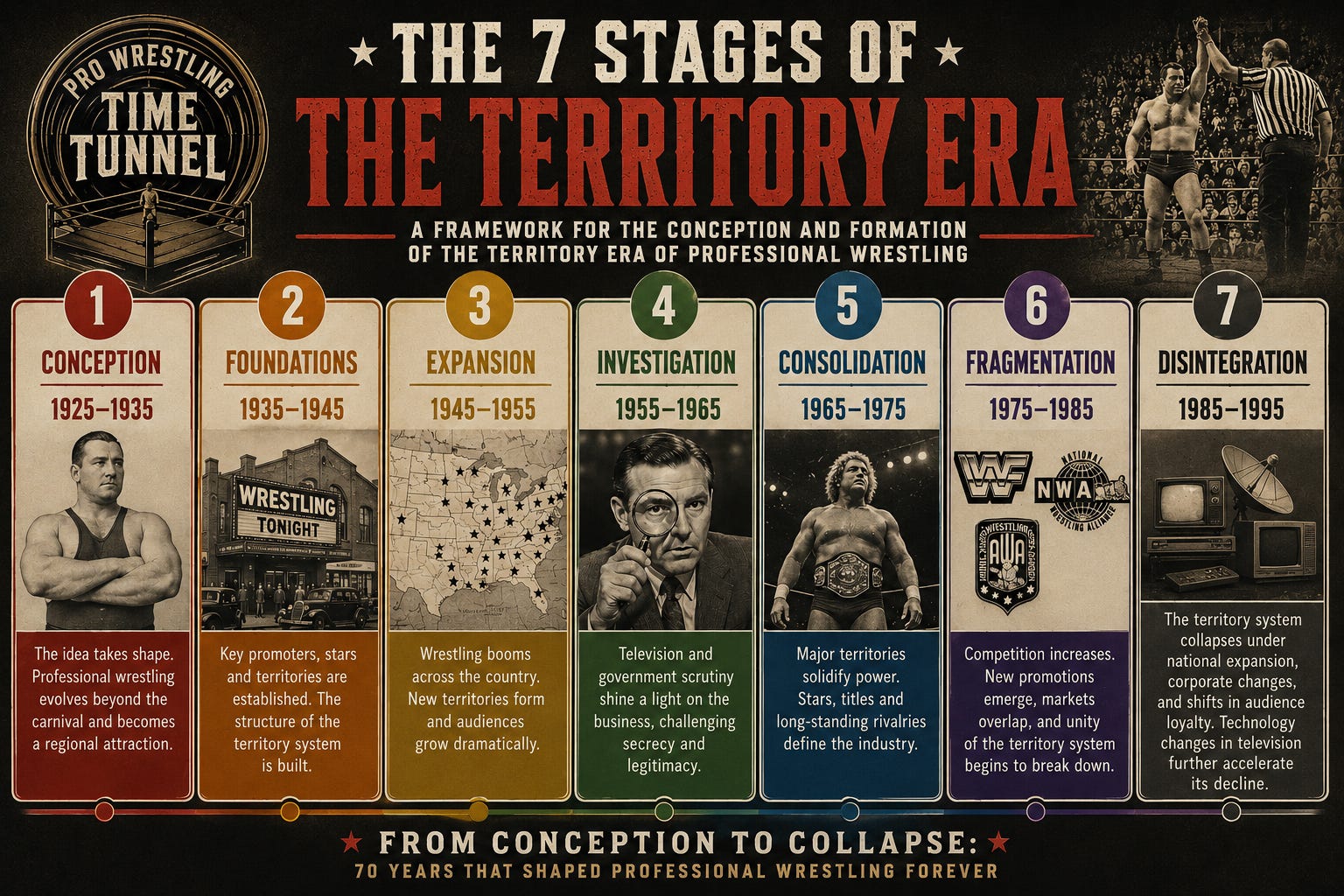
7 Stages of The Territory Era
Stage 4: Investigation
August 1956
Year Two, Month Eight
In the framework of the 7 Stages of the Territory Era, August 1956 continued the investigative phase of the mid-1950s, when the National Wrestling Alliance’s cooperative territorial system remained the dominant structure of professional wrestling across North America while facing growing external scrutiny and internal adaptation. The month opened with Whipper Billy Watson firmly established as NWA World Heavyweight Champion, a reign that began in March when he dethroned Lou Thesz in Toronto. Watson’s championship tour through August illustrated the alliance’s ideal of a traveling world title that legitimized local promotions without permanently disrupting their regional hierarchies. He defended the belt in major markets, blending decisive victories with strategic draws that protected both the champion and the local stars who challenged him.
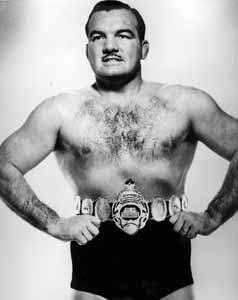
Pictured: NWA World Heavyweight Champion, Whipper Billy Watson
Watson’s August itinerary carried him from Toronto to the American Southwest and the West Coast. On August 2 at Maple Leaf Gardens he defeated Dick Hutton by count-out. Six days later at the Olympic Auditorium in Los Angeles he wrestled Lou Thesz to a ninety-minute time-limit draw, a high-profile encounter that allowed two of the era’s most respected scientific wrestlers to showcase their craft before a West Coast audience still adjusting to Watson’s reign. The following night in Amarillo he defeated Dory Funk by disqualification, and on August 10 in Houston he went to a ninety-minute draw with local favorite Pepper Gomez. On August 14 at the Dallas Sportatorium Watson defeated Buddy Rogers in a two-out-of-three-falls contest after Rogers won the first fall and was then counted out in the second, unable to continue. These defenses reinforced Watson’s credibility while giving regional heroes such as Gomez, Funk, and Rogers the platform of a world-title challenge that elevated their own standing with local fans.
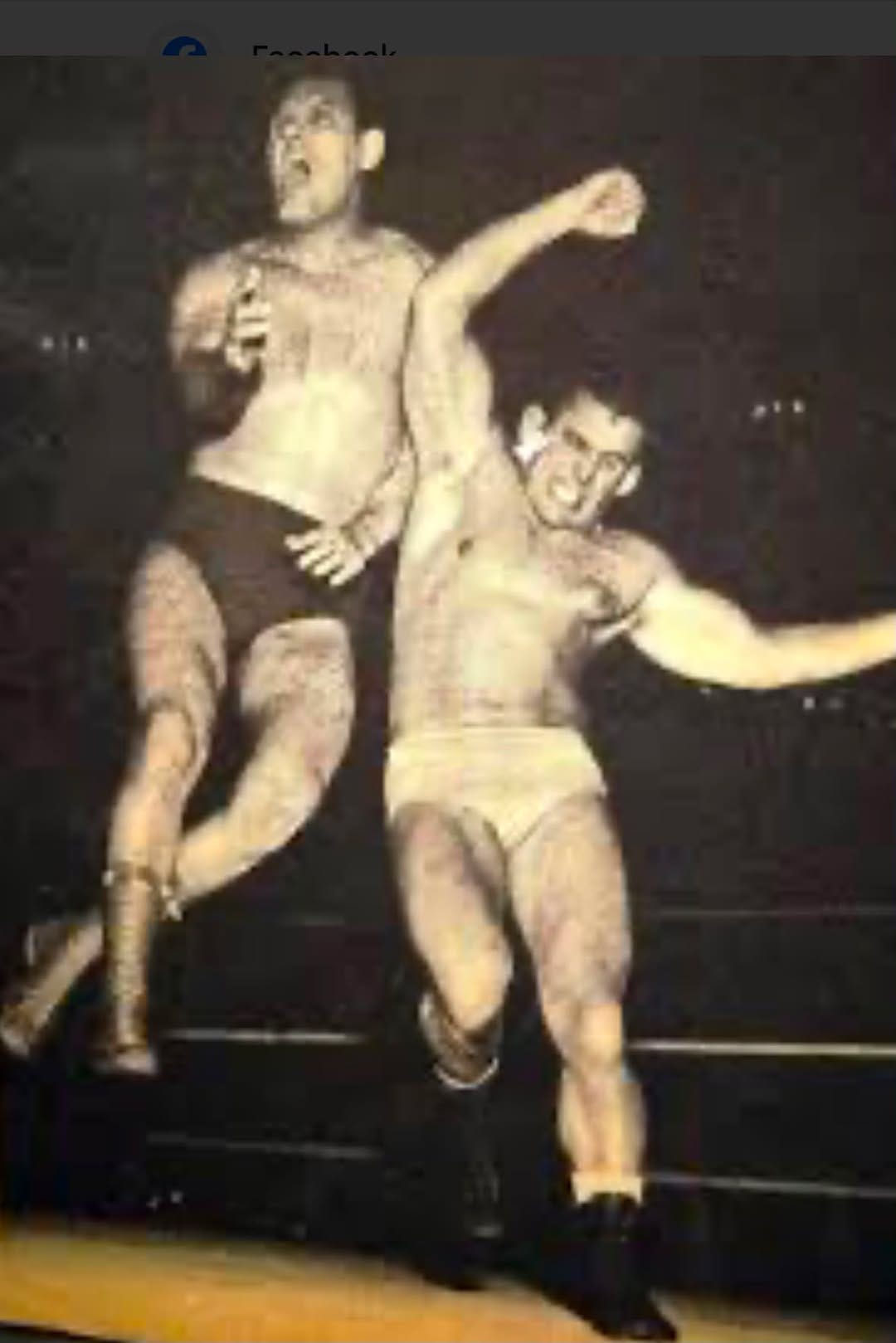
Pictured: Edouard Carpentier ctaches Killer Kowalski coming off the ropes
Canada remained one of the strongest pillars of the territorial system. In Montreal, Eddie Quinn’s promotion continued to draw massive outdoor crowds at Delorimier Stadium. On August 8 more than twenty thousand fans watched a card headlined by a no-contest between Montreal World Heavyweight Champion Killer Kowalski and the rising French star Édouard Carpentier after the referee was injured. One week later, on August 15, Carpentier defeated Kowalski by disqualification with former heavyweight boxing champion Rocky Marciano serving as special referee before another enormous crowd exceeding twenty-one thousand. These cards demonstrated how Canadian promoters blended international talent, local favorites, and celebrity referees to create summer spectacles that rivaled any American outdoor show. In Toronto, Maple Leaf Wrestling under Frank Tunney kept Watson active while also presenting Antonino Rocca in a curfew draw with Carpentier on August 23, linking the Canadian circuit to the Northeast talent pool.
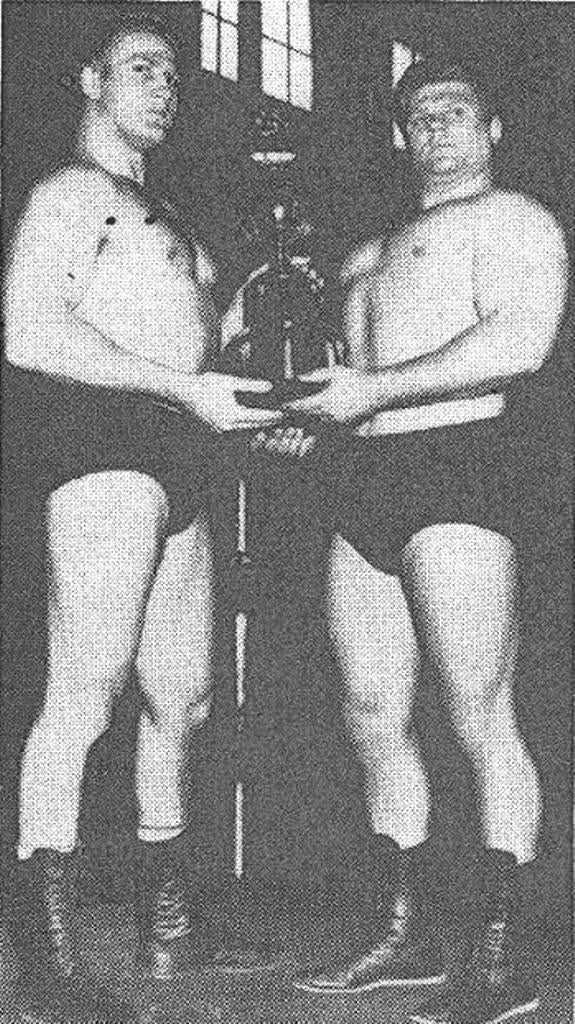
Pictured: NWA Tag Team Champions Reggie and Stan Lisowski
The Midwest produced consistent action that reflected both the scientific and the brawling styles popular in the region. In Chicago and its surrounding markets, Fred Kohler’s operation featured the Lisowski Brothers (Reggie and Stan) as dominant tag-team champions. On August 4 at Milwaukee’s County Stadium a large outdoor crowd witnessed the Lisowskis successfully defend their titles against Hans Schmidt and Dick the Bruiser. That same card saw Antonino Rocca defeat Angelo Poffo and Verne Gagne defeat NWA United States Heavyweight Champion Wilbur Snyder by disqualification, with former boxing great Jack Dempsey serving as special referee for the latter bout. Later in the month at the International Amphitheater the Lisowskis defeated Rocca and Snyder, underscoring the rough, hard-hitting tag-team wars that packed houses across the Midwest. Gagne’s continued presence as a top babyface and occasional challenger for regional titles kept the territory’s prestige high even as the world title remained elsewhere.
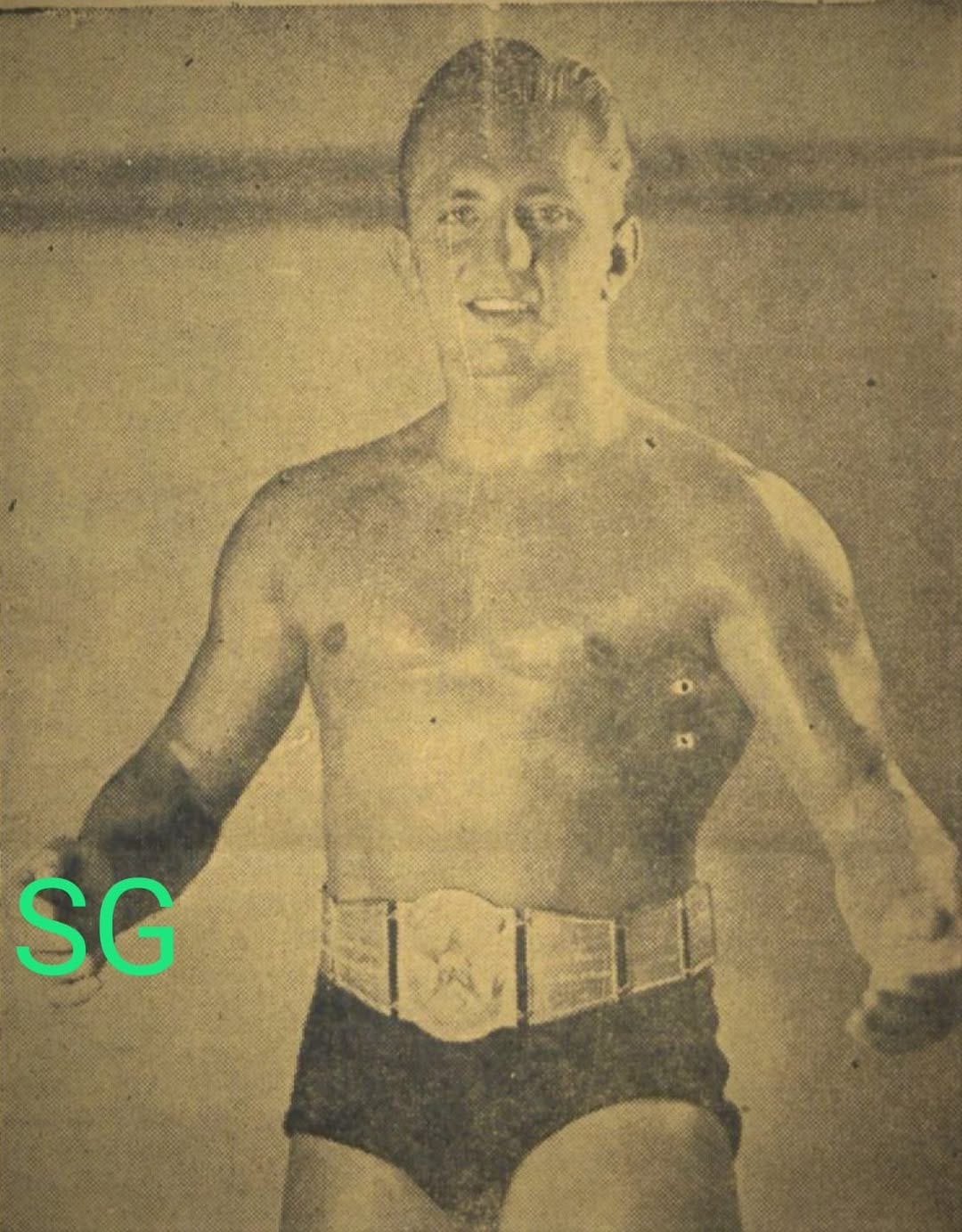
Pictured: Buddy Rogers NWA Texas Heavyweight Champion
**Photo Credit: Scott George
In the Southwest, Texas remained a vibrant territory under promoters such as Ed McLemore in Dallas and Morris Sigel in Houston. Buddy Rogers continued his strong run, earning a world-title opportunity against Watson after earlier victories. Tag-team activity stayed lively, with Duke Keomuka and Tony Martin carrying a version of the NWA Texas Tag Team Championship into the month after their late-July capture. Matches involving Pepper Gomez, Johnny Valentine, Gene Kelly, and various combinations of local and traveling talent filled the Sportatorium and Sam Houston Coliseum week after week, maintaining the hard-edged, story-driven style that Texas fans expected.
The Northeast, still in the process of consolidation under Vince McMahon Sr. and Toots Mondt’s Capitol Wrestling Corporation, continued to benefit from the television expansion that had begun in late June. Antonino Rocca remained the central attraction. On August 6 at Griffith Stadium in Washington he defeated Karl von Hess in a two-out-of-three-falls match before more than eight thousand fans. Rocca also appeared in Baltimore and other regional stops, sometimes teaming with Verne Gagne against heels such as Hans Schmidt and Killer Kowalski. The WABD Channel 5 television presence continued to introduce new fans to the product while driving live attendance. McMahon’s gradual unification of the previously fragmented New York promotional landscape proceeded steadily, with Mondt’s booking expertise and Rocca’s star power forming the creative and commercial core of the operation. Supporting figures in New Jersey and surrounding markets helped maintain the weekly schedule of armory and smaller-arena shows that fed talent into the larger television and Garden-level events.
On the West Coast, NWA Los Angeles under Cal Eaton and related California promotions ran frequent cards in Los Angeles, Pasadena, Santa Monica, Bakersfield, and San Francisco. The Olympic Auditorium remained a key venue, hosting Watson’s draw with Thesz and numerous mid-card and main-event matches featuring local and traveling talent. Further north, Pacific Northwest towns such as Seattle and Portland continued their regular weekly schedules with a mix of regional stars and occasional imports. In Hawaii, Al Karasick’s Mid-Pacific promotion maintained its island circuit, connecting the Pacific to the broader NWA network.
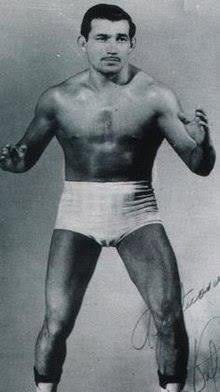
Pictured: Rolando Vera NWA World Middleweight Champion
Mexico’s Empresa Mexicana de Lucha Libre under Salvador Lutteroth sustained its distinctive lucha libre tradition while remaining affiliated with the NWA for world-title recognition. August cards at Arena México and Arena Coliseo featured ongoing middleweight title activity. On August 12 Rolando Vera defeated El Santo for the NWA World Middleweight Championship, only for the athletic commission later to overturn the result amid controversy over Santo’s condition and the frequency of his defenses. The episode illustrated both the intense weekly schedule of Mexican wrestling and the occasional intervention of athletic commissions in championship outcomes. Women’s and lower-division tournaments continued alongside the main events, keeping the arenas full and the product culturally distinct from its North American counterparts.
In Japan, the Japan Pro Wrestling Alliance under Rikidōzan continued its post-war rise. Rikidōzan’s combination of strong-style power and carefully selected international opponents kept crowds large in Tokyo and other major cities. The JPWA’s relationship with the NWA provided occasional talent exchanges that reinforced the global reach of the alliance even as Japanese wrestling developed its own identity and fan culture.
![American family watching television, 1958 [1152×1071] : r/HistoryPorn](https://substackcdn.com/image/fetch/$s_!3oGF!,f_auto,q_auto:good,fl_progressive:steep/https%3A%2F%2Fsubstack-post-media.s3.amazonaws.com%2Fpublic%2Fimages%2Fdfc04a3e-a889-4314-ab4f-80abbcee9b7f_640x595.jpeg "American family watching television, 1958 [1152×1071] : r/HistoryPorn")
Television’s growing importance remained a defining feature of Stage Four. McMahon’s Northeast expansion through WABD continued to demonstrate that carefully produced television could build stars and increase live gates rather than simply cannibalize them. Other territories maintained local or regional television arrangements that served similar purposes on a smaller scale. The medium rewarded wrestlers with distinctive styles—Rocca’s aerial athleticism, Carpentier’s gymnastics, Watson’s methodical power, the Lisowskis’ brawling intensity—and helped create household names that transcended individual cities.
August 1956 closed with the NWA’s annual membership meeting in St. Louis (which I will be writing about in tomorrow’s Chronicle) at the end of the month, where Sam Muchnick and the assembled members reviewed the state of the alliance. The gathering occurred against the backdrop of the consent decree that had formalized certain restrictions on the NWA’s practices earlier in the year. Promoters continued to operate their territories with relative autonomy while sharing the prestige of a single world champion and the benefits of talent exchange. The system still functioned effectively: Watson traveled, local heroes received world-title opportunities, outdoor stadiums filled in Montreal and Milwaukee, television expanded the audience in the Northeast, and international partners in Mexico and Japan maintained their own vibrant scenes.
The month therefore captured the territorial era at a moment of confident operation tempered by awareness of external pressures. The Investigation stage was not yet fragmentation or disintegration; it was a period of careful navigation, media adaptation, and continued cooperation under the NWA banner. August 1956 showed the machine still running smoothly—weekly cards across the continent and beyond, a traveling world champion who lent legitimacy without destroying local business, and promoters who understood how to balance the demands of television, live gates, and regulatory scrutiny. The foundations remained solid even as the first subtle tests of the system’s long-term resilience continued to appear on the horizon.
Thank You for Watching and Listening
I’m Tony Richards, Pro Wrestling Historian, Author and Storyteller. I share pro wrestling historical items in each issue of the Time Tunnel Pro Wrestling History Newsletter and each episode of our podcast show. Thanks for your support! If you enjoy my information on select events, matches and insights, please share with folks you think might like to be a subscriber!
Remember, Premium subscribers get access to exclusive and special content such as some special issues including a multi-part deep dives on wrestling territories, wrestler bios and championship title histories, special audio and video interviews on territory pro wrestling and more available in the Pro Wrestling Time Tunnel for Premium Subscribers. Being a Premium Subscriber also means you support me in my efforts to document Pro Wrestling History through my research, writing, books, vidoes and podcasts. And…I have something very special planned for our Premium Subscribers on the Podcast side of things in 2026! Details soon here in the Pro Wrestling Time Tunnel.