



Today’s Favorite Quote: Other than mastering your own emotions & physical health, there is nothing I can think of that is more important than learning to master your relationships - Tony Robbins
Happy Birthday to those who have passed on and to those great wrestlers still with us:
In Memoriam:
Lord Alfred Hayes 1928
Frank Fuller 1929
Charles Wolfe Jr\Gino Hernandez 1957
Happy Birthday:
Rena Lesnar\Sable (58)
Scott D’Amore (52)
Shayna Baszler (46)
Joe Ruby\Joe gacy (39)
Rinku Singh\Veer Mahan (38)
RIP Memorial: We stop & remember those who have passed on this day and gave themselves to the business for us, the fans. We salute you and thank you.
Ed “Strangler” Lewis 8-8-1966 at the age of 75
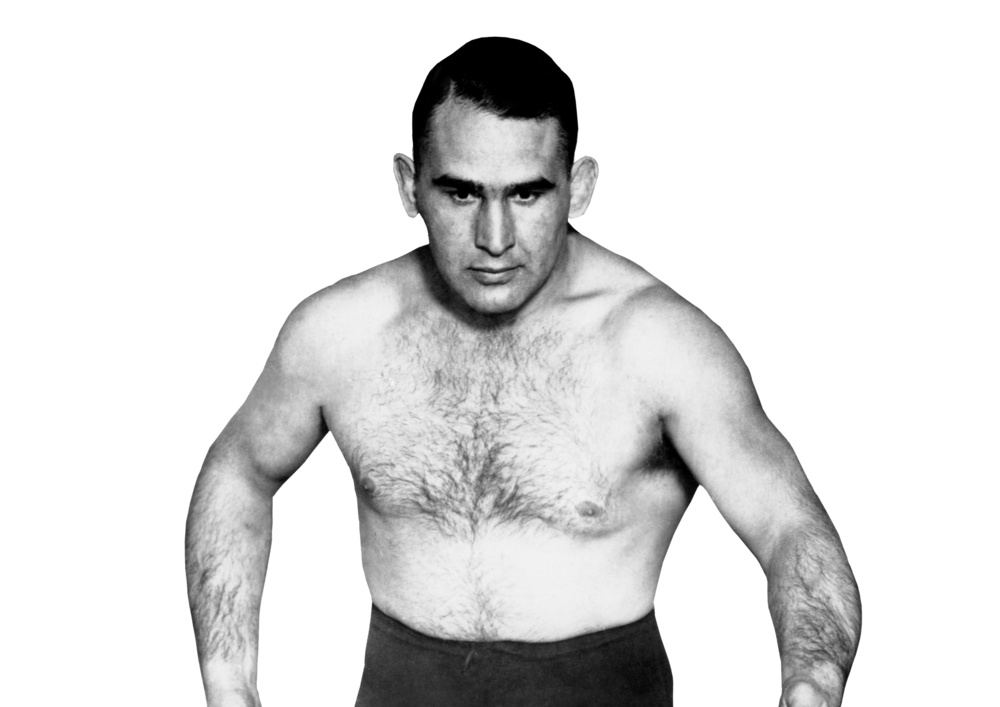
Ken Fenelon 8-8-1972 at the age of 63

Significant Debuts:
“Exotic” Adrian Street 8-8-1957 at the age of 17
Riki Choshu 8-8-1974 at the age of 23
Chigusa Naguyo 8-8-1980 at the age of 16
The Life and Career of Theresa Theis
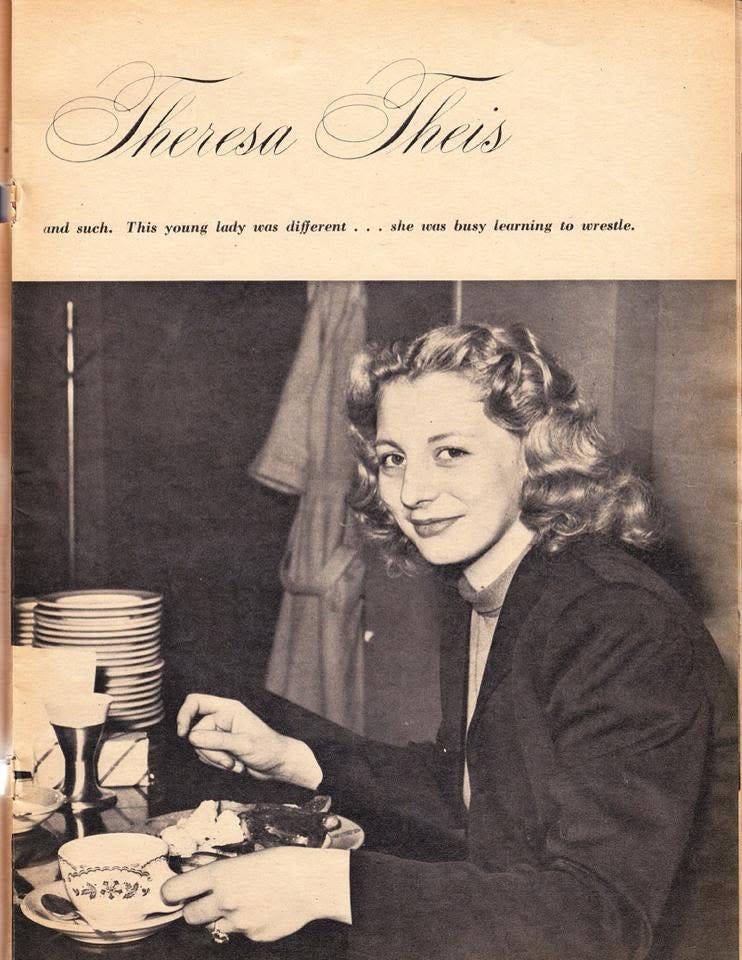
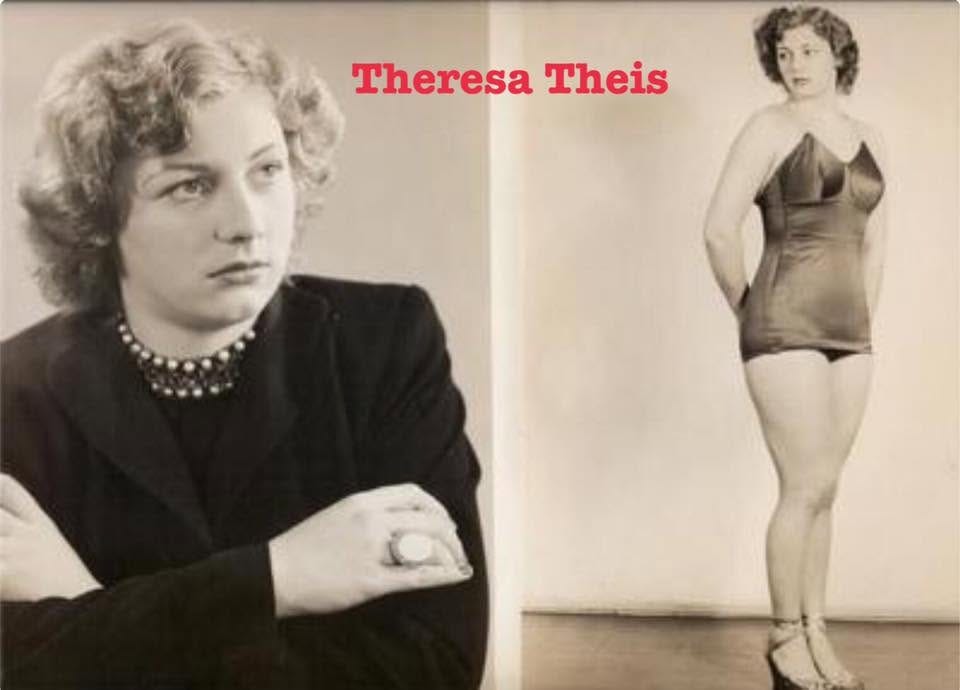
Theresa Theis was an American professional wrestler who competed primarily in the post-World War II territory era of women’s wrestling. Born November 23, 1930, in the United States, she stood 5 feet 9 inches and weighed approximately 141 pounds during her career. She debuted around 1947 and remained active until 1962, compiling roughly fifteen years of in-ring experience across multiple regional promotions. She died on August 7, 1999, at the age of 68.
Theis belonged to the generation of women who worked the undercard and midcard of house shows and television programs during a period when women’s matches were still a regular, if secondary, feature of most major territories. She never held a recognized world title, yet she repeatedly shared the ring with the dominant champions and top draws of her time—Mildred Burke, Slave Girl Moolah (later the Fabulous Moolah), June Byers, and Penny Banner—serving as a reliable opponent who could put over established stars while occasionally scoring wins against lesser-known competitors.
Early Career and the Late 1940s–Early 1950s
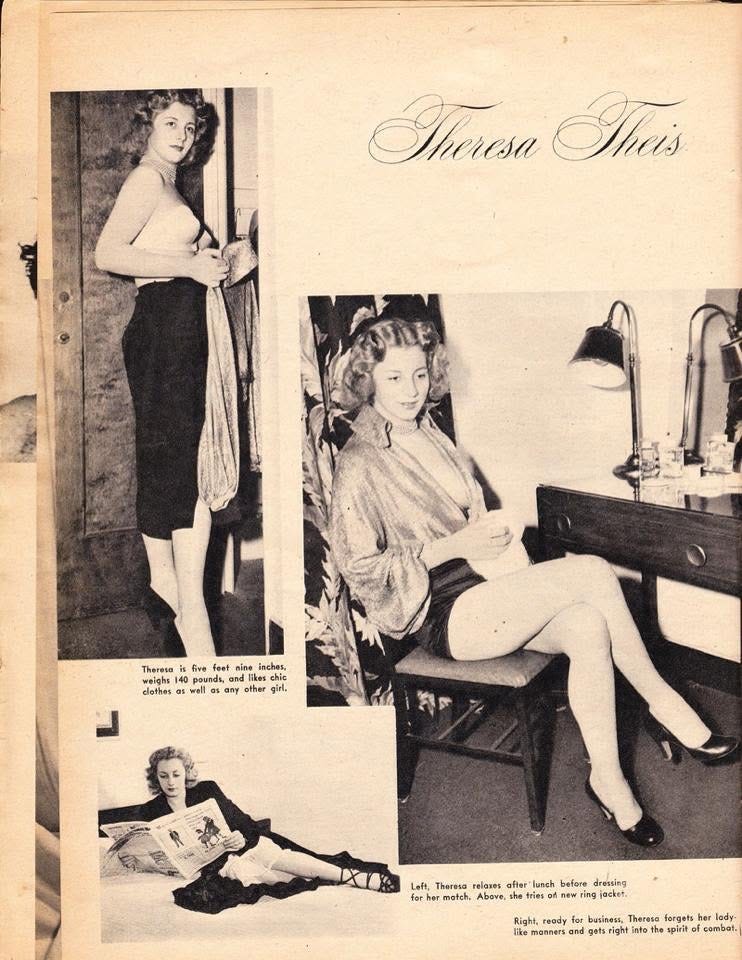
Theis entered the professional ranks in the late 1940s, a transitional period for women’s wrestling. Mildred Burke still reigned as the dominant champion and promotional force, while the infrastructure of the National Wrestling Alliance territories was solidifying. Available records show Theis active by 1948, working a mixture of singles and multi-woman matches in the Midwest and South.
By the early 1950s she was appearing regularly in Minnesota, Nebraska, Missouri, and the Mid-Atlantic. On November 29, 1952, in Teaneck, New Jersey, she challenged Mildred Burke for the World Women’s Title and was defeated. Similar title losses to Burke followed in April 1953 in both Lincoln, Nebraska, and St. Paul, Minnesota. These matches placed her among the group of credible challengers used to reinforce Burke’s supremacy during the final years of her long reign.
She also worked multi-woman battle royals and tag matches, including appearances in Texas and the Carolinas. Her early record reflects the typical pattern of a solid hand: competitive wins against regional talent mixed with decisive losses to the established hierarchy.
Mid-1950s Territory Work
The mid-1950s saw Theis travel widely. She appeared for Championship Wrestling from Florida (CWF), facing names such as Bonnie Watson and Mars Bennett (the latter ending in a television draw in Tampa). She also worked Jim Crockett Promotions in the Carolinas and Virginia, where she engaged in a series of matches with Bonnie Watson in early 1957, scoring several two-out-of-three-falls victories before later losing to Slave Girl Moolah in Greenville, Norfolk, and Richmond.
Moolah, still billed as Slave Girl Moolah at the time, was rising under the booking influence of Billy Wolfe’s network and later her own independent operation. Theis’s losses to her were consistent with the role many women filled: providing credible opposition that allowed the future multi-decade champion to look strong without requiring prolonged programs.
In 1958 Theis appeared in NWA Mid-America (the Memphis territory), exchanging wins and losses with the character known as Princess Vampire. She also worked Ohio and other Midwestern towns, continuing the pattern of steady regional bookings rather than long-term main-event runs in any single promotion.
Later Years and Challenges to June Byers
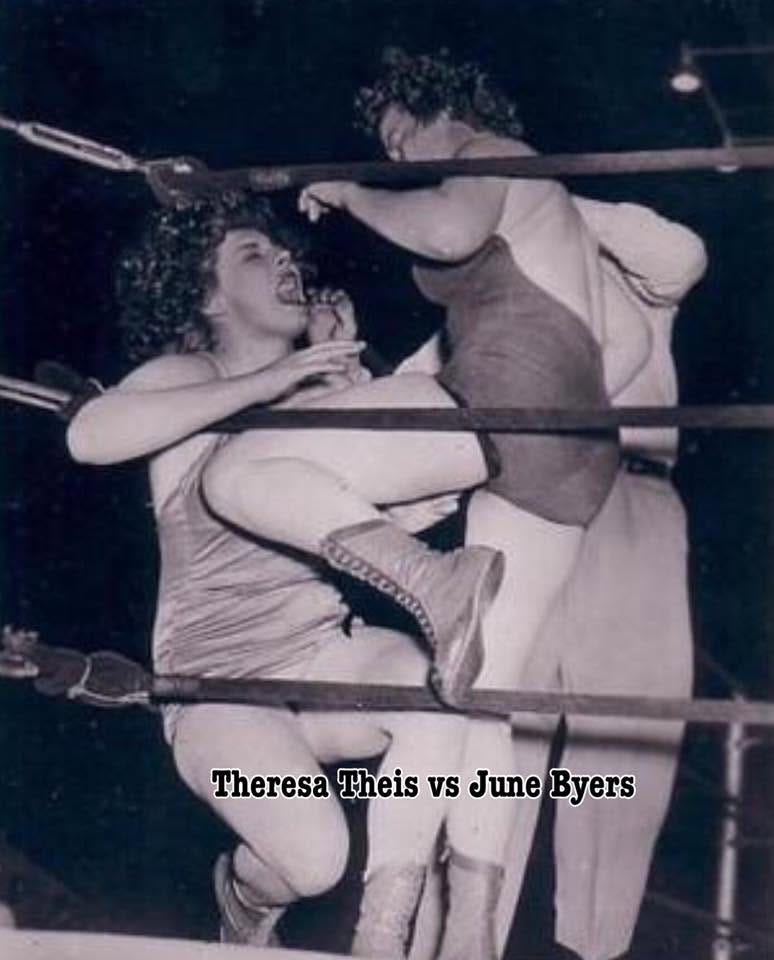
Pictured: Theresa Theis is backed into the corner and takes a vicious knee from June Byers
By the late 1950s and early 1960s the women’s title picture had shifted. June Byers had claimed the championship after the controversial 1954 match with Mildred Burke, and Theis later challenged Byers on multiple occasions. Documented title matches include a March 1961 loss in Terre Haute, Indiana, a November 1961 loss in Vancouver, British Columbia, and a final recorded World Women’s Title bout on July 24, 1962, in Reno, Nevada, again resulting in a loss to Byers.
In between these high-profile challenges she continued to work midwestern cards. In 1960 she scored a twenty-minute win over Jackie Hammond in Milwaukee and lost to Penny Banner on the same circuit. These appearances illustrate the dual function many women performed: occasionally elevated for title programs when a credible local or traveling challenger was needed, then returned to the undercard against other mid-level talent.
Style, Role, and Place in the Territory System
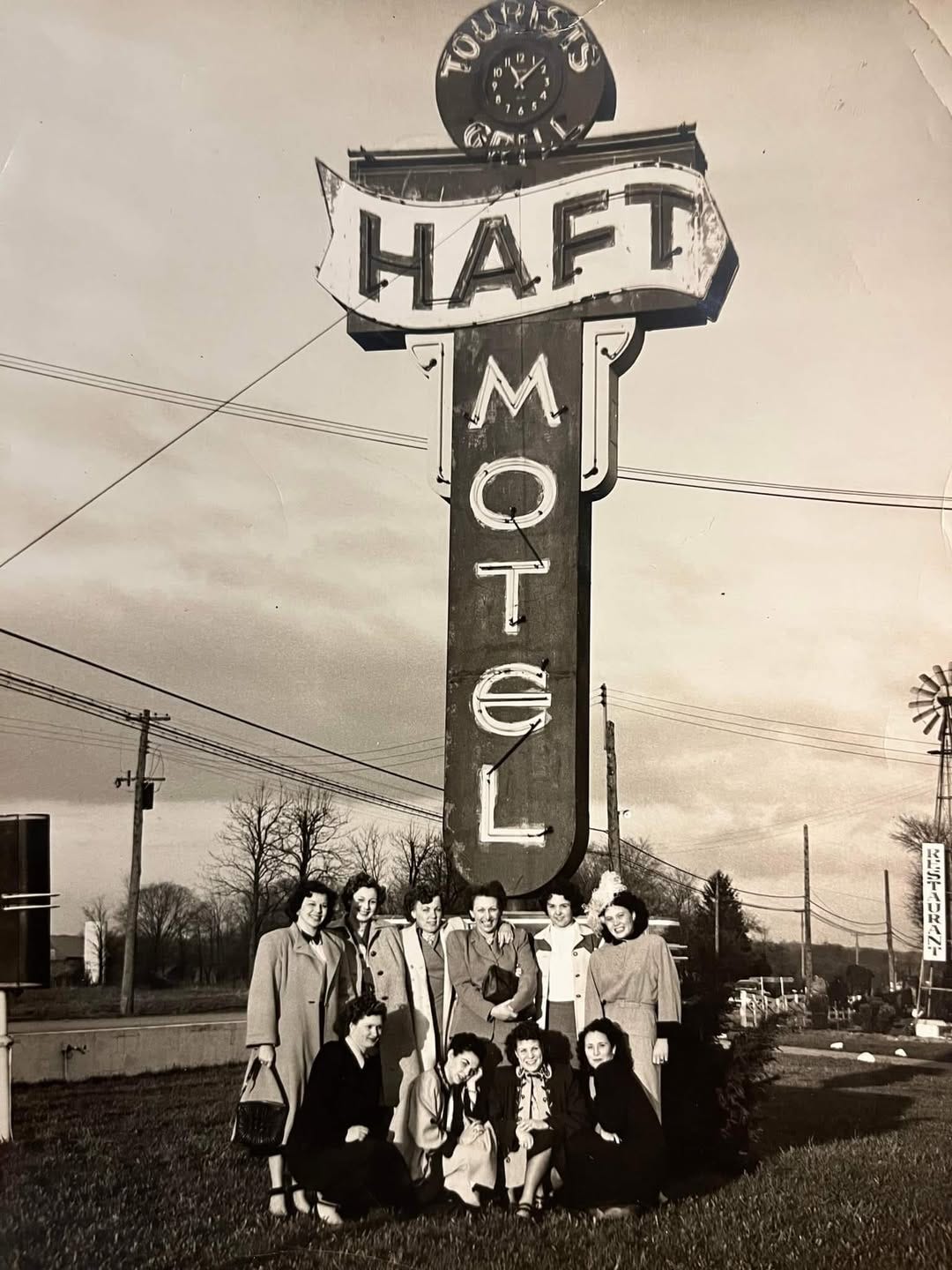
Pictured: Front Row: Dot Dotson, Lillian Ellison, Violet Viann, Celia Blevins
Back Row: Juanita Coffman, Theresa Theis, June Byers, Elvira Snodgrass, Catherine Simpson, and Mae Weston
In Front or the old Haft Motel where the Wrestlers often stayed.
Booking patterns indicate Theis was a competent, athletic performer capable of working longer matches when required. She was not positioned as a charismatic top star or a dominant heel, but rather as a dependable professional who could deliver competitive contests and protect the hierarchy. In an era when women’s matches were often limited to one or two per card and when travel was relentless, such reliability was essential to keeping the division viable across dozens of independent and NWA-affiliated promotions.
Her career overlapped the decline of Mildred Burke’s direct promotional control, the rise of June Byers, and the early consolidation of power by the future Fabulous Moolah. Theis worked under all three dominant figures of the period without becoming closely identified with any single promotional faction. This independence was common among the rank-and-file women who moved from territory to territory as bookings dictated.
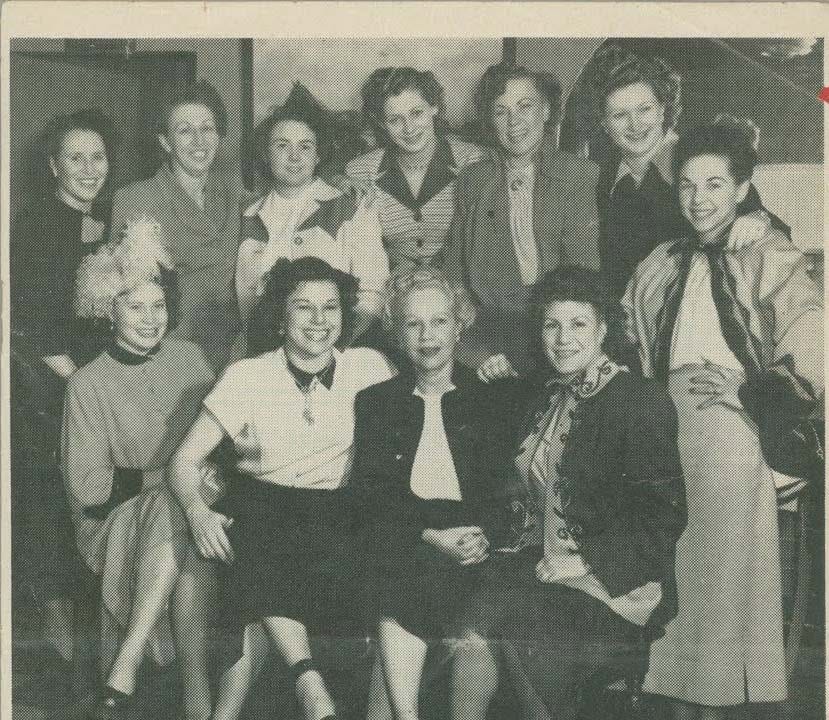
Pictured: This Group Shot includes some of the Greatest in Women’s Wrestling History, all of these ladies we’re originally trained by Billy Wolfe.
Back Row: Cecelia Blevins, Elvira Snodgrass, Catherine Simpson, Theresa Theis, June Byers, Dot Dotson, and Lillian Ellison better known as The Fabulous Moolah.
Front Row: Mae Weston, Juanita Coffman, unknown, and Violet Viann.
Retirement and Legacy
Theis’s final documented matches occurred in 1962. At approximately thirty-one or thirty-two years of age she stepped away from the ring after fifteen years of continuous work. Like many of her contemporaries, she left behind limited personal publicity, few recorded interviews, and almost no surviving film of her matches. What remains is the paper trail of results preserved in databases and occasional contemporary newspaper notices—such as a 1960 advertisement for a June Byers title defense against her in Mentone, Indiana.
Personal Life and Marriage To Ray Stevens
Beyond the ring, Theresa Theis’s life was closely intertwined with one of professional wrestling’s most colorful characters. In 1952 she married Carl Raymond Stevens—better known as Ray “The Crippler” or “Blond Bomber” Stevens—when he was just seventeen and she was already an established performer on the women’s circuit. At a time when Stevens was still developing his craft, Theis not only shared a personal life with him but also worked as one of his early trainers, helping shape the skills that would later make him a major star in San Francisco, the AWA, and beyond.
The marriage lasted two decades, ending in divorce in 1972. Yet the connection between them endured. In 1995, after Stevens suffered serious health problems (including a heart attack the previous year and subsequent quadruple-bypass surgery), he returned to California and moved back in with Theis. She was with him during the final months of his life. When Stevens died in his sleep of heart failure on May 3, 1996, at his home in Fremont, Theis offered a clear-eyed and affectionate assessment of the man she had known for more than forty years. Speaking to the Wrestling Observer, she said: “He had one of the most fun lives of anybody who ever lived. He made a lot of money. He spent a lot of money. And he traveled the world. He was really something special in the wrestling business.”
Theis herself passed away three years later, on August 7, 1999, at the age of 68. Her long association with Stevens—first as wife and trainer during his formative years, later as a steady presence in his final chapter—adds a human dimension to a career otherwise defined by the demanding travel and limited recognition that characterized so many women working the territories in the 1940s, 1950s, and early 1960s.
Legacy
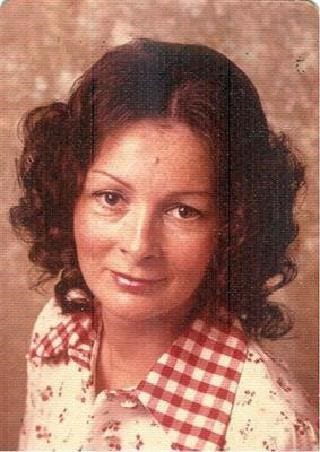
Theresa Theis represents the large cohort of skilled but largely unsung women who filled the women’s divisions of the territory era. Without performers willing to travel, lose cleanly to champions, and still deliver entertaining matches against one another, the women’s wrestling product of the 1940s, 1950s, and early 1960s could not have sustained itself. Her career, spanning the late Burke years through the early Byers and Moolah eras, places her squarely in the working middle of that history—neither a headline champion nor a fleeting novelty, but a professional who helped keep the cards running for a decade and a half.
One Thing I Learned About Ed “Strangler” Lewis
He developed his legendary (and dreaded) headlock primarily with his left arm—even though he was naturally right-handed—because he practiced the moves in front of a mirror while studying a wrestling instructional book by the original 19th-century star Evan “Strangler” Lewis.
To make the illustrations appear correct when viewed in the mirror, young Robert Friedrich (his real name) reversed the techniques. The left-arm version stuck, and it became the signature hold that helped define his career and terrify opponents for decades.
Thank You for Watching and Listening
I’m Tony Richards, Pro Wrestling Historian, Author and Storyteller. I share pro wrestling historical items in each issue of the Time Tunnel Pro Wrestling History Newsletter and each episode of our podcast show. Thanks for your support! If you enjoy my information on select events, matches and insights, please share with folks you think might like to be a subscriber!
Remember, Premium subscribers get access to exclusive and special content such as some special issues including a multi-part deep dives on wrestling territories, wrestler bios and championship title histories, special audio and video interviews on territory pro wrestling and more available in the Pro Wrestling Time Tunnel for Premium Subscribers. Being a Premium Subscriber also means you support me in my efforts to document Pro Wrestling History through my research, writing, books, vidoes and podcasts. And…I have something very special planned for our Premium Subscribers on the Podcast side of things in 2026! Details soon here in the Pro Wrestling Time Tunnel.