


Today’s Favorite Quote: Happiness lies not in the mere possession of money; it lies in the joy of achievement, in the thrill of creative effort - Franklin D. Roosevelt
Happy Birthday to those who have passed on and to those great wrestlers still with us:
In Memoriam:
The Original “Masked Marvel\Mort Henderson 1879
Mort Henderson The Original Masked Marvel 1915
Tiger Conway, Sr 1932
“The Alaskan” Jay York 1938
“The Lawman” Don Slatton 1938
Happy Birthday:
Dean Simon\Malenko (66)
Kensuke Sasaki (60)
Frankie Kazarian (49)
Sam Stoker\Kit Wilson (32)
RIP Memorial: We stop & remember those who have passed on this day and gave themselves to the business for us, the fans. We salute you and thank you.
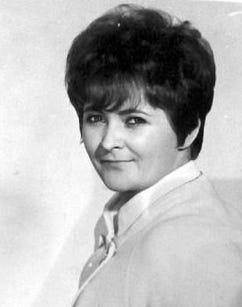
Jean Antone 8-4-2016 at the age of 73
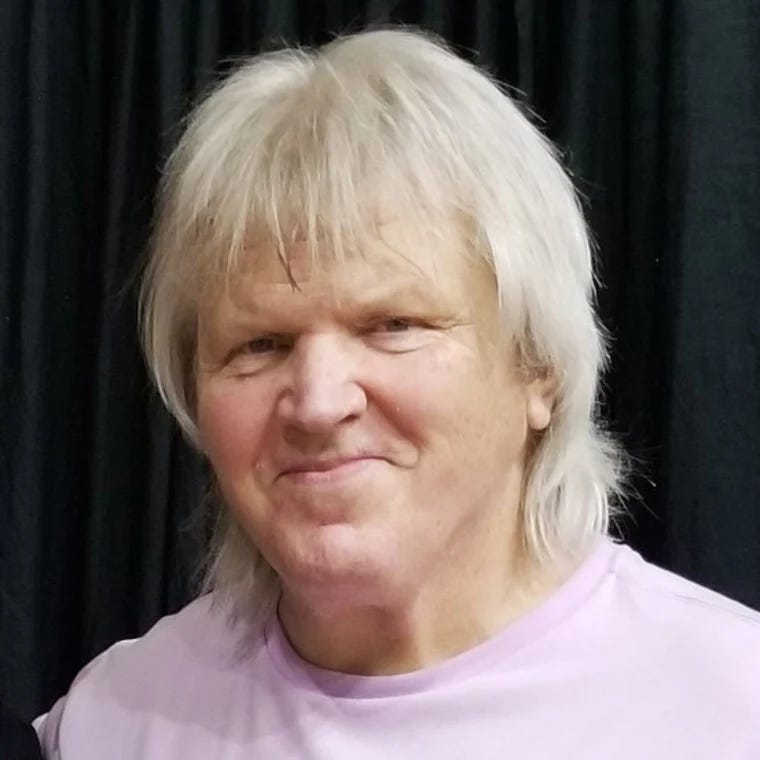
Beautiful Bobby Eaton 8-4-2021 at the age of 62
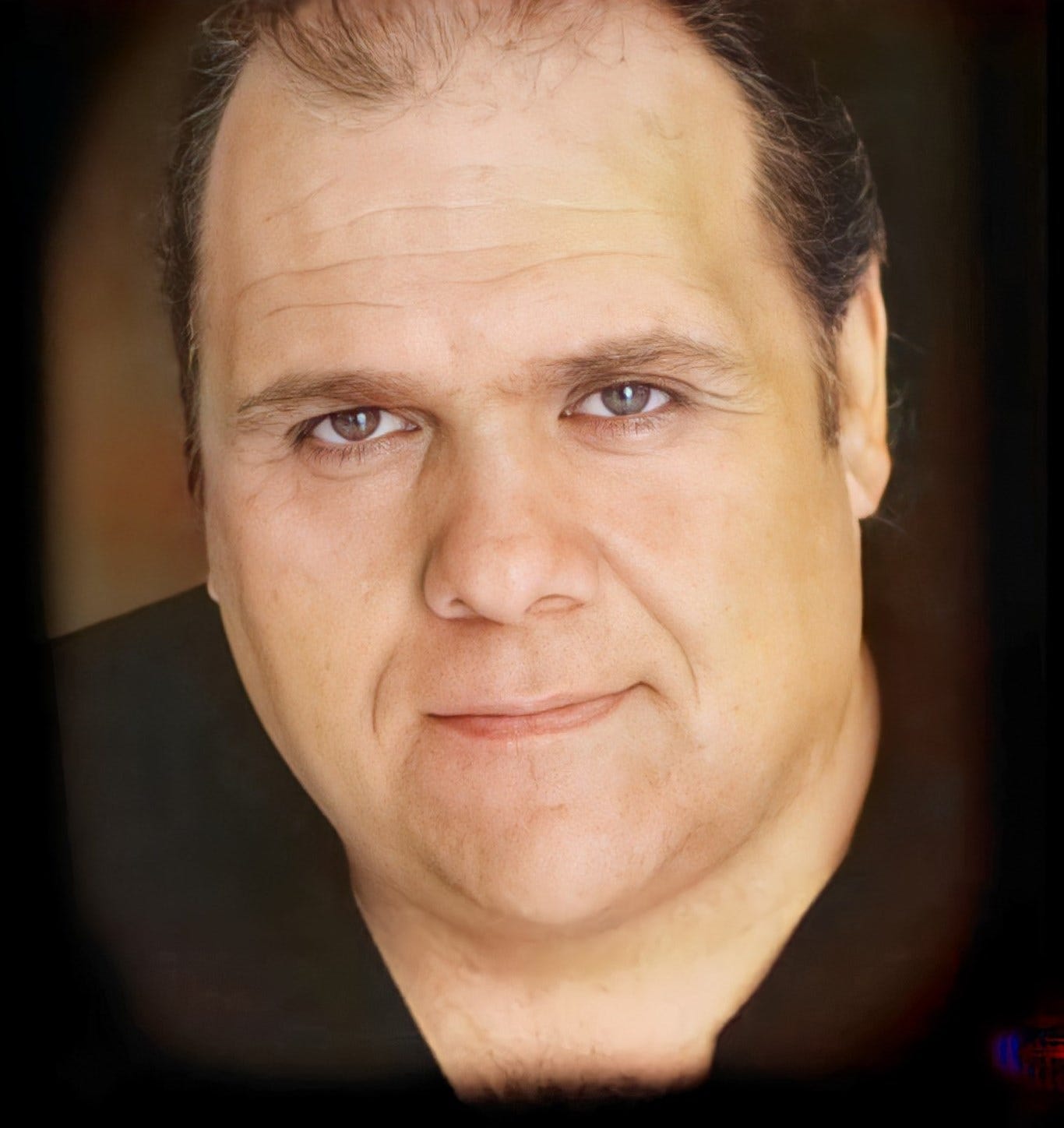
Bert Prentice 8-4-2021 at the age of 63
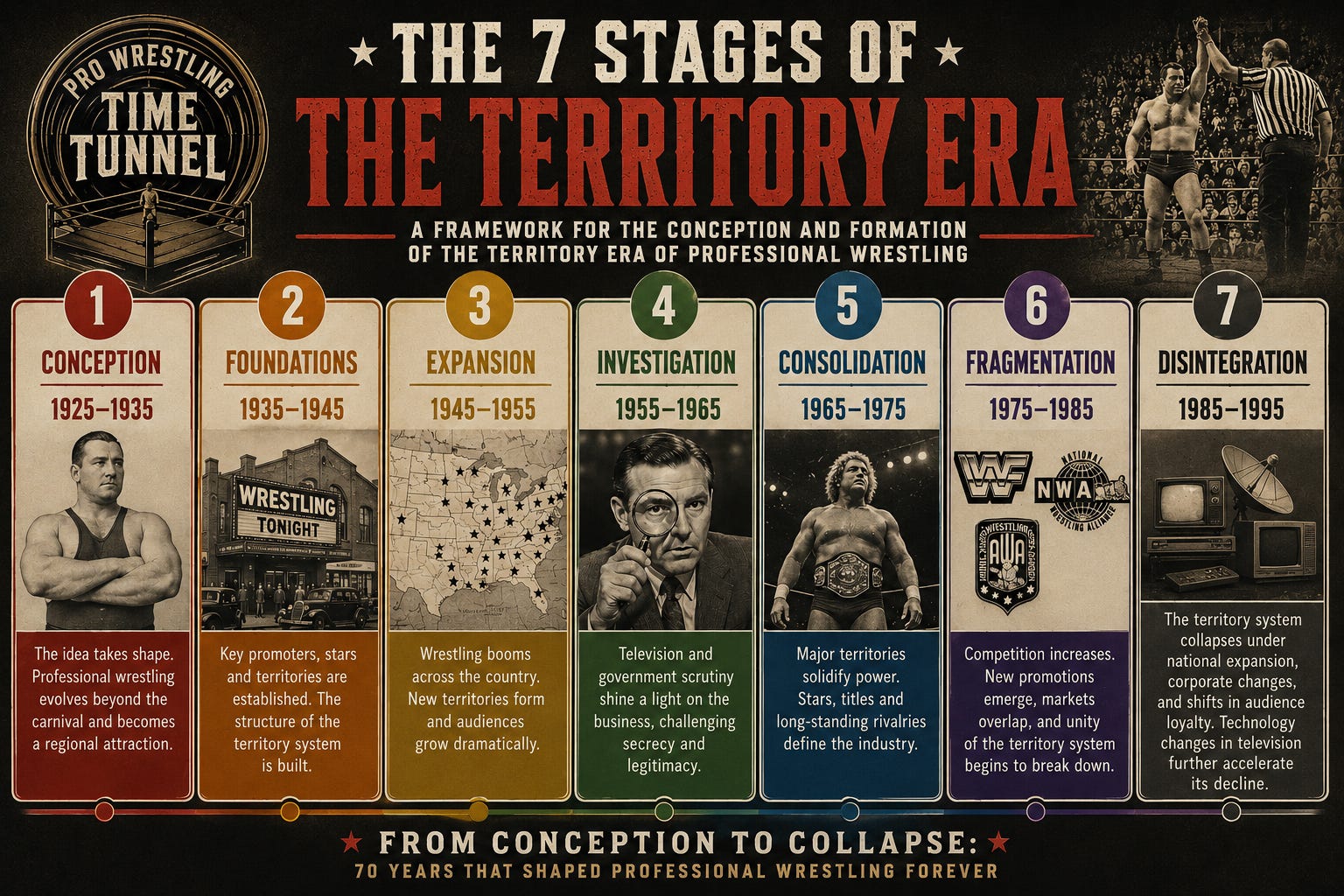
7 Stages of the Territory Era
Stage 3: Expansion
The Post-War Impact of Lou Thesz
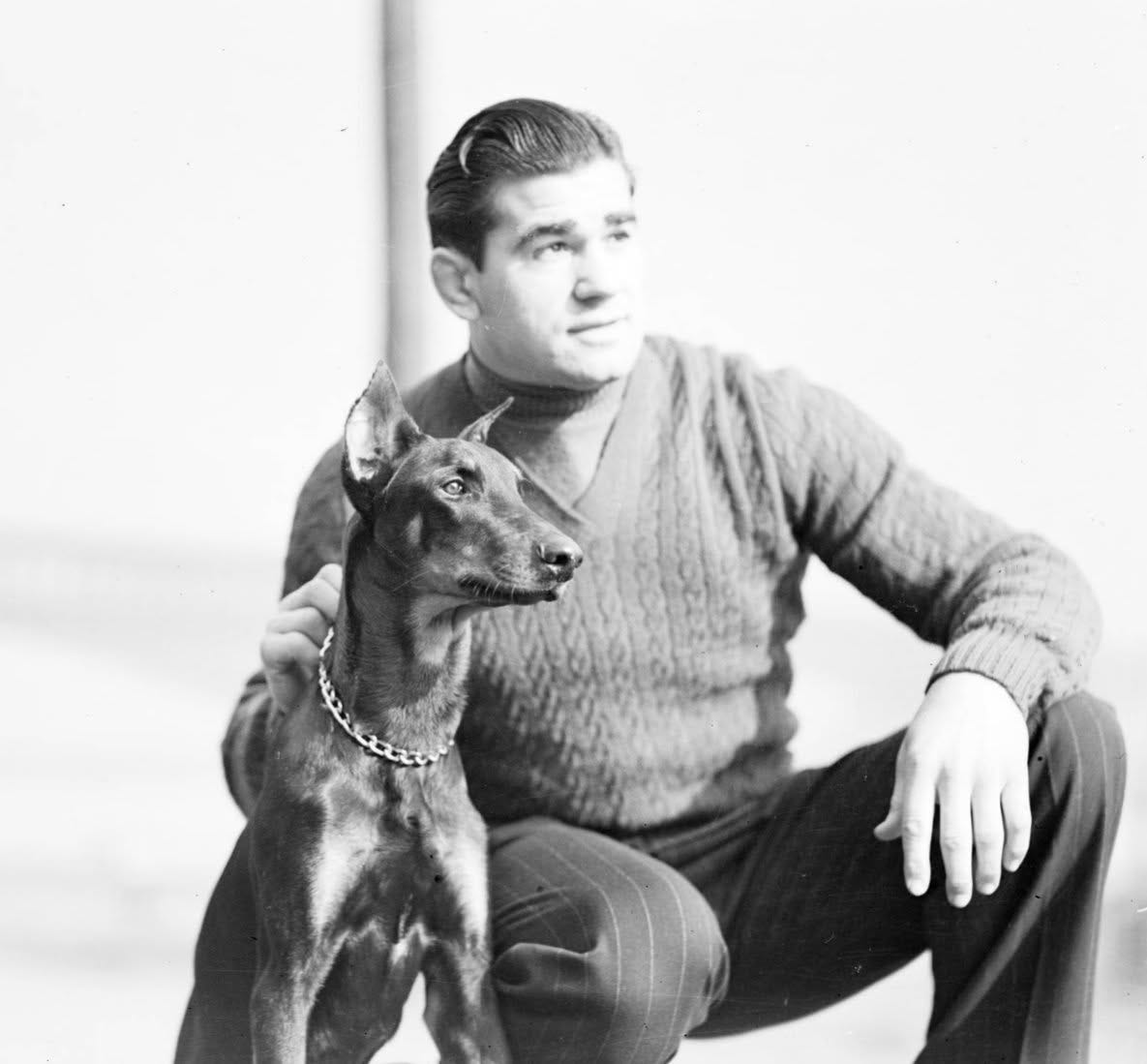
Lou Thesz’s post-war impact was foundational to the structure, credibility, and longevity of the territory system that defined professional wrestling from the late 1940s through the 1960s. Returning from U.S. Army service in 1946 after teaching hand-to-hand combat, Thesz rapidly reestablished himself as a top contender and, within three years, became the central figure who gave the newly formed National Wrestling Alliance its legitimacy and national reach.
Immediate Return and Rebuilding Momentum (1946–1948)

Discharged in 1946, Thesz wasted little time. He was already active that summer—drawing with Dave Levin in Houston in early August, defeating Ernie Dusek in St. Louis on August 9, and challenging Montreal World Heavyweight Champion Bobby Managoff (losing by disqualification before 12,000 at the Forum on August 21). He captured the Texas Heavyweight Championship from Buddy Rogers in May 1946 (a short reign) and won the Montreal version of the World Heavyweight Championship from Managoff on September 11, 1946.
These appearances placed him among the elite group of headliners that included Wild Bill Longson (the long-reigning National Wrestling Association World Heavyweight Champion), Orville Brown, Yvon Robert, and Managoff. Thesz’s style—rooted in catch-as-catch-can and Greco-Roman fundamentals taught by mentors such as Ed “Strangler” Lewis and Ray Steele—emphasized holds, conditioning, and realism. In an era still recovering from wartime talent shortages, he represented continuity with the pre-war “scientific” tradition at a moment when flashier entertainment elements were beginning to emerge.
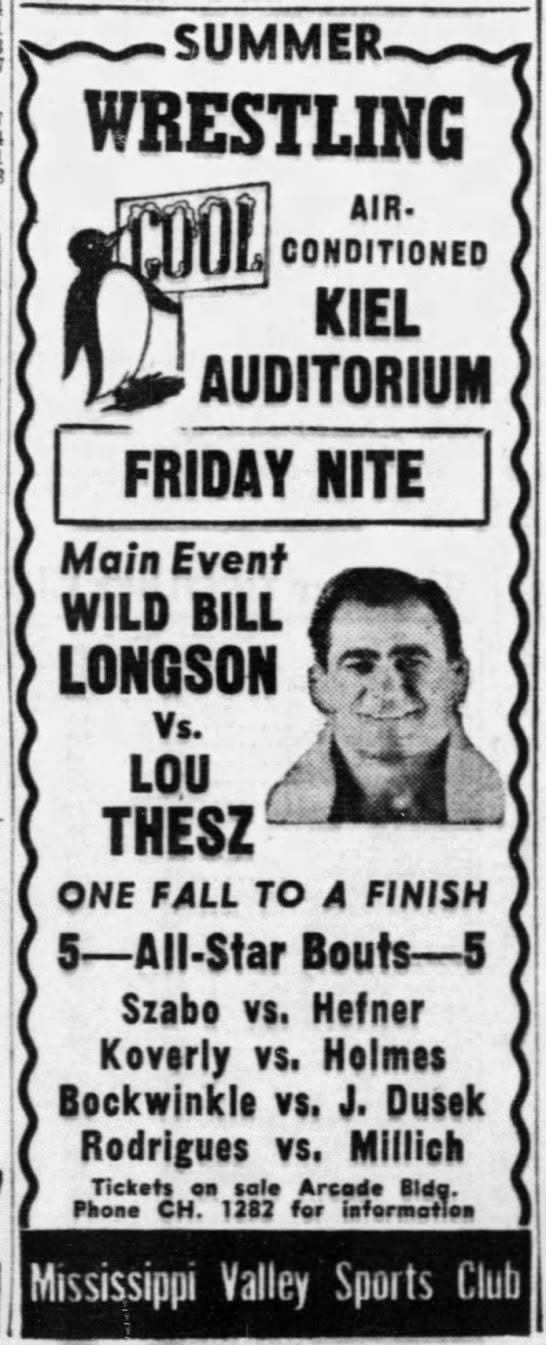
His biggest pre-Alliance breakthrough came on July 20, 1948, in Indianapolis, when he defeated Longson to win the National Wrestling Association World Heavyweight Championship. That victory positioned him as the logical counterpart to the new National Wrestling Alliance, founded earlier that same month in Waterloo, Iowa, with Orville Brown recognized as its first champion.
The NWA Championship and Unification (from 1949 Onward)
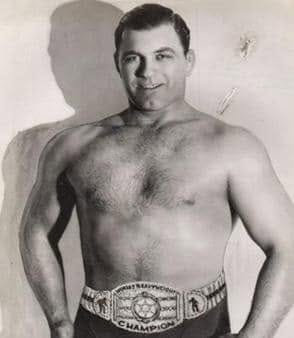
Pictured: National Wrestling Alliance World Champion Orville Brown
A planned unification match between Brown (NWA) and Thesz (National Wrestling Association) for Thanksgiving 1949 never occurred. Brown suffered career-ending injuries in a car accident on November 1. On November 27, 1949, the NWA formally recognized Thesz as World Heavyweight Champion. He held the title until March 15, 1956—a single reign of 2,300 days, the longest in NWA history. Across three recognized NWA reigns (1949–1956, 1956–1957, and 1963–1966), his combined total reached 3,749 days, still the record.
Thesz used the championship as a tool of consolidation. He defeated Baron Michele Leone in Los Angeles on May 21, 1952, for the California/Olympic Auditorium World Heavyweight claim before a reported 25,000 fans (with thousands turned away) and a $103,000 gate. By systematically absorbing or neutralizing rival “world” titles, he came closer than anyone since the 1930s to being an undisputed heavyweight champion. His presence as a credible, tough, traveling champion helped the NWA expand from a Midwest core to more than 30 affiliates across the United States, Canada, and Mexico by the early 1950s.
Style, Credibility, and Resistance to Spectacle
Thesz’s greatest long-term influence was philosophical and technical. He insisted that the world champion should be a legitimate wrestler capable of protecting the title against double-crosses or shoot challenges. Promoters valued him precisely because he could enforce finishes through skill rather than politics alone. His matches emphasized mat wrestling, submissions, and storytelling through holds rather than pure theatrics.
He is widely credited with popularizing or inventing several enduring maneuvers: the Lou Thesz Press, an early version of the powerbomb, the stepover toehold facelock (STF), and the belly-to-back waistlock suplex (later associated with the German suplex). These techniques became foundational to technical wrestling styles for decades.
At the same time, Thesz openly preferred the traditional approach over the rising gimmick-heavy entertainment of figures such as Gorgeous George and, later, Buddy Rogers. He adapted enough to remain relevant in the television era but never fully embraced the carnival elements. This stance made him a transitional figure: the last widely accepted pure wrestler-champion who still operated at the commercial peak of the business.
Business, Territorial, and International Reach
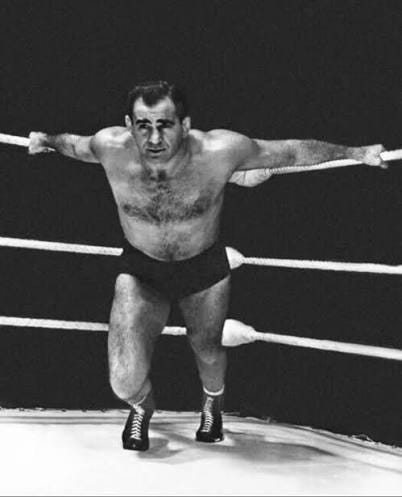
Thesz was also a shrewd businessman. He held a partial ownership stake in the St. Louis territory from roughly 1948 to 1955 and earned an estimated $50,000–$60,000 annually during his peak 1950s years, supplemented by ownership income. He demanded accurate gate statements and preferred cash percentages, protecting his earnings in an industry known for creative accounting.
Internationally, his 1957 series of matches against Rikidozan in Japan—defending the NWA title—played a major role in popularizing professional wrestling there and establishing the template for foreign champions elevating local stars. He later became the inaugural NWA International Heavyweight Champion (a belt that fed into All Japan’s Triple Crown lineage) and, at age 62, the first UWA World Heavyweight Champion in Mexico after a program involving Mil Máscaras.
Longevity and Enduring Legacy
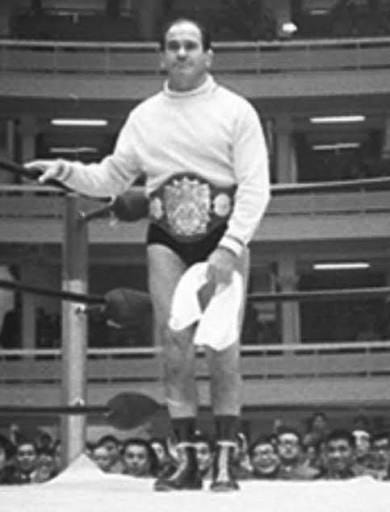
After dropping the title to Gene Kiniski in 1966, Thesz continued competing into the 1970s and made his final match in 1990 against Masahiro Chono in Japan at age 74. He trained wrestlers, served in advisory and commissioner roles (including with the Union of Professional Wrestling Forces International), and authored the autobiography Hooker, which remains one of the most candid insider accounts of the territory era.
Post-war Thesz did more than win titles. He supplied the athletic and moral credibility the young National Wrestling Alliance needed to transform a collection of regional fiefdoms into a coherent national system. By carrying the world championship across territories with skill, toughness, and consistency, he set the standard against which later champions—Dick Hutton, Pat O’Connor, Buddy Rogers, and eventually Ric Flair—would be measured. In the critical window between the end of World War II and the full television boom, Lou Thesz was the figure who made the idea of one dominant, respected world champion both possible and believable.
Thank You for Watching and Listening
I’m Tony Richards, Pro Wrestling Historian, Author and Storyteller. I share pro wrestling historical items in each issue of the Time Tunnel Pro Wrestling History Newsletter and each episode of our podcast show. Thanks for your support! If you enjoy my information on select events, matches and insights, please share with folks you think might like to be a subscriber!
Remember, Premium subscribers get access to exclusive and special content such as some special issues including a multi-part deep dives on wrestling territories, wrestler bios and championship title histories, special audio and video interviews on territory pro wrestling and more available in the Pro Wrestling Time Tunnel for Premium Subscribers. Being a Premium Subscriber also means you support me in my efforts to document Pro Wrestling History through my research, writing, books, vidoes and podcasts. And…I have something very special planned for our Premium Subscribers on the Podcast side of things in 2026! Details soon here in the Pro Wrestling Time Tunnel.