


Today’s Favorite Quote: A strong positive self-image is the best possible self-preparation for success in life-Dr. Joyce Brothers
Happy Birthday to those who have passed on and to those great wrestlers still with us:
In Memoriam:
Tom Jenkins 1872
Steve Gobrukovich\Nicoli Volkoff 1915
Mars Bennett 1922
Karl Gotch 1922
Haystacks Calhoun 1934
Apache Bull Ramos 1937
Happy Birthday:
Eric Esch\Butterbean (60)
RIP Memorial: We stop & remember those who have passed on this day and gave themselves to the business for us, the fans. We salute you and thank you.
Juanita Coffman\Juanita Gallagher 8-3-1987 at the age of 66

Jim LaRock 8-3-2006 at the age of 82

Dutch Savage 8-3-2013 at the age of 78
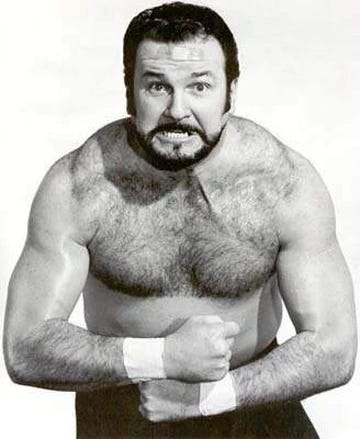
Jody Hamilton\The Assassin 8-3-2021 at the age of 82

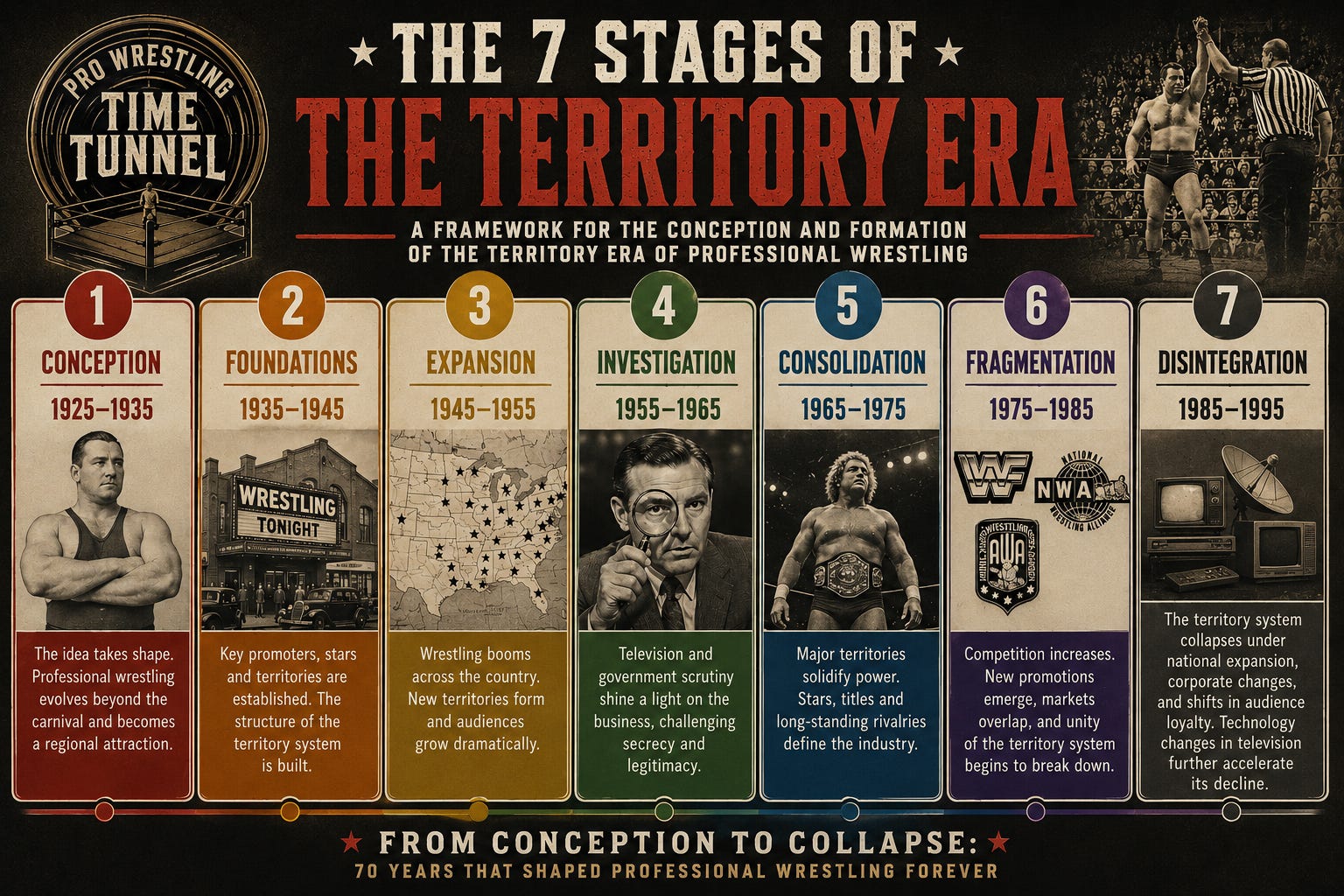
7 Stages of the Territory Era
Stage 3: Expansion
Year 2 Month 7
August 1946
August 1946 stands as a revealing cross-section of professional wrestling at the precise moment the industry shook off the last constraints of World War II and settled into the rhythms that would define the classic territory era. One year after V-J Day, gas rationing and travel restrictions were gone, paper shortages had eased, and arenas that had been dark or half-filled during the war years were filling again. Soldiers and sailors returned to civilian life as both performers and paying customers. The result was a business already showing robust health, still fragmented by competing “world” titles and regional power bases, yet already generating the crowds, talent pipelines, and promoter rivalries that would make the National Wrestling Alliance’s formation in 1948 both possible and necessary.
This was not yet the fully codified territory system of later decades. It was the living precursor—what the 7 Stages framework treats as the early recovery and regional consolidation phase—where strong local offices defended their markets, champions traveled carefully, and novelty attractions could still pack houses overnight. The month’s cards, from the Olympic Auditorium in Los Angeles to the Montreal Forum and the small towns of the Texas Panhandle, illustrate both the vitality and the structural limitations of the business in that transitional summer.
The Post-War Landscape
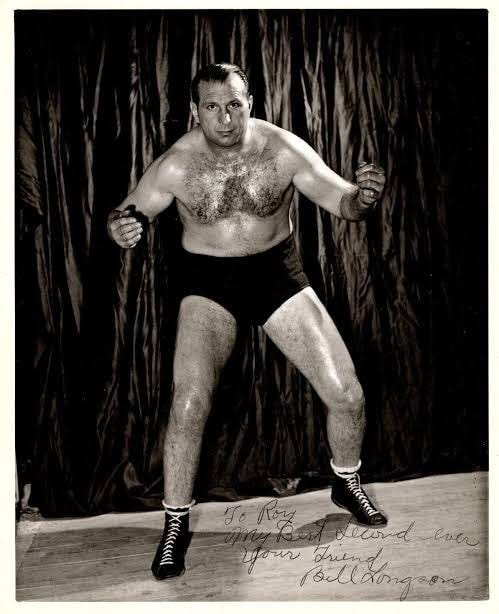
Pictured: National Wrestling Association World Champion, Wild Bill Longson
The war had thinned the ranks and limited touring. By mid-1946 the pipeline was reopening. Lou Thesz, discharged from Army service after teaching hand-to-hand combat, was back in the ring and working steadily across the Midwest, Texas, and Canada. Wild Bill Longson continued his long National Wrestling Association World Heavyweight Championship reign, a title he had held since February 1943 and defended with the aggressive, rule-bending style that made him a reliable heat magnet. Orville Brown dominated the Midwest Wrestling Association version of the world title centered in Kansas. In Montreal, Bobby Managoff carried the local world championship. Junior heavyweight divisions, especially Leroy McGuirk’s claim, remained active in the Southwest. Multiple “world” champions coexisted without national coordination; promoters simply billed the version that served their market.
Television was still experimental. Fred Kohler had begun weekly shows from Chicago’s Rainbo Arena on WBKB in July 1946, an early signal of the medium that would transform the business within a few years. For now, the product lived or died by live gates, newspaper publicity, and word of mouth.
Los Angeles and the Carnera Experiment
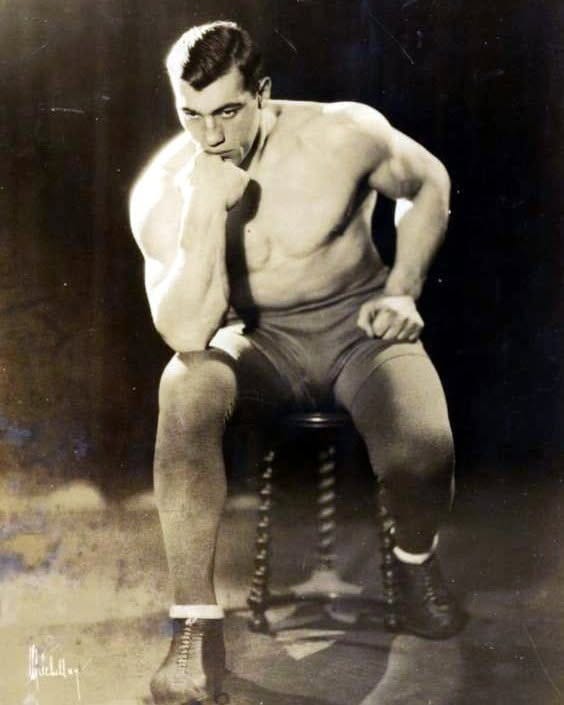
Pictured: Primo Carnera
No single story better captures the month’s commercial energy than Primo Carnera’s arrival at the Olympic Auditorium. The former heavyweight boxing champion, long past his ring prime and recently returned from Italy, made his California wrestling debut on August 21 before 10,000 fans. He defeated Tommy O’Toole cleanly. The novelty of the giant, still imposing at roughly 260 pounds, sold tickets. One week later the house dipped to 7,500 as Enrique Torres defeated the Swedish Angel in the main event, but Carnera’s presence had already established him as a short-term attraction who could headline and draw.
The supporting cast reflected the California office’s mix of established hands and rising local talent. Enrique Torres, still early in the rise that would make him a major Pacific Coast star, teamed with Carlos Mojica to beat the Swedish Angel and Jules Strongbow on the 21st and then pinned the Angel cleanly on the 28th. Reginald Siki, George Becker, Rebel Bob Russell, Pat Fraley, Brother Jonathan, and Sandor Szabo filled the undercards. Matches were typically two-out-of-three falls or time-limit draws, the standard fare that rewarded conditioning and crowd psychology over pure athleticism. The Olympic remained one of the most reliable weekly houses on the West Coast, and Carnera’s run demonstrated how a name from another sport could still move the needle in a recovering market.
The Midwest Title Picture and Orville Brown
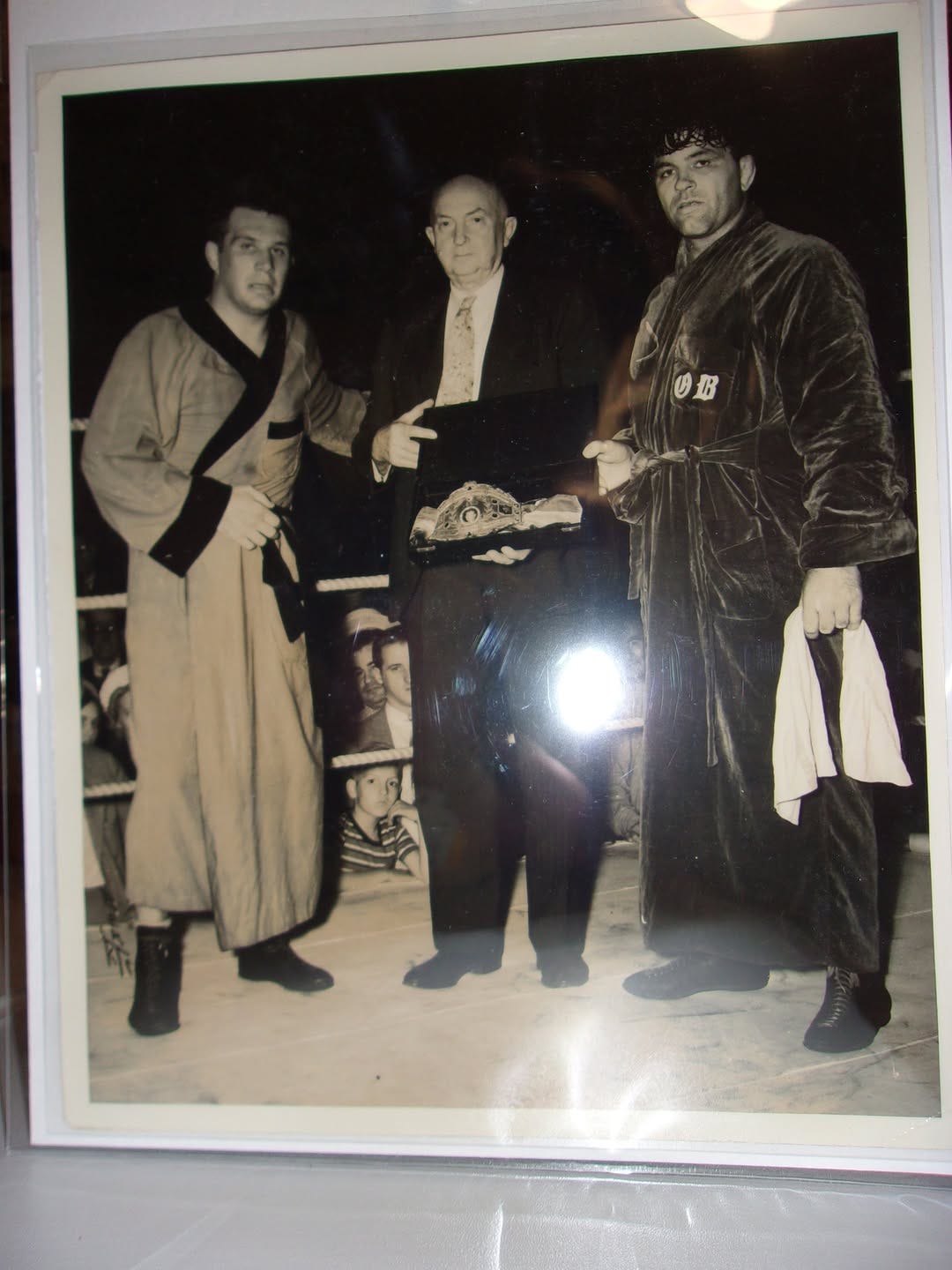
Pictured: Bobby Bruns, Kansas Promoter George Simoson and Orville Brown
On August 8 in Kansas City (or Topeka, depending on the source), Orville Brown defeated Bobby Bruns to regain the Midwest Wrestling Association World Heavyweight Championship. Brown had lost the belt to Bruns via disqualification in June, a finish he disputed, and the rematch restored order in the Kansas-Missouri territory. Brown was a legitimate shooter with a farmer’s strength and a reputation for hard, clean matches. He would go on to become the first recognized National Wrestling Alliance World Heavyweight Champion in 1948, but in August 1946 he was simply the dominant figure in his region, defending against the usual mix of local challengers and traveling heels.
The Brown-Bruns sequence illustrated a common post-war pattern: title changes that served booking needs rather than pure athletic hierarchy, followed by rapid restoration of the preferred champion. Brown’s ability to work both as a credible world title claimant and as a territorial anchor made him valuable well beyond Kansas City.
St. Louis, Longson, and Thesz
St. Louis remained the gravitational center of the National Wrestling Association title. Tom Packs and Sam Muchnick operated competing offices, a rivalry that kept the city active even when major cards were spaced out. Wild Bill Longson, the long-reigning NWA champion, continued to draw as the arrogant heel whose piledriver and aggressive tactics generated genuine heat. Lou Thesz, freshly back from service, was already positioned as the scientific counterweight. On August 9 at the Kiel Auditorium, Thesz defeated Ernie Dusek. Later in the month Thesz appeared in Evansville and other nearby towns, building the reputation that would eventually make him the dominant champion of the next decade.
The coexistence of Packs’s and Muchnick’s promotions in the same city foreshadowed the later consolidation that produced the modern St. Louis Wrestling Club. For now it meant more opportunities for talent and more competition for the best dates.
Montreal and the Canadian Market
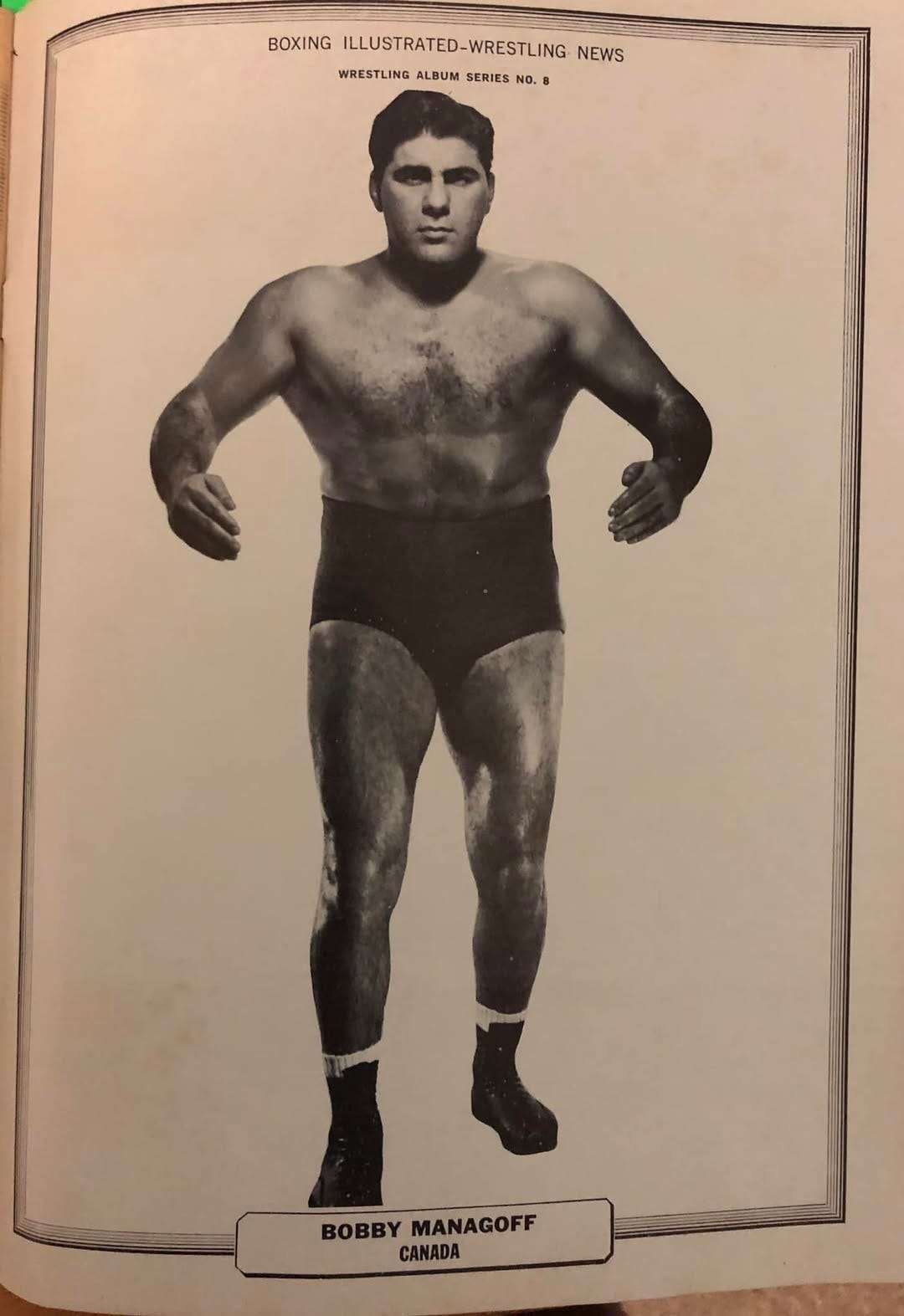
Pictured: Bobby Managoff in Montreal, Canada
Eddie Quinn’s Montreal promotion delivered one of the month’s strongest gates. On August 21 at the Montreal Forum, 12,000 fans watched Bobby Managoff, the Montreal World Heavyweight Champion, defeat Lou Thesz by disqualification. Yvon Robert, still a major drawing card in Quebec, defeated Dave Detton (Warren Bockwinkel) on the same card. The DQ finish protected both men while giving the local champion the win in front of his people. Canadian offices in this period operated with relative independence from the American title picture, using their own champions and strong local favorites while still importing U.S. talent for special attractions.
The Southwest Circuit
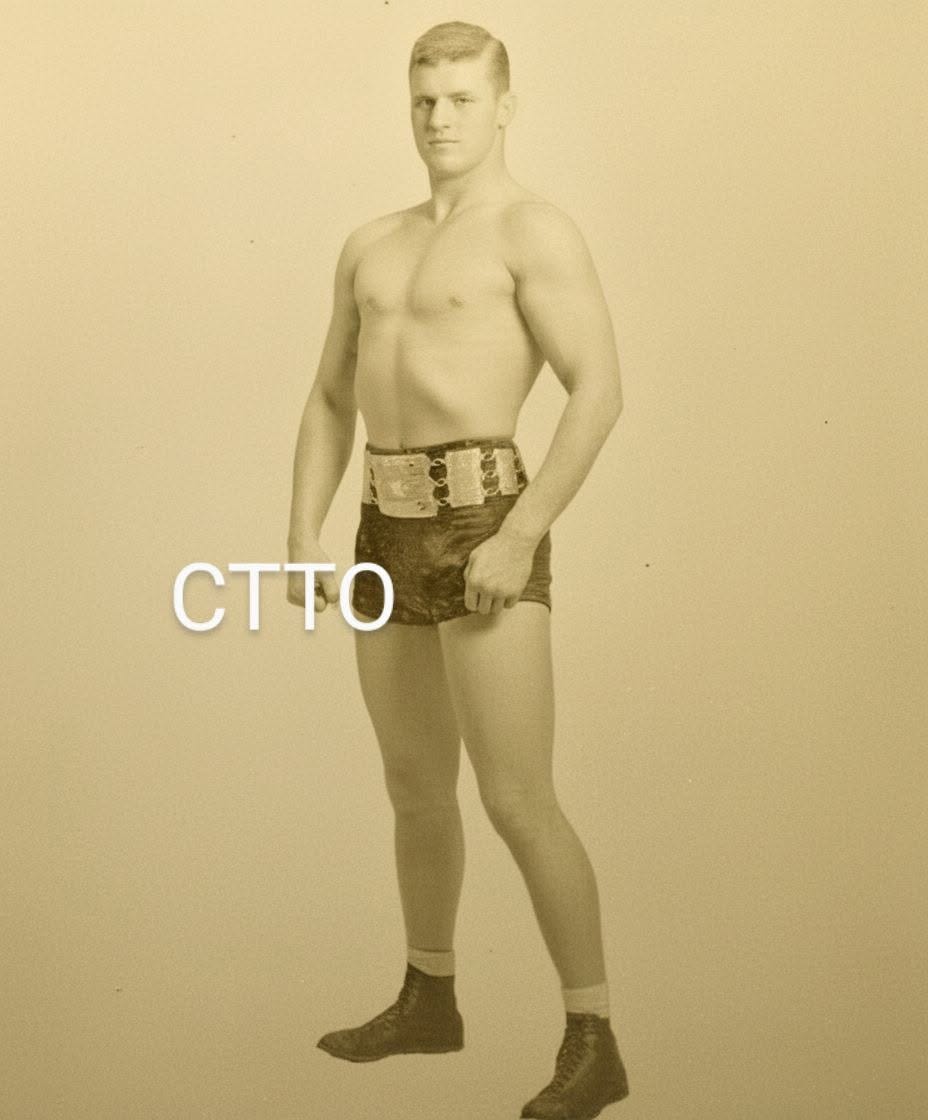
Pictured: LeRoy McGuirk National Wrestling Association World Junior Heavyweight Champion
**Photo credit: Scott George
In Texas and New Mexico the Western States office and related promoters kept a steady schedule of outdoor and armory cards. Leroy McGuirk defended the World Junior Heavyweight Championship, defeating Billy Weidner in two straight falls on August 15 in Amarillo. Names such as Ken Mayne, Walter Stratton, Salvador Flores, Floyd Hansen, and Pat O’Dowdy filled multi-town loops through Lubbock, Abilene, Clovis, Vernon, and Wichita Falls. These were classic territorial programs: short matches, frequent draws and disqualifications, and the junior division providing a secondary title with its own prestige. The circuit demonstrated how smaller markets sustained themselves with reliable weekly or bi-weekly shows once travel became unrestricted.
Other Regional Activity
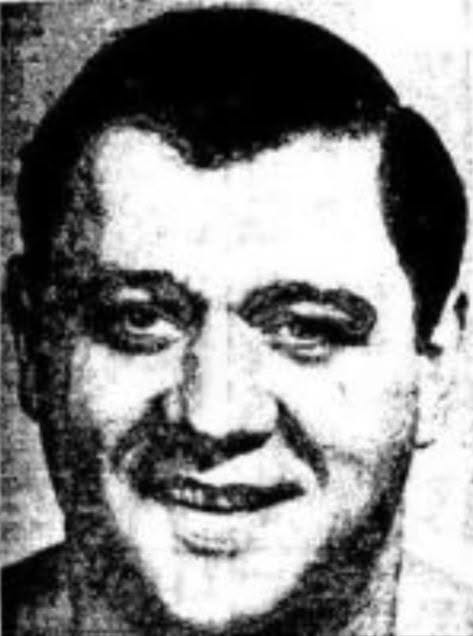
Pictured: Babe Sharkey, World Heavyweight Champion
In the Pacific Northwest, Babe Sharkey defended a world title claim against Frank Plestina in Walla Walla on August 7, with Tony Galento as referee—an example of the celebrity crossover bookings still common. Fresno ran regular cards featuring Vincent Lopez, the Swedish Angel, Billy Hanson, and Pat Fraley. In Montana, Orville Brown was billed as world champion while defeating Ronnie Etchison in Helena. Mexico’s EMLL continued its regular Arena Coliseo schedule with names such as Enrique Llanes, Bobby Bonales, and Tarzán López. The geographic spread was wide; the connective tissue was still thin.
Business Realities of August 1946
The numbers tell a clear story of recovery. Olympic Auditorium crowds of 7,500–10,000, a Montreal Forum house of 12,000, and steady smaller-town gates across the Midwest and Southwest reflected renewed disposable income and a public hungry for live entertainment. Talent costs remained manageable because the wrestler pool was still rebuilding; many performers worked frequent short programs rather than long tours. Promoters controlled arenas through relationships with athletic commissions and local political figures, a structure that rewarded established offices and made independent competition difficult.
The multiplicity of world titles was both a strength and a weakness. It allowed every major territory to claim a champion and sell that claim locally. It also limited the possibility of true national storytelling. That fragmentation would eventually drive the 1948 Waterloo meeting that created the National Wrestling Alliance. In August 1946 the pieces were already visible: strong regional champions (Longson, Brown, Managoff), reliable drawing cities (Los Angeles, St. Louis, Montreal, Kansas City), a rising generation of scientific wrestlers (Thesz) and colorful heels (Longson, later Rogers and George), and the first experiments with television.
Primo Carnera’s successful California debut showed that outside names could still create short-term spikes. Enrique Torres’s steady advancement illustrated the value of developing local talent. Thesz’s return from the Army signaled the reappearance of the pure wrestling style that would dominate the next decade. Longson’s continued reign proved that a skilled heel champion could carry a territory for years.
August 1946 was not a month of dramatic national title changes or revolutionary new styles. It was something more fundamental: proof that the territorial system had survived the war intact and was already generating the crowds, the talent, and the rivalries that would define pro wrestling for the next thirty-five years. The arenas were open, the roads were clear, and the business was moving again. The stages that followed—full NWA consolidation, the television boom, the expansion of the junior divisions, and the eventual rise of the next generation of stars—were already visible in the cards of that first full peacetime summer.
Thank You for Watching and Listening
I’m Tony Richards, Pro Wrestling Historian, Author and Storyteller. I share pro wrestling historical items in each issue of the Time Tunnel Pro Wrestling History Newsletter and each episode of our podcast show. Thanks for your support! If you enjoy my information on select events, matches and insights, please share with folks you think might like to be a subscriber!
Remember, Premium subscribers get access to exclusive and special content such as some special issues including a multi-part deep dives on wrestling territories, wrestler bios and championship title histories, special audio and video interviews on territory pro wrestling and more available in the Pro Wrestling Time Tunnel for Premium Subscribers. Being a Premium Subscriber also means you support me in my efforts to document Pro Wrestling History through my research, writing, books, vidoes and podcasts. And…I have something very special planned for our Premium Subscribers on the Podcast side of things in 2026! Details soon here in the Pro Wrestling Time Tunnel.