



Today’s Favorite Quote: Teams that trust do not dread meetings, they actually enthusiastically participate and look forward to the next meeting.
Happy Birthday to those who have passed on and to those great wrestlers still with us:
In Memoriam:
George Hackenschmidt 1877
Aurelian “Grizzly” Smith 1931
Ib Solvang Hansen\Eric The Red 1934
Happy Birthday:
Jimmy Golden (76)
Michael Hayner\Prince Iaukea (62)
Mike Chioda (60)
Devon Dudley (54)
Yoshitatsu Tatsu (49)
Prince Nana Osei Bandoh (47)
Carmelo Hayes (32)
RIP Memorial: We stop & remember those who have passed on this day and gave themselves to the business for us, the fans. We salute you and thank you.
Ray Gunkel 8-1-1972 at the age of 48

Don Owen 8-1-2002 at the ago of 90
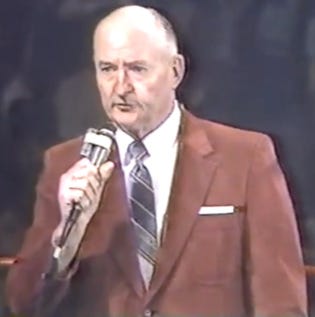
Ken Timbs 8-1-2004 at the age of 53
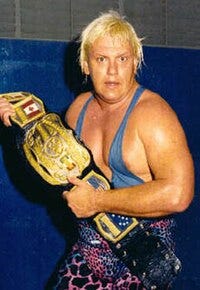
Harley Race 8-1-2019 at the age of 76
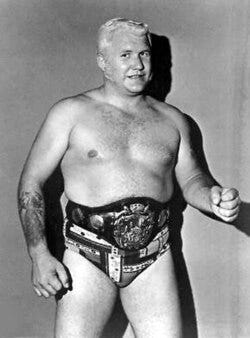
The Life and Career of George Hackenschmidt
George Hackenschmidt, known as “The Russian Lion,” stands as one of the foundational figures of modern professional wrestling and physical culture. An Estonian-born strongman, Greco-Roman and catch-as-catch-can wrestler, record-setting weightlifter, author, and philosopher, he is widely recognized as professional wrestling’s first undisputed world heavyweight champion. Unlike many of his contemporaries, Hackenschmidt is noted for competing in largely legitimate contests rather than the fixed exhibitions that increasingly dominated the sport. His combination of extraordinary strength, scientific technique, personal dignity, and later intellectual pursuits left a lasting imprint on both athletic training and the early global popularization of wrestling.
Early Life and Physical Development
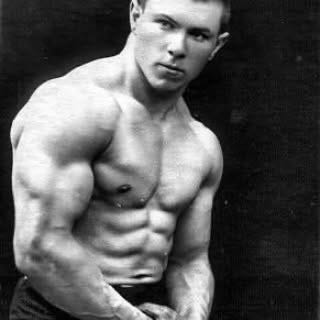
Georg Karl Julius Hackenschmidt was born on 1 August 1877 (20 July Old Style) in Dorpat (now Tartu), in the Governorate of Livonia of the Russian Empire. His father, Georg Friedrich Heinrich Hackenschmidt, was a Baltic German of Prussian ancestry who owned dye works; his mother, Ida Louise Johansson, was of Estonian and Swedish descent. He had a younger brother, Bruno (who later wrestled and died in German captivity during World War I), and a sister, Alice. Neither parent was particularly robust, though a maternal grandfather was described as large and powerful.
From childhood Hackenschmidt displayed exceptional physical aptitude. At the local German Real school (Dorpater Realschule) he excelled in gymnastics, swimming, running, jumping, cycling, and the traditional game of gorodki. Early feats included lifting a small horse off the ground and one-handed overhead presses of heavy weights. After leaving school in 1895 he apprenticed as a blacksmith and technical engineer in a Reval (Tallinn) factory while joining the local Athletic and Cycling Club. There he shifted focus to heavy weightlifting and began wrestling, initially with mixed results against more experienced opponents.
In 1896 he challenged the established Estonian strongman and wrestler Georg Lurich and was defeated, yet the experience accelerated his development. Measurements from that period already showed a powerfully built young man: at age 18 he stood approximately 5 ft 7½ in with a 44-inch expanded chest and solid arm development. By late 1897 his lifts included a two-hand press of 243 lb from the shoulders (claimed as a world record at the time) and other impressive one-arm and two-arm movements.
Emergence as Strongman and Amateur Champion
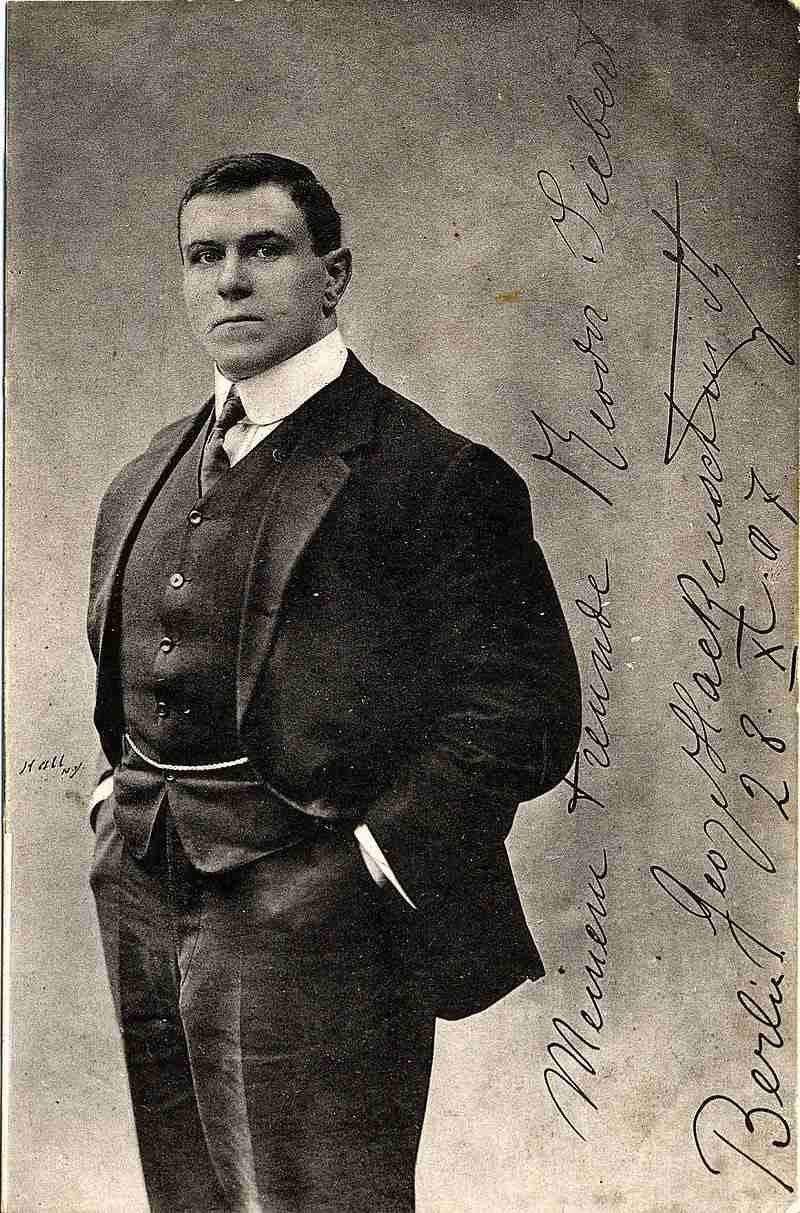
A hand injury in late 1897 led him to the circle of Dr. Vladislav Krajewski, physician to Tsar Nicholas II and founder of the Saint Petersburg Athletic and Cycling Club. Krajewski became a pivotal mentor—Hackenschmidt later called him a second father—and invited the young athlete to St. Petersburg in 1898. There Hackenschmidt rapidly won the Russian weightlifting championship and defeated the French wrestler Paul Pons. He placed third in the weightlifting decathlon at the 1898 World Championships in Vienna while capturing the openweight Greco-Roman wrestling title at the concurrent European Championships.
After a brief period of military service with the elite Preobrazhensky Regiment in 1899, he claimed the Russian wrestling championship by defeating Alexander von Schmelling. An arm injury sustained at the 1899 World Championships in Paris slowed him temporarily, but by 1900 he had returned stronger. That summer he dominated a lengthy Moscow tournament, winning the championships of both Moscow and St. Petersburg while competing almost daily. In 1901, at the Casino de Paris world championship tournament featuring more than 100 wrestlers, he took first place overall, winning both the lightweight and heavyweight divisions and substantial prize money. These victories established him as Europe’s premier heavyweight.
Professional Career and International Stardom
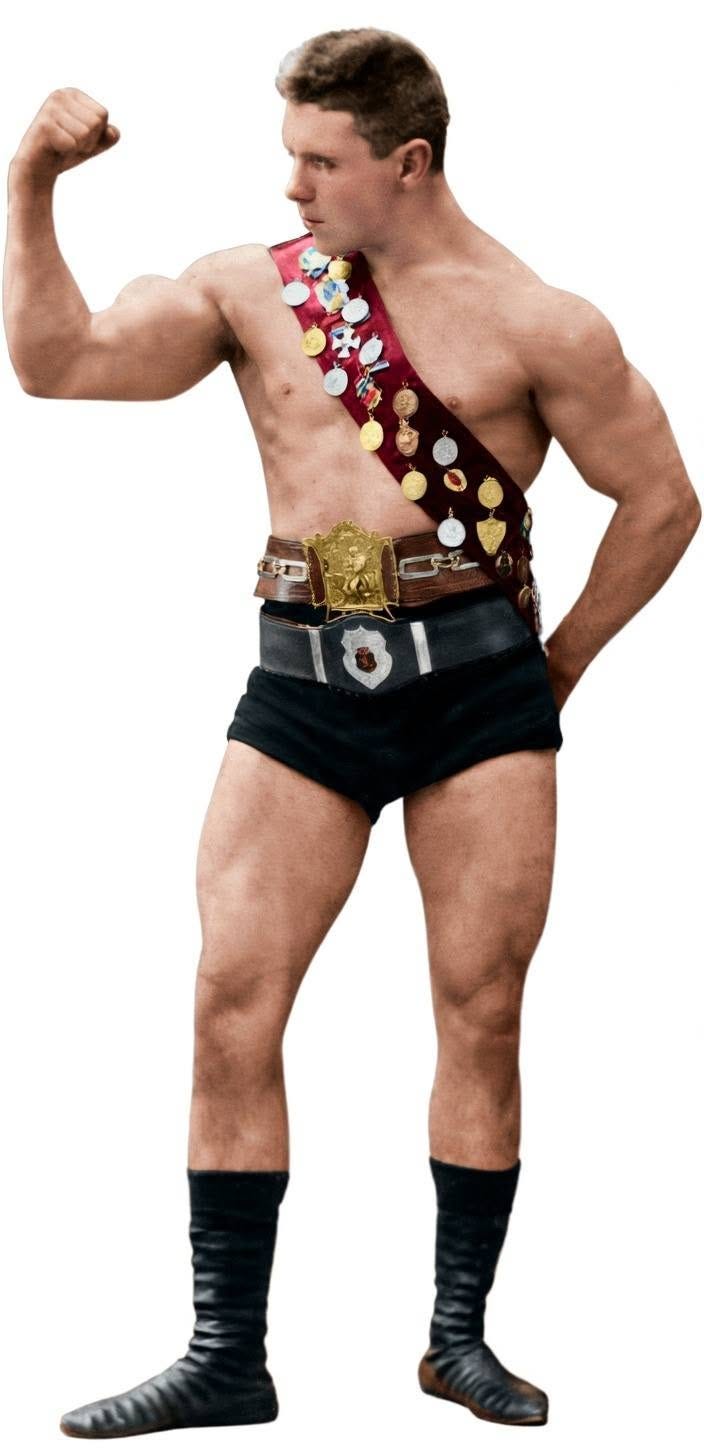
Hackenschmidt turned fully professional around 1900–1901. Managed for a time by the British impresario C. B. Cochran, he toured England’s music halls and theaters, defeating multiple opponents nightly and creating a sensation. Handsome, powerfully proportioned (typically billed around 5 ft 9 in and 220 lb, with measured 1905 statistics of 204 lb, 19-inch biceps, 22-inch neck, 52-inch chest, and 34-inch waist), fluent in several languages, and cultured in manner, he became a popular idol. He defeated leading British and continental wrestlers including Tom Cannon, Antonio Pieri, and the formidable Ahmed Madrali (“The Terrible Turk”), whom he threw in under two minutes at Olympia in 1904, dislocating Madrali’s shoulder.
In July 1904 at the Royal Albert Hall he defeated American champion Tom Jenkins in straight Greco-Roman falls. After a successful Australian tour he returned to the United States. On 4 May 1905 at Madison Square Garden, wrestling under catch-as-catch-can rules, Hackenschmidt again defeated Jenkins in two falls (31:14 and 22:04) to claim the inaugural World Heavyweight Wrestling Championship. He is generally regarded as the first widely recognized world heavyweight champion in the professional freestyle/catch style. Subsequent defenses and exhibitions, including a rain-soaked victory over Scottish champion Alexander Munro before 16,000 spectators at Ibrox Stadium, cemented his status.
Hackenschmidt is credited with popularizing the bear hug as a finishing hold and with helping introduce or refine movements that later became known as the hack squat (named after him) and elements of the bench press. His career record is often cited as approximately 2,000–3,000 matches with only a handful of losses (most accounts emphasize just two major professional defeats, both to Frank Gotch). He insisted on competitive integrity in an era when fixed matches were common.
The Rivalry with Frank Gotch
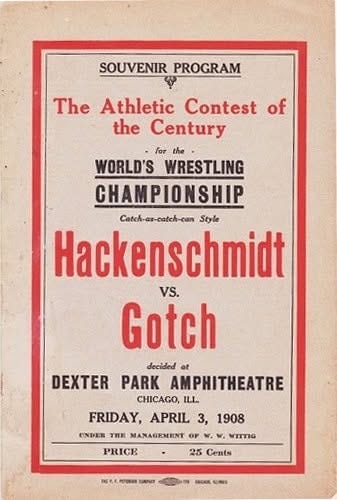
The defining chapter of Hackenschmidt’s career was his series with American champion Frank Gotch. On 3 April 1908 at Dexter Park Pavilion in Chicago, an out-of-condition Hackenschmidt lost the world title. Gotch used superior speed, defensive wrestling, and aggressive (sometimes rough) tactics—including alleged thumbing and butting—to wear him down over roughly two hours before applying a toe hold that forced the concession. Hackenschmidt later claimed fouls and demanded a rematch while initially praising Gotch’s ability.
The long-awaited rematch took place on 4 September 1911 at Comiskey Park before nearly 30,000 spectators and a then-record gate of approximately $87,000. Hackenschmidt entered with a compromised right knee, injured (or re-injured) during training, allegedly when sparring partner Dr. Benjamin Roller’s foot struck the joint. Controversies persist: some accounts suggest deliberate interference by Gotch’s camp, while others regard the injury as genuine but not decisive. Gotch dominated, winning in two falls within about 20 minutes, again finishing with the toe hold. The match remains one of the most debated in early wrestling history.
Retirement, Later Life, and Intellectual Pursuits
Persistent knee problems forced Hackenschmidt’s retirement from active competition around 1911–1912. He settled primarily in England, later becoming a French citizen (1939) and a British subject (1946/1950). During World War I he was interned in Germany with his French wife Rachel; in World War II the couple lived in southern France before returning to London. He taught physical education to members of the House of Lords, judged the 1948 Mr. Universe contest (won by John Grimek), and remained active in physical culture circles into old age. In 1961 he presented a medal to Soviet weightlifter Yury Vlasov after a world-record performance in London.
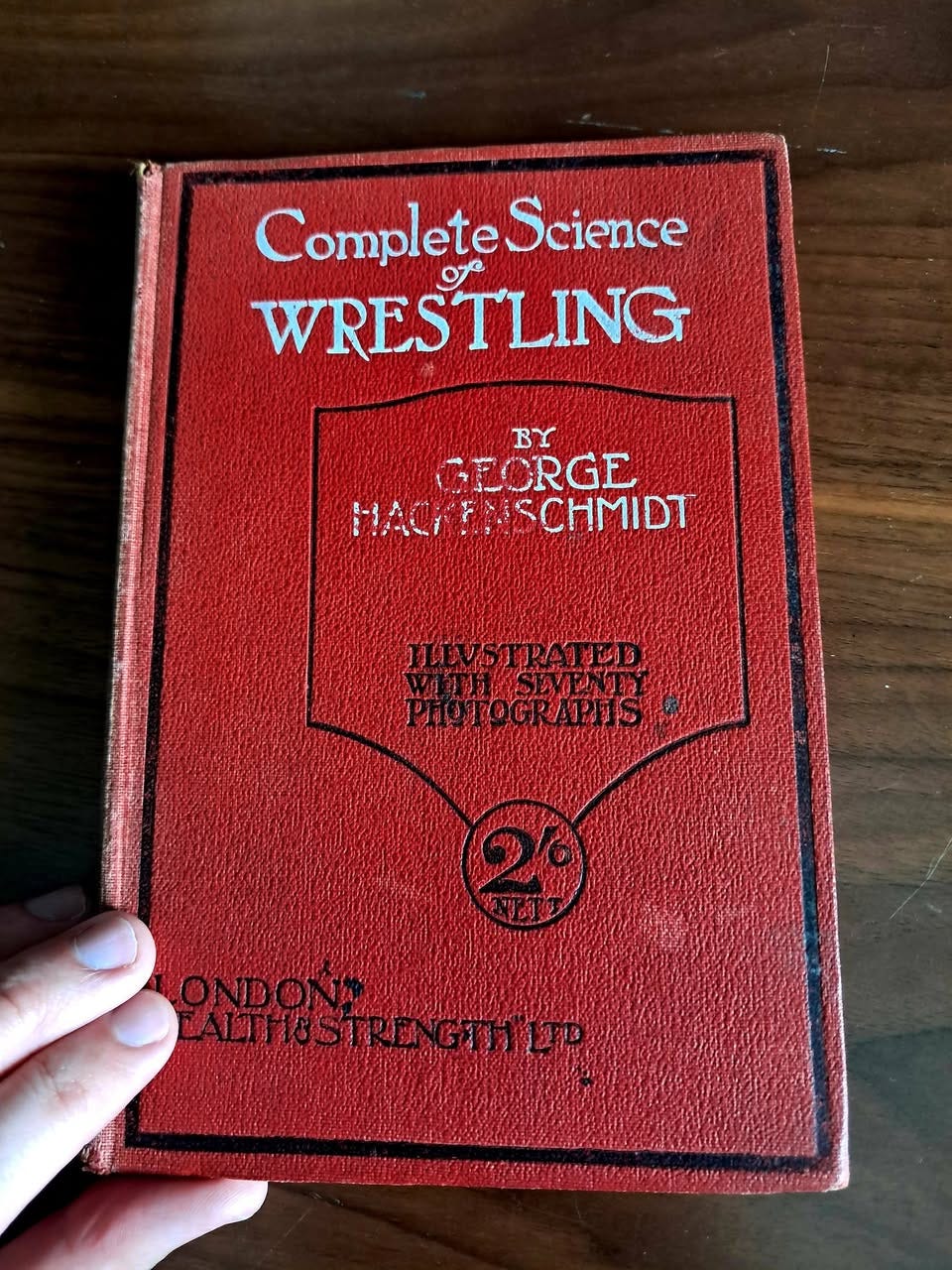
Hackenschmidt evolved into a strict vegetarian who emphasized fresh, uncooked foods, self-discipline, and the rejection of alcohol, tobacco, and excess. His writings include The Complete Science of Wrestling (1909), The Way to Live in Health and Physical Fitness, Man and Cosmic Antagonism to Mind and Spirit (1935–36, partly composed during internment), Fitness and Your Self, and philosophical works exploring consciousness, character, and the relationship between mind and body. He advocated progressive resistance training, moderation, and the unity of physical and moral development. A cultured polyglot and friend of figures such as Harry Houdini and George Bernard Shaw, he once challenged Albert Einstein to debate relativity—an invitation that reflected his intellectual curiosity more than any formal scientific claim.
Legacy
George Hackenschmidt died on 19 February 1968 in London at the age of 90 and was cremated at West Norwood Cemetery. His legacy is multifaceted. He is inducted into the Professional Wrestling Hall of Fame, the George Tragos/Lou Thesz Professional Wrestling Hall of Fame, and the International Professional Wrestling Hall of Fame. The Georg Hackenschmidt Memorial Greco-Roman tournament continues in Tartu. Strength athletes still perform the hack squat that bears his name. Theodore Roosevelt is reported to have said that if he were not President he would like to be George Hackenschmidt—an anecdote that captures the admiration he inspired.
More enduringly, Hackenschmidt represented an ideal of the complete athlete: immense natural power refined by intelligence and discipline, competitive honesty in an increasingly theatrical sport, and a lifelong commitment to self-improvement that extended far beyond the ring. In the transition from nineteenth-century strongman exhibitions and Greco-Roman tournaments to the catch-as-catch-can professional era that would eventually evolve into modern pro wrestling, he stands as both pioneer and exemplar—the Russian Lion whose roar still echoes in the history of the sport.
One Thing I Learned About Jimmy Golden
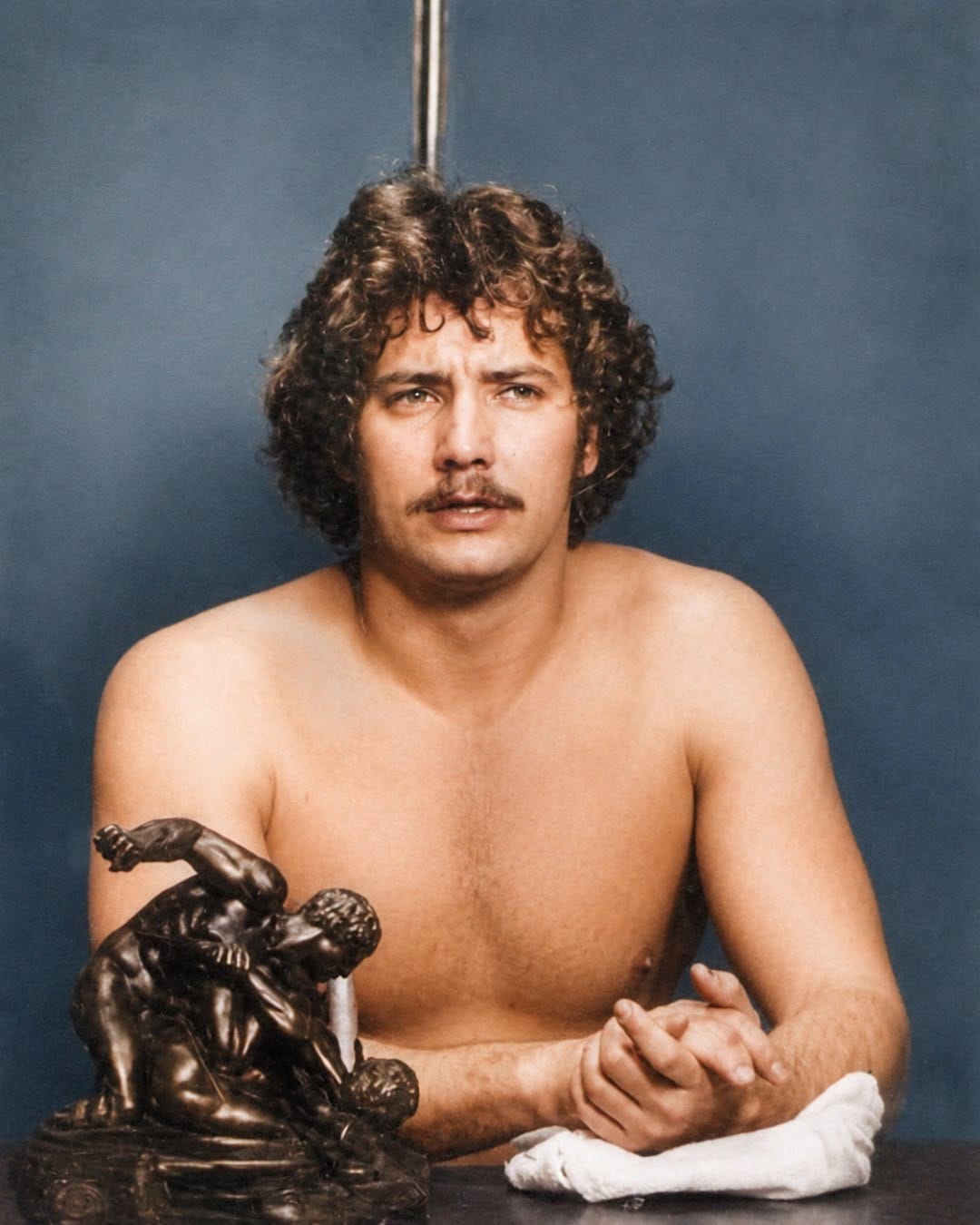
Early in his career, in the early 1970s, he traveled to Australia and worked for promoter Jim Barnett’s World Championship Wrestling promotion. While there, he captured the NWA Austra-Asian Tag Team Championship, partnered at different points in records with wrestlers such as Dennis McCord or Austin Idol.
This overseas run is often overshadowed by his long Southern territory career (especially in Alabama with cousin Robert Fuller) and his later WCW run as the rugged Bunkhouse Buck, but it shows how far the territory-era hands of that era traveled even as young workers. Golden debuted in 1968 for his father Billy Golden’s Alabama promotion and kept wrestling into 2020, giving him a remarkably long career spanning more than five decades.

Thank You for Watching and Listening
I’m Tony Richards, Pro Wrestling Historian, Author and Storyteller. I share pro wrestling historical items in each issue of the Time Tunnel Pro Wrestling History Newsletter and each episode of our podcast show. Thanks for your support! If you enjoy my information on select events, matches and insights, please share with folks you think might like to be a subscriber!
Remember, Premium subscribers get access to exclusive and special content such as some special issues including a multi-part deep dives on wrestling territories, wrestler bios and championship title histories, special audio and video interviews on territory pro wrestling and more available in the Pro Wrestling Time Tunnel for Premium Subscribers. Being a Premium Subscriber also means you support me in my efforts to document Pro Wrestling History through my research, writing, books, vidoes and podcasts. And…I have something very special planned for our Premium Subscribers on the Podcast side of things in 2026! Details soon here in the Pro Wrestling Time Tunnel.