


Today’s Best Quote: To think is easy, to act is difficult, to act as one thinks is most difficult - Goethe
Happy Birthday to those who have passed on and to those great wrestlers still with us:
In Memoriam:
(none)
Happy Birthday:
“Wildfire” Tommy Rich (69)
Yukio Sakaguchi (52)
Roderick Strong (42)
Marty Scrull (37)
Tessa Blanchard (30)
RIP Memorial: We stop & remember those who have passed on this day and gave themselves to the business for us, the fans. We salute you and thank you.
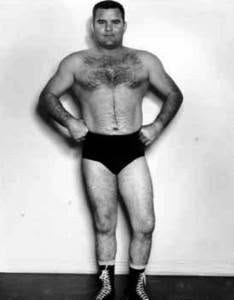
Chuck Conley\Cousin Chuck\Hilbilly Chuck 7-26-2013 t the age of 75
Jose Luis Alvarado Nieves\Super Porky\Brazo de Plata 7-26-2021 at the age of 58

Flashback 1976
Q3 Analysis (July-September)
Big Time Wrestling
Dallas, Texas Office
In the third quarter of 1976 the Dallas booking office of NWA Big Time Wrestling, operated by Fritz Von Erich, remained one of the stronger talent suppliers in the National Wrestling Alliance. The office’s primary weekly houses were the Dallas Sportatorium and Fort Worth. From that base it provided the majority of the working roster that appeared for local promoters across the state — most notably Joe Blanchard in San Antonio and Corpus Christi, and Paul Boesch in Houston. Austin dates also drew from the same pool. The relationship was classic territorial: Dallas created the angles, elevated the stars, and kept a deep midcard employed; the local promoters in the southern and central towns provided the buildings, the local television where available, and the additional gates.
The June 5 Super Bowl of Wrestling at Texas Stadium in Irving (reported near 17,000) still supplied residual heat heading into the summer. NWA World Heavyweight Champion Terry Funk’s double count-out with Fritz Von Erich had reinforced the long-running family rivalry and given the Dallas office a strong talking point for the months ahead.
July
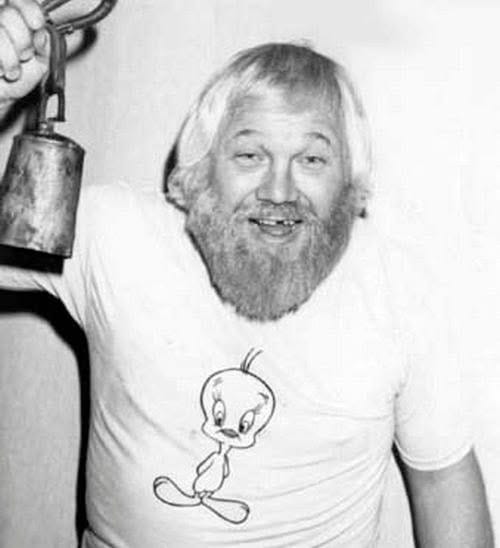
Moondog Mayne quickly established himself as the top heel working the Dallas-Fort Worth loop. He scored key wins and disqualifications over Fritz Von Erich and Jose Lothario, frequently teaming with Killer Brooks. Rocky Johnson remained a reliable babyface counter. Lord Alfred Hayes continued as a secondary heel presence. The undercard featured consistent work from Gino Hernandez, El Bracero, Skip Young, and others. The typical pattern was a Fort Worth show followed the next night by Dallas, allowing angles to progress in tight weekly cycles. The same performers who worked those houses also appeared on Blanchard’s San Antonio and Corpus Christi cards and on Boesch’s Houston shows, carrying the heat and the finishes south.
While the Dallas–Fort Worth houses focused on the developing Moondog Mayne program against Fritz Von Erich, Jose Lothario, and Rocky Johnson, the southern towns continued to draw from both the Dallas talent pool and other NWA offices.
Los Angeles Title Change In San Antonio
On July 7 in San Antonio, Roddy Piper defeated Chavo Guerrero to capture the NWA Americas Heavyweight Championship (the top title of the NWA Hollywood office). Whether this is recorded as Piper’s first reign or a subsequent exchange, the match itself is significant: it placed a major Los Angeles program and title in a Texas building promoted by Joe Blanchard, underscoring how fluid talent and championships could move across NWA territories in 1976. This probably has some connection to Fritz’ NWA Presidency during this time. Guerrero and Piper’s ongoing feud was one of the hottest in the Hollywood territory at the time; bringing it into San Antonio gave local fans a high-profile inter-promotional attraction while the Dallas office’s own stars continued their weekly grind farther north.
The same pattern held throughout the quarter — Dallas-created angles and performers (Mayne, Hayes, Stanke, Lothario, Johnson, and later Kevin Von Erich) regularly appeared for Blanchard in San Antonio and Corpus Christi and for Paul Boesch in Houston, while occasional outside titles and talent, such as the Americas championship, added extra flavor to the southern cards.
August
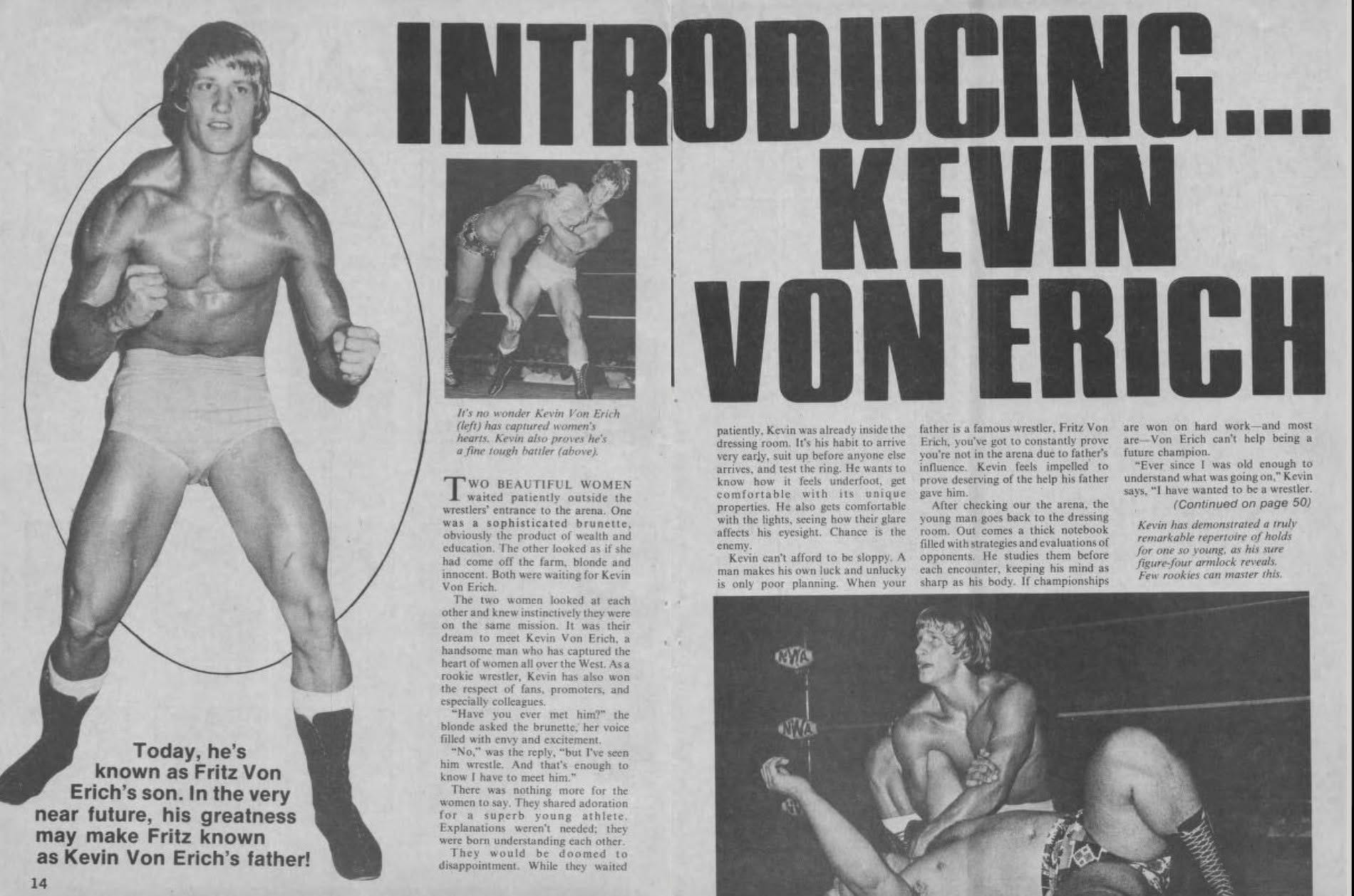
The month produced two significant developments. On August 9 in Fort Worth, Kevin Von Erich made his professional debut, defeating Paul Perschmann (later Buddy Rose). The first of Fritz’s sons to enter the ring under the family name, Kevin’s appearance was a quiet but important moment for the long-term direction of the office.
Storylines intensified. Fritz defeated Lord Alfred Hayes in a lumberjack match in Dallas. Siegfried Stanke arrived and immediately began working claw matches against the top babyfaces, creating a natural physical contrast with Fritz’s Iron Claw. Terry Funk returned and defeated Rocky Johnson. Moondog Mayne and Jose Lothario collided in a Mexican Death Match, with Mayne taking the win. These programs were built in the Dallas-Fort Worth houses and then played in the towns supplied by the office. Rocky Johnson’s activity as NWA Texas Heavyweight Champion during this period further linked the various promotions.
September
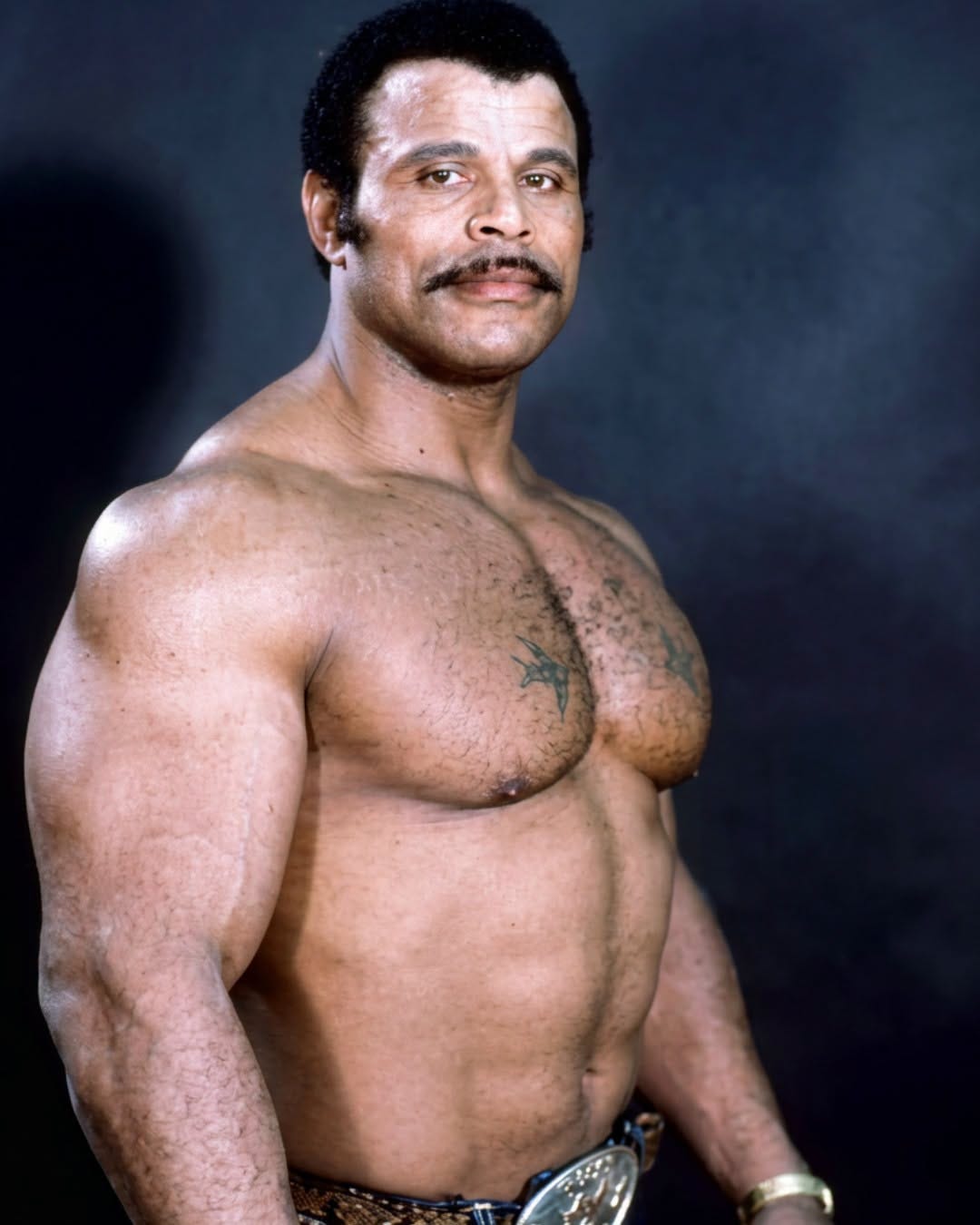
The Mayne program received a clean payoff. On September 14 in Dallas, Rocky Johnson defeated Moondog Mayne with Fritz Von Erich as special referee; the match carried the stipulation that Mayne’s manager J.J. Dillon would leave Texas. The angle was closed properly and the office moved forward.
Fritz and Stanke continued their claw series, including another claw-versus-claw match. Ivan Putski arrived late in the month and immediately worked strong against Mayne and Big O. Les Thornton and Tony Charles added depth to the tag and midcard divisions. Jose Lothario remained a constant across the circuit, particularly valuable in the South Texas towns where Blanchard promoted.
The Broader Circuit
Complete public results for every San Antonio, Corpus Christi, and Houston date in Q3 1976 remain thinner than the Sportatorium and Fort Worth records. That is typical of the era. What is clear is the consistent talent crossover. The same heels who worked multi-week programs in Dallas and Fort Worth — Mayne, Hayes, Stanke, Brooks — appeared for Blanchard and Boesch. Jose Lothario’s popularity in South Texas made him especially useful on those cards. Terry Funk’s World Title defenses continued to rotate through the state, including Houston and other Texas stops. The Dallas office did not need to promote every town directly; it supplied the performers and the stories that made the local promoters’ shows viable.
Analysis
The strength of the Dallas booking office in the summer of 1976 lay in disciplined program construction and roster depth. Angles were allowed to breathe across multiple weeks. Stipulation matches were used for payoff rather than as weekly crutches. Young talent received meaningful exposure without being forced into main events too early. The system still functioned as a true territorial network: one strong office creating product that multiple local promoters could use.
By the end of September the office had closed the Mayne run cleanly, introduced Kevin Von Erich, established Stanke as a credible claw threat, and brought in Putski for the fall. The roads between Dallas, Fort Worth, San Antonio, Corpus Christi, Houston, and Austin continued to carry the same core group of performers. In a year when larger national forces were beginning to press against the territorial model, the Dallas office still delivered coherent, personality-driven wrestling that felt rooted in Texas. That combination of local control and statewide talent supply defined the territory’s strength in the third quarter of 1976.
The booking in Q3 1976 demonstrated the strengths of a mature territorial operation. Programs were built patiently: Mayne’s run stretched across July and August before a decisive September payoff. Fritz worked selective, high-impact matches rather than weekly main events against every challenger. Young talent received meaningful exposure without being overpushed. Special stipulations—lumberjack, Mexican Death Match, lights-out, claw versus claw, special referee—were used sparingly enough to retain their impact. The Sportatorium remained the spiritual home, Fort Worth the reliable secondary market, and the surrounding cities the economic glue that kept the roster employed and the product visible across the state.
By the end of September the territory stood on solid ground. Kevin Von Erich had begun his career. Moondog Mayne’s major run had been concluded with a logical finish. Siegfried Stanke provided a fresh claw threat for Fritz. Ivan Putski added star power for the fall. The roads between Dallas, Fort Worth, San Antonio, Corpus Christi, Houston, and Austin continued to carry the same mix of local heroes and traveling heels that had defined Texas wrestling for decades.
In the broader context of 1976—an era when national television and shifting business models were beginning to strain the territorial system—the Dallas office still delivered consistent, hard-hitting, personality-driven wrestling that felt rooted in its region. The summer of 1976 was not a period of radical change; it was a period of confident execution, the kind that kept fans returning to the Sportatorium week after week and set the stage for the more explosive years that would follow.
Thank You for Watching and Listening
I’m Tony Richards, Pro Wrestling Historian, Author and Storyteller. I share pro wrestling historical items in each issue of the Time Tunnel Pro Wrestling History Newsletter and each episode of our podcast show. Thanks for your support! If you enjoy my information on select events, matches and insights, please share with folks you think might like to be a subscriber!
Remember, Premium subscribers get access to exclusive and special content such as some special issues including a multi-part deep dives on wrestling territories, wrestler bios and championship title histories, special audio and video interviews on territory pro wrestling and more available in the Pro Wrestling Time Tunnel for Premium Subscribers. Being a Premium Subscriber also means you support me in my efforts to document Pro Wrestling History through my research, writing, books, vidoes and podcasts. And…I have something very special planned for our Premium Subscribers on the Podcast side of things in 2026! Details soon here in the Pro Wrestling Time Tunnel.