


Today’s Best Quote: Circumstances are the rulers of the weak, they are but instruments of the wise - Samuel Lover
Happy Birthday to those who have passed on and to those great wrestlers still with us:
In Memoriam:
Rufus R Jones 1913
Tony Altomare 1928
Skip Young 1951
Joe Savoldi 1957
Happy Birthday:
Torrie Wilson (51)
Zack Sabre, Jr (39)
Gary Gordon\Angelo Dawkins (36)
Levi Cooper\Tucker Night (36)
RIP Memorial: We stop & remember those who have passed on this day and gave themselves to the business for us, the fans. We salute you and thank you.
Hercules Cortez 7-24-1971 at the age of 39
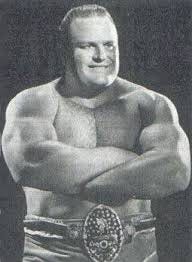
Ronnie P. Gossett 7-24-2007 at the age of 63
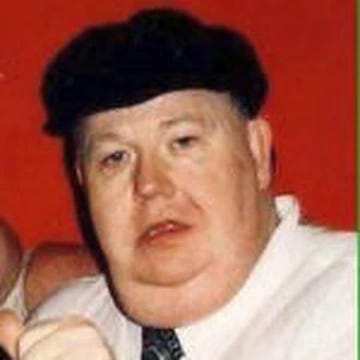
Leonce Cormier\Leo Burke 7-24-2024 at the age of 76

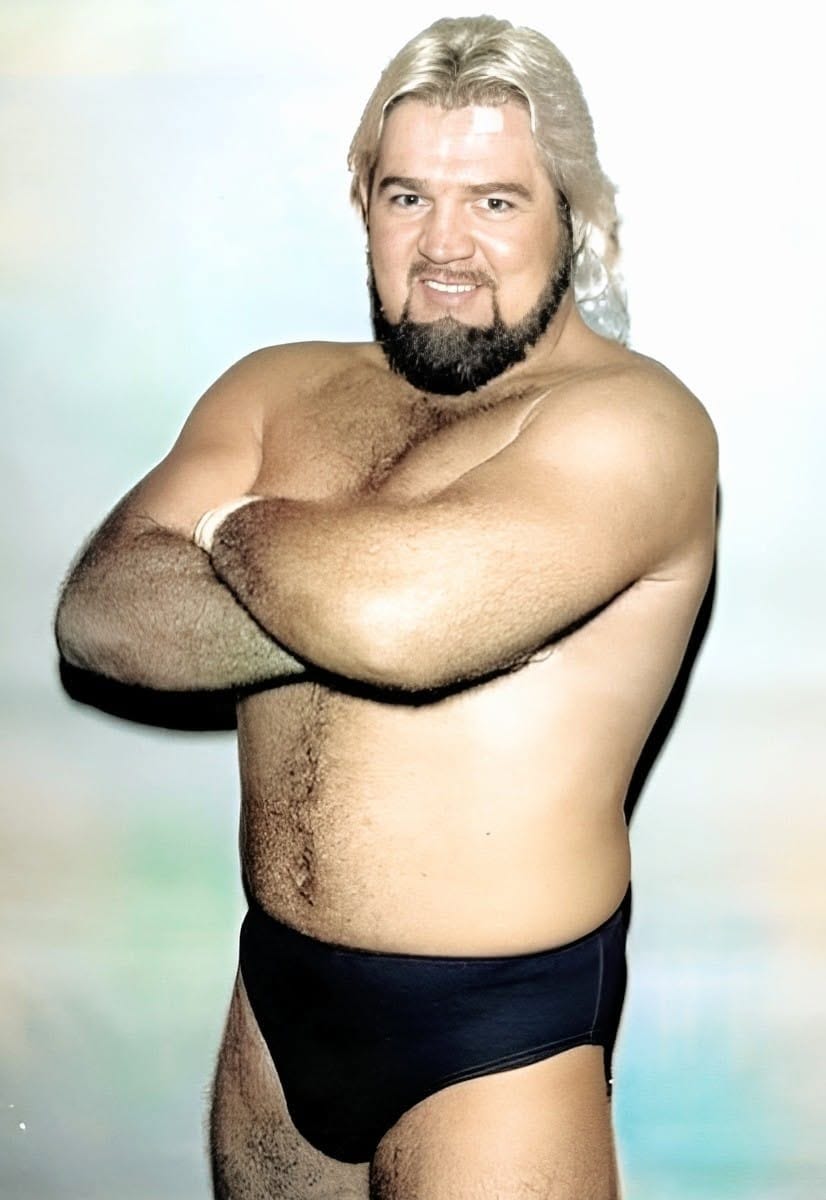
The Life and Career of Rip Oliver
Larry Richard Oliver stood as one of the most successful and longest-tenured stars in the territorial era of professional wrestling. Known professionally as “Crippler” Rip Oliver, he became synonymous with Don Owen’s Pacific Northwest Wrestling (PNW) promotion in Portland, Oregon. While many wrestlers used the Northwest as a stepping stone before chasing national fame, Oliver largely stayed, building an unmatched legacy as the territory’s record-setting heavyweight champion and its most reliable top heel through the 1980s.
Early Life and Entry into Wrestling
Born in Homosassa, Florida (Citrus County), on the Homosassa River, Oliver grew up in a working-class family that owned the Independent Fish Company. His parents, Dennis Lee Oliver (1922–1980) and Sadie Lenore Head Oliver, instilled a strong work ethic amid the natural beauty and demanding labor of the area. Like many wrestlers of his generation, Oliver was a multi-sport high school athlete—excelling in football, baseball, and basketball—and reportedly turned down a college scholarship to pursue wrestling.
He debuted professionally around 1975–1976 (sources vary slightly on the exact year) under names such as Rick Oliver or Ricky Oliver. Early training credits include Soldat Gorky (a veteran with deep PNW ties from earlier decades), with some accounts also referencing influences from Danny Plecha or Stu Hart’s camp. Oliver began as a preliminary wrestler in Championship Wrestling from Florida (CWF) and other Southern territories, including stops in Georgia, Texas, and Mid-America promotions. He gained seasoning through undercard matches and at least one early masked tour of New Japan Pro-Wrestling as “The Gestapo,” where he worked with top stars like Antonio Inoki, Tatsumi Fujinami, and Riki Choshu.
These years established Oliver as a solid, reliable worker with a rugged, no-nonsense style. He developed the physical presence (billed around 6’0”, 209–245 lbs) and in-ring fundamentals that would later define his main-event persona, though he had yet to achieve championship success or widespread recognition.
Arrival and Ascent in Pacific Northwest Wrestling (1980–1982)
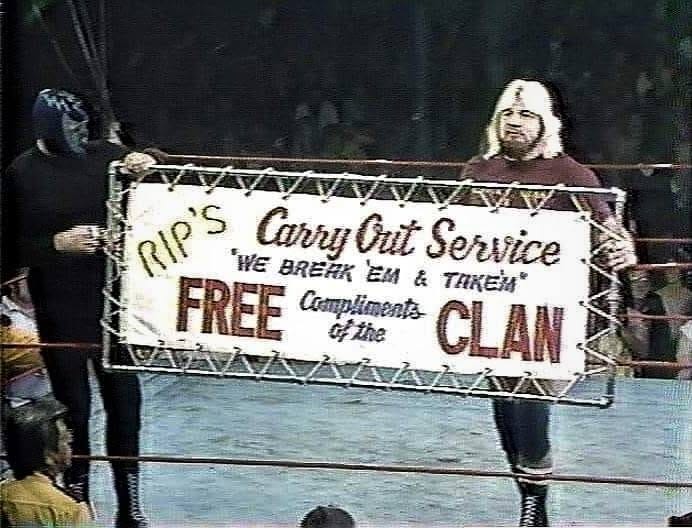
Oliver joined PNW in August 1980, debuting in the Portland Sports Arena under promoter Don Owen. The territory blended West Coast athleticism, brawling, and family-friendly presentation with edgier heel tactics, maintaining strong local television and live event business into the national expansion era. Oliver quickly integrated into Buddy Rose’s heel stable (“Buddy Rose’s Army”) and captured his first title—a PNW Tag Team Championship with Fidel Cortez—within weeks.
The “Crippler” nickname originated from television announcer Frank Bonnema after Oliver separated Jay Youngblood’s shoulder in a match. Oliver embraced the moniker and a signature weapon: a heavily taped thumb that he used to jab opponents’ throats, adding a gritty, illegal edge to his matches. His bleached-blonde hair, beard, and barrel-chested physique gave him a memorable, intimidating look that contrasted with more polished babyfaces.
By April 1982, when Buddy Rose departed the territory, Oliver stepped into the top heel position. He captured the NWA Pacific Northwest Heavyweight Championship for the first time shortly thereafter and held it across multiple reigns more often than any wrestler in PNW history—12 times total, with combined reigns exceeding 793 days. He also amassed 16 PNW Tag Team Championship reigns, frequently partnering with David Sierra (The Cuban Assassin), Buddy Rose, Matt Borne, Bobby Jaggers, Mike Miller, and later his own son Larry Oliver.
Peak Dominance: The Clan, Major Feuds, and Territorial Storytelling (1982–1987)
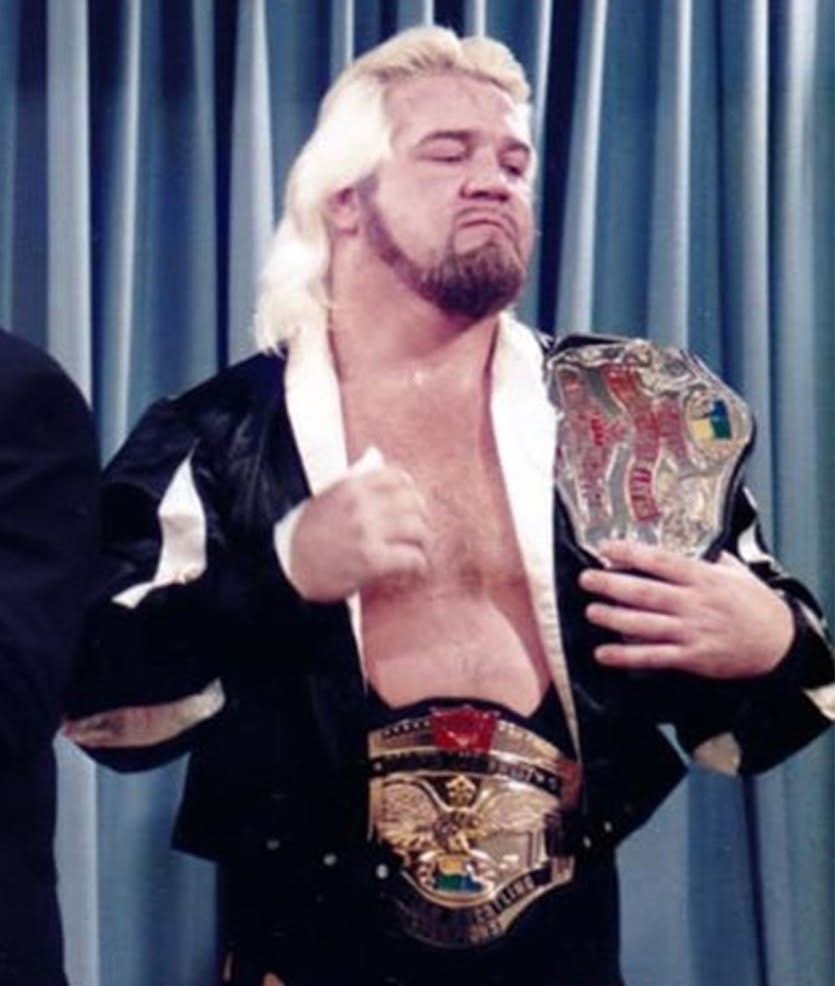
Oliver’s peak years (roughly 1982–1987) showcased the best of territorial wrestling: long-term storylines, heated personal rivalries, and a promotion that rewarded consistency over flash. He formed “The Clan” stable, which included Dynamite Kid (Tom Billington), The Assassin (David Sierra), and at times the Cuban Assassin. The group generated intense crowd reactions; Billington later recalled some of the hottest crowds of his career in Portland.
The rivalry with Billy Jack Haynes spanned multiple years and runs. A notorious 1985 angle saw Oliver (disguised as Santa Claus) attack Haynes with a tire iron after a match, bloodying him in front of the live Portland crowd (TV wisely cut away for younger viewers). The angle exemplified Oliver’s ability to generate nuclear heat while advancing personal stakes. Their programs included loser-leaves-town matches and continued into the late 1980s/early 1990s.
Some of his other key opponents included Curt Hennig, Matt Borne, Stan Stasiak, Rocky Johnson, Brett Sawyer, Steve Regal, Tom Zenk, and Buzz Sawyer. Oliver challenged Ric Flair for the NWA World Heavyweight Championship on October 1, 1984, further elevating his status.
Oliver excelled as a promo artist and in-ring psychologist. He blended brawling, targeted attacks (thumb, foreign objects), strong selling, and expressive body language. Commentators and peers noted his shoulder-breaker and timing in tag matches. He balanced overt villainy with enough charisma that some fans respected his professionalism.
Excursions kept him sharp. In 1985 he worked World Class Championship Wrestling (WCCW) in Texas, managed briefly by Jim Cornette. Storylines involved arm-breaking angles (notably with Mike Von Erich) and winning the WCCW Television Championship after injuring Billy Jack Haynes in a worked-shoot style finish. He also completed additional New Japan tours. These runs reinforced his reputation as a versatile, hard-hitting heel.
Brief National Exposure and Return (1987–1991)
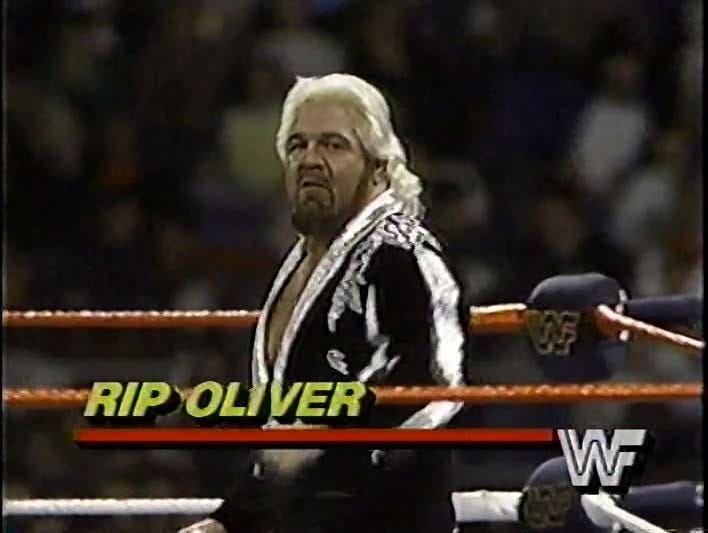
In 1987 Oliver received a short WWF tryout, working primarily as enhancement talent (jobber). His most visible moment came as the masked “Super Ninja” (sometimes called Super Black Ninja), where he was quickly squashed by The Ultimate Warrior in a challenge for the WWF Intercontinental Championship on Saturday Night’s Main Event. The presentation clashed with his established territorial persona, and he soon returned to PNW. The national exposure aired locally and complicated his positioning back home, as the Grappler (Lynn Denton) had risen as the new top heel.
Oliver returned to PNW in 1990. He turned more babyface at times, feuding with The Grappler and teaming with Billy Jack Haynes before shifting dynamics again. Most poignantly, he teamed with his son Larry Oliver, winning the PNW Tag Team Titles together in September 1990—one of several father-son moments in wrestling history. On September 26, 1991, Oliver won the PNW Heavyweight Championship for a record 12th time. His final match came on October 12, 1991, when he dropped the title to Demolition Crush (Brian Adams) in a match announced as breaking Oliver’s neck via full nelson.
Retirement, Post-Wrestling Life, and Legacy
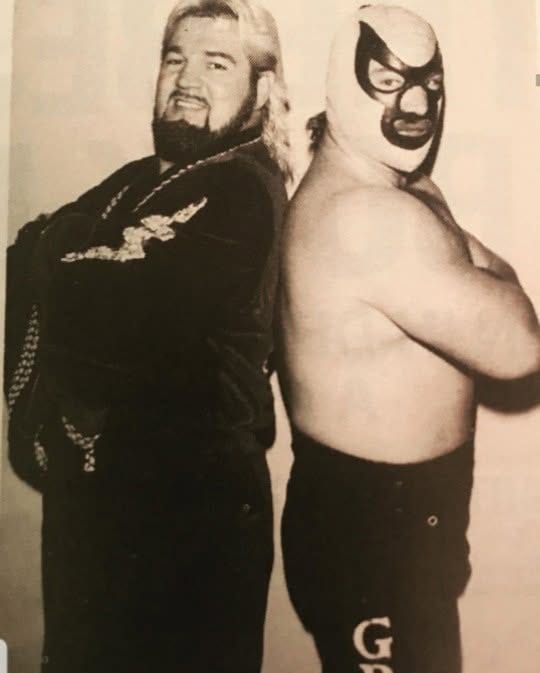
Pictured: Rip Oliver and The Grappler (Len Denton)
With Don Owen’s PNW winding down (the promotion effectively closed its major operations around this period), Oliver retired from full-time wrestling. He worked in the logging industry in the Pacific Northwest—fitting for his rugged, flannel-and-suspenders “logger” persona that sometimes appeared in storylines. He remained a respected figure in the Portland wrestling community and made occasional appearances at fan fests.
Health challenges mounted in later years. Oliver suffered multiple heart attacks and entered hospice care due to end-stage heart failure. He passed away on March 5, 2020, at age 67, surrounded by family. He was survived by his wife Gail and sons, including wrestler Larry Oliver Jr.
In 2016 Oliver joined a class-action lawsuit against WWE alleging traumatic brain injuries and concealment of risks; the suit was later dismissed.
Legacy and Historical Significance
Rip Oliver’s career encapsulates the territorial era’s strengths and the transition to national consolidation. In an industry where many talents chased bigger paydays elsewhere, Oliver became PNW’s backbone. His record 12 heavyweight reigns and 16 tag team reigns reflect sustained drawing power and the promotion’s faith in long-term storytelling over constant turnover. He headlined through the 1980s boom years, worked with legends (Piper, Flair, Hennig, Dynamite Kid), and helped define the territory’s identity as a place of gritty, personal, and sometimes outrageous angles (Santa Claus tire-iron attacks included).
Peers and historians remember him as a complete package: strong promos, excellent selling and body language, reliable in-ring work, and the ability to make opponents look like stars while protecting his own heat. In fan polls decades later, he ranked among the greatest PNW villains, behind only Buddy Rose.
For wrestling historians studying the NWA territories, Oliver represents the loyal, homegrown (or adopted) star who thrived without needing national television. His story parallels other territorial pillars who kept regional promotions vibrant even as Vince McMahon’s WWF expanded. The involvement of his son Larry added a generational layer, and his post-retirement life in the Northwest underscored the real-world roots many territorial wrestlers maintained.
Rip “The Crippler” Oliver may not have headlined WrestleMania or held a world title, but in Portland, Seattle, and the Pacific Northwest, he was the man for nearly a decade. His legacy endures in highlight reels of classic PNW television, the record books, and the memories of fans who saw him rule the territory with a taped thumb, a sharp tongue, and an unmatched commitment to one of wrestling’s most enduring regional strongholds.
One Thing I Learned About Skip Young
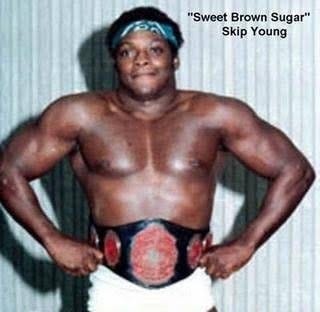
He possessed one of the highest and most impressive dropkicks in the business—so athletic that peers said he could effectively dropkick either a giant like André the Giant or a high-flyer the size of Rey Mysterio with equal effectiveness, and he would get to the opponent in a hurry.
Jim Ross and “Cowboy” Johnny Mantell both specifically praised it as among the best dropkicks they ever saw. Mantell called him “probably one of the highest jumpers I’ve ever seen in the business.”
Young, a strong babyface and high-flyer primarily in Florida and Texas territories (including a friendship with David Von Erich that helped draw him into the business), never became a national superstar, but that explosive athleticism was a standout trait remembered by those who worked with him.
Thank You for Reading
I’m Tony Richards, Pro Wrestling Historian, Author and Storyteller. I share pro wrestling historical items in each issue of the Time Tunnel Pro Wrestling History Newsletter. Thanks for reading! If you enjoy my information on select events, matches and insights, please share it with folks you think might like to be a subscriber!
Remember, premium investors get access to exclusive and special content such as some special issues including a multi-part deep dives on wrestling territories, wrestler bios and championship title histories, special audio and video interviews on territory pro wrestling and more available in the Pro Wrestling Time Tunnel for Premium Investors.