


Happy Birthday to those who have passed on and to those great wrestlers still with us:
In Memoriam:
Louis Tillet 1934
Jay Clayton 1941
Perro Aguayo Ramirez\Perro Aguayo, Jr 1979
Happy Birthday:
Al Perez (69)
Sonny Siaki (52)
Peter Rosenberg (47)
RIP Memorial: We stop & remember those who have passed on this day and gave themselves to the business for us, the fans. We salute you and thank you.
Herb Abrams 7-23-1996 at the age of 41

Tor Komata\Mr Moto 7-23-2007 at the age of 70

George Allen “Buddy” Hack 7-23-2013 at the age of 83
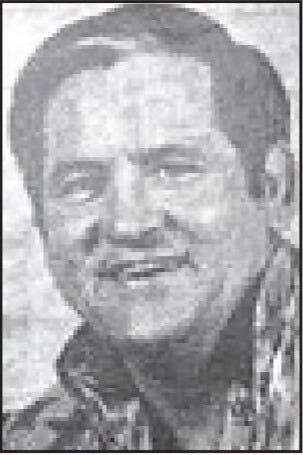
The Life and Career of Hercules Cortez
Alfonso Carlos Chicharro y Lamamié de Clairac better known by his ring name Hercules Cortez, was a Spanish professional wrestler and actor whose powerful physique, strongman gimmick, and international travels made him a notable figure in the territorial wrestling landscape of the 1950s through early 1970s.
Billed at 6 ft 3 in (1.91 m) and 320 lb (145 kg) from Madrid, Spain, he embodied the classic powerhouse archetype while demonstrating surprising agility and showmanship for his size. His career spanned Spain, Europe, North America (including key NWA and AWA territories), and Australia, culminating in a tragic death at age 39 while co-holding the AWA World Tag Team Championship with Red Bastien.
Cortez’s story reflects the ambitious, peripatetic nature of territorial-era wrestling: European talent imported to bolster North American cards, strongman characters drawing crowds with feats of strength, and the harsh realities of constant travel that claimed too many lives.
Early Life and Athletic Foundations
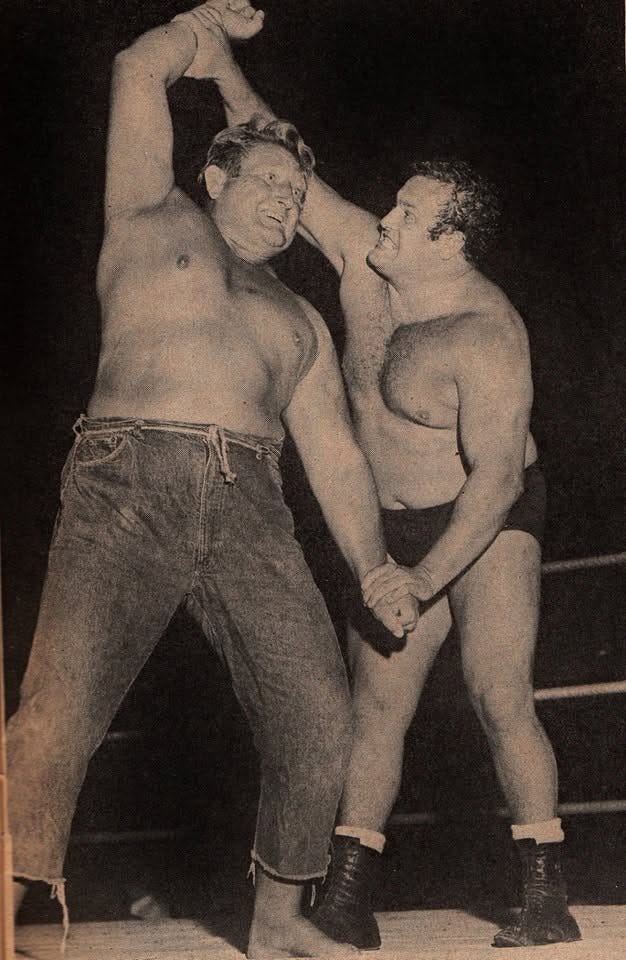
Pictured: Hercules Cortez vs Yukon Eric
Born the youngest of 13 children (some accounts note a larger family) into a prominent Spanish family, Alfonso Carlos Chicharro grew up amid the shadows of the Spanish Civil War. His father, Jaime Chicharro, was a lawyer and Carlist deputy for Nules in Castellón with Basque roots in Zarautz. The family endured profound loss, with four brothers killed during the conflict while still in their teens.
Despite these hardships—or perhaps because of them—young Alfonso channeled his energies into physical pursuits. He stood out for his natural strength and imposing frame (later measured around 1.95 m / ~6 ft 5 in and up to 165 kg in peak condition). He trained at Madrid’s Gimnasio Guzmán el Bueno and excelled in amateur athletics: he was a sub-champion of Spain in the javelin throw and became the Spanish Greco-Roman wrestling champion in 1954, defeating notable competitor Miguel de la Quadra Salcedo in the final. He also pursued weightlifting feats and studied engineering at El Escorial before fully committing to professional wrestling.
These foundations gave him credibility as a genuine strongman rather than a purely worked attraction. His in-ring style would later combine raw power with effective punch combinations and mobility that impressed observers.
Entry into Wrestling and Name Changes
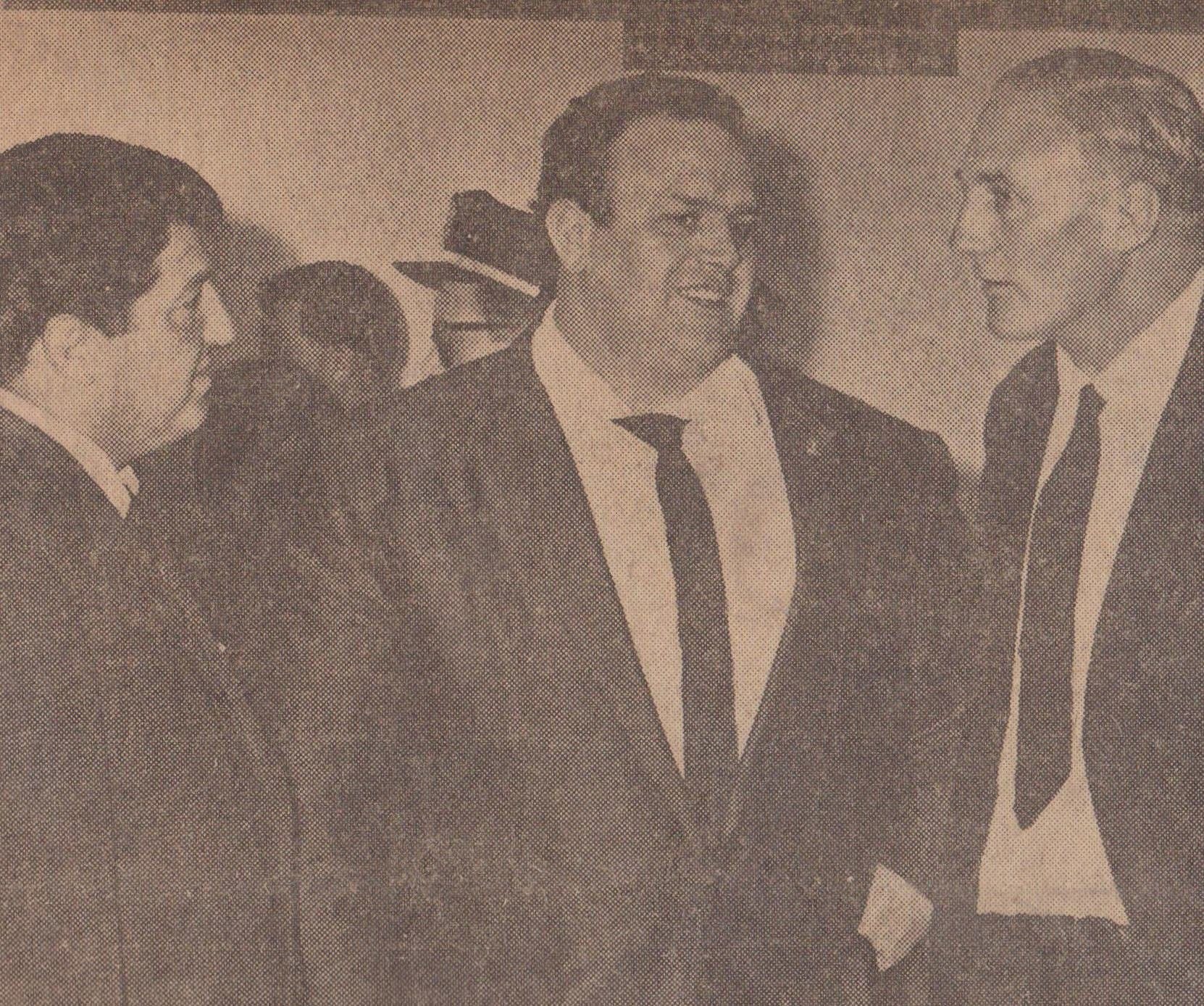
Pictured: Promoter Sam Cohen, Hercules Cortez and promoter Bull Hefer, Johannesburg, South Africa, mid 1960s.
Cortez debuted professionally around 1952 in Spain at approximately age 20, initially competing as Pepe Chicharro or Pepe Cortés (sometimes Pepe Cortez). He quickly established himself on the Spanish scene, winning the Spanish Heavyweight Championship under the Corporacion Internacional de Catch banner. Early highlights included a match against former world heavyweight boxing champion Primo Carnera.
He expanded internationally in the mid-1950s, working in France and Venezuela. By 1958, he arrived in North America, competing in Canada and the United States under the name Claude Dassary (or Dassaray). This period included runs in Maple Leaf Wrestling (Toronto) and NWA Capitol Wrestling in the Northeast, where he faced established names like Fritz von Erich, Gene Kiniski, the Golden Grahams (Jerry and Eddie), and others in singles and tag matches.
A pivotal personal and professional moment occurred during his Canadian travels: he met Waltraud (later Valerie or Valeri), a German woman who did not initially speak Spanish. The well-educated, multilingual Chicharro communicated with her in German; they married and built a family. Around 1960, at her suggestion, he adopted the ring name Hercules Cortez, which became his lasting identity.
The Hercules Cortez Gimmick and Rise
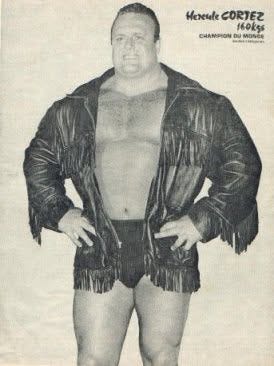
The “Mighty Hercules Cortez” persona leaned heavily into his natural attributes. A signature attraction was a large boulder he reportedly brought from Spain, which he would place in the ring and challenge opponents (or audience members) to lift—few, if any, succeeded. This strongman spectacle, combined with his size, power, and entertaining style, made him a reliable draw across territories.
He worked extensively in the Midwest and Ohio (Al Haft promotions), California (AWA San Francisco), and other NWA-affiliated areas. Claims circulated of major victories, including a “world title” win over Lou Thesz (with accounts varying between Madison Square Garden in 1962 or California dates against figures like Freddie Blassie). While Thesz matches in 1961 reportedly ended in two draws and two losses for Cortez, such promotional billing underscored his push as a top international attraction. He also captured or was recognized for a European Heavyweight title around 1964.
Cortez’s popularity was evident in fan engagement—he reportedly received hundreds of letters weekly—and his pride in his Spanish heritage. He often wore the Cross of St. Andrew and made television appearances in Spain on TVE in the late 1960s, dominating arm-wrestling challenges and once directing a prize to a local baker with large hands who had tied him.
International Peak: Australia and Film Work
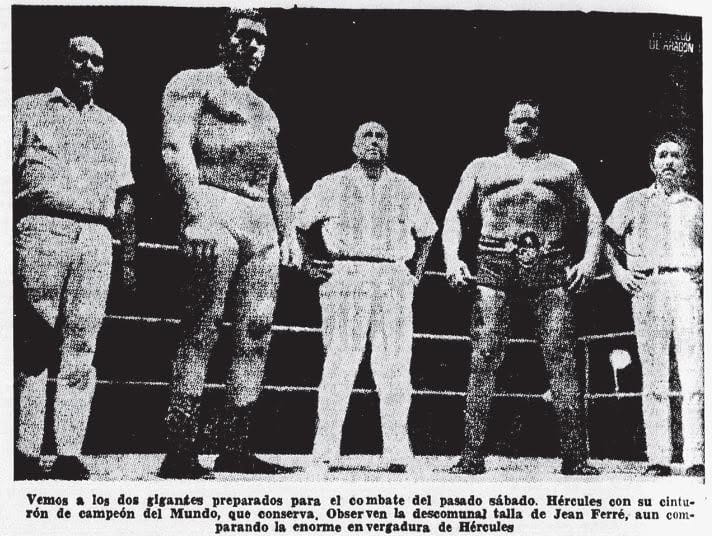
Pictured: Hercules Cotez about to defend his World Heavyweight Title (Spanish version) against Jean Ferre (Andre The Giant) in Madrid, Spain on August 22nd, 1970
In 1965, Cortez joined Jim Barnett’s upstart World Championship Wrestling promotion in Australia (operating as the International Wrestling Alliance or IWA). On May 22, 1965, in Melbourne, he defeated Mitsu Arakawa to win the IWA World Heavyweight Championship. His reign was brief; he dropped the title to Killer Kowalski in the same city roughly a month later. This run exemplified the global opportunities available to top territorial talent.
He also ventured into acting in the late 1960s, appearing in several Spanish and Italian films that capitalized on his imposing physique. Notable credits include supporting roles in spaghetti westerns and comedies such as Kill Them All and Come Back Alone (1968, directed by Enzo Castellari), The Pizza Triangle (1970, Ettore Scola), and Una bruja sin escoba (1967). These appearances supplemented his wrestling income and broadened his public profile in Europe.
AWA Tag Team Success and Final Chapter (1970–1971)
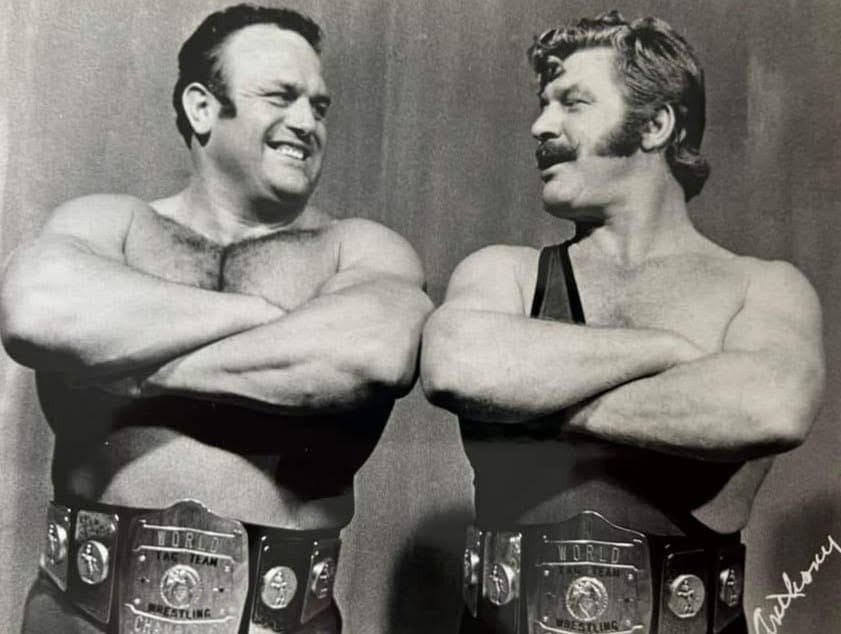
By the late 1960s and into 1970–71, Cortez was a regular in Verne Gagne’s American Wrestling Association territory, one of the most prominent and well-organized promotions in the United States. In early 1971, promoters paired the massive, powerhouse Spaniard with the popular, scientifically oriented junior heavyweight Red Bastien. The odd-couple team clicked: Bastien’s speed, skill, and charisma complemented Cortez’s raw strength and presence, creating compelling matches against established tandems.
On May 15, 1971, in Milwaukee, Wisconsin, Bastien and Cortez defeated Mad Dog and Butcher Vachon to capture the AWA World Tag Team Championship. They defended the titles successfully in several cities, including notable bouts against the Vachons in Chicago and Winnipeg in June 1971. The team was riding high as fan favorites when tragedy struck.
Tragic Death
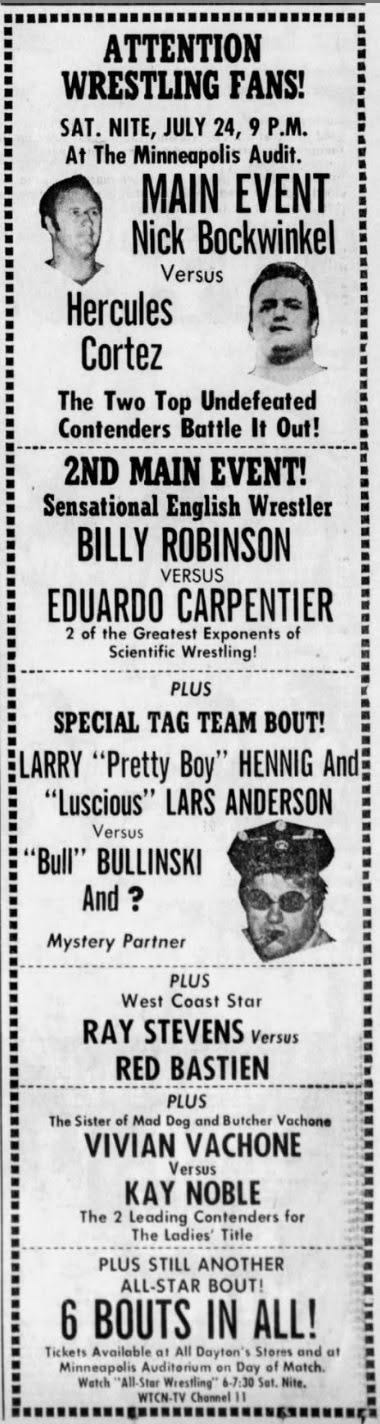
Pictured: The advertised card for July 24th, 1971 at the Auditorium in Minneapolis, Minnesota
On the night of July 23–24, 1971, after a tag team title defense in Winnipeg, Cortez and Bastien were driving back toward the Minneapolis-St. Paul area in a Mustang. Near St. Cloud, Minnesota, the car crashed at high speed. Cortez, believed to be driving or having fallen asleep at the wheel according to some recollections, was ejected through the windshield. He landed approximately 75 feet away, suffering a broken neck and dying instantly at age 39.
Bastien survived with relatively minor injuries. The wrestling world was stunned. Cortez had been scheduled to wrestle Nick Bockwinkel in a singles match that day or shortly thereafter. In the locker room, the loss was deeply felt; Bockwinkel later described Cortez fondly as a beloved “big giant lab St. Bernard” whom everyone wanted to hug—a gentle giant whose death saddened the entire AWA roster amid the inherent hazards of territory travel.
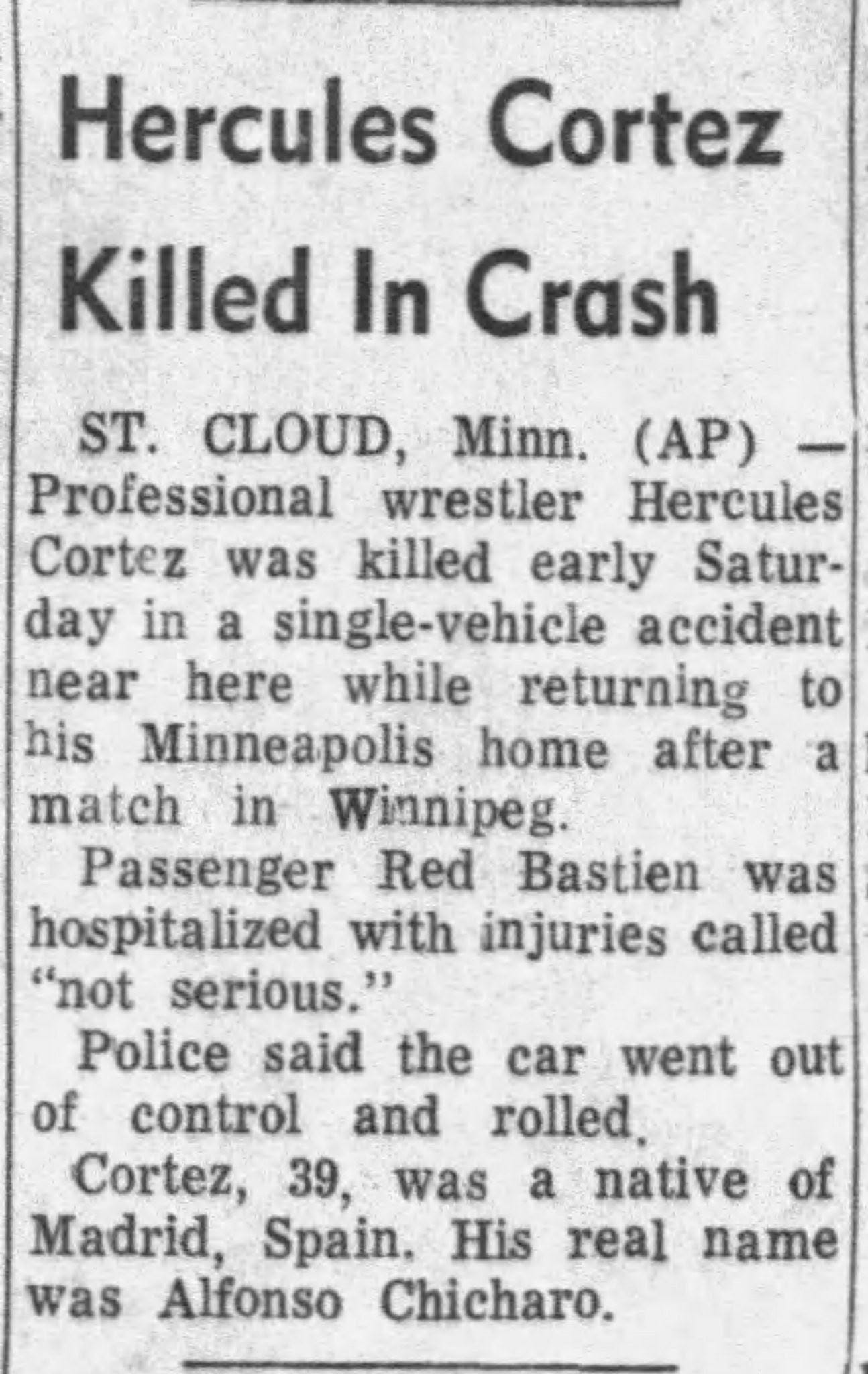
Red Bastien took time off to recover and, upon returning, chose The Crusher as his new tag team partner. The Bastien-Crusher duo continued as champions and feuded with emerging stars like Nick Bockwinkel and Ray Stevens. Cortez was buried in North Royalton, Ohio. He left behind his wife Valerie (then 31) and three young children: Alfonso (born 1960), Ricardo (1963), and María (1964). The family remained in the United States.
A 1970 incident in Spain—where Cortez and others were arrested during a hashish raid, leading to sensational media coverage and mafia speculation due to his celebrity—added a layer of complexity to his later years, though its direct connection to his death remains unproven rumor.
Legacy
Hercules Cortez received posthumous recognition, including a Cauliflower Alley Club award in 2002. In wrestling circles, he is remembered as an exciting performer who brought legitimate athletic credentials and international flavor to North American territories. His strongman boulder challenge and powerful yet entertaining style influenced perceptions of big-man wrestling in the era. In Spain, he became a mythic figure—a national hero who conquered audiences abroad—and legends (including rumors he faked his death to return as a masked wrestler) persisted among fans and peers.
His story also highlights the human cost of the territorial system: long overnight drives between cities like Winnipeg and the Twin Cities, the physical toll of the business, and the sudden losses that could upend storylines and personal lives. Peers like Nick Bockwinkel and promoters recognized him as a genuinely likable and talented performer whose potential was cut short at what should have been a career peak.
Note on nomenclature: A later Puerto Rican wrestler, Ruben “Hercules” Ayala, occasionally used the ring name “Hercules Cortez” during tours in Canadian promotions such as the Atlantic Grand Prix and Stampede Wrestling. While sharing a similar strongman billing, he is a distinct individual with a separate career primarily in Puerto Rico, Canada, and the U.S. The 1932–1971 Spanish wrestler remains the primary historical figure associated with the name in most wrestling databases and histories.
Hercules Cortez’s life—from Civil War-shadowed Spanish youth and amateur athletic triumphs to international wrestling stardom, film work, and a championship reign ended by tragedy—embodies both the romance and the ruthlessness of mid-20th-century professional wrestling. He left behind a legacy of strength, showmanship, and quiet pride in his heritage that continues to resonate with historians and fans of the territorial era.
One Thing I Learned About Al Perez
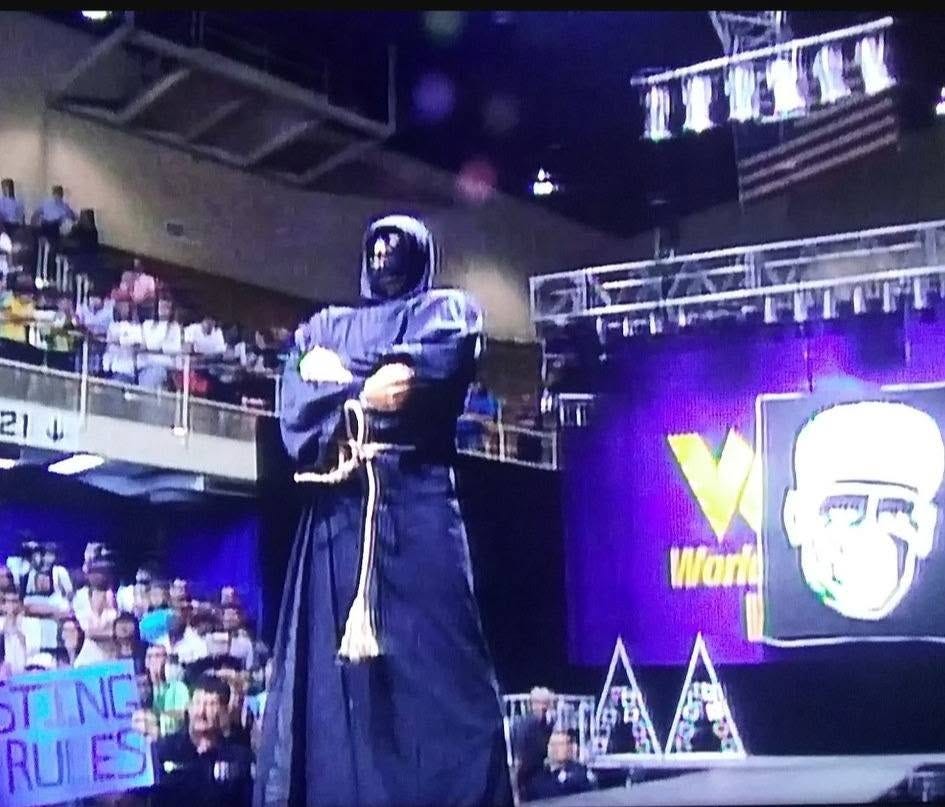
In the early 1990s during his WCW stint, Al Perez was one of the wrestlers who portrayed The Black Scorpion (he faced Sting in a losing effort at Clash of the Champions XII in September 1990. Ric Flair later claimed Perez was originally planned to be the long-term man behind the mask, but Perez disputes the extent of the booking and noted he only did it once before moving on. The gimmick ultimately evolved with other performers before its reveal.
This short-lived mystery-man angle was part of WCW’s efforts to build intrigue around Sting during the territory-to-national transition period. Perez had a reputation as a talented but often underutilized “could-have-been” star across multiple promotions.
Thank You for Reading
I’m Tony Richards, Pro Wrestling Historian, Author and Storyteller. I share pro wrestling historical items in each issue of the Time Tunnel Pro Wrestling History Newsletter. Thanks for reading! If you enjoy my information on select events, matches and insights, please share it with folks you think might like to be a subscriber!
Remember, premium investors get access to exclusive and special content such as some special issues including a multi-part deep dives on wrestling territories, wrestler bios and championship title histories, special audio and video interviews on territory pro wrestling and more available in the Pro Wrestling Time Tunnel for Premium Investors.