


Today’s Favorite Quote: Pray & be grateful for where you are & pray for success, you deserve it-James Altucher
Happy Birthday to those who have passed on and to those great wrestlers still with us:
In Memoriam:
Cyclone MacKey 1903
John Schweigart\Great Scott 1923
Leo Garibaldi 1929
Roy Boyd\Johnny Eagles 1934
Frenchy Martin 1947
Happy Birthday:
Randy Alls\Randy Rose (70)
Yoshiaki Yatsu (70)
Ruben Cain\Robert Gibson (68)
Jeremy Borash (52)
Kevin Kesar\Karrion Kross (41)
Yuvraj Dhesi\Jinder Mahal (40)
Valerie Loureda\Lola Vice (28)
RIP Memorial: We stop & remember those who have passed on this day and gave themselves to the business for us, the fans. We salute you and thank you.
(none)
Flashback 1976
Q3 Analysis (July-September)
NWA Hollywood Territory
Los Angeles, California Office
NWA Hollywood Wrestling, promoted by Mike LeBell, operated as a quintessential territorial promotion in the third quarter of 1976. Its strength lay in a compact Southern California circuit centered on passionate crowds, ethnic storytelling, and a white-hot main-event feud between heel Roddy Piper and babyface Chavo Guerrero (with occasional family involvement from Gory Guerrero). The program blended technical wrestling, brawls, masked wrestlers, tag action, and stipulations, while midcard talent like Crusher Verdu, Butcher Vachon, Pork Chop Cash, and Frank Monte provided depth. The Piper-Guerrero angle—fueled by Piper’s culturally provocative promos, bagpipe antics, donkey segments, and family insults—drove emotional investment, especially among Mexican-American fans during the Chicano Movement era. This created repeatable heat across weekly shows without relying on massive supercards.
Towns and Buildings
The promotion’s loop was efficient and effective:
Most weeks, NWA Hollywood ran:
Sundays: San Bernadino, The Arena
Mondays: Ventura, the County Fairgrounds
Tuesdays: San Dielgo, The Coliseum
Wednesdays and Fridays: Los Angeles, The Olympic (Wednesdays TV, Friday, Main House Show)
Saturdays: Bakersfield, Strelich Stadium
Going into detail on the three main towns and buildings:
• Grand Olympic Auditorium (Los Angeles): The flagship venue and “cathedral” of LA wrestling. Historic, atmospheric, and smoke-filled, it hosted the biggest crowds and most intense reactions to the main feud. Known for legendary bouts (e.g., earlier Blassie-Tolos wars), it gave the Piper-Guerrero program prestige and allowed for riotous crowd responses to Piper’s heel work. Friday or key cards here felt like events.
• San Diego Coliseum: A strong secondary market with reliable attendance. Midweek or weekend shows here (often drawing in the low-to-mid 2,000s on documented nights) extended the feud’s reach beyond LA and provided steady revenue. The building suited solid house show pacing with enthusiastic regional crowds.
• Strelich Stadium (Bakersfield; later renamed Strongbow Stadium): The smaller, loyal market in the Central Valley. Crowds typically ranged 1,200–2,500. It served as a workhorse venue for frequent cards, stipulation matches, and midcard development while still featuring the stars. Ideal for testing angles and giving fans closer access to the action.
This loop allowed frequent exposure without overexposure, with the Olympic delivering prestige, San Diego volume, and Bakersfield consistency. Attendance metrics were respectable for 1976 weekly territory business (e.g., documented San Diego crowds of roughly 1,950–2,420), boosted by the main feud but not at record levels like the 1971 Coliseum supercard.
July 1976: Title Stakes and Building Intensity
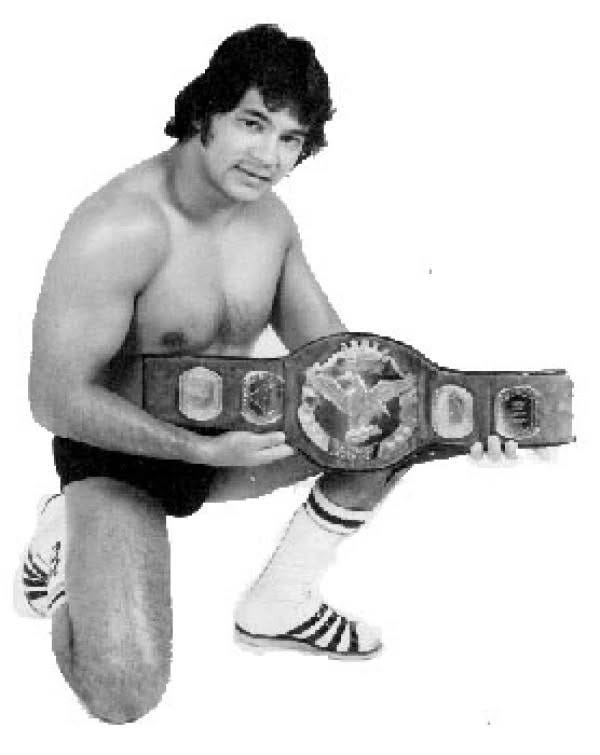
Pictured: Chavo Guerrero
July featured the standard loop (Bakersfield on the 1st, Los Angeles on the 2nd) but centered on escalating Piper-Guerrero heat. Key cards included July 15 in Bakersfield (Crusher Verdu & Roddy Piper vs. Mr. Mexico II & Pork Chop Cash in tags, plus Texas Death Match elements with Chavo). On July 22 in Bakersfield, Piper defeated Mr. Mexico II under a high-stakes stipulation. The Olympic Auditorium on July 23 saw Chavo and Piper fight to a tense draw, supported by matches like Mike Adams over Don Fonzo Fargo and Butcher Vachon over Mr. California. The month peaked on July 27 at the San Diego Coliseum (attendance 2,417), where Chavo retained the NWA Americas Heavyweight Title over Piper in 26:12, with undercard work from Verdu, Monte, Vachon, and others. Chavo also scored other victories, such as a Texas Death win over Verdu. An earlier San Diego show on July 20 drew 1,954 fans for a card featuring Piper vs. Mr. Mexico II and a tag with Chavo & Vachon.
The feud delivered strong emotional and athletic content, with Piper’s provocations generating consistent crowd reactions. Business felt energized, with San Diego figures indicating solid regional draw (around 2,000 on these nights). July established momentum through title implications and stipulations while using the loop to keep supporting talent active.
August 1976: Steady Simmer and Supporting Angles
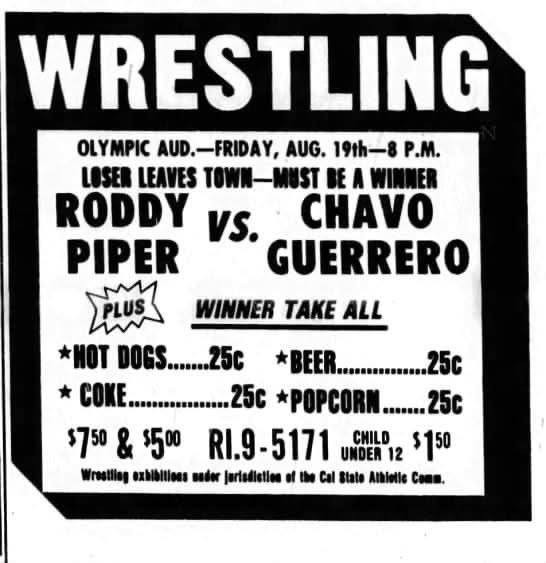
August maintained the rhythm with multiple shows in Los Angeles (e.g., August 20), San Diego (August 3, 10, 24, 31), and Bakersfield (August 5, 12, 19, 26). The main program continued simmering via tags and singles. On August 3 in San Diego (attendance 2,089), highlights included Butcher Vachon & Choi Sun vs. Mr. California & Rock Riddle and Piper vs. Mr. Mexico II. The August 5 Bakersfield card featured Piper again facing Mr. Mexico II, a tag of Don Fonzo Fargo & Mr. California vs. Choi Sun & Pork Chop Cash, and a Stretcher Match. Chavo appeared on several cards, keeping the rivalry alive alongside Piper’s parallel Mr. Mexico II angle and brawls involving Vachon and Verdu.
This month emphasized consistency over blow-offs. The feud provided the emotional anchor while new layers (masked stipulations, stretcher bouts) refreshed cards. San Diego attendance held steady near 2,000, and the loop across towns supported reliable business without major fluctuations. August showcased the territory’s professionalism—deep enough to sustain interest even as the primary program built toward later payoffs.
September 1976: Decisive Wins, Shifting Momentum, and New Directions
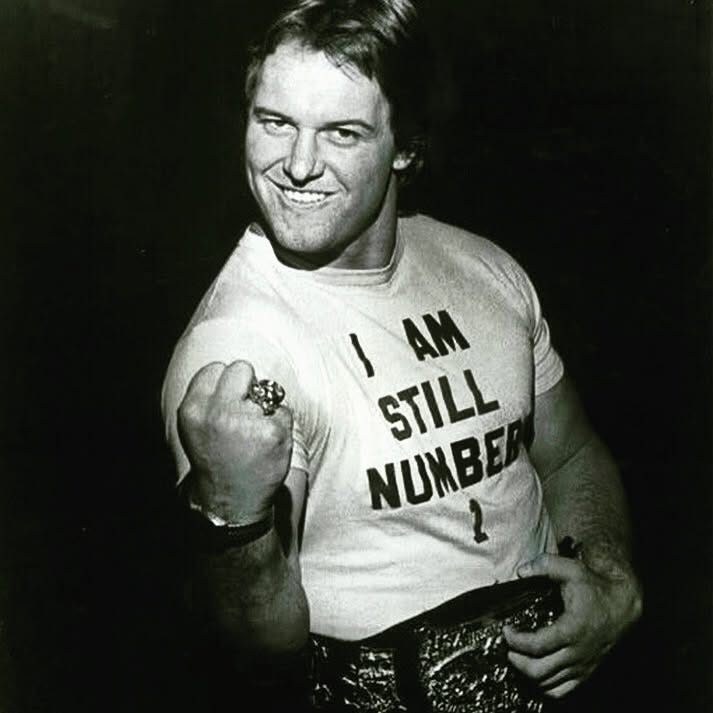
September kept the circuit busy (Los Angeles on the 1st/3rd/8th/22nd, Bakersfield on the 2nd/9th/16th/23rd/30th, San Diego on the 21st). Early action included September 1 at the Olympic (Piper def. Mike Adams but lost a tag to Chavo & El Azteca with Vachon; September 2 in Bakersfield saw The Scorpions defeat Piper & The Hangman for the Americas Tag Titles). Piper picked up midcard wins (over Vachon on Sept. 3 in LA; over Scorpion I on Sept. 8 in LA) amid punishment matches with Vachon.
The Guerrero program hit decisive notes late: September 21 in San Diego (Verdu def. Piper); September 22 at the Olympic (Chavo def. Piper); September 23 in Bakersfield (Chavo def. Piper by DQ). The month closed on September 30 in Bakersfield with Vachon defeating Piper in another punishment bout. Specific attendance figures for these September shows are not widely documented in available records, but the pattern from earlier in the quarter suggests similar steady draws in the low-to-mid 2,000 range for San Diego and consistent (if smaller) crowds in Bakersfield and at the Olympic on feud-driven cards.
September balanced payoffs in the main feud with fresh angles and Piper’s resilience in midcard spots. The Olympic delivered prestige wins for Chavo, while Bakersfield hosted frequent stipulations. Business remained steady, with the feud continuing to anchor attendance across the loop. The month felt transitional—advancing the core story while opening doors for expanded conflicts.
Quarterly Summary
Q3 1976 highlighted NWA Hollywood’s effectiveness: a hot, culturally resonant main feud driving the weekly town loop, supported by varied undercard action and consistent venues. Documented San Diego attendance clustered around 1,950–2,420 on some nights, reflecting reliable weekly business that the Piper-Guerrero program helped sustain (with LA likely performing stronger on key feud cards and Bakersfield providing loyal smaller support). The Olympic provided the spotlight, San Diego reliable crowds, and Bakersfield loyal support. Piper’s heel brilliance and Chavo’s babyface fire created memorable weekly drama, sustaining the territory through a competitive era. The quarter built lasting heat that carried momentum forward, exemplifying classic territorial wrestling at its best.
Thank You for Reading
I’m Tony Richards, Pro Wrestling Historian, Author and Storyteller. I share pro wrestling historical items in each issue of the Time Tunnel Pro Wrestling History Newsletter. Thanks for reading! If you enjoy my information on select events, matches and insights, please share it with folks you think might like to be a subscriber!
Remember, premium investors get access to exclusive and special content such as some special issues including a multi-part deep dives on wrestling territories, wrestler bios and championship title histories, special audio and video interviews on territory pro wrestling and more available in the Pro Wrestling Time Tunnel for Premium Investors.