


Happy Birthday to those who have passed on and to those great wrestlers still with us:
In Memoriam:
Mike Sharpe, Sr 1922
Reggie Lisowski\The Crusher 1926
Dick Beyer\The Destroyer\Dr. X 1930
Jim White 1942
Ernie Holmes 1948
Leon Spinks 1953
Butch Reed 1954
Happy Birthday:
The Original El Vikingo (82)
TJ Wilson\Tyson Kidd (46)
Jeff Cobb (44)
RIP Memorial: We stop & remember those who have passed on this day and gave themselves to the business for us, the fans. We salute you and thank you.
Lou Daro 7-11-1958 at the age of 74

Orville Lee Carlson\Cowboy Carlson 7-11-1996 at the age of 73

Glen Detton 7-11-1997 at the age of 76

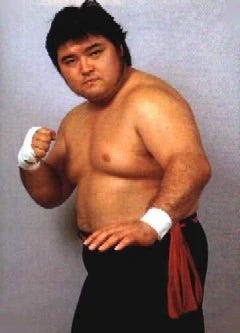
Shinya Hashimoto 7-11-2005 at the age of 40
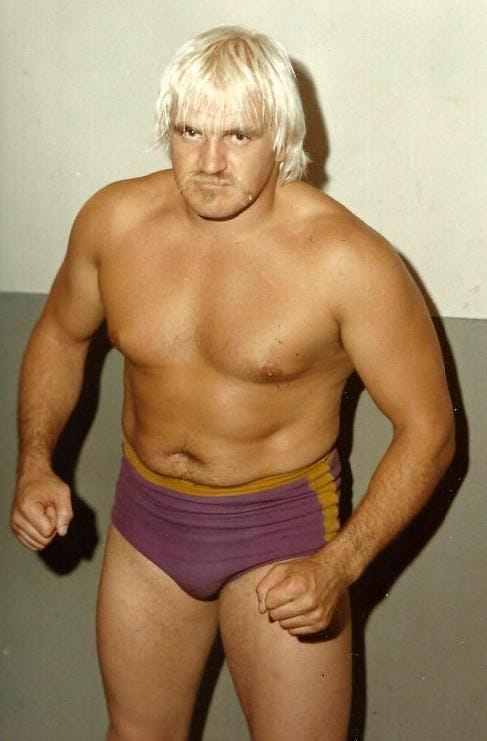
Buddy Wolfe 7-11-2017 at the age of 76
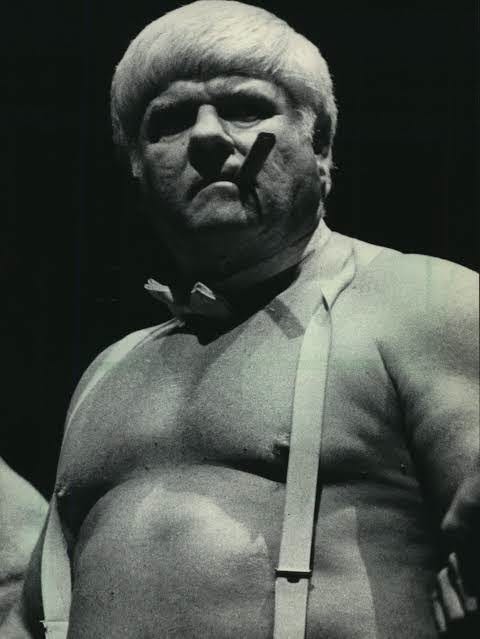
The Life and Career of The Crusher (Reggie Lisowski)
The Crusher represents the perfect complement to the era’s scientific heroes. While Gagne and others emphasized holds and technique, Crusher proved that brawling authenticity and larger-than-life personality could pack arenas just as effectively. He helped make the AWA a powerhouse in the Midwest and gave working-class fans a champion who looked and sounded like them—or at least like the toughest guy at their local tavern.
More than 20 years after his death, The Crusher endures not merely as a wrestler but as an archetype: the unbreakable everyman who turned Milwaukee (and by extension, the entire territorial wrestling landscape) into his personal kingdom. How ’bout dat?
One of the most iconic and successful tag teams in the history of territorial professional wrestling, The Crusher and Dick the Bruiser formed a devastating, long-running duo that defined the rough-and-tumble style of the American Wrestling Association (AWA) and its affiliated promotions in the 1960s and 1970s. Billed at times as “cousins” or the “Cussin’ Cousins,” and nicknamed “saloon goons” by rivals like Nick Bockwinkel, the pair combined brute strength, brawling intensity, and undeniable charisma to become massive draws across the Midwest. Their chemistry stemmed from shared blue-collar sensibilities, football backgrounds (Bruiser was a former Green Bay Packer), and a willingness to bleed and fight for every inch.
The partnership began taking shape in the late 1950s/early 1960s as Crusher Lisowski transitioned from a solo heel to a more established force. Dick the Bruiser, a tough-as-nails competitor known as “The World’s Most Dangerous Wrestler,” proved the perfect foil and partner. They were often presented as family in storylines, enhancing their on-screen bond. This kayfabe connection helped fans buy into their unbreakable alliance, even as they occasionally feuded or traded punches with each other after matches if they felt the opponents hadn’t been sufficiently “softened up.” 
Until early 1965, Crusher worked primarily as a heel in the AWA. A key turning point came during programs with the heel duo of Larry Hennig and Harley Race. Fans began cheering the rugged pair as babyfaces, embracing them as authentic Midwest everymen who absorbed punishment and delivered explosive comebacks. This face turn solidified their status as one of the territory’s top attractions.
Championship Dominance
The team’s title record is staggering:
• AWA World Tag Team Championship: 5 reigns together (part of Crusher’s total of 9 AWA tag title runs).
• WWA World Tag Team Championship (Indianapolis promotion run by Bruiser): 6 reigns.
• Additional NWA regional titles, including the NWA International Tag Team Championship.
Specific notable title wins include:
• Defeating Ivan and Karol Kalmikoff for the AWA titles on August 20, 1963.
• Beating Verne Gagne and Moose Evans on February 23, 1964.
• Overcoming Larry Hennig and Harley Race on May 28, 1966.
• Later reigns against teams like Mitsu Arakawa & Dr. Moto (December 28, 1968), and Nick Bockwinkel & Ray Stevens (August 16, 1975). 
Bruiser’s ownership stake in the Indianapolis WWA promotion (purchased in 1964 with Wilbur Snyder) created a strong working relationship with the AWA, allowing talent and title exchanges that benefited both groups and elevated the team’s visibility.
Steel Cage Specialists and Brawlers
Crusher and Bruiser were masters of the no-holds-barred style. They were particularly renowned as steel cage specialists, rarely losing in that brutal environment. Matches often featured blood, chair shots, and pure chaos—perfect for drawing crowds to arenas like the Milwaukee Auditorium or Chicago’s Soldier Field. 
Famous bouts included cage matches against teams like The Blackjacks (with Bobby Heenan) and programs with Bockwinkel & Stevens, The Koloffs, and others. Their ability to “absorb tremendous punishment and still come back for the win” was a hallmark. Post-match antics—sometimes fighting each other—added to their unpredictable, saloon-brawl reputation.
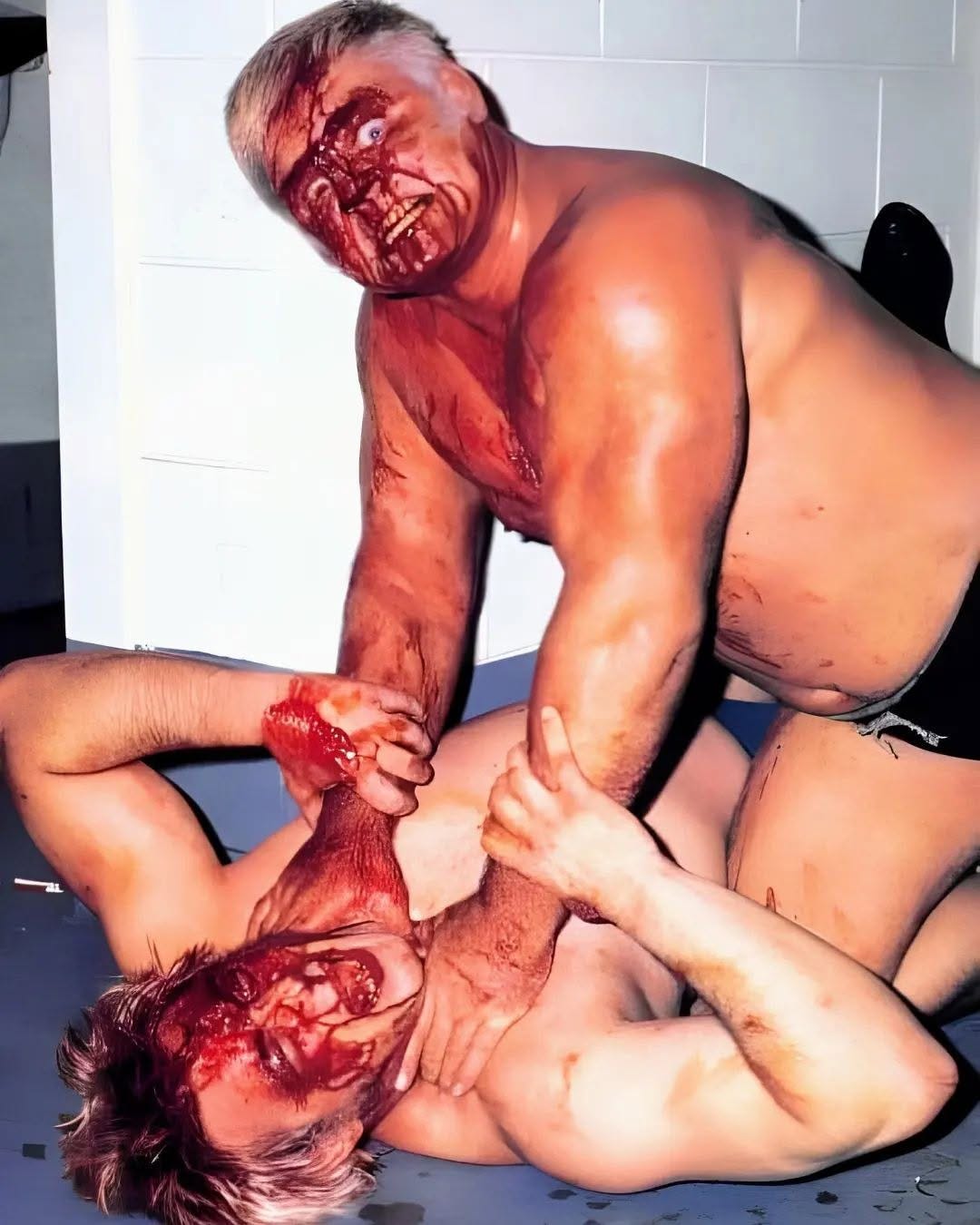
For 15–20 years, the duo worked on-and-off as partners while also pursuing successful singles careers (both held the AWA World Heavyweight Championship). They headlined across the AWA territory, helping maintain strong gates in key markets like Milwaukee, where Crusher’s hometown hero status amplified their appeal. Their gimmick—tough guys who partied hard (kayfabe beer and polka for Crusher)—resonated deeply with working-class fans.
The partnership endured into the 1980s, though age and the shifting wrestling landscape (national expansion) took a toll. They continued teaming sporadically, including multi-man matches at events like AWA SuperClash.
Why It Worked: Complementary Strengths
• Crusher: The charismatic promo man with “100 megaton biceps,” Polish pride, and crowd-pleasing antics.
• Bruiser: The enforcer with legitimate toughness and football pedigree, adding credibility and menace.
Together, they balanced personality and power. Verne Gagne and others respected their drawing power and work ethic. Their success exemplified the territorial model: local heroes with national appeal through regional storytelling and hard-hitting action.
In the annals of pro wrestling history—particularly the territorial era they helped define—The Crusher and Dick the Bruiser remain a gold standard for tag team dominance, toughness, and fan connection. Their runs produced some of the most memorable brawls and championship moments of the 1960s–1970s, cementing both men as legends. “How ’bout dat?” indeed.
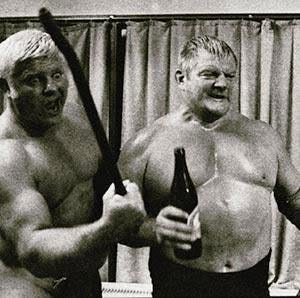
The dynamic between Reggie “The Crusher” Lisowski and Verne Gagne stands as a classic example of territorial wrestling storytelling: a promoter/owner and top star whose in-ring rivalry highlighted contrasting styles while driving business for the American Wrestling Association (AWA). Gagne, the Minnesota native, former Olympian, NCAA champion, and founder/owner of the AWA, embodied the clean-cut, technical “scientific” wrestler. Crusher, the gravel-voiced, barrel-chested brawler from South Milwaukee, represented raw power, working-class charisma, and unorthodox toughness. Their encounters helped define the AWA’s appeal in the Upper Midwest during its peak territorial years.
Gagne positioned himself as the heroic technician who relied on holds, counters, arm drags, submissions, and endurance. Crusher brought the opposite: brute strength, body slams, claw holds, strikes, and a larger-than-life persona complete with bombastic promos about his “100 megaton biceps,” calling opponents “turkeynecks,” and his signature “How ’bout dat?” Their programs emphasized the technician vs. powerhouse clash, with Crusher often serving as the brawling nemesis (or later ally) to Gagne’s established hero role. This contrast resonated with fans—Gagne as the local Minnesota ideal, Crusher as Milwaukee’s tough-guy everyman.
Crusher was one of the AWA’s biggest draws, helping pack arenas in key markets like Milwaukee and the Twin Cities. Their matches were frequently described as “dandy” by Gagne himself.
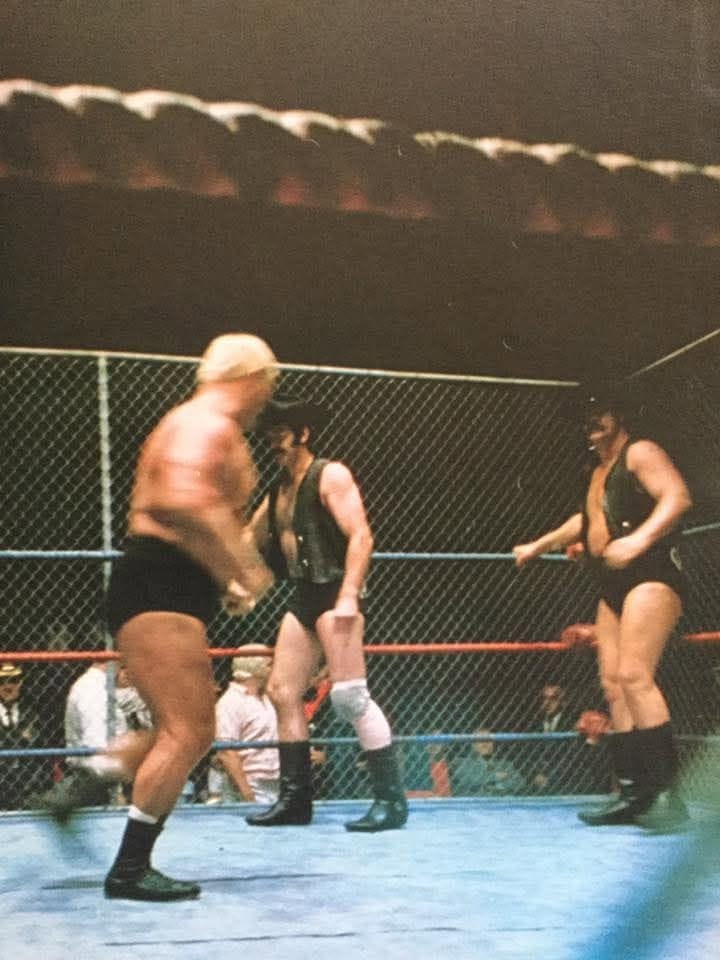
Pictured: The Crusher and Bruiser vs The Blackjacks
Their rivalry featured several high-stakes singles bouts, primarily for the AWA World Heavyweight Championship:
• Early Context (1950s): They crossed paths in tags, such as a 1956 match where Gagne teamed with Argentina Rocca and Wilbur Snyder against Reggie Lisowski, Stan Lisowski (kayfabe brother), and Dick the Bruiser. 
• 1963 Title Runs: Crusher defeated Gagne on February 15, 1963, in Omaha to win a version of the World Heavyweight Championship. On July 9, 1963, Crusher beat Gagne again in a match that unified the AWA World Heavyweight title with the Omaha version. 
• November 16, 1963 – St. Paul Armory: In a notable two-out-of-three falls match before 7,647 fans, Crusher defeated Gagne to capture the AWA World title for the second time. Gagne dominated early with technical wrestling, but Crusher rallied with power and resilience to win cleanly in the deciding fall. This reign lasted roughly 28 days before Gagne regained the title on December 14, 1963, in Minneapolis.
These quick title changes were typical territorial booking—building drama, creating rematches, and sustaining attendance. Crusher ultimately held the AWA World Heavyweight Championship three times in his career (the third coming against Mad Dog Vachon in 1965).
Gagne’s feuds list included Crusher prominently while Gagne was champion.
Beyond rivalry, they teamed successfully. Crusher and Gagne won the AWA World Tag Team Championship together once (part of Crusher’s nine total AWA tag reigns and Gagne’s four).  This showed mutual professional trust and versatility—two top stars who could work together when the storyline called for it.
Business and Promoter-Star Dynamics
As AWA owner and booker, Gagne relied on Crusher as a reliable main-event attraction and gate-draw for years. Crusher’s longevity and popularity in the territory (especially Milwaukee) made him invaluable. Their working relationship spanned decades, with Crusher primarily associated with the AWA even as he worked other territories.
In the mid-1980s, as the AWA faced challenges This reflects typical territorial economics—promoters like Gagne often operated on tighter budgets compared to the emerging national expansion.
Despite the competitive in-ring battles, there appears to have been genuine professional respect. Upon Crusher’s death in October 2005, Gagne told the St. Paul Pioneer Press: “We had some dandy matches. The Crusher never was a great technically skilled wrestler, but he was tougher than nails and a brawler. He could bench press nearly 600 pounds. And he loved to have fun. After a match, he couldn’t get a beer in his hands fast enough.”
**Tony Note: The beer reference was kayfabe—Crusher reportedly preferred wine in real life.)
No major public feuds or personal animosity are documented; their relationship fits the standard model of a territorial promoter using a charismatic star to create compelling, money-drawing programs while maintaining a functional working alliance..
Their rivalry and occasional partnership exemplified the strengths of the territorial system: regional heroes with distinct personalities, extended storylines built on style contrasts, and flexible booking that allowed both competition and cooperation. Crusher helped make the AWA a powerhouse in the Midwest, while Gagne’s vision and in-ring presence provided the foundation. Together, they contributed to some of the AWA’s most memorable moments in the 1960s, an era when the promotion thrived on such well-crafted rivalries.
In summary, the relationship between The Crusher and Verne Gagne was one of professional synergy—rivalry that drew crowds, teamwork when needed, and underlying respect that endured beyond the ring. It remains a highlight of AWA history and a textbook example of how contrasting styles could elevate an entire territory.
One Thing I Learned About The Destroyer
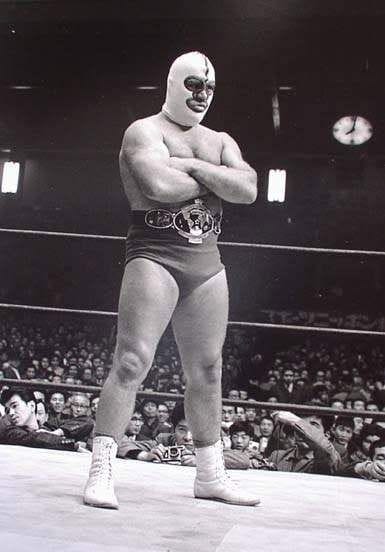
When he first started wrestling as the masked Destroyer in Los Angeles in 1962, his original mask was uncomfortable—it was hard to see through and extremely itchy. Journeyman wrestler Ox Anderson came to the rescue by lending him a replacement mask fashioned from a woman’s girdle, which Beyer used successfully for years.
This quirky improvisation helped launch one of the most successful masked careers in wrestling history, including his massive popularity in Japan and signature figure-four leglock. Beyer lived the gimmick so thoroughly that he rarely (if ever) removed the mask in public during his Japanese tours.
Thank You for Reading
I’m Tony Richards, Pro Wrestling Historian, Author and Storyteller. I share pro wrestling historical items in each issue of the Time Tunnel Pro Wrestling History Newsletter. Thanks for reading! If you enjoy my information on select events, matches and insights, please share it with folks you think might like to be a subscriber!
Remember, premium investors get access to exclusive and special content such as some special issues including a multi-part deep dives on wrestling territories, wrestler bios and championship title histories, special audio and video interviews on territory pro wrestling and more available in the Pro Wrestling Time Tunnel for Premium Investors.