


Happy Birthday to those who have passed on and to those great wrestlers still with us:
In Memoriam:
Charley Perry Croy\Sailor Moran 1907
Wayne Bridges 1936
Shigeru Akabane\Little Tokyo 1941
Happy Birthday:
Jim Morris\Hillbilly Jim (74)
Mark Lowrance (67)
Jerry Sags (62)
Jamie Dundee (55)
Tatsuhito Takaiwa (54)
Adam Cole (37)
RIP Memorial: We stop & remember those who have passed on this day and gave themselves to the business for us, the fans. We salute you and thank you.
Walter Paul Sieber\Waldo Von Erich 7-5-2009 at the age of 75
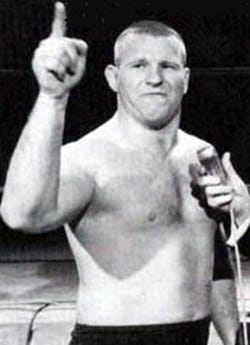
W. Douglas Donnan\Karl Von Brauner 7-5-2009 at the age of 78

Select Event Flashbacks
81-Year Flashback:
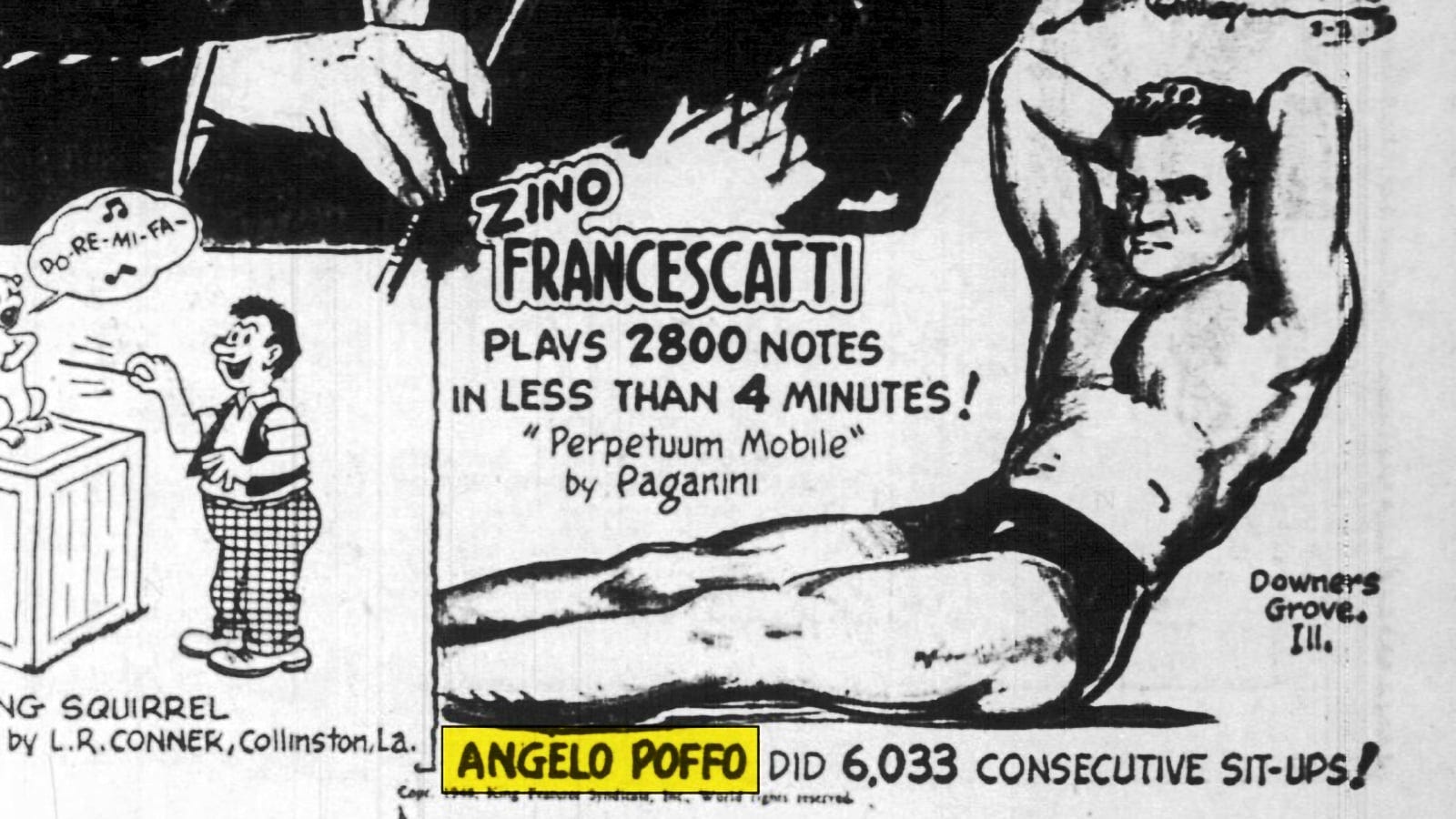
7-4-1945: Angelo Poffo set the world record for consecutive sit-ups by doing 6,033 sit-ups in 4 hours and 10 minutes
50 Year Flashback
Q3 (July-September)
NWA Tri-State Wrestling
Tulsa, Oklahoma Booking Office
July 1976: The Superdome Summit
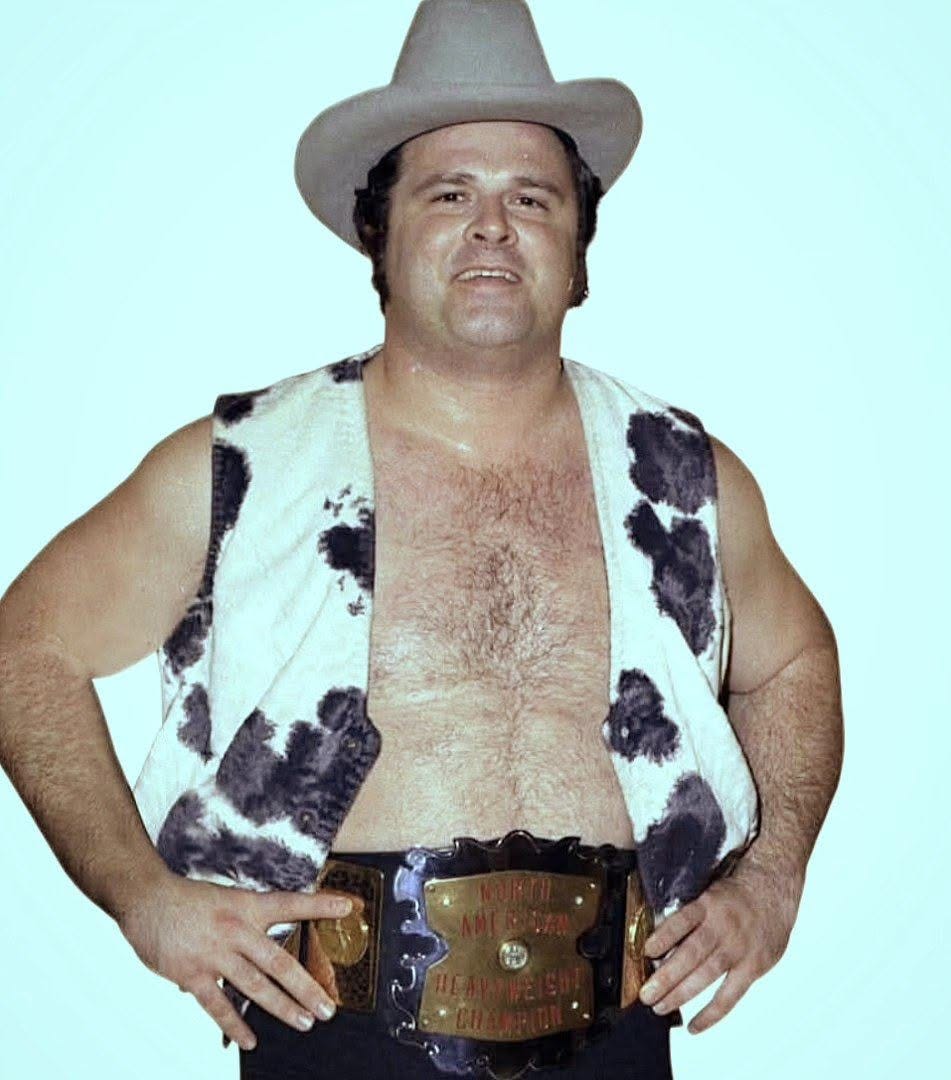
In July 1976, the NWA Tri-State promotion reached a dramatic crescendo with its most ambitious undertaking to date. Based in Tulsa under promoter Leroy McGuirk and powered by the star presence of “Cowboy” Bill Watts as North American Heavyweight Champion, the territory built steadily toward a landmark supercard. Weekly shows in Tulsa’s Expo Square Pavilion and Fairgrounds Pavilion, along with stops in Oklahoma City, Shreveport, and other circuit towns, kept the action hot and drew solid crowds that reflected the territory’s dedicated fanbase. Watts defended his regional title in tough encounters, including submission-style bouts against powerhouses like Ken Patera. Tag team programs involving Ted DiBiase and Dick Murdoch, as well as ongoing rivalries featuring Killer Karl Kox, Buck Robley, and Nelson Royal, filled out the cards and sustained interest.
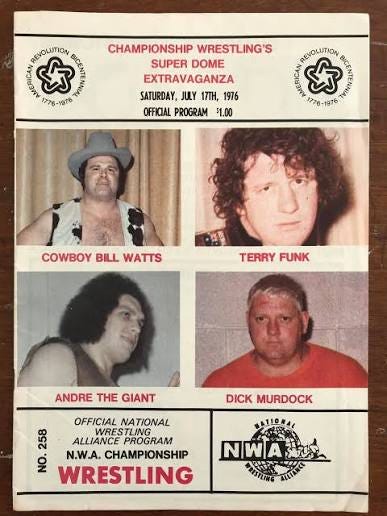
The centerpiece arrived on July 17 at the Louisiana Superdome in New Orleans. This first major Superdome wrestling extravaganza drew approximately 17,000 fans and generated a $75,000 gate, proving Tri-State’s ability to stage big events in a major market and marking one of the strongest single-night performances in the territory’s history up to that point. The stacked undercard delivered variety and spectacle. Pat Barrett pinned Tom Jones to open the show. Ted DiBiase teamed with Jay Clayton to defeat Randy Tyler and Bobby Jaggers, giving the rising DiBiase valuable exposure. Nelson Royal scored a pinfall victory over Ron Starr. Grizzly Smith overpowered Sigfried Stanke. A lighter bout saw Bobo Johnson and Farmer Pete defeat Little Tokyo and Billy the Red. Dick the Bruiser and Abdullah the Butcher battled to a double disqualification in a wild, crowd-pleasing brawl. Andre the Giant teamed with Buck Robley to defeat Ken Patera and Bob Sweetan, pairing the giant with a local heel for memorable dynamics. In one of the evening’s most unique stipulations, Dick Murdoch defeated Killer Karl Kox in a blindfold “Jim Bowie death match,” advancing or concluding a chapter in their long, intense personal feud with stiff, dramatic action.
The main event pitted NWA World Champion Terry Funk against Bill Watts in a hard-hitting clash that symbolized territory pride versus national supremacy. Watts, the embodiment of Tri-State toughness, pushed the champion to the limit in a grueling contest that ended with Funk retaining via TKO. The finish—whether the result of accumulated punishment, a strategic hold, or referee stoppage—left Watts bloodied but respected, and the New Orleans crowd of 17,000 energized. Funk’s victory maintained the integrity of the world title while elevating Watts as a credible contender who had gone toe-to-toe with the best. The entire July 17 card blended local heroes with touring stars like Andre, the Bruiser, and Funk, creating an unforgettable night that boosted the promotion’s profile across Louisiana and beyond. The month closed with the territory riding high on this momentum, setting the stage for continued strong programming in the weeks ahead.
August 1976: Momentum and the Weekly Grind
August saw Tri-State settle back into its reliable territorial rhythm while capitalizing on the excitement and strong attendance generated by the Superdome show. House shows continued across the circuit, with Tulsa remaining the primary hub at venues like the Expo Square Pavilion, where crowds remained robust in the wake of July’s success. Cards there and in Oklahoma City, Shreveport, Alexandria, and Arkansas stops featured Watts prominently, often defending the North American Championship or working tag matches that showcased his enduring draw and helped maintain solid gates. The loss to Funk became narrative fuel rather than a setback; Watts carried himself as the territory’s unbreakable standard-bearer, using the experience to motivate stronger performances against regional challengers.
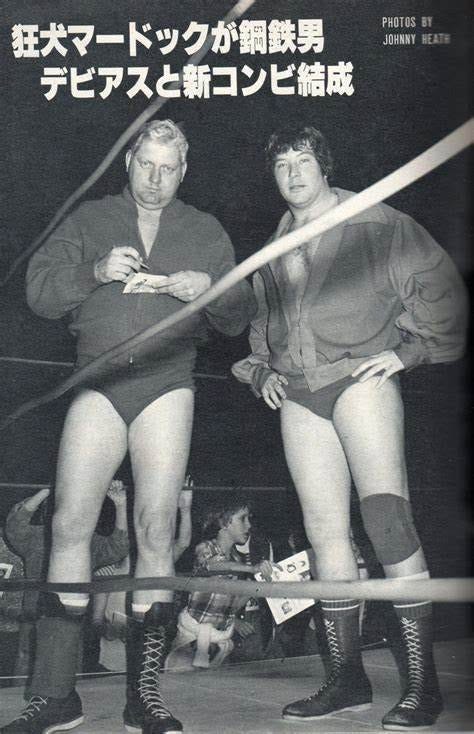
Pictured: The tag team of Dick Murdoch and Ted DiBiase in 1976
Tag team action stayed competitive, with teams built around DiBiase, Murdoch, Robley, Royal, and veterans like Kox and Sweetan trading advantages and keeping the United States Tag Team titles in play. Robley’s “Yellow Belly” antics and loaded-arm tactics continued to draw heat, while DiBiase’s athleticism marked him as a future cornerstone. Nelson Royal provided steady veteran presence on midcards, and occasional women’s matches—such as those involving Kitty Adams, Vivian St. John, Leilani Kai, and Toni Rose—added diversity to certain Tulsa cards that continued to attract good houses. Special attractions rotated through to maintain interest, and television from key markets like Shreveport advanced ongoing angles, including any lingering fallout from the Murdoch-Kox blindfold match and Patera’s power-based challenges.
The month emphasized consistency over spectacle, with attendance holding steady at the territory’s typical strong levels for weekly stops. Crowds responded well to the familiar mix of stiff wrestling, personal storylines, and believable rivalries that defined Tri-State. Watts’ resilience after the world title challenge reinforced his status, while younger talent gained ground through strong performances. By late August, the promotion had successfully translated the July high—highlighted by the 17,000-fan Superdome gate—into sustained weekly business, keeping fans engaged across Oklahoma, Louisiana, and Arkansas.
September 1976: Sustained Strength and Transition Seeds
September maintained Tri-State’s steady pace as summer gave way to fall, with the circuit’s loop of house shows delivering dependable value and consistent attendance in Tulsa, Oklahoma City, Shreveport, New Orleans-area spots, and Arkansas towns. Watts continued anchoring the promotion as North American Champion, working main events that blended title defenses with tag team combinations alongside partners like Murdoch and drew the reliable crowds the territory had come to expect. Programs evolved naturally from prior months: DiBiase’s push accelerated with more featured matches, Robley and Kox-type heels provided consistent antagonism, and Royal anchored solid undercard bouts. The tag division remained active, with defenses and multi-man tags keeping storylines fresh and supporting steady gates.
Television and arena promos built toward potential shifts in the championship landscape, planting subtle seeds for later developments in the fall—such as the emergence of figures like The Spoiler in contention. While no single supercard matched July’s Superdome scale of 17,000 fans, the month featured the usual blend of athletic contests, blood-and-guts rivalries, and occasional gimmicks that kept the product engaging and houses strong. Women’s bouts and other variety acts appeared on select cards to broaden appeal.
Overall, September exemplified Tri-State’s resilience in the territorial era. McGuirk’s operation thrived by balancing big-dream ambitions (proven by the July Superdome success) with week-in, week-out reliability and solid attendance figures. Watts’ leadership, the rising stock of DiBiase and Murdoch, and the depth of the roster ensured strong gates and loyal audiences throughout the month. As the quarter ended, the promotion stood poised for continued success, with the summer’s highlights—including the standout New Orleans crowd—reinforcing its place as one of the NWA’s most vibrant territories.
Thank You for Reading
I’m Tony Richards, Pro Wrestling Historian, Author and Storyteller. I share pro wrestling historical items in each issue of the Time Tunnel Pro Wrestling History Newsletter. Thanks for reading! If you enjoy my information on select events, matches and insights, please share it with folks you think might like to be a subscriber!
Remember, premium investors get access to exclusive and special content such as some special issues including a multi-part deep dives on wrestling territories, wrestler bios and championship title histories, special audio and video interviews on territory pro wrestling and more available in the Pro Wrestling Time Tunnel for Premium Investors.