


Happy Birthday to those who have passed on and to those great wrestlers still with us:
In Memoriam:
Jack Welch 1905
Ed McLemore 1905
Shinya Hashimoto 1965
Happy Birthday:
Steve Olsonoski (73)
Kenneth Rinehurst\Jack Victory (62)
Joseph Dorgon\Johnny Swinger (51)
Joey Janela (37)
RIP Memorial: We stop & remember those who have passed on this day and gave themselves to the business for us, the fans. We salute you and thank you.
John Yachetti\The Beast 7-3-1986 at the age of 59

Billy Garrett\Medic #2 & Intern #2 7-3-2002 at the age of 64
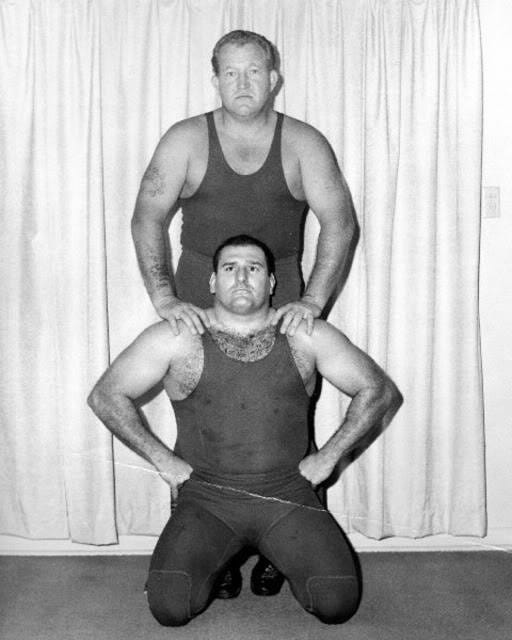
(Garrett and Starr without their masks as Interns)
Perri Aguayo 7-3-2019 at the age of 73

The Life and Career of Adrian Adonis
Keith Franke, better known to wrestling audiences as Adrian Adonis, was born on September 15, 1953, in Buffalo, New York. Adopted by Kenneth and Hortense Franke, he grew up in a working-class neighborhood on the city’s west side alongside two sisters, Karen and Susan. The environment was tough, and Franke developed a reputation for street toughness and loyalty that would later inform his ring persona. He attended high school in the Kenmore area, where he distinguished himself as an amateur wrestler by winning a Section VI title in 1970. Football also appealed to him, and after leaving school he briefly played in the Canadian Football League, though the pull of professional wrestling proved stronger.
Introduced to the business through football connections, Franke crossed into Toronto for training under the demanding veteran Fred Atkins. For two years he absorbed the old-school lessons of timing, psychology, and physical conditioning before making his professional debut in 1974 under the name Keith Franks. His early years unfolded across the North American territorial landscape, a proving ground where wrestlers traveled grueling circuits and learned to adapt quickly. In Pacific Northwest Wrestling he crossed paths with a young Roddy Piper, first as a partner and later as a rival. Adonis teamed with Ron Starr to defeat Piper and Killer Brooks for the NWA Pacific Northwest Tag Team Championship, demonstrating an opportunistic, hard-hitting style that drew heat while showcasing solid in-ring fundamentals. Further south in NWA Hollywood Wrestling he captured the NWA Americas Heavyweight Championship and the tag team title on two occasions, working with partners including Black Gordman and, again, Piper. These experiences forged a versatile performer comfortable in both brawling and tag-team warfare.
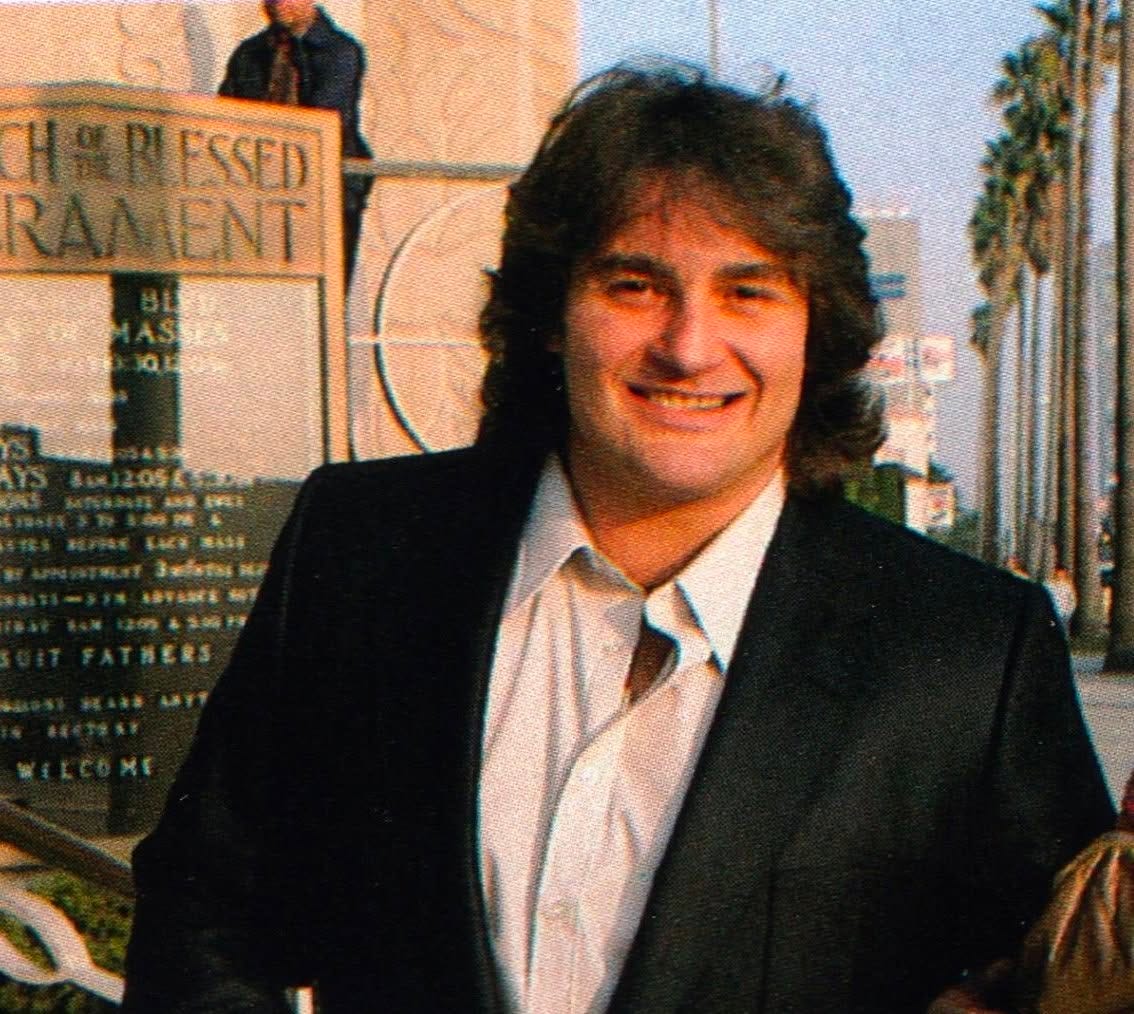
By the late 1970s Franke had adopted the ring name Adrian Adonis and the character of a leather-jacketed biker thug. The persona suited his Buffalo background and projected a menacing, streetwise heel. In 1979 he arrived in the American Wrestling Association, where he formed the East-West Connection with the flamboyant Jesse Ventura. Billed as representing opposite coasts—Adonis from New York, Ventura from California—the duo blended Adonis’s mechanical opportunism with Ventura’s larger-than-life charisma. Under Verne Gagne’s strict territorial regime they were awarded the AWA World Tag Team Championship in July 1980 when one half of the reigning champions could not defend. They held the titles for nearly eleven months, using cunning and physicality to retain them until losing to Greg Gagne and Jim Brunzell in June 1981. The partnership established Adonis as a reliable upper-midcard presence capable of complementing bigger personalities while delivering strong matches night after night.
The East-West Connection stands as one of the most effective heel tag teams of the late territorial era, a partnership built on deliberate contrasts that created both in-ring synergy and compelling television. Formed in Verne Gagne’s American Wrestling Association in the late 1970s, the duo of Adrian Adonis and Jesse “The Body” Ventura took the simple geographic billing—Adonis representing the gritty East from New York and Ventura the sun-drenched West from California—and turned it into a fully realized identity. Their success was not accidental; it stemmed from complementary personalities, distinct skill sets, and a shared understanding of how to generate heat while remaining credible athletes in an era when tag team wrestling in the Midwest demanded both substance and showmanship.
At the core of their dynamic was a classic division of labor that played to each man’s strengths. Adonis, drawing from his amateur wrestling background, territorial seasoning in places like Pacific Northwest and NWA Hollywood, and real-life toughness from Buffalo’s streets, functioned as the team’s technical anchor and opportunistic mechanic. He brought speed, chain wrestling, agility, and a willingness to cheat when the referee was distracted—classic heel tactics executed with precision. Ventura, with his bodybuilder physique, power-based offense, and larger-than-life arrogance, supplied the explosive force and star presence. Where Adonis bent rules and worked holds, Ventura delivered impactful strikes, suplexes, and intimidating stares that made the team feel like a genuine threat. Observers and Ventura himself later noted that this contrast was the secret: Adonis’s athletic reliability grounded the act, while Ventura’s charisma and power made every match feel bigger. Their styles meshed naturally rather than clashing, allowing seamless double-team maneuvers and hot tags that frustrated babyface teams.
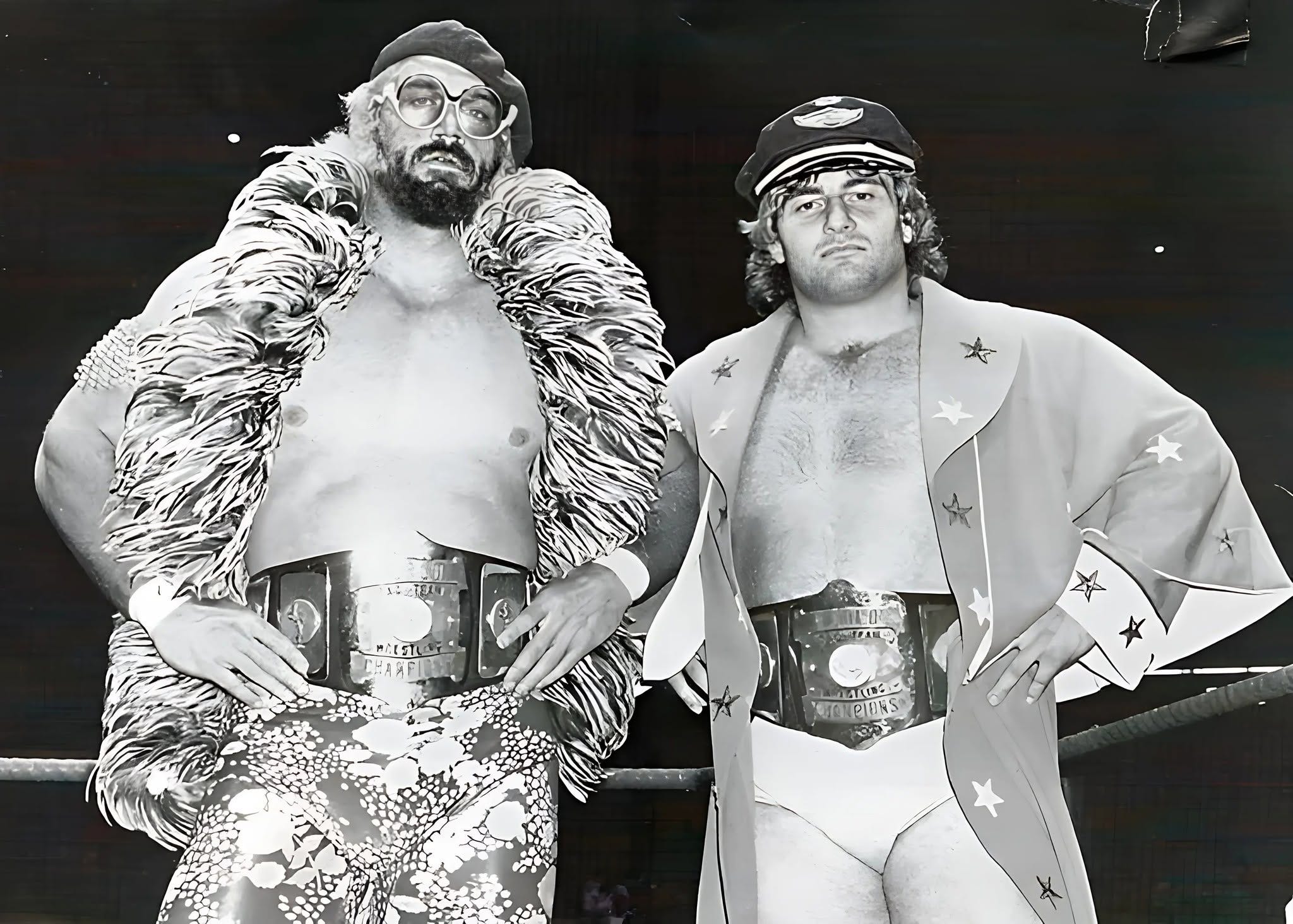
This in-ring chemistry was amplified by their promotional work. Ventura’s gift for the microphone—boastful, cutting, and laced with personal bravado—made him the primary voice, but Adonis contributed his own confident, streetwise edge. Together they projected an aura of cool, unapologetic arrogance that set them apart from more cartoonish heels of the period. Interviews conducted by Mean Gene Okerlund captured the dynamic perfectly: the pair would dismiss aging challengers like Pat Patterson and Ray Stevens as relics of the past while positioning themselves as the team of the 1980s. They wove in real-life color, such as mentioning dinners with members of Jefferson Airplane during West Coast swings, adding a layer of celebrity glamour that elevated their territorial status. These segments reinforced the East-West theme and made the team feel current and connected to a broader cultural moment.
Their path to the AWA World Tag Team Championship exemplified opportunistic territorial booking. On July 20, 1980, in Denver, Colorado, they were awarded the titles by forfeit when one half of the reigning champions (involving Greg Gagne) failed to appear for a scheduled defense. Rather than feeling cheap, the storyline positioned the East-West Connection as dominant newcomers ready to take over. They held the belts for 329 days, defending across the AWA’s circuit with a mix of hard-hitting matches and rule-bending antics. The reign showcased their versatility: they could brawl with power teams or outmaneuver more technical opponents. Their eventual loss on June 14, 1981, in Green Bay, Wisconsin, to the popular High Flyers (Greg Gagne and Jim Brunzell) delivered a satisfying payoff, allowing the territory’s established babyfaces to reclaim gold while giving the East-West Connection a strong exit that preserved their credibility.
Beyond the ring, the partnership benefited from genuine professional respect. Ventura later described Adonis as a phenomenal and athletic partner who could adapt to almost any situation in the ring. Their differing backgrounds—Adonis’s working-class toughness and territorial grind versus Ventura’s rising star power and bodybuilding persona—created natural tension and balance rather than friction. Fans who saw them live or on television often remarked on how well they complemented each other: Ventura’s mouth and muscle paired with Adonis’s speed and in-ring intelligence produced matches that felt both athletic and entertaining. This mutual reliance helped them stand out in an AWA tag division that featured strong competition and demanded consistent quality.
The move to the World Wrestling Federation came in October 1981, with Adonis and Ventura arriving under the management of Freddie Blassie. Adonis quickly transitioned into singles competition, challenging WWF Champion Bob Backlund and Intercontinental Champion Pedro Morales in prominent bouts throughout 1982. When Ventura shifted to the broadcast booth, Adonis continued as a solo act before forming a new alliance with the rugged Dick Murdoch.
The North-South Connection represented a pragmatic yet effective pairing in the early years of Vince McMahon’s national expansion of the World Wrestling Federation. Formed in late 1983, the team of Adrian Adonis and Dick Murdoch stepped into the tag team spotlight at a moment when the promotion was blending territorial veterans with its growing national roster. The name itself highlighted regional contrast—Adonis billed from the North (New York) and Murdoch from the South (Texas)—echoing the geographic gimmickry of Adonis’s earlier East-West Connection with Jesse Ventura, but shifting the tone toward something more grounded and brawling-oriented.
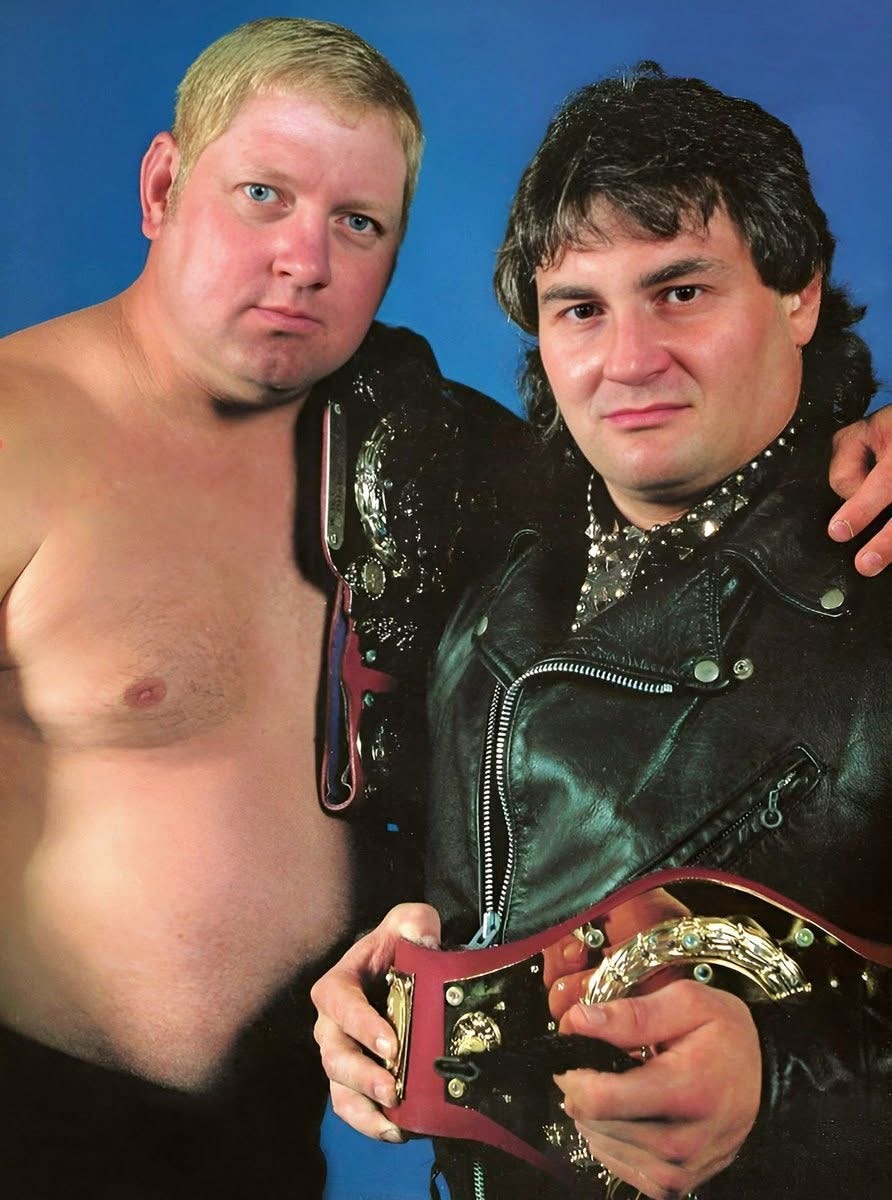
The partnership arose out of necessity and opportunity. Ventura’s recurring back issues and transition toward broadcasting had sidelined the East-West Connection as a full-time unit. Adonis, who had already established himself in the WWF through high-profile singles challenges and tag success, needed a reliable partner who could deliver old-school credibility. Murdoch, a seasoned territory veteran with decades of experience across Southern and Midwestern promotions, fit the bill perfectly. His rugged, no-nonsense Texas brawler persona provided the perfect counterpoint to Adonis’s opportunistic New York edge. Where Ventura had brought charisma and mic dominance, Murdoch supplied veteran psychology, power offense, and an authentic toughness that made the team feel like legitimate threats rather than flashy newcomers.
In the ring, their dynamics relied on complementary roles that maximized each man’s strengths during a transitional period in Adonis’s physical presentation. Murdoch, the older and more experienced hand, anchored the team with hard-hitting strikes, suplexes, and ring generalship rooted in territorial brawling traditions. Adonis, who had gained considerable weight by this point through the demands of constant travel and the celebratory road lifestyle, brought surprising agility, chain wrestling, and a willingness to bend rules when the opportunity arose. The result was a cohesive heel unit capable of both straight power matches and opportunistic double-team work. Murdoch often handled the heavy lifting and crowd control, while Adonis used his mobility and WWF familiarity to execute cheating tactics or hot tags that kept opponents off balance. This blend allowed them to work effectively against a variety of styles, from power teams to more technical ones.
Their championship run exemplified the opportunistic booking common in the expanding WWF. On April 17, 1984, at a television taping in Allentown, Pennsylvania, the North-South Connection upset the popular babyface duo of Tony Atlas and Rocky Johnson—known as the Soul Patrol—to capture the WWF World Tag Team Championship. The victory positioned them as credible heels who could dethrone established fan favorites. They held the titles for roughly nine months, defending against notable teams including the Wild Samoans, B. Brian Blair and Bob Backlund, and the legendary Brisco Brothers. A particularly memorable encounter came on December 28, 1984, at Madison Square Garden, where they defended against Jack and Jerry Brisco in a match filled with pandemonium and classic tag team drama. They also competed in the 5th Annual MSG Tag League in late 1984, reaching the finals before falling to Antonio Inoki and Tatsumi Fujinami. These bouts showcased their ability to deliver solid, hard-fought contests that fit the era’s mix of athleticism and storytelling.
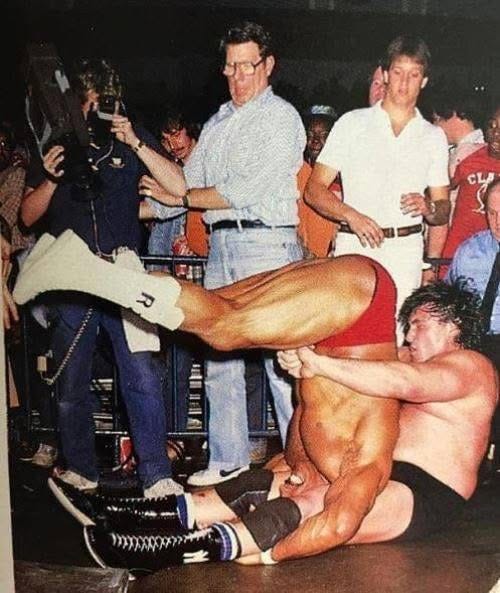
Pictured: Adrian Adonis pilesdrives Rocky Johnson
The reign ended on January 21, 1985, when they dropped the belts to Barry Windham and Mike Rotunda of the U.S. Express. The loss to the rising babyface team felt like a natural passing of the torch, allowing younger or more athletically positioned wrestlers to take the spotlight as Hulkamania continued to reshape the promotion. Shortly after, the North-South Connection disbanded. Adonis moved into singles competition and eventual managerial associations before his radical transformation into “Adorable” Adrian Adonis, while Murdoch continued working in various capacities, often returning to territorial or independent scenes.
What made the North-South Connection work was its workmanlike reliability rather than explosive charisma. Unlike the East-West Connection, which benefited from Ventura’s larger-than-life personality and promo flair, this team leaned into straightforward heel tactics and veteran presence. Murdoch’s experience stabilized Adonis during a period of physical change, giving the younger man a credible platform while he adapted to his heavier frame. Their regional billing added just enough flavor to differentiate them without overshadowing the in-ring action. In the broader context of 1984–1985 WWF, the team served as a bridge between the territorial era—where veterans like Murdoch had honed their craft—and the national product’s push toward bigger stars and more theatrical presentation. They provided consistent upper-midcard heat and championship credibility at a time when the tag division was expanding alongside the singles roster.
Critically, the partnership’s limitations were evident in its relatively short lifespan and lack of long-term programs. It lacked the memorable interview segments or personal rivalries that defined stronger teams of the period. Once the titles changed hands, there was little sustained momentum to keep the duo together, reflecting perhaps Adonis’s shifting creative direction toward more individualistic storylines. Yet within its window, the North-South Connection succeeded as a functional, believable unit that delivered quality matches and helped both men maintain relevance during WWF’s rapid growth.
In Adonis’s overall career arc, the team marked an important transitional phase between the flashier East-West success and his later provocative singles persona. It demonstrated his adaptability—pairing effectively with vastly different partners while navigating physical and stylistic evolution. For Murdoch, it offered a late-career national spotlight that highlighted his enduring value as a territory-seasoned brawler. Historically, the North-South Connection stands as a solid, if understated, example of how the early national WWF integrated veteran talent with emerging stars, producing tag teams that felt authentic to wrestling’s roots even as the promotion moved toward spectacle. Their story underscores the era’s blend of continuity and change, where regional contrasts and old-school chemistry could still thrive amid the dawn of Hulkamania.
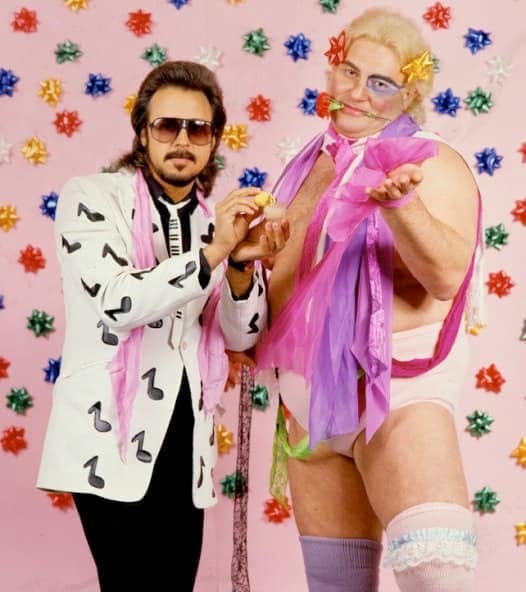
A more dramatic reinvention arrived in late 1985 and early 1986. After brief associations with managers Bobby Heenan and then Jimmy Hart, Adonis bleached his hair blond, adopted pink ring attire, leg warmers, scarves, garish makeup, and effeminate mannerisms. The “Adorable” Adrian Adonis character emerged as a provocative heel designed to generate intense crowd reactions in an era when such boundary-pushing portrayals were rare on national television. His weight peaked well above 300 pounds, creating a stark visual contrast to his earlier biker image, yet he retained the athletic base and bumping ability that allowed him to work solid matches. The new persona found its signature platform in “The Flower Shop,” a talk segment that directly parodied and challenged Roddy Piper’s Pit. Managed by the bombastic Jimmy Hart, Adonis used the show to needle rivals, most notably aiding Paul Orndorff’s heel turn by emphasizing his position in Hulk Hogan’s shadow.
The rivalry with Piper escalated into one of the most memorable personal feuds of the mid-1980s. A pivotal early moment came in January 1986 when Adonis appeared on Piper’s Pit and presented his trademark leather jacket to the host—a gesture Piper would honor by wearing it for years afterward. The conflict turned physical when Adonis, joined by allies including “Cowboy” Bob Orton, attacked Piper, leading to a prolonged absence for the babyface and a dramatic return. Their story reached its climax at WrestleMania III on March 29, 1987, in a hair-versus-hair match framed as Piper’s retirement bout while he pursued acting opportunities. The six-minute encounter delivered intensity and storytelling, with Piper emerging victorious and Brutus Beefcake delivering the memorable post-match shearing of Adonis’s hair. The segment stood among the highlights of that landmark card and cemented the Adorable character’s place in wrestling memory.
Adonis’s WWF tenure ended shortly after WrestleMania III amid reported backstage tensions and what were described as dress-code violations. He returned briefly to the AWA under the management of Paul E. Dangerously, still working the Adorable gimmick while actively shedding weight in hopes of another national opportunity. He competed in tournaments, including a final loss to Greg Gagne in the AWA International Television Championship tournament. In the summer of 1988 he toured New Japan Pro Wrestling, where he shed the flamboyant attire, reunited with Dick Murdoch to challenge for the IWGP Tag Team Championship, and teamed with talents including Owen Hart and D.J. Peterson. These dates demonstrated his enduring adaptability across styles and cultures.
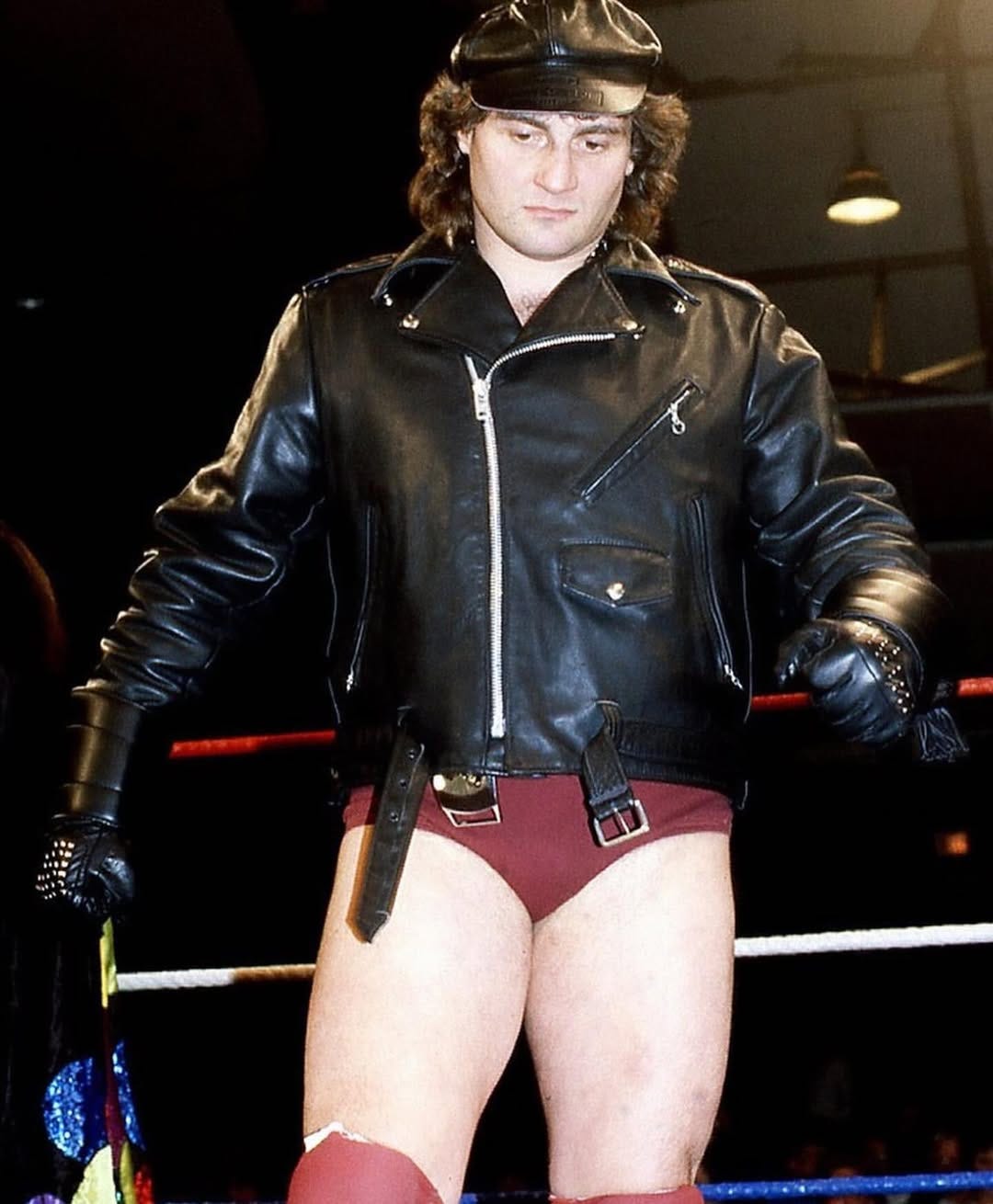
Tragically, on July 4, 1988, while working independent dates for promoter Dave McKigney in Newfoundland, Canada, Adonis’s life ended at age 34. Traveling in a minivan near Lewisporte with McKigney and the Arko twins—sometimes billed as the Kelly brothers—the vehicle swerved off the Indian Arm Bridge and plunged into the water below after an attempt to avoid an animal on the road, with the setting sun reportedly impairing visibility. Adonis, McKigney, and one passenger suffered fatal injuries; only one occupant survived with serious wounds. He left behind his wife Bea, whom he had married in 1972, and their two daughters, Angela and Gena. He was buried at Greenlawn Memorial Park in Bakersfield, California.
Throughout his career Adrian Adonis proved himself a versatile and resilient performer who thrived in contrasting roles. The tough, leather-clad biker from Buffalo brought authentic street credibility and in-ring toughness to the territories. The flamboyant Adorable character, though polarizing, generated enormous heat and memorable television moments while allowing him to showcase retained athleticism in the ring. His tag-team success with Ventura and Murdoch highlighted his ability to complement different styles, and his long build with Piper demonstrated mastery of psychological storytelling through talk segments and personal stakes. Behind the characters stood a man remembered by peers as a loyal friend and excellent worker whose journey from territorial grind to national spotlight and back to the independents reflected both the opportunities and the harsh realities of wrestling in the 1980s. Though his time was cut short, the moments he created continue to resonate with those who appreciate the depth and adaptability that defined a memorable career.
One Thing I Learned About Texas Wrestling
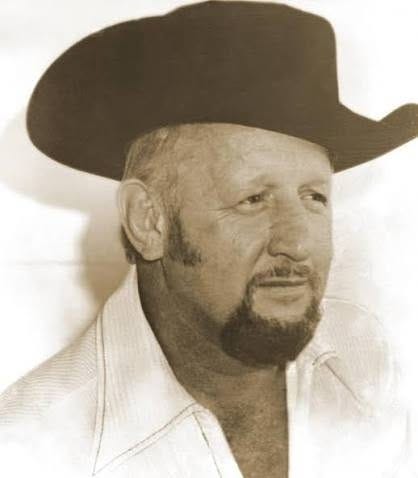
Dory Funk Sr., a cornerstone figure in West Texas wrestling, balanced his in-ring career with significant community work. After moving to Amarillo in 1949, he served as superintendent and football coach at Cal Farley’s Boys Ranch in Tascosa from roughly 1950 to 1953. He stepped in during a period of unrest among the boys and helped stabilize the ranch through his discipline and presence on the mat and field, while continuing to wrestle and build his reputation as a tough competitor known for his “two-fisted buster” style.
Texas hosted multiple NWA-affiliated operations across cities like Amarillo, Dallas, Houston, and San Antonio, with talent exchanges and world title defenses helping maintain the territory system’s structure. Promoters recognized the NWA World Heavyweight Champion (often Lou Thesz during much of the decade), and local stars like Funk Sr. rose through the ranks, winning titles such as the NWA Junior Heavyweight Championship in 1958 and multiple North American heavyweight honors. The rugged, hard-hitting style in places like Amarillo laid groundwork for later family legacies, including his sons Dory Jr. and Terry Funk.

Thank You for Reading
I’m Tony Richards, Pro Wrestling Historian, Author and Storyteller. I share pro wrestling historical items in each issue of the Time Tunnel Pro Wrestling History Newsletter. Thanks for reading! If you enjoy my information on select events, matches and insights, please share it with folks you think might like to be a subscriber!
Remember, premium investors get access to exclusive and special content such as some special issues including a multi-part deep dives on wrestling territories, wrestler bios and championship title histories, special audio and video interviews on territory pro wrestling and more available in the Pro Wrestling Time Tunnel for Premium Investors.