


Happy Birthday to those who have passed on and to those great wrestlers still with us:
In Memoriam:
Barbara Galento 1940
Johnny Saint 1941
Leo Burke 1948
Happy Birthday:
Steve Cepello\Steve Strong (77)
Serena Deeb (40)
Arianna Grace (31)
RIP Memorial: We stop & remember those who have passed on this day and gave themselves to the business for us, the fans. We salute you and thank you.
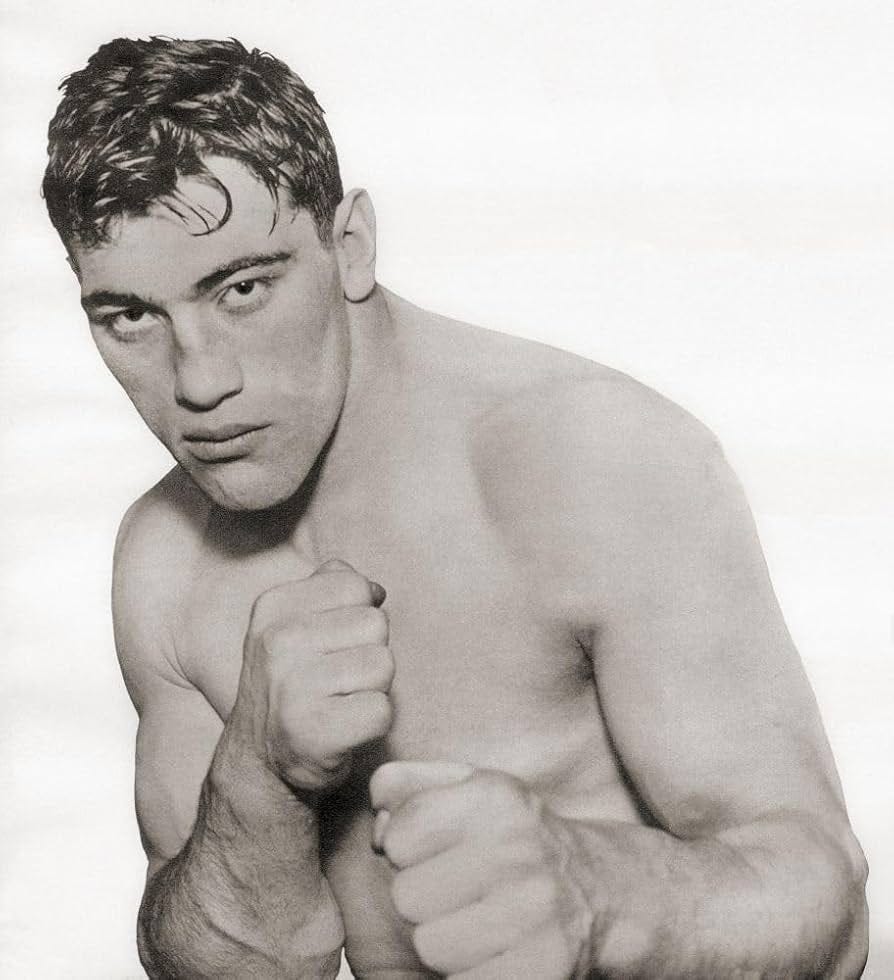
Primo Carnera 6-29-1967 at the age of 60
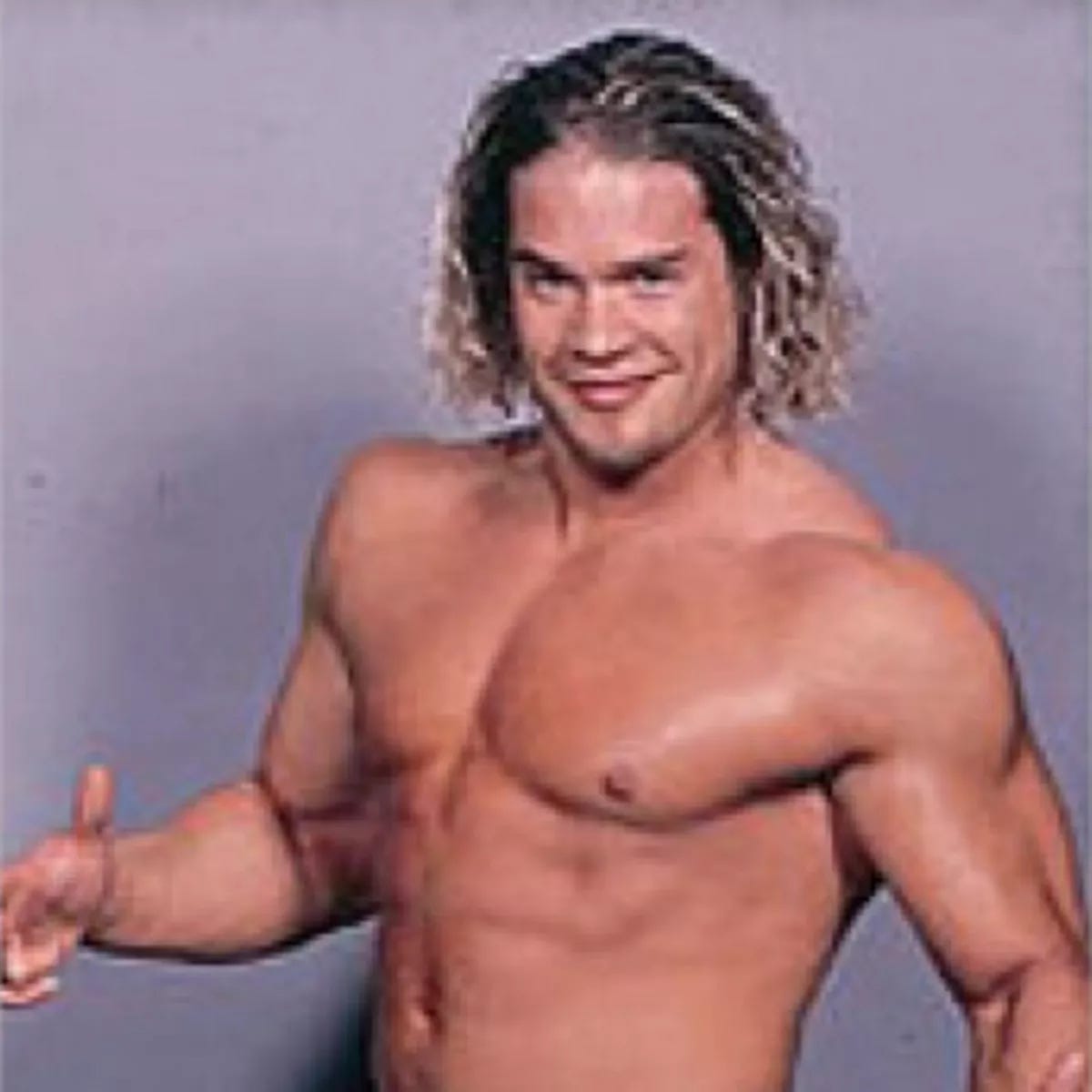
Matt Cappotelli 6-29-2018 at the age of 38
Significant Debut:
Alex Perez 6-29-1951 at the age of 21 at the Armory in Albuquerque, New Mexico in a 20 minute draw with Jack Carter
7 Stages of the Territory Era
Stage 7: Disintegration
Year 2 Month 6
June 1986
By the summer of 1986, the traditional territorial model of professional wrestling had entered its terminal phase of disintegration. The old NWA-sanctioned patchwork of protected regional fiefdoms, once stabilized by handshake agreements, talent exchanges, and a shared world champion who traveled like a dignitary, had been shattered by Vince McMahon’s national expansion of the World Wrestling Federation. What remained were not coherent territories in the classic sense but a scattered collection of ambitious holdouts, local strongholds, desperate consolidations, and culturally distinct international scenes. Boundaries had blurred beyond recognition. Talent moved with increasing freedom toward the brightest spotlights and largest paychecks. Television deals fragmented or evaporated. Attendance patterns told a story of polarization: explosive in some pockets, eroding in others. June 1986 captured this moment of uneasy transition with particular clarity—a month of continued WWF momentum, feverish activity in the Southeast flagship of Jim Crockett Promotions, visible strain in the Midwest and Texas, quiet persistence in Memphis, and resilient, largely unaffected operations in Japan and Mexico.

The World Wrestling Federation operated as the undisputed national power. Hulk Hogan remained the central figure, his long reign as WWF World Heavyweight Champion serving as the anchor for a coast-to-coast machine of syndicated programming, house show tours, and mainstream crossover appeal. The post-WrestleMania 2 period had not slowed the expansion; if anything, the organization had settled into a rhythm of reliable big-event positioning and character-driven storytelling that filled arenas in cities far beyond its original Northeast base. Rising stars such as Randy Savage, with his flamboyant intensity, and Jake Roberts, whose psychological edge and snake symbolism added a darker layer, complemented Hogan’s heroic positioning. Tag team wrestling thrived with acts like the British Bulldogs bringing athletic credibility and power. House shows rolled through major markets with consistent production values and crowd energy that smaller promotions struggled to match. The WWF product emphasized larger-than-life presentation, quick pacing, and entertainment hooks designed for broader audiences, including women and children drawn in by the rock ‘n’ wrestling era. While critics noted excesses in gimmickry and the physical toll of the schedule, the business results were undeniable: the old territorial walls had been breached, and the federation now treated the entire continent as its domain.

In stark contrast stood Jim Crockett Promotions, the most serious and artistically coherent challenger among the remaining American promotions. Operating under the NWA banner and branding its Saturday night TBS broadcast as World Championship Wrestling, Crockett’s organization represented the last major attempt to sustain a high-level, territory-rooted product on a near-national scale. Ric Flair, the Nature Boy, held the NWA World Heavyweight Championship and embodied the traveling champion ideal more vividly than perhaps anyone since the classic era. His June defenses and television appearances showcased the full Flair package: the regal strut, the eloquent yet unhinged promos, the figure-four leglock, and the willingness to bleed and sell for the story. The Four Horsemen—Flair alongside Arn Anderson, the returning Ole Anderson, Tully Blanchard, and the calculating J.J. Dillon—functioned as the dominant heel force, their coordinated arrogance and in-ring precision creating must-see television and arena heat. Babyface opposition centered on Dusty Rhodes, whose everyman charisma and “Hard Times” fire resonated deeply in the Southeast, alongside the high-flying heroics of Magnum T.A. and the timeless Rock ‘n’ Roll Express versus Midnight Express rivalry, one of the decade’s defining tag team wars.
June found Crockett Promotions in active preparation for the expansive Great American Bash summer tour. Flair’s title was being defended across a demanding multi-city schedule that tested both the champion’s stamina and the promotion’s logistical reach. Television tapings in the Atlanta studios maintained a distinctive atmosphere—smaller crowds but intense engagement, with Tony Schiavone and David Crockett on commentary providing a mix of straight analysis and fan enthusiasm. The product emphasized wrestling psychology, long-term storytelling, and believable finishes over pure spectacle. Yet the pressures of disintegration were evident. Competing directly with WWF’s syndicated reach and production polish required resources the old territorial model had never demanded. Talent raids, shifting alliances, and the sheer financial weight of running a broader schedule created constant tension. Crockett’s operation was the strongest remaining expression of NWA values—quality in-ring work, character depth, and regional passion—but it was fighting an uphill battle against a fundamentally different business paradigm.
Further west and north, the American Wrestling Association presented a picture of fading relevance mixed with pockets of genuine quality. Verne Gagne’s promotion, once a cornerstone of the Midwest, had seen better days. Stan Hansen carried the AWA World Heavyweight Championship with his trademark brawling legitimacy, but the overall momentum had slowed. A notable bright spot arrived on June 28 with the Battle by the Bay supercard on ESPN from Oakland, an attempt to leverage national cable exposure. The event featured title implications, including activity around the tag team division where the Midnight Rockers—Shawn Michaels and Marty Jannetty—were making their mark, and Sherri Martel capturing women’s gold. Yet attendance figures and the promotion’s overall trajectory reflected the broader disintegration: smaller crowds than in peak years, difficulty retaining top talent against WWF and Crockett opportunities, and a sense that the AWA’s traditional strengths were no longer enough to command national attention. Internal transitions, including situations involving Nick Bockwinkel and the championship picture, underscored a promotion navigating survival rather than dominance.

In Texas, World Class Championship Wrestling embodied the most tragic dimension of Stage 7. Fritz Von Erich’s decision earlier in the year to withdraw from the NWA and pursue an independent national path had not produced the anticipated breakthrough. Instead, June 4 delivered a devastating personal and professional blow when Kerry Von Erich suffered a severe motorcycle accident that crushed his right foot and ankle. The injury sidelined one of the promotion’s most popular stars for an extended period and would ultimately lead to amputation, accelerating already declining attendance at the Sportatorium and regional events. The Von Erich family’s long run of drawing power, built on athleticism, charisma, and Texas loyalty, was eroding under the weight of repeated tragedies. Key talent such as the Freebirds had already departed for Bill Watts’ Universal Wrestling Federation, further thinning the roster. What had once been a white-hot territory with innovative angles and massive local gates now felt fragmented and uncertain, a stark illustration of how quickly even successful regional promotions could unravel when the old support structures collapsed.

Smaller or more localized operations offered varying degrees of continuity. In Memphis, the Continental Wrestling Association under Jerry Jarrett and anchored by Jerry Lawler maintained its identity as a tough, character-driven territory that still drew loyal crowds through television and arena shows. Lawler’s blend of wrestling skill, mic work, and hometown hero status allowed the promotion to function as a self-contained ecosystem even as larger forces reshaped the industry. Other remnants—Pacific Northwest under Don Owen, Florida Championship Wrestling, and Central States—faced consolidation pressures, with Jim Crockett Promotions absorbing pieces of the latter around this period. Bill Watts’ Universal Wrestling Federation, the rebranded Mid-South, continued its push for national recognition with a harder-hitting, more athletic style featuring Steve Williams and others, but financial strains were mounting and would lead to its eventual sale to Crockett in 1987.
Internationally, the picture diverged sharply from the American turmoil. In Japan, both New Japan Pro-Wrestling and All Japan Pro Wrestling operated with stability and cultural confidence largely insulated from the U.S. territorial collapse. NJPW’s IWGP League tournament reached its conclusion in mid-June in Tokyo, with Antonio Inoki defeating Dick Murdoch in the finals—an affirmation of Inoki’s enduring centrality even as he entered his mid-40s. The promotion blended strong-style fundamentals, international crossovers, and a dedicated domestic fanbase that filled halls for consistent tours. All Japan maintained its reputation for hard-hitting excellence and tournament formats under Giant Baba’s leadership. These promotions treated wrestling more as athletic competition and performance art than pure entertainment product, sustaining healthy business models without the existential threats facing American territories.
In Mexico, Empresa Mexicana de Lucha Libre continued its vibrant weekly spectacles at Arena México and beyond. The lucha libre tradition—with its emphasis on high-flying technique, mask-versus-mask drama, intricate rudo/técnico storytelling, and deep cultural resonance—remained robust and self-sustaining. While American promotions fractured and consolidated, EMLL’s ecosystem of weekly events, passionate crowds, and generational talent pipelines showed no signs of disintegration. It represented an alternative model that prioritized local identity and in-ring artistry over national expansion or mainstream crossover.
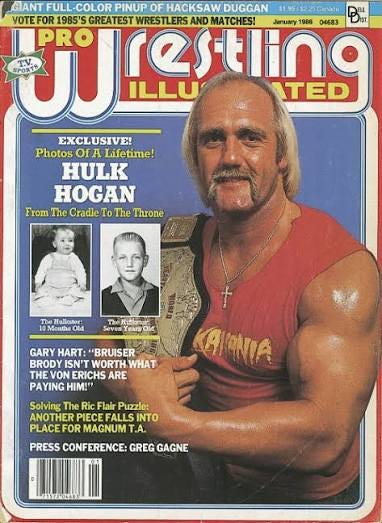
Pictured: Pro Wrestling Illustrated January 1986
June 1986 thus revealed the full spectrum of Stage 7 disintegration. The WWF had effectively won the war for national supremacy, reshaping audience expectations and business structures in its image. Jim Crockett Promotions fought back with perhaps the highest-quality wrestling product of the era, centered on Flair’s championship reign and the Horsemen’s dominance, yet even its ambitions carried the seeds of overextension. AWA, WCCW, and smaller U.S. operations displayed varying degrees of resilience, decline, or crisis, with personal tragedies in Texas accelerating the sense of unraveling. Japan and Mexico demonstrated that strong regional or cultural models could endure outside the American maelstrom.
What was disintegrating was not merely a collection of promotions but an entire way of doing business—the assumption that territories could remain protected, that a world champion could unify the landscape through travel and prestige, and that local loyalty would always outweigh national entertainment machinery. The remaining territories of June 1986 were fighting rearguard actions, adapting in fragments, or simply holding on. Their stories—Flair’s strut across Southern arenas, Kerry Von Erich’s heartbreaking injury, Inoki’s tournament triumph, Lawler’s Memphis grit—marked the painful transition from the territorial era into something newer, more consolidated, and ultimately more corporate. The old kingdoms were gone; what came next would be built from their ruins.
Thank You for Reading
I’m Tony Richards, Pro Wrestling Historian, Author and Storyteller. I share pro wrestling historical items in each issue of the Time Tunnel Pro Wrestling History Newsletter. Thanks for reading! If you enjoy my information on select events, matches and insights, please share it with folks you think might like to be a subscriber!
Remember, premium investors get access to exclusive and special content such as some special issues including a multi-part deep dives on wrestling territories, wrestler bios and championship title histories, special audio and video interviews on territory pro wrestling and more available in the Pro Wrestling Time Tunnel for Premium Investors.