


Happy Birthday to those who have passed on and to those great wrestlers still with us:
In Memoriam:
“Whipper” Billy Watson 1915
Samuel Thomas Hesser\Mighty Jumbo 1923
Happy Birthday:
Phillip Theis\Damien Demento (68)
Bobby Blaze (63)
Layla El (49)
Jessika Heiser\Jessika Carr (35)
RIP Memorial: We stop & remember those who have passed on this day and gave themselves to the business for us, the fans. We salute you and thank you.
James “Rex” Mobley 6-25-1980 at the age of 74
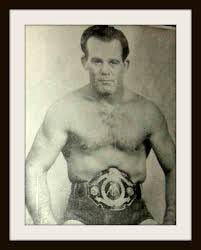
Sika Anoa’i The Wild Samoan 6-25-2024 at the age of 76
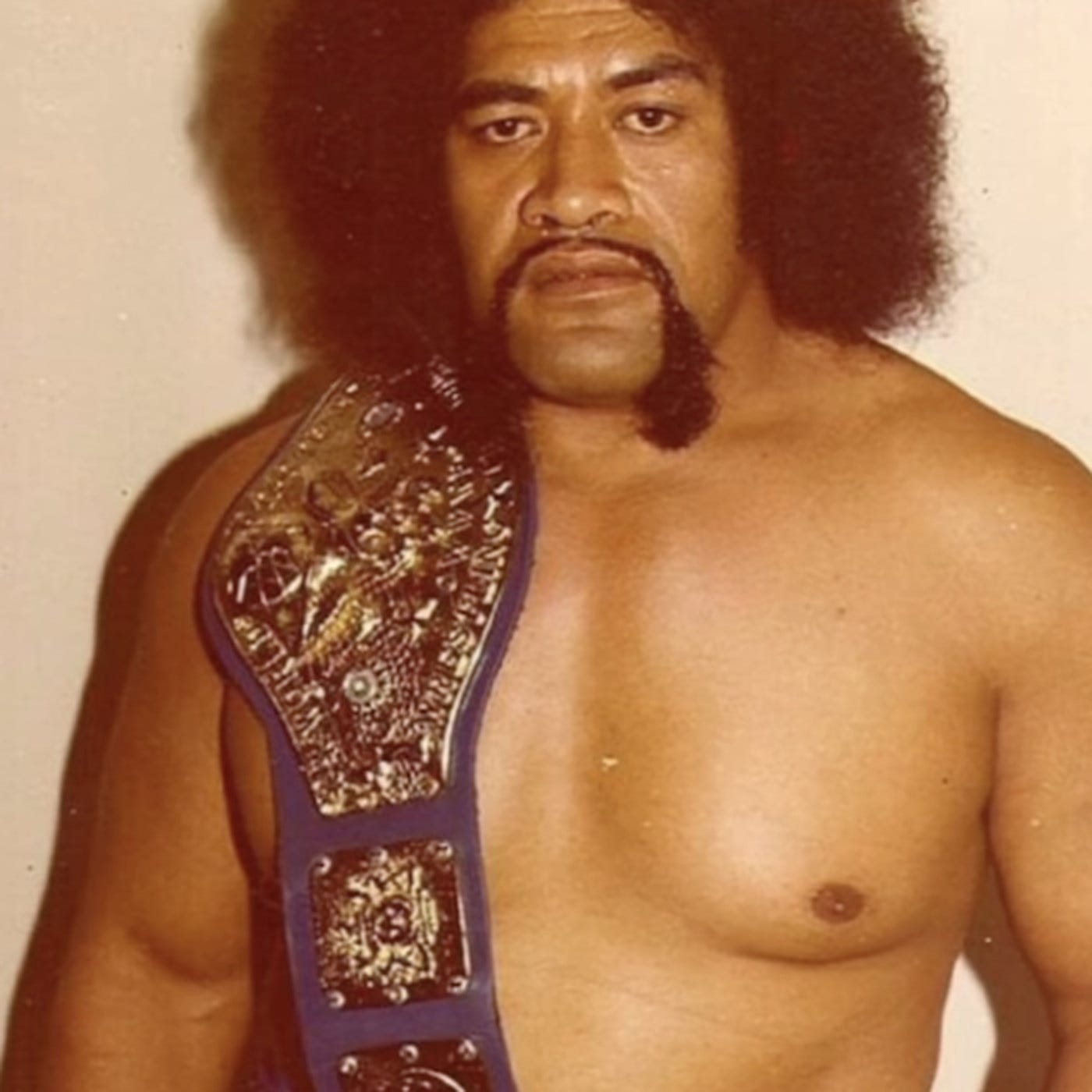
The Life and Career of Jackie Fargo
Henry Faggart, better known as Jackie Fargo, stands as one of the most charismatic and influential figures in the territorial era of professional wrestling, particularly in the Southeastern United States. Born on June 26, 1930, in Concord, North Carolina, and passing on June 24, 2013, in China Grove, North Carolina, at the age of 82 from congestive heart failure, Fargo embodied the larger-than-life babyface of the NWA territories. With his bleached blonde hair, flamboyant personality, and signature “Fargo Strut,” he became a blueprint for showmanship that influenced generations, from Jerry “The King” Lawler to Ric Flair, Jeff Jarrett, and The Fabulous Ones. A 45-time tag team champion and mentor who helped launch major stars and shaped the wild, brawling style of Memphis wrestling, Fargo bridged the golden age of tag team wrestling in the 1950s with the explosive Memphis era of the 1970s and beyond.
Fargo grew up in North Carolina and first encountered wrestling as a teenager at the YMCA in Goldsboro. After competing in state championships as an amateur, a local promoter spotted his potential and encouraged him to turn professional for better pay. He trained at the Quonset Auditorium in Bowling Green, Kentucky, under Joe and Kenny Marshall, initially wrestling as “Wild Man Fargo.” He debuted around 1950, working for promoters like Johnny Long in Atlanta. In 1952, he wrestled in Cuba before serving in the Korean War. This period honed his toughness and resilience, traits that defined his in-ring persona.
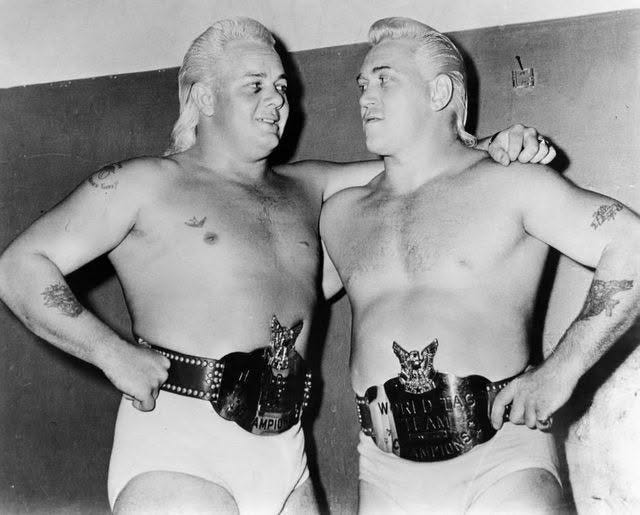
Pictured: The Fabulous Fargos, Jackie and Don, NWA World Tag Team Champions
Early in his career, after working under promoter Toots Mondt in West Virginia where he was billed as Wildman Fargo, he came into contact with the colorful and controversial promoter Jack Pfefer. Pfefer had a profound effect on Fargo’s bookings and career trajectory. Known for his eccentric style, aggressive negotiations, and dramatic promotional flair, Pfefer helped shape opportunities for Fargo and was instrumental in the formation and early promotion of the Fabulous Fargos tag team with Don Fargo (who had worked as Wildman Stevens). Pfefer provided colorful gimmicks, such as the infamous colored wigs in one memorable story, and pushed for strong bookings while acting as a manager or negotiator for the team. His involvement helped launch them as a major attraction in the late 1950s.
Fargo excelled as a tag team wrestler, capturing gold an astonishing 45 times. His most famous partnership was with Don Fargo as the Fabulous Fargos. Together they dominated the National Wrestling Alliance in the late 1950s, winning versions of the NWA World Tag Team Championship, including the Northeast (inaugural) and Chicago versions. A highlight came on March 30, 1957, at Madison Square Garden, where they drew a record 20,125 fans against Antonino Rocca and Miguel Pérez.
They headlined across the Northeast, Tennessee, Alabama, Georgia, and Chicago. After the Fabulous Fargos run, Fargo teamed with his real brother Sonny “Roughhouse” Fargo and others like Mario Milano, Lester Welch, Tex Riley, Len Rossi, Dennis Hall, Jerry Jarrett, Mr. Wrestling, and Lou Thesz. He captured the NWA Southern Tag Team Championship (Tennessee version) 22 times and the NWA World Tag Team Championship (Tennessee version) 15 times, among many other reigns. Jim Cornette has credited Fargo with popularizing wild brawls and the use of tables and chairs in Tennessee. He was also a singles competitor, winning the NWA Mid-America Heavyweight Championship three times and the NWA Southern Junior Heavyweight Championship five times.
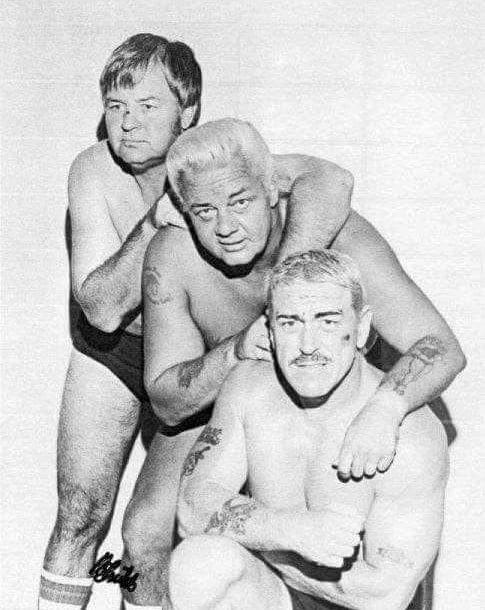
Pictured: The hottest heels on the Nashville and Gulf Coast Wrestling TV shows, Sonny, Jackie and Don, The Fabulous Fargo Brothers billed from New York City.
In May 1957, the Fabulous Fargos debuted for Nashville promoters Nick Gulas and Roy Welch in the NWA Mid-America territory. Their arrival, amplified by WSIX-TV Channel 8, ignited one of the hottest box office runs in territorial wrestling history. The Fargos’ charisma, signature “Fargo Strut,” and high-impact style, combined with strong rivalries, drove 18 consecutive sellouts at the Hippodrome in Nashville, Tennessee. The Fargos were featured on top in 12 of those sellouts. They also split time with the emerging Gulf Coast Territory. Gulas-Welch had been producing wrestling on WSIX-TV since the mid-1950s. The two-hour Saturday night broadcast was already a ratings monster. The Fargos’ debut on the show introduced them as flashy, unbeatable heels, building anticipation for live events. This TV platform fueled capacity crowds at the Hippodrome. The Fargos headlined or featured prominently, often against the Corsica Brothers or Welch family combinations, creating must-see weekly storylines.
On August 27, 1957, they drew a Standing Room Only crowd in a special six-man tag: Jackie, Don, and Sonny “Roughhouse” Fargo versus Roy, Herb, and Lester Welch. This marked Sonny Fargo’s first ring appearance and the first time all three Fargos appeared together. The Fargos won two falls to one, showcasing family unity against the territory’s foundational babyfaces. The streak culminated on September 3, 1957, with the 18th consecutive sellout. In the main events, Mike Clancy defended the NWA World Junior Heavyweight Title against Jackie Fargo, with Clancy retaining two falls to one, and Herb Welch defeated Don Fargo in a 10-round boxing match. These multi-style matches highlighted the promotion’s creativity in sustaining interest.
The Fargos’ momentum coincided with major territorial growth. On June 8, 1957, WSIX-TV expanded the live Saturday night wrestling show by 30 minutes, extending it from 8:30 PM to 11:00 PM. This gave more time for matches, interviews, and hype, further boosting attendance. On June 13, 1957, Gulas-Welch announced the purchase of booking and promotional rights to Memphis from Les Wolfe. This acquisition, fueled by the Nashville surge, laid the foundation for Memphis as a major hub in the territory. The Fargos also worked the Gulf Coast Territory during this period, capturing additional tag gold and maintaining their status as a premier NWA team. They traded the NWA World Tag Team Championship (Mid-America version) with the Corsica Brothers, while Welch family feuds added emotional depth.
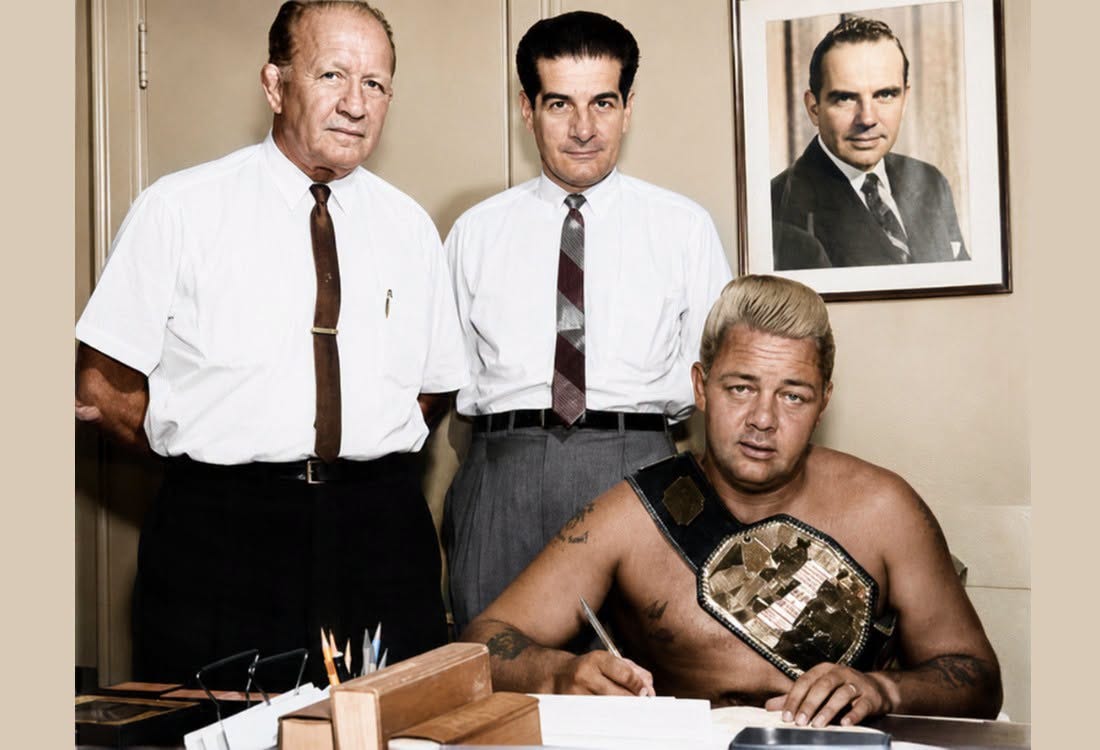
Pictured: Roy Welch and Nick Gulas signing NWA Southern Junior Heavyweight Champion, Jackie Fargo to a long-term contract to wrestle in the Tennessee Territory
Jackie Fargo’s transition to babyface status in the Gulas-Welch territory appears to have involved several interconnected angles across different cities, and the incident you described fits neatly into that timeline. On October 30, 1961, at the Ellis Auditorium in Memphis, Lester Welch reportedly rushed in to save Fargo from a post-match beating at the hands of the Greene brothers. This kind of dramatic run-in was a classic way to build sympathy and momentum for a wrestler shifting sides, especially in a territory where cards and storylines often varied by city to keep local crowds invested.The timing lines up well with what is known about Fargo’s career shift. Just two weeks earlier, on October 17, 1961, Fargo and Welch had teamed up to win the Southern Tag Team titles in Nashville, defeating Great Mephisto and Dante. Their alliance as a unit suggests Fargo was already being positioned as a fan-friendly character by late October, and an attack by established heels like Don and Al Greene—followed by a heroic save from Welch—would have given Memphis fans a clear reason to rally behind him.
Ellis Auditorium served as the main wrestling venue in Memphis for the promotion, making it the perfect stage for a high-impact angle aimed at solidifying Fargo as the territory’s top babyface in that city.This Memphis save complements the broader picture of Fargo’s turn being handled with flexibility across the large Gulas-Welch region. While one angle reportedly involved Fargo himself making a run-in to help Len Rossi in another part of the territory, helping establish Rossi and Fargo as the standout heroes in Birmingham as well as laying the foundation for the Rossi-Fargo tag team which held the NWA World Tag Team Titles many times through the mid-1960s, the Lester Welch save in Memphis would have created a parallel moment of heroism that resonated strongly with local fans. Territories of that era frequently used such localized saves and alliances to build multiple babyface stars without forcing a single storyline on every town. Welch, as a member of the prominent Welch wrestling family tied to the promotion, made for a natural ally once Fargo had turned.
During this era in the Gulas-Welch territory, tensions arose over pay. Pfefer, still connected to Fargo as a manager pushing for better compensation, threatened to expose the scripted nature of professional wrestling (kayfabe) to the press as leverage against the promotion. Christine “Teeny” Jarrett, who had risen from ticket seller to a powerful backstage figure protecting Gulas-Welch interests, confronted Pfefer directly. In a dramatic showdown, she threatened to kill him if he followed through with exposing the business. This bold stand protected kayfabe and the promotion’s financial structure. The confrontation effectively ended or severely limited Pfefer’s role in managing Jackie Fargo within the territory. Teeny’s assertiveness earned her greater responsibility, including partnerships and control over promoting shows in additional towns like Louisville, Lexington, and Evansville, solidifying her influence.
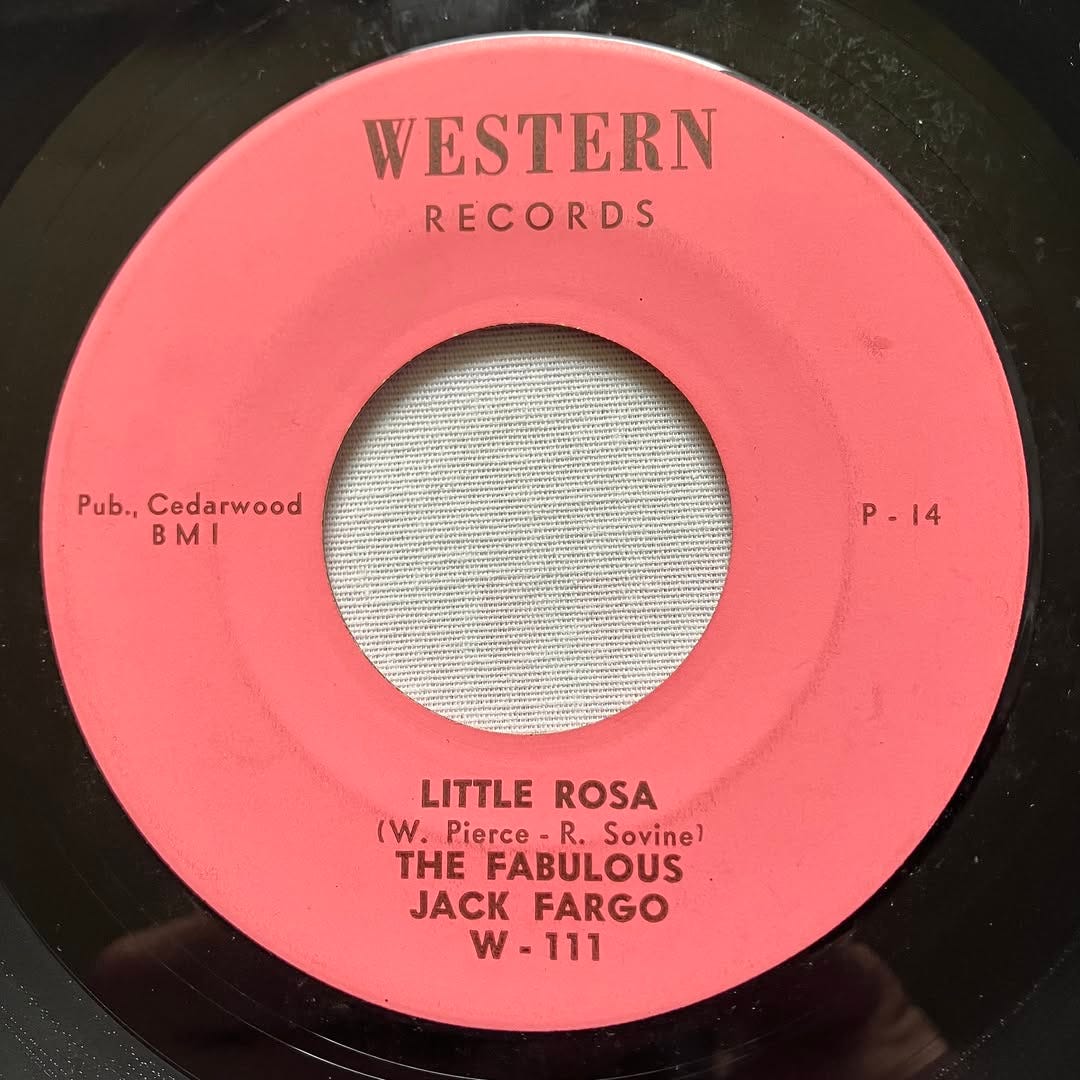
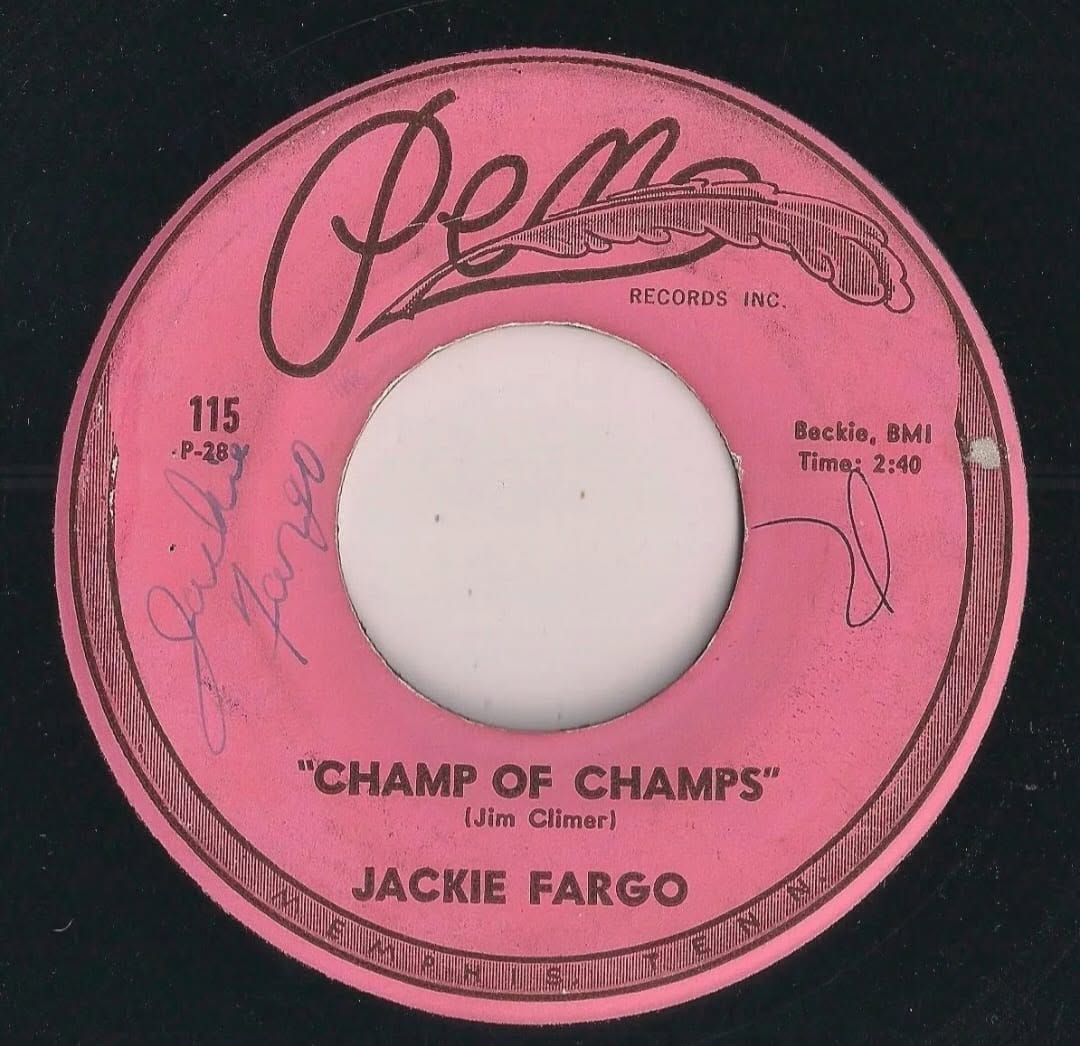
Jackie Fargo also tried his hand at recording country music in the early 1960s. This brief foray into music happened right around the peak of his wrestling career in the Gulas-Welch territory, when his local fame in Memphis made crossover projects with country artists a natural fit. He didn’t pursue a full singing career or release albums, but he did cut several 45 RPM singles that blended country storytelling with his wrestling persona.One of his solo efforts was the promo single “Champ Of Champs” / “The Cowboy And The Wedding Gown” on Pen Records Inc. The A-side, written by Jim Climer, leaned into his wrestling champion image with a runtime of about 2:40. The B-side was a more traditional country narrative.
The record was cut at the legendary Sam Phillips Recording Studio in Memphis, with lacquer work by Scotty Moore, giving it strong ties to the city’s music scene.Fargo also teamed up with his real-life wrestling tag partner Len Rossi for the Fronia Records single “If It Isn’t You” / “Cotton Fields.” He co-wrote the A-side with Rossi and Memphis country singer Eddie Bond. The track clocks in at roughly 2:23 and shows the wrestlers stepping into the studio together as a duo.Another collaboration came in 1962 with Eddie Bond on Pen Records: “Little Rosa” / “I Just Dropped In To Say Goodbye.”
This straightforward country single further embedded Fargo in the local Memphis country music circles. Bond, a well-known country performer in the area, even hosted a TV show called Country Shindig, and Fargo’s involvement suggests he may have appeared or performed in that world alongside his wrestling schedule.These releases appear to have been limited, one-off projects rather than the start of a sustained music career. They capitalized on Fargo’s popularity as a beloved babyface wrestler in Memphis, where wrestling and country music often overlapped in the 1960s local entertainment scene.
There were no extensive live singing tours, additional albums, or a long discography beyond these singles and a possible production credit on another country record. Fargo used these recording in conjunction with appearances at his nightclub in Memphis that he co-owned with Bond. A fan-uploaded “music video” clip circulating online simply pairs wrestling footage with one of his tracks, highlighting how his music remains a minor but charming footnote to his wrestling legacy.
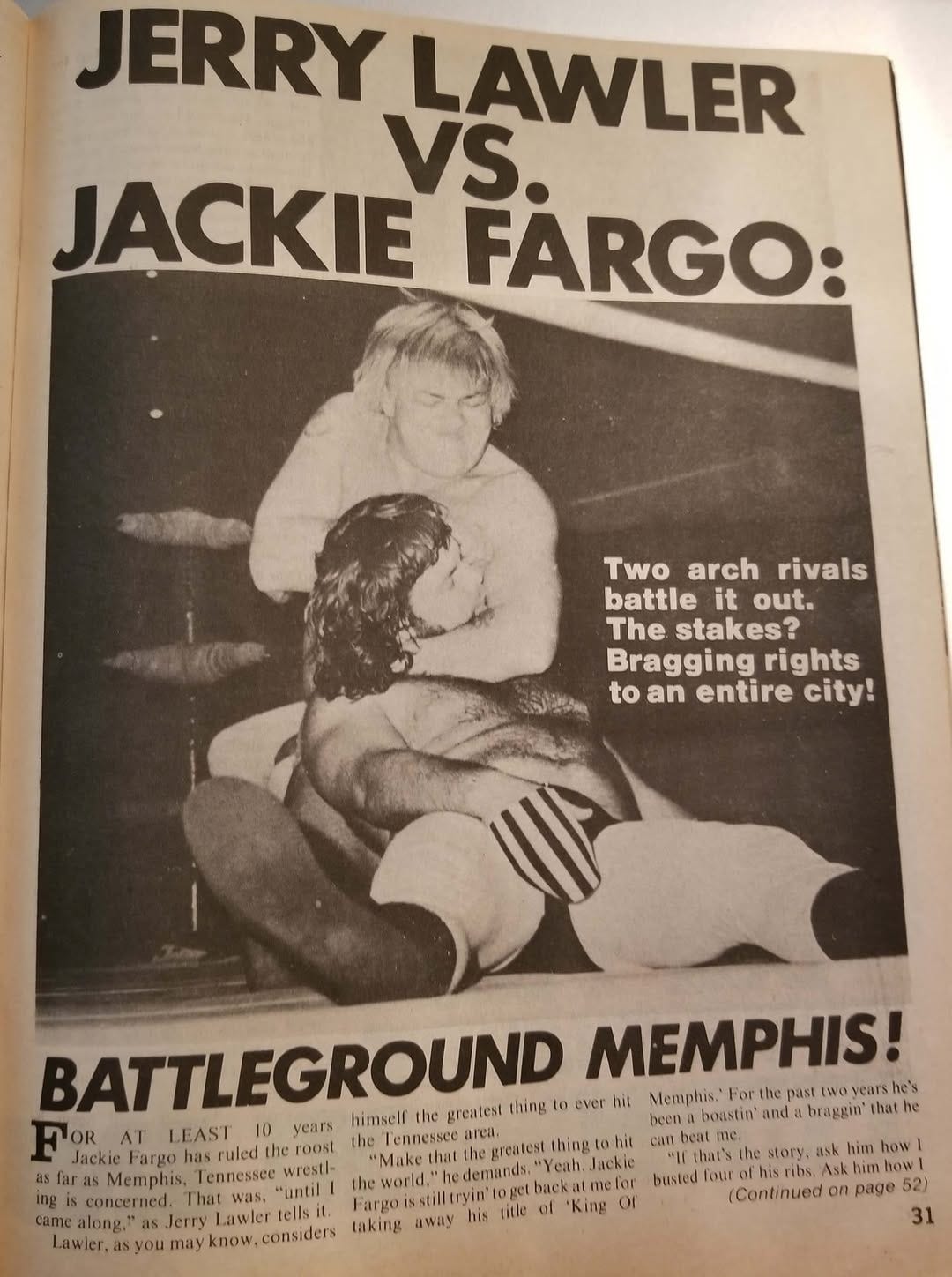
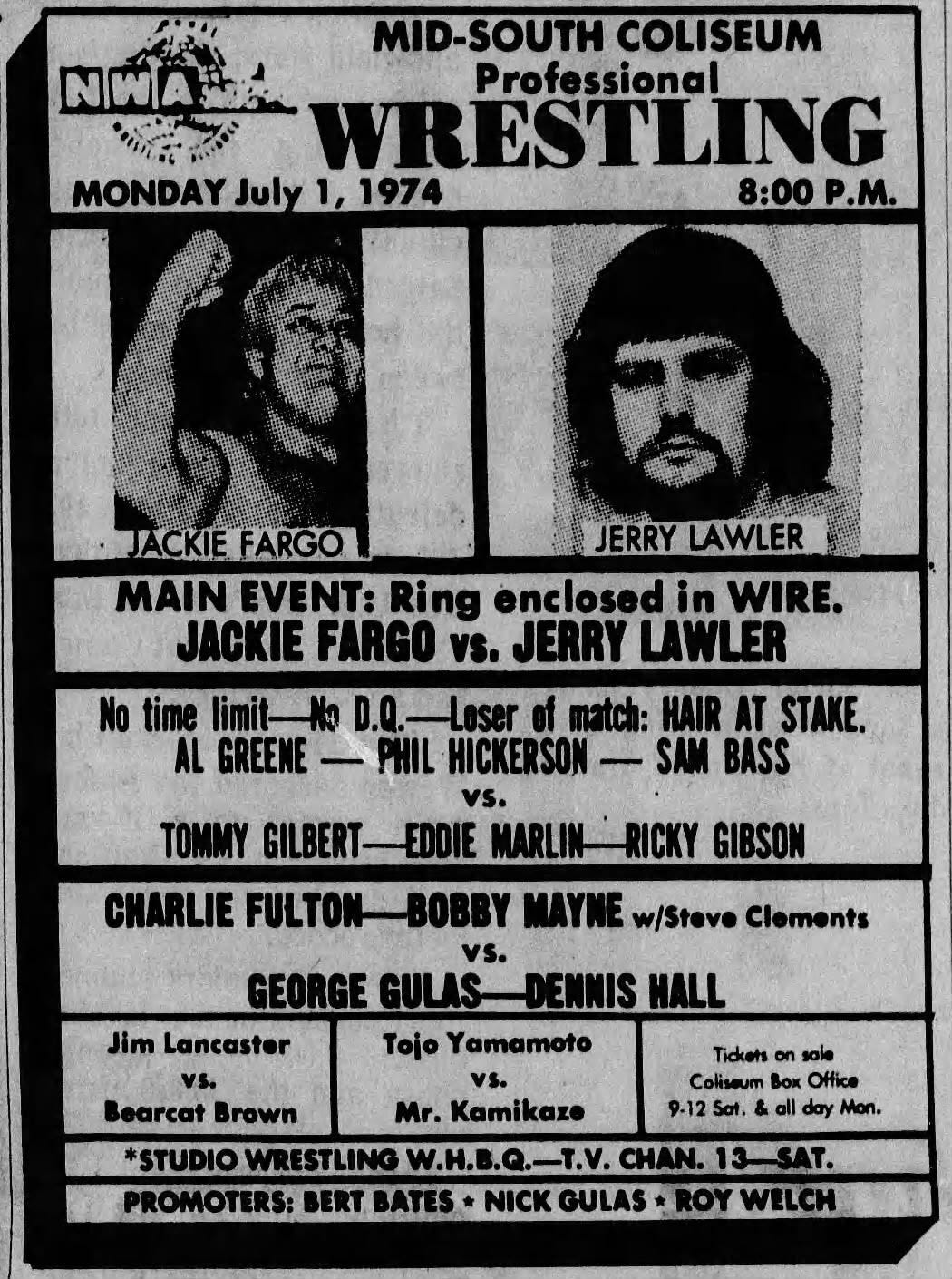
Fargo became a mainstay of NWA Tennessee Territory, later the Continental Wrestling Association, and called Memphis home. His charisma, blonde hair, and the “Fargo Strut” made him a top draw. This mannerism was widely imitated and remains iconic today. He served as a key mentor and trainer, most notably guiding a young Jerry Lawler. In 1972, Fargo had a notorious program with Al Greene that culminated in a high-stakes loser-leaves-town match involving Al’s brother Don Greene’s Southern Junior Heavyweight Title and $5,000 against Fargo’s hair. Fargo lost and got his head shaved in front of the fans. These programs helped fuel massive attendance at the large Mid-South Coliseum. Their relationship included a notable feud in 1974 that was a really big deal for the territory.
As part of Lawler’s all-year “Quest For The Title” program, the program with Fargo drew sellout crowds in June, July, and August at the Mid-South Coliseum. In 1974, for two weeks in June, Jackie Fargo and Jerry Lawler drew 11,542 and 11,783 to the Mid-South Coliseum for main events in Memphis. In July 1974, they drew 11,407 and 10,535 for two consecutive weeks. These strong attendances helped establish Lawler as the new star while Fargo remained a major attraction. Fargo later teamed with George Gulas and Tojo Yamamoto in the early 1970s, winning NWA Mid-America Tag Team titles multiple times and becoming the first NWA World Six-Man Tag Team Champions with Gulas and Dennis Hall in November 1973. He later supported The Fabulous Ones (Stan Lane and Steve Keirn) in their feuds. The Fabulous Ones tag team was directly inspired by The Fargos, particularly Jackie’s influence on their flamboyant style and presentation.
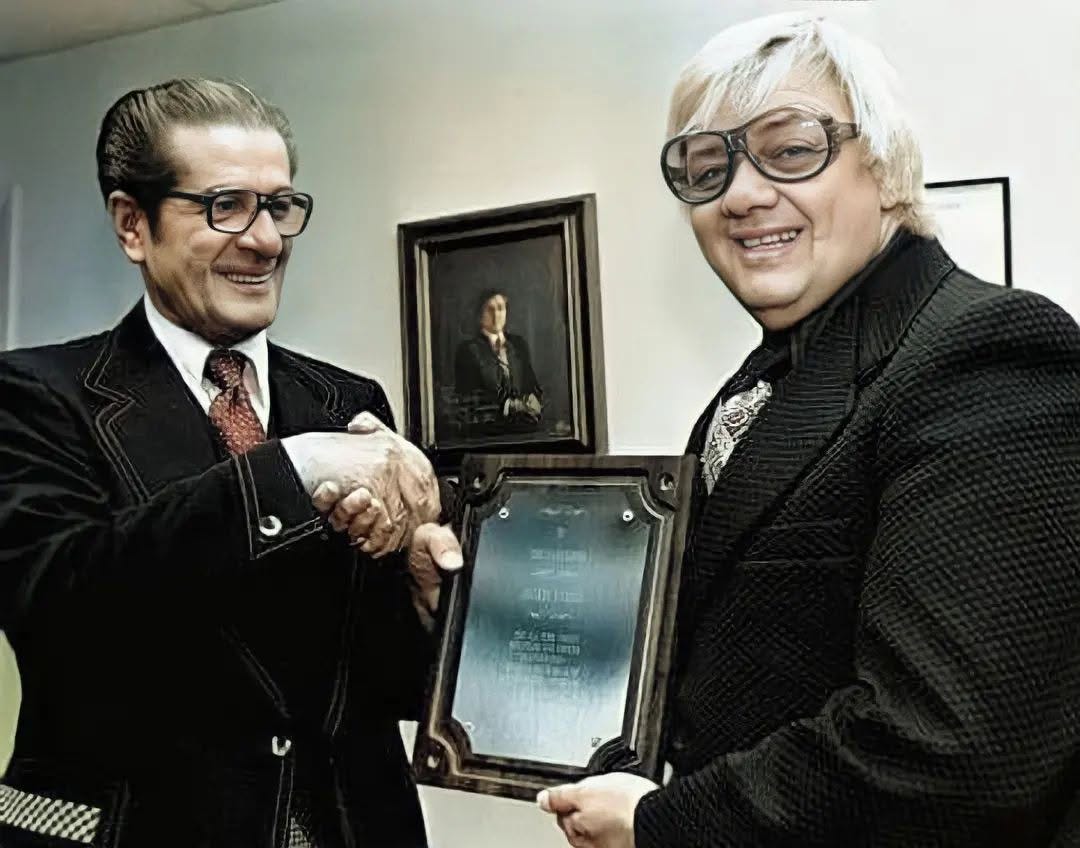
Pictured: Nick Gulas presents Jackie Fargo a special plaque honoring him and his career in 1980
Fargo wound down full-time wrestling in the 1980s but made appearances, including helping The Fabulous Ones and wrestling as late as 2006 at age 76. He appeared on the first NWA-TNA weekly PPV in 2002 alongside other legends and stayed involved as a manager and promoter. Outside the ring, he ran a nightclub and other businesses in Memphis. He was hospitalized with pneumonia in 2011 and passed in 2013 after a week with congestive heart failure, surrounded by family. He was survived by three daughters, grandchildren, and great-grandchildren.
In the context of the “7 Stages of the Territory Era,” Jackie Fargo thrived in the expansion, peak, and fragmentation phases. His 1950s tag team dominance, bolstered by early influences like Pfefer’s booking vision, exemplified the golden age of cooperative NWA territories. In Memphis, he bridged generations, mentoring Lawler and others who carried the territory through the 1970s and into the national expansion challenges of the 1980s. Fargo was inducted into the NWA Hall of Fame in 2013. His strut, brawling style, and mentorship left an indelible mark. Lawler summed it up: Fargo was the most popular figure in Southern wrestling, a revolutionary force whose influence echoed through the industry.
“The Fabulous One” wasn’t just a wrestler—he was a showman, a builder, and a legend whose strut continues in arenas today. In the rich tapestry of territorial wrestling history, Jackie Fargo remains a cornerstone of Memphis and Southeastern wrestling’s enduring appeal.
One Thing I Learned About Toni Adams
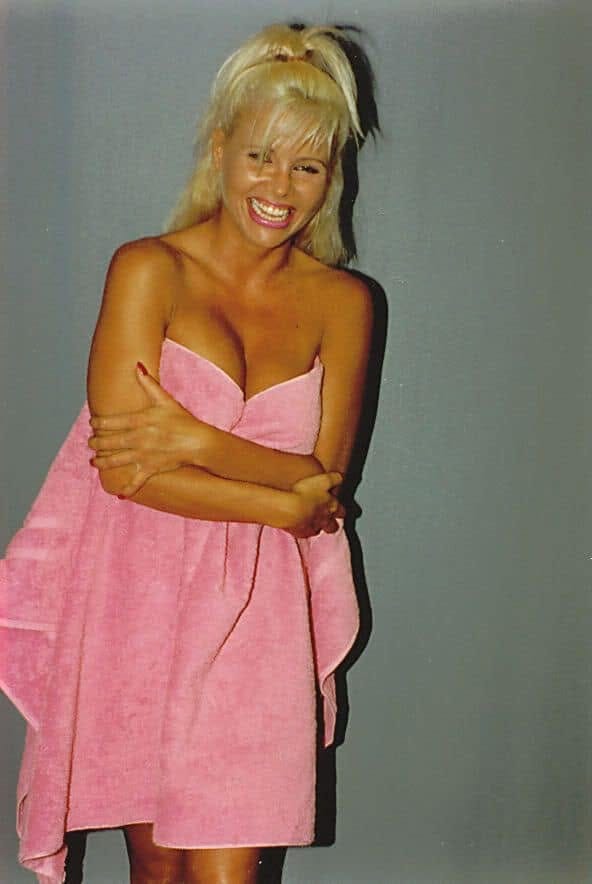
Beyond her well-known role as the valet/manager for her then-husband Chris Adams in World Class Championship Wrestling (including memorable angles with the Freebirds and Steve Austin), she co-managed Chris’s wrestling school in the late 1980s and ran a summer camp while also dabbling in promoting under Chris Adams Promotions. She passed away in 2010 at age 45.
Thank You for Reading
I’m Tony Richards, Pro Wrestling Historian, Author and Storyteller. I share pro wrestling historical items in each issue of the Time Tunnel Pro Wrestling History Newsletter. Thanks for reading! If you enjoy my information on select events, matches and insights, please share it with folks you think might like to be a subscriber!
Remember, premium investors get access to exclusive and special content such as some special issues including a multi-part deep dives on wrestling territories, wrestler bios and championship title histories, special audio and video interviews on territory pro wrestling and more available in the Pro Wrestling Time Tunnel for Premium Investors.