


Happy Birthday to those who have passed on and to those great wrestlers still with us:
In Memoriam:
Billy Riley 1896
Henri Deglane 1902
“Leaping” Larry Chene 1924
Chris Colt 1946
Jerry Reese\Big Red 1950
John Tenta\Earthquake 1963
Happy Birthday:
(none)
RIP Memorial: We stop & remember those who have passed on this day and gave themselves to the business for us, the fans. We salute you and thank you.
Nancy Benoit\Fallen Angel\Woman 6-22-2007 at the age of 43

Billy Red Lyons 6-22-2009 at the age of 77

Buddy Landel 6-22-2015 at the age of 53
Significant Debut:
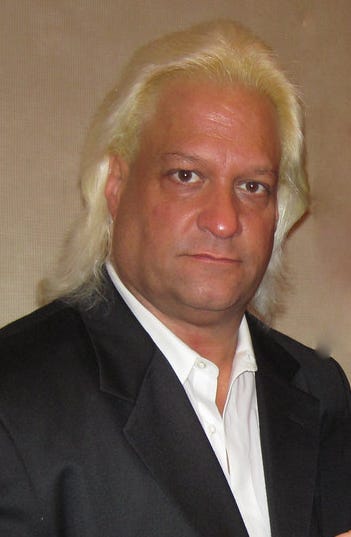
Dr. Ralph Wilson 6-22-1928 at the age of 21
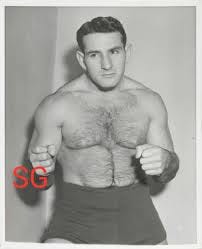
7 Stages of The Territory Era
Stage 6: Fragmentation
Year 2 Month 6
June 1976
In June 1976, as the United States celebrated its Bicentennial with parades and fireworks honoring two centuries of independence, professional wrestling flourished within the National Wrestling Alliance’s expansive territorial system. Terry Funk, the rugged and resilient NWA World Heavyweight Champion, acted as the central unifying force, journeying across regions to defend his title and bolster local main events. The NWA’s structure promoted regional autonomy with shared recognition of the world championship, talent swaps, and boundary respect, creating a rich diversity of styles that packed venues worldwide—from intimate Southern armories to international arenas.

NWA:
In the Mid-Atlantic territory run by Jim Crockett Promotions, the heated rivalry between flamboyant heel Ric Flair and babyface powerhouse Wahoo McDaniel dominated. McDaniel had seized the NWA Mid-Atlantic Heavyweight Championship from Flair earlier in the spring, sparking June clashes filled with Flair’s precise chops and figure-four leglock setups met by Wahoo’s thunderous tomahawk chops and atomic drops. These psychology-rich bouts in Greensboro Coliseum and Charlotte’s Park Center consistently drew strong crowds eager for the blood, fire, and dramatic storytelling that defined the territory. The Minnesota Wrecking Crew, Gene and Ole Anderson, further anchored the scene as reigning NWA World Tag Team Champions, dispatching challengers like the Mongols in stiff, rule-breaking tag wars that highlighted their veteran efficiency.
Championship Wrestling from Florida, led by Eddie Graham, stood as a vital NWA pillar with robust gates powered by Dusty Rhodes’ everyman charisma. The American Dream headlined with programs emphasizing heart and resilience, incorporating NWA visitors into cards across Tampa, Miami, and Jacksonville. Southern brawling mixed with technical elements, supported by strong television, kept fans engaged as storylines built toward summer transitions, including Rhodes’ trajectory with the Florida Heavyweight Championship.
Georgia Championship Wrestling under Jim Barnett gained rapid momentum through savvy TV innovations. Mr. Wrestling II, the masked fan favorite, carried the heavyweight load with compelling feuds against heels like Dick Slater and the Spoiler. Tag team action intensified around June 7 in Augusta, where the Red Devils dropped the Georgia Tag Team Titles to Dean Ho and Ken Mantell, triggering quick subsequent changes that maintained excitement at the Omni. Mr. Wrestling II’s athletic singles matches against Slater, Skandor Akbar, and Ox Baker blended skill and mystery, elevating the territory’s profile.
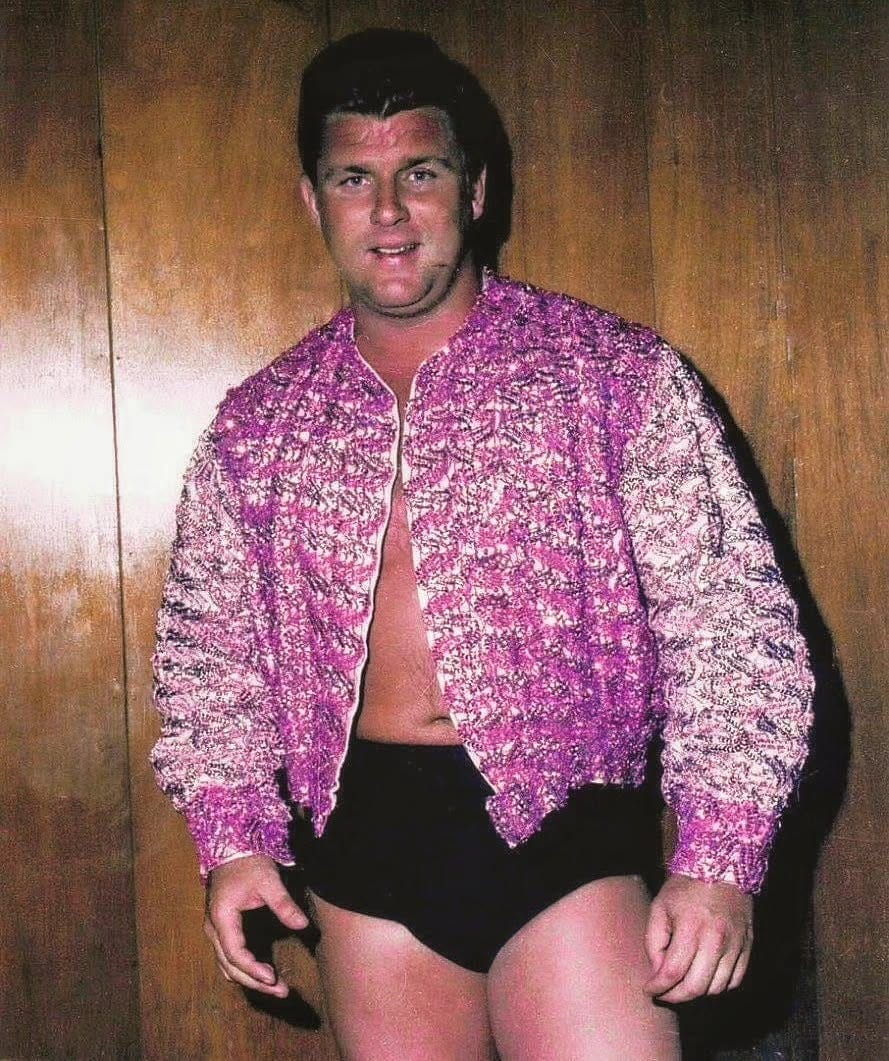
Pictured: Perinnial NWA Gulf Coast Heavyweight Champion, Ken Lucas
Gulf Coast Championship Wrestling, operating in the Alabama-Florida-Panhandle region, provided accessible weekly action that complemented larger NWA promotions. Promoted with a focus on local and regional talent, June cards featured reliable house shows and television tapings with wrestlers like the Wrestling Pro, Sweet Daddy Banks, Ken Lucas, and Chief Thundercloud in competitive singles and tag bouts. These programs emphasized straightforward Southern-style wrestling with crowd-pleasing rivalries, helping sustain interest in smaller markets and serving as a developmental feeder for broader Alliance territories.
The Dallas territory, promoted by Fritz Von Erich as Big Time Wrestling, hosted one of the month’s standout spectacles: the Super Bowl of Wrestling on June 5 at Texas Stadium in Irving, drawing around 17,000 fans. In the main event, NWA World Heavyweight Champion Terry Funk battled Fritz Von Erich to a double count-out when both competitors fought outside the ring and could not beat the referee’s count back inside. The contest showcased Funk’s tenacious brawling against Von Erich’s punishing iron claw, electrifying the massive Bicentennial crowd with power spots and family legacy drama. Supporting bouts featured Andre the Giant in a handicap victory over the Mongolian Stomper and J.J. Dillon, El Santo teaming with Jose Lothario to topple Killer Tim Brooks and Buddy Rose, plus appearances by Rocky Johnson, Rick Martel, and Red Bastien, making it a memorable showcase.
The NWA Tri-State territory, promoted by Leroy McGuirk in Oklahoma, Arkansas, and Louisiana, offered gritty Southern action with a focus on tough competitors and regional pride. McGuirk’s booking emphasized rugged loops and credible main events in cities like Tulsa, Little Rock, and Shreveport. Bill Watts, the imposing “Cowboy,” brought significant star power and intensity to the territory through his physical brawling style, power moves, and commanding presence. Watts frequently headlined or featured in key matches, leveraging his experience to deliver stiff, believable contests that elevated angles and drew fans seeking authentic hard-hitting action. June programs featured Watts in singles and tag scenarios alongside touring NWA stars or local talent, contributing to the territory’s no-nonsense reputation and consistent house show business while reinforcing its role as a vital NWA outpost for talent development and regional storytelling.
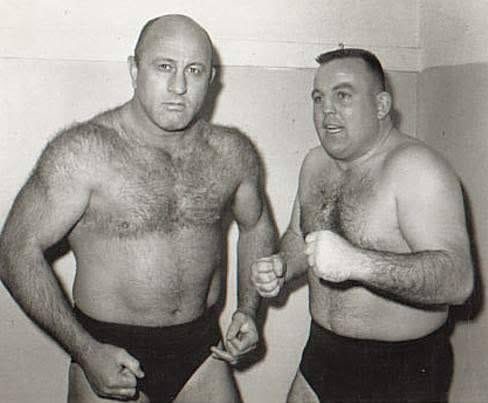
Pictured: Bob Geigel and Bulldog Bob Brown
In the Kansas City area, Central States Wrestling under Bob Geigel maintained the NWA’s traditional heartland presence with reliable weekly circuits. Geigel’s promotion featured solid undercard action and main events built around regional stars and visiting champions, often in armories and arenas across Missouri and neighboring states. June cards included competitive heavyweight bouts and tag team defenses that emphasized scientific wrestling mixed with brawling, drawing steady crowds who appreciated the territory’s straightforward, no-frills approach. Local wrestlers and regulars provided depth, with Geigel’s operations serving as a backbone for the Alliance through talent movement and classic booking principles.
In the Los Angeles NWA Hollywood territory, promoted by Mike and Gene LeBell at the iconic Olympic Auditorium, a fierce feud between young heel Roddy Piper and Chavo Guerrero Sr. generated tremendous heat. Piper, already a top villain after capturing the NWA Americas Heavyweight Title from Chavo in March, continued antagonizing the entire Guerrero family throughout the year. Their June programs featured intense singles matches and multi-man bouts laced with personal animosity, including Piper’s signature insults and rule-breaking tactics against Chavo’s scientific style and family support from Gory Guerrero. These clashes, often centered around trophies and stipulations, drew passionate crowds and exemplified the territory’s blend of athleticism and dramatic family warfare.
San Francisco’s Big Time Wrestling, promoted by Roy Shire, delivered a distinct West Coast flavor with athletic, fast-paced action at the Cow Palace and other venues. June programs showcased a mix of technical exchanges and high-impact bouts featuring local favorites and touring talent, maintaining the territory’s reputation for quality matches that appealed to sophisticated Bay Area crowds. The promotion balanced regional stars with NWA visitors, sustaining steady business in a competitive market.
Portland Wrestling, under the Don Owen family, provided strong Pacific Northwest programming known for its family-friendly yet competitive style. June house shows and television emphasized clean wrestling, emerging talents, and occasional NWA crossovers, drawing loyal regional audiences to arenas in Portland and surrounding areas. The territory’s booking focused on long-term storylines and athletic credibility, contributing to the NWA’s Western presence.
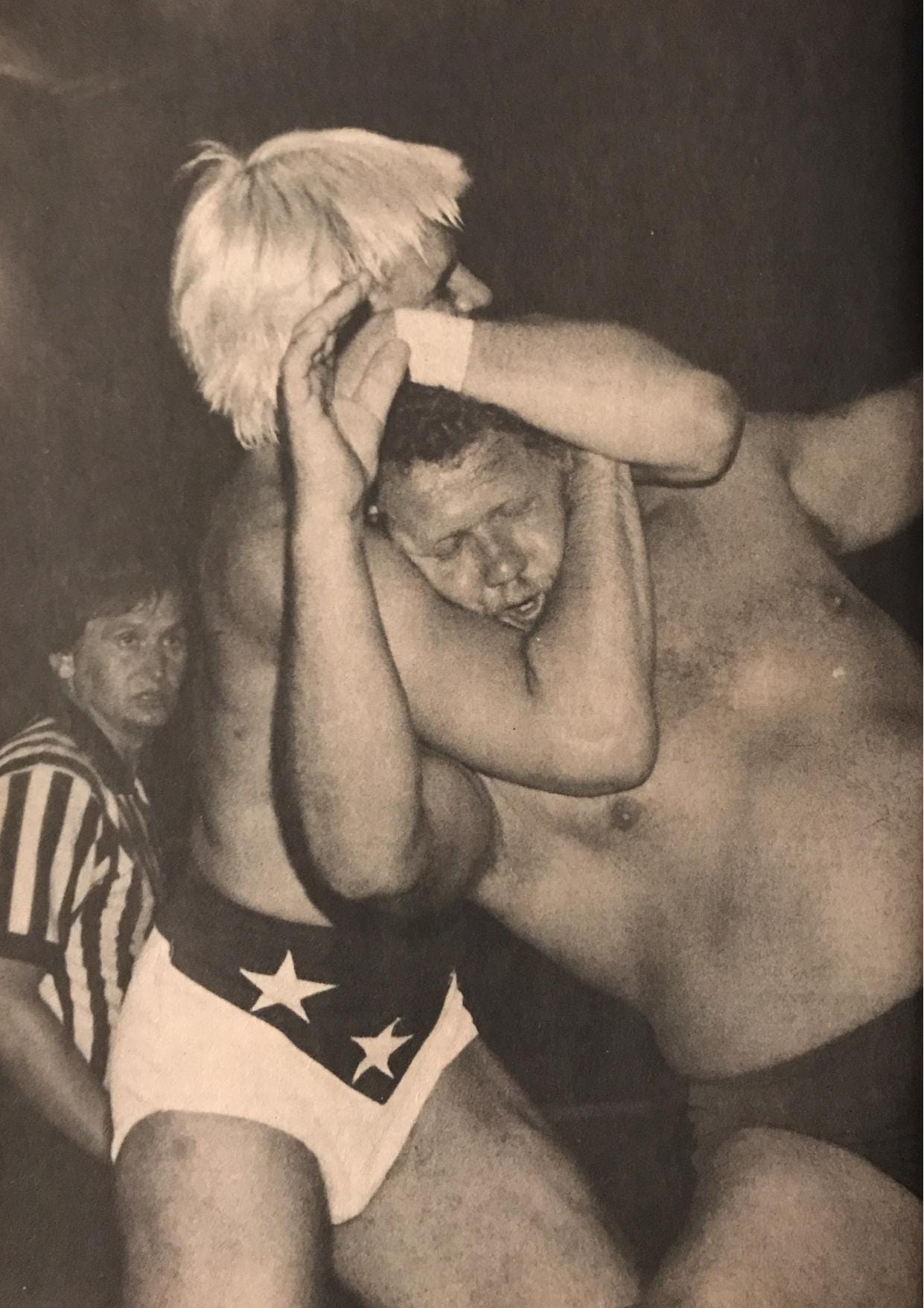
Pictured: Tommy Rich applies the sleeper hold to Jerry Lawler during one of their matches in 1976
The Gulas-Welch territory, operating as NWA Mid-America across Tennessee, Kentucky, and Alabama with key stops in Memphis and Nashville, delivered consistent house show action under promoters Nick Gulas and Roy Welch. At the Mid-South Coliseum in Memphis, Jerry Lawler reigned as a dominant Southern Heavyweight Champion, defending against contenders in high-attendance cards. On June 7, for instance, Lawler beat Don Anderson in a multi-referee match, while tag teams like Plowboy Frazier and Bill Dundee clashed with the Dominoes, and Southern Tag Champions Don Greene and The Scorpion defended in a falls-count-anywhere bout against Danny Miller and Tommy Rich. June 14 saw Dundee and Frazier teaming successfully, with ongoing rivalries involving talents like the Bicentennial Kings (Phil Hickerson and Dennis Condrey) in the tag division. These loops emphasized storytelling, athleticism, and regional stars, sustaining the territory’s role in the broader NWA ecosystem.
Canada’s NWA territories in Ontario and the prairies facilitated talent exchanges with U.S. promotions, bringing in stars like the Sheik or touring champions for rugged, straightforward action suited to local fans, thereby strengthening cross-border ties within the Alliance.
In Mexico, Empresa Mexicana de Lucha Libre (EMLL) thrived on lucha libre’s vibrant traditions, with high-flying mask-versus-mask dramas and best-of-three-falls multi-man tags filling Arena México. June built toward anniversary events, showcasing tecnicos and rudos in culturally resonant bouts connected to the NWA through talent circulation.
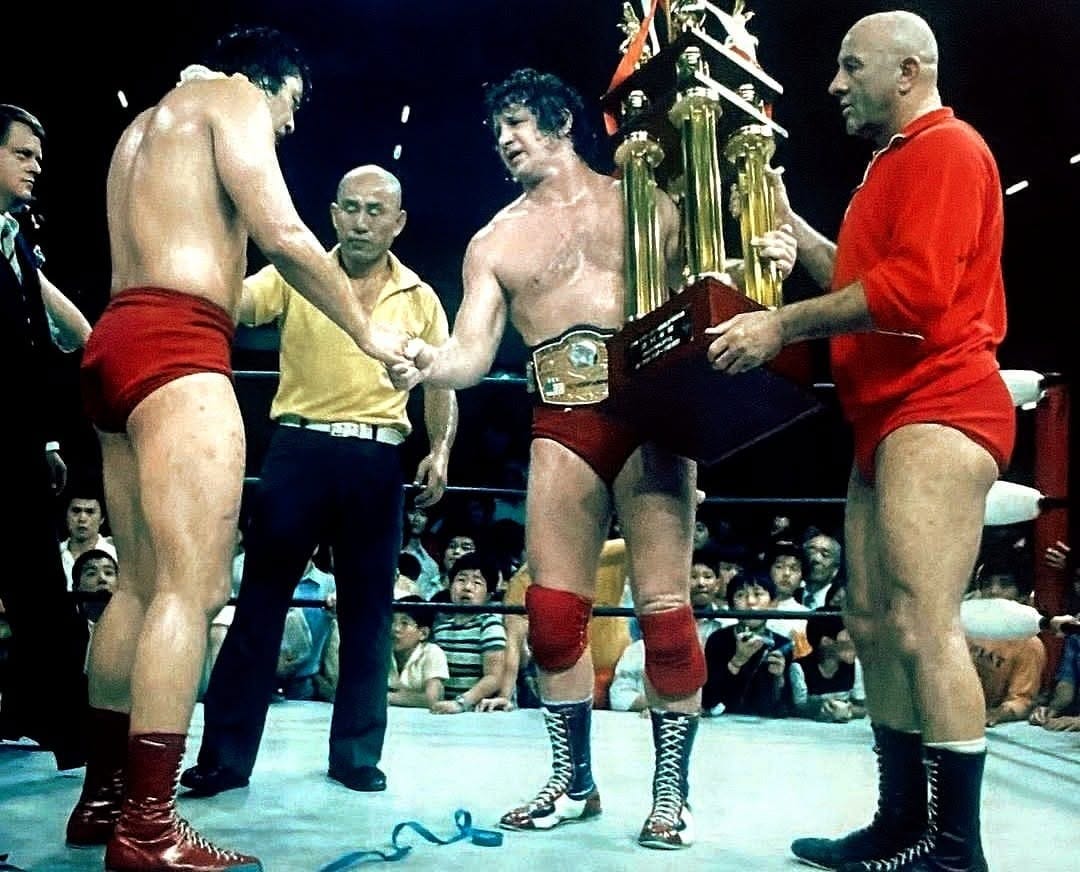
Pictured: NWA World Champion Terry Funk shakes hands with Jumbo Tsuruta as Bob Geigel hands the series trophy to Funk
Japan offered dynamic international highlights. In All Japan Pro Wrestling, Terry Funk defended the NWA World Heavyweight Championship against Jumbo Tsuruta on June 11 at Kuramae Kokugikan in Tokyo during the Champion Series. Funk’s wild American brawling met Tsuruta’s stiff, technical precision in a two-out-of-three-falls classic lasting about thirty minutes, elevating the young Japanese star in a match praised for its intensity. Meanwhile, Antonio Inoki’s New Japan Pro Wrestling presented the June 26 “War of the Worlds” boxer-versus-wrestler bout against Muhammad Ali at Nippon Budokan—a 15-round draw under special rules that captured global attention via closed-circuit and advanced puroresu’s profile.
Australia’s World Championship Wrestling and New Zealand’s promotions, such as those under Steve Rickard, incorporated imported NWA talent and local stars for house shows in Sydney, Melbourne, and beyond. These Oceania outposts sustained interest through championship defenses and exchanges, contributing to the Alliance’s global reach despite their smaller scale.
June 1976 showcased the NWA’s vitality through Terry Funk’s key defenses—like the Texas Stadium double count-out with Von Erich and the Tokyo victory over Tsuruta—alongside territory-specific feuds such as Piper versus Chavo in Hollywood and Lawler’s title work in Mid-America. Television growth in Georgia, spectacle events in Dallas, and stylistic variety from Southern chops to Mexican aerials and Japanese stiffness drove attendance. Yet hints of change appeared, with semi-autonomous groups like the WWWF staging their own Shea Stadium attractions featuring Andre the Giant, foreshadowing shifts in the territorial model amid travel demands and politics.
In the patriotic atmosphere of 1976, pro wrestling embodied decentralized resilience and communal spectacle. From Texas Stadium roars for Funk and Von Erich, Olympic Auditorium heat between Piper and Chavo, Memphis crowds cheering Lawler, to Tokyo’s Tsuruta challenge, the territories formed an interconnected tapestry of athletic theater and regional pride that defined a golden era in wrestling history. As Funk carried the championship onward, the NWA mosaic stood strong, its stories enduring for generations.
WWWF
In June 1976, as America immersed itself in Bicentennial celebrations, the World Wide Wrestling Federation (WWWF) and the American Wrestling Association (AWA) stood as major forces in professional wrestling, each carving out distinct identities while coexisting with the National Wrestling Alliance’s territorial network. Though not fully bound by the NWA’s world title framework, both promotions thrived on strong regional bases, innovative booking, and marquee talent that drew massive crowds. The WWWF emphasized larger-than-life spectacle and ethnic heroes in the Northeast, while the AWA highlighted technical excellence and athletic legitimacy in the Upper Midwest. That month, both delivered high-profile events and consistent house show success, underscoring their influence amid a vibrant wrestling landscape.
The WWWF, under the steady hand of Vince McMahon Sr., reached a peak of popularity with Bruno Sammartino as its enduring world champion. Sammartino’s reign symbolized resilience and heroism, drawing fervent support from diverse immigrant communities in New York, Pennsylvania, and New England. June featured strong cards across the territory, building on the promotion’s reputation for physical, dramatic matches. A notable highlight came earlier in the buildup to major summer shows, but June house shows maintained momentum with Sammartino defending against challengers like Stan Hansen in count-out finishes that protected the champion while advancing heated storylines. The Executioners, managed by Captain Lou Albano, continued as dominant tag team heels, clashing with fan favorites such as Chief Jay Strongbow and Billy White Wolf in best-of-three-falls bouts that emphasized brutality and rule-breaking.
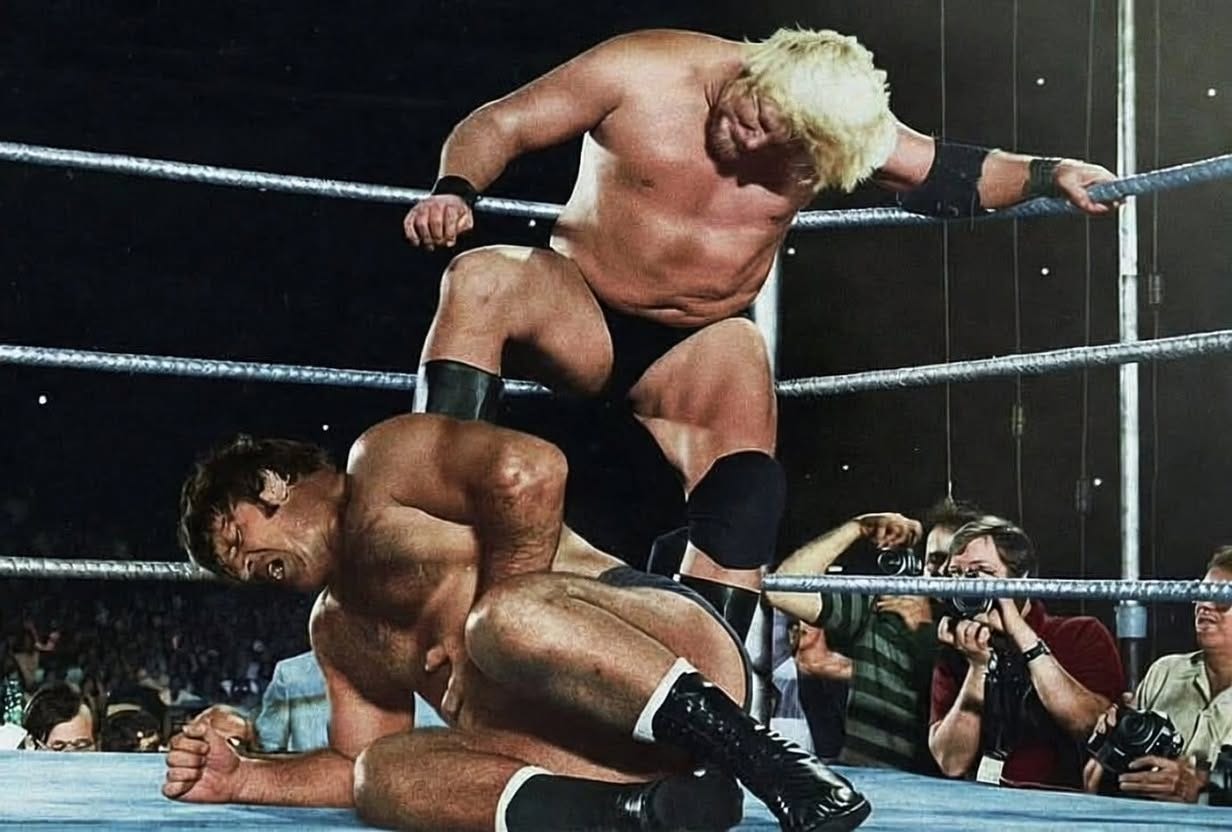
Pictured: Stan Hansen stomps on Bruno Sammartino
One of the WWWF’s defining moments around this period was the lead-in to and ripple effects from its big Shea Stadium spectacular on June 25, which drew 32,000 fans and was broadcast via closed-circuit to additional locations. While the full card extended into late June programming, it featured Andre the Giant in a memorable wrestler-versus-boxer attraction against Chuck Wepner, where the Giant prevailed by count-out after tossing the boxer over the top rope in a chaotic scene that captured mainstream attention. Sammartino successfully retained his title against Hansen via count-out after Hansen abandoned the ring area, preserving the champion’s aura. Supporting matches included Ivan Putski pinning Baron Mikel Scicluna, Chief Jay Strongbow and Billy White Wolf challenging the Executioners for the tag titles in a disqualification-filled best-of-three-falls encounter, and other bouts with talents like Jose Gonzalez, Kevin Sullivan, and Crusher Blackwell. These events amplified the WWWF’s reach, blending athletic competition with theatrical elements that appealed to broad audiences and reinforced its status as a Northeast powerhouse less reliant on NWA title exchanges.
Throughout June, the WWWF’s weekly television tapings and arena loops in cities like Philadelphia, Boston, and Pittsburgh showcased a mix of established stars and rising talent. Superstar Billy Graham and Ivan Koloff formed dangerous alliances under managers like the Grand Wizard and Albano, creating multi-man main events that tested babyface teams. Haystacks Calhoun and other giants added spectacle, while technical workers like Dominic DeNucci provided solid undercard balance. The promotion’s success stemmed from its focus on long-term storytelling, ethnic pride, and physicality, allowing it to maintain strong gates even as the NWA territories exchanged champions freely. By operating somewhat independently, the WWWF avoided diluting its world title picture while benefiting from occasional crossovers, such as closed-circuit broadcasts that tied into national wrestling interest.
AWA:
Meanwhile, the AWA, helmed by Verne Gagne in the Upper Midwest, championed a style rooted in amateur wrestling roots, scientific grappling, and legitimate athleticism. Nick Bockwinkel, the sophisticated AWA World Heavyweight Champion managed by Bobby Heenan, embodied the promotion’s class and cunning. In June, Bockwinkel continued a rigorous schedule of defenses, including a notable no-contest title bout against Gagne himself on June 25 in Chicago, a match that highlighted their storied rivalry and drew significant attention. This encounter allowed both men to look strong without a definitive finish, preserving Bockwinkel’s reign while fueling future programs. Tag team action remained a cornerstone, with Blackjack Lanza and Bobby Duncum defending the AWA World Tag Team Titles in stiff, competitive bouts against teams featuring Greg Gagne, Jim Brunzell, and others, often incorporating interference from Heenan to generate heat.
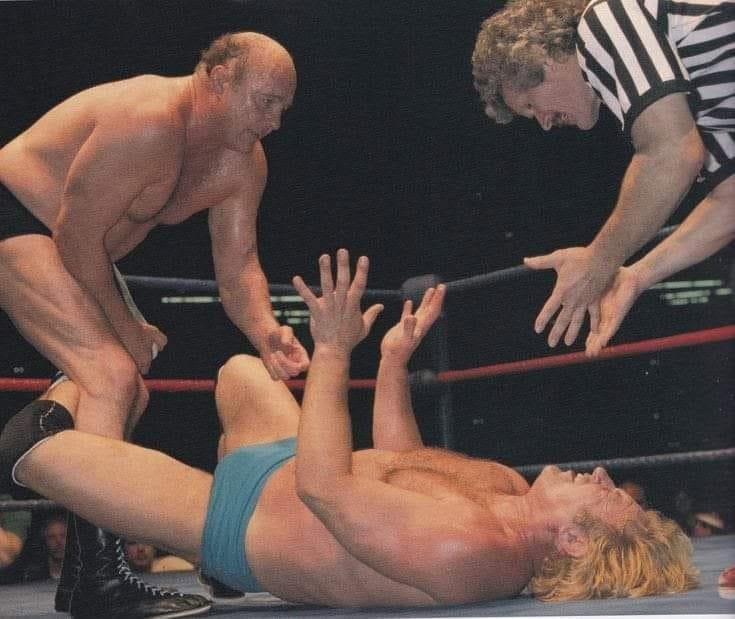
Pictured: Verne Gagne puts the spinning toe hold on AWA Champion, Nick Bockwinkel
The AWA’s territory spanned Minnesota, Wisconsin, Illinois, and beyond, with strong house show loops in Minneapolis, Milwaukee, and Chicago. Verne Gagne, though semi-retired from full-time competition, remained a key figure, occasionally stepping in to lend credibility. Talents like Larry Hennig, The Crusher, Dick the Bruiser (in overlapping areas), and international imports added depth. June cards frequently featured technical showcases where Bockwinkel’s precision and submissions clashed with power-based challengers, reinforcing the promotion’s emphasis on “real” wrestling over pure spectacle. Television programming from the region helped build stars and maintain fan engagement, with storylines revolving around Heenan’s villainous stable disrupting the natural order.
Both the WWWF and AWA demonstrated the strength of non-NWA-aligned (or semi-aligned) promotions in 1976. The WWWF excelled in grand-scale drama and ethnic connections, packing arenas with Sammartino’s defenses and Shea-adjacent spectacles featuring Andre the Giant. The AWA prioritized wrestling purity and athletic credibility, with Bockwinkel’s calculated reign and tag team excellence providing consistent quality. Their independence allowed creative freedom— the WWWF with its theatrical flair and the AWA with its grappling focus—while still indirectly benefiting from the NWA’s overall ecosystem through talent flows and shared audiences.
In the broader context of June 1976, these two promotions complemented the NWA territories by offering alternatives that expanded wrestling’s appeal. The WWWF’s Northeast stronghold and the AWA’s Midwest base sustained high attendance amid Bicentennial patriotism, proving that diverse booking philosophies could coexist and thrive. Sammartino’s heroic stands and Bockwinkel’s technical mastery, alongside supporting stars and managers like Albano and Heenan, created memorable nights that kept fans invested. As the month progressed, both laid groundwork for continued success, navigating the territorial era’s dynamics with distinct identities that enriched the sport’s golden age.
Thank You for Reading
I’m Tony Richards, Pro Wrestling Historian, Author and Storyteller. I share pro wrestling historical items in each issue of the Time Tunnel Pro Wrestling History Newsletter. Thanks for reading! If you enjoy my information on select events, matches and insights, please share it with folks you think might like to be a subscriber!
Remember, premium investors get access to exclusive and special content such as some special issues including a multi-part deep dives on wrestling territories, wrestler bios and championship title histories, special audio and video interviews on territory pro wrestling and more available in the Pro Wrestling Time Tunnel for Premium Investors.