



Happy Birthday to those who have passed on and to those great wrestlers still with us:
In Memoriam:
Tom Andrews\The Claw 1937
Don West 1963
Happy Birthday:
Koko Ware (68)
Masashi Honda\Mr Gannosuke (58)
Quinton “Rampage” Jackson (48)
Jessica Cricks\Havok (40)
RIP Memorial: We stop & remember those who have passed on this day and gave themselves to the business for us, the fans. We salute you and thank you.
Dan McLeod 6-20-1986 at the age of 97
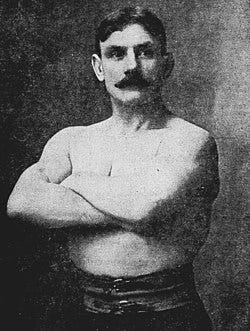
Flashback 1898
The 1898 Showdown: Yusuf Ismail (The Terrible Turk) Defeats Evan “Strangler” Lewis for the American Heavyweight Championship
On June 20, 1898, in Chicago’s Tattersalls arena, one of the most dramatic clashes in the early history of professional wrestling took place. Turkish strongman Yusuf Ismail—billed as the “Terrible Turk”—defeated American champion Evan “Strangler” Lewis in a best-of-three-falls match for the American Heavyweight Championship (often promoted with world-title implications). The bout drew a reported 10,000 spectators, a massive crowd for the era, with a $3,500 purse at stake. It pitted brute Ottoman-style power against American catch-as-catch-can ingenuity, under rules that specifically barred the stranglehold (neck yoke/sleeper) for which Lewis was famous.
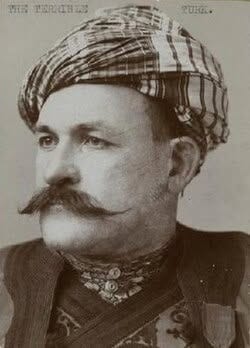
Pictured; Yusif Ismail
This match stands as a pivotal moment in the “Turkish Invasion” era of wrestling, symbolizing the collision of Old World traditional wrestling traditions with the evolving American professional scene in the late 19th century. It was also Ismail’s final victory before his tragic death at sea just weeks later.
Born around 1857 in the village of Karalar (near Shumen, then part of the Ottoman Empire, now Bulgaria), Ismail was a massive figure at approximately 6’2” and 250–305 lbs. He rose to prominence in traditional Turkish oil wrestling (pehlivan), notably winning the prestigious Kırkpınar Tournament in 1887. In 1894, French promoter Joseph Doublier brought him (along with other Turkish wrestlers) to Paris as part of the “Turkish Invasion” to challenge the dominant French Greco-Roman scene.
Turkish Oil Wrestling
Kırkpınar oil wrestling, known in Turkish as Yağlı Güreş, stands as one of the world’s oldest continuously held sporting traditions. Held annually in Edirne, Turkey, since at least 1362 (with some accounts tracing roots to the 14th-century Ottoman expansion into Thrace), it is recognized by UNESCO as Intangible Cultural Heritage and listed in the Guinness Book of World Records as the oldest ongoing sanctioned sporting competition. For Yusuf Ismail—better known as Koca Yusuf or the “Terrible Turk”—mastery of these traditions propelled him to legendary status, including his Kırkpınar championship around 1885–1887, before his international career and tragic end in 1898.
The Kırkpınar festival originated during the Ottoman era as a morale booster for troops and a celebration of martial prowess. Legend holds that it began when Sultan Murad I’s general Süleyman Pasha crossed into Europe with 40 warriors; two brothers among them wrestled to the death on a meadow that became known as “Kırkpınar” (Forty Springs). The event evolved into a grand festival honoring sultans and warriors.
Oil wrestling itself has deeper roots, possibly tracing to Greco-Roman times or earlier Central Asian Turkic traditions, blended with Islamic and Ottoman influences. It symbolizes strength, endurance, honor, and brotherhood—core values of the pehlivan (hero or champion wrestler). Unlike modern combat sports, it emphasizes technique, patience, and mental fortitude over raw aggression, with matches that can last 30–60 minutes or more in the senior categories
Central to the experience is the Peşrev—a theatrical, ritualistic warm-up and greeting performed before each match. Wrestlers line up, often with the previous champion on the right, face the Kıbla (direction of Mecca), hold hands in a gesture of brotherhood (“You are more than a brother… comrade in holy struggle”), listen to the cazgır’s prayer, and perform synchronized movements: rhythmic thigh-slapping marches, salutes to the audience and soil (symbolizing return to earth), and respectful greetings.
After the peşrev, the yağcı oils the wrestlers with copious amounts of olive oil (historically two tons used across the event), making grips extremely difficult. Wrestlers then don the kıspet (or kispet)—heavy, hand-stitched leather trousers made from water buffalo or calf hide, reaching below the knee, tied with cords at the waist and cuffs. These weigh around 13 kg (29 lbs) and are considered “half of the pehlivan,” symbolizing honor and tradition. A ceremony for donning the kıspet once carried deep spiritual and cultural meaning.
Post-match, the winner traditionally lifts and embraces the opponent in a display of respect.
Kırkpınar embodies Turkish national identity, blending Ottoman martial heritage, Islamic values of brotherhood and humility, and folk traditions. Pehlivan are revered as heroes; winning the Golden Belt brings lifelong prestige, cash prizes, and invitations to other events. The sport fosters community, mentorship (masters training apprentices), and continuity across generations.
Ismail translated the unique demands of traditional Turkish oil wrestling In Europe (primarily France, 1894–1897), Ismail dominated under Greco-Roman and mixed rules. Promoters billed the “Turkish Invasion” as exotic power versus refined European technique. His oil wrestling roots gave him an edge in chaotic, no-holds-barred elements and crowd-pleasing spectacle. He reportedly racked up around 115 victories with few (if any) clean losses, defeating top names and remaining undefeated until a controversial disqualification against Ernest Roeber in 1898. He innovated all this into a devastating professional style that made him nearly unbeatable in Europe and a sensation in the United States during the 1890s. His background in pehlivan wrestling provided the raw power, endurance, adaptability, and unorthodox grappling that powered an undefeated (or near-undefeated) streak of roughly four years and over 100 victories before his tragic death in 1898.
In Europe, primarily in France from 1894 to 1897, Ismail dominated under Greco-Roman and mixed rules. Promoters billed the “Turkish Invasion” as exotic power versus refined European technique. His oil wrestling roots gave him an edge in chaotic, no-holds-barred elements and crowd-pleasing spectacle. He reportedly racked up around 115 victories with few (if any) clean losses, defeating top names and remaining undefeated until a controversial disqualification against Ernest Roeber in 1898.
Ismail quickly established himself as nearly unbeatable in Europe, remaining undefeated for nearly four years with a claimed record of over 100 wins. His style emphasized raw power, devastating holds, and a fierce, sometimes brutal intensity. In Paris, he became a sensation—and a heel—known for matches so violent that police intervention was sometimes required (such as his brutal encounter with fellow Turk Ibrahim Mahmut).
In early 1898, manager Antonio Pierri and promoter William A. Brady brought him to the United States. He offered $100 challenges and dominated opponents, including injuring lightweight George Bothner with his overwhelming strength. A controversial disqualification loss to Ernest Roeber at Madison Square Garden (in which he allegedly pushed Roeber out of the ring, sparking a near-riot) only heightened his notoriety.
In the U.S., facing catch-as-catch-can wrestlers, his pehlivan background shone even brighter. The slippery, endurance-focused training helped him counter chokes and holds while imposing his own powerful grappling.
Training In The Turkish Style
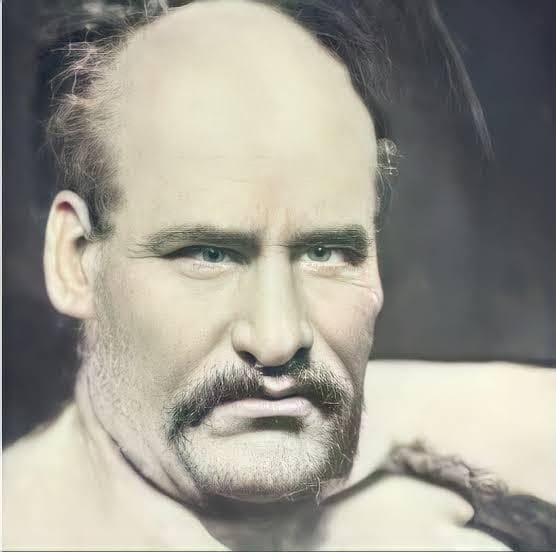
Pictured: Gaddar ( Cruel) Kel ( Bald) Aliço, 27 times Kırkpınar champion
I think, for us today, it’s hard to imagine how any of the wrestlers were prepared in this era, but especially a powerhouse like Ismail.
I wanted to take just a little space and write about how these types of athletes were trained in the Turkish oil wrestling style.
Training begins young and follows a hierarchical apprenticeship model, recognized by UNESCO as central to preserving the tradition. An apprentice trains under an experienced master for several years—often 5–10 or more—before competing at Kırkpınar. The master imparts not only techniques but also ethics, strategy, and the unwritten rules of pehlivan honor, generosity, and respect.
Apprentices assist at tournaments by carrying the master’s basket of gear (oil, towels, etc.), observing, and supporting. This hands-on immersion builds character alongside skill. Modern additions like the Kırkpınar Physical Education and Sports Academy at Trakya University support academic study and youth development, but the core remains traditional mentorship.
Pehlivan training is notoriously demanding, designed to replicate the heat, slipperiness, and prolonged exertion of Kırkpınar bouts (which can last 30–60+ minutes with no time limits in elite divisions historically).
• Heat Acclimation: Wrestlers deliberately train at the hottest times of day (high noon in summer, when temperatures exceed 35°C/95°F and feel like 50°C with humidity and gear). This prepares the body for July competitions in Edirne. Sessions include running, stretching, and strength work in full kıspet (heavy leather trousers).
• Strength and Functional Power: Emphasis on core, grip, and full-body strength. Exercises include running and strength training in kıspet, bodyweight movements, lifting heavy objects, and traditional tools (similar to Persian meel clubs in related cultures). Training builds the ability to lift, throw, and control opponents under slippery conditions. Modern pehlivans incorporate squats, presses, and wrestling-specific drills.
• Oil-Specific Drills: Wrestlers practice techniques while oiled, developing “frictionless adaptation”—constant micro-adjustments in grips on leather kıspet or skin. This forges exceptional forearm/grip strength and tendon resilience through chaotic, variable resistance. Drills focus on cuff grips, waist locks, lifts, trips, and pins.
• Endurance and Stamina: Long sparring sessions simulate match length. Historical tekke (wrestling lodges) in Ottoman times featured oiled marble floors for slippery training, blending athletic and spiritual practice. Pehlivans develop the mental fortitude to outlast opponents in grueling battles.
Training prioritizes technique over raw power, though size and strength are assets. Key focuses:
• Mastering grips on kıspet (cuffs, waistband, inside/outside) since oil negates skin holds.
• Throws, lifts (e.g., over shoulders), trips, and ground control.
• The Peşrev—ritualistic warm-up movements that double as mobility and mental preparation.
• Strategy: Patience, exploiting opponent fatigue, and using the slippery environment advantageously.
Apprentices progress through categories (Tesvik to Baş Güre) based on experience, building toward the Başpehlivan (Chief Wrestler) level.
While specific modern diets vary, historical and traditional approaches emphasize nourishing, strength-building foods suited to intense training (high protein, sustained energy). Recovery includes traditional Turkish baths (hamam), oil’s healing properties (anti-inflammatory, mosquito repellent), and rest. Pehlivans embody moral values—honesty, respect, generosity—fostering a disciplined lifestyle.
These were real warriors by the time they were ready to compete.
The Original Strangler Lewis
Born May 24, 1860, in Ridgeway, Wisconsin, the 5’9”, ~180 lb Lewis was a pioneer of American catch-as-catch-can wrestling. He perfected the “stranglehold” (a precursor to the modern sleeperhold), using it to dominate foes. Lewis won the American Catch-as-Catch-Can Championship in 1887 by defeating Joe Acton and later unified titles, including against Ernest Roeber. He held the American Heavyweight Championship for years before losing it earlier to Martin “Farmer” Burns.
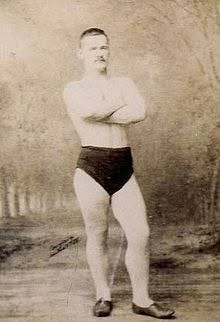
Pictured: Evan “Strangler” Lewis
Lewis grew up in rural Wisconsin, an environment that likely fostered the toughness required for frontier-style athletics. Cornish immigrant communities in the Midwest practiced Cornish wrestling, an upright jacketed style focused on throws and pins (often three- or four-point falls involving shoulders and hips). This was Lewis’s foundational background—distinct from the more ground-oriented Lancashire catch-as-catch-can style that was gaining popularity in America through British imports.
He transitioned to professional wrestling dramatically in May 1882 by winning a 64-man tournament in Montana. Returning to Wisconsin, he claimed the state heavyweight title in 1883 by defeating Ben Knight. By the mid-1880s, he had relocated to Madison and begun challenging international talent, building a reputation through mixed-style matches that showcased his adaptability.
Lewis was not initially versed in Lancashire catch-as-catch-can, the dominant “up-and-down” style allowing holds on any body part, ground wrestling, and submissions. To adapt, he partnered with seasoned British professionals like Joe Acton and Jimmy Faulkner. These collaborations involved repeated sparring sessions where Lewis absorbed techniques, ring psychology, and the acrobatic flair (such as head-creels and bridges) common among lighter catch wrestlers. This hands-on mentorship was his primary “training camp,” turning him from a Cornish thrower into a versatile catch stylist capable of competing at the highest levels.
Like most wrestlers of the period, Lewis relied on functional, full-body strength developed through actual matches and informal drills rather than modern weightlifting. His compact, powerful build suited roughhouse tactics—aggressive brawling, powerful grips, and sustained pressure. He trained to endure long bouts, often under varying rules (Greco-Roman, collar-and-elbow, side-hold, and catch). Heat acclimation and endurance work were implicit in the demanding travel and frequent challenge matches across the U.S.
The stranglehold was reportedly refined from boxing chancery holds. Lewis practiced applying it to control and pin opponents without necessarily injuring them, though its controversial use (sometimes barred in matches) added to his intimidating persona. He favored “flat falls” (four-point pins), retaining elements of his Cornish heritage even in catch rules.
Lewis prepared psychologically for the spectacle of pro wrestling. Promoters and partners built his reputation in newspapers before major bouts, creating hype around his “brutalities.” He embraced a rough, fight-like style that compensated for any initial shortcomings in pure Lancashire technique, making matches exciting and marketable. This showmanship, combined with legitimate skill, helped him unify titles.
His preparation was pragmatic: constant competition against top talent, learning through partnership with experts, and leveraging physicality and ferocity. This approach proved highly effective, as evidenced by his dominance in the late 1880s and early 1890s.
Lewis defeated Joe Acton in 1887 for the American Catch-as-Catch-Can Championship. He unified multiple titles, including victories over Ernest Roeber that added Greco-Roman and collar-and-elbow honors. He held the American Heavyweight Championship for years, defending it vigorously until losing to Martin “Farmer” Burns (a future trainer of legends like Frank Gotch).
In mixed-style challenges, he excelled, such as a 1892 five-style match victory over Cornish champion Jack King for a substantial purse. His bouts often blended legitimate competition with promotional theater, drawing large crowds and by 1898, Lewis was a veteran technician whose grappling expertise and signature choke made him one of America’s top stars. The match with Ismail was a classic “East vs. West” or “Power vs. Technique” narrative that promoters loved.
The Promoter For The Title Match
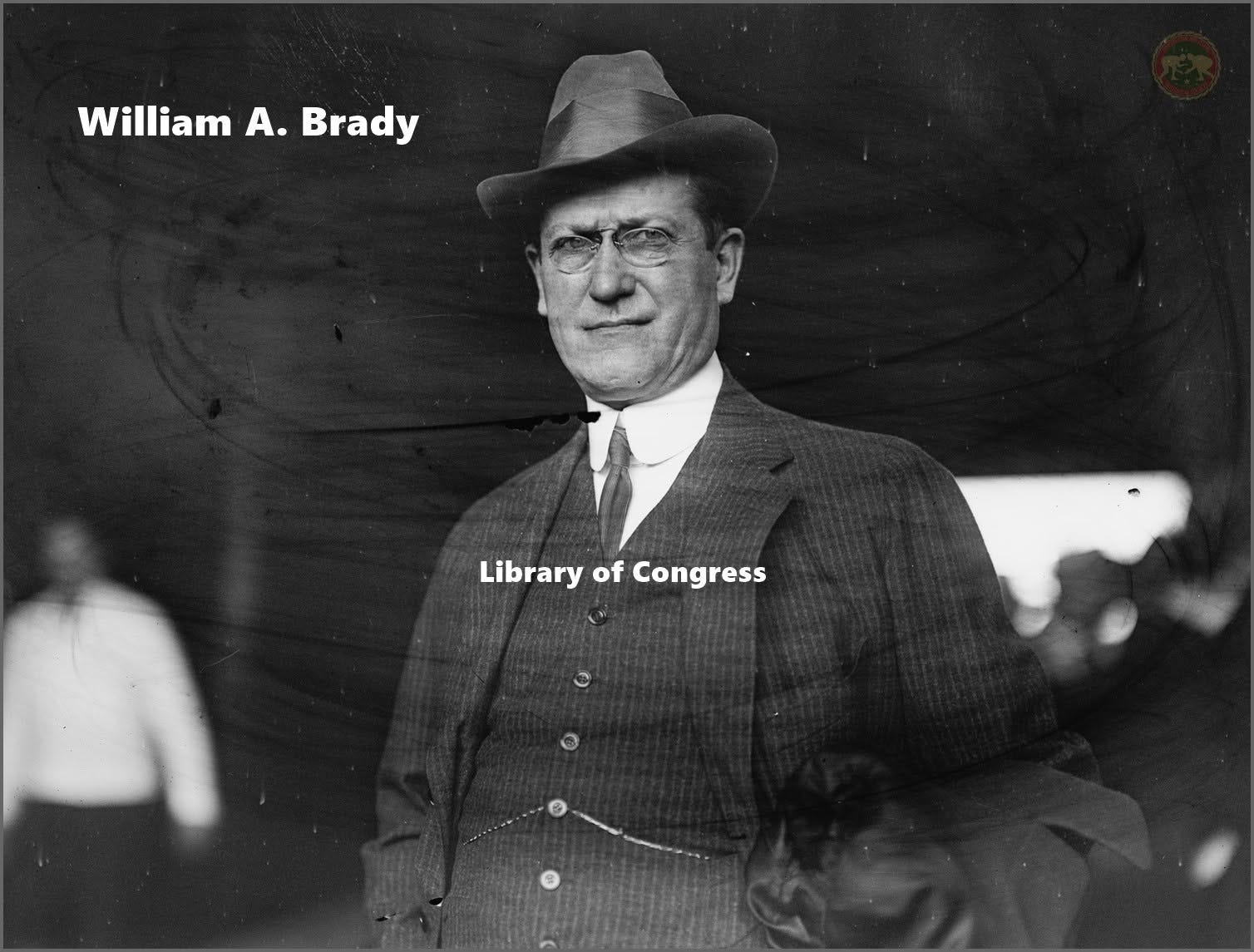
The key figure orchestrating Yusuf Ismail’s (the “Terrible Turk”) American tour—and specifically the high-profile June 20, 1898, showdown against Evan “Strangler” Lewis at Chicago’s Tattersalls arena—was William A. Brady. Brady, a rising theatrical impresario who later became one of Broadway’s most successful producers, took a hands-on role in managing and promoting Ismail after the Turk’s arrival in the United States.
Brady stepped in as Ismail’s manager/promoter roughly a month after the wrestler’s February 1898 landing in New York (initially brought over by Antonio Pierri and others). He quickly capitalized on the “Turkish Invasion” hype, using aggressive publicity tactics that fit the era’s barnstorming style:
• He staged $100 challenges at venues like the London Theatre in New York, offering the purse to any wrestler who could last 15 minutes with the massive Turk. This generated massive newspaper coverage and built Ismail’s fearsome reputation.
• Brady handled financial dealings, publicity, and match bookings, including high-stakes bouts against top American stars like Ernest Roeber and, ultimately, Lewis.
• Contemporary accounts credit Brady with much of the sensationalism around Ismail’s career, including colorful (and often exaggerated) stories surrounding the Turk’s tragic death aboard the La Bourgogne—such as the money belt filled with gold coins.
The Chicago match itself, billed for the American Heavyweight Championship (with world-title implications) and a $3,500 purse, drew a reported 10,000 fans. It was a classic East-vs-West spectacle that Brady helped engineer as part of Ismail’s whirlwind U.S. run. Rules were tailored (barring Lewis’s signature stranglehold) to heighten drama and accommodate the styles.
The Terrible Greek
Antonio Pierri, often billed as “The Terrible Greek” or “Pierri the Greek,” was a pivotal figure in late 19th- and early 20th-century professional wrestling. Born in Greece (likely on the island of Syros), he competed as a Greco-Roman heavyweight in Europe and the United States before transitioning into management and promotion. Pierri’s career bridged the eras of challenge matches and international tours, making him a key architect of the “Turkish Invasion” and a mentor to numerous wrestlers. His involvement with Yusuf Ismail (the original “Terrible Turk”) in 1898 exemplifies his dual role as both competitor and savvy promoter.
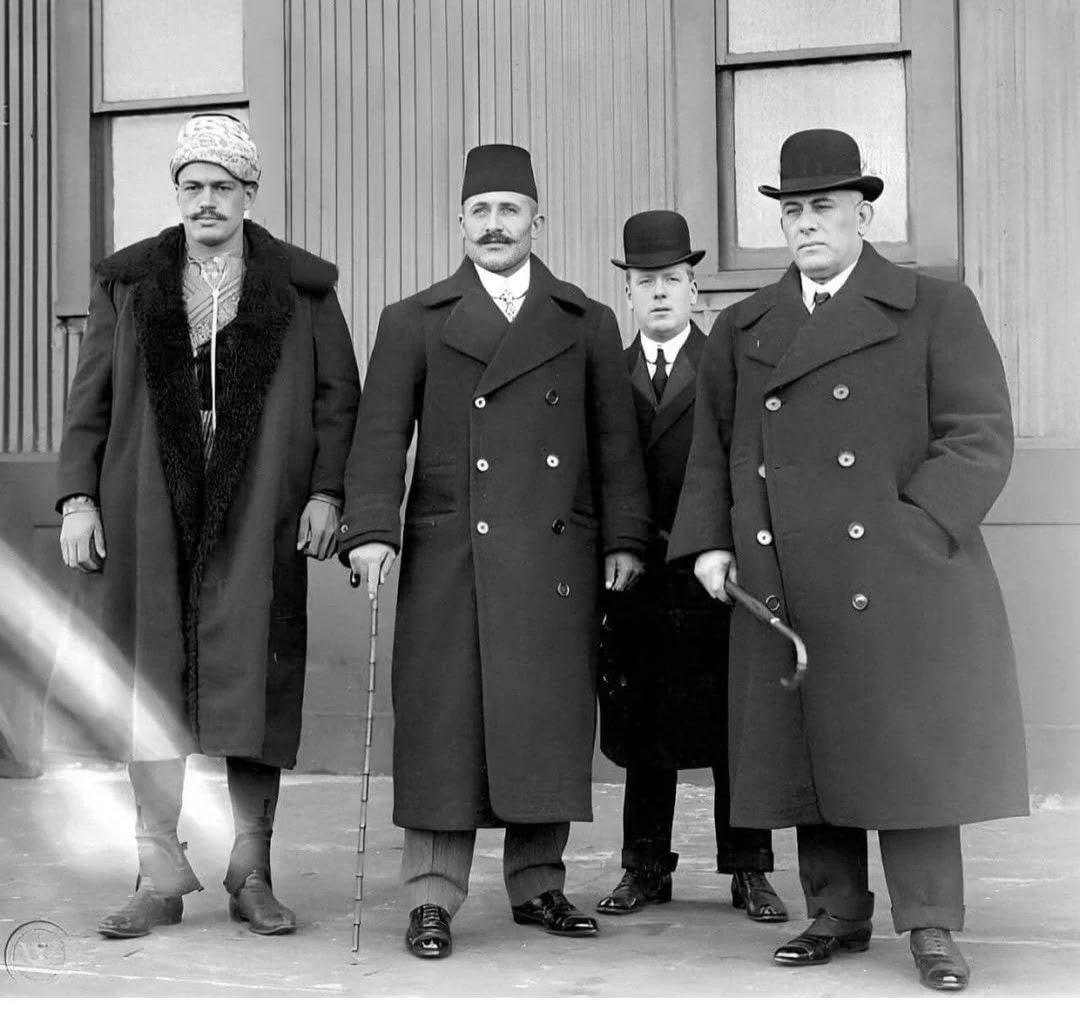
Pictured: Two Turkish wrestlers and former Greek wrestler, Antonio Pierri "The Terrible Greek" during a Greco-Roman wrestling competition in the United States in 1909.
Pierri emerged in the 1880s–1890s as a legitimate Greco-Roman wrestler known for his skill, toughness, and promotional flair. He claimed major titles, including a notable victory over Tom Cannon in 1886 for the European Heavyweight Greco-Roman Championship in Manchester, England (though Cannon quickly regained it). His matches against top talent like Cannon highlighted the era’s fluid international scene, where wrestlers traveled between Europe, Australia, and America under varying rules.
Pierri earned the “Terrible Greek” moniker for his aggressive, crowd-pleasing style—mirroring the “Terrible Turk” gimmick he would later popularize. He faced (and lost to) Yusuf Ismail in Paris around 1895, an encounter that later positioned him uniquely as both rival and manager. Contemporary accounts describe him as a master of Greco-Roman technique, with strong throws and control, though he often weighed in as a heavyweight capable of handling larger opponents.
His active wrestling career extended into the early 1900s, but he increasingly focused on managing and promoting troupes of international wrestlers. He continued competing sporadically while building stables of talent.
Pierri’s most famous contribution came during the 1898 American tour of Turkish wrestlers. Accompanied by backer Joseph Doublier, he managed Yusuf Ismail upon the latter’s arrival in New York on February 18, 1898. Pierri orchestrated high-profile $100 challenges (offering the purse to anyone who could last 15 minutes with the massive Turk), generating massive publicity and positioning Ismail as an unstoppable foreign heel.
This promotional strategy directly led to major bouts, including Lewis-Ismail championship match in Chicago. Pierri helped shape the narrative of East-vs-West clashes, tailoring rules and building hype that drew large crowds. His prior experience wrestling Ismail lent credibility to the promotions.
The Match: June 20, 1898, Chicago
Billed for the American Heavyweight Championship (and often the “championship of the world”), the contest was best-of-three falls under catch-as-catch-can rules, with Lewis’s stranglehold explicitly barred to neutralize his primary weapon and accommodate Ismail’s powerful style.
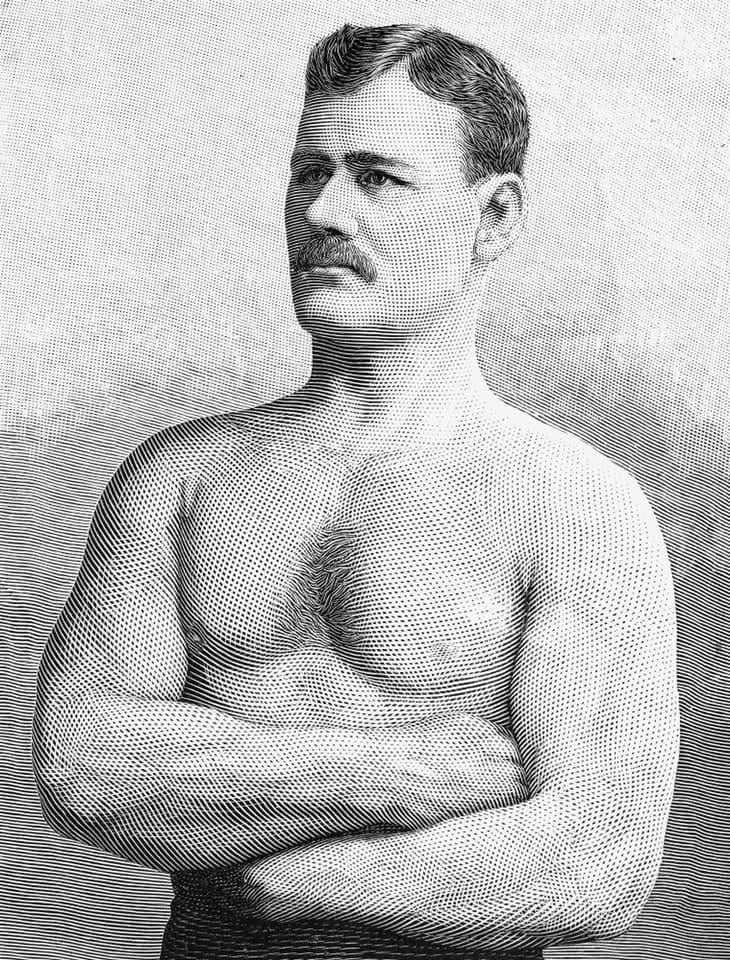
Pictured: Evan “Strangler” Lewis
Contemporary accounts describe a fast-paced, controversial affair:
• First Fall: Ismail took the offensive immediately. Within about three minutes, he locked Lewis in a stranglehold. The referee awarded the fall to Lewis on a foul due to the barred move.
• Second and Third Falls: After a caution (and reportedly a second stranglehold incident), Ismail adjusted and dominated. He secured the second fall in roughly six minutes and the third in seven minutes, again using powerful grappling that some reports described as strangle-like but which the referee allowed this time. Lewis, overpowered by Ismail’s size and strength, could not mount a sustained comeback.
Post-match, Lewis was gracious in defeat, reportedly stating, “I was licked. The Turk is the better man.” This concession from a respected American champion amplified the victory’s significance.
The outcome highlighted the era’s blend of legitimate athletic competition and promotional spectacle. Ismail’s use of barred holds added controversy, fitting his “Terrible Turk” heel persona, while the large crowd and high stakes underscored wrestling’s growing popularity as a big-ticket sport.
This bout occurred during a transitional period when wrestling mixed legitimate contests, challenge matches, and theatrical elements. The late 19th century saw American promoters booking international stars to draw crowds, much like the territorial era of your “7 Stages” framework. Ismail represented the influx of European/Ottoman talent challenging U.S. champions, prefiguring later “foreign menace” angles.
Lewis’s career bridged collar-and-elbow, Greco-Roman, and catch styles, while Ismail brought the raw power of Kırkpınar traditions. Their clash exemplified the globalization of wrestling even in the 1890s. Title histories vary slightly due to the fragmented nature of early championships, but Ismail’s win is widely recognized as a brief but notable reign for the American Heavyweight Title.
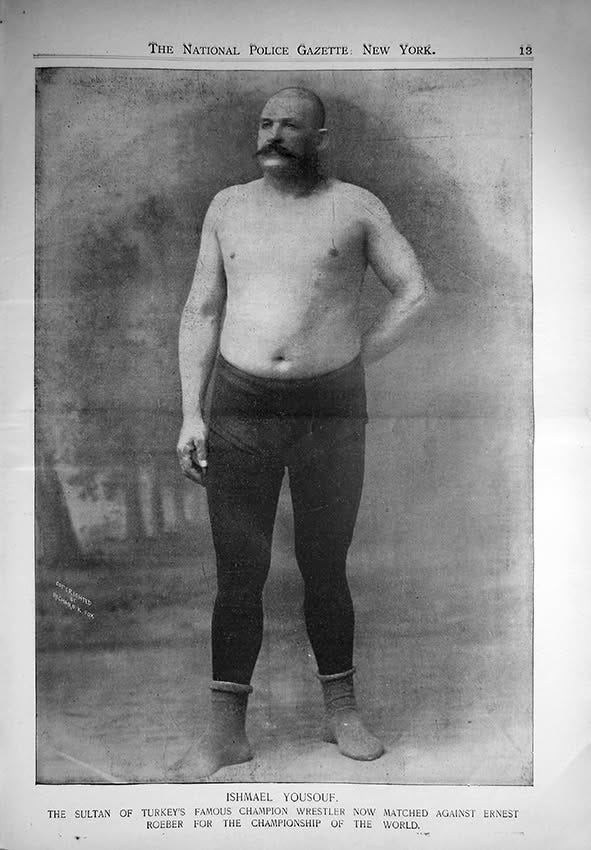
Pictured: Yusif Ismail in the Police Gazette, April 2nd, 1898
Ismail’s victory was his last. He boarded the French ocean liner La Bourgogne shortly afterward, intending to return home wealthy and possibly open a business. On July 4, 1898, the ship collided with another vessel and sank off Nova Scotia, resulting in over 500 deaths. Ismail reportedly drowned, dragged under by a money belt containing $8,000–$10,000 in gold coins he had converted his earnings into—a detail romanticized (and possibly exaggerated) in contemporary press accounts managed by promoter William Brady.
Sensational stories claimed he fought ruthlessly for a lifeboat, but these are largely dismissed as hype. His death at age ~41 cemented his legend as one of wrestling’s first great tragic foreign attractions. Lewis continued wrestling until around 1899 and lived until 1919.
Yusuf Ismail was the original “Terrible Turk,” inspiring a lineage of wrestlers using the gimmick. His 1898 win over Lewis remains a highlight of pre-1900 pro wrestling history—a testament to size, strength, and showmanship in an era when matches could still be presented as genuine tests of supremacy. For historians of the territorial and pre-territory periods, it illustrates early international booking strategies, the power of ethnic/foreign heels, and the risks/rewards of the road.
In the broader sweep of wrestling’s evolution—from carnival strongmen and challenge matches to the structured territories you chronicle in your Pro Wrestling Time Tunnel work—this match captures the sport’s adventurous, larger-than-life spirit at the close of the 19th century. Ismail’s brief but explosive American run added color and controversy that helped pave the way for future stars.
One Thing I Learned About Koko Ware
He sang the title track “Piledriver” on the WWF’s 1987 album Piledriver: The Wrestling Album I
His smooth, vibrato-heavy vocals carried the upbeat track (which playfully compares falling in love to taking a piledriver), and he even appeared in the official music video. The song later became one of his entrance themes for a while.
“The Birdman” had legitimate singing talent on top of his in-ring charisma — something most fans never associate with his WWF run.
Thank You for Reading
I’m Tony Richards, Pro Wrestling Historian, Author and Storyteller. I share pro wrestling historical items in each issue of the Time Tunnel Pro Wrestling History Newsletter. Thanks for reading! If you enjoy my information on select events, matches and insights, please share it with folks you think might like to be a subscriber!
Remember, premium investors get access to exclusive and special content such as some special issues including a multi-part deep dives on wrestling territories, wrestler bios and championship title histories, special audio and video interviews on territory pro wrestling and more available in the Pro Wrestling Time Tunnel for Premium Investors.
Something to ponder, Dan McLeod's lifetime essentially spanned from William Muldoon to Hulk Hogan