


Happy Birthday to those who have passed on and to those great wrestlers still with us:
In Memoriam:
Leo Nomellini 1924
George Arnold “Hootie” Dahmer\Chief White Owl 1935
William Reid Guillot/Billy The Kid 1936
Wahoo McDaniel 1938
Felipe Estrada\El Canek 1952
Happy Birthday:
Tod Gordon (71)
Gurvinder Malhotra\Shanky (34)
RIP Memorial: We stop & remember those who have passed on this day and gave themselves to the business for us, the fans. We salute you and thank you.
Jim Browning 6-19-1936 at the age of 33
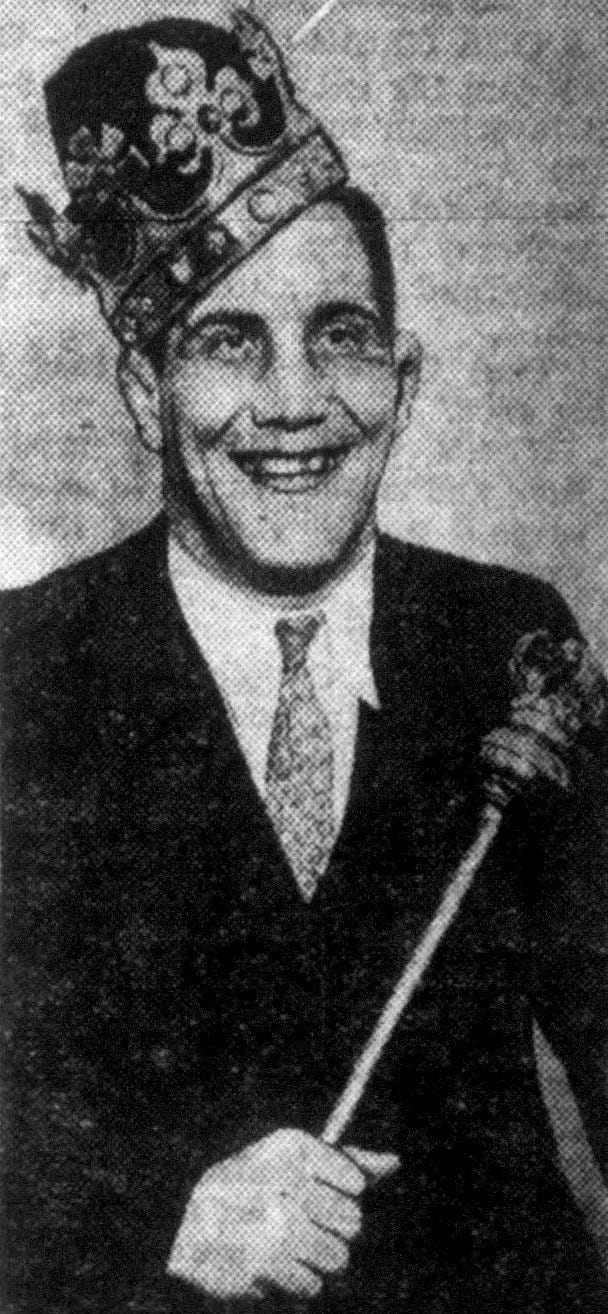
Tom Jenkins 6-19-1857 at the age of 84
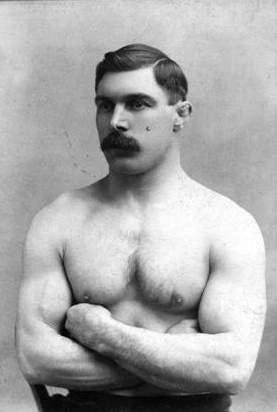
Ralph Garibaldi 6-19-1993 at the age of 85
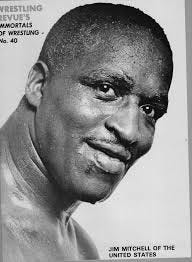
“The Black Panther” Jim Mitchell 6-19-1996 at the age of 87
Stan Stasiak 6-19-1997 at the age of 60
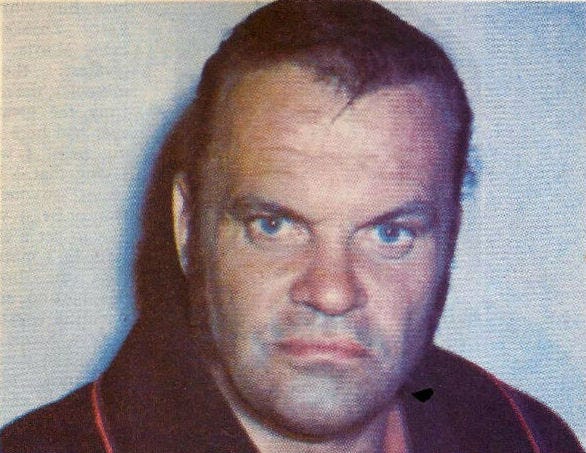
Tim White 6-19-2022 at the 68

The Life and Career of Abe Jacobs
Abner Robert “Abe” Jacobs, born on June 18, 1928, on the remote Chatham Islands off the coast of New Zealand, and passing away peacefully on August 21, 2023, at the age of 95 in Charlotte, North Carolina, stands as one of professional wrestling’s most respected journeymen of the territorial era. A pioneering Kiwi wrestler who followed in the footsteps of Pat O’Connor to the United States, Jacobs built a remarkable career that spanned more than two decades and an estimated 8,000 matches across 25 countries. Known for his legitimate amateur wrestling foundation, his innovative signature submission hold called the Kiwi Roll, and his versatility as both a scientific babyface in North America and a masked heel abroad, he faced legends such as Lou Thesz, Buddy Rogers, Antonio Inoki, and many others. His story embodies the rugged adventure, technical skill, quiet dedication, and creative adaptability that defined the National Wrestling Alliance’s Golden Age.
Jacobs’ early life on the Chatham Islands was defined by isolation and hard physical labor that forged his exceptional strength and resilience. His father managed a vast cattle station teeming with thousands of sheep and cattle. With no cars or roads on the islands, everything moved by horseback. Young Abe learned to ride extensively, breaking his first horse at age 13, herding 1,200 sheep over three grueling days, and helping train sheep dogs. He completed elementary school locally and finished high school through correspondence courses. This rural upbringing instilled in him an unyielding endurance and toughness that would serve him extraordinarily well in the wrestling ring.
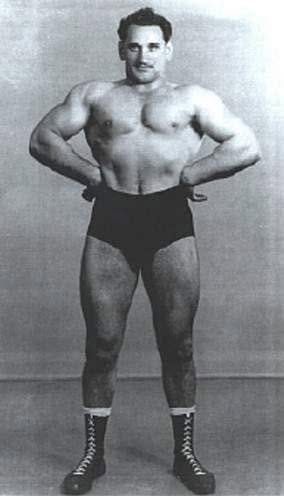
In the late 1940s, Jacobs first encountered professional wrestling through radio broadcasts of the Dominion Wrestling Union and newspaper photographs. He was immediately captivated, even catching a brief broadcast of Gorgeous George wrestling George Temple from San Diego. Inspired by these glimpses, he began weight training—an unconventional practice at the time, as many feared it would leave athletes muscle-bound—and transitioned into amateur wrestling as a teenager. His amateur career proved stellar. Jacobs captured seven provincial titles, including three in Canterbury and four in Wellington. He earned a silver medal as runner-up in the New Zealand Nationals and later claimed the national championship, which he held until losing it to John da Silva in 1953. He came agonizingly close to making the 1956 Olympic team, falling short by a single point in the trials. Despite a temporary setback when he was dismissed from an Easter training camp for incorporating weightlifting, his dedication never faltered. Jacobs consistently credited his amateur background with making him a complete, tough, and fundamentally sound wrestler.
After the Olympic trials, Jacobs turned professional in 1958. Trained primarily by The Zebra Kid, George Bollas, with additional guidance from Al Costello and Don Curtis, he made his debut in Hastings, New Zealand, substituting for George McKay in the main event against his own trainer. It was on that very night that he unveiled his signature maneuver, the Kiwi Roll, also known as the Kiwi Leg Roll or Kiwi Leg-Lock. This innovative submission hold, which he had developed during amateur gym sessions, immediately generated buzz. Local newspapers covered the move the following day, helping establish early excitement around the young wrestler. Jacobs named it the Kiwi Roll in honor of his New Zealand heritage, referencing the country’s iconic flightless bird.
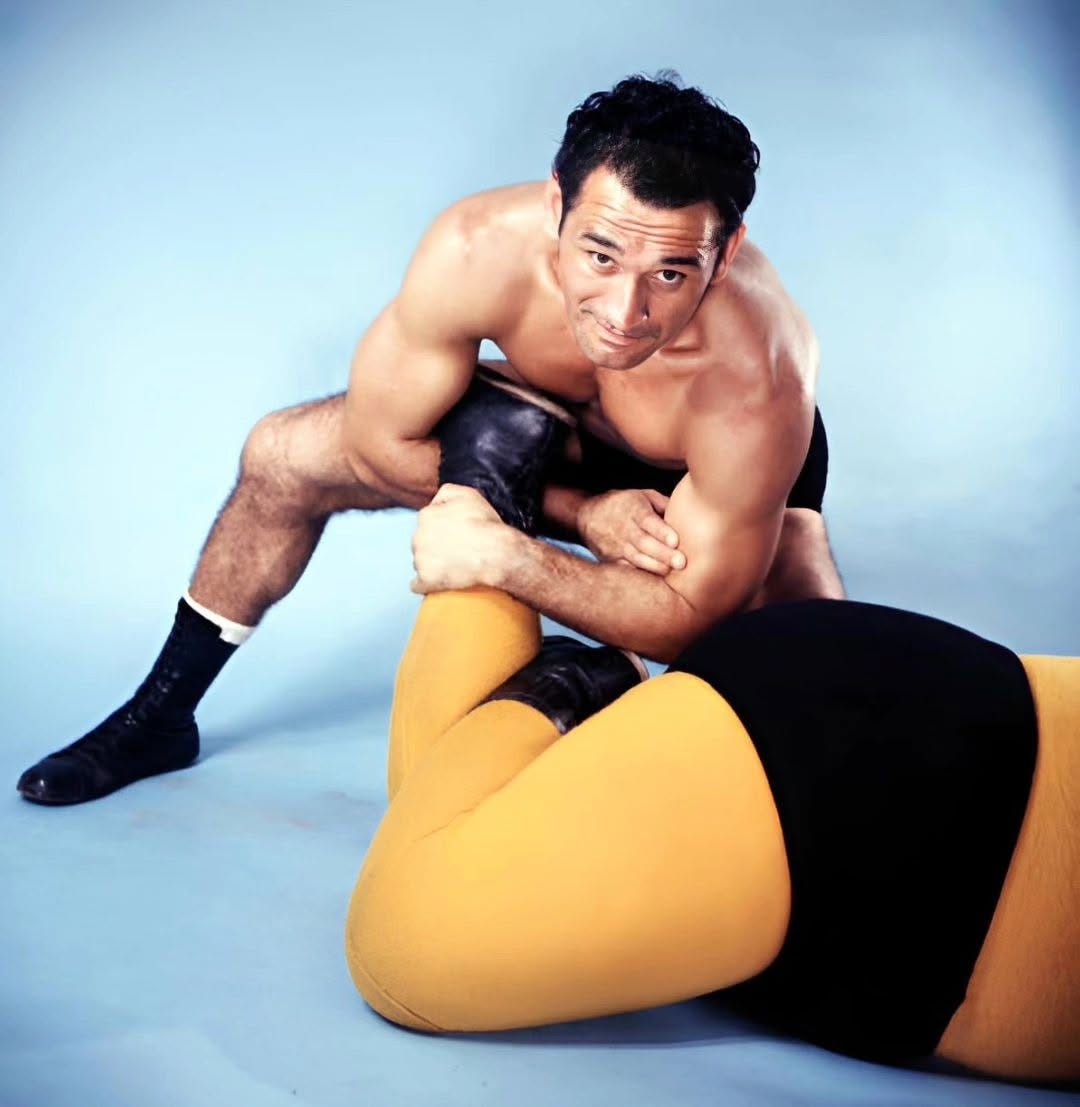
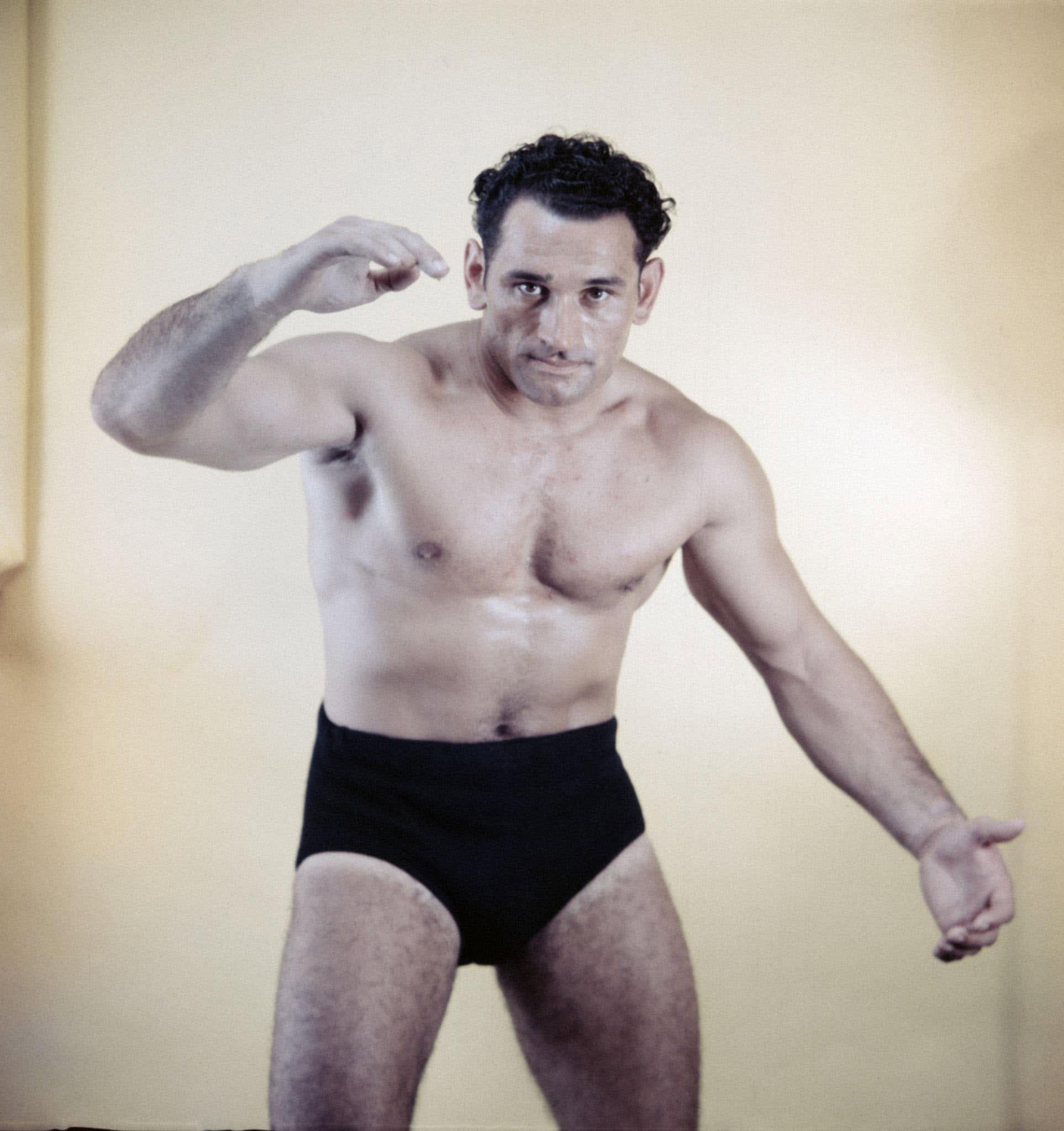
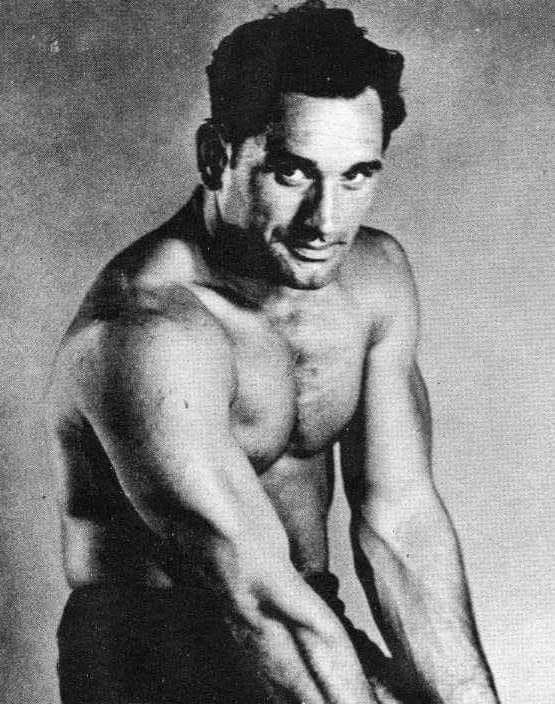
Pictured: Abe Jacobs demonstrates a hold in 1958
The Kiwi Roll would become far more than a simple finisher; it was a dynamic, rolling variation that applied torque and pressure through continuous motion rather than a static lock, setting it apart from more conventional submissions of the era. Jacobs developed the hold organically while experimenting in the gym as an accomplished amateur wrestler. In one session, he grapevined an opponent’s leg—wrapping his own leg around it—and rolled with the motion. The training partner immediately felt intense pain in the knee and ankle, prompting Jacobs to recognize its potential. He refined it into a pro wrestling submission that blended amateur fundamentals with entertainment value. At its core, the move required Jacobs to first secure control of one of the opponent’s legs, often after weakening it with prior holds or as part of a dramatic comeback sequence. He would then position his own shin or leg into the bend or back-bend of the opponent’s knee in a grapevine-style configuration. Grasping the opponent’s ankle or foot firmly with his hands for leverage and control, Jacobs would initiate a rolling or rotating motion.
This typically involved a series of quarter-turns or circular rolls across the mat, effectively “flopping” the opponent around the ring while maintaining relentless pressure. The primary point of attack was the ankle, where the grip and body positioning created twisting torque, with secondary effects targeting the knee and entire leg, amplifying the pain through the grapevine element and the shifting angles of the roll. Unlike the more common figure-four leglock—which crosses the legs into a “4” shape and often relies on the wrestler’s body weight for a bridged hold—the Kiwi Roll emphasized mobility and constant adjustment. The continuous rolling made escape extremely difficult, as the opponent was constantly destabilized and unable to plant or counter effectively. Jacobs described it vividly in interviews: he would “get a leg and roll him around the ring… right around the ring,” keeping pressure right across the ankle until the submission came. Execution demanded exceptional conditioning, timing, and strength—qualities Jacobs possessed from his rural upbringing, amateur titles, and rigorous training.
At 6’2” to 6’3” and around 230 to 252 pounds in his prime, he used his size and leverage to control bigger opponents. The roll’s spectacle came from its unusual appearance: the opponent tumbling across the canvas in a controlled yet chaotic manner, often eliciting pops from first-time viewers and chants of “Kiwi Roll!” from regulars. It worked beautifully in tag team matches for dramatic hot tags and finishes, and as a singles finisher, it projected technical superiority. What made the hold truly unique—and nearly impossible to replicate—was a subtle “one little thing” in the execution, according to Jacobs. Dozens of wrestlers asked him to teach it over the years, but he humorously claimed in later interviews to have “forgotten” how, maintaining its mystique. Even after studying available footage, most could not perfect the pressure and roll transition.
Mike Bucci, known as Simon Dean or Nova, is one of the few who successfully adapted it after dedicated research prompted by veterans like Dr. Tom Prichard and Gerald Brisco, using it in a WWE developmental dark match to earn praise. Surviving footage, such as from a 1978 Mid-Atlantic house show tag match, captures the hold in action, with Jacobs applying the grapevine, securing the ankle, and executing the rolling sequence into a submission lock, drawing strong crowd reactions. The move’s effectiveness stemmed not just from pain but from its psychology: it looked painful, unusual, and inescapable, perfect for building drama in the territorial era. Compared to contemporaries, the Kiwi Roll stood out for its mobility and innovation, requiring the practitioner to stay active and adjust angles mid-roll, demanding superior mat control. Jacobs’ legitimate amateur background allowed him to sell the hold’s authenticity convincingly.
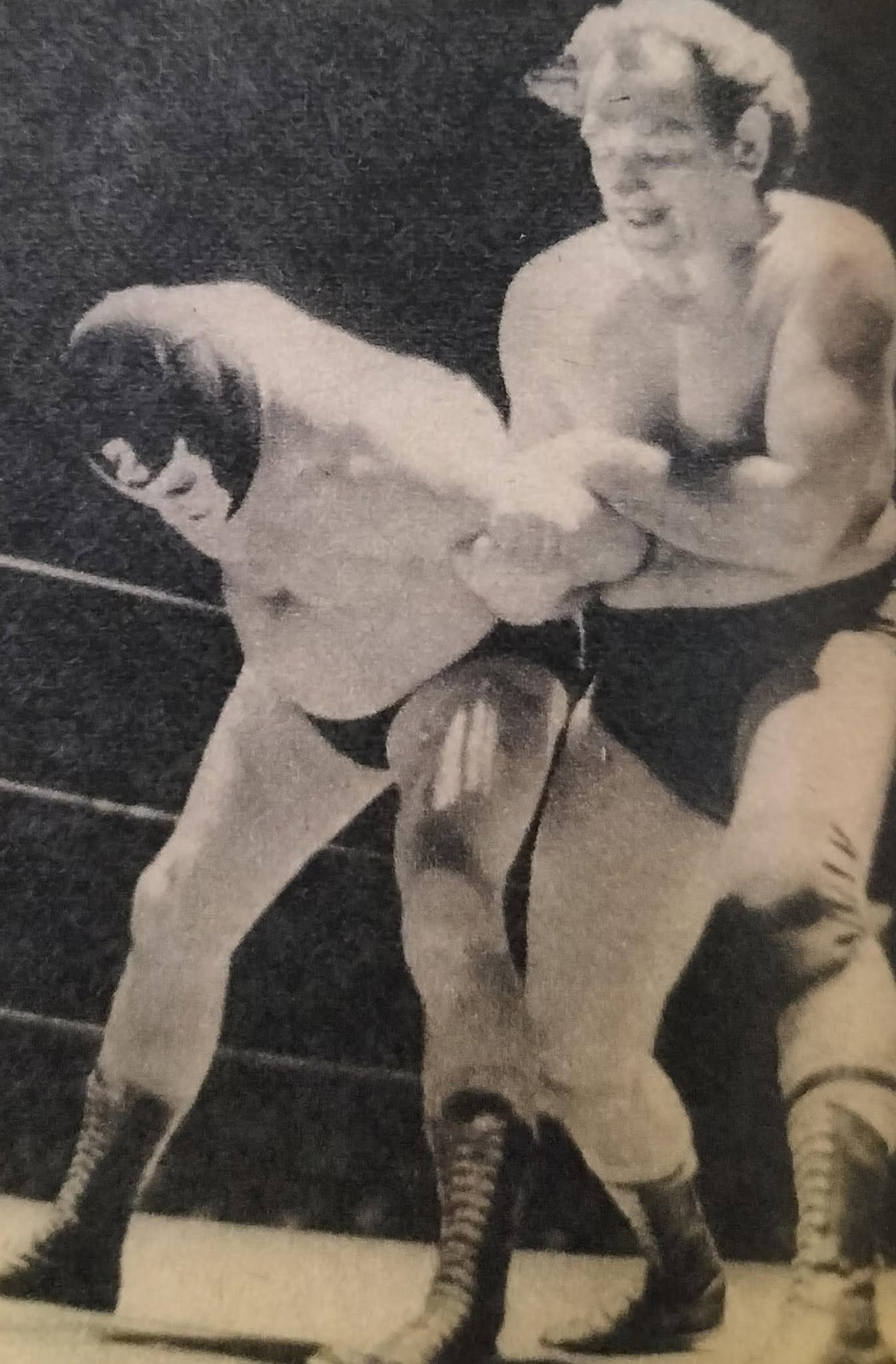
Pictured: Abe Jacobs cranks on the arm of Mr. X 2 (Gordon Nelson)
Following his New Zealand debut, Jacobs wrestled a handful of matches locally before heading to Hawaii to work for promoter Al Karasick, enjoying good pay and a relatively light schedule. Three months later, he arrived in the continental United States, debuting for Vince McMahon Sr.’s Capitol Sports promotion in Washington, D.C. Billed as the “Jewish Heavyweight Champion” from Wellington, New Zealand, the 6’3”, roughly 230-to-252-pound babyface made an immediate impact. He clashed with top heels including Buddy Rogers in multiple bouts for the U.S. and NWA World titles, Karl Von Hess in a heated feud that even drew FBI scrutiny due to inflammatory promos, Johnny Valentine, The Sheik, Bull Curry, and Dr. Jerry Graham. Jacobs teamed with stars like Antonino Rocca and appeared at Madison Square Garden. On February 28, 1961, he faced NWA World Champion Pat O’Connor in a historic contest—the first time two New Zealanders had battled for a world title on foreign soil. He also challenged Rogers again in Virginia.
Jacobs excelled particularly as a tag team specialist. In 1962, he and Haystacks Calhoun captured the NWA Los Angeles International Television Tag Team Championship. He partnered successfully with George Becker, Sailor Art Thomas, Klondike Bill, Man Mountain Mike, and others. In 1964, teaming with Don Curtis, he won the NWA Florida version of the World Tag Team Championship from Hiro Matsuda and Duke Keomuka, holding the titles for over a month. He worked extensively for Jim Crockett Promotions in the Carolinas, headlining early in his tenure and later serving as a reliable veteran who helped elevate younger talent. Notably, in 1974 he faced a debuting Ric Flair, scoring a key early victory for “The Nature Boy.” Jacobs also secured the NWA Western States Tag Team Championship twice with Pez Whatley and claimed the NWA North American Championship in Canada. Throughout these runs, the Kiwi Roll remained his go-to finisher, providing dramatic closers and allowing him to showcase his scientific style even as a tag specialist.
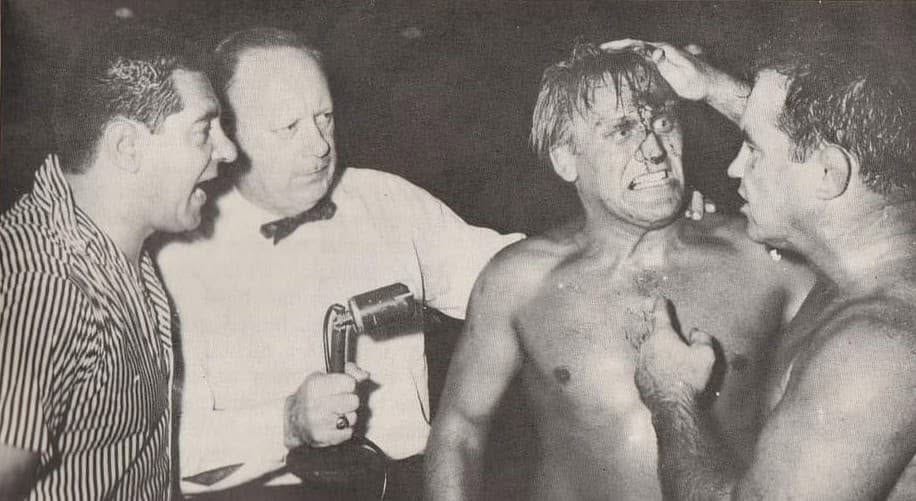
Pictured: Irish Mike Clancy points to the bloody head of Abe Jacobs as the referee and announcer Harry Thornton look on after a bloody tag match with Tojo Yamamoto & Yoshino Sato in Chattanooga, Tennessee at the Memorial Auditorium on August 1st, 1963
Beyond the United States, Jacobs was a true international journeyman, circling the globe four times. One of the most intriguing chapters came during multiple tours of Japan starting in 1966, where he adopted the masked heel persona known as the Red Pimpernel. This alter ego allowed the respected scientific babyface to reinvent himself for Japanese audiences, transforming him into a despised foreign villain who drew strong heat opposite national hero Antonio Inoki and other top stars. The persona exemplified the territorial era’s creative use of masks, cultural adaptations, and international booking strategies to generate excitement and bigger payoffs in foreign markets.
The name derived from the classic 1905 novel The Scarlet Pimpernel by Baroness Orczy, about a daring English nobleman who secretly rescues French aristocrats during the Reign of Terror while maintaining a foppish public persona. Japanese promoters adapted it to “Red Pimpernel” for linguistic simplicity or dramatic flair, billing Jacobs as the “Redddddo Pimpernelllllll” in dramatic ring announcements that became memorable to those who heard them. Jacobs was pragmatic about the change, recalling that when promoters wanted to mask him and call him the Scarlet Pimpernel, he simply replied that they could call him anything they wanted as long as the pay was right. The shift from “Scarlet” to “Red” was a practical adjustment that stuck. Physically, the imposing 6’3” Jacobs presented a menacing figure under the full-face wrestling mask that concealed his identity while allowing him to project villainy as a gaijin heel. This disguise enabled him to work as a rule-breaking antagonist, contrasting sharply with his usual straightforward, mat-based babyface style back home. He continued using his signature Kiwi Roll finisher, adding a layer of technical legitimacy even in his villainous role.
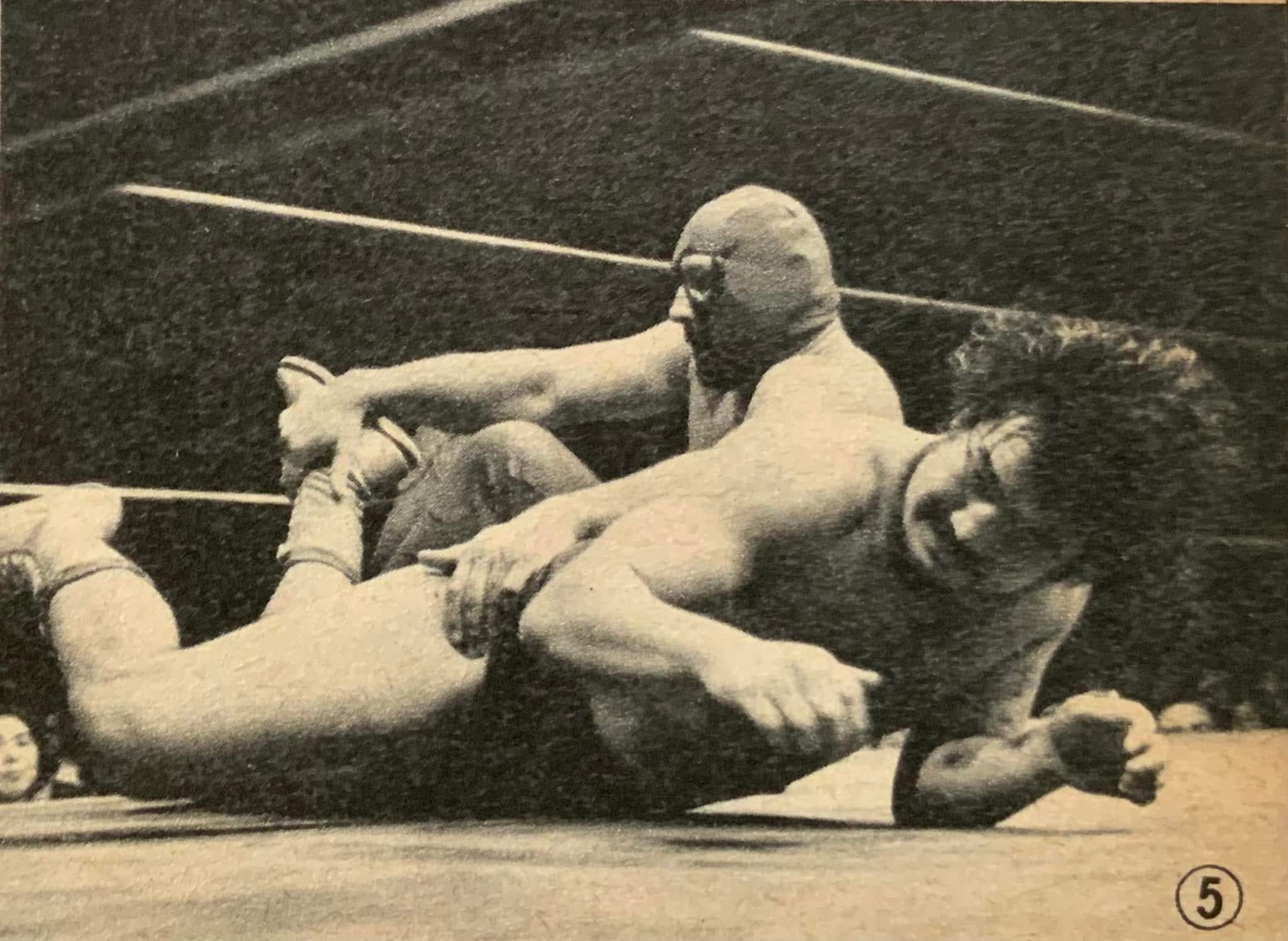
Pictured: Red Pimpernel (Abe Jacobs) applying his famous original hold Kiwi Roll to Katsuhisa Shibata in Japan
Jacobs first arrived in Japan in 1966 and returned three or four times total, often wrestling under the mask. He became a frequent opponent for Antonio Inoki, facing him dozens of times—reportedly over 30 matches—across tours from north to south. These bouts were highly popular with Japanese audiences, who embraced the intense foreigner-versus-native dynamic. As the heel Red Pimpernel, Jacobs leaned into rule-breaking tactics while still showcasing his legitimate amateur grappling skills and the rolling mechanics of the Kiwi Roll. The matches allowed Inoki to demonstrate his evolving strong style, incorporating suplexes, submissions, and ground control.
A memorable highlight of the rivalry occurred during one bout when an enraged spectator struck Jacobs with an umbrella, underscoring the genuine heat the Red Pimpernel generated. Jacobs later recounted how fans “hated my guts” whenever he stepped in against Inoki, a testament to the effectiveness of the masked heel role in drawing emotional investment from crowds. The rivalry extended to title contention; as Red Pimpernel, Jacobs challenged Inoki for the NJPW Real World Heavyweight Championship on October 9, 1972, at Hiroshima Prefectural Gymnasium during the New Golden Series tour. Inoki submitted Jacobs after 27:43 in that defense, using the opportunity to showcase his technical prowess against a reliable veteran.
This title match fit into broader patterns, as Inoki had recently captured the championship, and using established international talents like Jacobs helped establish the new promotion’s credibility. Jacobs also faced Inoki in tag team and multi-man scenarios. For Jacobs, the Japan tours were part of his larger life as a globe-trotting journeyman. International bookings, including those in Japan, often proved more lucrative than domestic U.S. territory work. However, they came with challenges. Coming from a rugged, isolated upbringing on New Zealand’s Chatham Islands, Jacobs found the language barrier, cultural differences, and demanding travel schedule a stark contrast. Yet he adapted, using the Red Pimpernel character to thrive in high-stakes environments while protecting his primary identity for North American bookings—a standard practice for masked wrestlers. The Inoki rivalry exemplified the versatility that defined Jacobs’ career, bridging territories and generations while adding depth and drama to his estimated 8,000-match journey.
Jacobs competed across Europe, Southeast Asia, Australasia, South America, and South Africa, adapting to strict weight rules and high-altitude conditions where necessary. He continued challenging world champions like Lou Thesz in both the U.S. and Japan, maintaining a demanding schedule into the early 1980s. His final significant run came in the Mid-Atlantic territory, where fans remembered him fondly for his solid, mat-based wrestling style and the unforgettable Kiwi Roll.
Jacobs retired around 1981 after a 23-to-25-year career. He remained connected to the business, managing Ricky Steamboat’s gym in the 1990s. In recognition of his contributions, he was inducted into the George Tragos/Lou Thesz Professional Wrestling Hall of Fame in 2008. He was also named one of New Zealand’s Top Ten Born Wrestlers and featured on a commemorative ten-dollar note. In Charlotte, he stayed active through golf, part-time work shuttling cars, and support for charities like the Eblen Foundation. He enjoyed sharing stories at wrestling events and maintained close friendships with peers. For a time, his longevity earned him recognition as the world’s oldest known living professional wrestler.
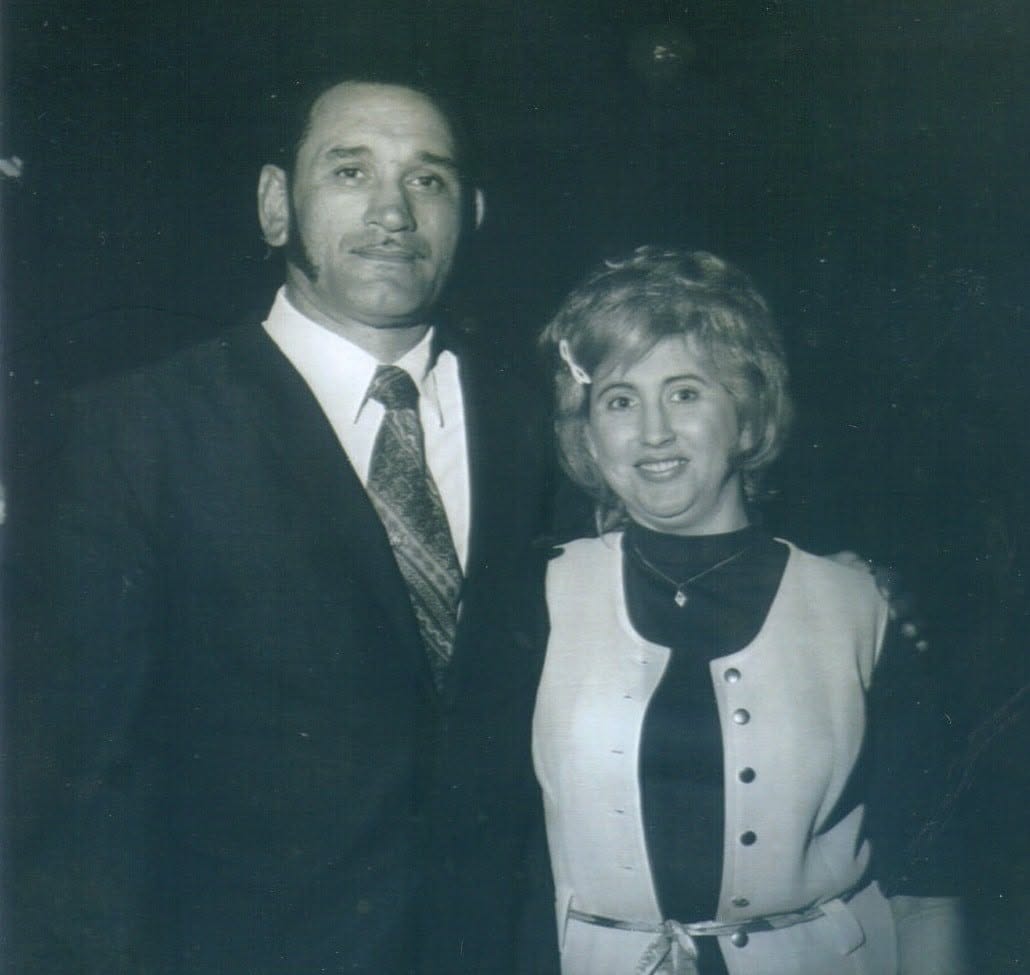
Pictured: Abe and Evelyn Jacobs
A devoted family man, Jacobs reconnected later in life with Evelyn Murray, whom he had first met at a 1961-62 show in Shelby, North Carolina. After her first husband, wrestler John “Wolfman” Smith, passed away and specifically recommended Abe, the two married and shared a loving later life together. Jacobs often prioritized returning home to Evelyn after road trips. Tributes following his passing highlighted not only his in-ring innovation and skill with the Kiwi Roll but also his character—reliable, positive, and respected by all. Colleagues like Les Thatcher praised him as an excellent athlete and skilled mat wrestler who was easy to travel with, while Dan Hodge and others lauded both his abilities and personal integrity.
Abe Jacobs embodied the ideal of the territorial-era journeyman: legitimately tough, well-traveled, and dedicated to delivering quality matches for fans night after night. From his rugged beginnings on a remote New Zealand cattle station to global rings where he tested himself against the greatest of his generation—including epic masked battles as the Red Pimpernel against Antonio Inoki—the Kiwi Roll served as the perfect symbol of his inventive spirit. From its humble gym origins to thrilling arenas worldwide, the mechanics of the rolling submission captured the essence of what made territorial wrestling special: holds that told stories, popped crowds, and left a lasting impression. In an industry often defined by flash and spectacle, Jacobs left an indelible mark through technical proficiency, professionalism, adaptability across personas and continents, and a deep love for the craft.
One Thing I Learned About El Canek
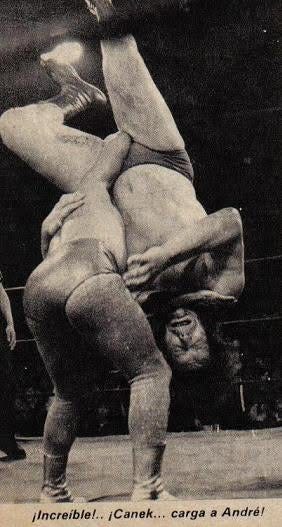
El Canek was a massive star in Mexico famous for body-slamming André the Giant years before Hulk Hogan did it at WrestleMania III, holding the UWA World Heavyweight Title a record 15 times, and being one of Mexico’s biggest heavyweight draws in the ‘80s. .His journey started humbly as a frail kid from Tabasco whose dad left when he was 3, who got inspired by an El Santo comic book as a child and later worked in a blacksmith shop to build strength before becoming the “Príncipe Maya”
Thank You for Reading
I’m Tony Richards, Pro Wrestling Historian, Author and Storyteller. I share pro wrestling historical items in each issue of the Time Tunnel Pro Wrestling History Newsletter. Thanks for reading! If you enjoy my information on select events, matches and insights, please share it with folks you think might like to be a subscriber!
Remember, premium investors get access to exclusive and special content such as some special issues including a multi-part deep dives on wrestling territories, wrestler bios and championship title histories, special audio and video interviews on territory pro wrestling and more available in the Pro Wrestling Time Tunnel for Premium Investors.