



Happy Birthday to those who have passed on and to those great wrestlers still with us:
In Memoriam:
Janet Wolfe 1933
Otto Wanz 1943
Bill Ash 1946
Robert Aebi\Count Drummer\The Mummy 1949
Chris Taylor 1950
Antonio Pena 1951
Michael Jones\Virgil 1951
Danny Fargo 1959
Happy Birthday:
Jacques Rougeau (66)
Glenn Ruth\Headbanger Thrasher (57)
RIP Memorial: We stop & remember those who have passed on this day and gave themselves to the business for us, the fans. We salute you and thank you.
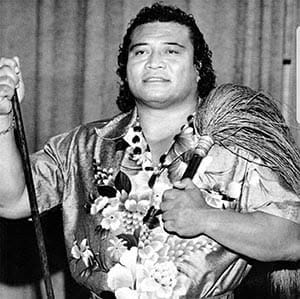
The High Chief Peter Maivia 6-13-1982 at the age of 45
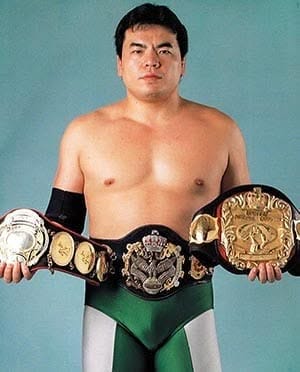
Mitsuharu Misawa 6-13-2009 at the age of 46
Significant Debut:
Stu Gibson 6-12-1950 at the age of 25
The Life and Career of Chris Taylor
Chris Taylor stands as one of the most remarkable figures in the history of amateur and professional wrestling. At 6 feet 5 inches (196 cm) and often weighing over 400 pounds (up to around 500 at times), he was the heaviest Olympian in history until weight limits were introduced later. Yet his legacy is defined not just by his physical enormity but by his surprising agility, technical prowess, gentle personality, and rapid rise through the ranks of collegiate, international, and professional wrestling before a tragically short life cut short by health complications.
Born in Dowagiac, Michigan, to a working-class family, Taylor’s growth was extraordinary. By age 14, he was reportedly 6’2” and 280 pounds; within 18 months, he reached 6’5” and 360 pounds. Medical evaluations at the University of Michigan could not fully explain his rapid development, though they noted his heart was twice the normal size. His father was 6’2”, 225 pounds, and his mother of average build.
Taylor did not begin wrestling until his junior year of high school at Dowagiac Union. Incredibly, he won the Michigan state heavyweight championship that same year (1967), dropping only one match en route. His senior year saw another strong performance, though he placed second in the state finals. He compiled a high school record of 58-2 and earned two state titles. Teammates and locals remembered his kind demeanor even then, with stories of his self-deprecating humor and willingness to help others.
Taylor continued at Muskegon Community College in Michigan, where he went undefeated (41-0 in dual meets, overall around 51-0) and won a national junior college heavyweight title as a freshman. A frightening incident occurred when he broke an opponent’s neck during a match; the young man was paralyzed, and Taylor was so distraught he nearly quit wrestling. The opponent’s parents reassured him it was not his fault, helping him persevere. It was at Muskegon that he met Lynne Hart, who later became his wife.
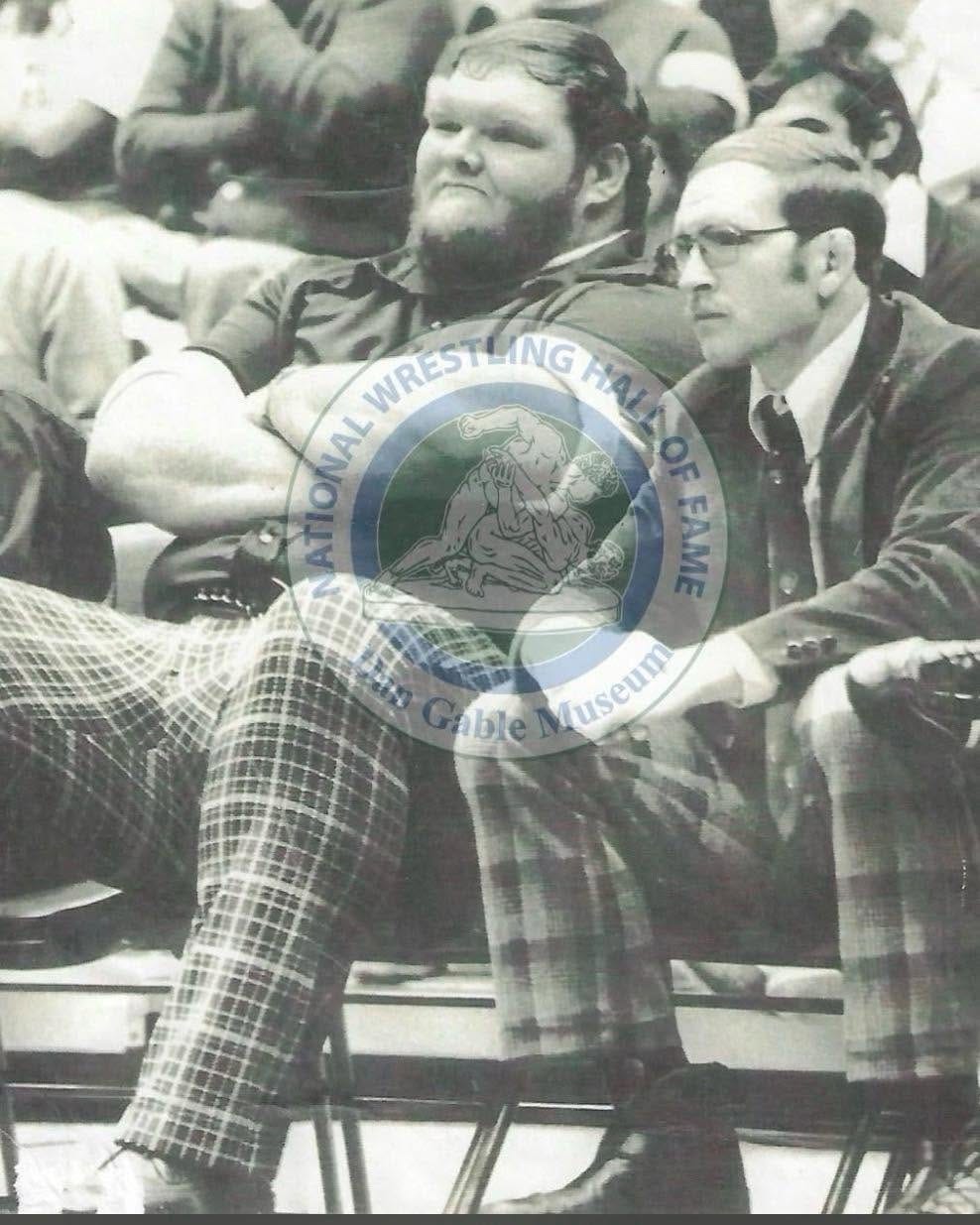
Iowa State University, under legendary coach Harold Nichols, recruited him for his final two seasons. There, Taylor became a national phenomenon. In an era with no weight limits for heavyweights, he wrestled at 400+ pounds yet displayed remarkable quickness, agility, and pinning ability. His Iowa State record was an astonishing 87-0-1, with 70 pins. Opponents lasted an average of just 2:14 before being pinned. As a senior in 1973, he set an NCAA record with 44 pins in 48 matches and was named Big Eight Athlete of the Year.
He won NCAA heavyweight titles in both 1972 and 1973, defeating Greg Wojciechowski and Jim Hagen respectively. These victories helped Iowa State claim team NCAA championships both years. Fans flocked to see him; a dual against Oklahoma State drew over 10,000 spectators, a record at the time. Opponents sometimes drew straws to face him, and stories abound of his gentle nature—he would often break his own falls to avoid injuring foes and was known for his bearhug-style finishes. Teammates, including Dan Gable, recalled his ability to lighten tense practices, such as grabbing a mop and singing “Proud Mary.”
Fresh off his first NCAA title, Taylor made history by competing in both freestyle and Greco-Roman at the 1972 Summer Olympics—the only American to do so that year. He was a medal favorite in both.
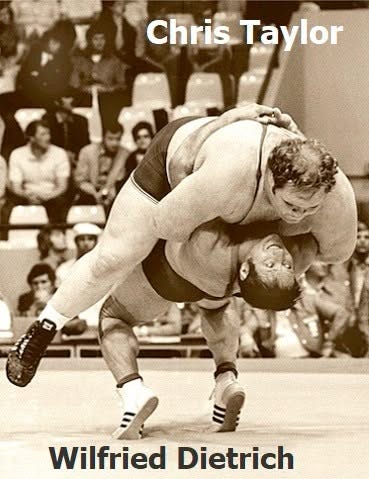
In freestyle, Taylor advanced to the semifinals, losing only to Soviet legend Aleksandr Medved (an eight-time world champion) in a highly controversial 3-2 decision. Dietrich (around 260 pounds) suplexed the massive Taylor in one of the most iconic images in Olympic wrestling history. Medved appeared to be stalling, but the referee awarded a point to the Soviet for Taylor’s alleged lack of action. The referee later admitted bias due to Taylor’s size advantage and was dismissed from the tournament and banned internationally. Taylor earned bronze, but many believed he was robbed of gold. The Munich Games were also marred by the Black September terrorist attack on Israeli athletes, an event Taylor witnessed indirectly.
In the semifinals, Taylor faced Soviet legend Aleksandr Medved, a two-time defending Olympic champion and one of the greatest freestyle wrestlers ever (ultimately with 10 World/Olympic titles).
Taylor’s massive size made him difficult to move. Medved, at around 231-250 pounds, appeared to stall at times, struggling against the immovable American. Observers noted Taylor dominating positionally, but the bout stayed close. With the score tied or close, Turkish referee Umit Demirag penalized Taylor for passivity (lack of action), awarding a crucial point to Medved. This resulted in a controversial 3-2 victory for the Soviet wrestler.
Post-match, Demirag admitted he felt sorry for Medved due to the extreme size disparity and wanted to give the smaller man a chance. The international wrestling governing body (FILA at the time) immediately dismissed him from the remainder of the Olympics and banned him from future international officiating. However, the result stood, and Medved went on to win gold. Taylor, who had only this one loss, took bronze.
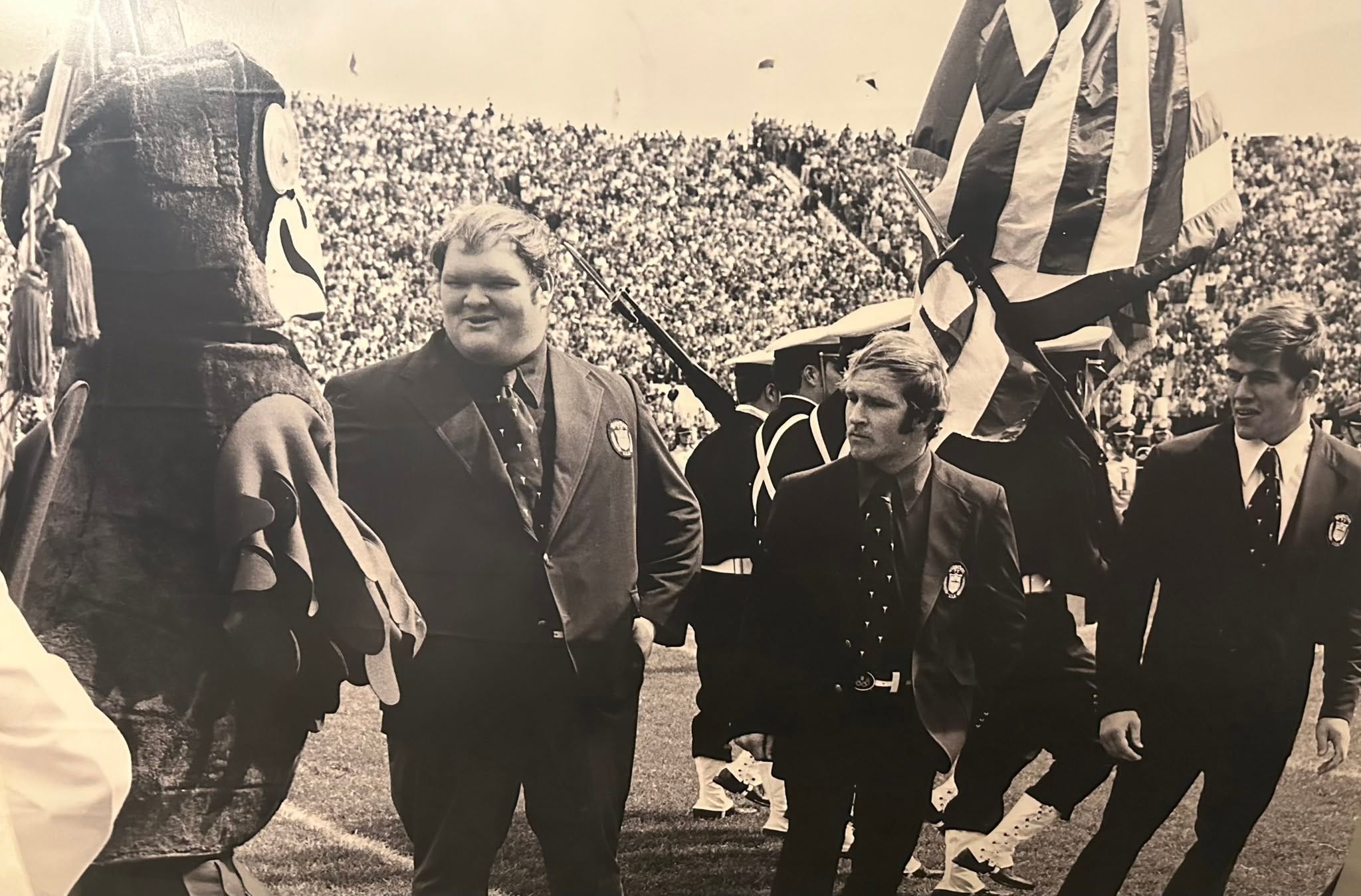
Pictured: Chris Taylor, Dan Gable, and Ben Peterson being honored during an Iowa State Football game after returning from the 1972 Olympics
Many American observers, coaches, and wrestling historians viewed this as a clear robbery, emblematic of Cold War-era judging biases favoring Soviet athletes. Taylor’s size, while an advantage in raw power and pinning, seemed to work against him in subjective passivity calls. The incident drew significant media attention, including coverage in The New York Times and Time magazine, which criticized the officiating.
Taylor still performed impressively overall in freestyle (5-1 record), showcasing his agility and skill despite the loss. While less about a “stolen” decision, this match carried its own disputes and became legendary for different reasons.
Accounts from U.S. coaches (e.g., Alan Rice and others) claim Dietrich pinned himself during the suplex throw under the era’s “touch fall” rules—he landed on his back first but rolled through to pin Taylor. The referee awarded the fall to Dietrich anyway. Taylor had beaten Dietrich earlier in freestyle.
This outcome contributed to Taylor not placing in Greco-Roman. The home-crowd advantage for Dietrich (Munich Games) and potential referee leniency added to perceptions of unfairness.
The controversies occurred against the backdrop of the tragic Munich Massacre (Black September terrorist attack on Israeli athletes), which overshadowed much of the Games. Cold War politics often influenced judging in combat sports, with Soviet and Eastern Bloc athletes frequently benefiting from home/aligned officials. Taylor’s unprecedented size amplified scrutiny—some viewed him as a novelty or “unwrestlable” giant, potentially biasing officials subconsciously or overtly.
Taylor handled the disappointments with his characteristic gentle demeanor. The events elevated his fame, helping launch his professional AWA career. He remains a symbol of resilience and talent transcending physical extremes.
Wrestling historians and Iowa State/Cyclone fans widely regard the Medved decision as a blatant injustice. The referee’s removal validated critics. The Dietrich throw is celebrated for its athleticism but debated for the pin call. In today’s wrestling (with weight classes and stricter rules), such scenarios are rarer. Taylor’s story underscores how subjectivity in judging can alter legacies, especially for outliers like him.
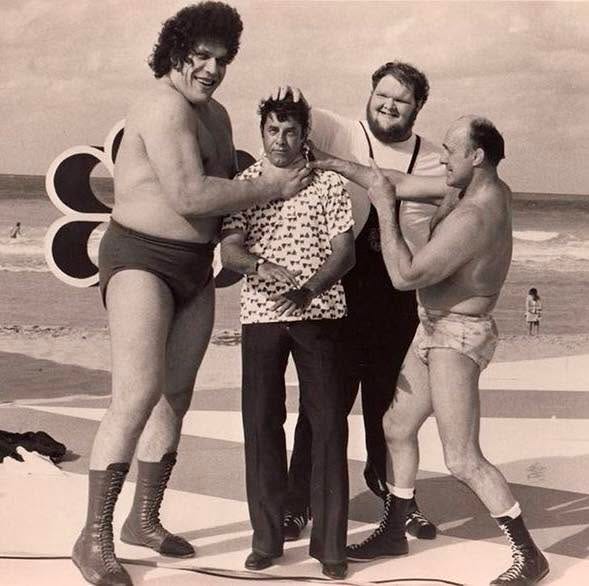
Pictured: André the Giant, entertainer Jerry Lewis and wrestler Chris Taylor
Post-Olympics, Taylor signed a lucrative contract with the American Wrestling Association (AWA). Trained by Verne Gagne and Billy Robinson, he debuted in late 1973 against René Goulet and faced stars like a young Ric Flair (whom he defeated), Mad Dog Vachon, and others. He was groomed as a major attraction, with his size and amateur pedigree making him a natural draw. His finishing move was a variation of the bearhug.
Health issues—phlebitis, kidney problems, and hepatitis—limited his in-ring time. He retired around 1977 after several successful years. Footage of his AWA matches appears in documentaries like WWE’s The Spectacular Legacy of the AWA and The Definitive Ric Flair Collection, and ESPN’s 30 for 30 on Flair.
On September 9, 1973, Taylor married Lynne Hart. Their daughter, Jenny, was born in 1975. Taylor was known as the “Gentle Giant”—kind, humorous, and beloved. He ate modestly most days but could devour large meals occasionally. His ring size was 17; he wore enormous clothing and needed special accommodations on planes. Despite his size, he was surprisingly athletic, running the 100-yard dash in 14 seconds and pressing significant weights.
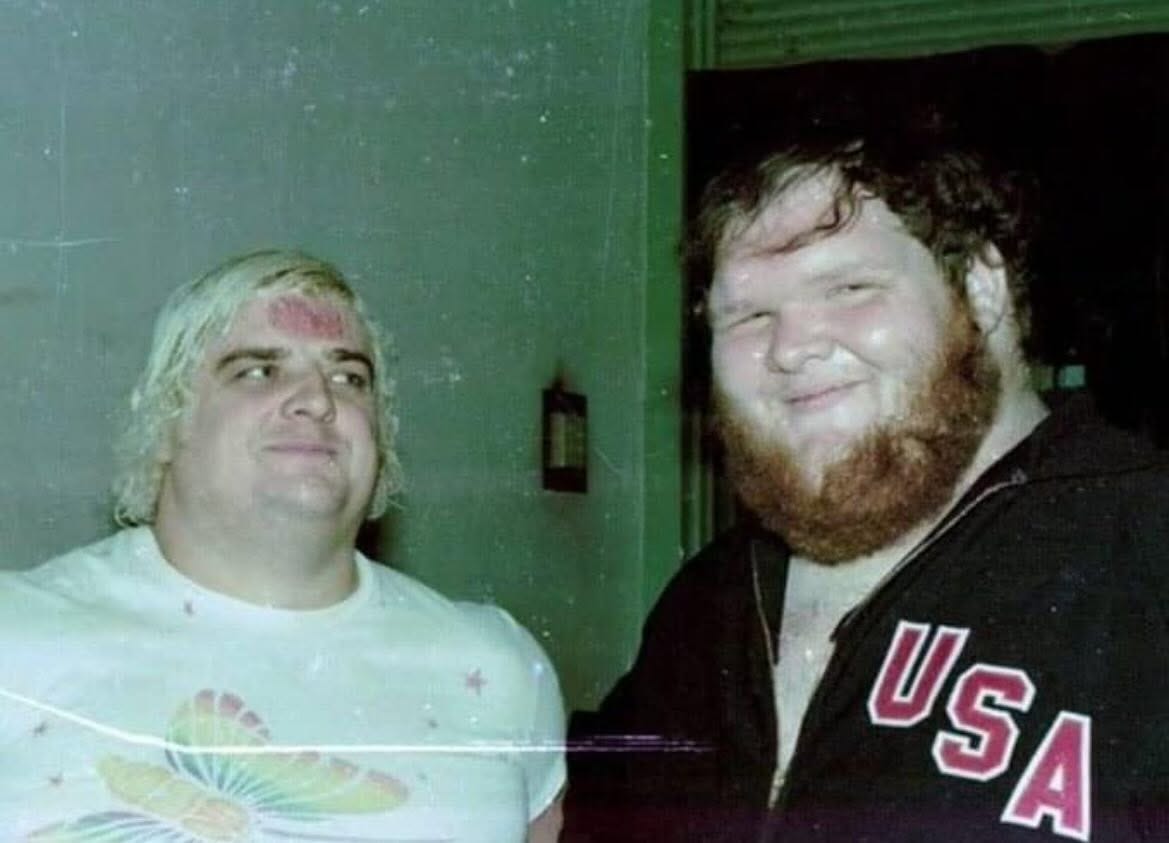
Pictured: Dusty Rhodes and Chris Taylor
He remained connected to his Michigan roots and Iowa community, remembered for generosity and a big heart (literally and figuratively).
Taylor’s health deteriorated due to complications from phlebitis, kidney failure, hepatitis, and cardiovascular issues exacerbated by his size. He died at home in Story City, Iowa, on June 30, 1979, at age 29, from blood clots. Lynne found him; Jenny was three years old. He is buried in Riverside Cemetery in Dowagiac, Michigan, under a headstone reading “A friend to all,” engraved with Olympic rings.
His legacy lives on through inductions into the National Wrestling Hall of Fame (Distinguished Member, 2012), Iowa State Wrestling Hall of Fame, Glen Brand Hall of Fame of Iowa (2005), and George Tragos/Lou Thesz Professional Wrestling Hall of Fame (2013). He remains a symbol of wrestling’s inclusivity—“AnyBODY Can Wrestle”—and inspiration for overcoming odds through talent and character.
Chris Taylor’s story is one of meteoric achievement tempered by physical challenges and brevity. In just 29 years, he lived a life larger than most, leaving an indelible mark on the sport and those who knew him. As his childhood friend noted, he packed more into his short life than many do in a much longer one. The Gentle Giant endures as a testament to skill transcending size and kindness outlasting physical power.
One Thing I Learned About Mitsuharu Misawa
He was notoriously private about his personal life. Many wrestlers who had known and worked closely with him for decades had no idea he even had children. He was married to actress Mayumi Shiina since 1988 and left behind a daughter (Kaede) and a son (Shizuma) when he passed away in 2009.

Thank You for Reading
I’m Tony Richards, Pro Wrestling Historian, Author and Storyteller. I share pro wrestling historical items in each issue of the Time Tunnel Pro Wrestling History Newsletter. Thanks for reading! If you enjoy my information on select events, matches and insights, please share it with folks you think might like to be a subscriber!
Remember, premium investors get access to exclusive and special content such as some special issues including a multi-part deep dives on wrestling territories, wrestler bios and championship title histories, special audio and video interviews on territory pro wrestling and more available in the Pro Wrestling Time Tunnel for Premium Investors.