


Happy Birthday to those who have passed on and to those great wrestlers still with us:
In Memoriam:
Dick Daviscourt 1887
Ed Francis 1926
John DaSilva 1934
Happy Birthday:
Iceman King Parsons (76)
Terry Allen\Magnum TA (67)
Mike Enos (63)
Rachel Collins\MsChif (50)
Hikaru Shida (38)
RIP Memorial: We stop & remember those who have passed on this day and gave themselves to the business for us, the fans. We salute you and thank you.
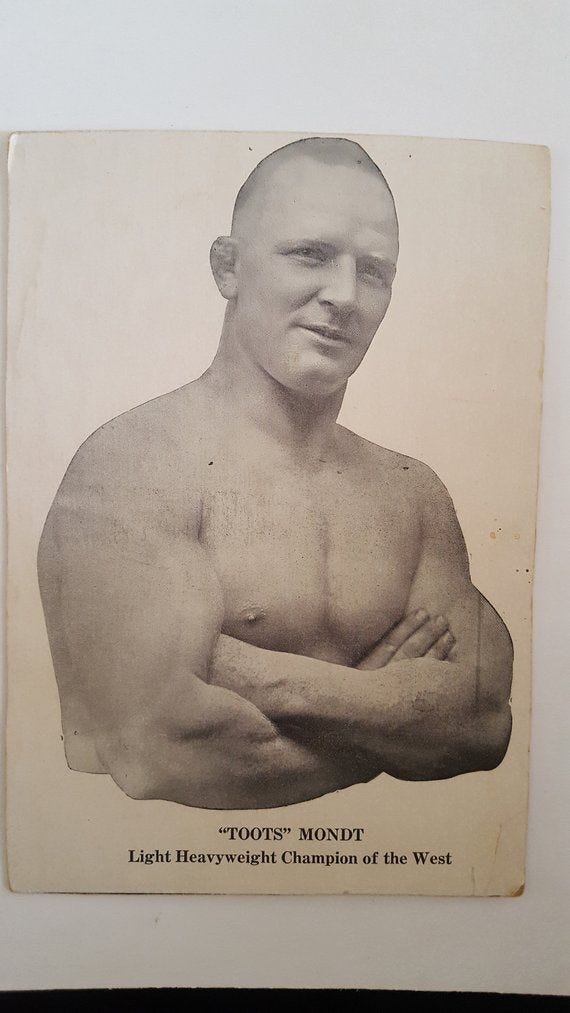
Toots Mondt 6-11-1976 at the age of 82
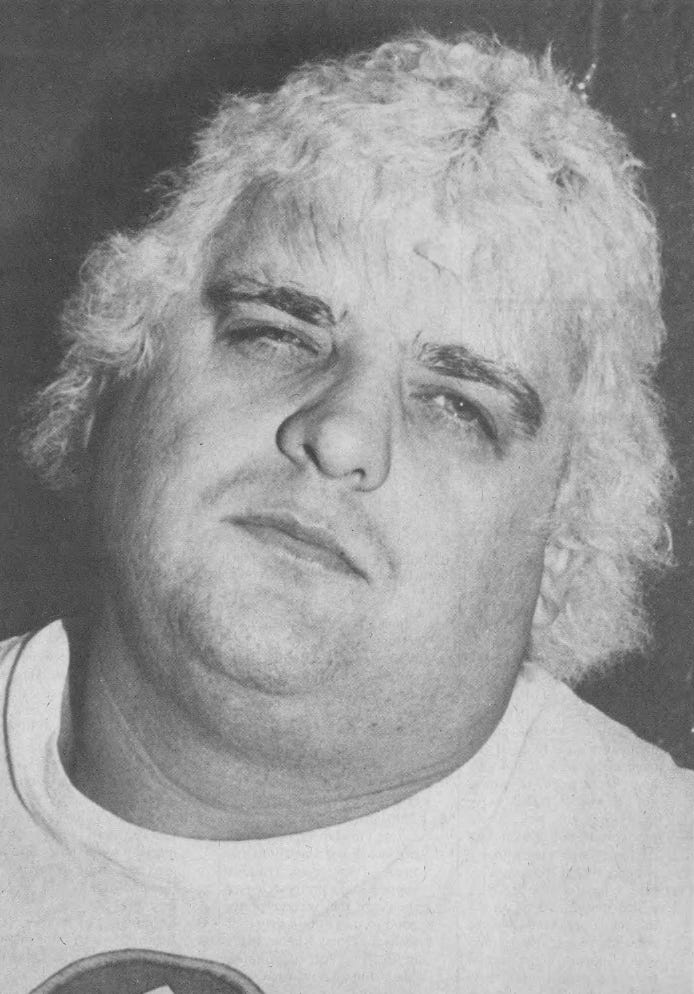
Virgil Runnels\Dusty Rhodes 6-11-2015 at the age of 69
The Life and Career of Butch Reed
Bruce Franklin Reed, better known as Butch Reed, was born on July 11, 1954, in Kansas City, Missouri. He passed away on February 5, 2021, at age 66 in Warrensburg, Missouri, from complications following two massive heart attacks in January 2021, with his family attributing his death in part to a COVID-19 diagnosis around January 12.

A standout athlete with a powerful 6’2”, 260+ lb build, Reed played college football as a linebacker at the University of Central Missouri. In 1976, he signed as an undrafted rookie free agent with his hometown NFL team, the Kansas City Chiefs, but was cut before the regular season. Like many gridiron talents of his era, he transitioned into professional wrestling, debuting in 1978 after training under Ronnie Etchison. He wrestled until around 2013, leaving a legacy as a tough, athletic performer who excelled in territories, tag teams, and high-profile national spots.
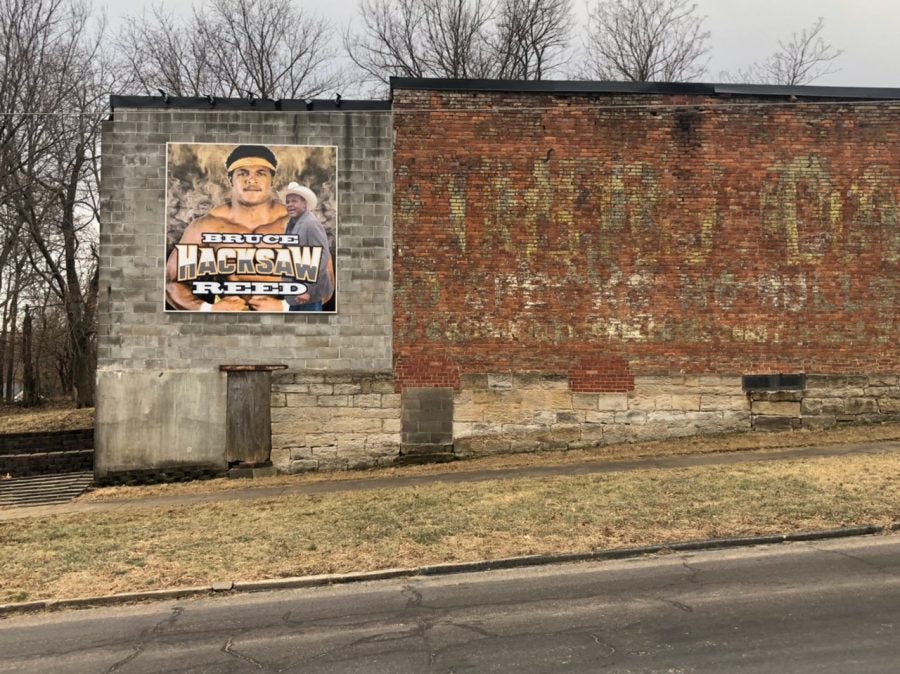
Pictured: The mural dedicated to the University of Central Misosuri athlete, Butch Reed on North Main Street in Warrensburg, Missouri
Reed began as “Bruce Reed” or “Hacksaw” Butch Reed in the NWA’s Central States territory. In 1980, he teamed with Jerry Roberts (a young Jacques Rougeau) to win the NWA Central States Tag Team Championship from Mike George and Bob Sweetan.
He gained significant traction in Championship Wrestling from Florida and other NWA hotspots like St. Louis and Georgia. A pivotal moment came on April 7, 1982, with a highly acclaimed match against Ric Flair (now recognized as Dave Meltzer’s first 5-star match). Reed also won the Florida version of the NWA North American Tag Team Championship with Sweet Brown Sugar (Skip Young) by defeating Dory Funk Jr. and David Von Erich in 1982. He captured the NWA International Heavyweight Championship (Florida version) from Dory Funk Jr.—a notable distinction as the only time that title changed hands outside Japan (though not recognized in Japan).
Reed’s athleticism, charisma, and legitimate toughness made him a natural heel or face in rough-and-tumble territories, setting the stage for bigger opportunities.
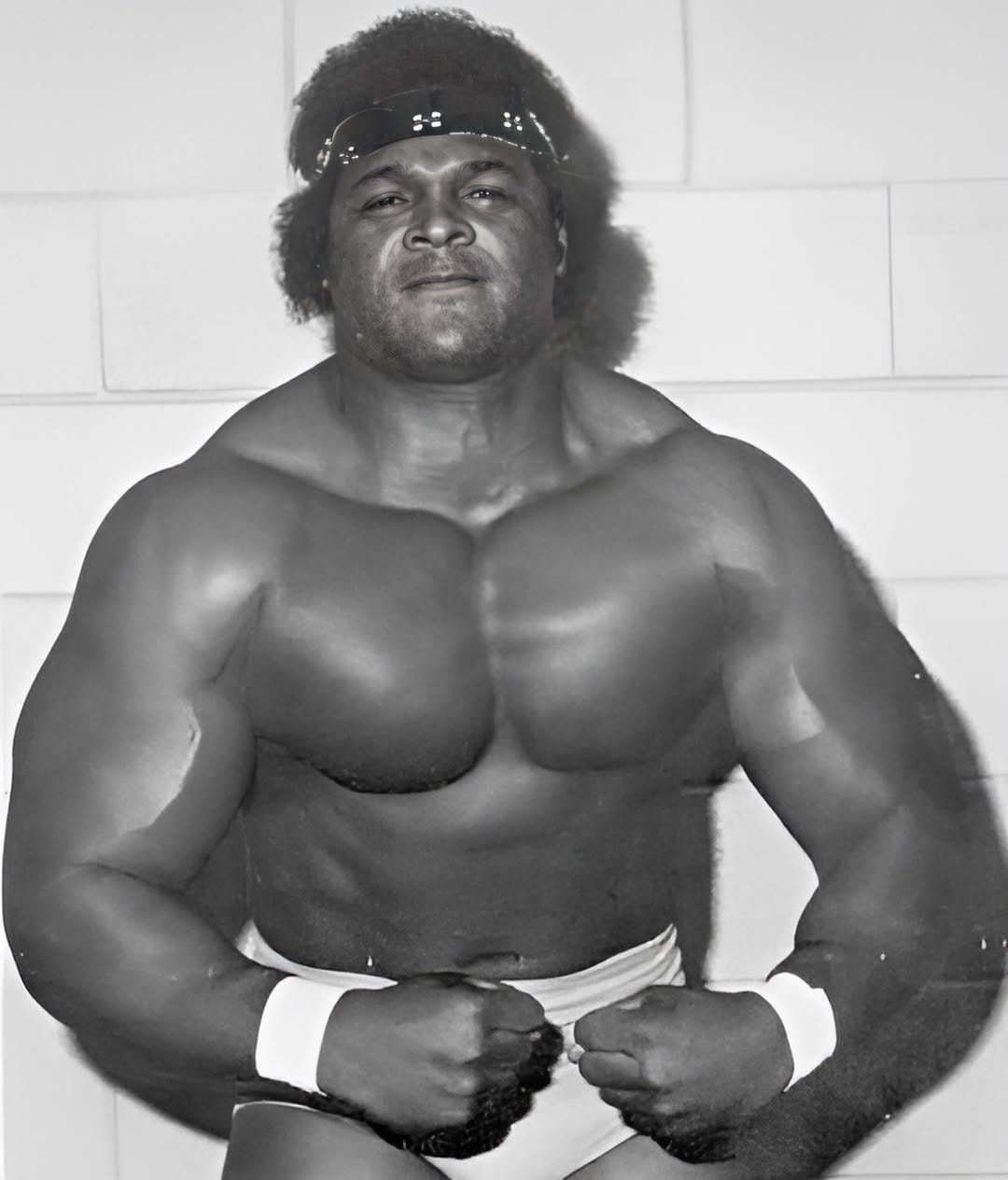
Mid-South Wrestling under Bill Watts became the platform where Reed truly shone as a star. Arriving as a partner for top face Junkyard Dog (JYD), he clashed with “Hacksaw” Jim Duggan over the nickname, leading to Reed’s heel turn when Duggan was chosen as JYD’s partner.
On July 16, 1983, Reed defeated JYD for the Mid-South North American Heavyweight Championship. His arrogant persona shone in storylines, such as letting fans pick a challenger (dismissing JYD) before facing Magnum T.A. He briefly held the Mid-South Tag Team Championship with Jim Neidhart. Feuds followed with Neidhart, Terry Taylor (including brutal Coalminer’s Glove spots with Buddy Landel), and a renewed, intense rivalry with JYD featuring dog collar matches and painted-mask angles (“Stagger Lee”).
After JYD’s abrupt departure to WWF, Reed navigated shifting alliances, including a face turn against Skandor Akbar’s Army (with Duggan’s help). He won the North American title again from Dick Murdoch in 1985, had a memorable one-hour draw with Ric Flair, and feuded with Dick Slater. His Mid-South run highlighted his ability to draw as both heel and face, proving “two black men fighting each other could draw money” in his words.
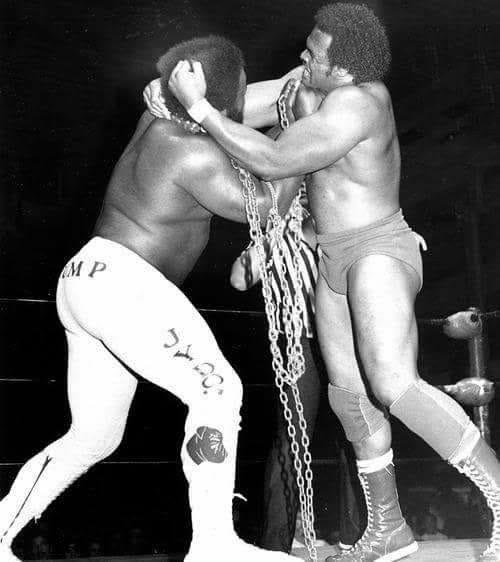
Pictured: Junkyard Do and Butch Reed in a chaon match in Mid-South Wrestling
Reed joined the WWF with manager Slick, dyeing his hair blond and rebranding as “The Natural” Butch Reed—an homage to Sweet Daddy Siki. He debuted strongly, defeating Koko B. Ware at WrestleMania III (1987). He targeted Intercontinental Champion Ricky Steamboat and was reportedly set to win the title, but a no-show led to Honky Tonk Man getting the push instead.
Reed participated in major events: Survivor Series 1987 (on André the Giant’s team, first eliminated by Hulk Hogan), the first Royal Rumble (1988, first eliminated), and WrestleMania IV (lost to Randy Savage in the tournament first round after showboating). Feuds with Tito Santana, Superstar Billy Graham (via injury angle), and Don Muraco kept him visible, but he left in 1988 without a major singles title.
Reed returned to NWA/WCW as “Hacksaw.” After mid-card struggles and brief alignments (J.J. Dillon, Yamazaki Corporation), he formed the masked tag team Doom with Ron Simmons under Woman. They debuted strongly at Halloween Havoc 1989 but initially struggled. After unmasking at Clash of the Champions X (1990) and hiring Teddy Long as manager, Doom transformed.
They defeated the Steiner Brothers for the WCW World Tag Team Championship at Capital Combat (1990) and held the titles for much of the year, defending against top teams like the Steiners, Rock ‘n’ Roll Express, and others. As tweeners, they engaged in racially charged angles with the Four Horsemen. Doom lost the titles to the Freebirds in 1991, leading to a breakup and Reed’s loss to Simmons in a Thunderdome match. Reed later won the USWA Unified World Heavyweight Championship from JYD in 1992.
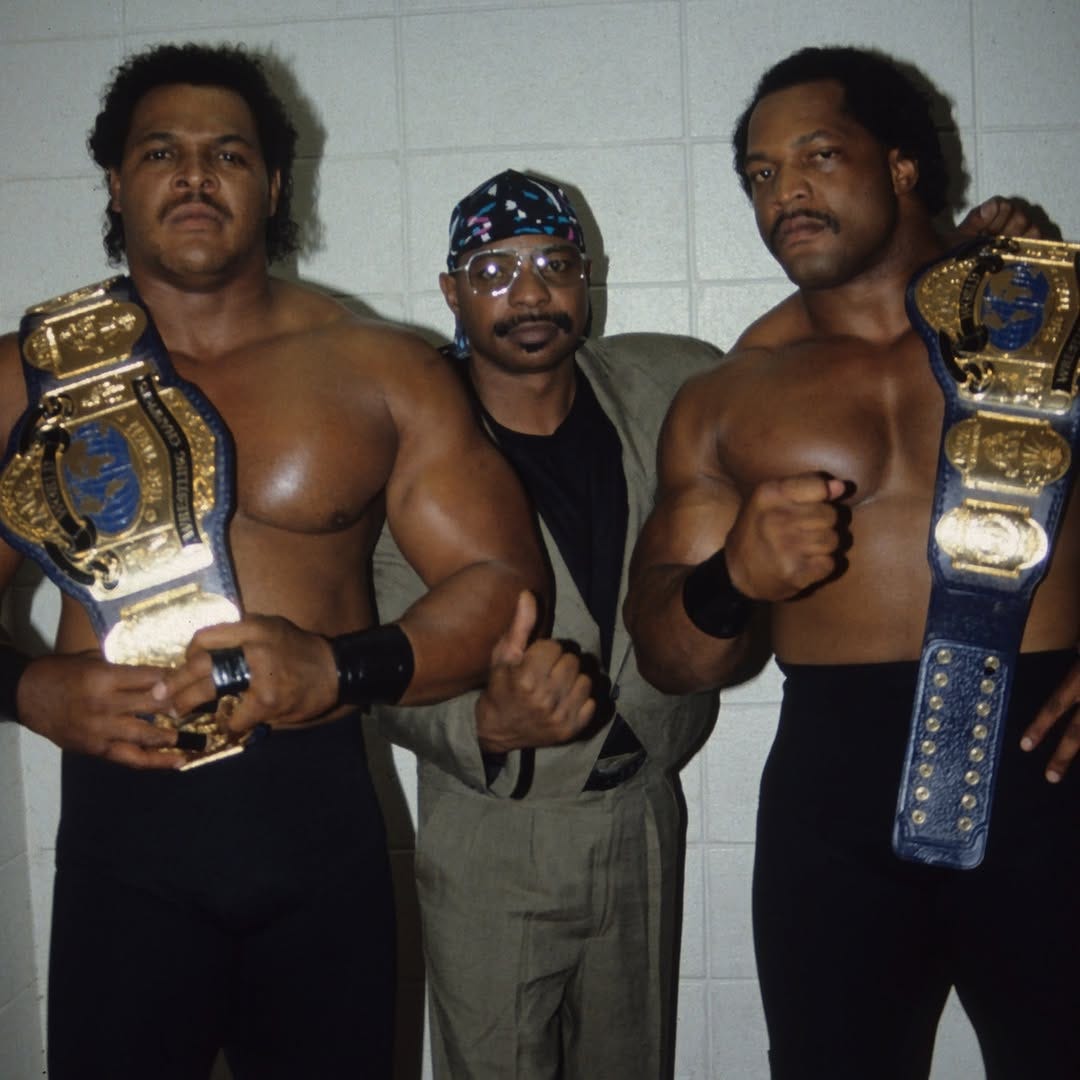
Pictured: NWA World Tag Team Champions, Doom: Butch Reed, manager Teddy Long, Ron Simmons
Reed continued wrestling sporadically into the 2000s and 2010s, winning regional titles like the WLW Heavyweight Championship (2001) and others in Missouri and Michigan promotions. He made a WWE cameo in 2007.
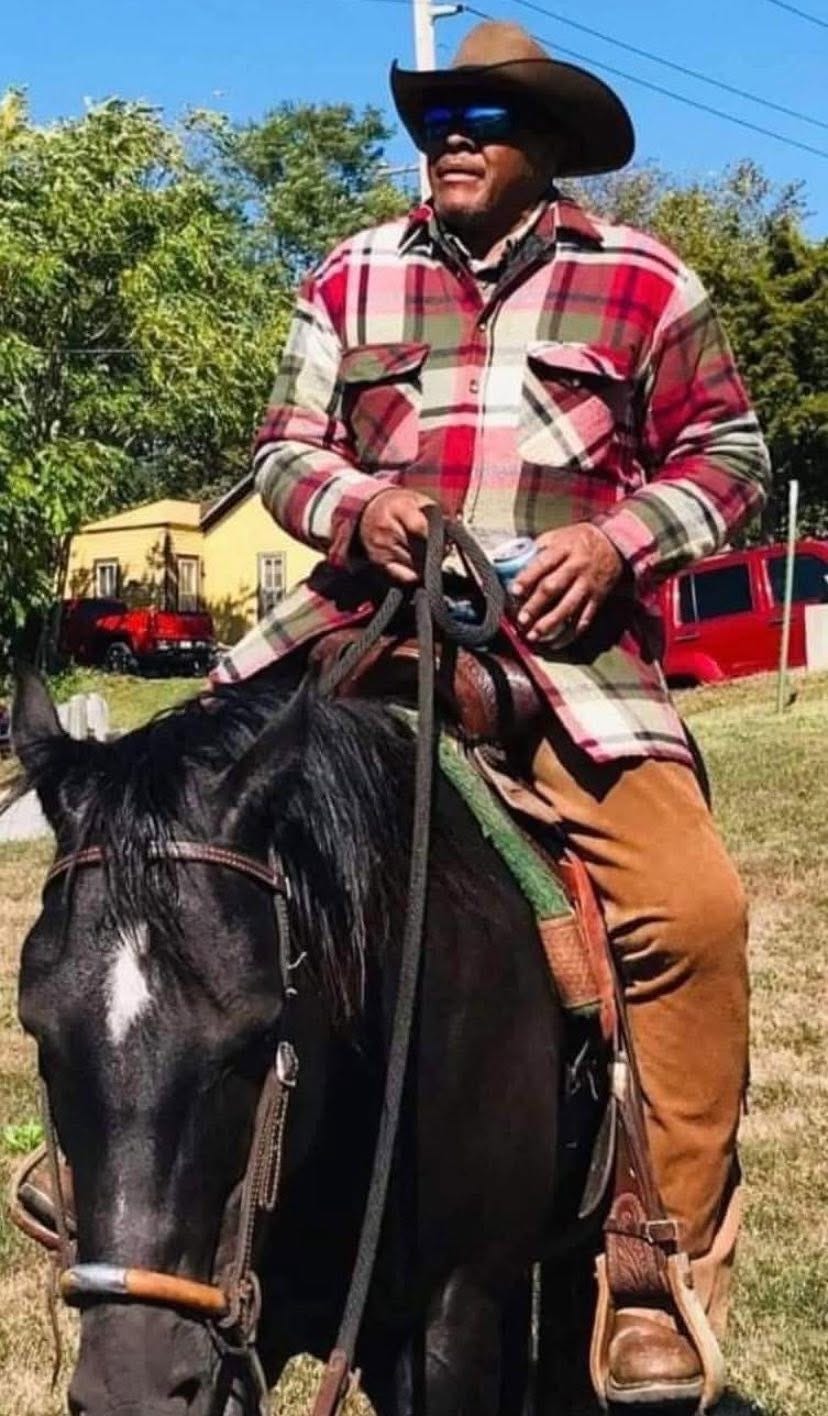
Beyond wrestling, Reed was a rodeo cowboy and remained a respected locker room veteran known for his toughness and work ethic. In later years, he reportedly admired AEW’s Powerhouse Hobbs as a spiritual successor.
Reed’s career spanned the territorial era’s peak through the national expansion. He was often a victim of timing—hot in Mid-South during transitions, positioned for pushes in WWF and WCW that didn’t fully materialize into world title contention. Yet his impact in tag teams (especially Doom), intense rivalries, and athletic presence influenced generations. He exemplified the transition from football tough guys to athletic entertainers in wrestling’s evolution.
Butch Reed was posthumously inducted into the St. Louis Wrestling Hall of Fame as part of the Class of 2025. The induction ceremony took place on May 17, 2025, at the St. Louis Airport location (often associated with events at the Aviator Hotel and Ballroom area). This honor recognizes his significant contributions to the historic St. Louis territory under promoter Sam Muchnick, where Reed wrestled in the late 1970s and 1980s.
Reed had deep roots in St. Louis wrestling. He competed there early in his career, gaining valuable experience and exposure against top talent like Harley Race. The territory’s strong emphasis on athleticism, tough in-ring action, and storytelling aligned well with Reed’s powerful build, legitimate football background, and versatile heel/face work. His matches in St. Louis, including high-profile bouts, helped build his reputation as a rising star in the NWA.
The 2025 class included other notable names (posthumous and otherwise), such as Jerry Blackwell, Ivan Koloff, and Dory Funk Sr., underscoring Reed’s place among territorial legends. This induction came over four years after his death in February 2021, reflecting a growing appreciation for under-recognized figures from the territorial era.
Family and community efforts amplified the honor. The Bruce Reed Memorial Fund (also referred to as the “Natural Hacksaw Butch Reed” fund), established by Reed’s relatives and friends in his hometown of Warrensburg, Missouri, has been active in preserving his legacy. In conjunction with the HOF induction, a new plaque was added in front of Reed’s existing bust or memorial in the area (noted around late May 2025). The fund supports community initiatives, including events like an annual barbecue fundraiser and a memorial statue/plaque in Blind Boone Park. These efforts highlight Reed not just as a wrestler but as a local hero and pioneer athlete from Warrensburg.
The induction was described in wrestling circles as emotional, with family involvement underscoring the personal impact. For a wrestler who never captured a major world title but excelled in territories and tag teams, this local Hall of Fame recognition validates his foundational work where he built his name.
Reed received several honors and rankings during and after his career, though he was not inducted into the WWE Hall of Fame (Jim Ross once commented he didn’t think Reed would make it there). Key ones include:
• Wrestling Observer Newsletter Awards:
• Strongest Wrestler (1984) — Reflecting his impressive power and athletic presence during his dominant Mid-South run.
• Most Unimproved (1987) — A dubious distinction from his WWF period, possibly tied to booking frustrations or perceived stagnation in that national spotlight.
• Pro Wrestling Illustrated (PWI) Rankings (as of the 2003 “PWI Years” retrospective):
• #174 of the 500 best singles wrestlers.
• #91 of the 100 best tag teams (with Ron Simmons as part of Doom).
• Championship Accomplishments (these serve as major in-ring “awards”):
• WCW World Tag Team Championship (1 time) with Ron Simmons as Doom.
• Multiple regional titles, including Mid-South North American Heavyweight Championship (multiple reigns), USWA Unified World Heavyweight Championship, NWA International Heavyweight Championship (Florida version), and others in Central States, Florida, WLW, etc.
Butch Reed’s story is one of resilience, reinvention (“Hacksaw” to “The Natural” to Doom), and quiet influence in an era of larger-than-life stars. He left an indelible mark on pro wrestling history as a legitimate force who could hang with the best.
One Thing I Learned About Magnum TA
The iconic ring name “Magnum T.A.” wasn’t Terry Allen’s own idea — it came directly from André the Giant.
While they were in Florida (and earlier crossing paths in Portland), André noticed Allen’s resemblance to Tom Selleck from the hit show Magnum, P.I. and suggested combining “Magnum” with Allen’s real initials (T.A.). André even pushed for him to use it, and the rest is history. This fun collaboration helped launch one of the most charismatic babyface characters of the 1980s.
Thank You for Reading
I’m Tony Richards, Pro Wrestling Historian, Author and Storyteller. I share pro wrestling historical items in each issue of the Time Tunnel Pro Wrestling History Newsletter. Thanks for reading! If you enjoy my information on select events, matches and insights, please share it with folks you think might like to be a subscriber!
Remember, premium investors get access to exclusive and special content such as some special issues including a multi-part deep dives on wrestling territories, wrestler bios and championship title histories, special audio and video interviews on territory pro wrestling and more available in the Pro Wrestling Time Tunnel for Premium Investors.
Butch always had that aura about him that screamed this is one tough sonuvagun and he’s gonna kick your ass!!