


Happy Birthday to those who have passed on and to those great wrestlers still with us:
In Memoriam:
Wild Bill Longson 1906
Baron Michele Leone 1909
Kathy Starr 1935
Ruben J. Huizar\Eddie Sullivan 1941
Happy Birthday:
Dan Severn (68)
Chris Chavis\Tatanka (65)
Liv Morgan (32)
RIP Memorial: We stop & remember those who have passed on this day and gave themselves to the business for us, the fans. We salute you and thank you.
Henry Ordermann 6-8-1947 at the age of 64

Ron Starr 6-8-2017 at the age of 66

7 Stages of the Territory Era
Stage 4: Investigation (1955-1965)
Year 2 of Stage 4, Month 6
June 1956
June 1956 exemplifies Stage 4: Investigation (1955-1965). This phase captures the NWA at its height of centralized control and economic dominance, even as federal scrutiny from the U.S. Department of Justice (DOJ) antitrust investigation intensified. The Alliance’s near-monopolistic structure—territorial boundaries, unified champion, talent coordination, and blacklisting mechanisms—faced systematic oversight, yet its operational power remained formidable. Local booking offices leveraged syndicated television to reinforce geographic territories, driving business while the investigation loomed.
This month highlighted the tension: unparalleled internal strength tested by external regulatory pressure, setting the stage for formal adjustments via the later 1956 Consent Decree without immediate collapse.This month highlighted the tension: unparalleled internal strength tested by external regulatory pressure, setting the stage for formal adjustments via the later 1956 Consent Decree without immediate collapse.
The Full Extent of NWA Control and Power in June 1956

The NWA, led by President Sam Muchnick in St. Louis, operated as a highly effective alliance of promoters that dictated the landscape of pro wrestling across North America and influenced international scenes. Its power manifested through several interlocking mechanisms:
• Unified World Championship as Central Authority: Whipper Billy Watson reigned as NWA World Heavyweight Champion (having defeated Lou Thesz by count-out on March 15 in Toronto). Watson’s selective defenses and tours generated revenue for host territories while elevating local talent. This “traveling champion” model ensured the belt’s prestige unified the Alliance—territories paid guarantees for appearances, fostering cooperation rather than cutthroat competition.
• Strict Territorial Boundaries and Exclusivity: Promoters respected defined geographic fiefdoms, preventing invasions or talent raids. Outlaw promoters or wrestlers ignoring the system faced blacklisting, effectively limiting competition. This created stable regional monopolies, protected by mutual agreements and NWA board enforcement.
• Talent Booking and Exchange System: Wrestlers were routed through NWA channels, providing steady work and consistent quality. Top stars like Pat O’Connor, Dick Hutton, Verne Gagne, Edouard Carpentier, Antonino Rocca, and others moved fluidly between territories per coordinated schedules. Local offices handled midcard/undercard while headliners from the Alliance boosted gates.
• Political and Administrative Control: Muchnick’s leadership navigated egos and external threats. The NWA’s bylaws and membership rules centralized decision-making, with the board (key promoters) holding sway. This structure minimized destructive wars while maximizing collective profits.
• Television as a Territorial Reinforcer: Syndicated local programming (e.g., Vince McMahon Sr.’s Capitol Wrestling shows expanding in the Northeast) drove fans to live arena events within each territory, without nationalizing the product. This promoter-controlled model amplified power during the TV boom.
Despite the DOJ probe into alleged monopolistic practices (territorial locks, blacklisting, price-fixing), the NWA’s day-to-day control was undiminished in June. Business thrived in the Golden Age, with strong attendance and the system’s adaptability proving resilient.
Business Conditions and Territorial Dynamics
Wrestling enjoyed robust gates amid TV-driven popularity. Promoters balanced investigation pressures with daily operations, using syndication to solidify markets. The investigation itself underscored the NWA’s influence—it was powerful enough to warrant federal attention—yet promoters like Muchnick used connections to manage outcomes. This Stage 4 dynamic of scrutiny amid peak operations defined the era’s regulatory challenges.
Northeast / Capitol Wrestling (McMahon Sr.)
Vince McMahon Sr and Capitol Wrestling Corporation partners’ syndicated TV expanded to New York (WABD, June 21), building live event momentum at venues like Madison Square Garden precursors. Antonino Rocca’s acrobatic style dominated as a massive draw.
Foreign heel vs. babyface hero feuds; tag action feeding mains. Strong ethnic audience turnout reinforced territorial control.
**See Tomorrow’s Issue 420 of The Daily Chronicle for the special feature on The consolidation of the New York market.
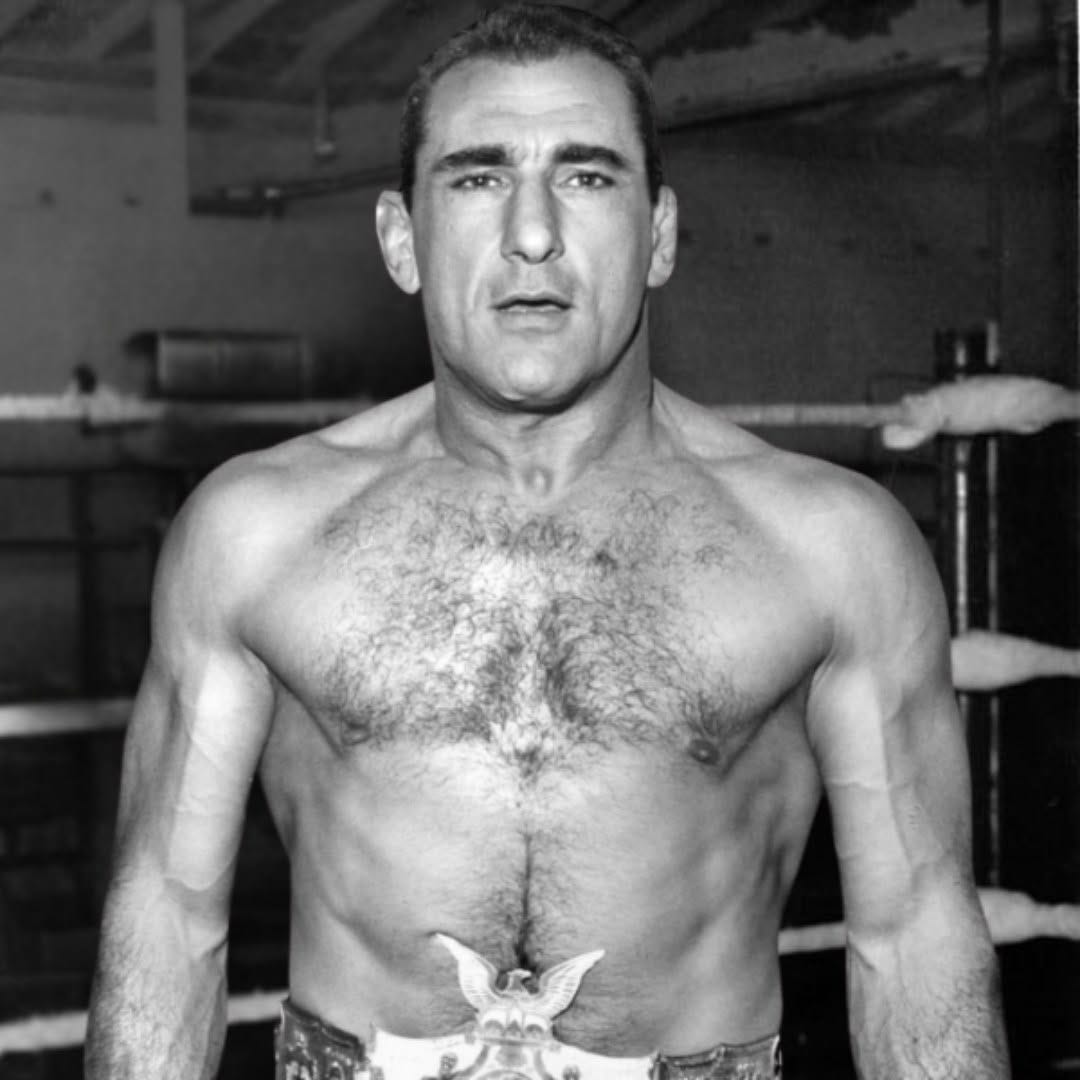
Antonino Rocca was the franchise draw. The Argentine acrobat and high-flyer was the undisputed top star, headlining with his innovative aerial maneuvers, cartwheels, and charismatic appeal. Rocca’s matches against heels created massive excitement and drove attendance.
Regular appearances by wrestlers like Edouard Carpentier (athletic style), Buddy Rogers influences, and other NWA imports fueled weekly programs. Feuds mixed technical grappling, high spots, and tag team cooperation typical of the territory.
Weekly shows mixed main event showcases featuring Rocca with undercard singles and tags, creating balanced, exciting cards that rewarded repeat viewership and live attendance. The acrobatic, fan-friendly style differentiated the product in a crowded urban market.
Canada:
Toronto / Maple Leaf Wrestling (Frank Tunney)
• Top Matches:
• June 14, Maple Leaf Gardens (~6,500 fans): Watson def. Pat O’Connor (32 min technical showcase).
• June 21: Dick Hutton challenges with abdominal stretch; count-out victories.
• Late June: Midget tags and undercard variety (Brunetti Bros., etc.).
• Stars/Angles: Watson as hometown champion; O’Connor as British Empire contender; Hutton pushing. High draws reflected local hero power.
Montreal (Eddie Quinn)
Edouard Carpentier vs. Don Leo Jonathan (DQ finishes); Yvon Robert and Killer Kowalski influences. Athleticism vs. power angles packed the Forum.
Midwest / St. Louis/Mineapolis (Muchnick/Kohler/Gagne)
St. Louis:
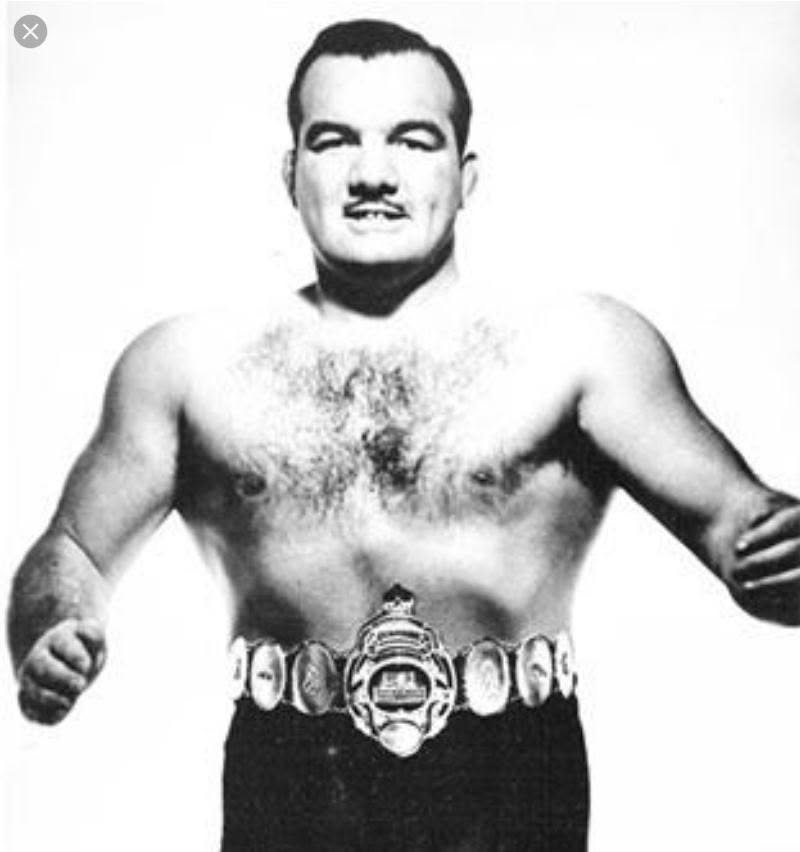
In the central NWA hub of St. Louis under promoter Sam Muchnick at the Kiel Auditorium, June 1956 exemplified the heart of Stage 4: Investigation dynamics. As NWA President navigating the ongoing DOJ antitrust probe, Muchnick ran a high-profile operation that reinforced the Alliance’s power through top-tier talent, the traveling World Champion, and strong local control via early syndicated TV elements. His office delivered consistent, prestige-driven cards centered on technical singles action and credible main events that drew solid crowds amid the TV boom.
The marquee focus remained on Whipper Billy Watson as NWA World Heavyweight Champion (reigning since March). St. Louis, as a key NWA stronghold, hosted significant defenses and contender programs that elevated the territory’s status:
Watson made selective appearances or was built around in programs involving top challengers like Pat O’Connor and Dick Hutton. These matches emphasized scientific, hard-hitting wrestling with submissions and endurance tests—hallmarks of Muchnick’s preference for credible, athletic bouts.
Ongoing rivalries featured Lou Thesz (former champion and local draw) in special programs or tag/supporting roles, keeping the championship picture hot leading toward the November title change back to Thesz in St. Louis.
This championship-centric booking anchored main events, rotating credible opponents while preserving the belt’s prestige across the Alliance.
Chicago:
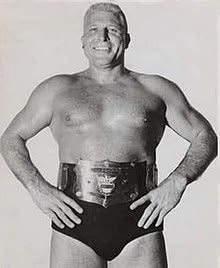
In the Chicago market under promoter Fred Kohler with shows at both the International Amphitheater (bigger cards) and Marigold Arena (weekly TV tapings), June 1956 showcased strong local control through syndicated TV and NWA talent exchanges. This reinforced geographic territorial boundaries amid the broader Stage 4 Investigation pressures on the Alliance. Kohler’s office delivered consistent weekly cards centered on rugged singles and tag team action, with established stars driving gates in the TV-driven Golden Age.
The key championship focus was around the regional NWA United States Heavyweight Championship (Chicago version), held by Wilbur Snyder during this period. Snyder served as a top technical draw with credible defenses and programs that anchored main events:
June 1, 1956 – International Amphitheater: Wilbur Snyder* defeated Hans Schmidt in a featured singles bout, maintaining momentum for the title picture.
Ongoing programs throughout June kept Snyder prominent, with rivalries involving power heels and technical challengers providing strong hero-villain dynamics suited to Chicago crowds. This territorial title helped Kohler maintain prestige and rotate opponents while tying into the broader NWA structure.
Notable June Activity:
• June 2, Marigold Arena: Strong tag action with the Lisowskis defeating Seymour Koenig & Don Pollock; Dick the Bruiser beating Zack Malkov.
• June 9–30 shows: Consistent undercard and midcard bouts featuring Roy McClarity, Mighty Atlas, Nick Bockwinkel, Benito Gardini, and others, with occasional ladies and variety matches for crowd appeal.
Weekly Saturday cards at Marigold (often TV-focused) and select Amphitheater dates mixed main event title programs with undercard singles and tags, creating balanced shows that rewarded repeat attendance.
Kohler’s syndicated programming from Marigold and the Amphitheater effectively promoted live events across the Chicago area, strengthening the office’s exclusive territorial hold. Business remained solid despite some earlier TV challenges, with the NWA’s unified champion (Whipper Billy Watson) providing occasional crossover appeal. This local-first approach exemplified Stage 4 resilience—adapting to investigation scrutiny while protecting regional dominance.
Kohler’s consistent use of regional titles, star power (Snyder, Bruiser, Lisowskis), and TV syndication mirrors effective territory management. It highlights protecting your “product” and audience territory through reliable stars and adaptable booking amid external pressures—much like daily writing discipline sustains long-term growth.
Minneapolis:
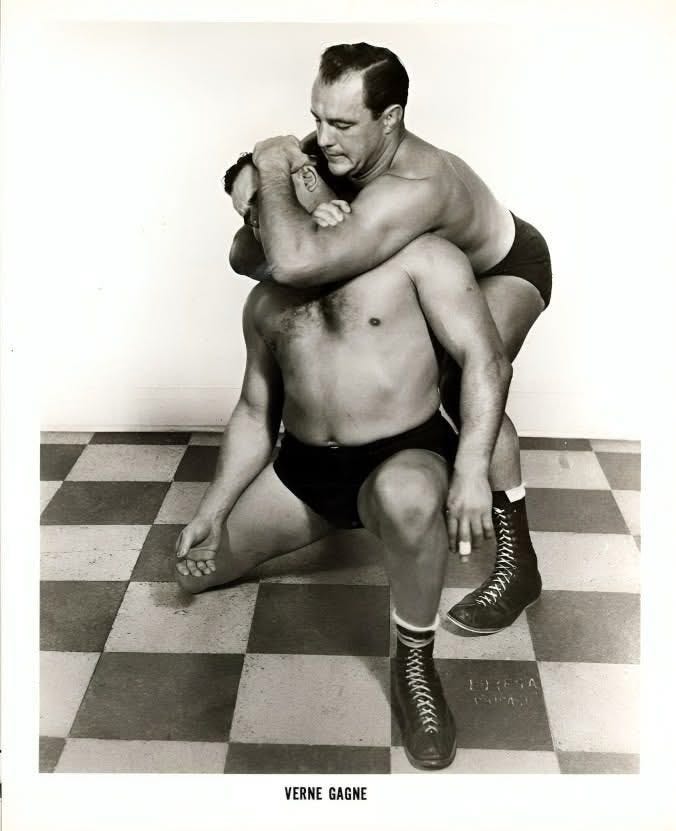
The Minneapolis/St. Paul hub of the NWA territory under promoters Wally Karbo and rising star/booker Verne Gagne (with shows at the Minneapolis Auditorium and St. Paul Armory), June 1956 exemplified strong local control through syndicated TV and NWA talent exchanges. This reinforced geographic territorial boundaries amid the broader Stage 4 Investigation pressures on the Alliance. The office delivered consistent weekly cards centered on technical singles action, tag team feuds, and credible main events that drew solid crowds in the TV-driven Golden Age.
The territory featured active versions of NWA titles, with emphasis on tag team prestige and heavyweight contenders. Focus remained on programs involving the NWA International Tag Team Championship (Minneapolis version) or related claims, with teams like the Kalmikoffs (Ivan & Karol) prominent as dominant heels following their earlier victories (e.g., March programs against Lord Athol Layton & Bobby Managoff).
Verne Gagne, as a top technical babyface and future AWA founder, anchored singles and tag programs, building toward greater independence while still aligned with the NWA. His matches emphasized scientific wrestling, amateur-style credibility, and submissions suited to Midwest audiences. This championship focus anchored main events, allowing rotation of NWA-import challengers while maintaining regional prestige.
Karbo and Gagne’s syndicated/local TV programming effectively promoted live events across the Minnesota market, strengthening the office’s exclusive territorial hold. Business remained solid in the Golden Age, with the NWA’s unified champion (Whipper Billy Watson) providing occasional crossover appeal. This local-first approach exemplified Stage 4 resilience—adapting to investigation scrutiny while protecting regional dominance and laying groundwork for the territory’s eventual evolution into the AWA.
Transformation Note: Karbo and Gagne’s emphasis on credible technical wrestling, tag prestige, and steady talent flow mirrors effective territory management. It highlights protecting your “product” and audience territory through reliable stars and adaptable booking amid external pressures—much like daily writing discipline sustains long-term growth.
Texas / Southwest (Dallas/Houston/Amarillo)
West Texas\Amarillo:
In Amarillo, very early stage West Texas Doc Sarpolis, having purchased the territory in the later part of 1955, is now injecting his booking in West Texas with heel team of Art Nelson and Rip Rogers (Eddie Graham). Sarpolis rotates these three at the top, not only in tag team matches but in singles matches as well.
The standout event and storyline revolved around the territorial version of the NWA World Tag Team Titles, which provided a consistent hook for multi-week feuds and title switches:
• June 7, 1956 – Amarillo, TX (Sports Arena): Dizzy Davis & Sonny Myers defeated Art Nelson & Rip Rogers (Rip Rogers was the future Eddie Graham) to win the NWA World Tag Team Championship (Amarillo version). This was a pivotal title change that injected fresh momentum into the tag division.
This victory set up ongoing defenses and rivalries. Nelson & Rogers had been a strong heel team, and the switch to Davis & Myers (a more dynamic babyface combo) allowed for classic babyface/heel tag storytelling—technical grappling vs. rule-breaking, with frequent interference and multi-man spots. The titles remained active and defended regularly, helping establish the promotion’s identity in tag wrestling.
Regular imports via NWA channels included names like Art Nelson, Rip Rogers, Dizzy Davis, Sonny Myers, Tommy Phelps, and others. Angles mixed power brawls, submissions (toe holds were popular), and multi-man tags. The territory’s style leaned rugged and credible, differentiating it while cooperating with the broader Alliance.
Shows at the Sports Arena drew solidly as part of the post-TV boom. Sarpolis focused on consistent weekly cards (often Thursdays) across the circuit, using championships to drive repeat attendance. This period solidified the office’s operations before deeper Funk family involvement.
Dallas:
In Dallas, Sportatorium gates healthy with traveling heels vs. locals. Exemplified the booking office defense of territory.
The primary ongoing storyline centered on the Texas State Tag Team Championship, which was in flux/vacant or hotly contested earlier in the spring, driving weekly tournament-style bouts and rivalries:
• June 5, 1956 – Dallas Sportatorium: “Iron” Mike DiBiase & Danny Plechas wrestled Don Evans & Duke Keomuka to a double disqualification in a wild match, part of the ongoing series/tournament to determine new state tag champions. This kept the feud simmering with interference and chaos.
• June 12, 1956 – Dallas Sportatorium: “Iron” Mike DiBiase & Danny Plechas defeated Don Evans & Duke Keomuka (2/3 falls) to capture the Texas State Tag Team Title. The ring was surrounded by a fence for this “rematch for the vacant title,” adding a big-match atmosphere. This title win solidified DiBiase & Plechas as a top heel or powerhouse team, setting up defenses and programs through the summer.
• June 19, 1956: DiBiase & Plechas defeated Don Evans & Duke Keomuka again in a “battle to the finish” match, reinforcing their dominance.
• June 26, 1956: Texas State Tag Team Champions DiBiase & Plechas defeated Paul Boesch & Otto Kuss (2/3 falls), continuing their run.
In the Singles Division:
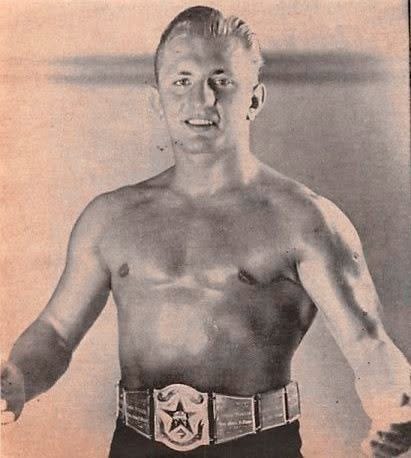
Texas State Heavyweight Championship: Buddy Rogers was the champion in June (having won it from Pepper Gomez earlier). He defended successfully:
• June 5: Buddy Rogers b. Ramon Torres (2/3).
• June 12: Buddy Rogers b. Len Rossi (using his “paralytic headlock”).
Rogers’ flashy, arrogant style contrasted with gritty Texas babyfaces, providing strong main event drawing power. Other top singles included Ramon Torres, “Cowboy” Orv Carlson, and midcarders like George Drake, Larry Chene, and Cyclone Anaya in supporting feuds.
McLemore’s consistent championship-driven booking and use of TV syndication mirrored Sarpolis/Funk Sr.’s approach in Amarillo—pragmatic territory strengthening under NWA oversight. It highlights Stage 4 resilience: local offices adapting and consolidating power despite external “investigation.” For creators/coaches, it’s a model of protecting your geographic/audience “territory” through repeatable hooks (titles, rivalries) and gradual team-building.
Houston:
In Houston, Morris Sigel at the Sam Houston Coliseum, June 1956 followed the established pattern of strong local control through syndicated TV and NWA talent exchanges. This reinforced geographic territorial boundaries amid the broader Stage 4 Investigation pressures on the Alliance. Sigel’s office (with Paul Boesch beginning his influential association as wrestler/advisor/announcer) delivered consistent weekly cards featuring rugged Texas-style singles action, with traveling stars and a high-profile heavyweight champion driving gates.
The marquee storyline centered on Buddy Rogers capturing and defending the NWA Texas Heavyweight Championship. Rogers, with his flamboyant “Nature Boy” persona (arrogant, rule-bending style), emerged as a major heel draw after winning the title early in the month. His reign provided a clear hero-villain dynamic suited to Coliseum crowds:
• June 1, 1956 – Houston (Sam Houston Coliseum): Buddy Rogers defeated Pepper Gomez to win the Texas State Heavyweight Championship. This title change was a key hook, elevating Rogers as the top antagonist.
• Subsequent defenses throughout June kept Rogers in the spotlight, building heat for rivalries with babyface challengers and setting up summer programs.
This championship focus anchored the main events, allowing Sigel to rotate credible opponents while maintaining prestige for the territorial title.
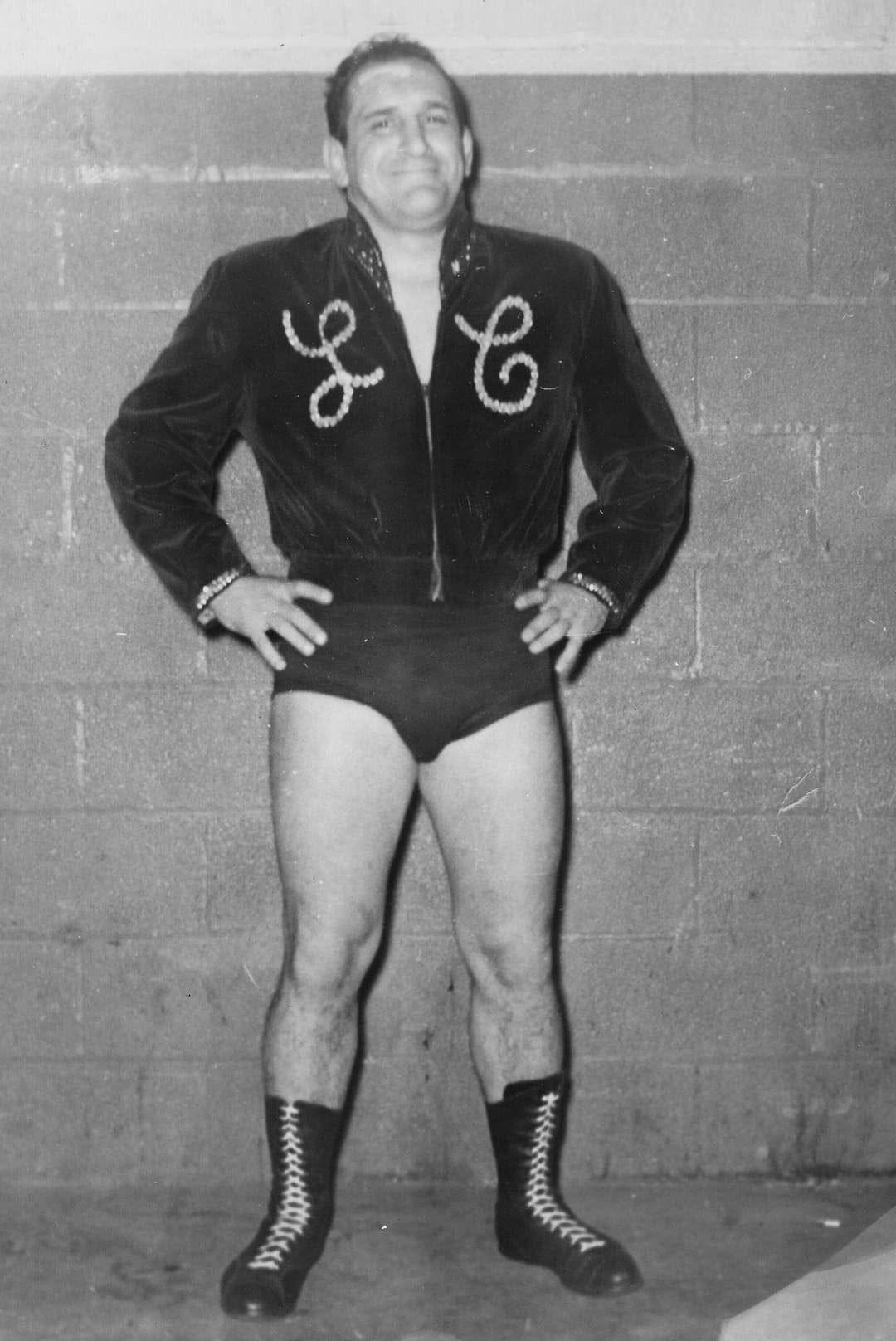
Pictured: Larry Chene
Traveling Stars and Midcard Depth: Regular appearances by wrestlers like Pepper Gomez (former champion), Duke Keomuka, Larry Chene, and others fueled weekly programs. Feuds emphasized technical grappling, submissions, and hard-hitting brawls typical of Texas wrestling.
Paul Boesch, transitioning toward a larger role, added credibility and local appeal through in-ring work and emerging announcing duties. His presence helped bridge talent and fan engagement.
Weekly shows (often Fridays) mixed main event title defenses with undercard singles bouts, creating a balanced product that rewarded repeat attendance. Occasional variety acts and tag support rounded out the cards.
Sigel’s syndicated TV programming from the Sam Houston Coliseum effectively promoted live events across the Houston area and beyond, strengthening the office’s exclusive territorial hold. Business remained solid in the TV-driven Golden Age, with the NWA’s unified champion (Whipper Billy Watson) providing occasional crossover appeal. This local-first approach exemplified Stage 4 resilience—adapting to investigation scrutiny while protecting regional dominance.
Tennessee (Gulas\Welch)
June 1956 represented a period of steady territorial strengthening through local studio television and NWA talent exchanges. With shows centered in Nashville (and runs in Chattanooga, Knoxville, and surrounding towns), this office reinforced geographic boundaries amid the broader Stage 4 Investigation pressures on the Alliance. The territory emphasized rugged Southern-style singles and tag team action, relying heavily on homegrown talent while drawing from the NWA network, building toward the major Memphis expansion in July.
The territory featured active regional titles, with a strong emphasis on tag team wrestling that would become a Mid-America hallmark. Programs revolved around versions of the NWA Southern Tag Team Championship and early iterations of what became the NWA Tennessee Tag Team Championship. Feuds often involved local teams and traveling heels, using best-of-three-falls formats common in the South.
Singles heavyweight programs highlighted credible babyfaces and arrogant heels, aligning with the territory’s preference for athletic, story-driven matches suited to regional audiences. This championship focus anchored main events, allowing rotation of opponents and building long-term heat through weekly television exposure.
Key Singles Talent and Supporting Angles
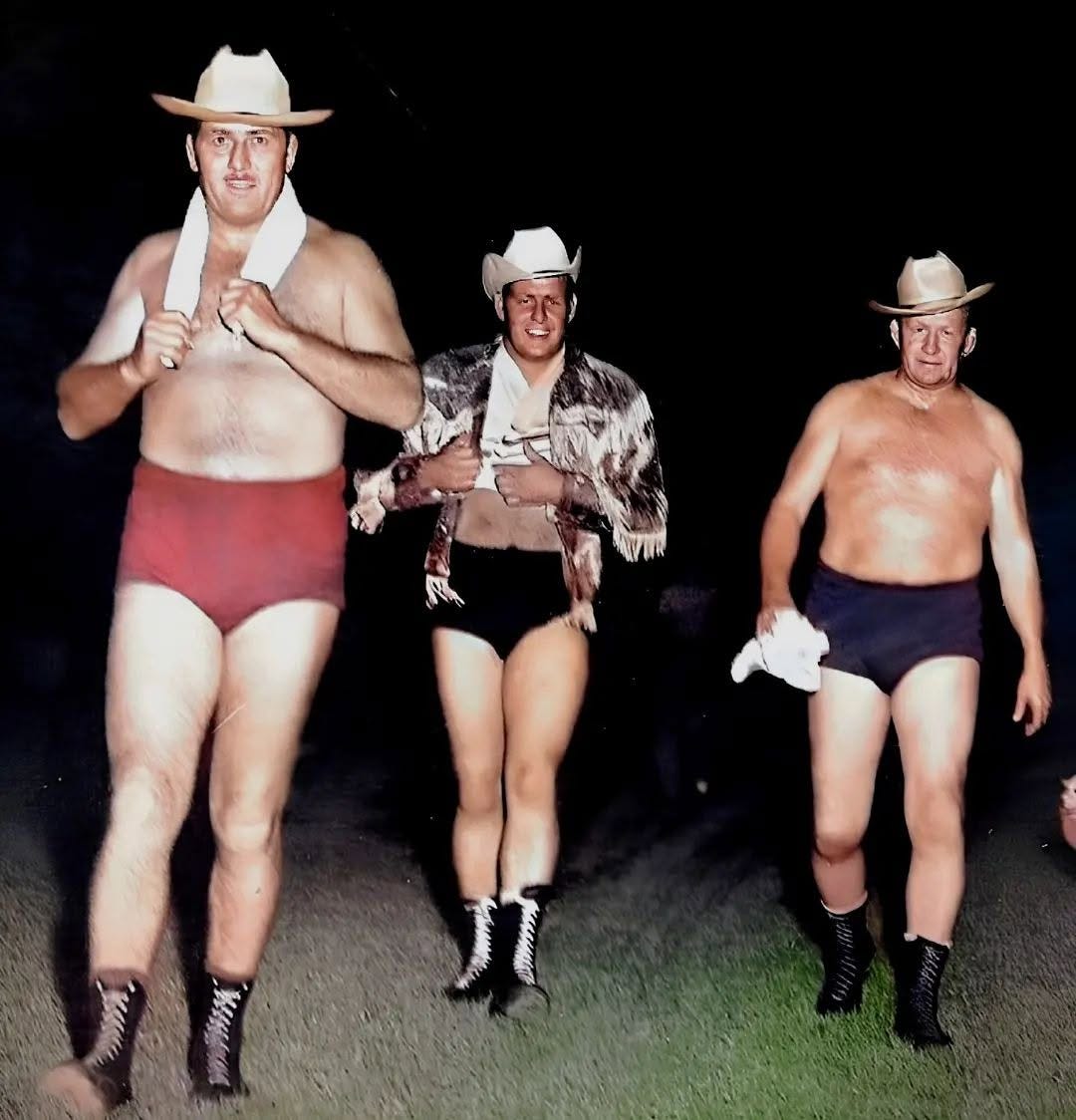
Pictured: The Welch Brothers: Herb, Lester and Roy
Regular appearances by wrestlers like the Welch family (including Roy and relatives), homegrown Southern talent, and NWA imports fueled weekly programs. Feuds emphasized hard-hitting brawls, submissions, and tag team cooperation typical of the territory. Gulas-Welch leaned on reliable regional stars and studio-friendly personalities, creating strong hero-villain dynamics that connected with Tennessee crowds. Angles often built around personal rivalries and championship pursuits.
Weekly TV studio and arena shows (with Nashville TV on WSIX-TV Channel 8 already established from late 1955) mixed main event title programs with undercard singles and tags, creating balanced, repeatable cards that rewarded repeat attendance and drove live gates.
Business & TV Context
Gulas and Welch’s pioneering use of local studio wrestling on television effectively promoted live events across Nashville, Chattanooga, Knoxville, and the broader territory, strengthening their exclusive hold. Business was solid in the TV-driven Golden Age, with the NWA’s unified champion (Whipper Billy Watson) providing occasional crossover appeal through talent flow. This local-first, studio-based model exemplified Stage 4 resilience—adapting to investigation scrutiny while protecting and expanding regional dominance, setting the stage for the Memphis acquisition the following month.
Transformation Note: Gulas and Welch’s focus on homegrown talent, studio TV innovation, and gradual territory expansion mirrors effective territory management. through reliable stars, adaptable booking, and smart local media use in regular weekly towns.
Carolinas: (Jim Crockett Promotions)
June 1956 marked an important early step in territorial strengthening through the launch of local television. This reinforced geographic boundaries amid the broader Stage 4 Investigation pressures on the NWA Alliance. Crockett’s office delivered consistent weekly cards featuring rugged Southern-style singles and tag team action, relying on a mix of regional talent and NWA imports while pioneering TV exposure that would define the territory’s future growth.
The territory featured active regional titles typical of NWA offices, with emphasis on singles and tag team programs that built weekly heat:
Programs revolved around territorial heavyweight and tag team championships, with feuds often involving best-of-three-falls formats common in the South. These provided reliable hooks for main events and repeat business. The focus remained on credible babyfaces versus arrogant or rule-breaking heels, aligning with regional audience preferences for athletic, story-driven matches.
This championship-driven booking anchored main events, allowing rotation of opponents and building long-term rivalries through emerging television exposure.
Regular appearances by wrestlers such as Mr. Moto, Kinji Shiduya, Gene Becker, Jack Whitzig, Don Arnold, Don Eagle, Chief War Eagle, the Garibaldi Brothers (Chick, Leo, etc.), Carl Von Hess, Dick Steinborn, and Angelo Martinelli fueled weekly programs. Feuds emphasized hard-hitting brawls, submissions, and tag team cooperation typical of the territory.
Crockett leaned on reliable talent suited for studio and arena shows, creating strong hero-villain dynamics that connected with Southern crowds. Angles often built around personal rivalries, championship pursuits, and variety elements including women’s and midget matches.
Weekly TV studio shows (notably the new “Carolina Wrestling” program) mixed main event title programs with undercard singles and tags, creating balanced, repeatable cards that rewarded repeat attendance and drove live gates.
Business & TV Context
A pivotal development was the debut of “Carolina Wrestling” on WFBC Channel 4 in Greenville, SC, beginning June 2, 1956. This live studio program (with occasional moves to larger venues like Textile Hall due to ticket demand) represented Crockett’s earliest major foray into televised wrestling. It effectively promoted live arena events across the Carolinas and Virginia, strengthening the office’s exclusive territorial hold. Business was solid in the TV-driven Golden Age, with the NWA’s unified champion (Whipper Billy Watson) providing occasional crossover appeal through talent flow. This pioneering local TV model exemplified Stage 4 resilience—adapting to investigation scrutiny while protecting and expanding regional dominance through innovative media use.
Mexico (EMLL)
Mexico’s EMLL (later CMLL) scene in June 1956 operated as a dynamic parallel to the U.S. NWA territories during your Stage 4: Investigation phase. While the DOJ probed the Alliance’s territorial system and talent coordination, EMLL under Salvador Lutteroth thrived as Mexico’s dominant promotion, leveraging the brand-new Arena México (opened April 27, 1956) as its “Catedral de la Lucha Libre.” This venue quickly became the spiritual and commercial heart of lucha libre, hosting frequent high-profile cards that blended athleticism, drama, and cultural spectacle.
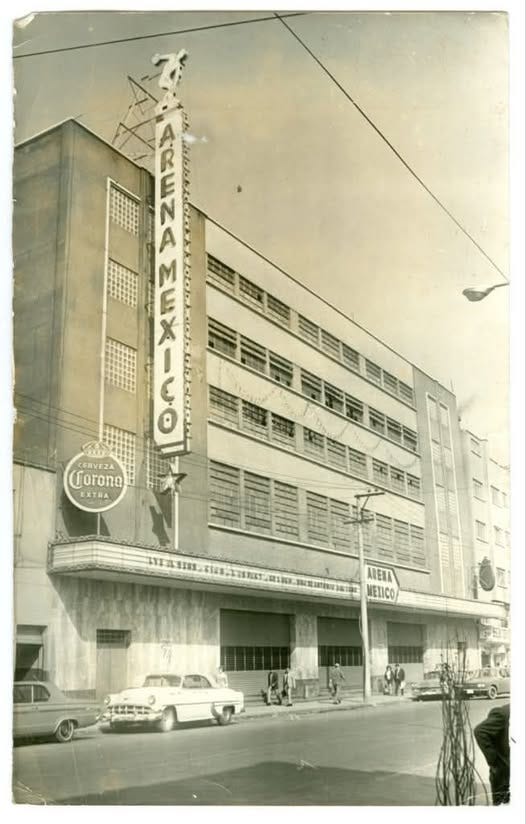
Arena México: The New Cathedral
• Opened earlier that year, Arena México rapidly solidified as the premier venue in Mexico City, drawing massive crowds with its modern facilities and capacity for big spectacles. By June, it hosted regular Friday and other weekly shows featuring top talent.
Record gates (e.g., strong attendance noted around mid-June cards) reflected the post-opening boom. Syndicated/local TV exposure (paralleling U.S. promoters like McMahon Sr., Kohler, and McLemore) drove fans from the broadcasts to live events, reinforcing EMLL’s geographic dominance in central Mexico without fragmenting into smaller offices.
El Santo (Rudolfo Guzmán Huerta) was the undisputed king of lucha libre, headlining with his silver mask and heroic técnico style. In June 1956, programs built heat for major storylines:
Santo Vs. Rolando Vera and Title Defenses: Santo defended the NWA World Middleweight Championship successfully, including a notable bout on June 22, 1956, at Arena México where he defeated Rolando Vera. These matches showcased technical prowess and high drama.
Frequent programs against rudos like Médico Asesino (with whom he teamed at times) and ongoing tensions with Blue Demon (a major rival from prior years). June cards featured mixed tag and singles bouts that heightened personal feuds. The El Gladiador (Luis Ramírez Romero) program was actively building—culminating in the historic mask-vs-mask match at the EMLL 23rd Anniversary Show on September 21, 1956, where Santo won Gladiador’s mask in a dramatic 35-minute submission finish. June shows laid the groundwork with intense rivalries and “rematch vibes” through undercard and midcard positioning.
Masked wrestling was central to EMLL’s appeal. June 1956 cards emphasized high-stakes masked vs. masked or masked vs. hair elements, creating emotional investment:
Spectacles often involved multi-man tags or apuesta-style stipulations that teased bigger payoffs. The culture of luchas de apuestas (bets matches) amplified drama—masks represented identity and honor, leading to cathartic unmaskings that drew huge crowds. Arena México became the ideal stage for these spectacles, blending theater with athletic competition.
EMLL’s integration into the NWA (joined around 1952–1953) enabled talent flow and championship prestige without losing local flavor. Recognition of titles like the NWA World Middleweight (held by Santo) and Welterweight (Blue Demon) tied Mexican lucha to the broader Alliance.
Occasional U.S. talent exchanges complemented homegrown stars, mirroring how NWA offices in Dallas, Houston, Chicago, etc., benefited from shared rosters. This cooperation fueled a parallel boom: while the U.S. faced DOJ scrutiny over monopolistic practices, EMLL used the structure to professionalize and expand, with Arena México as the flagship. Business thrived alongside Japan’s Rikidōzan era and U.S. TV syndication.
Japan (JWA / Rikidōzan)
While the U.S. DOJ probed the Alliance’s monopolistic practices, the JWA (Japan Wrestling Association) under Rikidōzan operated as a parallel powerhouse—leveraging NWA talent exchanges and the World Tag Team Titles to build puroresu into a national phenomenon. The Sharpe Brothers (Ben & “Iron” Mike Sharpe), towering Canadian heels, served as ideal foreign invaders, amplifying patriotic storytelling through size-disparity battles and rule-breaking tactics.
The month featured high-profile tag team clashes as part of the ongoing International Series:
• June 2, 1956 – Fukuoka Sports Center: Ben & Mike Sharpe drew with Rikidōzan & Kokichi Endo. The Sharpes retained the NWA World Tag Team Championship in this best-of-three-falls encounter (referee: Mike Mazurki in some reports). This road show built anticipation for the Tokyo climax. 
• June 7, 1956 – Kuramae Sumo Hall (Tokyo): In the tour finale, the Sharpe Brothers drew again with Rikidōzan & Kokichi Endo in front of approximately 15,000 fans. The Sharpes retained the titles. This was a best-of-three-falls main event, with classic heel tactics (double-teaming, illegal holds) met by Rikidōzan’s explosive karate chops and Endo’s support.
These draws maintained the Sharpes’ championship reign while allowing Rikidōzan to look strong without a clean loss—standard territorial booking to protect the top star and keep the feud alive.
Storylines, Angles, and Talent
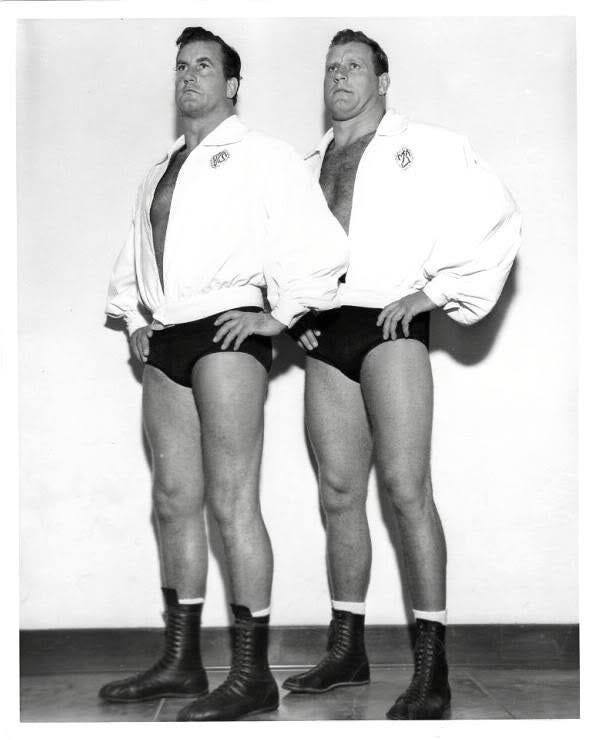
Pictured: The Sharpe Brothers. Mike Sr. and Ben
• Patriotic Hero vs. Foreign Giants: Rikidōzan embodied Japanese resilience and strength. Partner Kokichi Endo (a skilled wrestler/judoka) complemented his power with technical prowess. The Sharpes, at 6’5”+ and ~250 lbs each, were booked as bullying American-style heels who bent rules, creating emotional investment. Rikidōzan’s signature chops and comebacks delivered cathartic moments for post-war audiences.
• NWA Integration: The matches tied directly into the NWA World Tag Titles (often recognized in JWA via exchanges). This exemplified Stage 4 cooperation—U.S. talent boosting international gates while the Alliance’s unified champion (Whipper Billy Watson) maintained global prestige. Full shows included undercard talent like Azumafuji, Lucky Simunovich, and others, building depth for the JWA’s growing roster.
Business and Cultural Impact
• Strong Draws: 15,000 at Sumo Hall reflected puroresu’s explosive popularity, fueled by TV broadcasts that reached massive audiences (building on the 1954 Sharpe series phenomenon).
• TV Syndication Parallel: Like U.S. promoters (McMahon, Kohler, etc.), JWA used local media to drive live attendance, reinforcing its “territory” in Japan amid NWA scrutiny.
• Longer-Term: These programs sustained momentum leading into later Rikidōzan title wins and JWA growth. The Sharpe feud was a proven formula from 1954, recycled effectively for star power.
Transformation Note: Rikidōzan’s booking of foreign invaders like the Sharpes while protecting his aura mirrors “ego mastery” in high-stakes environments—strategic compromise (draws) that preserves core strength amid external pressures (NWA investigation parallels). For creators/coaches, it shows how consistent rivalries and cultural resonance (hero vs. outsider) build a loyal audience territory
Other Developing Regions
Australia/Europe: Sporadic NWA-influenced tours; not full territories yet.
Investigation Stage 4 in Action
June 1956 showcased NWA power at its apex under scrutiny. The DOJ investigation probed but did not disrupt operations—the system’s cooperative incentives proved stronger than regulatory threats in the short term. TV syndication by local offices was key: it nationalized exposure selectively while preserving geographic control, a prescient adaptation. Watson’s reign bridged technical and charismatic eras, mirroring leadership navigation of challenges.
Muchnick’s handling of investigation pressures models “ego mastery” and secure communication—preserving the Alliance’s mission through strategic flexibility. For creators and coaches, it parallels protecting your territory (audience, daily discipline) amid external “probes” (algorithms, critics): maintain core power while adapting boundaries. “Done over perfect” sustains long-term resilience.
Thank You for Reading
I’m Tony Richards, Pro Wrestling Historian, Author and Storyteller. I share pro wrestling historical items in each issue of the Time Tunnel Pro Wrestling History Newsletter. Thanks for reading! If you enjoy my information on select events, matches and insights, please share it with folks you think might like to be a subscriber!
Remember, premium investors get access to exclusive and special content such as some special issues including a multi-part deep dives on wrestling territories, wrestler bios and championship title histories, special audio and video interviews on territory pro wrestling and more available in the Pro Wrestling Time Tunnel for Premium Investors.