


Happy Birthday to those who have passed on and to those great wrestlers still with us:
In Memoriam:
Brute Bernard 1921
Rip Hawk 1930
Tony Rocco 1942
Larry Latham 1952
Happy Birthday:
Ahmed Johnson (63)
O.D.B. (48)
Jaxson Ryker (44)
Drew McIntyre (41)
RIP Memorial: We stop & remember those who have passed on this day and gave themselves to the business for us, the fans. We salute you and thank you.
Dick Dunn 6-6-1995 at the age of 64
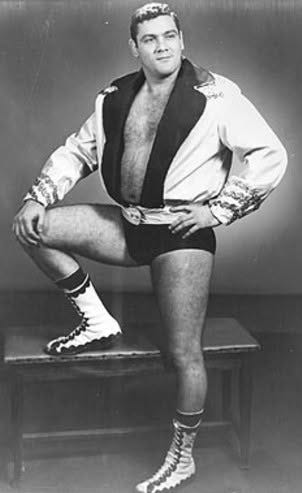
Danny Miller 6-6-2016 at the age of 84
Flashback 1982
Vince McMahon, Jr. Buys Capitol Wrestling Corporation
On June 7, 1982 (with some sources citing June 5 or 6 for the formal agreement), Vincent Kennedy McMahon, then in his late 30s, acquired control of Capitol Wrestling Corporation (CWC) — the parent company of the World Wrestling Federation (WWF) — from his father, Vincent James McMahon (Vince Sr.), and his business partners. This transaction, valued at approximately $1 million (with detailed share allocations and payment structures), marked the beginning of one of the most transformative eras in professional wrestling. What began as a family business handover evolved into a revolutionary shift that dismantled the longstanding territorial system and propelled wrestling into mainstream American entertainment.
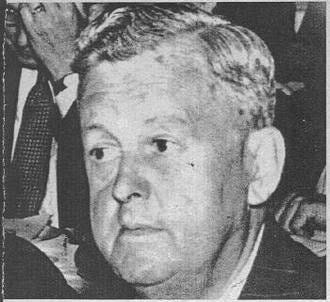
Pictured: Jess McMahon, father of Vince McMahon, Sr.
The roots of Capitol Wrestling Corporation trace back to the early 1950s. Jess McMahon, Vince Sr.‘s father, had been a successful boxing and wrestling promoter. In partnership with “Toots” Mondt, Jess helped establish CWC in 1953. Vince Sr. took a leading role, building a powerful Northeast territory centered in New York, with Madison Square Garden as its flagship venue. Under his leadership, the promotion broke away from the National Wrestling Alliance (NWA) in the 1960s to form the World Wide Wrestling Federation (WWWF), later rebranded as the WWF. Vince Sr. was known for a conservative, territorial approach that emphasized live events, regional television, and respect for the unwritten “gentlemen’s agreements” that kept promoters from invading each other’s territories.
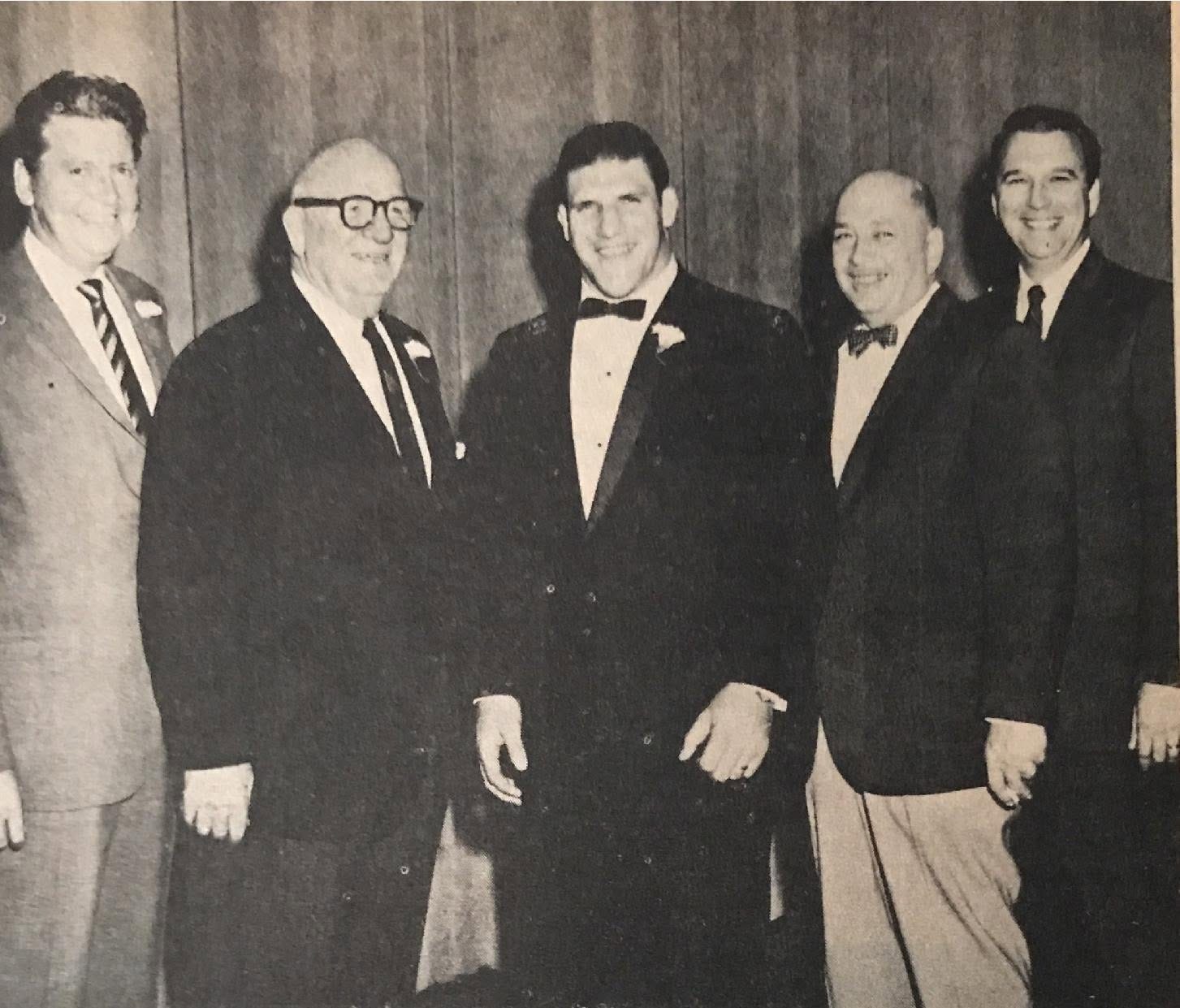
Pictured: Capitol Wrestling Partner Vince McMahon, Sr, Partner Toots Mondt, Pittsburg Partner Bruno Sammartino, Capitol Partner Phil Zacko and Pittsburg Television Announce, Bill Cardille
Vince Sr.‘s relationship with his son was complex and distant. Vince Jr. (born Vincent Kennedy McMahon in 1945) did not meet his biological father until age 12, after Vince Sr. had left the family when Vince Jr. was an infant. Raised in challenging circumstances, including an abusive stepfather, the younger McMahon eventually reconnected with his father and entered the family business. He started as a ring announcer and commentator in the late 1960s and early 1970s, then promoted shows in outlying areas like Maine. Despite his father’s initial reluctance — Vince Sr. reportedly doubted his son’s suitability for the rough-and-tumble wrestling world — Vince Jr. proved capable and ambitious.
By the late 1970s, Vince Jr. and his wife Linda had founded Titan Sports, Inc. in 1980 as a vehicle for their growing ambitions. Vince Sr., facing health issues and contemplating retirement, became open to a sale. The deal reflected the era’s family business dynamics but carried strict safeguards due to Vince Sr.‘s concerns about his son’s vision.
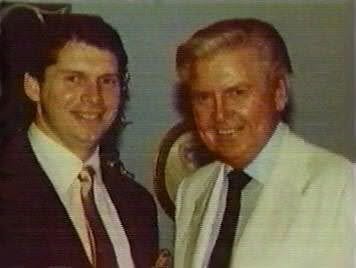
Pictured: Vince McMahon, Sr and Vince McMahon, Jr
The acquisition was not a simple cash purchase but a structured buyout involving shares in CWC. Titan Sports, Inc., owned by Vince and Linda McMahon, acquired the company while keeping CWC as a subsidiary.
Key details include:
• Titan purchased 385 shares from partners Gorilla Monsoon, Phil Zacko, and Arnold Skaaland for $644,264, payable within one year (with a 15-day grace period).
• The remaining 615 shares were acquired for around $1 million total, with the bulk ($822,132) going to Vince Sr., who held the majority stake. Monsoon and Zacko each received approximately $71,147, and Skaaland got $35,574.
The terms were rigorous: if Titan missed even one payment, control would revert to Vince Sr. and the partners. This reflected Vince Sr.’s caution. Vince Jr. funded the purchase through operational profits from live events, television, and merchandise, rather than massive external loans, demonstrating early business acumen. By June 1983, payments were complete, solidifying full control.
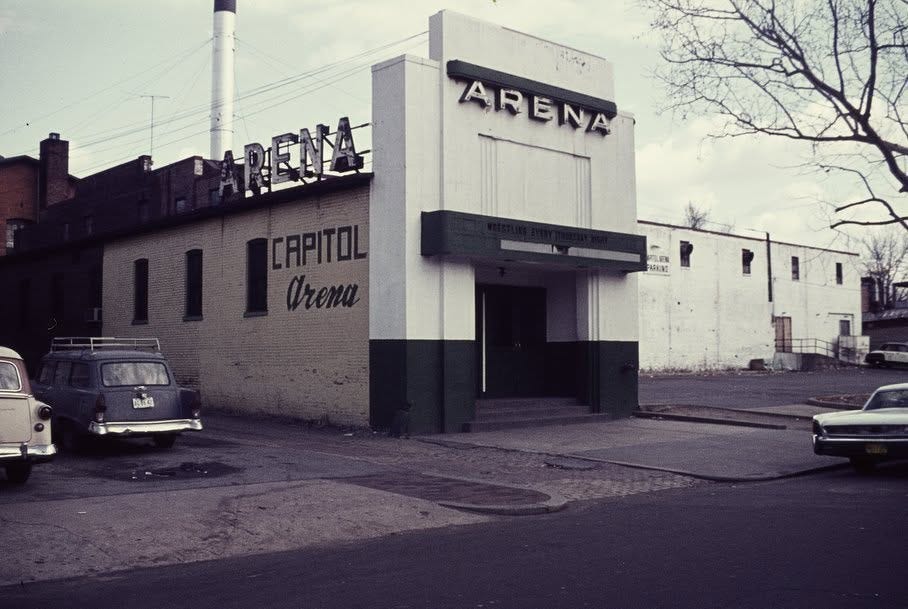
Pictured: The Capitol Arena in Washington, D.C. where the Capitol Wrestling Corporation, still an active member of the National Wrestling Alliance (NWA), ran its first show, January 7th, 1953.
Vince Sr. reportedly warned his son against radical changes and later expressed that he would not have sold if he had known the full extent of the planned national expansion. As Vince Jr. recalled in a 1991 Sports Illustrated interview: “Had my father known what I was going to do, he never would have sold his stock to me.”
Vince Sr. operated within the NWA framework, respecting territorial boundaries. Vince Jr., however, envisioned a national — and eventually global — entertainment brand.
Almost immediately after the purchase, he began aggressive moves:
• Signing talent from various territories, most notably Hulk Hogan from the American Wrestling Association (AWA) in 1984.
• Securing national cable television deals, including with USA Network and syndicated programming.
• Violating territorial norms by promoting in other promoters’ regions and using national outlets like USA and WTBS to broadcast into new markets.
The Key Point—> The changing television paradigm from local network UHF and VHF television stations to cable providers with anywhere from 15 to 40 channels with superstations and networks from other markets carrying other wrestling programming were being delivered into wrestling fans’ homes across the old territory limited lines and Vince’s expansion and leaning into this new paradigm ended the territorial era.
Promoters like Verne Gagne, Jim Crockett Jr., and others saw their audiences erode as they were slow to adapt their product offering as well as upgrade distribution and production quality. Most of the terriotries had syndication nets but within their own geographies. When national audiences saw WWF stars like Hogan, they became household names through rock ‘n’ wrestling crossovers with MTV and mainstream media. The 1980s wrestling boom, headlined by WrestleMania in 1985, transformed the industry from smoky arenas and regional feuds into a spectacle-driven entertainment juggernaut.
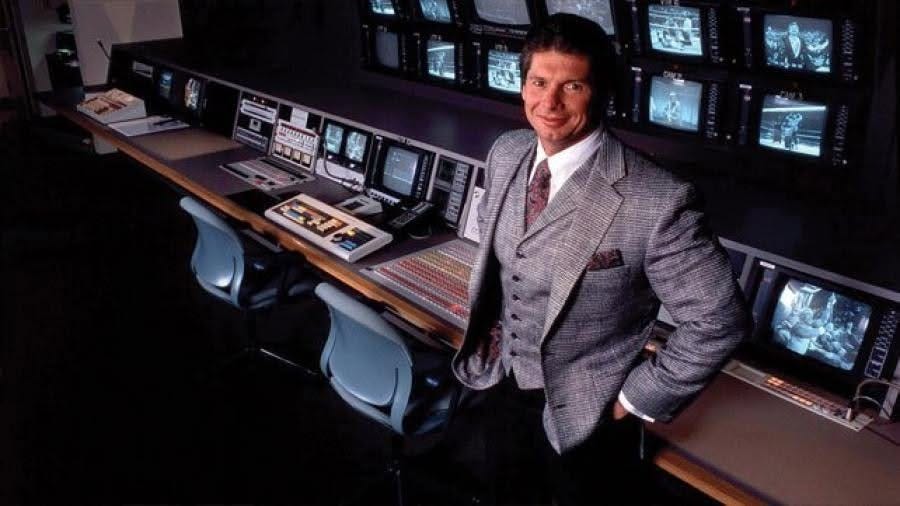
Pictured: Vince McMahon, Jr in one of the new state of the art WWF Television Production Suites
Vince Sr. lived just long enough to see the early stages of this transformation, passing away from pancreatic cancer on May 24, 1984, at age 69. He did not witness the full empire his son would build. The purchase laid the foundation for WWE’s dominance: Titan Towers headquarters, international expansion, merchandise empires, and eventual public offerings and media deals.
Critics argue the move destroyed wrestling’s traditional fabric, leading to monopolistic practices and the decline of smaller promotions. Supporters credit Vince Jr. with professionalizing the industry, improving wrestler visibility (despite controversies), and creating massive economic value. What started as a $1 million family transaction (roughly $3 million in today’s dollars) grew into a multi-billion-dollar enterprise. But, what many people miss with this argument is that most business disruption comes from changing technology. This technology change started when WTCG in Atlanta was uplinked to a satellite and started being seen outside the Georgia Wrestling Territory.
That genie was not going back in the bottle. Even with Jack and Gerry Brisco’s urging of Jim Barnett to promote shows outside the territory’s traditional lines, Barnett was from the old school and would only promote show tours in areas that were now dark (no wrestling was being promoted), which included Barnett’s old territory in the late 1950s and early 1960s, which included Detroit, Cincinnati, and other cities that had transitioned from Barnett to Ed Farhat (The Sheik), but Farhat had been out of business basically for a couple of years when the Georgia tours started.
After seeing some success with the expanded tours, The Briscos and Barnett couldn’t see themselves pulling the trigger to go totally national, so they made the deicsion to sell Georgia Championship Wrestling’s shares, which included the WTBS national distrubution contract to Vince McMahon’s, Titan Sports in 1984. Interestingly enough, this led to the infamous, Black Saturday as well as Gerry Brisco and Barnett becoming key members of Vince McMahon’s executive leadership team that greatly expanded the effort across the United States.
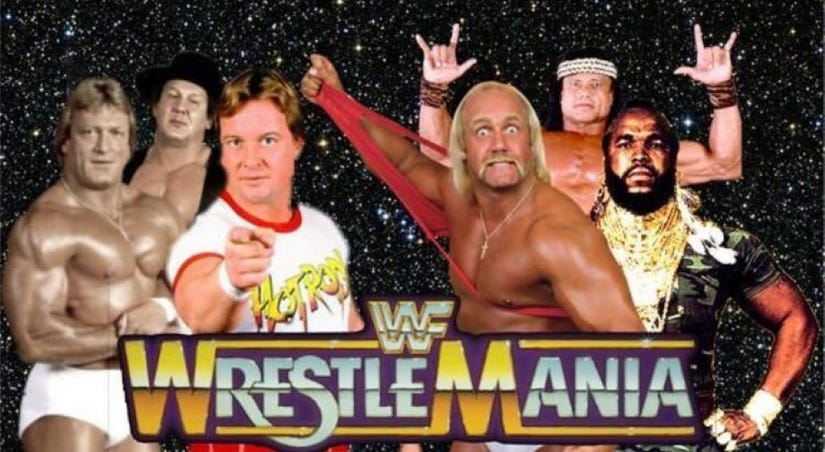
The 1982 acquisition represents more than a business deal; it symbolizes a generational clash between tradition and innovation. Vince Sr. embodied the old guard — honorable within its rules, focused on live gates and regional loyalty. Vince Jr. represented the new: media-savvy, risk-taking, and unapologetically ambitious. This handover enabled the “Rock ‘n’ Wrestling” era, the Attitude Era, and WWE’s evolution into a global powerhouse under the McMahon family until its 2023 sale to Endeavor (TKO Group Holdings).
Today, the event is remembered as the spark that ignited modern sports entertainment. That pivotal June 1982 transfer of power was the one of the first catalysts to force professional wrestling out of its fragmented and niche condition. Instead, it became a cultural phenomenon, proving that one determined individual’s vision, backed by a family legacy, could reshape and transform an entire industry. Vince McMahon Jr.‘s bold purchase from his father stands as a testament to ambition’s power to rewrite the rules.
Thank You for Reading
I’m Tony Richards, Pro Wrestling Historian, Author and Storyteller. I share pro wrestling historical items in each issue of the Time Tunnel Pro Wrestling History Newsletter. Thanks for reading! If you enjoy my information on select events, matches and insights, please share it with folks you think might like to be a subscriber!
Remember, premium investors get access to exclusive and special content such as some special issues including a multi-part deep dives on wrestling territories, wrestler bios and championship title histories, special audio and video interviews on territory pro wrestling and more available in the Pro Wrestling Time Tunnel for Premium Investors.