


Happy Birthday to those who have passed on and to those great wrestlers still with us:
In Memoriam:
Moondog Spike 1950
Happy Birthday:
Randy Mulkey (62)
Montez Ford (36)
Gable Stevenson (26)
RIP Memorial: We stop & remember those who have passed on this day and gave themselves to the business for us, the fans. We salute you and thank you.
Sky Hi Lee 5-31-1974 at the age of 53
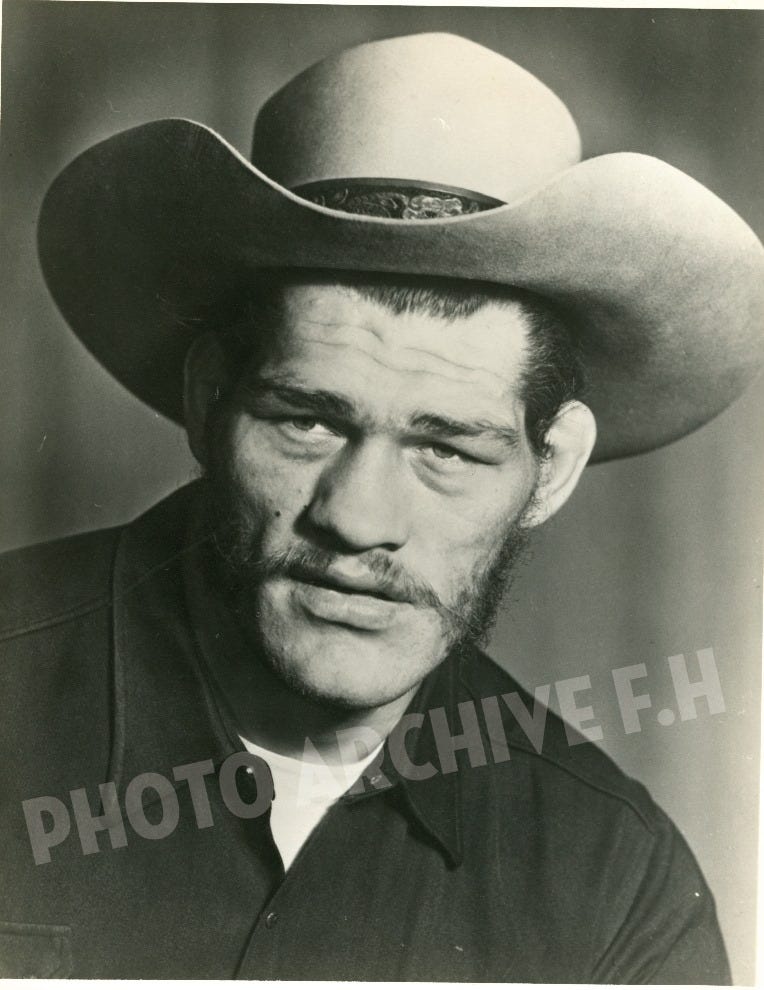
Tex McKenzie 5-31-2001 at the age of 70
Flashback 1976
Q2 Analysis (April-June)
American Wrestling Association
Minneapolis, Minnesota Office
The spring months of April, May, and June 1976 represented a solid transitional period for the American Wrestling Association (AWA) under Verne Gagne’s leadership. As one of the NWA’s premier territories (though operating its own World Heavyweight Championship), the AWA maintained strong regional drawing power in the Midwest, particularly in Minnesota, Wisconsin, Illinois, and Iowa. The promotion emphasized athletic, scientific wrestling mixed with rugged brawls, relying on established stars rather than national expansion gimmicks. Business remained healthy for a territorial outfit, with consistent house show attendance and major events building toward summer peaks.
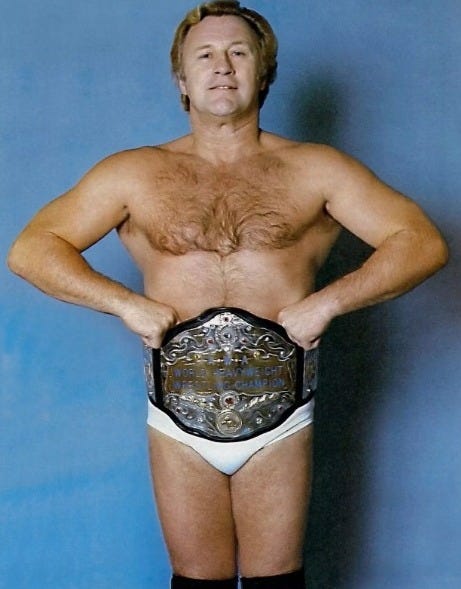
Pictured: Nick Bockwinkel, AWA World Heavyweight Champion
Nick Bockwinkel reigned as AWA World Heavyweight Champion throughout this period, having defeated Verne Gagne for the title in late 1975. Bockwinkel, managed by Bobby “The Brain” Heenan, embodied the arrogant, technically proficient heel champion. His defenses against top babyfaces like Verne Gagne, The Crusher, Greg Gagne, and others highlighted the promotion’s focus on credible, psychology-driven matches.
Verne Gagne, the promotion’s founder and patriarch, remained the top babyface draw at age 50. He frequently challenged Bockwinkel in non-title and title matches, often ending in time-limit draws, double disqualifications, or controversial finishes to protect both men while building long-term heat.
Other key singles competitors included The Crusher (Reggie Lisowski) and Dick the Bruiser, Billy Robinson (holding the AWA British Empire Heavyweight Championship), Mad Dog Vachon, Baron Von Raschke, Greg Gagne, Jim Brunzell, Peter Maivia, Wilbur Snyder, and Larry Hennig.
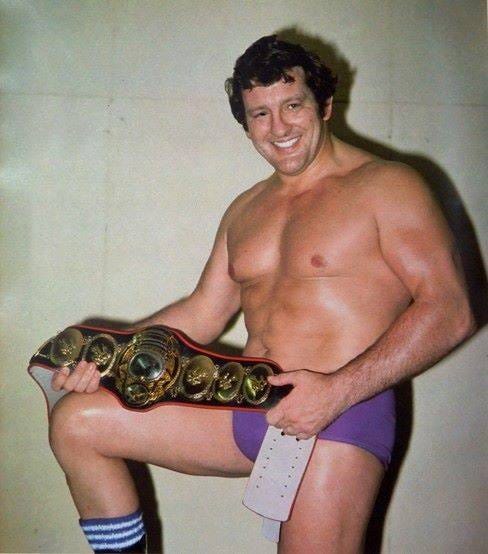
Pictured: Billy Robinson, AWA British Empire Champion
The AWA World Tag Team Championship was held by Dick the Bruiser and The Crusher for much of the spring. Their gritty, barroom-brawl style made them massive fan favorites. They faced consistent challenges from heels like Blackjack Lanza and Bobby Duncum (managed by Heenan), setting up a major title change in late July 1976 when Lanza and Duncum finally dethroned them.
The High Flyers (Greg Gagne and Jim Brunzell) were on the rise as exciting, athletic babyfaces, often positioned as underdog challengers.
Key Angles and Storylines (April–June 1976)
The spring focused on established rivalries rather than explosive new angles:
• Bockwinkel vs. Gagne: This remained the central singles feud. Matches frequently featured interference from Heenan and his stable, with Gagne coming close but never quite reclaiming the gold during these months. The story emphasized respect for tradition versus the new “scientific” heel archetype.
• Bruiser & Crusher vs. Heenan’s Team: Ongoing wars with Lanza, Duncum, and others built tremendous heat. Steel cage matches and no-holds-barred stipulations were teased or delivered on house shows.
• High Flyers Push: Greg Gagne and Jim Brunzell received increased TV time and tag title shots, positioning them as the next generation of AWA stars.
• Monster Heel Presence: Mad Dog Vachon, Baron Von Raschke, and occasional appearances by talents like Ox Baker created chaotic brawls that contrasted with the technical main events.
The promotion avoided over-reliance on blood or extreme violence, sticking to its reputation for “real” wrestling.
Big Shows and Business Conditions
April 1976
Routine house shows dominated, with Bockwinkel defending against challengers like Greg Gagne and Chris Taylor. Attendance hovered in the 2,000–6,000 range for typical arenas. TV tapings in Minneapolis, Minnesota and Moline, Illinois advanced ongoing feuds without major title changes.
Big matches for April 1976:
April 17 – Milwaukee, WI @ Auditorium (att. ~6,079): Verne Gagne defeated AWA World Champion Nick Bockwinkel via DQ (top-billed title challenge).
April 29 – Winnipeg, MB, Canada @ Arena (att. 7,644): Verne Gagne vs. AWA World Champion Nick Bockwinkel ended in a double disqualification (featured title bout alongside the Loser Leaves Town tag).
April 30 – Denver, CO @ Auditorium Arena: AWA World Champion Nick Bockwinkel defeated Larry Hennig via DQ (18:52; hard-hitting title defense).
April 27 – Omaha, NE @ Civic Auditorium: Cage match – Greg Gagne & Jim Brunzell (High Flyers) defeated Bobby Duncum & Bobby Heenan.
April 10 – Minneapolis, MN @ Auditorium: AWA World Champion Nick Bockwinkel defeated Chris Taylor via DQ (title defense in the promotion’s home base).
May 1976
Similar patterns continued with strong tag team action. The Crusher and Bruiser maintained their tag titles amid consistent challenges. Business was reliable but not yet at peak summer levels.
Big matches for May 1976:
May 2 – Green Bay, WI @ Brown County Veteran’s Memorial Arena: Two-ring $50,000 Battle Royal (Larry Hennig won Ring 1; Mad Dog Vachon won Ring 2 – massive multi-man spectacle).
May 8 – Minneapolis, MN @ Auditorium: Chris Taylor defeated AWA World Champion Nick Bockwinkel via DQ (featured title match).
May 4 – Omaha, NE @ Civic Auditorium: Loser Leaves Town – Larry Hennig & Jos Leduc defeated Jimmy Valiant & Johnny Valiant (AWA Champion Nick Bockwinkel also defended vs. Chris Taylor on the card).
May 5 – Davenport, IA @ Palmer Auditorium: 6-man tag – Verne Gagne, Greg Gagne & Jim Brunzell defeated Nick Bockwinkel, Blackjack Lanza & Bobby Duncum.
May 8 – Milwaukee, WI @ Auditorium (att. ~5,241): 2/3 falls tag – Blackjack Lanza & Bobby Duncum defeated Greg Gagne & Jim Brunzell (High Flyers feud).
June 1976
The standout event was the June 25, 1976, supershow at Chicago Stadium. This closed-circuit broadcast drew significant interest by incorporating cross-promotional elements such as André the Giant vs. Chuck Wepner and footage from the Antonio Inoki vs. Muhammad Ali bout. Local AWA action included Greg Gagne vs. Bob Orton Jr., Bruiser & Crusher vs. Lanza & Duncum, and a main event no-contest between Bockwinkel and Verne Gagne. The event contributed to a strong gate and demonstrated the territory’s vitality.
Big Matches for June 1976:
June 25 – Chicago, IL @ Chicago Stadium (major closed-circuit TV event also featuring Muhammad Ali vs. Antonio Inoki and André the Giant vs. Chuck Wepner): Verne Gagne vs. AWA World Champion Nick Bockwinkel ended in a draw/no contest (huge draw card).
June 12 – Chicago, IL @ International Amphitheatre: AWA World Champion Nick Bockwinkel defeated Chris Taylor (title defense on a strong card).
June 10 – Winnipeg, MB, Canada @ Arena: No Time Limit / No DQ tag – Mad Dog Vachon & Baron Von Raschke defeated Larry Hennig & Jos Leduc.
June 12 – Milwaukee, WI @ Auditorium: No DQ tag – Mad Dog Vachon & Baron Von Raschke defeated Larry Hennig & Jos Leduc (heated rivalry bout).
June 8 – Omaha, NE @ Civic Auditorium: 2/3 falls tag – Mad Dog Vachon & Baron Von Raschke defeated Larry Hennig & Jos Leduc (escalating no-holds-barred feud).
These were the standout headline attractions that drove storylines, attendance, and interest during the spring of 1976. The AWA ran dozens of house shows monthly, so this focuses strictly on the cream of the crop.
Overall business in Q2 1976 was stable and profitable for the era. Crowds of 5,000–10,000+ were common for bigger stops, with sellouts in key markets like Milwaukee. The AWA benefited from loyal Midwest audiences who appreciated its no-nonsense style.
Analysis and Legacy of the Period
Q2 1976 captured the AWA at a classic territorial peak—pre-Hulkamania and pre-national expansion wars. Verne Gagne’s emphasis on athleticism and long-term storytelling kept the product credible and engaging. The Bockwinkel reign provided a strong heel anchor, while veterans like Bruiser and Crusher delivered the physicality fans craved. The impending tag title change to Heenan’s team in July would further elevate the “Heenan Family” as a dominant force.
This period highlighted the AWA’s strengths: consistent business, clear hero-villain dynamics, and a roster blending legends with hungry newcomers. While challenges from the evolving national landscape loomed, spring 1976 stood as a model of territorial success during the last golden age of the territories.
Bobby Heenan’s Heenan Family: Formation, Dominance, and Lasting Impact
Bobby “The Brain” Heenan stands as one of professional wrestling’s greatest managers, and his brainchild—the Heenan Family—became the gold standard for villainous stables. Though the group evolved across territories and decades, its formal formation and initial success took root in the American Wrestling Association (AWA) during the mid-1970s.
Origins and Early Assembly (1969–1974)
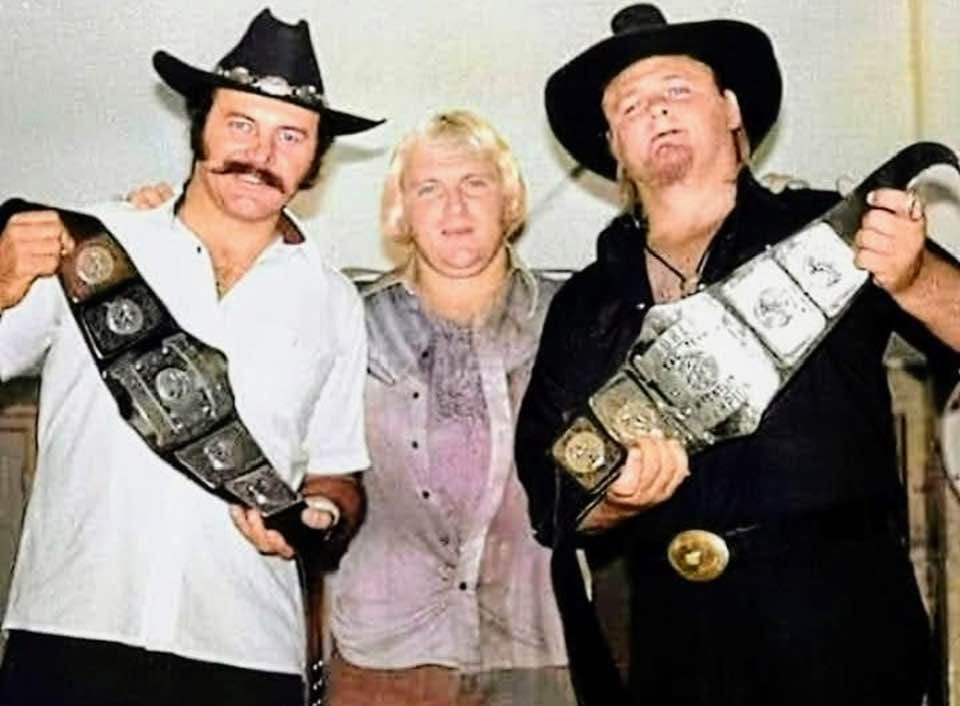
Heenan began managing in the late 1960s, working in various territories including the AWA, WWA (Indianapolis), and others. He initially handled teams like The Blackjacks (Blackjack Lanza and Blackjack Mulligan). However, the concept of a cohesive “family” of heels under one umbrella manager crystallized when Heenan committed full-time to the AWA in 1974.
The first incarnation of the Heenan Family formed around a core of elite talent:
• Nick Bockwinkel — The smooth, arrogant technician who would become the face of the group.
• Ray “The Crippler” Stevens — Bockwinkel’s longtime tag partner, known for his vicious style.
• Blackjack Lanza — The rugged cowboy/outlaw heel.
• Bobby Duncum Sr. — Added shortly after, completing the powerhouse lineup.
This was not just a random collection of wrestlers but a deliberate “brute squad” of proven main-eventers and tag specialists. Heenan’s genius lay in positioning himself as the strategic mastermind behind them all, using his quick wit, promos, and interference to amplify their heat.
Peak Dominance in the AWA (1975–1976)
The Heenan Family reached its first major pinnacle in late 1975 and throughout 1976. On November 8, 1975, Bockwinkel defeated Verne Gagne to win the AWA World Heavyweight Championship, ending Gagne’s long reign. This victory, with Heenan in his corner, established the stable as a top threat.
The crowning achievement came on July 23, 1976, at the International Amphitheatre in Chicago. Blackjack Lanza and Bobby Duncum defeated the legendary babyface duo of Dick the Bruiser and The Crusher to capture the AWA World Tag Team Championship. This made Heenan the first manager in history to simultaneously guide both the singles world champion (Bockwinkel) and the tag champions. It was a historic power move that solidified the Family’s supremacy in the territory. 
During this period, the group engaged in intense feuds with AWA babyfaces, including Verne Gagne, The Crusher, Dick the Bruiser, Greg Gagne, and Jim Brunzell (The High Flyers). Their matches often featured Heenan’s signature interference, illegal tactics, and post-match beatdowns, generating massive heat in Midwest arenas.
Strategic Evolution and Expansion
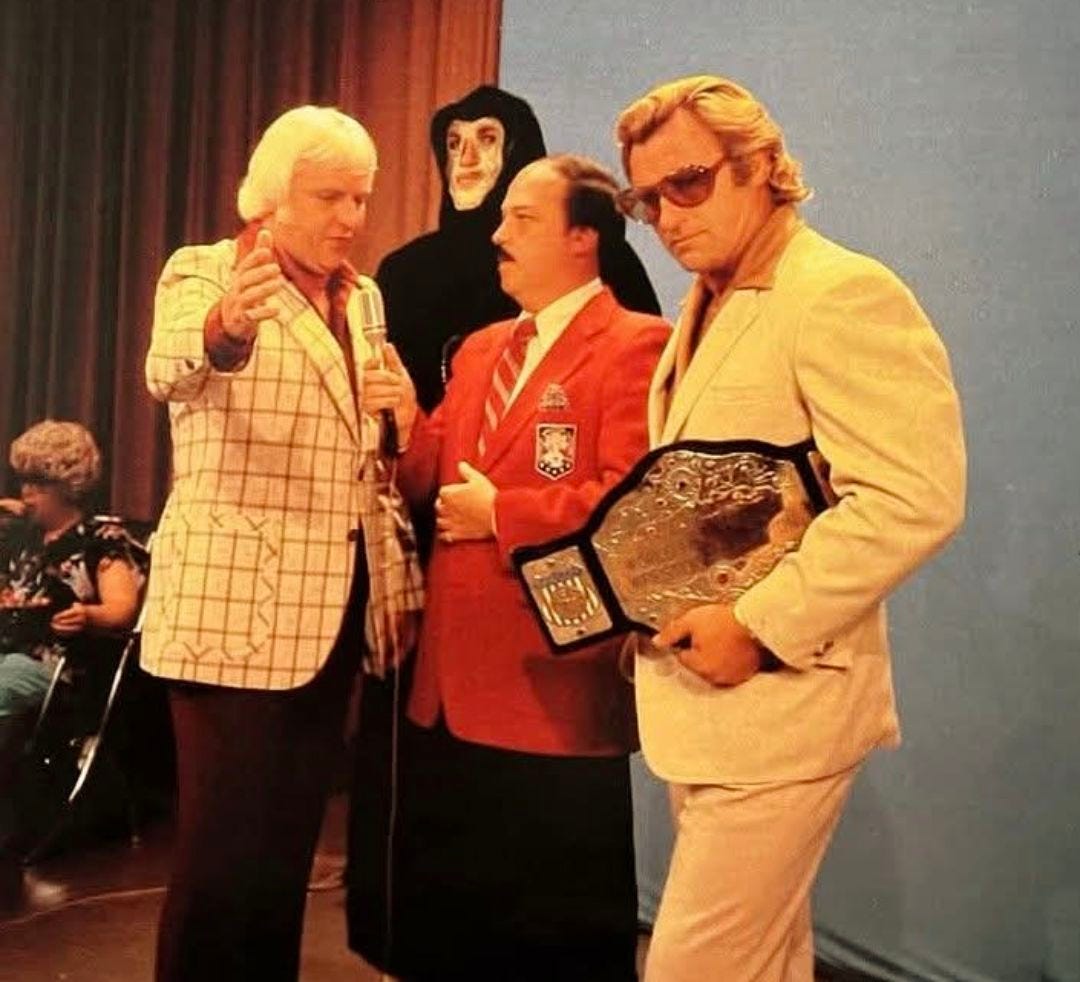
Heenan’s approach differed from previous managers by treating his charges as an interconnected “family” rather than isolated clients. He coordinated storylines so members supported each other, creating a dominant heel faction that felt organized and dangerous. This model influenced later groups like the Four Horsemen and the New World Order.
Heenan briefly left the AWA in 1979 (storyline suspension) for Georgia Championship Wrestling, where he formed a new version of the Family including Blackjack Lanza, Masked Superstar, Killer Karl Kox, and others. Upon returning to the AWA, he reformed the group around Bockwinkel and added talents like Ken Patera.
The stable’s greatest fame came later in the WWF (1984 onward), where Heenan managed stars like Big John Studd, King Kong Bundy, André the Giant (during his heel turn), Ric Flair, and others. Yet the foundational philosophy—elite heels united under a cunning manager—originated in the AWA.
Analysis: Why It Worked
• Heenan’s Charisma: His “Brain” persona—arrogant, weaselly, and hilarious—made him the perfect foil. Fans loved to hate him as much as his wrestlers.
• Talent Synergy: Pairing technical masters (Bockwinkel), brawlers (Lanza/Duncum), and vicious technicians (Stevens) created versatile threats.
• Territorial Fit: In the AWA’s athletic, psychology-heavy environment, the Family provided credible, long-term heel dominance without relying on cartoonish gimmicks.
• Business Impact: Their title reigns and feuds helped draw consistent crowds and elevated the promotion’s villainous side during a strong period for the AWA territory.
The Heenan Family’s formation in the AWA marked the birth of the modern wrestling stable as a dominant force. What began as a 1974 full-time commitment in Minnesota evolved into a legendary concept that defined heel management for generations. Bobby Heenan didn’t just manage wrestlers—he built a wrestling dynasty.
Thank You for Reading
I’m Tony Richards, Pro Wrestling Historian, Author and Storyteller. I share pro wrestling historical items in each issue of the Time Tunnel Pro Wrestling History Newsletter. Thanks for reading! If you enjoy my information on select events, matches and insights, please share it with folks you think might like to be a subscriber!
Remember, premium investors get access to exclusive and special content such as some special issues including a multi-part deep dives on wrestling territories, wrestler bios and championship title histories, special audio and video interviews on territory pro wrestling and more available in the Pro Wrestling Time Tunnel for Premium Investors.