



Happy Birthday to those who have passed on and to those great wrestlers still with us:
In Memoriam:
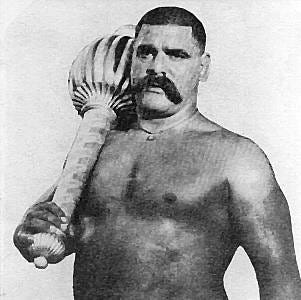
The Great Gama 1878
Eddie Quinn 1906
Don Betelman\Don Curtis 1937
El Solitario 1946
Brian Pillman 1962
Happy Birthday:
Scott Putski (60)
Ciclope\Halloweem (55)
Traci Brooks (51)
Bryan Danielson (45)
Joe Coffey (38)
Santana Garrett (38)
RIP Memorial: We stop & remember those who have passed on this day and gave themselves to the business for us, the fans. We salute you and thank you.
George Zaharias 5-22-1984 at the age of 76
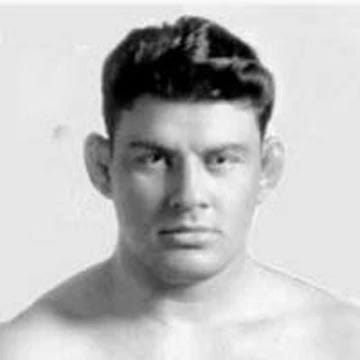
The Great Gama 5-22-1963 at the age of 83
Peggy Lee Leather 5-22-2023 at the age of 64

Significant Debuts:
Al Snow 5-22-1982 at the age of 18
The Life and Career of Brian Pillman
Brian Pillman remains one of professional wrestling’s most compelling and tragic figures—a former NFL hopeful who transformed into an agile high-flyer in Stampede Wrestling, a tag-team innovator in WCW, and ultimately the architect of the “Loose Cannon” gimmick that blurred the lines between kayfabe and reality in ways that presaged the Attitude Era. His career spanned barely a decade in the ring, yet it left an indelible mark through athletic innovation, psychological warfare, and a fearless commitment to character that influenced generations of performers.
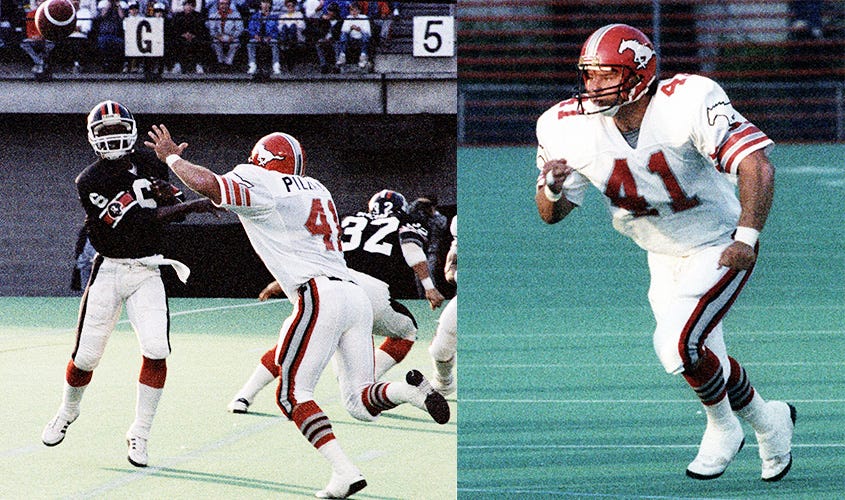
Pictured: Game photos of Brian Pillman playing for the CFL’s Calgary Stampeders
Born in Cincinnati, Ohio, to Welsh mother Mary and with three sisters and a brother, Pillman lost his father to a heart attack at just three months old—the same undiagnosed atherosclerotic heart disease that would claim his own life decades later. As a toddler, he endured 31–40 throat operations for polyps, spending much of his early childhood hospitalized and speaking through an electrolarynx. The resulting raspy voice made him a target for bullying, forging a combative resilience that defined his later persona. He boxed to defend himself and excelled in sports despite his fragility.
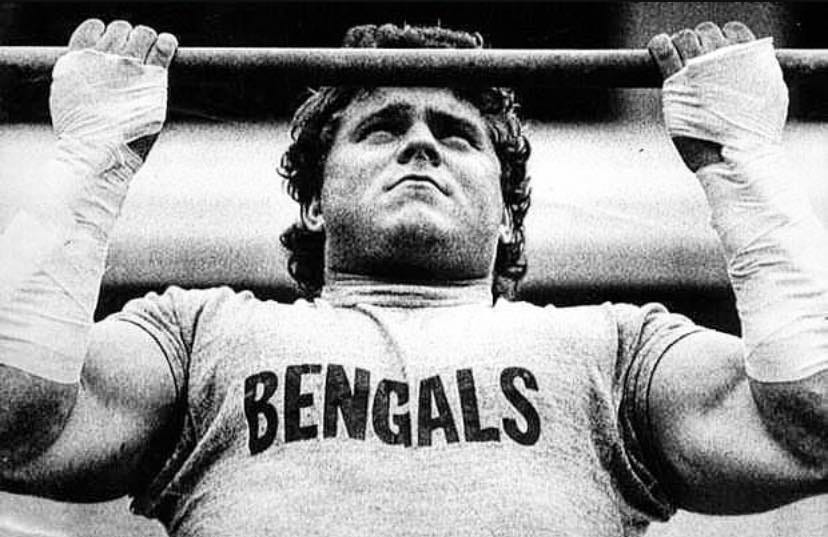
At Norwood High School and later Miami University (Ohio), Pillman starred as a linebacker, earning All-American honors. Undrafted in 1984, he signed as a free agent with the Cincinnati Bengals, earning the Ed Block Courage Award for perseverance. He had a brief CFL stint with the Calgary Stampeders in 1986 and even made preseason with the Buffalo Bills (cut after steroids were allegedly found in his room). His football tenacity—playing undersized yet ferociously—mirrored the “crazy like a fox” mentality that would define his wrestling career.
After his football dreams faded, Pillman stayed in Calgary and trained under Stu Hart in the legendary “Dungeon”—Stu’s basement torture chamber of suplexes, submissions, and psychological warfare. The Dungeon earned its fearsome reputation through Stu Hart’s training methods, known as “stretching.” Stu, a legitimate amateur wrestler and shooter, would lock trainees into painful submission holds—often for extended periods—while explaining their mechanics and effects in graphic detail. This wasn’t mere conditioning; it was psychological and physical warfare designed to build unbreakable pain tolerance, teach proper selling, and instill respect for the business.
Trainees described it as a torture chamber. Screams echoed from the basement. Many quit after minutes; others endured to earn the right to call themselves Dungeon graduates. Stu rarely charged for training—he did it for love of the craft and to stock his Stampede Wrestling promotion with credible talent. The environment emphasized fundamentals: chain wrestling, submissions, psychology, and taking believable bumps. Later trainers like Tokyo Joe and members of the Hart family continued the tradition using Stu’s playbook.
This harsh approach produced wrestlers who could work stiff, sell realistically, and handle themselves in real fights—skills that set them apart in an era when “kayfabe” was ironclad and territories demanded toughness. The Dungeon’s methods were not without controversy. Critics viewed Stu’s stretching as borderline sadistic, with potential for injury or long-term harm. The environment was unforgiving, and some stories highlight the physical and emotional toll. However, most graduates defended it as necessary preparation for wrestling’s realities, crediting Stu’s passion rather than cruelty. Stu himself was described as a loving family man and mentor who genuinely wanted to elevate the art form.
Pillman was one who endured The Dungeon and passed through the training and development. He debuted on November 25, 1986, for Stu’s Stampede Wrestling promotion. Hart family patriarch Stu and his sons quickly recognized Pillman’s potential, pairing him with Bruce Hart as the tag team Bad Company.
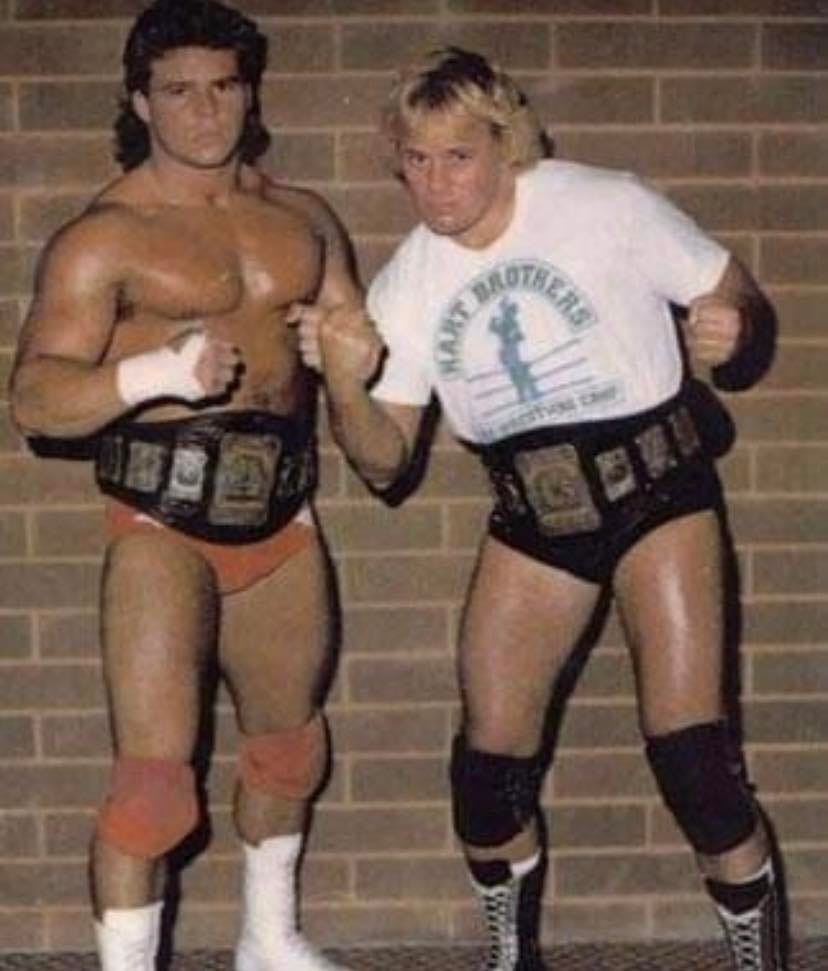
Pictured: Bad CompanyTag Team of Brian Pillman and Bruce Hart
Bad Company exploded onto the scene. On April 5–6, 1987, they won the Stampede International Tag Team Championship in a tournament final against Ron Starr and the Cuban Assassin (defeating Gus Jameson & Dr. Zhavago and Duke Meyers & Kerry Brown en route). Their reign was interrupted in October 1987 when titles were held up after a controversial finish against Jerry Morrow and Makhan Singh, but they regained the gold on November 13, 1987, in a rematch. They lost the belts for good to Morrow and the Cuban Assassin on July 22, 1988.
The team’s success wasn’t just athletic; it was theatrical. To get Pillman over as a fiery babyface, his girlfriend Trisa Hayes (later Beulah McGillicutty in ECW) was booked as his “sister” at ringside. Heel wrestlers taunted and harassed her, prompting Pillman to charge to the rescue—a classic heat-building tactic in the rough-and-tumble Stampede territory.
Pillman’s Stampede tenure honed the high-flying, agile style that earned him the “Flyin’ Brian” moniker. He absorbed the Hart family’s technical mastery while adding daredevil aerials and a skydiving persona that reflected his real-life thrill-seeking (he was an avid skydiver). Feuds with the Cuban Commandos, Makhan Singh, and others showcased his versatility in the territory’s blood-and-guts environment. His final Stampede match came on March 31, 1989, a loss to Johnny Smith. By then, he had briefly toured New Japan Pro-Wrestling in early 1989, facing stars like Masa Saito and teaming with Big Van Vader.
Stampede was Pillman’s crucible. The Dungeon forged his work ethic; the tag titles and Bad Company run gave him credibility; the territory’s wild crowds prepared him for national exposure. He left Canada as a polished, athletic babyface ready for the big leagues.
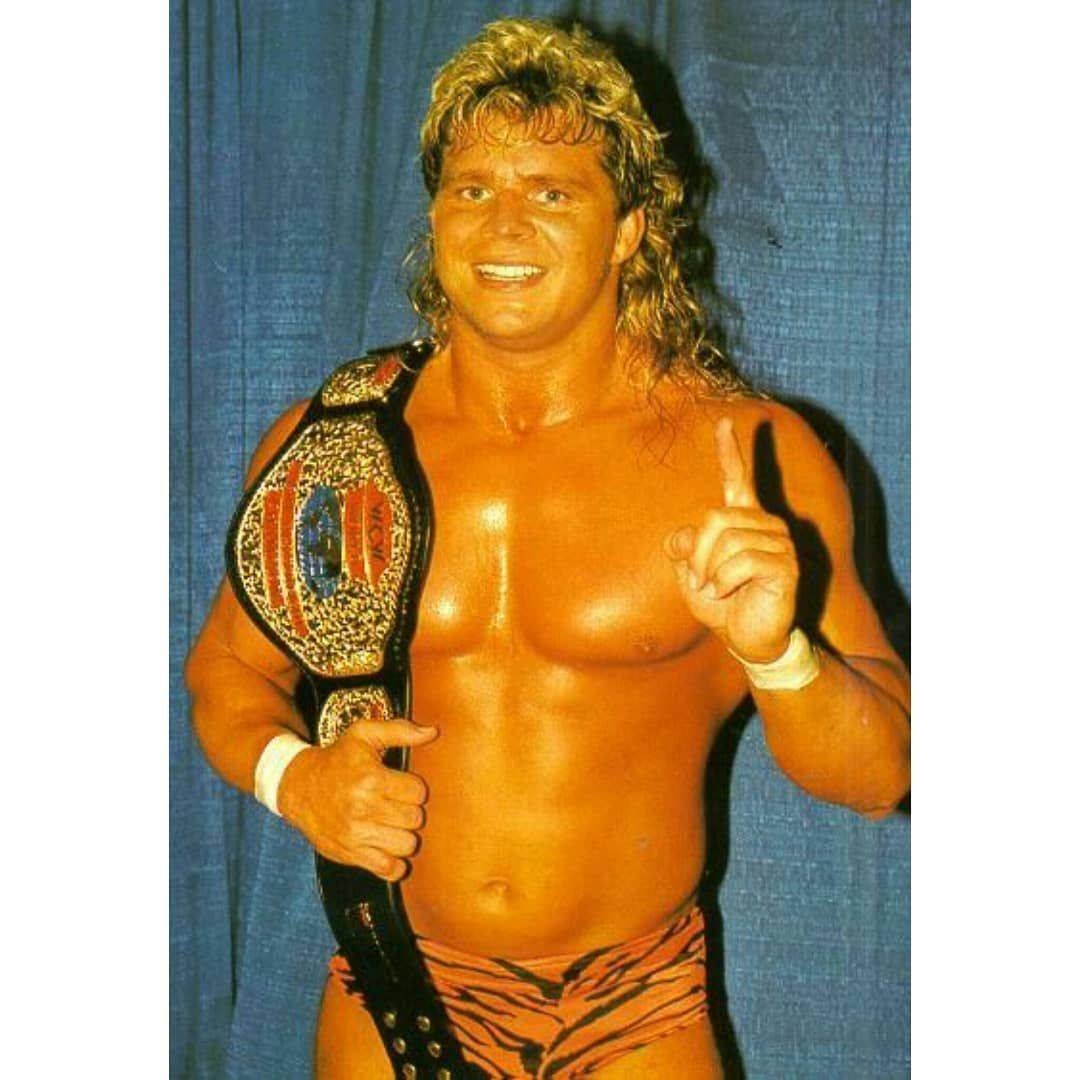
Pillman debuted in WCW (then NWA) in mid-1989 as “Flyin’ Brian,” hyped in vignettes showcasing his aerial arsenal—missile dropkicks, diving crossbodies, and early lucha libre influences alongside The Rockers. He challenged Lex Luger for the NWA U.S. Title at Halloween Havoc 1989 and Clash of the Champions IX, establishing himself as a credible underdog.
Teaming with “Z-Man” Tom Zenk, he captured the NWA United States Tag Team Titles from the Fabulous Freebirds in February 1990 (defending at WrestleWar before losing to The Midnight Express at Capital Combat). A memorable “Loser Leaves WCW” loss to Barry Windham and Arn Anderson in June 1991 led to the masked Yellow Dog gimmick—harassing Windham in a bounty series that ended with reinstatement.
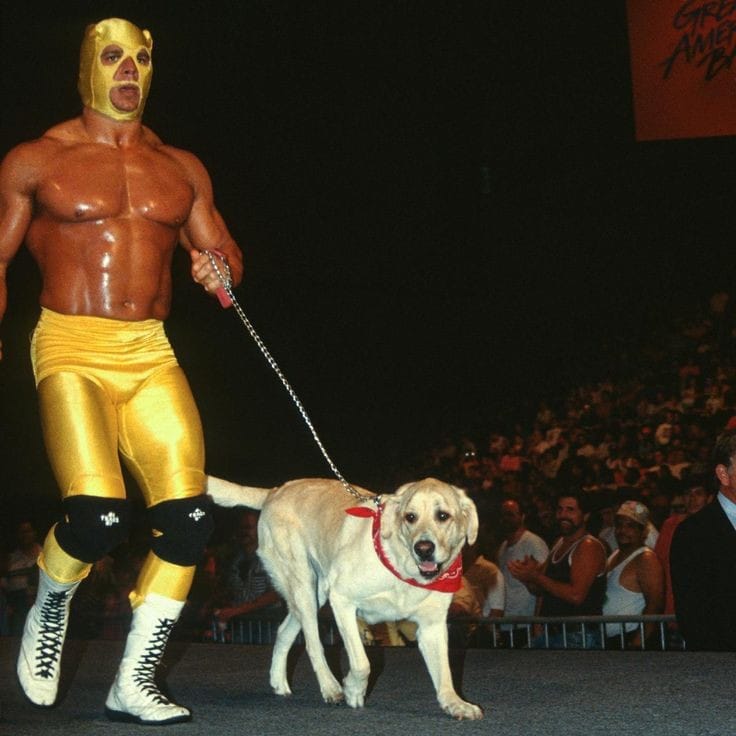
Pictured: The “Yellow Dog” gimmick
Pillman’s crowning singles achievement came in the fledgling cruiserweight division. He won the inaugural WCW Light Heavyweight Championship on October 27, 1991, defeating Richard Morton, and held it twice (regaining from Jushin Thunder Liger at SuperBrawl II in 1992). Classic matches against Liger, Brad Armstrong, and Scotty Flamingo highlighted his pioneering high-flying work.
His matches with Liger, in particular, were of great interest to wrestling fans who were “in the know” at the time, due to Liger’s worldwide work and influence on multiple junior heavyweight titles and programs. Pillman and Liger had multiple encounters in WCW between late 1991 and 1995, but their most famous and influential match was on February 29, 1992, at WCW SuperBrawl II for the WCW World Light Heavyweight Championship.) This bout stands as a pivotal moment in North American wrestling. It showcased two of the era’s top junior heavyweights—Pillman (“Flyin’ Brian,” the agile American high-flyer fresh from Stampede Wrestling) and Liger (the “Beast God” from New Japan Pro-Wrestling, blending lucha libre, strong style, and innovative aerials). Dave Meltzer awarded it ****¾ in the Wrestling Observer, and it is widely regarded as one of the best PPV opening matches in history.
Pillman had won the inaugural WCW Light Heavyweight Title in late 1991. Liger defeated him on Christmas Night 1991 to claim the belt, setting up this rematch as the centerpiece of the cruiserweight-style division WCW was experimenting with. At the time, American audiences were largely unfamiliar with the high-paced, athletic junior heavyweight style dominant in Japan and Mexico. This match served as a bold introduction. The Milwaukee Auditorium crowd was hot from the start, and the match opened the show, immediately signaling WCW’s intent to differentiate itself from the heavier, more character-driven WWF product.
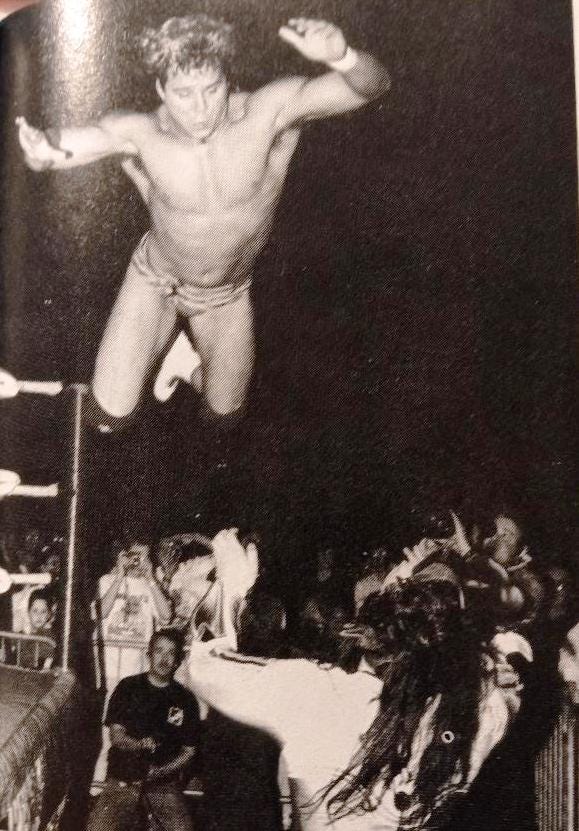
Pictured: Pillman does a dive to the outside of the ring on Liger
The ~17-minute contest was a near-flawless blend of technical wrestling, ground work, and explosive high spots, executed with crisp timing and mutual respect.
• Opening Chain Wrestling and Mat Work: They started with arm holds, shoulder tackles, drop toeholds, and headscissors, establishing equality and technical prowess. Liger targeted Pillman’s leg early with a single-leg takedown, knee work, and a Figure-4 leglock—classic strong-style psychology that grounded the high-flyer without dominating the match. Pillman sold effectively but reversed positions, showing resilience.
• Aerial Warfare and Momentum Shifts: The pace escalated with Liger’s picture-perfect moonsault press and a breathtaking diving senton from the top rope to the floor. Pillman countered with a baseball slide, springboard clothesline, and a diving crossbody to the outside. Standout spots included Pillman’s mid-air dropkick counter to Liger’s diving splash and a tilt-a-whirl headscissors reversal. Both men traded spinning wheel kicks and double dropkicks, creating mirror-image sequences that highlighted their parity.
• Finishing Stretch: The final minutes were a Japanese-style bomb exchange—German suplexes, powerbombs, superplexes, DDTs, and near-falls galore. Liger’s risk-taking culminated in a missed diving headbutt; Pillman capitalized with a European clutch (a quick cradle pin) for the victory and the title.
Post-match, they shook hands and hugged in a sportsmanlike display rare for the era.
The match had perfect pacing: it built from technical foundations to high-risk spots without feeling like a disconnected spotfest. Transitions were logical, selling was strong (especially Pillman’s leg), and near-falls created genuine tension despite the known outcome for some viewers.
This encounter was groundbreaking for several reasons:
• Introducing Global Styles to America: It popularized elements of lucha libre (high-flying, dives) and Japanese junior wrestling (stiff strikes, submissions, pacing) in a major U.S. promotion. Many American fans had never seen moves like Liger’s moonsault or the fluid chain wrestling on this stage. It helped lay the groundwork for WCW’s later cruiserweight division boom in the mid-1990s.
• Pillman’s Versatility: As a Dungeon-trained Stampede alum, Pillman fused technical credibility with daredevil athleticism. This match elevated him from a solid undercarder to a pioneer who could hang with international talent. It foreshadowed his “Loose Cannon” evolution by showing his adaptability.
• Liger’s Impact: Already a legend in Japan, Liger’s WCW appearances (including this one) built his international aura. His charisma in the mask and diverse arsenal made him a believable threat and crowd favorite despite being a “foreign” heel at times.
• Influence on the Industry: Reviewers at the time and in retrospect called it technically flawless and emotionally engaging through crowd energy. It proved lighter-weight, faster-paced wrestling could main-event segments or open major shows successfully. Echoes appear in later cruiserweight classics, the WCW Nitro era, and even modern AEW/NJPW junior divisions.
Other Pillman-Liger matches (e.g., house show rematches or their 1995 Nitro bout) were solid but lacked this match’s PPV spotlight and novelty factor. The SuperBrawl II version remains the definitive one. In hindsight, this match symbolizes more missed opportunities by those in charge of directing WCW. The Light Heavyweight division never fully became the focal point it could have been, but moments like this inspired future generations that we would see in five years.

Pictuured: The next generation iteration of the Hollywood Blonds gimmick, Steve Auston and Brian Pillman
In 1993, Pillman formed the Hollywood Blondes with “Stunning” Steve Austin. The duo was pure gold: they won the WCW World Tag Team Titles from Ricky Steamboat and Shane Douglas on March 27, 1993, defended in a steel cage at Slamboree against “Dos Hombres” (Steamboat & Zenk), and feuded brilliantly with The Four Horsemen. Their parody segment “A Flair for the Old” mocked Ric Flair mercilessly. The team split in late 1993 after Austin’s heel turn, but their chemistry foreshadowed future alliances.
Pillman turned tweener/face, feuded with Austin, and joined the reformed Four Horsemen in late 1995 alongside Arn Anderson, Chris Benoit, and Ric Flair. By September 1995, he debuted the Loose Cannon persona—edgy promos, leather vests, sunglasses, and graphic T-shirts. He blurred kayfabe with worked shoots: grabbing Bobby Heenan by the collar on Clash of the Champions, sarcastically calling Kevin Sullivan “booker man” in a strap match at SuperBrawl VI (1996), and getting “fired” by Eric Bischoff as part of a plan to build heat. The plan partially backfired when he used the freedom to jump promotions.
Also in 1993, Brian Pillman married Melanie Morgan (later Melanie Pillman) on March 17, 1993. Melanie, a former Penthouse model, caught Pillman’s eye through her magazine appearances. Their union created a large blended family amid Pillman’s rising wrestling career and personal struggles. At the time of marriage, both brought children from previous relationships. Pillman had daughters Danielle and Brittany from prior partners. Melanie had Alexis Michelle Reed (whom Pillman adopted) and Jesse Morgan.
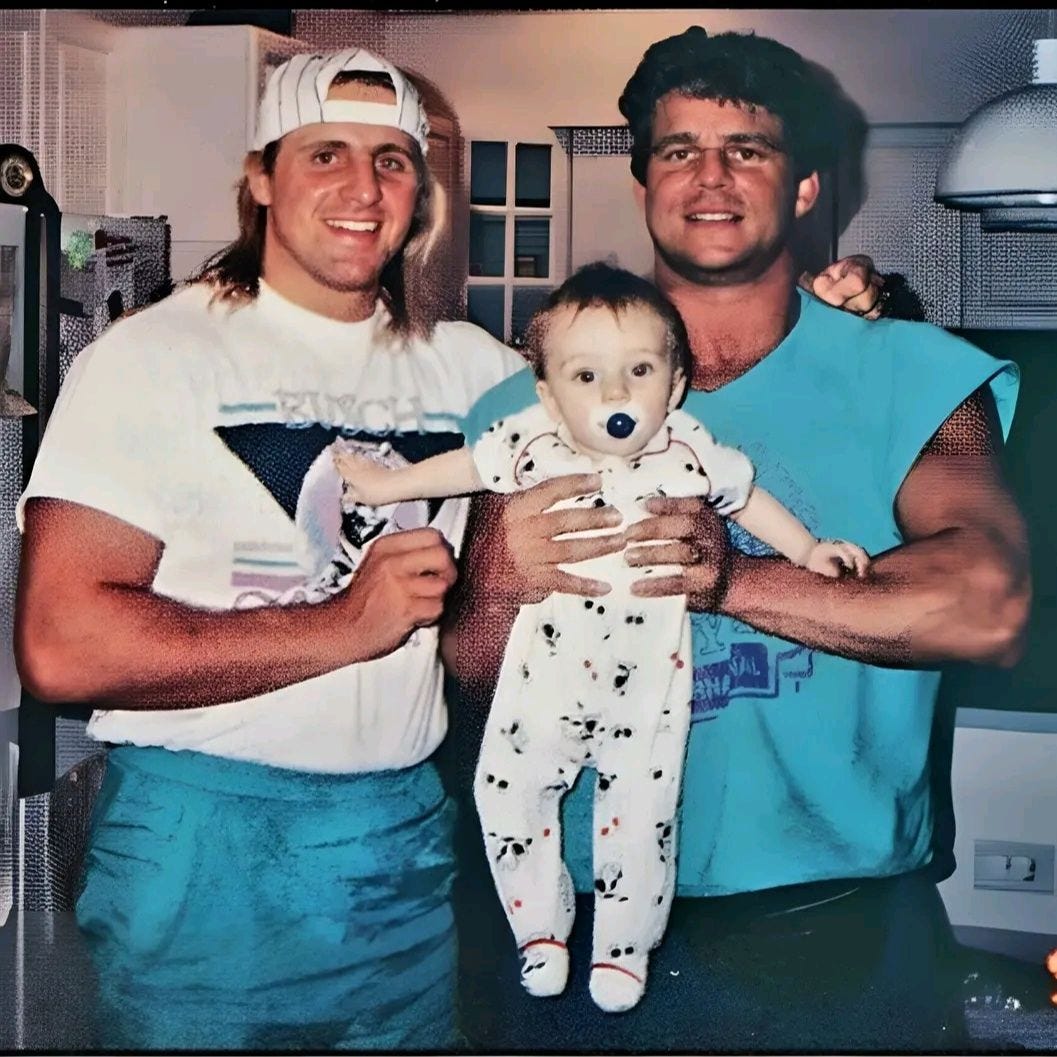
Pictured: Owen Hart, Brian Pillman and Brian Pillman, Jr.
Melanie Diane Lawrence is consistently described in wrestling biographies, online sources, and media tributes as a former Penthouse model whom Brian Pillman first encountered through a photo spread in the magazine. The couple married on March 17, 1993, after Pillman reportedly saw her pictorial and pursued her. This narrative appears in multiple reliable sources tied to Pillman’s life story, including Dark Side of the Ring episodes and wrestling histories.
However, detailed verification of her modeling work remains elusive. Extensive searches of Penthouse archives, Pet of the Month lists, and historical issues from the 1980s and early 1990s yield no confirmed full pictorial, Pet feature, or cover appearance under the names Melanie Morgan, Melanie Lawrence, or Melanie Pillman. Forum discussions among vintage erotica enthusiasts and wrestling fans note the absence of verifiable images or credits, leading some to speculate that her involvement may have been more limited—perhaps a one-off shoot, non-Pet layout, or an uncredited/lesser feature common in men’s magazines of the era. Others suggest wrestling lore may have exaggerated her status to “Penthouse Pet” for dramatic effect, a common tendency in the industry at the time.
Some online discussions link Melanie to the modeling/dancing alias Eva St. James (or similar variations), primarily in the context of exotic dancing or adult modeling circles. However, available records for “Eva St. James” point to a different performer active in the 2000s–2010s, making a direct connection speculative at best and unconfirmed. No mainstream Penthouse or major men’s magazine credits solidly tie back to Melanie under this or other aliases.
Prior to and around her marriage to Pillman, Melanie’s professional background appears to have included modeling and possibly dancing, fitting the era’s blend of glamour and adult entertainment opportunities. After marriage and during Pillman’s wrestling career, she largely stepped away from public modeling, focusing on family life amid the challenges of a wrestler’s road schedule. One biographical note mentions her later working as an accounts receivable clerk for a family trucking company, indicating a shift to more conventional employment.
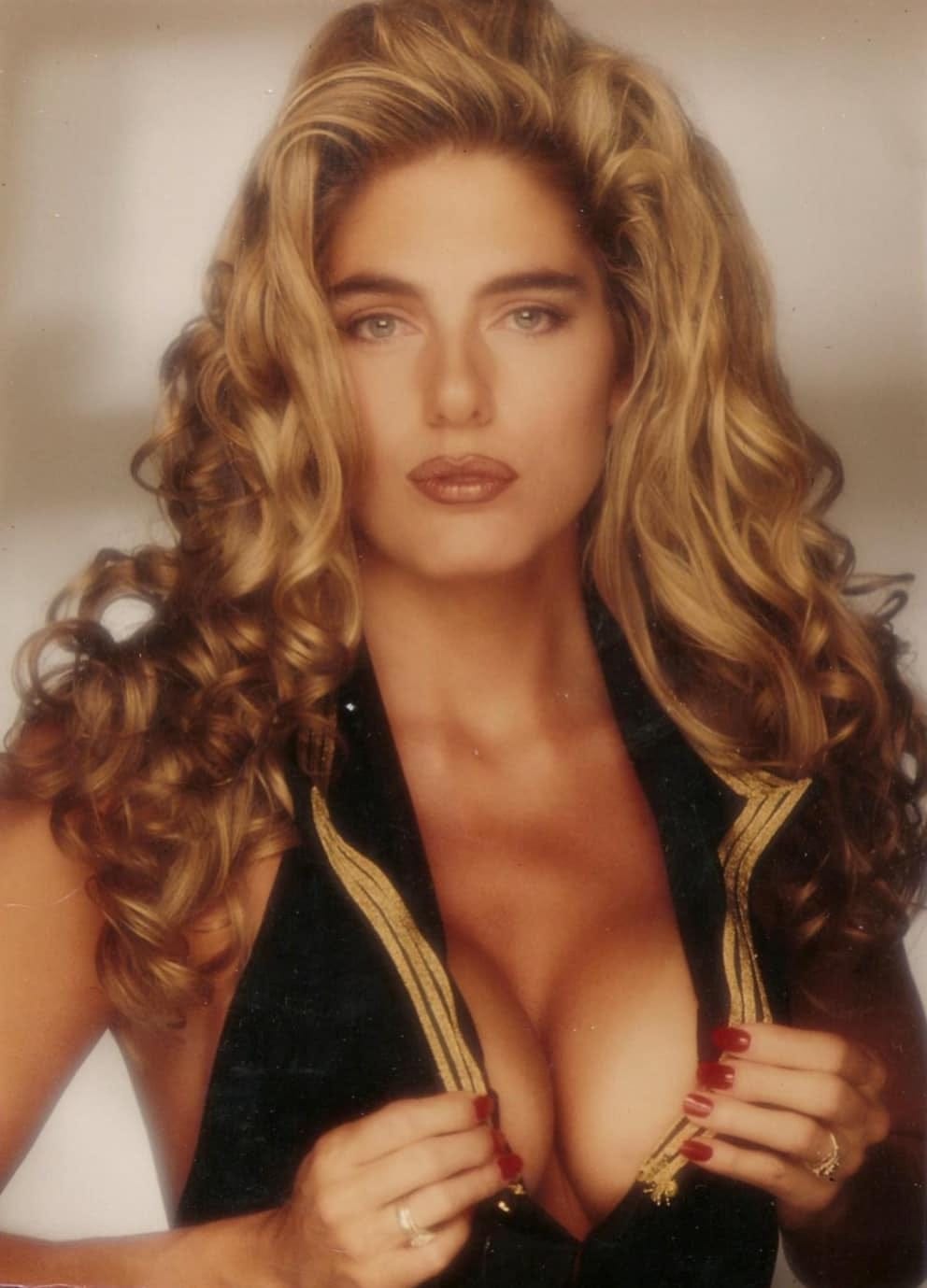
Pictured: Melanie Pillman
The “Penthouse model” descriptor became a colorful part of Brian Pillman’s personal mythology—emphasizing his charisma and the dramatic way he met his second wife. It features prominently in retellings of his life, from obituaries to documentaries. Regardless of the exact scope of her work (full Pet spread versus a pictorial or glamour modeling), it underscores Melanie’s pre-wrestling life as an attractive figure in modeling circles who caught the eye of a rising star.
Her modeling background added to the couple’s high-profile, turbulent story, which included a blended family, Pillman’s infidelities, their rocky marriage/divorce proceedings at the time of his 1997 death, and her controversial Raw interview the following night.
So, while concrete photographic or issue-specific evidence of Melanie’s Penthouse career is scarce and unverified in public archives, the consistent reporting across wrestling sources affirms she had a modeling background tied to the magazine that directly led to her meeting and marrying Brian Pillman. It remains a notable footnote in one of wrestling’s most tragic family sagas.
Together, the Brian-Melanie union had two biological children: Brian Zachary Pillman (born September 9, 1993, known as Brian Pillman Jr. or later Lexis King in WWE) and Skylar King (born after Pillman’s death in 1997). Melanie also adopted Brittany. The household thus included up to six children, with Pillman often regarded as a father figure to Melanie’s kids from before the marriage.
Contemporary accounts and later documentaries portray the marriage as passionate but turbulent. Pillman’s history of infidelity created ongoing tension, with Melanie described as possessive—understandable given his reputation. By 1997, the couple was in the midst of a heated divorce. Melanie later stated it was intended as a “wake-up call” rather than a permanent end. They were still living together at the time of Pillman’s death, though he had been relegated to the basement.
Pillman’s demanding wrestling schedule, injuries (including the severe 1996 car crash), and personal demons strained the relationship. Despite the challenges, those close to the family noted that Pillman loved all the children deeply and tried to provide for the large blended household.
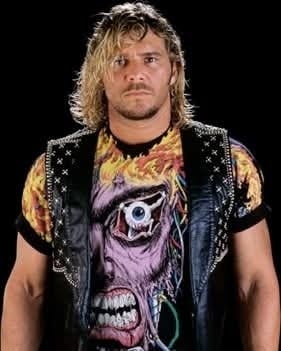
Pictured: “Loose Cannon” gimmick Brian Pillman
Brief ECW stops in 1994 (talent exchange) and 1996 (post-WCW “firing”) amplified the chaos: he insulted Bischoff on camera, attacked a plant with a fork, and verbally eviscerated the audience as “smart marks.” These appearances sharpened the unpredictable edge he brought to WWF.
A devastating April 15, 1996, aforementioned car crash in Kentucky—falling asleep at the wheel of his open-top Hummer H1, hitting a tree, flipping, and being ejected 40 feet (no seatbelt)—left him in a coma for a week with facial fractures and a shattered ankle fused in a fixed position. It ended his high-flying days but not his career.
Pillman signed wrestling’s first guaranteed contract with WWF on June 10, 1996—the first of many “guaranteed money” deals that shifted talent power. While recovering, he commentated before attacking a “fan” on Shotgun Saturday Night to return in-ring.
Brian Pillman’s “Loose Cannon” persona originated in WCW in late 1995 and carried over powerfully into his WWF tenure starting in June 1996. It marked a radical shift from his earlier “Flyin’ Brian” high-flyer image and Hollywood Blondes tag-team days. The character was an unpredictable, edgy anti-hero who blurred the lines between kayfabe and reality through worked shoots—promos and actions that felt unscripted and dangerous. Pillman fully committed to the role, changing his look to leather vests, graphic T-shirts, sunglasses, and a raspy, manic delivery that made audiences question what was real.
In WWF, the gimmick evolved amid Pillman’s recovery from the severe car crash that shattered his ankle and ended his high-flying style. He initially served as a commentator alongside Jim Ross while on crutches, then transitioned back to in-ring action. The Loose Cannon portrayed him as a ticking time bomb—erratic, defiant, and capable of anything. This fit perfectly into the emerging Attitude Era’s edgier tone, where breaking rules and pushing boundaries became central. Pillman used the persona to secure one of WWF’s first guaranteed contracts, leveraging his reputation for chaos across promotions.
His most infamous angle came November 4, 1996, on Raw: the “Pillman’s Got a Gun” segment.
This remains one of the most infamous and controversial segments in WWF/WWE history, perfectly embodying the Loose Cannon’s unpredictability. It stemmed from Pillman’s feud with his former Hollywood Blondes partner, Stone Cold Steve Austin. After Pillman showed favoritism toward Bret Hart, Austin turned on him, attacking him with a chair on Superstars (October 27, 1996) and “pillmanizing” his ankle (a term coined for the brutal spot).
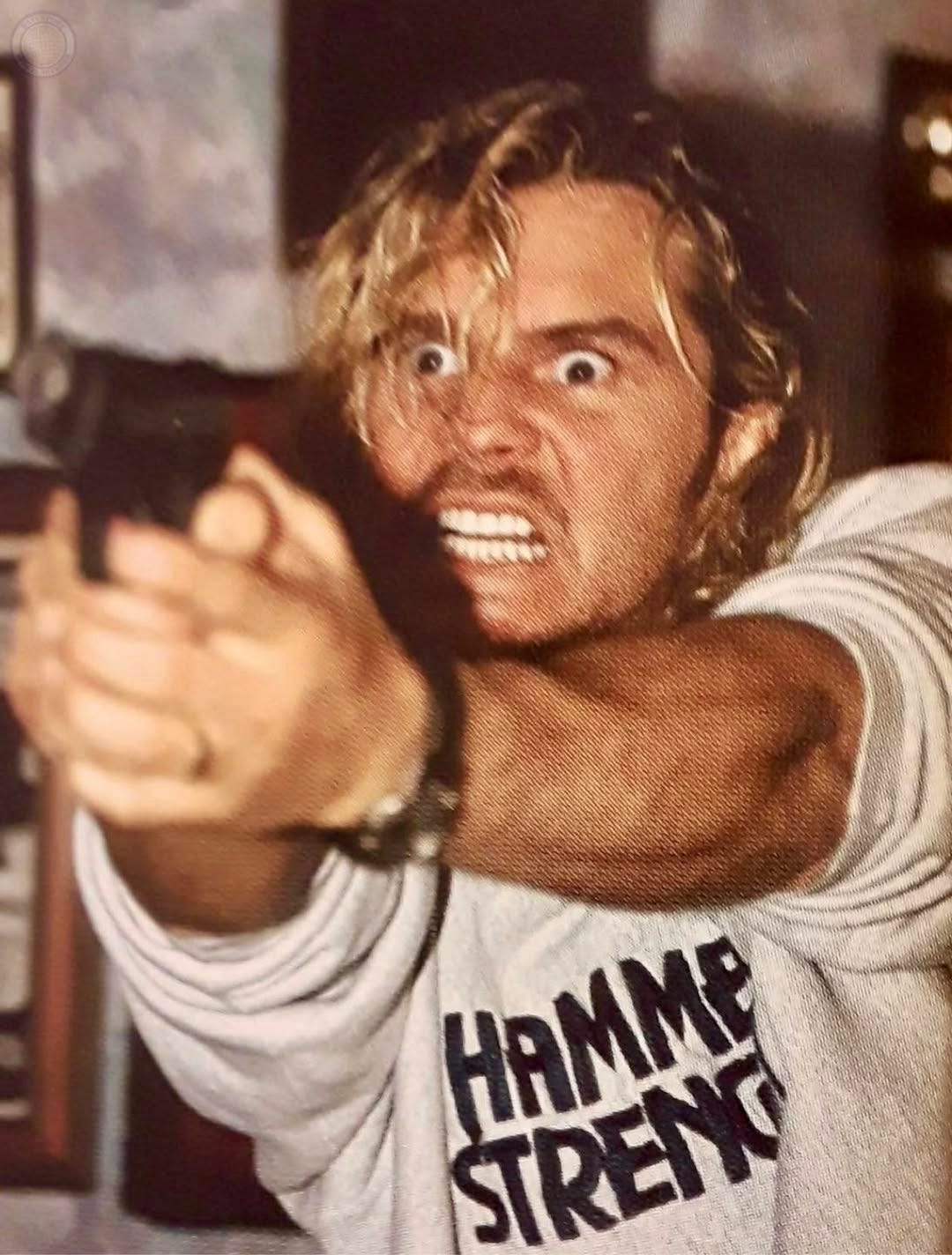
The angle built to a home invasion on the November 4, 1996 episode of Monday Night Raw. Pillman appeared via satellite from his home in Cincinnati (or nearby), recovering on crutches with his wife Melanie present. He delivered increasingly unhinged promos, warning Austin not to come after him and hinting at extreme measures. Austin, in the arena, dismissed the threats and headed to Pillman’s house anyway.
The segment escalated when Austin arrived, beat up Pillman’s friends outside, and smashed through a glass door. Inside, a frantic Pillman—looking genuinely unhinged—pulled out a 9mm pistol, cocked it, and yelled the iconic line: “Austin 3:16 will meet Pillman 9mm… I’m gonna blow his sorry ass straight to hell!” Chaos erupted as friends tried to restrain him. The satellite feed cut to black amid screams, with Jerry Lawler yelling “Somebody get the gun!” off-air. When it returned, Austin had fled, and Pillman was being held back.
The gun was loaded with blanks, but the moment felt shockingly real. It pushed 1996 television boundaries, drawing complaints, network scrutiny from USA, and forcing WWF to issue apologies. Many viewed it as a pivotal Attitude Era catalyst—blending reality (Pillman’s real edginess and the Austin feud) with high drama. Jim Ross later expressed mixed feelings, finding the gun element unrealistic but acknowledging Vince McMahon’s enthusiasm for its shock value.
The angle intensified the Austin-Pillman feud but shifted as Pillman joined The Hart Foundation in 1997 (aligning with Bret Hart, Owen Hart, British Bulldog, and Jim Neidhart as a pro-Canadian heel group). He continued loose-cannon antics, including a psychologically dark program with Goldust involving Marlena. His final major appearances built toward In Your House: Badd Blood in October 1997, where he was scheduled to wrestle before his tragic death.
On October 5, 1997, hours before In Your House: Badd Blood, Pillman was found dead in his Bloomington, Minnesota, hotel room at age 35. An autopsy revealed a heart attack from undetected atherosclerotic heart disease (the same as his father’s), with non-lethal traces of painkillers, muscle relaxers, and cocaine. WWF paid tribute the next night on Raw with a moment of silence and video package.
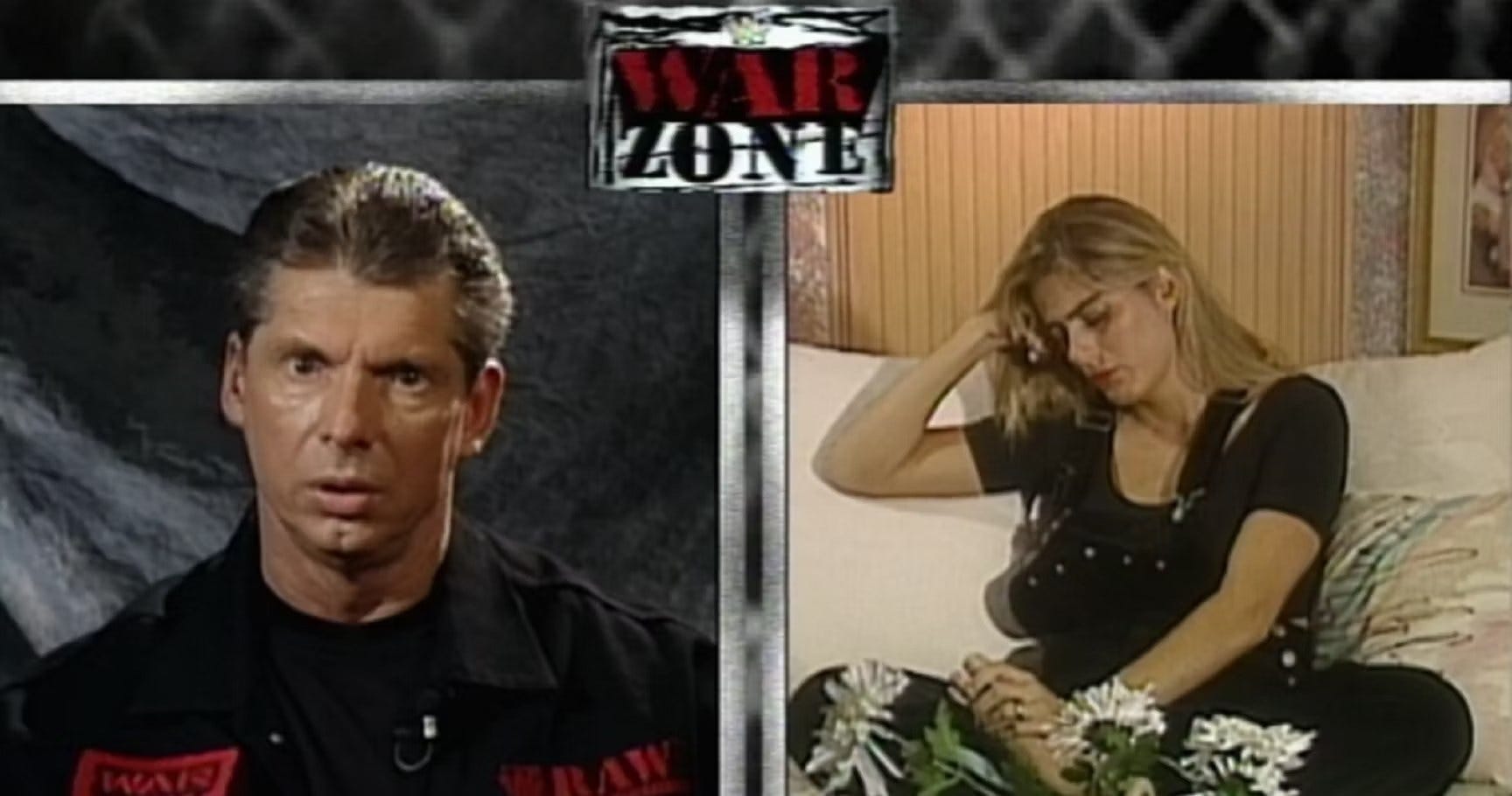
After Brian’s death, Melanie appeared on Raw the very next night in a widely criticized interview with Vince McMahon. Brian Jr. later expressed mixed feelings about it, believing at times that his mother’s grief appeared disingenuous, though they reconciled in later years. The family faced significant financial and personal difficulties. Melanie struggled with drug addiction, which reportedly consumed much of the support money from wrestling benefits and WWF. This led to instability; Brian Jr. was largely raised by his aunt Linda Pillman. Brittany Pillman has also publicly discussed hardships under Melanie’s care.
As far as changing the wrestling product and style at a macro level, Pillman’s efforts pioneered U.S. adoption of Mexican lucha libre and Japanese junior-style high-flying in the late 1980s/early 1990s. As “Flyin’ Brian,” he helped popularize cruiserweight wrestling. The Hollywood Blondes tag work influenced countless teams. But his greatest innovation was the Loose Cannon: breaking the fourth wall with worked shoots, prefiguring the Attitude Era’s reality-blurring. He played the game on his terms, securing guaranteed money and creative freedom when few had it.
Following Brian Pillman’s sudden death from a heart attack (with traces of painkillers and cocaine in his system), Melanie spiraled into deep depression, alcohol abuse, and drug addiction. Family accounts, particularly from Dark Side of the Ring (Season 3, Brian Pillman episode) and interviews with her children, paint a picture of severe neglect and instability. Brian Jr., who was only four when his father died, and stepsister Brittany Pillman described a chaotic household where Melanie’s substance issues led to the family blowing through wrestling benefit funds, memorial money, and royalties intended for the children. Brittany claimed the money “went right up her nose,” leaving the kids with nothing by the time she was 11.

Pictured: Brian Pillman, Jr
Brian Jr. recounted finding his mother passed out from alcohol poisoning as a child (around age 12), with a bottle of vodka nearby—an image he said no child should see. Later, after Melanie remarried, the home environment reportedly involved further drug abuse and neglect from her and her new partner. The children, including Brian Jr., were largely raised by extended family (such as Brian’s aunt Linda Pillman) amid the instability.
Melanie openly discussed her battles with addiction in Dark Side of the Ring, admitting she became heavily dependent on drugs and alcohol in the years after Brian’s death. Sources describe her lifestyle as dominated by these issues for roughly the final 25 years of her life (roughly 1997–2022). She reportedly spent family resources on substances, leading to financial hardship and strained relationships with her children. Her appearance and demeanor in later years were often noted as reflecting the toll of long-term addiction.
Despite the struggles, there were periods of reconciliation. Brian Jr. noted they had mended fences before her death, and he thanked her for “trying her absolute best.” She had moments of sobriety, but the overall pattern of substance abuse persisted. No official cause of death was publicly released, but accounts strongly imply complications related to her long-term lifestyle and addiction.
Melanie’s pre-wrestling life as a Penthouse model and her passionate but rocky marriage to Brian (marked by infidelity, a blended family, and his own substance use) set a foundation of intensity. The controversial Raw interview the night after Brian’s death—where Vince McMahon pressed her on drug-related topics despite her requests—reportedly exacerbated her trauma. Friends and family described her as intelligent, beautiful, and humorous (with a dark sense of humor), but overwhelmed by grief, the demands of single parenthood in a wrestling widow’s world, and subsequent poor choices.
She was 56 years old at the time of her passing.
Her son, Brian Pillman Jr. (now known as Lexis King in WWE), announced the news on Instagram the following day, stating she was pronounced dead at approximately 1:00 PM on June 1, 2022. No official cause of death was publicly released, though Brian Jr. attributed it to the long-term effects of her lifestyle choices and substance abuse struggles in the decades following Brian Pillman’s death.
The broader Pillman family remains complex and blended, with Pillman’s children and stepchildren navigating his outsized wrestling legacy. Brian Jr.’s journey from childhood tragedy to professional wrestler embodies resilience, much like his father’s own story of overcoming early adversity.
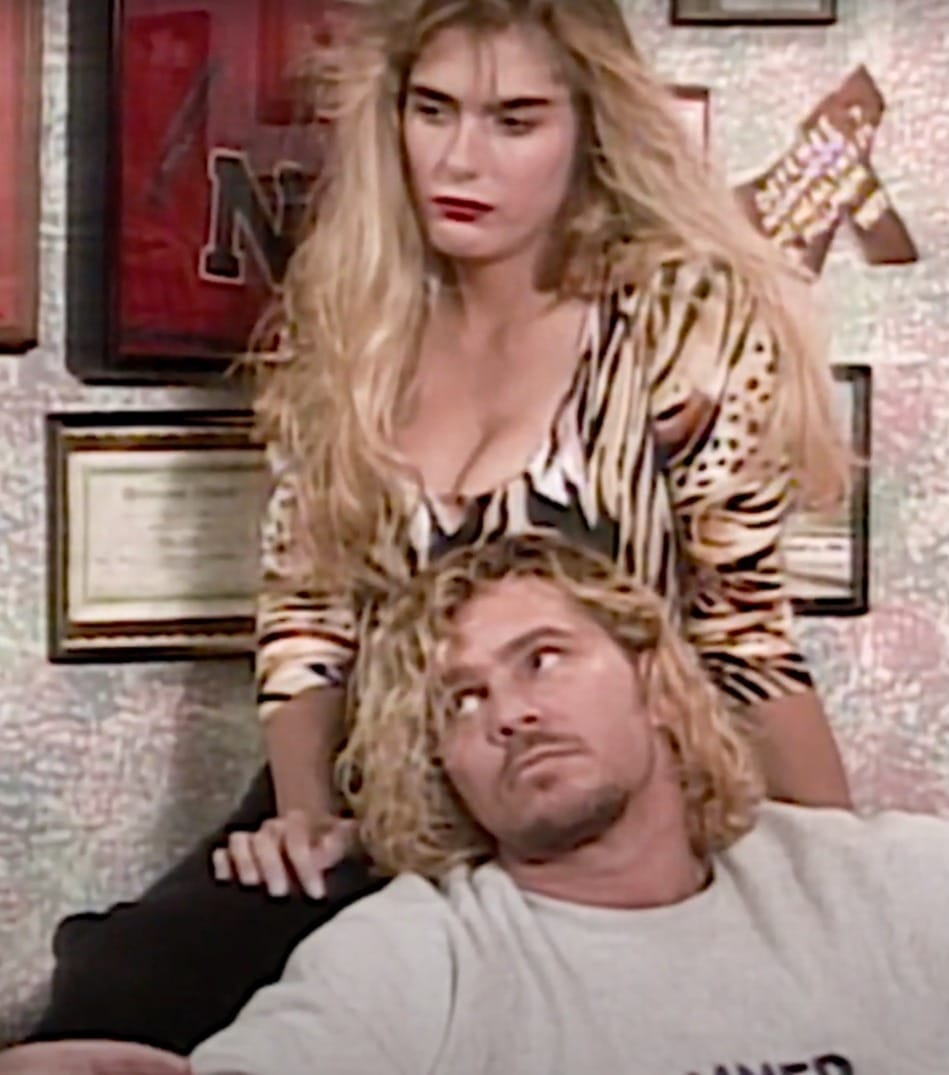
His son Brian Pillman Jr. carries on the legacy in AEW and beyond. Friends and peers like Dory Funk Jr. remembered him as a man who gave fans “more than their money’s worth.” Steve Austin, Bret Hart, and others have spoken of his influence and the “what if” of his potential had he lived longer. Brian Jr. was just four years old when his father died on October 5, 1997. His memories of his dad are limited, largely shaped by footage, family stories, and wrestling lore. He has spoken candidly about growing up without a father, feeling like he “had no family at all” at times due to subsequent hardships.
Brian Pillman’s story is one of resilience against physical frailty, bold reinvention, and a life cut short by the same silent killer that took his father. From the Dungeon’s mats to WCW’s lights to WWF’s edgier rings, he flew higher, pushed boundaries harder, and lived more dangerously than most. In an industry built on larger-than-life characters, the Loose Cannon was one of the few who made you believe it was all real—because, for him, it often was.
One Thing I Learned About Don Curtis
Before fully committing to pro wrestling, the young Donald Beitelman (later Don Curtis) had a memorable amateur workout against Lou Thesz at the University of Buffalo in 1951. Thesz, already a multi-time world champion, came away impressed, saying the aggressive college wrestler was “all over me like an octopus.” Curtis later recalled Thesz hooking him and taking him down repeatedly, but the session helped launch his pro career after Buffalo promoter Ed Don George saw his potential.
This early legit mat encounter with one of wrestling’s all-time greats stands out in a career that later included tag team success with Mark Lewin, promoting in Jacksonville, and respected civic roles managing the Gator Bowl complex and Coliseum. Curtis was a true athlete and “good guy” who served in the U.S. Navy submarine service during WWII before college.

Thank You for Reading
I’m Tony Richards, Pro Wrestling Historian, Author and Storyteller. I share pro wrestling historical items in each issue of the Time Tunnel Pro Wrestling History Newsletter. Thanks for reading! If you enjoy my information on select events, matches and insights, please share it with folks you think might like to be a subscriber!
Remember, premium investors get access to exclusive and special content such as some special issues including a multi-part deep dives on wrestling territories, wrestler bios and championship title histories, special audio and video interviews on territory pro wrestling and more available in the Pro Wrestling Time Tunnel for Premium Investors.