


Happy Birthday to those who have passed on and to those great wrestlers still with us:
In Memoriam:
Warren Bockwinkel 1911
Ivan Kalmikoff 1918
Chris Benoit 1967
Happy Birthday:
Mr. T (74)
Sean Mooney (67)
Kota Ibushi (44)
RIP Memorial: We stop & remember those who have passed on this day and gave themselves to the business for us, the fans. We salute you and thank you.
Tex Riley 5-21-1964 at the age of 47

The Life and Career of Tex Riley
Russell Alvin “Tex” Riley (sometimes listed as Russell Allen Riley) stands as one of the most reliable and beloved professional wrestlers of the post-World War II territorial era in the American South. A longtime babyface—the heroic, fan-favorite archetype—he spent decades thrilling crowds in the Tennessee Territory (primarily under the NWA Mid-America banner) and across neighboring Southern promotions in Alabama, Georgia, and beyond. Known for his cowboy-inspired gimmick, strong ring psychology, and tag-team prowess, Riley was a staple on local television and live events from the late 1930s until his sudden death in 1964. Though he never achieved national superstar status like some contemporaries, his consistent presence helped define the rugged, regional flavor of Southern wrestling in the 1940s through the early 1960s.
Born around November 1916 in Stanley, New Mexico (some records list 1913 or a Texas billing for the “Tex” persona), Riley hailed from the American Southwest. His family had deep roots in the region: his mother, Blanche Riley, later lived in Phoenix, Arizona; brothers James and Claude resided in Muleshoe, Texas; and sisters included Mrs. J.A. Mills in Muleshoe and Mrs. Dorothy Boea in Santa Fe, New Mexico. He eventually made Tennessee his home, marrying Jane Terry of Smithville in DeKalb County and putting down roots there. The couple had (or he helped raise) a son, James T. Waters (of Fairfield, California), and a granddaughter, Beate Waters, in Nashville. Riley’s adopted Southern identity—billed often from Texas despite his New Mexico origins—fit perfectly with the cowboy babyface role that resonated with rural and working-class audiences across the territory.
Riley entered the wrestling business around 1937, debuting in an era when the sport was still transitioning from carnival roots to more structured territorial promotions under the National Wrestling Alliance (NWA). Details of his earliest matches are sparse, as record-keeping for pre-1950s Southern wrestling is incomplete, but he quickly established himself as a journeyman capable of working multiple territories. By the late 1940s, he was a fixture in the Memphis/Nashville/Knoxville/Chattanooga circuit, teaming regularly and competing in the rough-and-tumble style that defined NWA Mid-America and its affiliates.
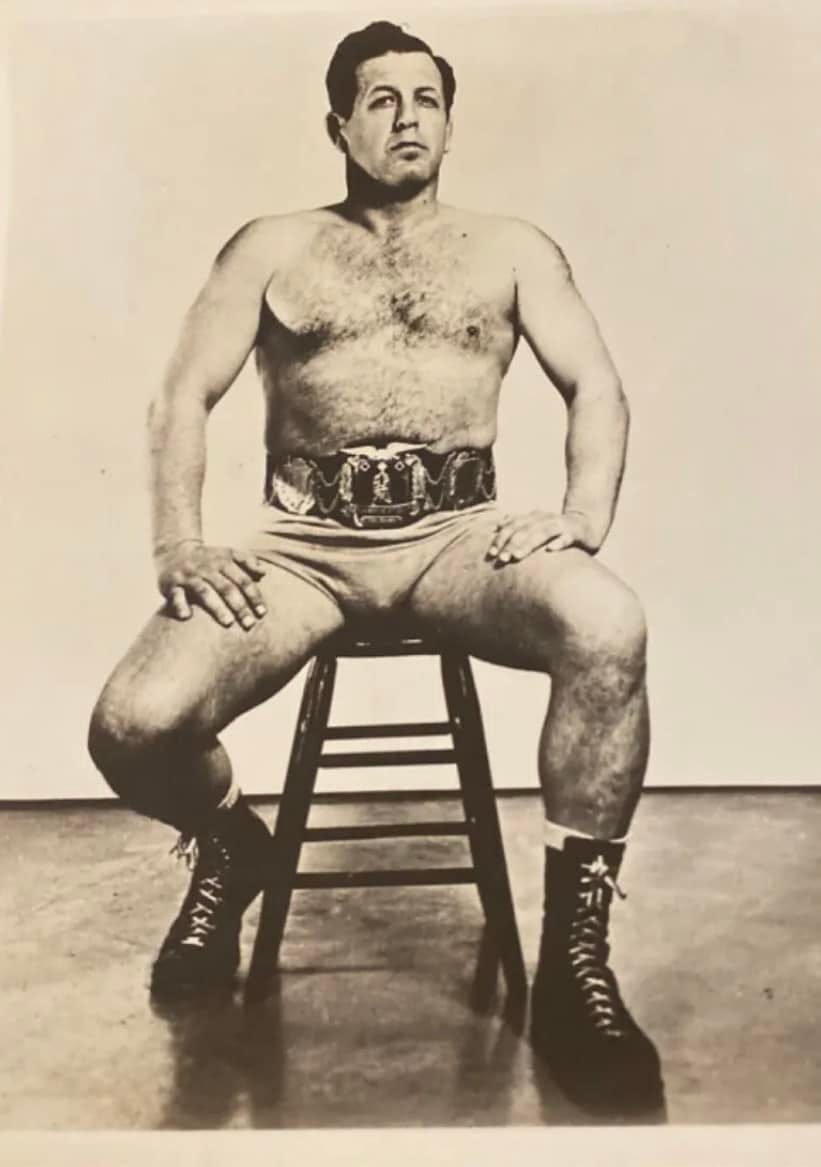
One of Riley’s signature achievements came in the singles division as NWA Southern Junior Heavyweight Champion (also referred to regionally by Gulas-Welch as a version of the World Junior Heavyweight Title). He captured the belt at least twice in documented reigns. On May 25, 1951, in Knoxville, Tennessee, he defeated Ali Pasha and was officially recognized by the NWA as the Southern champion (with Verne Gagne holding the “national” or “world” version). A second reign began on October 29, 1952, in Kingsport, Tennessee. These victories positioned him as a credible “giant killer”—an agile, skilled babyface who could believably topple larger heels through heart and technique. He defended the title in cities across Tennessee, Alabama, and Missouri, trading it with wrestlers like Henry Harrell, Jesse James, Red Roberts, and Ray Piret. The Junior Heavyweight scene showcased Riley’s versatility beyond pure power, emphasizing scientific wrestling and crowd-pleasing comebacks.
Riley’s greatest success, however, came in the tag-team division, where he formed some of the territory’s most popular and championship-laden partnerships. He held the NWA Southern Tag Team Championship (Tennessee version) numerous times across the 1940s–1960s, often with partners who complemented his babyface style. Early success included a reign with Herb Welch, winning in Nashville on November 23, 1948. He later teamed with Eddie Gossett (active into 1950, including a December 1950 win in Chattanooga) and Ray Piret (reigning around late 1951). In 1958, he paired with Dick Beyer (later known as The Destroyer) to capture the titles in Knoxville on April 18.
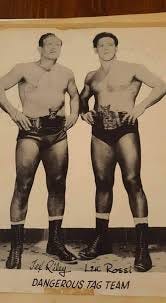
His most iconic and productive run came alongside Len Rossi, a New York native who moved to Nashville in 1958. Together, Riley and Rossi became arguably the most popular tag team in the Roy Welch and Nick Gulas Tennessee Territory during the late 1950s and early 1960s. They won the NWA World Tag Team Championship (Tennessee/Mid-America version) for the first time in June 1958 by defeating Don and Jackie Fargo—the first of at least two documented World Tag reigns as a duo. They also secured at least three (and possibly more) NWA Southern Tag Team Championship reigns, with notable victories over teams like Mephisto & Dante (The Great Mephisto/Lou Papneau and Hans Steiner) on dates such as August 22, 1961 (Nashville), September 16, 1961 (Chattanooga), and earlier cycles in 1959–1960. They defended the belts extensively across Memphis, Nashville, Chattanooga, and Knoxville, drawing strong crowds with their polished, psychology-driven matches that emphasized comebacks, double-team maneuvers, and dramatic storytelling.
Rossi later praised Riley effusively in interviews, calling him “a showman and a master manipulator from whom I learned a lot of ring psychology. He knew what would draw and what wouldn’t.” Their chemistry helped elevate both men, though Riley’s older age and colorful personal habits occasionally added drama. One memorable anecdote from a two-out-of-three-falls match against the Greene Brothers in Jackson, Tennessee, involved Rossi tagging in a supposedly “asleep” Riley in the corner—only for fans to jokingly blame it on booze. Rossi played it off as illness, turning a potential mishap into crowd heat. Riley was known to enjoy gambling and adult beverages, traits that added to his larger-than-life character but never diminished his status as a top fan favorite.
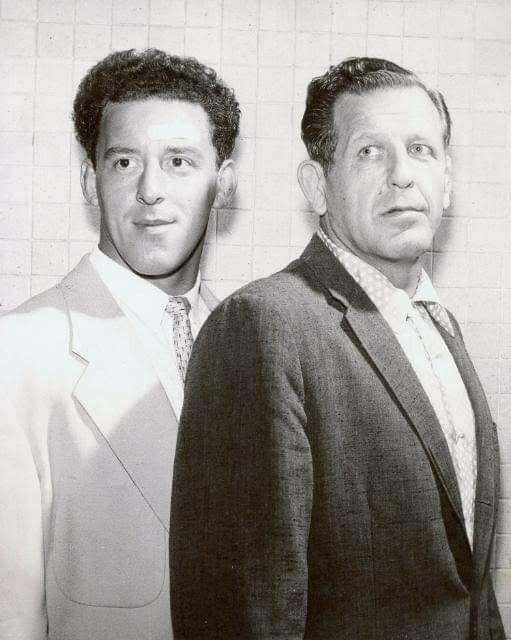
Pictured: Len Rossi and Tex Riley, NWA Southern Tag Team Champions
Beyond Rossi, Riley’s tag work showcased his adaptability. He teamed successfully with established stars like Herb Welch (a frequent early partner and occasional rival through the Welch Brothers faction) and Jackie Fargo (including a brief 1962 Southern Tag reign in Nashville). These partnerships allowed Riley to anchor babyface teams against the territory’s top heel units.
As a babyface, Riley embodied the classic territorial hero: resilient, relatable, and fiercely protective of his territory. He feuded extensively with the Welch Brothers (Herb, Roy, Lester, and associates), a rivalry that spanned decades and helped anchor storylines in Tennessee. This included direct tag clashes with Herb Welch (despite their occasional partnerships) and broader family feuds that drew on real territorial politics. Other major feuds pitted Riley against Red Roberts (a frequent singles and tag rival in the early 1950s), the Corsica Brothers (Joe and Jean, multiple-time champions against whom Riley’s teams traded wins), the Fargo brothers (Don and Jackie, key antagonists in both singles and tag bouts), and international heels like Karl and Kurt Von Brauner. He also battled the villainous duo Mephisto & Dante in prolonged programs during the early 1960s, as well as teams like Don & Luke Fields and The Medics. These rivalries often played out over weeks or months on the many Gulas-Welch weekly TV and house shows, all across 7 states with Riley’s cowboy persona fueling patriotic and underdog babyface narratives that resonated deeply with Southern audiences.
Riley’s matches were staples of weekly TV wrestling broadcasts, making him a “widely known TV wrestling star” in local households, as noted in his obituary. His feuds and tag runs emphasized endurance and crowd interaction, solidifying his role as a dependable hero who could reliably generate heat and sell tickets in smaller arenas across the territory.
Riley’s career was remarkably consistent rather than flashy. He held virtually every major local title in the Memphis/Tennessee area at least once and worked additional dates in Georgia, Alabama (including Birmingham), and other Southern stops. At an estimated 5’10” and around 188–200 pounds, he relied on agility, psychology, and babyface fire rather than size. His longevity—from 1937 through active bouts in 1964—spanned the golden age of territorial wrestling, when weekly live events and TV tapings sustained the business before national expansions.

Tragically, Riley’s in-ring career ended abruptly on May 21, 1964, in Savannah, Georgia (part of the Georgia territory circuit). After teaming with Joe Scarpa (later known as Chief Jay Strongbow) against Kurt and Karl Von Brauner, he collapsed in the dressing room from a massive heart attack. He was only 47 or 48 years old. Funeral services were held at the First Baptist Church in Smithville, Tennessee, with burial at Whorton Springs Cemetery in DeKalb County. His obituary highlighted his status as a TV star and noted survivors from both his immediate family and Southwestern relatives. Walker Funeral Home handled arrangements.
Riley’s passing left a void in the Tennessee scene. Len Rossi, who continued wrestling successfully for years (including more tag reigns with others like Bearcat Brown and Mario Milano, often credited Riley with teaching him essential lessons in drawing crowds. Fans and historians still remember him fondly as a cornerstone babyface whose work helped sustain the territory through lean and prosperous times alike.
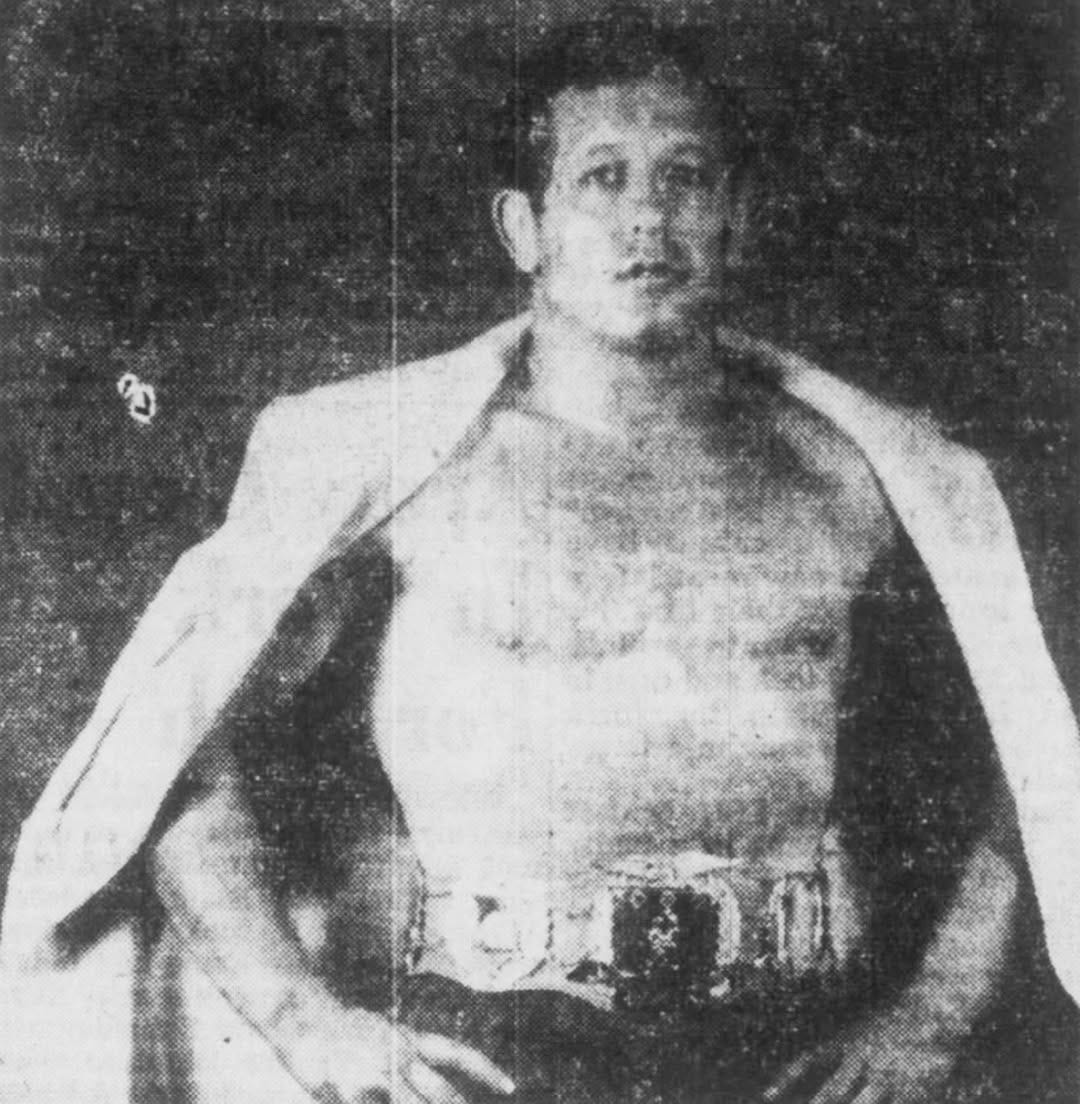
In the broader context of pro wrestling history, Tex Riley exemplifies the unsung heroes of the territorial era—wrestlers who built loyal regional followings through reliability, charisma, and authentic connection with audiences. His cowboy babyface persona, multiple championship reigns (especially in tags with Rossi and others), and decades-long feuds cemented his legacy in Southern wrestling lore. The titles, partnerships, and testimonials paint a picture of a dedicated performer who gave nearly three decades to the squared circle. Riley may have left the ring too soon, but his contributions to the Roy Welch and Nick Gulas Tennessee Territory endure as part of the rich tapestry of Territory Era wrestling.
Today, with modern wrestling’s global reach, figures like Tex Riley remind us of the sport’s grassroots foundations—where local heroes in places like Smithville, Nashville, and Knoxville kept the lights on and the crowds cheering, one tag-team victory and babyface comeback at a time.
One Thing I Learned About Eddie Quinn
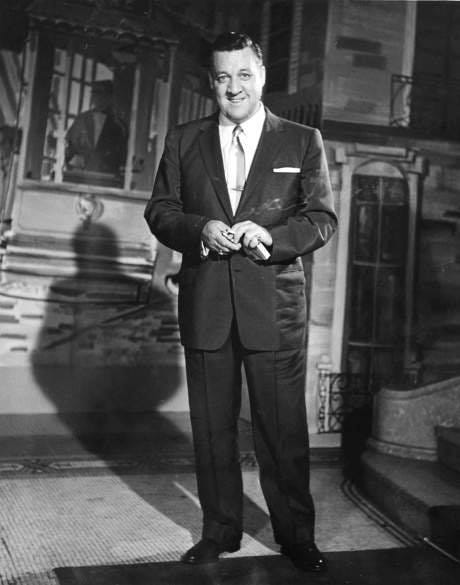
Pictured: Montreal Booking Office Owner and NWA Member, Eddie Quinn
After a mild stroke in 1959 and mounting financial/tax troubles (he was earning big money but spending even more), Eddie Quinn quietly left Montreal for New Hampshire. There, he and his wife bought the Hobb Nursing Home in North Hampton—where he later died of a cerebral hemorrhage in December 1965.
This shift from flamboyant wrestling/boxing promoter (and El Morocco nightclub owner who partied with stars like Jackie Gleason and Dean Martin) to nursing home proprietor in a small New England town was a stark, almost poetic end to his high-flying career. It’s a lesser-highlighted chapter compared to his big successes at the Montreal Forum with stars like Yvon Robert and Édouard Carpentier.
Quinn was a larger-than-life risk-taker who revived “gimmickry and bloody brawls” in Montreal wrestling starting in 1939.
Thank You for Reading
I’m Tony Richards, Pro Wrestling Historian, Author and Storyteller. I share pro wrestling historical items in each issue of the Time Tunnel Pro Wrestling History Newsletter. Thanks for reading! If you enjoy my information on select events, matches and insights, please share it with folks you think might like to be a subscriber!
Remember, premium investors get access to exclusive and special content such as some special issues including a multi-part deep dives on wrestling territories, wrestler bios and championship title histories, special audio and video interviews on territory pro wrestling and more available in the Pro Wrestling Time Tunnel for Premium Investors.