


Happy Birthday to those who have passed on and to those great wrestlers still with us:
In Memoriam:
Gus Kallio 1891
George Kazana 1906
Billy Red Lions 1932
Mike Pappas 1941
Koichi Hayashi\Mr. Hayashi 1942
Dave Hebner 1949
Happy Birthday:
Earl Hebner (77)
Alex Wright (51)
Daniel “Cash” Wheeler (39)
Odyssey Jones (32)
RIP Memorial: We stop & remember those who have passed on this day and gave themselves to the business for us, the fans. We salute you and thank you.
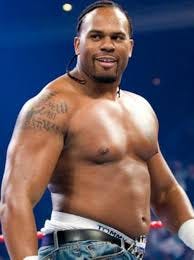
Shad Gaspard 5-17-2020 at the age of 39
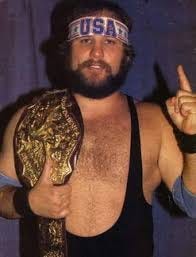
Don Kernodle 5-17-2021 at the age of 71
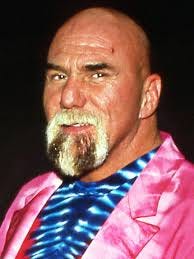
Superstar Billy Graham 5-17-2023 at the age of 79
50 Year Flashback
1976
Q2 Analysis (April-June) Jim Crockett Promotions, Charlotte, North Carolina Office

In the spring of 1976, Jim Crockett Promotions (JCP)—operating primarily under the Mid-Atlantic Championship Wrestling banner—stood as one of the National Wrestling Alliance’s (NWA) premier territories. Headquartered in Charlotte, North Carolina, and helmed by Jim Crockett Jr., the promotion controlled a lucrative circuit spanning the Carolinas and Virginia, with regular stops in major venues like the Greensboro Coliseum, Charlotte Coliseum, and Richmond Coliseum. Televised weekly on stations such as WRAL (Raleigh), the promotion thrived on a mix of athletic in-ring action, heated promos, and personal angles that kept fans glued to their screens every Saturday afternoon. The period from April to June 1976 exemplified JCP’s strength during the territorial era: frequent title changes, escalating rivalries, the emergence of future legends like Ric Flair, and consistent house show business fueled by star power and compelling storytelling.

The roster blended established NWA veterans with hungry young talent. Top babyfaces included Wahoo McDaniel (the tough Native American powerhouse and multi-time Mid-Atlantic Heavyweight Champion), Tim Woods (aka “Mr. Wrestling,” a scientific technician), newcomer Dino Bravo (an impressive Canadian strongman pushed immediately into the main event), Paul Jones (a gritty rule-enforcer), and Rufus R. “Freight Train” Jones (a charismatic powerhouse often involved in six-man tags). Key heels featured Ric Flair (still early in his “Nature Boy” persona but already a cocky, high-flying villain post his 1975 plane crash recovery), the Anderson family (Gene and Ole, the ruthless World Tag Team Champions and backbone of the heel stable), Angelo Mosca (“Madman,” a bullying former football star), and Blackjack Mulligan (the dominant, big-boot-wielding United States Heavyweight Champion). Supporting players like Johnny Weaver, Tiger Conway Jr., and visiting stars such as NWA World Heavyweight Champion Terry Funk and Andre the Giant rounded out the card. Flair, in particular, was on a roll, using this quarter as his “coming-out party” after the crash, while Bravo’s rapid ascent marked him as one of the most promising arrivals in years.
Storylines and angles centered on personal humiliation, revenge, and championship prestige, classic territorial booking that blended athleticism with drama. One of the most memorable angles began in April when Ric Flair and the Andersons triple-teamed Rufus R. Jones on television, forcing him to his knees, slapping him, and placing a chauffeur’s cap on his head in a degrading display of dominance. The NWA heavily fined the heels, but the incident ignited a series of six-man tag team matches pitting Rufus, Wahoo McDaniel, and special attraction Andre the Giant against Flair and the Andersons. These bouts drew big crowds across the territory and highlighted the promotion’s ability to elevate mid-card feuds into must-see events.
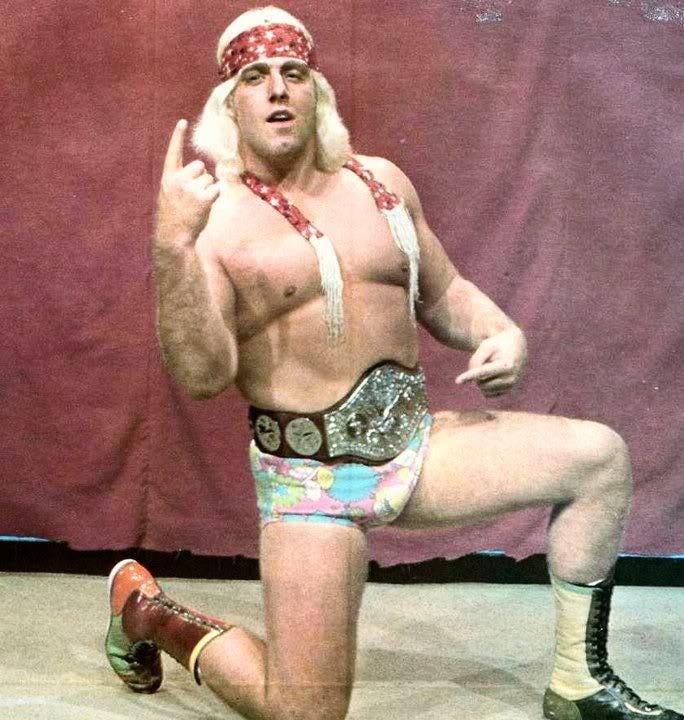
The defining rivalry of the quarter—and one Flair later called one of his toughest and best—was between Ric Flair and Wahoo McDaniel over the NWA Mid-Atlantic Heavyweight Championship. Wahoo captured the title from Flair in early May in Charlotte. On May 24 in Charlotte, Flair regained it in one of the most infamous matches of the era: after spilling outside the ring, Flair smashed Wahoo’s head into a collapsing table, grabbed a table leg with an exposed nail, and drove it into Wahoo’s forehead, opening two massive lacerations that required 40 stitches. The bloody finish, ruled a Flair victory, fueled weeks of revenge promos and set the stage for summer rematches. This angle perfectly captured JCP’s style—realistic violence, no-holds-barred intensity, and long-term storytelling.
Tag team and television title action kept the undercard and mid-card hot. In April, a tournament for the vacant Mid-Atlantic TV Title concluded on April 14 in Raleigh (aired days later) when Angelo Mosca defeated Tim Woods in the final using a handful of tights in a controversial finish. Mosca’s “Big Nasty” reign was marked by bullying and stipulations, culminating in his June 30 loss to Paul Jones in the WRAL studios after a heated confrontation and slap on TV; Jones pinned him under a unique stipulation that would have forced Jones to “get out of Mosca’s hair” if he lost. Meanwhile, the NWA World Tag Team Titles (recognized in the territory) changed hands twice: on May 8, newcomer Dino Bravo teamed with veteran Tim Woods in a major upset to dethrone Gene and Ole Anderson in a televised challenge match. The new duo held strong through terrific battles until June 28 in Greenville, South Carolina, when the Andersons regained the belts. Ole Anderson—sporting a cast on his injured thumb (and having survived a non-serious stabbing by a fan in Greenville earlier in the month)—used the cast for a disguised low blow on Woods, allowing Gene to pin him. The maneuver was protested but upheld, extending the Anderson family’s dominance into the summer.
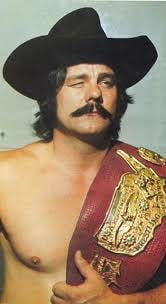
Blackjack Mulligan maintained an iron grip on the United States Heavyweight Title throughout the quarter, defending successfully against challengers like Paul Jones and Rufus R. Jones while dominating the heavyweight division. NWA World Champion Terry Funk made rare main-event-style appearances, including a clean non-title loss to Wahoo McDaniel on April 24 TV, lending prestige to the territory. New mid-card talent in June—Jerry Blackwell, Hans Schroeder, and Red Bastien—bolstered depth, with Bastien even teaming with Andre the Giant on TV. Johnny Valentine, still recovering from prior injuries, returned as a color commentator over Memorial Day weekend, hinting at a future in-ring comeback (foreshadowing the tragic plane crash that would sideline him and others later that year).
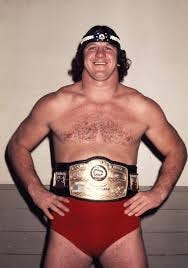
Business in JCP during April–June 1976 was robust and stable, reflecting the territory’s peak territorial-era health. While exact quarterly financials are unavailable, house show attendance in key markets like Greensboro routinely hit 9,000–11,000 fans, with special six-man tags featuring Andre the Giant and the Flair-Wahoo program noted for doing “big business.” No major stars departed the area, TV angles hooked weekly viewers, and frequent title changes plus personal feuds maintained strong gates seven nights a week. The promotion ran multiple shows nightly with few breaks, relying on its deep roster and Crockett’s on-air legitimacy to build credibility. This period helped solidify JCP as a top NWA draw, setting the foundation for Flair’s superstar trajectory and the explosive growth that would define the territory through the late 1970s and 1980s.
In summary, April through June 1976 captured Jim Crockett Promotions at its gritty, fan-engaging best. Bloody rivalries like Flair vs. Wahoo, opportunistic title grabs by the Andersons, and newcomer pushes like Dino Bravo’s showcased the promotion’s booking prowess. With a mix of athletic main events, personal angles, and reliable business, JCP proved why the Mid-Atlantic was a must-watch territory in the NWA landscape—building stars and stories that would echo for decades in professional wrestling history.
Thank You for Reading
I’m Tony Richards, Pro Wrestling Historian, Author and Storyteller. I share pro wrestling historical items in each issue of the Time Tunnel Pro Wrestling History Newsletter. Thanks for reading! If you enjoy my information on select events, matches and insights, please share it with folks you think might like to be a subscriber!
Remember, premium investors get access to exclusive and special content such as some special issues including a multi-part deep dives on wrestling territories, wrestler bios and championship title histories, special audio and video interviews on territory pro wrestling and more available in the Pro Wrestling Time Tunnel for Premium Investors.