



Happy Birthday to those who have passed on and to those great wrestlers still with us:
In Memoriam:
Ethel Johnson 1935
Paul “Butcher” Vachon 1938
Scott Irwin\The Super Destroyer 1952
Leon White\Big Van Vader 1955
Dr. Death Steve Williams 1960
Tommy Rogers 1961
Happy Birthday:
Robert Fuller (77)
Matt Cordona (41)
RIP Memorial: We stop & remember those who have passed on this day and gave themselves to the business for us, the fans. We salute you and thank you.
Carol Cook 5-14-1963 at the age of 30

Fred Atkins 5-14-1988 at the age of 77
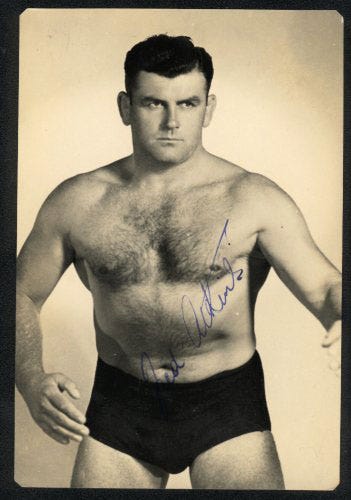
Herman Gust Funk 5-14-2015 at the age of 88
Jerome Young\New Jack 5-14-2021 at the age of 58

The Life and Career of Chief Jules Strongbow
Chief Jules Strongbow—real name John Ralph “Buster” Bilbo—was a foundational figure in professional wrestling’s Los Angeles territory during its mid-20th-century golden age. A wrestler turned matchmaker, booker, promoter, commentator, and television personality, he shaped the Southern California scene for nearly four decades at the iconic Olympic Auditorium. Unlike his later namesake, the 1980s WWF tag-team wrestler Francis Huntington (who performed as Jules Strongbow alongside Chief Jay Strongbow), Bilbo operated primarily behind the scenes after the 1940s, building stars, forging alliances, and helping launch the North American Wrestling Alliance (NAWA, later World Wrestling Alliance or WWA). His influence extended from in-ring competition in the 1930s to television syndication and international partnerships in the 1960s, until his death in 1975.

Bilbo was born on January 22, 1906, in De Queen, Arkansas, the only son of Hattie Catherine Burt and William Edward Bilbo. He grew up in Shawnee, Oklahoma, with a younger sister, and had partial Cherokee ancestry (approximately 3/8), though he was promoted throughout his career as a full-blooded Cherokee Indian under the “Cherokee Choker” gimmick. Before entering wrestling, he worked as a lumberman in Oklahoma and married his first wife, Betty L. Mast, in 1928 (the marriage ended in 1950). He later married Ramona Rae Roten in 1951; the couple had two children and remained together until his death.
Bilbo debuted as Jules Strongbow around 1931, wrestling his first documented match on December 2, 1931, in Columbus. Standing 6’4” and weighing between 285 and over 350 pounds at his heaviest, he compiled more than 1,200 matches in a career that spanned roughly 1931 to 1948. He competed primarily as a singles wrestler but also formed tag teams with partners including Rebel Russell, Rudy LaDitzi, Dutch Heffner, Wee Willie Davis, Tiny Roebuck, and Killer Karl Davis. Notable bouts included a 1932 match at Hollywood Legion Stadium where he accidentally deposited an opponent in Groucho Marx’s lap (an anecdote he later recounted on Marx’s You Bet Your Life), multiple encounters with Hardy Kruskamp (reportedly 45 times), and facing ex-boxer Primo Carnera in one of Carnera’s early pro-wrestling appearances. In 1945 he captured the Texas Heavyweight Championship, defeating Hans Schnabel on May 11 in Houston and defending it successfully before losing it later that month.
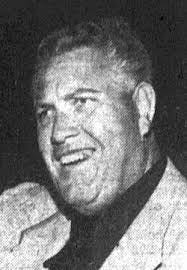
Strongbow’s transition from wrestler to power broker began in 1937 when he was named matchmaker at the Grand Olympic Auditorium in Los Angeles—a position he held for 38 years. By the 1950s he had become a full-time sports agent and key member of the “California Combine,” the Los Angeles booking office affiliated with the National Wrestling Alliance (NWA). In addition to booking and promoting, he served as ringside commentator and interviewer on popular television programs such as KTLA’s Wrestling from Hollywood and Main Event Wrestling from Hollywood Legion Stadium (often alongside announcer Dick Lane). He co-hosted CBS’s short-lived national Championship Wrestling in 1954, which aired on over 100 stations before cancellation due to sponsorship issues. Strongbow also became a minor celebrity in his own right: he appeared on You Bet Your Life with Groucho Marx in 1956, served as honorary mayor of Sepulveda, California, in 1954, and undertook a widely publicized 90-day weight-loss campaign in 1953 (dropping from 377 to 291 pounds), which was covered live on television and drew strong ratings.
Strongbow’s greatest legacy lay in his promotional vision. In 1959, following the NWA’s controversial title dispute involving Lou Thesz and Édouard Carpentier, he co-founded the North American Wrestling Alliance (NAWA) alongside promoters Cal and Aileen Eaton. The breakaway group later became the WWA and operated independently of the NWA for several years. As part of the creative team at the Olympic (alongside Freddie Blassie and Mr. Moto), Strongbow helped craft storylines and elevate talent. He is credited with creating or boosting major stars, facilitating Japanese talent exchanges (including early bouts involving Rikidōzan), and helping launch the masked wrestler The Destroyer. Strongbow also co-owned Stelrich Stadium in Bakersfield, California, which his widow later renamed Strongbow Stadium in his memory and continued to operate after his death.

Pictured: The former Strelich Stadium, later renamed Strongbow Stadium in Bakersfield, California
His influence extended beyond the ring. Strongbow mediated fan disputes (famously calming a near-riot at the Olympic in 1952), hosted tribute shows for fellow wrestlers, and maintained partnerships that kept Los Angeles wrestling vibrant into the 1970s. Tribute events honored his longevity: a 1959 “silver anniversary” show and a 1969 “Parade of Champions” supercard featuring NWA and WWA title matches. Even after his passing, his name lived on in the “Jules Strongbow Scientific Wrestler Championship Trophy,” which became the focal point of feuds (such as one between Rowdy Roddy Piper and Chavo Guerrero Sr.) in later California promotions.

Pictured: Dick Lane interviews Jules Strongbow on KTLA-TV in Los Angeles, California
John Ralph Bilbo, known to generations as Chief Jules Strongbow, died on May 13, 1975, at age 69 in Van Nuys, California, from pancreatic cancer. He was survived by his wife Ramona and their children. His death marked the end of an era for the Olympic Auditorium’s classic booking style, though the territory continued under subsequent promoters like Mike LeBell before the national expansion of the WWF in the 1980s.
Chief Jules Strongbow was never a household name like Gorgeous George or The Destroyer, yet without his steady hand as matchmaker, booker, and television presence, the Los Angeles wrestling scene might not have thrived as it did. From lumberman in Oklahoma to Cherokee Choker in the ring, and finally to the architect of one of wrestling’s most colorful territories, Bilbo embodied the transition from the barnstorming era to the television age. His 38-year tenure at the Olympic Auditorium and his role in founding the NAWA/WWA left an indelible mark on professional wrestling’s West Coast history—one built not on flash alone, but on decades of quiet, effective promotion that kept arenas full and fans engaged long after his own wrestling boots were hung up.
One Thing I Learned About Herman Gust Funk
He served in the U.S. Navy during WWII in the South Pacific and was selected for gunnery school (mastering everything from pistols to 20mm cannons). The Navy held monthly boxing and wrestling exhibitions, and as a wrestler, he earned steak dinners and 48-hour leaves as rewards.
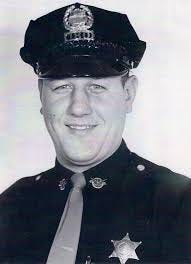
After the death of majority owner of Western States Sports, Karl “Doc” Sarpolis in 1967, Herman left the Hammond, Indiana, police force in 1968 to join the family in Amarillo as president of Sports Unlimited, the new wholly owned family business that promoted wrestling for live events and television in the Amarillo, Texas Territory.
Thank You for Reading
I’m Tony Richards, Pro Wrestling Historian, Author and Storyteller. I share pro wrestling historical items in each issue of the Time Tunnel Pro Wrestling History Newsletter. Thanks for reading! If you enjoy my information on select events, matches and insights, please share it with folks you think might like to be a subscriber!
Remember, premium investors get access to exclusive and special content such as some special issues including a multi-part deep dives on wrestling territories, wrestler bios and championship title histories, special audio and video interviews on territory pro wrestling and more available in the Pro Wrestling Time Tunnel for Premium Investors.