


Happy Birthday to those who have passed on and to those great wrestlers still with us:
In Memoriam:
James Dudley 1910
Bill Howard 1945
Doug Dellinger 1946
Happy Birthday:
Doug Basham (55)
Ricky Ortiz (51)
Kushida (45)
RIP Memorial: We stop & remember those who have passed on this day and gave themselves to the business for us, the fans. We salute you and thank you.
Tor Johnson 5-11-1971 at the age of 67

Danny Little Bear 5-11-1991 at the age of 53

Lenny Montana 5-11-1992 at the age of 66

Johnny Eagles 5-11-1999 at the age of 64

Penny Banner 5-11-2008 at the age of 73

Leo Garibaldi 5-11-2008 at the age of 78

Gorgeous George, Jr. 5-11-2012 at the age of 74

7 Stages of The Territory Era Review
60 Year Flashback
Stage of the Territory Era: Stage 5: Re-Consolidation
Month 4 of Year 2: May 1966:The Influence of Studio Wrestling and “Bicycled” Television
The pivotal role of TV syndication as it existed in May 1966, was a cornerstone and defining feature of Stage 5 re-consolidation—was the widespread use of regional TV syndication. By 1966, nearly every major territory produced weekly taped or live studio shows that were syndicated across local stations within their protected geographic boundaries.
These programs functioned as low-cost, high-impact promotional engines: they built larger-than-life personas for stars like Bruno Sammartino (via WWWF’s syndicated “Heavyweight Wrestling” from Washington, DC tapings), Gene Kiniski (defending on multiple NWA feeds), and Mad Dog Vachon (AWA studio showcases), while teasing ongoing feuds and angles that drove fans to buy tickets for the “real” payoffs in arenas.

Capitol Wrestling\WWWF
In 1966, the Capitol Wrestling Corporation (CWC, which had operated as the World Wide Wrestling Federation/WWWF since 1963) produced its flagship TV program under names like “Heavyweight Wrestling from Washington,” “CWC Heavyweight Wrestling from Washington,” or “WWWF Heavyweight Wrestling.”
This was the primary weekly (sometimes twice-weekly) syndicated wrestling show for the territory, continuing a format that dated back to 1956. Ray Morgan served as the main announcer. It featured arena-style matches (often building to house shows), promos, and interviews, with the goal of selling tickets rather than giving away major finishes on TV.
The main/flagship show was taped at the National Arena (also referred to as the Capitol Arena) in Washington, D.C., in front of a live audience. This was the core production hub and original home base for the promotion. Matches were recorded there (not true live-to-air broadcasts), then edited/duplicated for distribution. (Tape duplication for syndication was handled at facilities such as in Owings Mills, MD.)
Live vs. Recorded Airings
No true live TV broadcasts for the main program in 1966. The arena tapings occurred before a live crowd, but the shows were pre-recorded/taped for quality, editing, and syndication control. This was standard for the era.
In the Washington, D.C. market, episodes aired relatively soon after taping (often same-week or with a near-”live from the arena” presentation feel on local stations).
In all other markets, it aired as recorded/taped syndication. Local stations inserted their own commercials, promos for upcoming house shows, and market-specific announcements. Blank spots were left in the tapes for this purpose.
A notable example: In New York City, the WWWF TV deal on WNEW ended April 30, 1966 (leading to an eight-month suspension of Madison Square Garden shows). Tapes from the Washington, D.C. tapings resumed airing on WOR-TV Channel 9 starting around August 1966.
Syndication and Territory Coverage
The Washington, D.C.-taped show was widely syndicated across the Northeast WWWF territory (and sometimes beyond), reaching stations in:
New York
New Jersey
Pennsylvania (including Philadelphia and Pittsburgh areas)
Maryland (Baltimore)
Connecticut
Massachusetts (Boston)
Delaware
and other Northeast markets.
Other Markets with Their Own (or Additional) Shows/Tapings
While the Washington, D.C. program was the flagship syndicated show, the promotion supplemented it with local tapings and content in key cities for better market penetration and to promote local house shows. This multi-city approach had been in place since at least the early 1960s and continued into 1966.
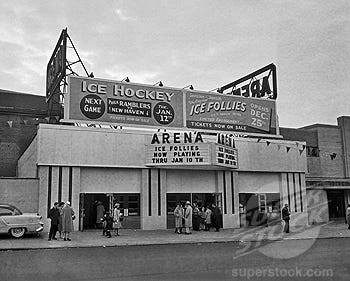
Pictured: The Arena in Philadelphia, Pennsylvania
Philadelphia: Additional TV tapings occurred (e.g., documented at the Philadelphia Arena on dates like January 21, 1966). Philadelphia had its own local productions or dedicated content, often tied to KYW-TV studios earlier in the decade; this evolved into a more prominent Philadelphia-based syndicated show hosted by Bill Cardille in the late 1960s.
Baltimore: Tapings at WBAL-TV studios or the Civic Center provided local content.
Bridgeport, CT: Arena tapings occurred for local market needs (more prominent earlier but part of the multi-location setup).
Pittsburgh: This market had its own distinct local program, “Studio Wrestling” on WIIC-TV Channel 11. It was a live studio-based show (not a direct WWWF/Capitol production) but often featured WWWF talent, including Bruno Sammartino (a Pittsburgh-area native with ties to the promotion). It operated somewhat independently under regional promoters but overlapped with WWWF.
Other Northeast cities primarily received the syndicated Washington tapes with localized inserts rather than fully separate productions. This system helped the WWWF maintain strong regional coverage while keeping production centralized around the D.C. flagship.
Overall, 1966 was a transitional year for New York TV exposure but a stable one for the core syndicated format that had made the promotion successful in the Northeast. The Washington-based show remained the backbone until tapings shifted more toward Pennsylvania in the early 1970s.
In the context of 1966 Capitol Wrestling Corporation / WWWF TV (the “Heavyweight Wrestling from Washington” program), here’s a clear breakdown of “live tapings” versus “broadcast”:
Live Taping (also called TV Taping or Arena Taping)
This refers to the production/recording process at the venue.
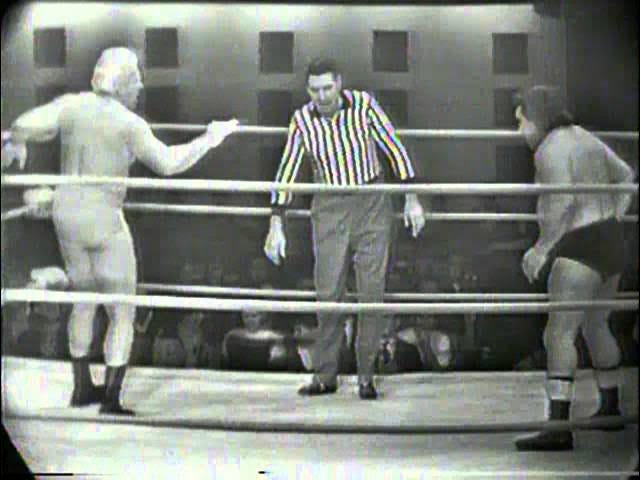
Matches, promos, and interviews were performed live in real time in front of a paying audience at the National Arena (also called Capitol Arena) in Washington, D.C.
Cameras rolled while the wrestling happened exactly as it would at a house show — no stops for retakes in most cases.
Ray Morgan called the action ringside during these sessions.
These were not studio shows with a tiny set and no crowd; they were full arena events designed to feel like a real wrestling card.
The entire show was captured on videotape (the technology of the era). Multiple weeks’ worth of TV episodes were often taped in one night or over a short period.
After taping, the footage was edited, duplicated, and prepared for distribution. Blank spots were left in the tapes so local stations could insert their own commercials and market-specific promos for upcoming live events.
This “live” aspect was only for the people physically in the arena that night — the wrestling itself happened once, spontaneously, in front of the crowd and cameras.
Broadcast (the TV airing)
This refers to when the pre-recorded tape actually played on television stations.
There were no true live-to-air broadcasts of the full WWWF TV show in 1966 (i.e., the TV audience did not see the action at the exact same moment it was happening in the arena). This was standard for almost all territorial wrestling TV at the time — it allowed the promotion to control content, protect house show results, and syndicate widely.
In the Washington, D.C. home market (on stations like WTTG Channel 5 or WDCA later in 1966): The tapes usually aired with very little delay — often the same week or even giving a near-”live from the arena” presentation feel on Thursday nights. It was the fastest turnaround and closest to feeling current.
In all other syndicated markets (New York, Philadelphia, Baltimore, Boston, Pittsburgh, Connecticut, etc.): The same D.C. tapes were shipped out and aired on a delayed basis — sometimes weeks later — with local station voiceovers, ads, and promos inserted. Each city essentially got its own customized version of the same core footage.
The phrasing you sometimes see in old descriptions like “live from the Capitol Arena” or “live wrestling program” is loose terminology that means “the footage originated from a live arena event” — not that the TV show was broadcast simultaneously while the matches were happening. By 1966 the entire system was built around taped syndication, which had been the promotion’s model since the late 1950s and continued until tapings moved to Pennsylvania in 1971.
This taped-arena approach was highly efficient: one set of tapings could feed dozens of TV markets across the Northeast while keeping the live house show business protected.
The videotape duplication for TV syndication (including programs like the WWWF/Capitol Wrestling “Heavyweight Wrestling from Washington”) was a completely analog, real-time, mechanical process using expensive 2-inch Quadruplex (Quad) videotape machines.
This was the broadcast-standard format invented by Ampex in 1956. There was no digital copying, no instant duplication, and no consumer-grade formats like VHS yet existed.
Here’s exactly how it worked:
1. Master Recording
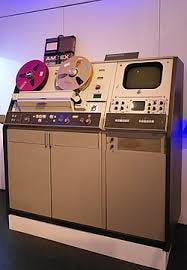
Pictured: Ampex Quadruplex VTR Machine
Matches and promos were recorded live-to-tape at the arena (National Arena in Washington, D.C.) using one or more Ampex Quadruplex VTRs (videotape recorders).
The tape was 2 inches wide, ran at 7.5 or 15 inches per second, and used four spinning video heads mounted on a drum that rotated transversely (side-to-side) across the tape at ~14,400 RPM (NTSC).
Audio, control track, and cue tracks ran along the edges.
One reel typically held about 60–90 minutes of programming, so multiple reels were often used for a full taping session.
2. Editing (if needed)
Early in the decade, editing was almost entirely physical: the tape was cut with a razor blade on a special splicing block and rejoined with splicing tape (similar to audio tape or film editing).
By the mid-to-late 1960s, limited electronic editing became possible, but it still involved copying segments from the master onto a new tape (called “assembly editing”), which created a second-generation copy with some quality loss.

3. Duplication (the core syndication step)
This happened at a specialized duplication facility — for WWWF/Capitol Wrestling in the 1960s, the majority of syndication dubs were made in a small dedicated room at Owings Mills, Maryland.
Setup: One “master” Quad machine played the edited master tape. Its video and audio outputs were fed (via cables) simultaneously to several “slave” Quad machines loaded with blank 2-inch tape reels.
The entire program ran in real time — if the show was 60 minutes long, it took 60 minutes to make each set of copies.
A single master could feed 4–8 (or more) slave machines at once, depending on the facility’s setup.
The result was multiple identical (or near-identical) first-generation dubs.
Blank sections were deliberately left on the tapes so local TV stations could later insert their own commercials and market-specific promos for upcoming house shows.
Each copy was a physical reel of 2-inch tape (heavy and bulky — often 10–12 inches in diameter).

4. Distribution and Airing
The duplicated reels were packaged and shipped (by mail, truck, or air freight) to individual TV stations across the Northeast territory.
Stations received their own customized copy, played it on their Quad VTR, and broadcast the signal over the air.
After airing, some stations returned the tapes (or “bicycled” them to the next station), while others kept them or erased/reused them.
Because Quad machines were extremely expensive ($50,000+ each in the late 1950s/early 1960s) and required skilled operators, only larger stations had them; smaller markets sometimes received kinescopes instead — a lower-quality film recording shot directly off a TV monitor for easier 16mm projection.
Key Limitations of 1960s Tape Duplication
Quality degradation: Every generation lost sharpness, increased noise, and introduced slight color or timing errors. Promotions tried to stay at first- or second-generation copies whenever possible.
Cost: Blank Quad tape was very expensive (hundreds of dollars per hour in today’s money), so reuse was common when possible.
Time: Duplication was slow and labor-intensive — you couldn’t “burn” 50 copies at once like today.
Logistics: Shipping heavy reels around the country every week was a major operation.
This exact master → real-time slave dubbing process in facilities like the one in Owings Mills is what allowed the single weekly taping in Washington, D.C., to feed dozens of TV markets with the same core show while still letting each city add its own local flavor. It was the standard method used by virtually all major territorial wrestling promotions, networks, and syndicators throughout the 1960s.
AWA:
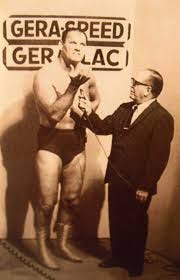
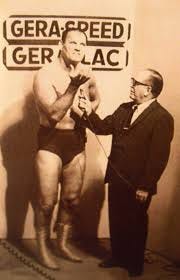
The AWA (American Wrestling Association) flagship TV program was AWA All-Star Wrestling (sometimes just called All-Star Wrestling). It was a syndicated series that had been running since around 1960 and continued through 1990. In the 1960s (including 1966), it functioned primarily as a one-hour paid advertisement/commercial for the AWA’s live house shows rather than a fully produced entertainment show with national sponsors.
The AWA bought 60- or 90-minute time slots on local TV stations (typically cheap Saturday or Sunday morning slots). The show was shot in black-and-white. 1966 marked the first year the AWA routinely videotaped broadcasts, which is why surviving footage from before that year is extremely rare or nonexistent.

Main Taping Location and Production
Primary taping location: A studio setup at WTCN-TV (Channel 11, owned by Metromedia) in the Calhoun Beach Hotel/Club in Minneapolis, Minnesota. This served as the AWA’s television production headquarters throughout the 1960s and most of the 1970s.
Wrestlers (usually 20–30 at a time) assembled every two weeks in the compact studio ring for squash matches against jobbers, plus interviews. There was little to no live crowd—just production crew.
The local Minneapolis-area broadcast on WTCN was sometimes presented as a live Saturday telecast from the studio (6:00–7:30 p.m. range in some descriptions). However, the syndicated versions sent to other markets were pre-taped, edited “canned” packages.
Post-taping (or on Tuesdays), wrestlers recorded market-specific interviews promoting upcoming house shows in various cities. Editors then spliced together the right matches + interviews for each local market and shipped the finished one-hour show to the stations. This allowed one central taping session to support dozens of house shows across the territory.
Live vs. recorded/syndicated:
Minneapolis-area viewers often saw a more immediate/localized version (possibly live from the studio).
All other markets received edited, pre-recorded tapes customized to their local house-show schedule. No national network feed—just first-run syndication.
Syndication and Markets
The show aired across the AWA’s Midwest territory and some adjacent areas (Minnesota, Wisconsin, Nebraska, Iowa, the Dakotas, parts of Illinois, Colorado, etc.). Notable markets included Minneapolis/St. Paul, Milwaukee, Omaha, Chicago, Denver, Green Bay, and others. Each station got its own version of the show tailored to promote the specific AWA card coming to that city soon.
Other Markets with Their Own Shows or Localized Programming
While All-Star Wrestling was the main syndicated program, larger secondary markets sometimes had additional or more localized TV presentations:
Omaha, Nebraska (on KETV and occasionally other channels like WOWT/Channel 6 or 7): Omaha frequently had its own local wrestling TV exposure tied to AWA events. Match histories from 1966 specifically list “Omaha, KETV” dates with AWA wrestlers, indicating local airings or tapings/promotions for Civic Auditorium house shows. Omaha operated with some autonomy inside the AWA territory.
Milwaukee: Had its own time slot (e.g., Wednesday nights on a weaker UHF station, Channel 18), which was popular and helped sell out the Milwaukee Auditorium/Arena.
Differences Between the Minneapolis/Main Taping Area and the Omaha Part of the Territory
There were noticeable differences in how the territory operated:
Centralized production in Minneapolis: All TV tapings for the main show happened there. The core AWA office and TV studio were in the Twin Cities. This made Minneapolis the “home base” for the syndicated program and the primary market.
Omaha as a semi-autonomous sub-territory: Omaha (and nearby Nebraska/Iowa stops) sometimes ran its own localized storylines, angles, or short-term title switches that weren’t always acknowledged in the rest of the AWA. For example, in November 1966, Dick the Bruiser and Mad Dog Vachon traded the AWA World Heavyweight Title twice in Omaha over a week—changes that were treated as minor or voided elsewhere, with Vachon remaining the recognized champion territory-wide. Omaha also had its own Midwest Tag Team Title scene and local favorites (e.g., Reggie Parks teaming with others there). House shows at the Omaha Civic Auditorium were big draws, and local TV (KETV) helped promote them with a more regional flavor.
In short:
Minneapolis = central hub for TV production and the “official” syndicated show.
Omaha = a strong secondary market with its own booking quirks, local TV emphasis, and occasional independent angles to boost ticket sales in that part of the territory.
All-Star Wrestling was very much a low-budget, territory-style operation: simple studio squash matches + heavy promotion for live events, all shot in Minneapolis and customized for each city. This model helped the AWA thrive in the Midwest during the 1960s before the bigger production changes of later decades. Surviving 1966 footage is rare but exists on some vintage wrestling collections.
NWA:
The National Wrestling Alliance (NWA) had various territories that handled their television is various ways.
Championship Wrestling From Florida
In Championship Wrestling From Florida, Gordon Solie’s authoritative Saturday-morning broadcasts from the company-owned Tampa Sportatorium had been a fixture since 1960, hyping Eddie Graham & Bob Orton Sr.’s tag title win and keeping the Assassins’ heat alive. Jim Crockett Promotions syndicated its branded shows (“Mid-Atlantic Championship Wrestling”) across Carolinas and Virginia stations through barter deals—providing free content in exchange for ad time—directly boosting attendance in Greensboro and Charlotte loops. Texas (Dallas Sportatorium) and Georgia cards received similar localized exposure, while San Francisco’s Roy Shire and Los Angeles’ Olympic Auditorium programs reinforced regional identities.
The impact was overwhelmingly positive and perfectly aligned with re-consolidation goals. TV syndication amplified live gates without the national overexposure that would later fracture the system; it created repeatable storylines (DQs, time-limit draws, and post-match brawls) that kept fans returning weekly; and it generated ancillary revenue through sponsors and barter arrangements at minimal production cost. In an era when national networks had largely dropped wrestling due to earlier saturation, these localized syndicated feeds sustained the NWA’s ecosystem, turning television into a territorial “free commercial” rather than a cannibalizing force.
Primary Markets and TV Stations (1966 Era)
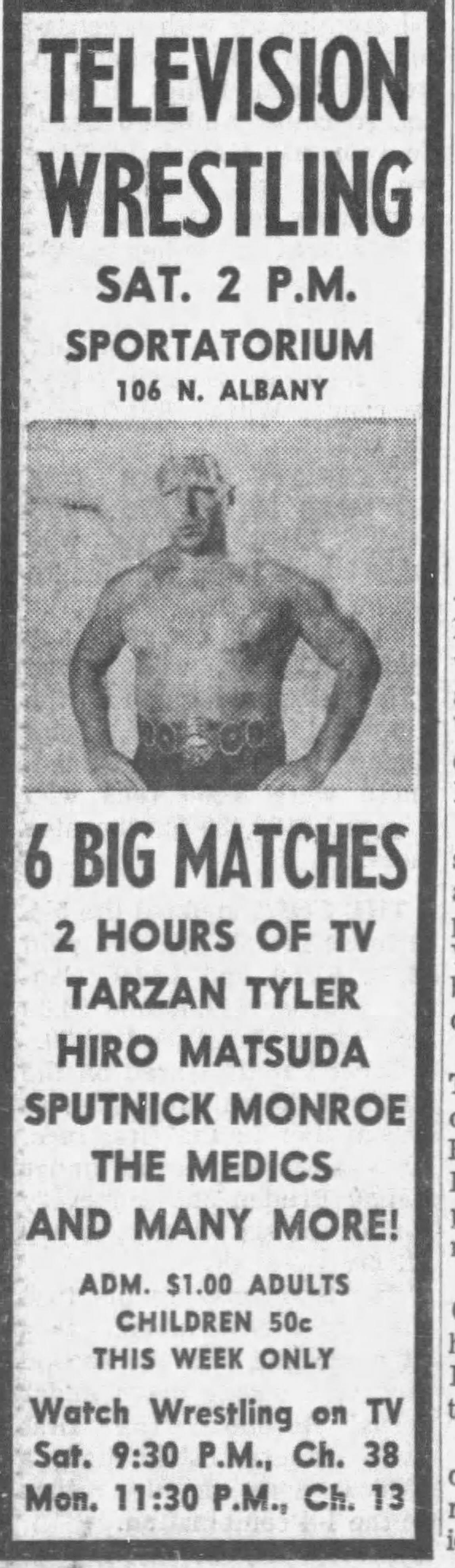
Pictured: Newspaper ad on February 19th, 1966 for Tampa, Florida TV Tapings
CWF’s core reach was Florida’s major TV markets (often called “Sun Coast,” “Gold Coast,” etc., by locals). The show typically aired on weekend afternoons or early evenings (e.g., Saturday noon/1 p.m. or Sunday slots, varying by station). Key active or newly starting stations around May 1966 included:
Sun Coast (Tampa/St. Petersburg area) — Core market (home base; live events often at Tampa’s Fort Homer Hesterly Armory or similar venues).
WLCY-TV Channel 10 (CBS; on air for CWF from ~1965–1978, Sunday ~1 p.m.).
WSUN-TV Channel 38 (UHF; St. Petersburg; mentioned in surviving 1966-era clips as a distribution point for Tampa-taped shows).
Miami/South Florida — Longtime market (CWF TV reportedly began here as early as 1958).
WTVJ Channel 4 (Saturdays ~noon/1 p.m.).
Central Florida (Orlando) — Major market.
WFTV Channel 9 (ABC; from 1958 onward; note: not always concurrent with nearby stations like WESH).
Space Coast (Daytona Beach/Volusia/Brevard area) — Strong viewership.
WESH-TV Channel 2 (NBC; 1956 onward; Saturday ~1 p.m. in the 1960s).
Treasure Coast (Fort Pierce area) — New or expanding market in 1966.
WTVX Channel 34 (CBS; began carrying CWF in 1966).
First Coast (Jacksonville/North Florida) — Key northern market.
WFGA Channel 12 (NBC/ABC; 1957–1971; Saturdays ~noon).
Gold Coast (West Palm Beach) — South Florida extension.
WEAT-TV Channel 12 (CBS; 1955–1974; Saturdays ~noon/1 p.m.).
Emerald Coast (Pensacola/Northwest Florida) and other panhandle areas.
WKRG-TV Channel 5 (CBS; Saturdays ~noon).
Other Florida markets (Tallahassee, Gainesville, etc.) likely carried it on stations such as WCTV Channel 6 (CBS, Tallahassee) or similar, though coverage was patchier in smaller areas.
Some syndication outside Florida (e.g., parts of Georgia, Alabama, or the Carolinas) began later or was limited; the primary footprint in 1966 remained Florida. A few stations aired reruns or delayed episodes (e.g., Fort Myers area on WINK-TV Channel 11).
This distribution helped build the territory’s reputation for strong in-ring action and storytelling under Eddie Graham (who bought in during 1961). Exact schedules could vary by station and week, and reception sometimes required antenna adjustments in fringe areas. Surviving 1966 clips (e.g., matches with Lou Thesz, Sputnik Monroe, or Dory Funk Jr.) confirm the Tampa-taped format was running steadily that spring.
Gulas-Welch Tennessee Territory
By 1966 the Gulas-Welch operation had perfected one of the most efficient and hyper-local live TV models in the entire NWA. Building on Roy Welch adn Nick Gulas’ pioneering 1955 studio show in Nashville (WSIX-TV8), the territory operated an extensive network of live studio wrestling programs and recorded tapings across multiple cities: Nashville, Memphis, Chattanooga and Jackson in Tennessee Huntsville and Birmingham in Alabama, and Paducah in Kentucky.

Pictured: Newspaper ad for WSIX-TV8 TV in Nashville, Tennessee
These shows aired live on Saturdays, while others were pre-taped for replay—creating a near-constant television presence within the protected geographic footprint. Unlike territories that relied on a single syndicated feed, Gulas-Welch treated television as a decentralized promotional grid: each studio fed its own market while sharing core storylines and talent, allowing the same tag-team tournament or Tojo Yamamoto heel turn to be “fresh” in Birmingham one week and Nashville the next.
Production was deliberately low-cost and high-volume. Studio tapings required minimal overhead—no expensive arena rentals, just a basic set, local announcers, and the wrestlers already under contract. The format favored quick, action-packed matches, promos, and post-match brawls that teased upcoming house shows without giving away finishes.
Barter-style arrangements with local stations kept airtime essentially free: Gulas-Welch supplied completed programming in exchange for commercial inventory that was then sold to regional sponsors (jewelers, car dealers, beer distributors) or used for hard-sell tickets plugs. This model turned television into a self-sustaining marketing machine—viewers in small towns across Tennessee, Kentucky, and Alabama saw their local heroes weekly, then drove to armories and coliseums for the live payoffs. In May 1966 the May 30 Nashville tournament final was perfectly timed to climax on TV, giving every market a reason to buy tickets for the follow-up loop while keeping the NWA World Tag Team (Mid-America version) active and protected.
Jim Crockett Promotions Territory
In 1966, Jim Crockett Promotions operated a highly effective decentralized network of television studio shows across multiple markets in the Carolinas and Virginia—well before the early-1970s consolidation to a single Wednesday-night taping at WRAL in Raleigh.
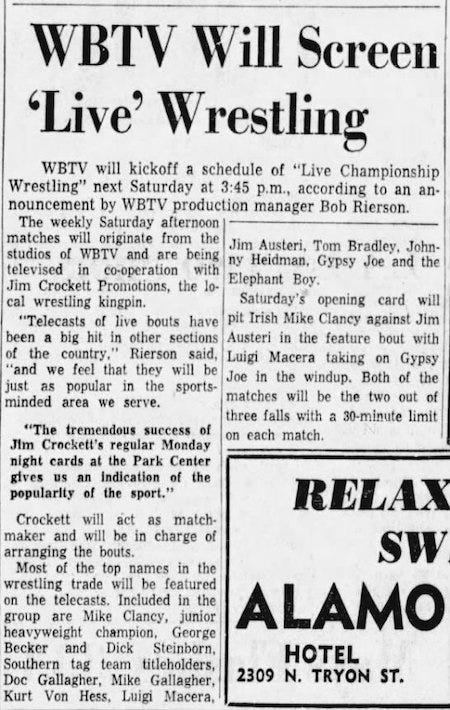
Pictured:: News report about the debut of wrestling on WBTV-TV in Charlotte, North Carolina
Primary production hubs included:
WRAL-TV in Raleigh, NC (Studio A), the territory’s most frequent taping site, where key angles (including earlier-1966 Southern Tag Team title changes) were captured for regional syndication.
WBTV in Charlotte, NC, home of the popular “Live Championship Wrestling” (later taped), hosted by sports director “Big Bill” Ward and tied directly to Park Center house shows.
WGHP in High Point/Greensboro, NC, hosted by Charlie Harville and serving the Piedmont Triad market with programming that drove attendance at the Greensboro Coliseum.
Additional local feeds reached markets such as Greenville, SC (WFBC) and Roanoke, VA (WDBJ).
These Saturday programs—typically one-hour studio shows with a ring set up on the studio floor—featured quick tag-team matches (often two-out-of-three-falls), fiery promos, and post-match brawls engineered to sell tickets to the live loops in each city. Everything ran on classic barter economics: Crockett supplied the completed show at virtually zero cost to the station in exchange for commercial inventory, which promoters then filled with hard-sell plugs for upcoming arena cards.
The model was hyper-local, low-overhead, and perfectly aligned with re-consolidation—maximizing attendance across a wide geographic footprint while strictly preserving territorial boundaries and generating steady, predictable revenue with minimal production expense.
The Practice of Bicycling Tapes
Beyond the studio concept was the additional distribution practice of “Bicycling”.
“Bicycling television tapes” was a low-cost, old-school distribution method used by pro wrestling promoters during the territorial era (roughly the 1940s–1980s, before national TV and satellite distribution took over). It was a practical workaround for getting weekly TV shows aired across multiple cities without the huge expense of making and shipping dozens of tape copies.
Each central booking office controlled a specific geographic “territory” — a region of cities and towns where they had exclusive rights to run live events. They didn’t just run one big show in the biggest city; they ran a weekly loop (or circuit) of house shows:
Monday night in City A
Tuesday in City B
Wednesday in City C
and so on, looping back around the territory.
TV was the main way to sell tickets to those live events. Every week promoters would tape a new TV show (usually in their home/base city) featuring matches, promos, and angles that hyped the upcoming live shows in each town on the loop.
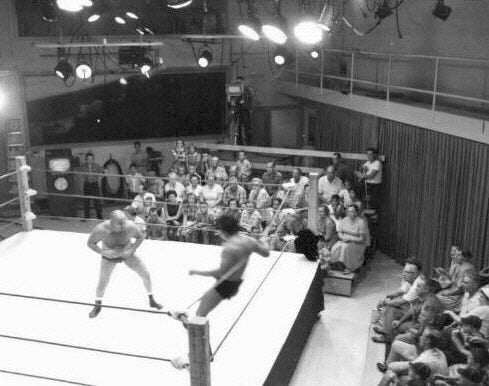
What “Bicycling the Tapes” Actually Meant
Video tape duplication and shipping were expensive and slow back then. Instead of making a separate copy for every TV station, promoters used one single master tape (or sometimes just a couple) and physically moved it from station to station in a chain — like passing a bicycle around a group of riders.
Here’s the typical flow:
Tape the show (often Saturday morning or in-studio) in the main hub booking office city.
Air it first in the home market (often but not always the biggest city).
Ship the physical tape (by mail, bus, or courier) to the next TV station on the loop.
That station airs the show on its scheduled day, then immediately forwards the same tape to the next station.
The tape keeps moving around the territory loop — sometimes taking a full week or more to complete the circuit.
When the tape finally returns to the promoter, they usually record the next week’s new show right over the old one and start the cycle again.
This is why it was called “bicycling” — the tape was literally being pedaled/handed around the territory in a continuous loop.
Why It Mattered (and Created Some Quirks)
Cost savings: One tape could promote shows in 5–10 different markets.
Timing issues: Because the tape moved slowly, the same episode might air in City A on Saturday and in City D a week later. Promoters had to book storylines carefully so that major angles or title changes didn’t spoil themselves across markets.
Localized promos: Sometimes they’d insert short interview segments recorded specifically for each town so the show felt “local” when it aired.
You’ll hear old-timers from territories like Tennessee, Portland, Mid-Atlantic, Florida, or the NWA in general talk about “bicycling tapes.” It was standard practice until satellite distribution (and eventually the WWF’s national expansion in the mid-’80s) made the whole system obsolete.
In short: Bicycling tapes = the cheap, analog way promoters circulated one precious (and costly) videotape around their weekly town loop so every market got wrestling TV without breaking the bank.
It was pure territorial-era hustle.
The impact of studio wrestling and bicycling best practices in syndication were profound for re-consolidation. The multi-studio approach prevented local overexposure, reinforced territorial boundaries, and generated steady revenue at local house shows at minimal marketing expense. It sustained a volume business model—dozens of small-to-medium towns per week—while building long-term fan loyalty through familiar, repeatable television. Gulas-Welch’s system proved that in Stage 5, smart, localized TV was the economic backbone that kept the Southern wheels turning profitably.
The limitations of the reach of the terrestrial VHF television signals throughout the various towns that were supplied talent and television tapes and then promoted by local town promoters, created the geographic invisible lines of the “territories”. While these TV signals were limited throughout the 1960s, the lines of the boundaries of territories were thick and strong. This would change in the next decade when the technology changed with satellite uplink and cable distribution. Howverm during this era, booking office and local promoters enjoyed the ability to be “an island unto themselves”.
Color broadcasts were just emerging in select markets (e.g., early experiments in Georgia), adding visual pop that heightened drama. Without this infrastructure, the month’s solid attendance figures and protected champion bookings would have been far harder to maintain. TV syndication, in short, was the quiet engine that kept the territorial map intact and profitable in May 1966.
The biggest names—Bruno Sammartino, Gene Kiniski, Mad Dog Vachon, Dick the Bruiser & The Crusher, Fritz Von Erich, Dory & Terry Funk, Eddie Graham & Bob Orton Sr., George Becker & Johnny Weaver, Buddy Austin & El Mongol, Giant Baba, and Louie Tillet—drove the action without upending the territorial order. This month illustrated why Stage 5 sustained wrestling’s golden territorial age: profitable, predictable, and built for longevity. The pieces were firmly in place, and the gates—and the TV screens- validated it.
Thank You for Reading
I’m Tony Richards, Pro Wrestling Historian, Author and Storyteller. I share pro wrestling historical items in each issue of the Time Tunnel Pro Wrestling History Newsletter. Thanks for reading! If you enjoy my information on select events, matches and insights, please share it with folks you think might like to be a subscriber!
Remember, premium investors get access to exclusive and special content such as some special issues including a multi-part deep dives on wrestling territories, wrestler bios and championship title histories, special audio and video interviews on territory pro wrestling and more available in the Pro Wrestling Time Tunnel for Premium Investors.