


Happy Birthday to those who have passed on and to those great wrestlers still with us:
In Memoriam:
King Kong Cox 1903
Happy Birthday:
Akira Taue (65)
Akitoshi Saito (61)
Tommoso Ciampa (41)
Io Shirai\Io Sky (36)
RIP Memorial: We stop & remember those who have passed on this day and gave themselves to the business for us, the fans. We salute you and thank you.
Fred Ward 5-8-1992 at the age of 82
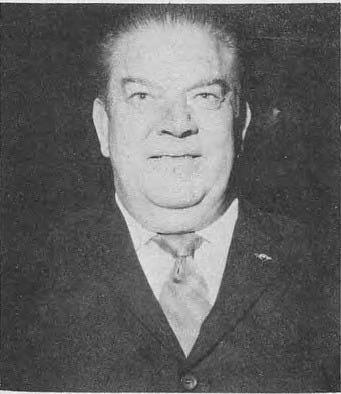
Guy Brunetti 5-8-2005 at the age of 75

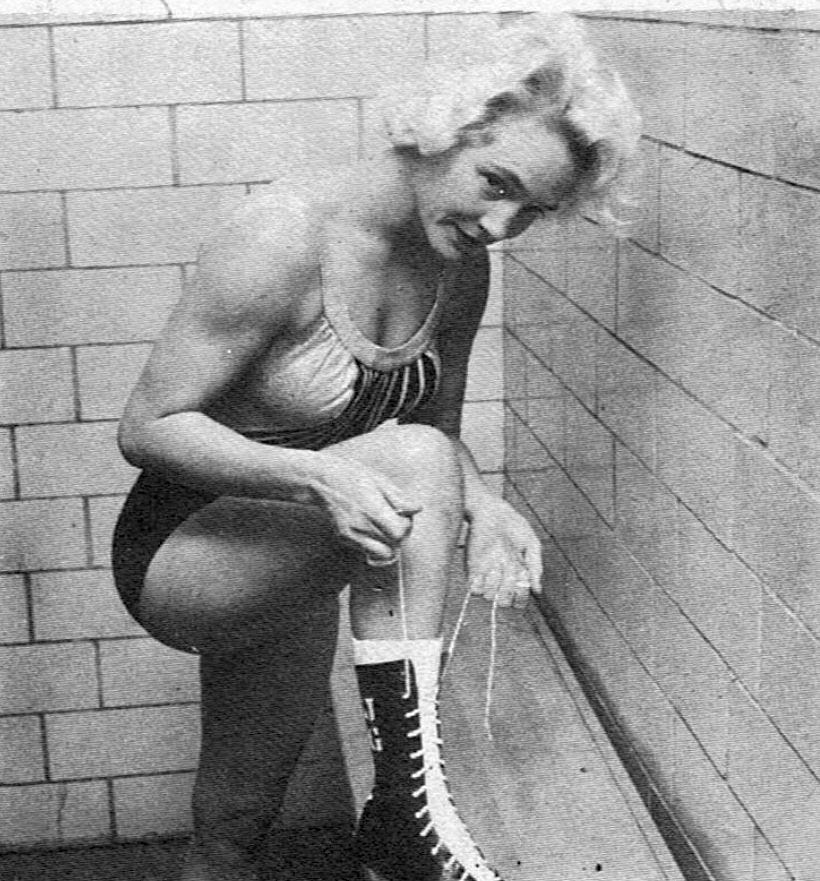
Judy Grable 5-8-2008 at the age of 82
Big Bully Busick 5-8-2018 at the age of 63
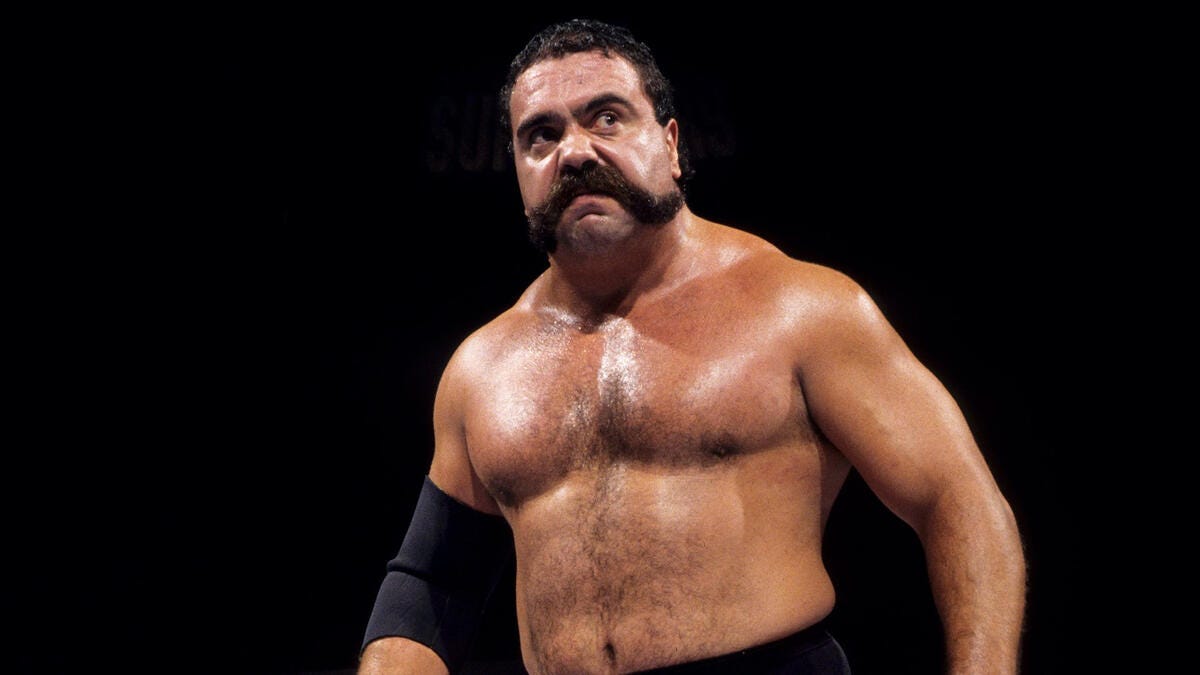
The Life and Career of Mike Shaw
Mike Shaw was an American professional wrestler whose career exemplified the unpredictable, often absurd world of territorial and national wrestling in the 1980s and 1990s. Billed at 6 ft 1 in (185 cm) and weighing around 401 lb (182 kg) in his later years, Shaw was a large, agile big man who trained under the legendary Killer Kowalski. He debuted in 1980 and remained active, with occasional returns, until shortly before his death. Best remembered for two wildly different personas—Norman the Lunatic in World Championship Wrestling (WCW) and Bastion Booger in the World Wrestling Federation (WWF, now WWE)—Shaw wrestled under more than a dozen ring names across North America, Japan, and Mexico. His career highlighted both the creative highs and the often humiliating lows of the industry, where talent frequently took a backseat to outlandish gimmicks.
Born in Skandia, Michigan (near Marquette), Shaw grew up in a working-class family; his father was a long-haul truck driver, a fact Shaw would later honor in one of his gimmicks. Little is publicly known about his pre-wrestling life beyond his amateur wrestling background and training under Kowalski. He entered the business at a time when the territorial system was still dominant, forcing wrestlers to constantly reinvent themselves to stay employed. Shaw’s early work showed promise as a versatile performer capable of playing both babyface and heel roles.
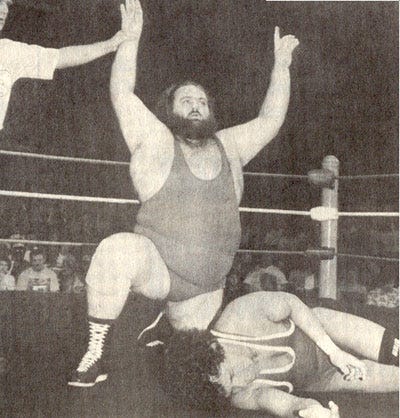
Shaw’s professional debut came in 1980 in Vancouver’s NWA All-Star Wrestling as Klondike Mike. By 1981, he had a brief, unremarkable stint in the WWF (then still a regional promotion) as Mike Smith. In 1982, he joined Stu Hart’s Stampede Wrestling in Calgary, Alberta, where he first gained significant traction. Initially wrestling under his real name, Shaw soon adopted the heel persona of Makhan Singh, a turbaned, villainous character who formed the Karachi Vice stable alongside Gama Singh (as Vokhan Singh) and Gary Albright (as Akam Singh). Managed by figures like Judah Rosenbloom and Abu Wizal, the group feuded prominently with future stars such as Owen Hart, Bret Hart, Davey Boy Smith, and Chris Benoit.
Shaw’s time as Makhan Singh in Stu Hart’s Stampede Wrestling stands as one of the most successful and memorable heel runs of his entire career. Fresh off early territorial stops as Klondike Mike and brief stints elsewhere, Shaw arrived in Calgary in 1982 wrestling under his real name. He initially struggled near the bottom of the card before a brief excursion to South Africa as Big Ben Sharpe. Upon returning, he aligned himself with the already-hated The Great Gama Singh (Gama Singh), adopting the turbaned, “honorary Pakistani” persona of Makhan Singh. This decision launched one of territorial wrestling’s most infamous stables and turned Shaw into a top villain in one of North America’s toughest crowds.
The stable known as Karachi Vice was born somewhat accidentally during a series of promos. Inspired by the massive popularity of the 1980s TV show Miami Vice, the group took on a villainous “Vice” theme tied to Karachi, Pakistan. Gama Singh recalled in interviews that during back-to-back promos with Shaw, Steve DiSalvo, and Kerry Brown, the name “Karachi Vice” simply slipped out. The Calgary fans ran with it, creating signs like “Karachi Ice,” “Karachi Mice,” and more, turning the stable into a cult sensation.
Managers were JR Foley initially, then Abu Wizal after Stampede’s 1985 rebirth. The group was portrayed as a slick, devious foreign heel faction that dominated the territory with underhanded tactics, generating nuclear heat in the conservative Calgary market. Fans genuinely despised them—Shaw’s pale American features under the turban only added to the absurdity and outrage.
Owen Hart, in particular, became Makhan Singh’s arch-nemesis in one of the territory’s most compelling programs. The two traded the Stampede North American Heavyweight Championship in a series of hard-hitting matches that showcased Shaw’s surprising agility and psychology as a big man.
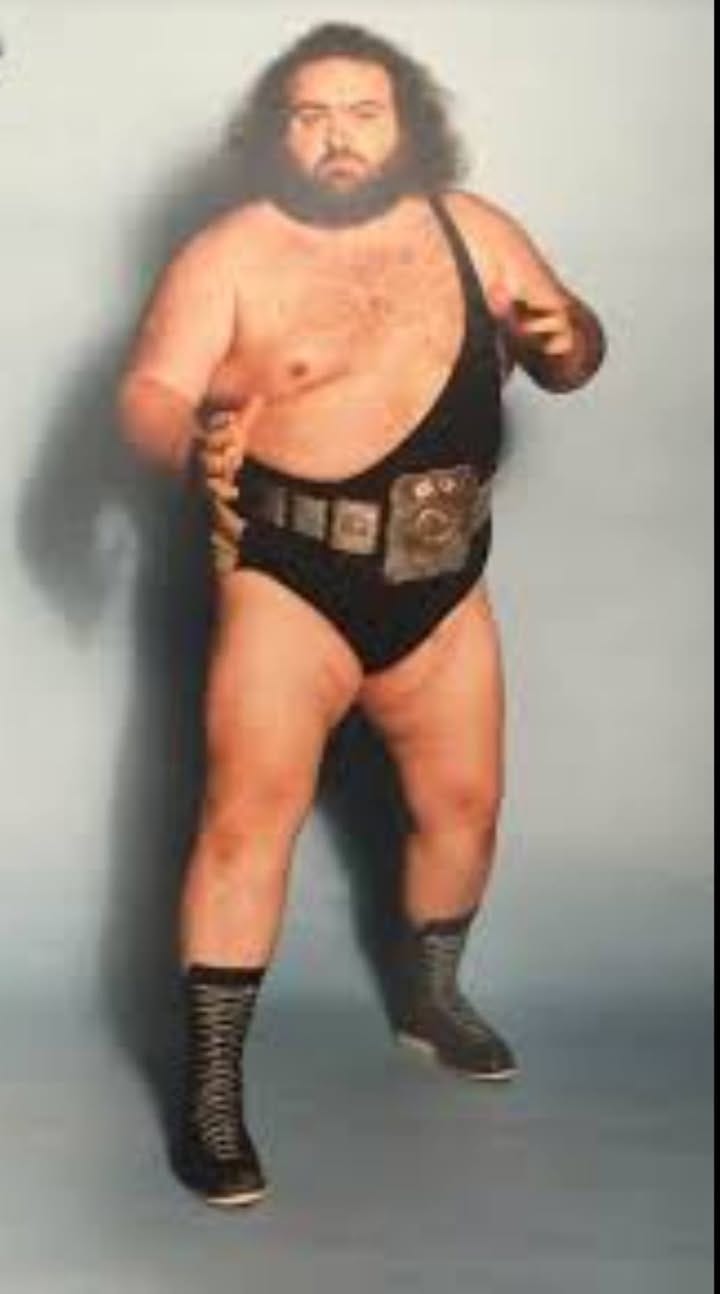
Makhan Singh’s North American Heavyweight Title Reigns (all against or involving Owen Hart):
1st Reign: October 31, 1986 – January 19, 1987 (80 days)
Defeated Owen Hart in a tournament final for the vacant title.
2nd Reign: January 30, 1987 – April 10, 1987 (70 days)
Regained the belt from Owen Hart.
3rd Reign: May 6, 1988 – December 9, 1988 (217 days)
Defeated Owen Hart once more; longest reign of the three. Lost the title to Don Muraco.
On December 30, 1988, Makhan Singh and Vokhan Singh (Gary Albright) defeated The British Bulldogs (Dynamite Kid & Davey Boy Smith) for the Stampede International Tag Team Championship. They held the belts until April 8, 1989, when they dropped them to Chris Benoit and Biff Wellington. Shaw also earned a second tag reign with Gerry Morrow (sometimes listed as Jerry Morrow). These title programs helped elevate the young babyfaces while keeping Karachi Vice at the top of the card.
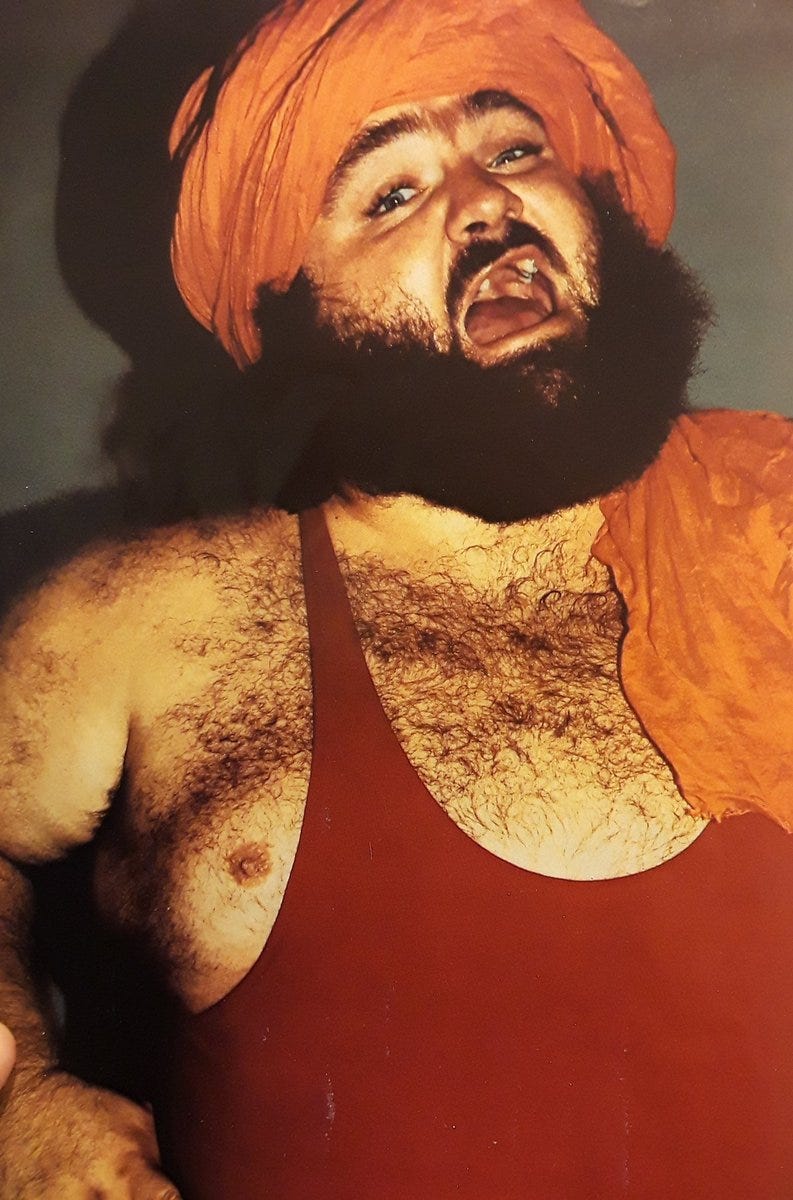
In the ring, Shaw excelled as a versatile power wrestler who could brawl, sell, and make opponents look like stars. His commitment to the gimmick—complete with promos full of arrogant, broken-English flair—made him a believable threat. Behind the scenes, Shaw was respected for his professionalism; he later reflected positively on the run in shoot interviews, noting how the heat was real and the territory’s small, intense crowds made every match feel important. Gama Singh has repeatedly called Karachi Vice one of Stampede’s most memorable angles, crediting fan creativity for amplifying its success.
By early 1989, Stampede Wrestling was struggling amid the rise of cable television and the national expansion of the WWF and NWA. After losing the tag titles in April, Shaw left Calgary. The promotion itself folded in December 1989. Just before the closure, Jim Ross recommended Shaw to WCW, where he would debut as Norman the Lunatic—marking the end of his most successful territorial chapter.
Makhan Singh’s Stampede years are widely regarded as Shaw’s career peak for pure wrestling credibility and character work. Unlike the cartoonish gimmicks that defined his later WWF and WCW stints (Bastion Booger, Friar Ferguson), the Karachi Vice era showcased Shaw as a serious, heat-drawing heel who could main-event and draw money. The stable became a cult favorite in wrestling nostalgia circles—fans still reference the “Karachi Vice 4 Life” signs and the accidental brilliance of the name. For a journeyman big man who never reached world-title status nationally, this run proved Shaw’s ability to adapt, commit fully, and thrive when given the right environment and creative freedom.
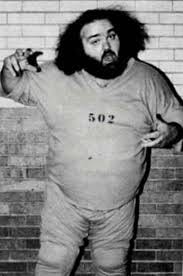
Stampede closed in December 1989, and Shaw made the jump just in time. His WCW debut came on June 14, 1989, at Clash of the Champions VII, where Norman the Lunatic defeated jobber Mike Justice in his first televised outing. Dressed in ragged institutional garb with the number “502” stenciled on his smock, Norman looked every bit the unstable brute: unkempt hair, wild eyes, and a lumbering yet agile frame at 6’1” and over 300 pounds. Teddy Long, in one of his earliest managerial roles in WCW, accompanied him to the ring, dangling the giant key like a threat—misbehave, and Norman would be dragged back to the asylum.
The gimmick played on classic wrestling tropes of the “monster heel” but added a layer of sympathy. Norman’s teddy bear became his security blanket and a key prop. Fans, particularly children, began bringing teddy bears to shows and tossing them into the ring; Shaw would collect them and later donate many to children’s hospitals, turning the character into a grassroots phenomenon. Early on, Norman functioned as a dominant but controllable force under Long’s thumb, winning squash matches while occasionally showing flashes of rebellion. His in-ring style mixed power moves with surprising athleticism for a big man—something Shaw had honed in Stampede—making him a credible threat rather than pure comedy relief.
The turning point came when Norman broke free from Long’s control. The storyline built sympathy for the big man: Long’s constant threats and belittling pushed Norman to snap, rejecting the key and the manager’s authority. Renamed Norman the Maniac, he turned fully face (hero) and began a more independent, heroic run. This shift resonated with audiences who had grown attached to the character’s underdog qualities. Norman feuded with the devious Kevin Sullivan, a natural rival whose occult-themed antics contrasted Norman’s childlike chaos. A highlight came at Clash of the Champions X on February 6, 1990, when Norman defeated Sullivan in a competitive bout. He also crossed paths with emerging stars like Cactus Jack (Mick Foley), defeating him at WrestleWar on February 25, 1990.
Norman’s popularity peaked when he earned multiple shots at the NWA World Heavyweight Championship against Ric Flair. Though he never captured the gold, these matches positioned him as a legitimate main-event level act for a time, elevating Shaw beyond mid-card status. The character’s appeal lay in its duality: intimidating enough to be taken seriously in the ring, yet vulnerable and relatable enough to draw cheers from crowds who saw past the “lunatic” label.

As 1990 wore on, WCW creative (under the influence of figures like Ole Anderson) sought to evolve the gimmick. Norman transitioned into Trucker Norm, a more grounded persona honoring Shaw’s late father, a long-haul truck driver. While the change was intended to add depth, many fans and observers felt it diluted the magic of the Lunatic/Maniac run. The trucker character lacked the visual flair and emotional hook of the asylum escapee, and Norman’s momentum faded.
He also worked in the United States Wrestling Association (USWA) as Jed Grundy and briefly reprised Makhan Singh in the Global Wrestling Federation (GWF) in 1991, joining The Cartel stable with Cactus Jack (Mick Foley) and others. Shaw even toured Mexico in 1991–1992 as Aaron Grundy, billed as the brother of the comic-book monster Solomon Grundy.
In 1993, Shaw transitioned to the WWF during a period when the company was experimenting with increasingly bizarre characters. He debuted briefly as Friar Ferguson (a “mad monk” gimmick), but the character was quickly dropped after complaints from the Catholic Church of New York. WWF management then repackaged him as Bastion Booger, an unkempt, gluttonous hunchback who ate on camera and wore ill-fitting, food-stained singlets. The gimmick was widely regarded as one of the era’s low points—humiliating for Shaw and emblematic of the company’s sometimes crude booking. As a lower-card wrestler and frequent jobber, Booger scored occasional wins, including a clean pin over Owen Hart, and appeared at the 1993 Survivor Series (in a losing effort alongside Bam Bam Bigelow and The Headshrinkers). He feuded lightly with Bigelow after “falling in love” with Luna Vachon, but the angle went nowhere. Shaw left WWF in 1994, though he retained the Booger character on the independent circuit.
Post-WWF, Shaw wrestled sporadically for independents in Michigan and Canada, including returns to Calgary and appearances for Border City Wrestling. He feuded with Typhoon (Fred Ottman) in 1995 and worked for various small promotions until largely retiring in 1999. In his later years, he opened a wrestling school in Skandia, Michigan, and took on security work. He made a nostalgic one-night return to WWE television on the December 10, 2007, Raw 15th-anniversary special, reprising Bastion Booger in a comedic segment with Triple H.
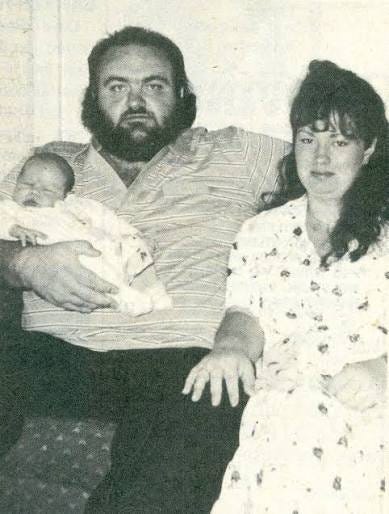
Shaw’s personal life remained relatively private. He was married to Kelly Shaw and had two children, son Joshua and daughter Amanda. Tragically, on September 11, 2010, Shaw died at age 53 in Marquette, Michigan, from a pulmonary embolism. Obituaries praised his professionalism and versatility, noting how he adapted to whatever gimmick promoters handed him.
Mike Shaw’s career was a microcosm of professional wrestling’s territorial-to-national transition. He never reached world-championship main-event status but left an indelible mark through memorable (and sometimes infamous) characters. From the athletic heel Makhan Singh to the sympathetic lunatic Norman and the grotesque Booger, Shaw demonstrated remarkable commitment to whatever role was asked of him. Though some gimmicks embarrassed him publicly, his resilience and work ethic earned respect from peers and fans alike.
One Thing I Learned About Fred Ward
Though he’s remembered primarily as the pioneering promoter who ran the central Georgia territory (Columbus, Macon, Augusta) for over 40 years under Fred Ward Promotions and as an NWA member, Ward himself was a professional wrestler in the 1930s and ’40s, competing under the names Tommy Ward and Tommy Londos. In a rare and largely forgotten angle in 1973—at nearly 59 years old—he actually came out of retirement to wrestle heel manager J.C. Dykes in one of his own shows. The bout was part of the ongoing Super Infernos storyline and gave fans a one-night glimpse of the old-school promoter stepping back into the ring for heat.
It’s a quirky reminder that even the suit-and-tie promoters of the territorial era often had legitimate in-ring roots—and occasionally couldn’t resist lacing up the boots one last time.
Thank You for Reading
I’m Tony Richards, Pro Wrestling Historian, Author and Storyteller. I share pro wrestling historical items in each issue of the Time Tunnel Pro Wrestling History Newsletter. Thanks for reading! If you enjoy my information on select events, matches and insights, please share it with folks you think might like to be a subscriber!
Remember, premium investors get access to exclusive and special content such as some special issues including a multi-part deep dives on wrestling territories, wrestler bios and championship title histories, special audio and video interviews on territory pro wrestling and more available in the Pro Wrestling Time Tunnel for Premium Investors.
Always thought that Shaw was a better worker than the gimmicks he did after leaving Stampede. Of course, even when WCW got him over, they got him not over even quicker.