


Happy Birthday to those who have passed on and to those great wrestlers still with us:
In Memoriam:
George Gordienko 1928
Ray Fernandez\Hercules Hernandez 1956
Owen Hart 1965
Happy Birthday:
Bobby Simmons (71)
Kevin Owens (42)
Will Ospreay (33)
RIP Memorial: We stop & remember those who have passed on this day and gave themselves to the business for us, the fans. We salute you and thank you.
Casey Columbo 5-7-1974 at the age of 71

Jack O’Brien 5-7-1985 at the age of 75

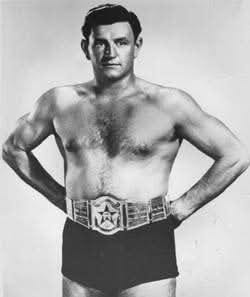
Sonny Myers 5-7-2007 at the age of 83
Significant Debuts:
Kerry Von Erich 5-7-1978 at the age of 18
Bull Nakano 5-7-1983 at the age of 15
The Life and Career of Sonny Myers
Harold Calvin “Sonny” Myers was an American professional wrestler whose six-decade involvement in the sport—from his debut in the mid-1940s through refereeing and promoting into the 21st century—made him a fixture of the territorial era of wrestling, particularly in the Midwest and Southwest. Billed from St. Joseph, Missouri, and known as “The Missouri Meteor” (or occasionally “Bag of Bones” for his lean 6’2”, roughly 200-pound frame), Myers was never a mainstream national superstar like some of his contemporaries. Yet he carved out an extraordinary career defined by multiple heavyweight championships, grueling territorial road wars, international tours, and a reputation as one of the era’s most skilled pure workers.
Myers held the NWA Central States Heavyweight Championship a remarkable 14 times, along with the NWA Missouri Heavyweight title, five reigns as NWA Texas Heavyweight Champion, and numerous tag team belts across NWA territories. He even enjoyed a brief, often-overlooked reign as NWA World Heavyweight Champion in 1947. Beyond the ring, he served as a sheriff in Buchanan County, Missouri, ran the successful Sonny Myers Carnival for 22 years, and later tended a tree farm—embodying the resilient, multifaceted life of a true territorial wrestler who never fully left the business.
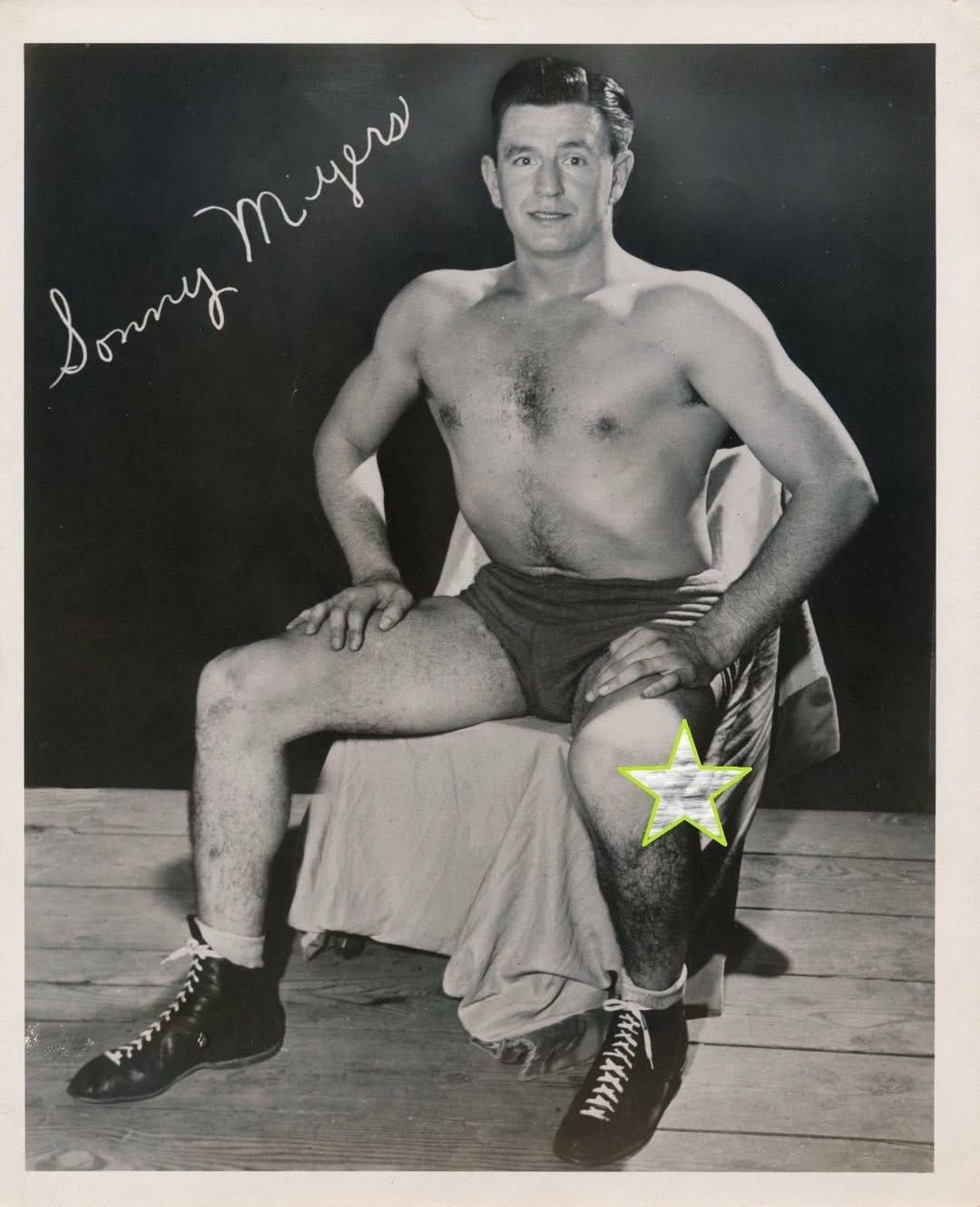
Born on a farm in Savannah, Missouri (Andrew County), in 1924, Harold C. Myers grew up in a rural environment far removed from the bright lights of arenas. He worked on the killing floor of Swift’s packinghouse in St. Joseph while excelling in multiple sports. A standout basketball player, he also attended the University of Missouri, where he wrestled and played baseball; he spent summers as a semi-pro baseball player. “I loved all sports… You’ve got to like something if you’re going to do something good,” he later reflected.
His path into wrestling began serendipitously in 1943 at the local YMCA. While playing basketball, the 19-year-old Myers wandered into a room where wrestlers were training under the legendary St. Joseph promoter Gust Karras. Myers was struck by the intensity—and the pipe smoke—but Karras saw potential in the athletic young man. With his parents’ permission, Myers trained under Karras and debuted around 1943.
Myers’ early matches in Kansas City and the Midwest were learning experiences against veterans. He drew and won preliminary bouts in 1944, gradually building credibility under Karras’ guidance. By 1947, he had earned a shot at the Midwest Wrestling Association (MWA) World Heavyweight Championship held by the formidable Orville Brown. Their four-match series in late 1947—highlighted by marathon bouts before packed crowds at Memorial Hall, with Jack Dempsey as a special referee in one—showcased Myers’ cat-like agility, atomic drop, and Japanese sleeper hold.
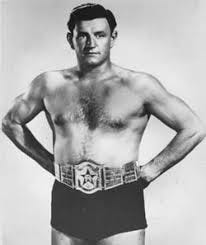
On November 3, 1947, Myers defeated Brown to claim a version of the world title. Fans and some officials hailed him as champion, but the timing was fateful. In 1948, the National Wrestling Alliance (NWA) formed and retroactively recognized Brown as its inaugural champion, consigning Myers’ reign to the footnotes of history. This “forgotten” world title run would later fuel resentment and legal action.
Myers quickly rebounded, winning the NWA Missouri Heavyweight title from Ronnie Etchison days after his Brown victory and embarking on a string of Texas Heavyweight Championship reigns starting in 1948.
The 1950s and 1960s marked Myers’ prime. He became synonymous with the NWA Central States territory (Kansas City/St. Joseph), where his 14 Central States Heavyweight Championship reigns made him a perennial main-eventer. He also captured tag gold with partners like Pat O’Connor, Dizzy Davis, Leo Garibaldi, Larry Chene, Thor Hagen, Ron Etchison, and Bobby Graham—winning versions of the NWA World Tag Team, North American Tag Team, and Central States Tag Team titles multiple times.
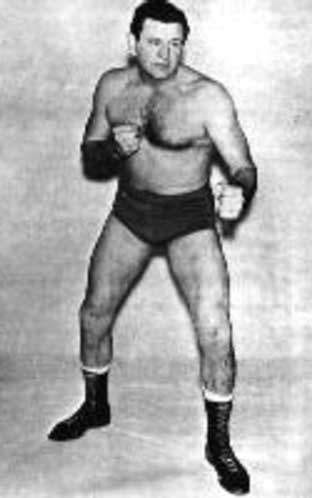
In Texas (booked out of Houston by Doc Sarpolis), he thrived in high-profile programs. He feuded with and teamed alongside stars like Rito Romero, Danny McShain, and Mike DiBiase, while also working in Amarillo (NWA North American Heavyweight Championship twice) and other territories such as Tennessee, Vancouver, and the Minneapolis Territory where he teamed with Johnny Weaver as the Weaver Brothers against the Nielsens and Angelo Poffo & Bronko Lubich.
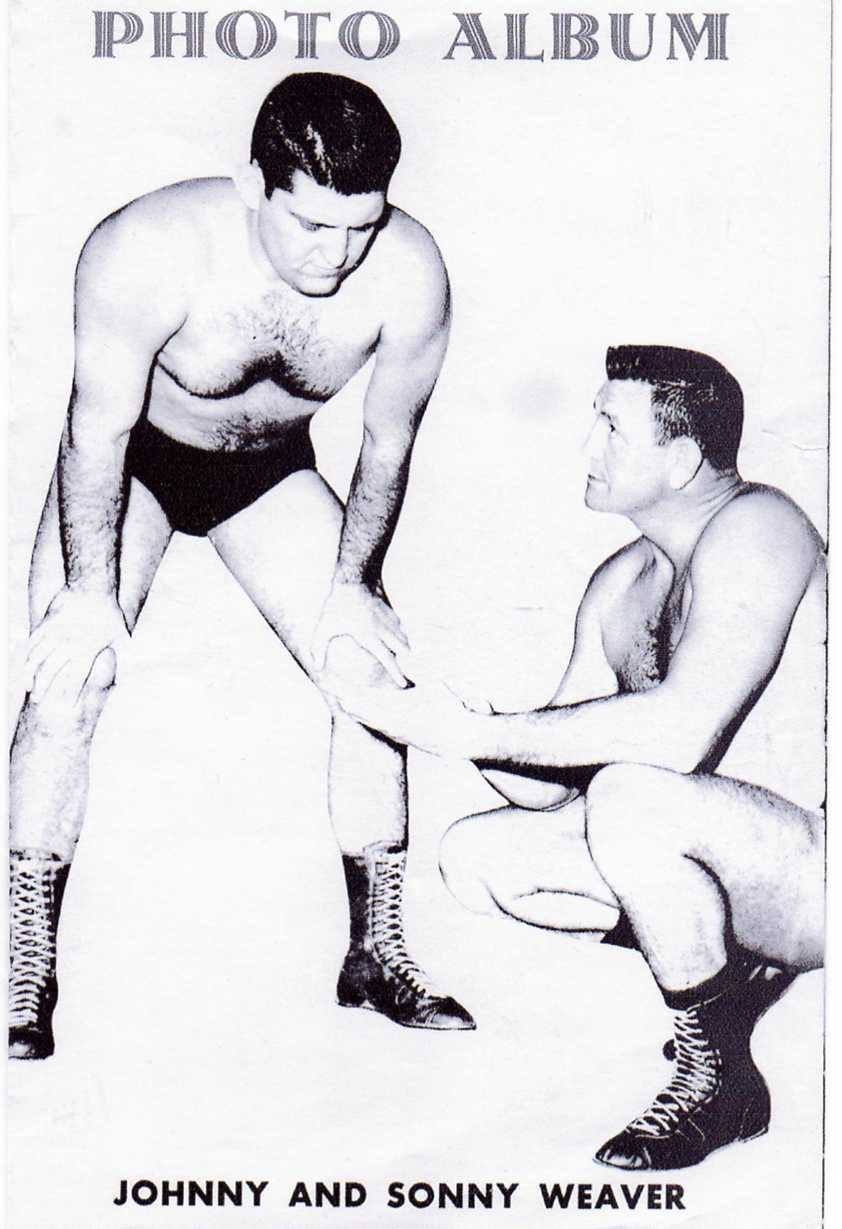
Pictured: The Weaver Brothers, Johnny Weaver and Sonny Weaver (Myers).
Myers’ style emphasized scientific wrestling, speed, and psychology rather than size or brawling—qualities that drew praise from peers. Harley Race called him “probably the best clean side of wrestling”; Jody Hamilton labeled him “the best pure all-around worker”; and Dick Brown noted he “did more with less of a body.”
Wrestling’s territorial grind brought both glory and danger. In June 1951, during a match in Angleton, Texas (near Houston), an irate fan climbed into the ring and stabbed Myers, slashing a 16½-inch gash across his abdomen. He required over 270 stitches (accounts vary between 248–258) and months of rehabilitation, yet he returned to the ring by April 1951 and continued touring relentlessly. His 1951 tax records reveal 63,881 miles driven and 294 nights away from home across multiple states.
Myers and his wife Elaine (whom he met at the matches and married on March 27, 1948) traveled the globe: England, France, Germany, Mexico, Canada, Alaska, Australia, and Japan (seven times). These international runs expanded his experience while keeping him rooted in St. Joseph.
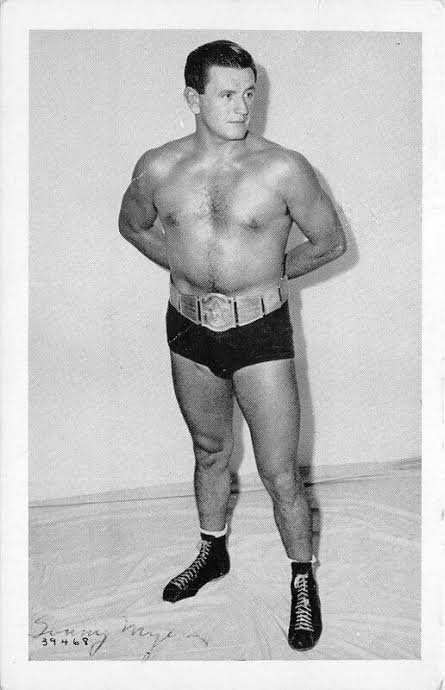
Myers’ 1947 world title snub and ongoing territorial politics led to a landmark legal battle. In the 1950s–1960s, he sued NWA founder P.L. “Pinkie” George and the Alliance for antitrust violations, alleging a monopoly that damaged his career. The feud dated back to at least 1953. Myers prevailed, settling for approximately $90,000 and securing a consent decree that forced the NWA to end certain restrictive practices. Lou Thesz later praised Myers for holding the promoters accountable.
Myers’ involvement in Japanese wrestling was part of his broader international touring career, with seven documented tours to Japan spanning the 1950s and 1960s (exact dates for all seven are not fully recorded in surviving historical accounts, which is common for the territorial era). He worked primarily as a skilled “gaijin” (foreign) heavyweight for Japan’s pioneering promotions, bringing his scientific, psychology-driven style that emphasized holds, agility, and clean wrestling—qualities highly valued in early puroresu.
His signature moves, including the Japanese Sleeper, a rear-naked choke variation) and atomic drop, were particularly effective and respected in Japan, where technical proficiency and storytelling in the ring were paramount.
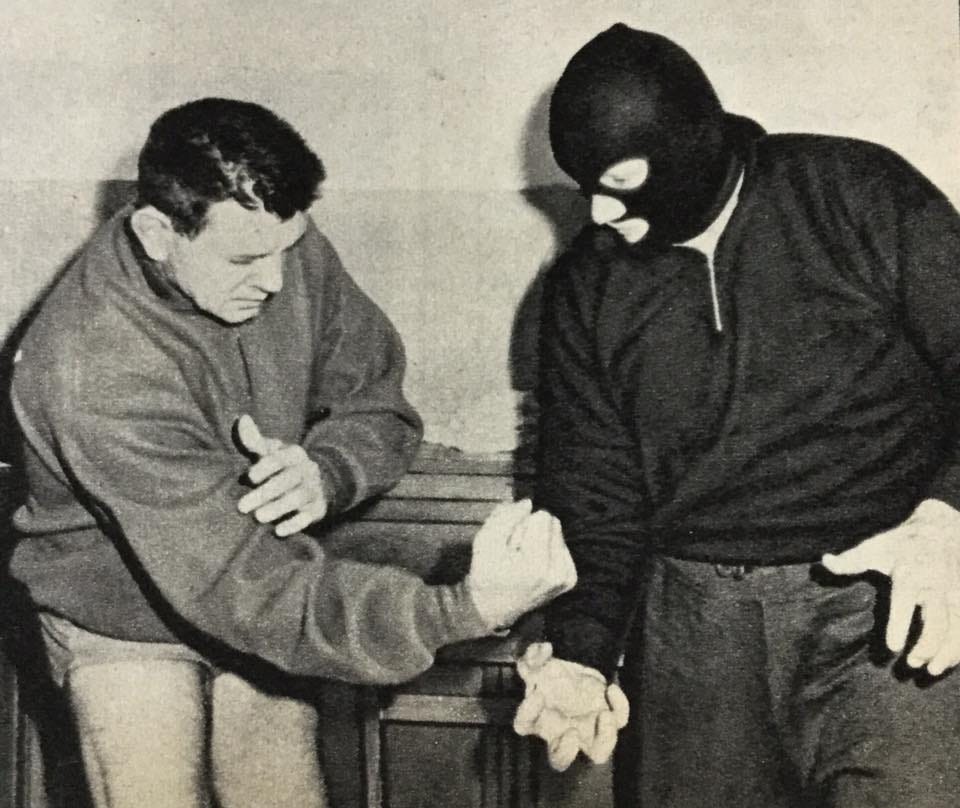
Pictured: Sonny Myers is showing something to a masked Lee Henning on a JApanese tour in Japan in 1963
Myers’ most prominent and best-documented Japanese run came in 1960 with the Japan Wrestling Association (JWA), the dominant promotion founded by the legendary Rikidōzan.
He departed the U.S. on April 7, 1960, after a final Amarillo appearance, for an extended tour.
From April 15 to May 13, 1960, he competed in the 2nd Annual JWA World League Tournament (also called the World Big League), a prestigious round-robin event held across various Japanese cities.
Myers finished 3rd overall with an impressive record of 8 wins, 0 losses, and 5 draws. Rikidōzan won the tournament, with NFL star Leo Nomellini placing 2nd.
A notable match from the tour was a May 16, 1960, bout in Tokyo against Rikidōzan himself that ended in a dramatic 1-1 draw with a third fall going to time limit. He also drew with other foreigners like Alex Perez during the tour, showing the respect he commanded by refusing an undeserved countout victory in one bout. Myers traveled with fellow American Stan Holek (billed as Stan Nielsen or Stan Lisowski), who later recalled Myers as a charismatic “character” who kept the group laughing during downtime—joking about visiting hot baths and commenting on Japanese physiques in his signature Midwestern wit.
On August 23, 1963, Myers faced Rikidōzan again in a high-profile JWA international match in Japan in which a photo of Myers taking a kick from the “Father of Japanese Wrestling” survives and is still treasured by the Momota family. When a faction of JWA talent (led by Toyonobori) briefly split to form the short-lived Tokyo Pro Wrestling promotion, Myers was among the foreign talent brought in. He appeared on cards at venues like Sumo Hall in Tokyo, teaming or clashing with stars like Johnny Powers, Dean Higuchi, and Toyonobori losing via disqualification in a tag match.
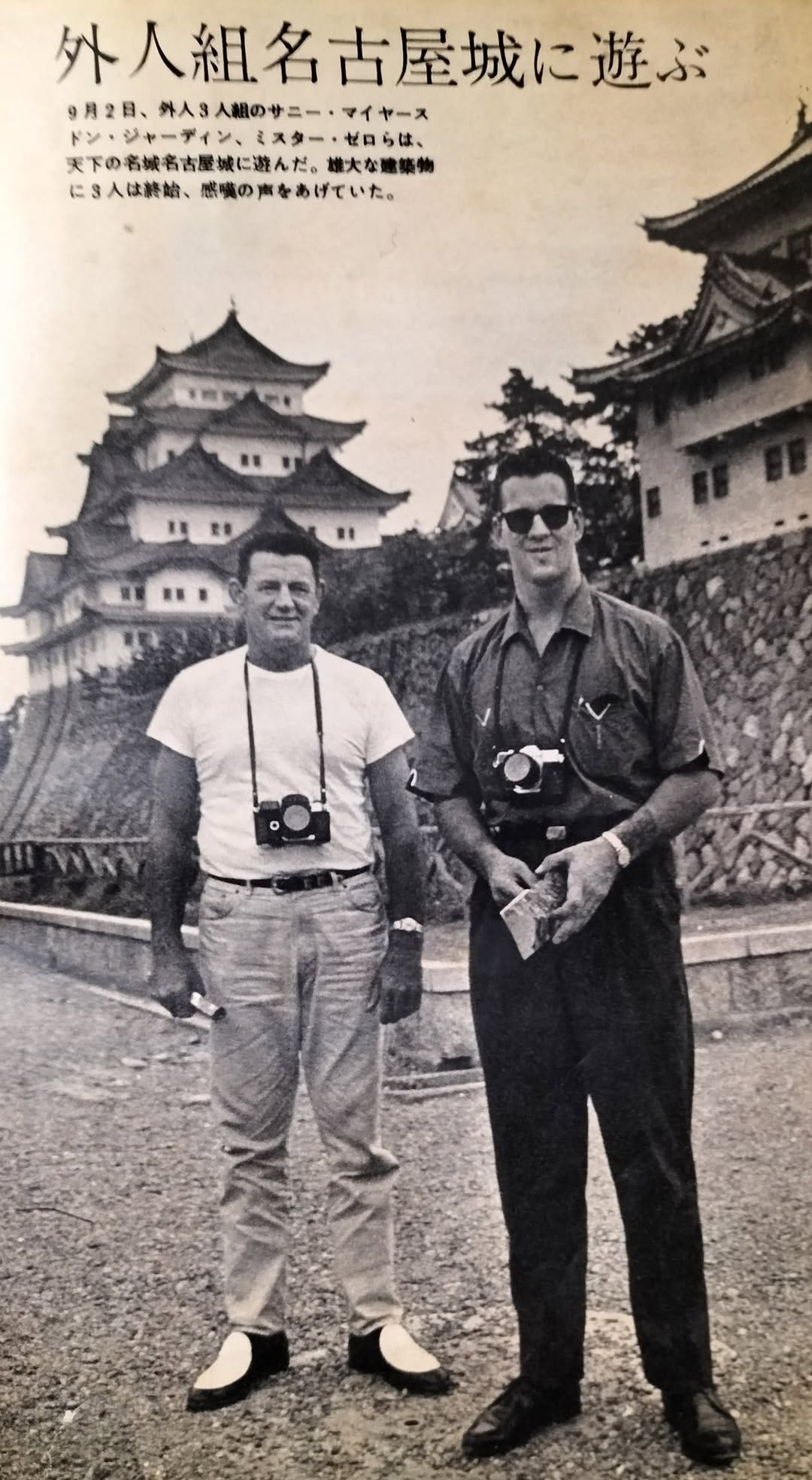
Pictured: September 2nd, 1963 Sonny Myers and Don Jardine at Nagoya castle, Aichi, Japan.
These excursions fit the NWA’s international exchange model of the era, where American territorial stars like Myers helped elevate Japanese promotions while gaining global experience. He never held major Japanese titles, but his consistent performances and professionalism made him a reliable draw and a bridge between U.S. and Japanese styles.
Myers’ seven trips to Japan (often with his wife Elaine) underscored his status as a true globe-trotting veteran. While he never became a puroresu icon on the level of Rikidōzan’s native stars, his work helped popularize Western technical wrestling in Japan during a formative period. Peers remembered him fondly for blending athleticism with showmanship, and his Japanese Sleeper hold even influenced later generations of workers.
Myers wrestled off and on into the late 1970s–early 1980s before transitioning to refereeing in the Central States territory (famously noted as one of the “world’s slowest” referees) and occasionally serving as an NWA troubleshooter.
Myers was the referee for Terry Funk’s NWA World Heavyweight Championship victory over Jack Brisco on December 10, 1975, at the Miami Beach Convention Center in Miami, Florida. Right after the pinfall, an ecstatic Terry Funk threw his arms up in celebration and accidentally smashed Myers in the face, breaking the referee’s nose. The moment has become a well-known piece of wrestling lore, often recounted in historical accounts and by those who were there. Myers, ever the tough Midwestern pro, took it in stride as part of the business.
This assignment fit perfectly with Myers’ later-career role. By the mid-1970s, after decades as a top territorial champion (especially in the NWA Central States area), he had transitioned into occasional refereeing and NWA troubleshooter duties. The Funk-Brisco match was one of the most high-profile spots of his refereeing tenure. The match itself was a dramatic, hard-fought contest that capped Jack Brisco’s nearly two-year reign and launched Terry Funk’s 424-day world title run. Myers’ involvement added an extra layer of credibility and “old-school” legitimacy to the proceedings.
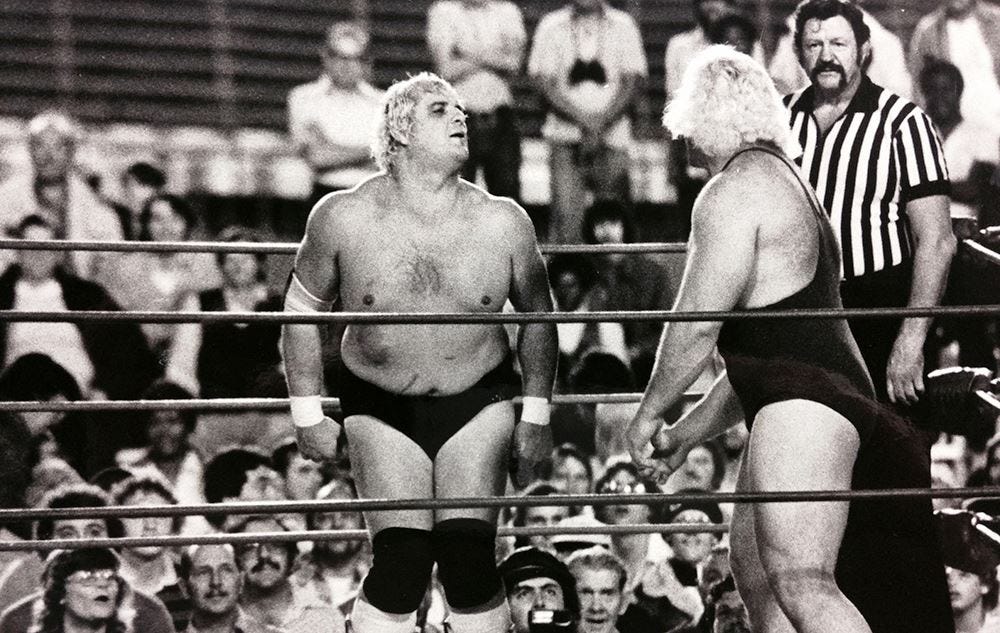
Pictured: Dusty Rhodes vs Ken Patera and Sonny Myers as the refreee
In 2001—more than 55 years after his debut—he came out of retirement to promote “Sonny Myers’ All Star Wrestling” shows in northwestern Missouri, featuring local independents.
Myers and Elaine raised two sons, Steve and Michael, in St. Joseph. Beyond wrestling, he worked as a car dealer, served as sheriff in Buchanan County, and co-ran the Sonny Myers Carnival for 22 years after merging it with his brother-in-law’s show. In later years, he tended a tree farm on over 150 acres in northwest Missouri.
He was a larger-than-life character offstage—known for humorous con-artist antics in restaurants and quick wit—he remained beloved by peers like Ed Wiskoski, Stan Holek, and Mad Dog Vachon.
Sonny Myers died on May 7, 2007, at age 83 in St. Joseph after a long illness. He was preceded in death by his parents and three sisters but survived by Elaine and his sons.
One Thing I Learned About Nelson Royal
He was born in Kentucky and later moved to the Texas Panhandle and began his career in the early 1960s as “Sir Nelson Royal”. He was broken into the business under the tutelege of Chief Don Eagle. Royal was an accomplished amateur wrestler, but got involved by being asked to replace another wrestler snd things just went forward from there afte Royal showed potential to be a good worker.
Thank You for Reading
I’m Tony Richards, Pro Wrestling Historian, Author and Storyteller. I share pro wrestling historical items in each issue of the Time Tunnel Pro Wrestling History Newsletter. Thanks for reading! If you enjoy my information on select events, matches and insights, please share it with folks you think might like to be a subscriber!
Remember, premium investors get access to exclusive and special content such as some special issues including a multi-part deep dives on wrestling territories, wrestler bios and championship title histories, special audio and video interviews on territory pro wrestling and more available in the Pro Wrestling Time Tunnel for Premium Investors.