


Happy Birthday to those who have passed on and to those great wrestlers still with us:
In Memoriam:
Billy Two Rivers 1935
Wally Yamaguchi 1958
Happy Birthday:
Bill Watts (87)
Hiroshi Hase (65)
Princess Victoria (64)
Chad Patton (50)
RIP Memorial: We stop & remember those who have passed on this day and gave themselves to the business for us, the fans. We salute you and thank you.
Edwin Bibby 5-5-1905 at the age of 56
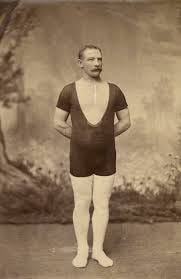
Randy Anderson 5-5-2002 at the age of 42

Millie Stafford 5-5-2008 at the age of 81

Significant Debuts:
Jimmy Valiant 5-5-1964 at the age of 21
7 Stages of The Territory Era Review
70 Year Flashback
Stage of the Territory Era: Stage 4: Investigation
Year 2: Spring & Summer 1956: The Influence of Television
In the spring and summer of 1956, professional wrestling in North America stood at the peak of its first Golden Age, a boom period driven largely by the explosive growth of television. The sport, once confined to smoky arenas and traveling carnivals, had transformed into a living-room staple that blended athleticism, melodrama, and larger-than-life characters. Television did not merely broadcast wrestling—it reshaped it, turning regional promotions into household entertainment while reinforcing the territorial system of the National Wrestling Alliance (NWA). A key question lingers from this era: Was wrestling still “network-driven” in mid-1956, or had local and regional television already taken over? The evidence shows a clear transition. While major networks had fueled the initial surge from 1948 to 1955, by spring 1956 the industry had shifted decisively to local and syndicated broadcasts tailored to NWA territories. This local focus not only sustained the business but also laid the groundwork for decades of regional dominance.
The TV Wrestling Boom of the 1940s and early 1950s
The roots of TV’s influence trace back to the late 1940s. The first recurring wrestling program, Hollywood Wrestling, debuted on Los Angeles’ KTLA in 1947 and was syndicated to other cities by 1952. By 1948, the three major networks—ABC, CBS, and especially the DuMont Television Network—began airing wrestling shows nationally. DuMont, in particular, became wrestling’s biggest champion, broadcasting matches from arenas like Chicago’s Marigold Gardens that reached audiences from New York to Boston. These network programs introduced stars like Gorgeous George, whose flamboyant persona and antics captivated viewers and drew mainstream attention (even mentioned by Bob Hope). Wrestling proved ideal for early TV: it was cheap to produce, visually dramatic, easy to follow, and filled airtime with colorful heroes and villains. The medium forced promoters to emphasize entertainment over pure athleticism—short matches, interviews, and storylines became standard. Attendance at live events soared as TV acted as a free commercial, drawing fans to arenas to see their favorites in person. By the early 1950s, wrestling was so ubiquitous that some called TV sets “wrestling sets.”

Pictured: Title Card from KTLA-TV, Los Angeles, Californnia
Wrestling was aggressively embraced by the emerging television networks as cheap, visually compelling filler content during TV’s explosive postwar growth. The DuMont Television Network (the short-lived “fourth network”) was wrestling’s biggest champion, broadcasting Wrestling from Marigold from Chicago’s Marigold Arena starting in September 1949. These shows reached a national audience via kinescope syndication to cities like New York and Boston, achieving massive ratings shares (up to 35.6% in some markets). ABC also aired wrestling from Chicago’s Rainbo Arena, while early local-to-national efforts like Hollywood Wrestling (KTLA, 1947 onward) were syndicated through the short-lived Paramount Television Network by 1952. NBC and CBS were less involved, but overall, wrestling appeared on network schedules as a prime-time or high-visibility draw. This national exposure created household names like Gorgeous George and helped sell millions of TV sets—wrestling was literally “must-see” programming that introduced the sport to millions of living rooms simultaneously.
Broadcasts were often live from large arenas (e.g., Marigold, Jamaica Arena), emphasizing spectacle and athleticism to showcase the new medium. Networks treated wrestling as entertainment programming to fill schedules and attract sponsors. The focus was on building broad national appeal and legitimizing TV as mass entertainment. Television (and wrestling on it) created the initial boom. TV set ownership skyrocketed, and wrestling’s accessibility turned casual fans into arena-goers. It professionalized the sport (shorter matches, promos, larger-than-life personas) and elevated the NWA’s world champions to semi-national stardom. Critics feared it would kill live gates; instead, it supercharged them.
in the late 1940s and very early 1950s, TV was revolutionary and hungry for content. With few stations and limited programming options, networks like DuMont used wrestling to differentiate themselves and fill airtime affordably.
Evolution of Wrestling on Television into the Mid-1950s
By spring 1956, the network era was fading fast. Overexposure had led networks to drop many high-rated wrestling programs after 1955. The DuMont Network, wrestling’s primary national supporter, was in terminal decline and fully ceased operations by late 1956. What remained were smaller, local syndicated shows relegated to late-night slots, Saturday mornings, or Sunday afternoons—filler programming rather than prime-time showcases. Promoters quickly adapted, using these local airwaves strategically.
Much of this stemmed from an innovation brainstorm of Jim Barnett based on turning a problem into an opportunity in 1955.

Pictured:“The Wizard of Pro Wrestling” Jim Barnett
Here’s the story: Jim Barnett (who, with partner Johnny Doyle, was running the Indianapolis-based promotion at the time) had been producing wrestling TV the usual way—hauling a mobile remote broadcast truck/unit to the arena, setting up ringside cameras, and doing a live or taped remote from the venue. One day in 1955 the mobile TV truck was unavailable (recollections often describe it as having “broken down” or simply not showing up). Rather than cancel the show, Barnett improvised: he had the ring moved into the local television station’s studio, set up the cameras there, and produced the entire program on the studio floor with a small audience or none at all.
This accidental solution became a deliberate, permanent format. Studio wrestling gave promoters far better control—cleaner production, easier time for interviews and promos, no arena crowd noise issues, and the ability to shoot multiple segments efficiently. It quickly became the standard across many NWA territories because it was cheaper and more reliable than remote trucks. Barnett is widely credited (including in sources like Paul Boesch’s accounts and wrestling histories) as the man who popularized or “fathered” full studio wrestling shows in North America.
A quick note on Cincinnati: The Indianapolis promotion (still under Barnett & Doyle) did expand into Cincinnati and began a regular live weekly studio show there on WCPO-TV in December 1958 to promote house shows at the Cincinnati Gardens. But the original “truck unavailable → move to studio” breakthrough that started the whole trend happened three years earlier in Indianapolis.
The 1955 Indianapolis incident is the one that wrestling old-timers and historians point to as the key moment when the industry shifted from arena remotes to the controlled studio format that dominated regional TV for the next 25+ years. Booking Offices and local town promoters bought time on stations in rival territories to starve out competition, a tactic that helped consolidate power within the NWA’s territorial model. Each NWA member “owned” a geographic region and produced its own TV show to hype weekly house shows, title defenses, and visiting world champions like Lou Thesz or Whipper Billy Watson. Television no longer needed national networks; regional stations provided targeted, cost-effective exposure that directly boosted ticket sales in each promoter’s backyard.
Video: I tell the story of Studio Wrestling on Stories with Brisco and Bradshaw: THe Legcy of Jim Barnett Series”
Barnett was not the only wrestling executive discovering innovation in television. At nearly the same time in the Fall of 1955 came the debut of Roy Welch and Nick Gulas’s Live Studio Wrestling on WSIX-TV Channel 8 in Nashville, Tennessee. These examples illustrate how local studio wrestling had already taken root by 1955 and became the dominant model in 1956, reinforcing the National Wrestling Alliance (NWA) territorial system while sustaining wrestling’s Golen Age economically. Gulas-Welch launched their groundbreaking two-hour Saturday-night live studio wrestling show on WSIX-TV Channel 8 in Nashville, while Jim Barnett’s Indianapolis promotion moved permanently to studio production after the remote truck failed. Reach became targeted and regional rather than coast-to-coast national.
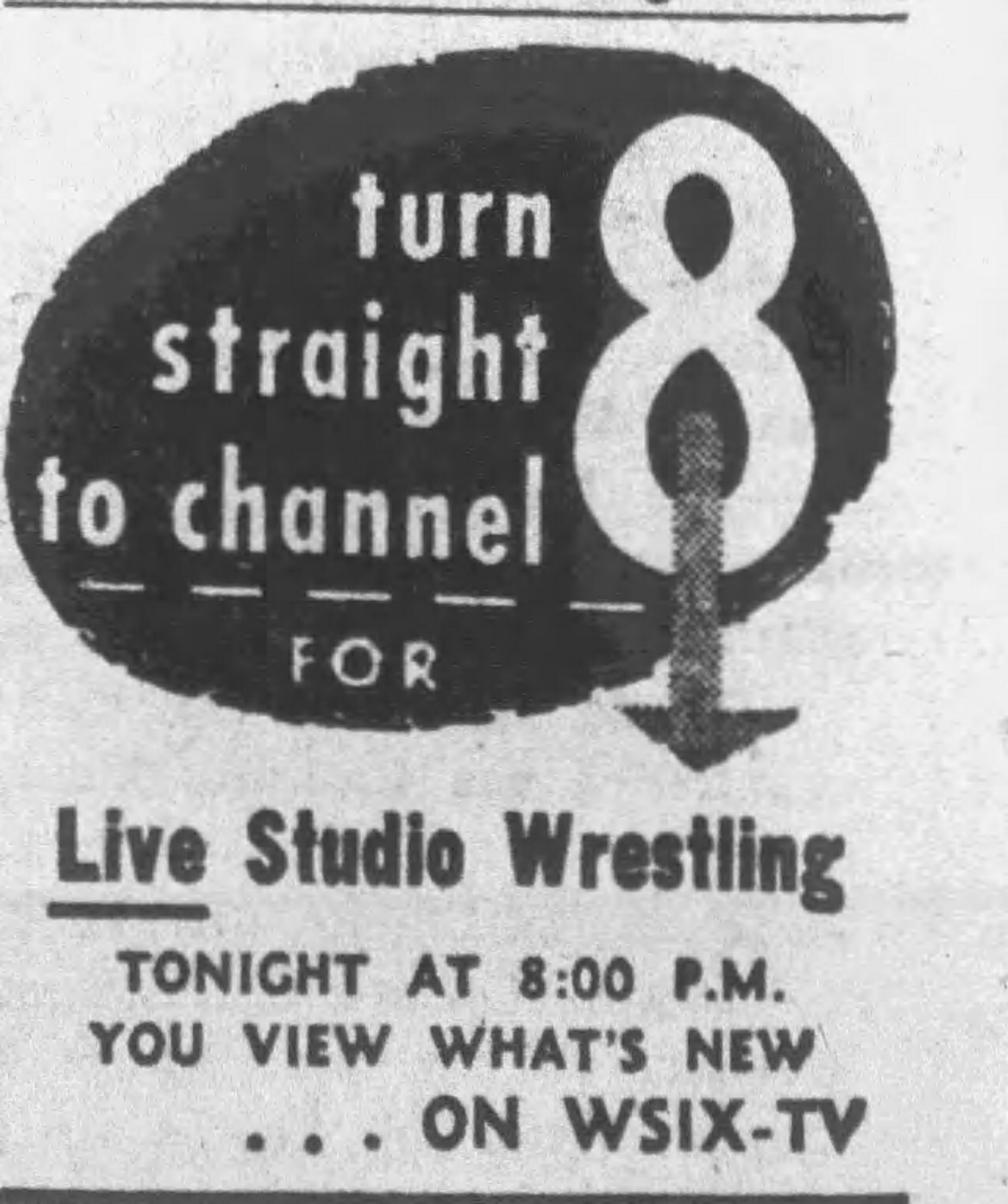
Pictured: Ad for Gulas-Welch Live Studio Wrestling on WSIX-TV8 in Nashville, Tennessee in November 1955
Spring and summer 1956 perfectly illustrate this local shift. On January 5, 1956, Vince McMahon Sr.’s Heavyweight Wrestling—taped at Washington, D.C.’s Capitol Arena—debuted on local station WTTG. By June 21, the program entered syndication, airing on New York’s WABD (Channel 5) as a summer replacement for the station’s studio wrestling show. It quickly became a permanent fixture, revitalizing wrestling in the lucrative New York market.
This was not a network feed but a syndicated product that McMahon controlled and distributed to stations, allowing him to build his Capitol Wrestling territory without relying on ABC, CBS, or NBC. Other regions followed similar patterns. Chicago’s Fred Kohler Enterprises continued airing matches (though its DuMont days were ending), Texas promoters syndicated from the Dallas Sportatorium, and Pacific Northwest Wrestling had run weekly TV since 1953. In the Carolinas, Jim Crockett Promotions was preparing its own local broadcasts. These shows featured arena or studio wrestling tailored to local audiences—often low-budget but highly effective at creating regional stars and selling out venues.
The influence of television in this specific window was profound and multifaceted. First, it democratized access: families across North America could now watch wrestling weekly without traveling to big cities. Second, it professionalized the product. Wrestlers adapted to TV’s demands—developing microphone skills, exaggerated entrances, and feuds that played well on camera. Matches were shortened and paced for commercial breaks, while promos built anticipation for live events. Third, it reinforced the NWA’s territorial structure. Because TV was local, fans in one area rarely saw another territory’s stars regularly; this kept the world champion’s appearances special and prevented talent raids. Finally, it generated revenue indirectly. Promoters often paid stations for airtime or bartered commercial spots, treating TV as advertising rather than a profit center. The payoff came at the box office: a hot TV angle could pack arenas from Toronto to Tampa.

By the Spring and Summer of 1956, the network era had effectively ended. DuMont, wrestling’s primary national platform, was in terminal decline and ceased operations entirely by August 1956. Major networks (now consolidating around NBC, CBS, and a stronger ABC) dropped most wrestling programs after 1955, relegating any remaining shows to low-priority filler slots (late nights, Saturday mornings/afternoons).
Wrestling was no longer a network priority; instead, promoters took full control. Vince McMahon Sr.’s Heavyweight Wrestling (taped at Washington, D.C.’s Capitol Arena) debuted locally on WTTG on January 5, 1956, and was syndicated regionally, appearing on New York’s WABD (Channel 5) by June 21, 1956. Other territories followed suit with their own local or syndicated programs like Chicago post-DuMont on WGN and Texas from the Dallas Sportatorium. Reach became targeted and regional rather than coast-to-coast national.

Pictured: Opening Title Card from Capitol Wrestling’s Heavyweight Wrestling broadcast
Critics at the time worried that TV would kill live attendance by giving away the product for free. Instead, the opposite occurred—television created demand. In 1956, the industry was thriving economically, with NWA territories collectively grossing millions. Stars like Antonino Rocca drew massive crowds in the Northeast, while Midwest and Southern promotions used TV to cultivate loyal regional followings. The medium also sparked cultural change: wrestling shed some of its “carny” stigma and entered mainstream living rooms, influencing fashion, slang, and even comedy routines.
Production shifted heavily to studio wrestling or controlled arena tapings produced by promoters themselves. Shows were cheaper, more interview- and storyline-driven, and explicitly designed as commercials for local house shows and title defenses. Promoters bought airtime or bartered commercial spots on local stations, turning TV into a direct marketing tool rather than a network profit center. This model prevented overexposure while protecting territorial boundaries—no more national feeds that could dilute a champion’s drawing power in one region.
Wrestling remained hugely profitable but operated regionally. Local TV sustained the NWA’s territorial model, with each promoter using their show to pack venues in their “backyard.” Overexposure concerns from the network years were avoided, and the medium continued driving attendance without national cannibalization. Culturally, it kept wrestling as a blue-collar living-room staple, but the glamour of prime-time network exposure had faded.
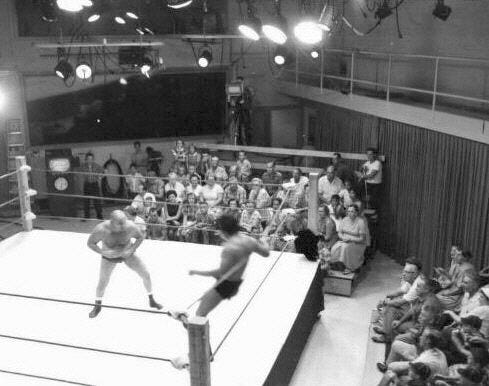
Pictured: Studio Wrestling from WBDJ-TV7 in Roanoke, Virginia in 1957
TV was maturing rapidly (household penetration was now widespread). The three surviving networks focused on prestige programming, sitcoms, and sports with broader appeal. Wrestling was seen as “lowbrow” filler—perfect for local stations but no longer a network flagship. This shift mirrored wrestling’s own maturation into a decentralized, promoter-driven business.
By the end of summer 1956, the blueprint for the next three decades of North American wrestling was set. The 1940s represented wrestling’s glamorous national debut on fledgling networks—TV and wrestling grew up together, creating stars and selling the medium. By 1956, that national network chapter had closed, replaced by a savvy, localized model that kept the industry thriving for the next three decades. TV was maturing rapidly.
The three surviving networks focused on prestige programming, sitcoms, and broader-appeal sports. Wrestling was seen as “lowbrow” filler—perfect for local stations but no longer a network flagship. The 1955 studio breakthroughs in Nashville and Indianapolis proved promoters no longer needed networks at all and the McMahon syndication launch in mid-1956 perfectly symbolized the new reality: promoters, not networks, now dictated wrestling’s television destiny.Network television had planted the seeds in the late 1940s and early 1950s, but local and syndicated TV had taken firm root.
The Golden Age was not just surviving—it was flourishing on local airwaves.
Thank You for Reading
I’m Tony Richards, Pro Wrestling Historian, Author and Storyteller. I share pro wrestling historical items in each issue of the Time Tunnel Pro Wrestling History Newsletter. Thanks for reading! If you enjoy my information on select events, matches and insights, please share it with folks you think might like to be a subscriber!
Remember, premium investors get access to exclusive and special content such as some special issues including a multi-part deep dives on wrestling territories, wrestler bios and championship title histories, special audio and video interviews on territory pro wrestling and more available in the Pro Wrestling Time Tunnel for Premium Investors.