


Happy Birthday to those who have passed on and to those great wrestlers still with us:
In Memoriam:
Dory Funk, Sr. 1919
Harry Fujiwara\Mr. Fuji 1934
Sam Steamboat 1934
Happy Birthday:
Scott Armstrong (65)
Jungle Jim Steele (59)
Ray Gonzalez (54)
RIP Memorial: We stop & remember those who have passed on this day and gave themselves to the business for us, the fans. We salute you and thank you.
(none)
7 Stages of The Territory Era Review
70 Year Flashback
Stage of the Territory Era: Stage 4: Investigation
Month 4 of Year 2: April 1956: The Month In Pro Wrestling
In May 1956, professional wrestling operated as a tightly regulated cartel under the National Wrestling Alliance (NWA), which exercised near absolute-total control over the sport across North America and maintained significant international influence. This era exemplified Stage 4: Investigation Stage in the 7 Stages of the Territory Era model—a phase of systematic oversight, territorial enforcement, and centralized championship management. The NWA investigated disputes, policed territorial boundaries, and coordinated talent rotation to sustain the monopoly while maximizing gate receipts through house shows and early television. Promoters collaborated via annual conventions, shared booking agents, and recognized a single world champion whose defenses boosted local draws without threatening regional exclusivity.

The NWA, founded in 1948 as a unification of regional promotions, had by the mid-1950s achieved unparalleled consolidation. Its almost impossible to fathom the exponential growth of the cooperative among booking offices from 1948 to 1956. It divided North America into geographic territories (e.g., Midwest hubs in St. Louis and Chicago, Canadian strongholds in Toronto and Montreal, West Coast operations in Los Angeles until its NWA affiliation ended around this time, and others in Boston, Omaha, and the South). Each territory was “owned” by a member booking office who booked talent exclusively within defined borders.
Overlaps were minimized, and violators faced sanctions. The NWA World Heavyweight Championship served as the unifying anchor: the champion toured territories on a schedule set by the board, drawing crowds while local stars built feuds around him. This structure created a cooperative monopoly that stifled competition from outsiders and ensured steady revenue through live events, with television emerging as a supplementary tool in select markets.
By May 1956, the NWA’s investigative apparatus—through board meetings, membership rosters, and dispute resolution—kept the system stable. The 1956 NWA Convention (details of which emphasized ongoing governance, such as pensions for wrestling elders like Ed “Strangler” Lewis) underscored this regulatory focus. Territories paid into a central fund, and the world title was defended under strict protocols to prevent any single promoter from dominating nationally. International reach extended to alliances with promoters in Mexico, Japan (via tours involving stars like Rikidozan), and parts of Europe, though North America remained the core.
The NWA World Heavyweight Championship: Watson’s Brief but Impactful Reign
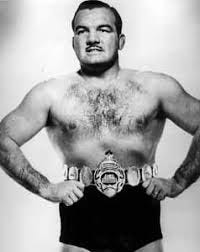
Central to the NWA’s power was the world title. On March 15, 1956, in Toronto’s Maple Leaf Gardens before 15,000 fans, Canadian icon Whipper Billy Watson dethroned longtime champion Lou Thesz by count-out in a match refereed by boxing legend Jack Dempsey. Watson, a patriotic babyface known for his technical prowess and crowd-pleasing style, became the first Canadian to hold the NWA World Heavyweight Championship. His 239-day reign (ending November 9, 1956, when Thesz regained it in St. Louis) positioned him as a touring champion who headlined across territories.
In the lead-up to and during May, Watson’s defenses exemplified the territory model: he appeared in key markets like Toronto (his home base) and defended against top challengers, including Thesz in rematches by disqualification or other non-pinfall finishes that preserved the champion’s aura while building long-term storylines. Watson’s presence elevated gates everywhere he went. Thesz, still a massive draw despite the loss, continued as a top contender and drew crowds in non-title bouts, maintaining the NWA’s talent balance by cycling stars without disrupting territorial hierarchies.
Key Wrestlers, Feuds, and Storylines Across the Wrestling World
May 1956 cards featured a mix of world-title orbiters, territorial main events, and colorful characters that defined the golden age of the territories:
Verne Gagne: Awarded the NWA United States Championship on April 7, 1956, the clean-cut technical wizard was a Midwest staple. On May 4 in Chicago’s International Amphitheater (8,818 fans), he wrestled Wilbur Snyder to a time-limit draw after trading falls, highlighting scientific wrestling feuds. Gagne’s US title defenses added prestige to regional shows without conflicting with the world title.
Killer Kowalski: The monstrous heel made waves in Montreal. On May 30 at the Montreal Forum (12,000 fans), he defeated local champion Yvon Robert 2-1 to capture the Montreal World Heavyweight Title, launching a dominant run that fed into broader NWA storylines involving Canadian rivalries.
Supporting stars and heels: Cards regularly featured Dick the Bruiser (ruthless rulebreaker), Hans Schmidt (Nazi-inspired heel), Gorgeous George (glamorous showman), Pat O’Connor, Bobo Brazil, Fred Atkins, Hard Boiled Haggerty, and the Dusek Brothers. Tag teams like the Lisowski Brothers (Reggie and Stan) and The Kalmikoffs provided undercard depth.
Women’s wrestling thrived with June Byers as NWA World Women’s Champion earlier in the year, and rising stars like Fabulous Moolah appearing in tag bouts (e.g., Boston on May 21).
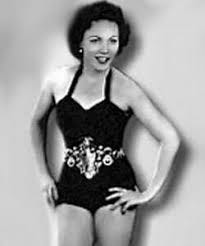
Pictured: NWA World Women’s Champion, June Byers
Storylines emphasized babyface heroes vs. monster heels, with finishes often by disqualification or time-limit draw to protect wrestlers for future tours. Feuds were localized (e.g., Kowalski vs. Montreal stars) but tied into the NWA ecosystem through champion appearances. International notes included Japanese tag title activity in April, where Rikidozan and Kokichi Endo defeated NWA World Tag Team Champions Ben and Mike Sharpe, signaling growing global interest.
Important Territory Events in and Around May 1956
Chicago (Midwest): May 4 card at the International Amphitheater mixed tag action, women’s bouts, and Gagne’s main event draw, typical of strong attendance in Sam Muchnick-influenced or affiliated markets.
Boston (Northeast): May 21 show (5,000 fans) featured Gagne vs. O’Connor draw and women’s matches, showcasing the American Wrestling Association (Boston) territory’s blend of athleticism and spectacle.
Montreal: The May 30 Kowalski title win at the Forum highlighted Eddie Quinn’s promotion and its occasional tensions with the broader NWA (Quinn would later depart amid disputes).
Toronto: Watson’s ongoing presence kept Maple Leaf Gardens as a flagship venue, with consistent 10,000+ crowds earlier in the year carrying into spring.
Smaller territories (e.g., Indianapolis, Vancouver) hosted similar cards with touring NWA talent. No major scandals or title vacancies disrupted operations in May, affirming the NWA’s effectiveness in maintaining order.
Broader Context and the Territory Model
In Stage 4, the NWA’s internal investigative processes—monitoring promoter compliance, talent contracts, and championship integrity—prevented fragmentation. Territory Television was not yet dominant, (see tomorrow’s Issue 385 for more on the role of television during this time period) so live gates drove the business. Attendance figures (8,000–15,000 for major shows) reflected strong fan loyalty to regional heroes and visiting champions. Challenges lurked but May 1956 represented peak stability: a unified North American product with global tentacles, where the NWA dictated who wrestled whom, where, and for what stakes.
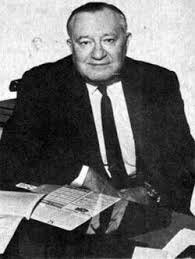
Pictured: NWA President Sam Muchnick
A major external threat was manifesting behind the scenes. The U.S. Department of Justice’s antitrust investigation into the National Wrestling Alliance (NWA) was actively underway by May 1956, casting a significant but largely behind-the-scenes shadow over the organization’s operations. The probe, which had roots in complaints dating back to at least 1953 and intensified after a 1955 interview of NWA President Sam Muchnick by DOJ investigator Stanley Disney, centered on allegations that the NWA violated Sections 1 and 2 of the Sherman Antitrust Act.
Prosecutors claimed the Alliance operated as an illegal monopoly by dividing North America into exclusive geographic territories, blacklisting uncooperative wrestlers and “outlaw” promoters, restricting talent bookings, engaging in price-fixing for exhibitions, and systematically blocking competition. This federal scrutiny aligned precisely with Stage 4: Investigation Stage in the Territory Era model, representing external regulatory pressure on the NWA’s consolidated cartel structure without yet triggering immediate collapse.
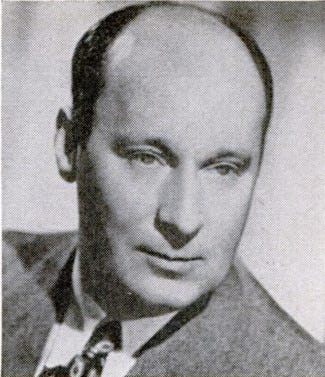
Pictured: United States and Illinois Congressman Mel Price
Although the formal complaint in United States v. National Wrestling Alliance was not filed until October 15, 1956—culminating in a consent decree entered the same day—the investigation created palpable tension within NWA leadership throughout the spring. Muchnick and other key figures engaged in ongoing correspondence and negotiations with the DOJ, leveraging political connections (including ties to Illinois Congressman Mel Price) to push for a negotiated settlement rather than dissolution of the Alliance. Internally, the NWA approved the consent decree at a St. Louis meeting on August 31, 1956, before its court entry. In May specifically, promoters likely exercised greater caution in written communications and overt enforcement of territorial borders or blacklisting to avoid supplying additional evidence to investigators.
Visible impact on the day-to-day wrestling business in May 1956 remained minimal. High-profile matches, world title defenses by NWA champion Whipper Billy Watson, Verne Gagne’s U.S. title program in the Midwest, Killer Kowalski’s Montreal title win on May 30, and standard territorial cards in Chicago, Toronto, Boston, and elsewhere proceeded without interruption or noticeable attendance dips. Fans experienced the same babyface-versus-heel storylines, scientific wrestling, and house-show circuits that defined the era. The investigation operated as an administrative and existential concern among NWA executives rather than a disruption to gates, talent rotation, or public programming.
Longer-term, the coming consent decree required the NWA to void anti-competitive bylaws, admit new members on non-discriminatory terms, cease recognizing exclusive territories or bookers, and stop blacklisting—though the organization admitted no wrongdoing. Membership dropped from around 36 to 26 booking office members as some exited, and while many territorial practices persisted informally for years, the decree marked the beginning of gradual erosion of the NWA’s absolute controlled monopoly. In the context of May 1956, the DOJ probe served as a quiet warning shot: the golden age of unchecked territorial control was under official federal examination, planting seeds for the structural shifts that would unfold later in the decade of the 1950s.
Thank You for Reading
I’m Tony Richards, Pro Wrestling Historian, Author and Storyteller. I share pro wrestling historical items in each issue of the Time Tunnel Pro Wrestling History Newsletter. Thanks for reading! If you enjoy my information on select events, matches and insights, please share it with folks you think might like to be a subscriber!
Remember, premium investors get access to exclusive and special content such as some special issues including a multi-part deep dives on wrestling territories, wrestler bios and championship title histories, special audio and video interviews on territory pro wrestling and more available in the Pro Wrestling Time Tunnel for Premium Investors.