


Happy Birthday to those who have passed on and to those great wrestlers still with us:
In Memoriam:
Wild Bull Curry 1913
Don Fields 1932
Don Kernodle 1950
Randy Colley 1950
Ray Traylor 1963
Happy Birthday:
Dwayne Johnson\The Rock (54)
Pat McAfee (39)
RIP Memorial: We stop & remember those who have passed on this day and gave themselves to the business for us, the fans. We salute you and thank you.
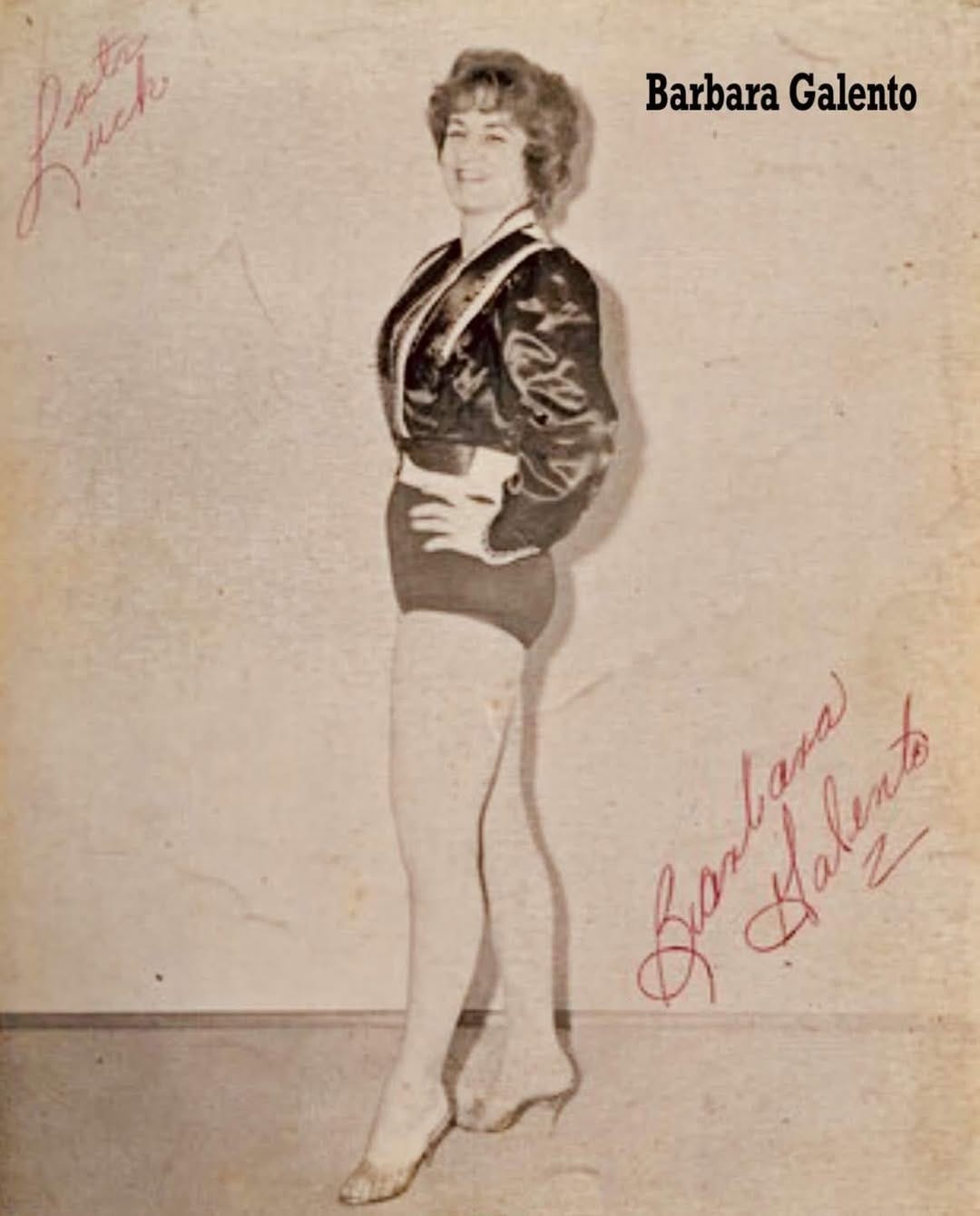
Barbara Galento 5-2-1994 at the age of 53
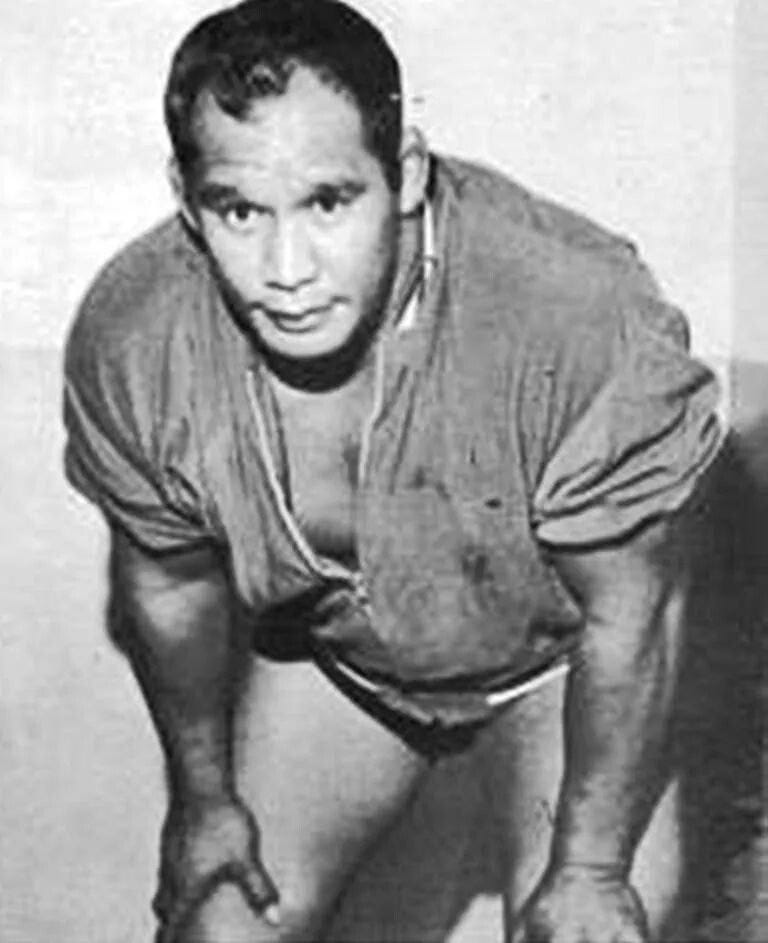
Sam Steamboat 5-2-2006 at the age of 71
152nd Kentucky Derby Day!
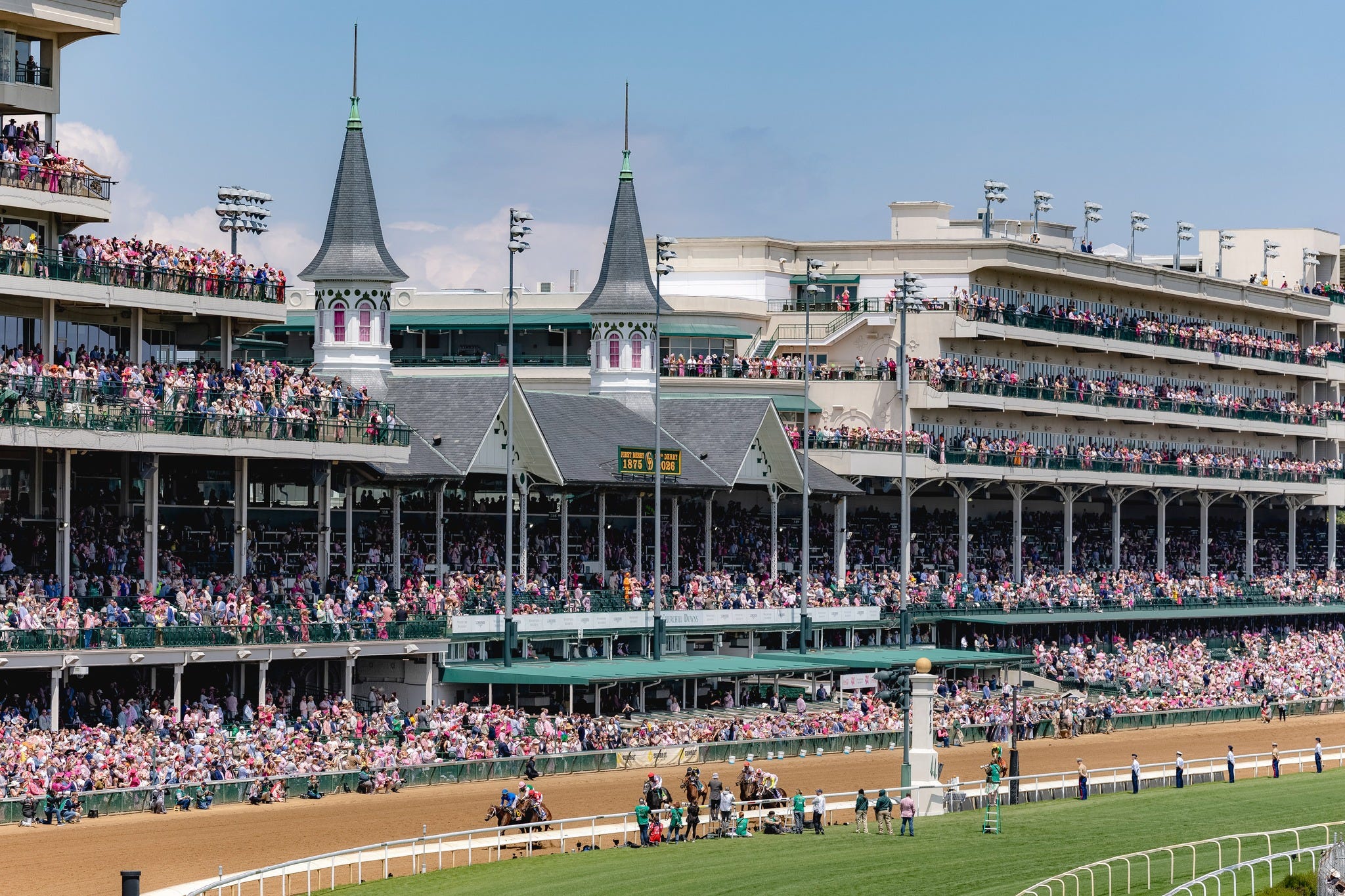
I am home in Kentucky for my first Derby Day since 1992.
I moved to Missouri in September of 1992, a couple months following that year’s Derby, which is always on the first Saturday in May. In my lifetime. I have attended 11 of the iconic races. Growing up here as a young boy, my sports heroes at one time were all Kentucky-based. Dan issel of the Kentucky Wildcats and Kentucky Colonels, Cassius Clay\Muhammad Ali from Louisville and Secretariat, the 1972 Kentucky Derby winner and still holder of the speed record on Derby Day, running the race in less than two minutes.
The Kentucky Derby, often billed as “the most exciting two minutes in sports,” stands as America’s most iconic horse race and the crown jewel of the Triple Crown. Held annually on the first Saturday in May at Churchill Downs in Louisville, Kentucky, it draws hundreds of thousands of spectators, millions of television viewers, and a global audience captivated by tradition, pageantry, and high-stakes Thoroughbred competition. Now in its 152nd running, the Derby remains the oldest continuously contested major sporting event in the United States, blending Southern hospitality with elite athleticism in a spectacle that has defined Louisville’s identity for more than 150 years.
The Derby’s origins trace to the vision of Colonel Meriwether Lewis Clark Jr., grandson of explorer William Clark of the Lewis and Clark expedition. In 1872, Clark visited England and was inspired by the Epsom Derby. Determined to create a premier American racing event, he returned to Louisville, formed the Louisville Jockey Club, and secured land from his uncles John and Henry Churchill. The track—later named Churchill Downs—opened on May 17, 1875. That inaugural Derby, run at 1.5 miles (the same distance as its English namesake), featured 15 three-year-old horses before a crowd of about 10,000. Aristides, ridden by jockey Oliver Lewis and trained by Ansel Williamson, won in a time of 2:37.75.
The race quickly became a Louisville institution, though it faced early financial struggles. Clark’s suicide in 1899 cast a shadow, but the track endured under new ownership. In 1896 the Derby distance was shortened to its current 1¼ miles (10 furlongs), a change that made it faster and more exciting for both horses and fans. By the early 20th century, the event had solidified its place in American culture. The famous twin spires of the grandstand, completed in 1895, became its enduring architectural symbol. In 1919, the Derby joined the Preakness Stakes and Belmont Stakes to form the Triple Crown, though it was not until 1930—when Gallant Fox completed the sweep—that the term gained widespread recognition. Legendary victories followed: Secretariat’s record-shattering 1:59.4 in 1973 remains the benchmark, while other icons like Citation (1948), Seattle Slew (1977), and Justify (2018) cemented the race’s mythic status.
Traditions have only deepened the Derby’s allure. The winner receives a garland of more than 400 red roses—earning it the nickname “the Run for the Roses”—a custom dating to 1896 and formalized in 1904. Mint juleps, served in frosted silver cups, have been the official drink since the 1930s. Each year, the crowd sings “My Old Kentucky Home” as the horses parade to the post, a moment of goose-bump patriotism that unites spectators from infield tailgates to million-dollar boxes. The Derby Festival, launched in 1956 with its Pegasus Parade and balloon race, turned the week into a citywide celebration that now spans two weeks and draws over a million visitors.
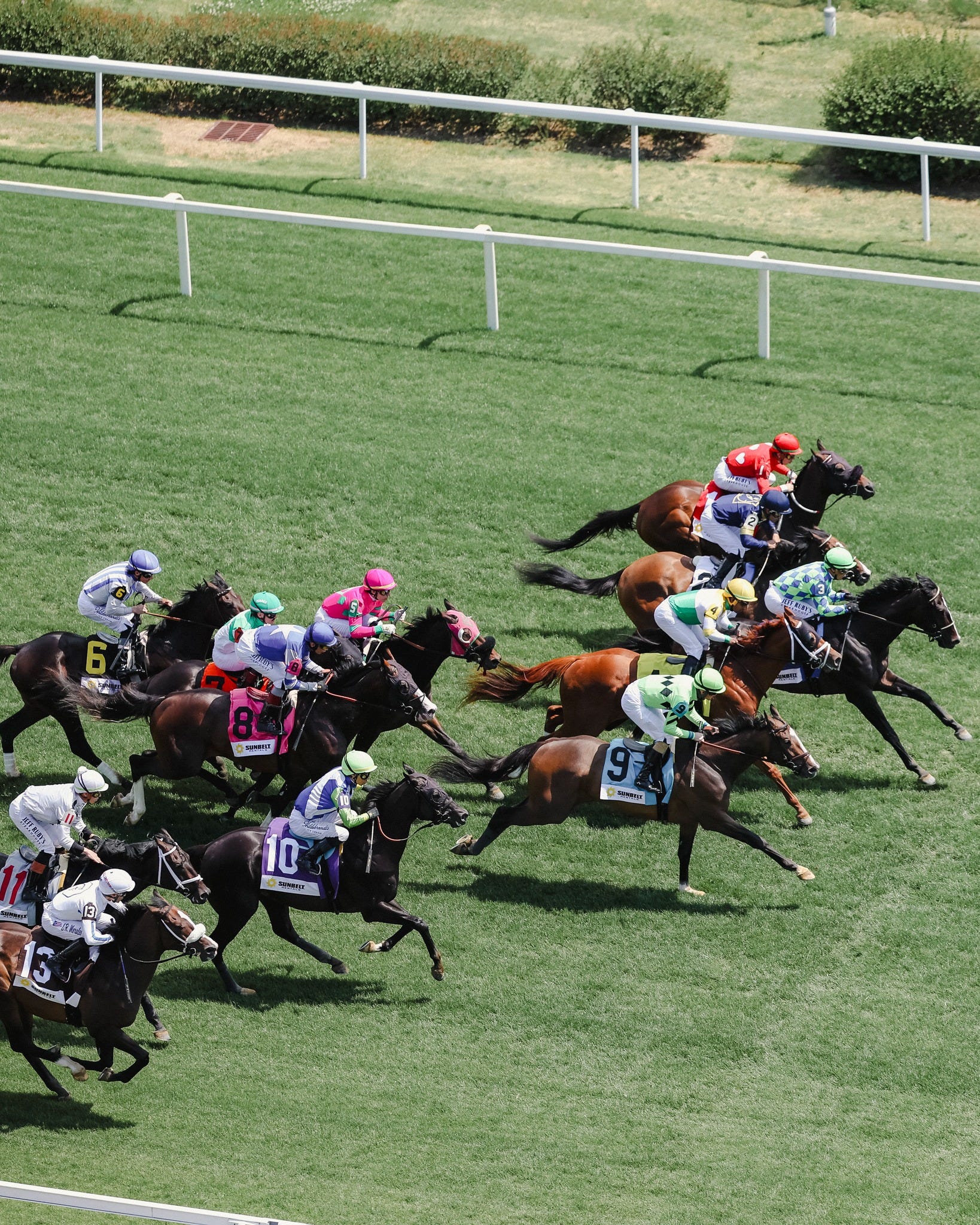
Today, the Derby is a Grade I stakes with a $5 million purse, limited to 20 three-year-old Thoroughbreds (colts carry 126 pounds, fillies 121). It remains a proving ground for future champions and a launching pad for trainers and jockeys chasing immortality. Churchill Downs has modernized—adding luxury suites and year-round racing—while preserving the twin spires and the electric atmosphere that makes Derby Day feel both timeless and electric.
As Louisville prepares for the 152nd Kentucky Derby on Saturday, May 2, 2026, the spotlight returns to Churchill Downs with gates opening at 9 a.m. ET and the featured race scheduled for a 6:57 p.m. ET post time. The event will air live on NBC and stream on Peacock. This year’s 20-horse field is led by morning-line favorite Renegade (post 1, approximately 4-1 or 5-1 odds), trained by Todd Pletcher and ridden by Irad Ortiz Jr. Renegade’s rail draw adds historical drama; only a handful of horses have won from post 1, yet his speed and pedigree make him the clear target. Close behind are strong contenders such as Brad Cox-trained Commandment (post 6, around 6-1), the lightly raced Further Ado (post 18, also 6-1), and The Puma (10-1). Other notable entries include So Happy, Albus, and Intrepido, with the full field offering a mix of proven graded-stakes winners and intriguing long shots.
The 2026 edition carries the usual blend of anticipation and unpredictability. Can Renegade overcome the rail and deliver Pletcher his third Derby victory? Will Cox’s deep contingent dominate? Or will a long-shot story emerge, as has happened so often in Derby lore? Regardless of the outcome, the race will once again crown a new champion, drape it in roses, and etch its name alongside the legends who have galloped across the Churchill Downs strip since 1875. In Louisville, the first Saturday in May is more than a race—it is a rite of spring, a celebration of heritage, and a reminder that, for two thrilling minutes, the eyes of the world turn to Kentucky.
The Life and Career of Jos LeDuc
Michel Pigeon, better known by his ring name Jos LeDuc (sometimes spelled Joe or Jos Leduc), was one of the most intense and memorable characters of professional wrestling’s territorial era. Born on August 31, 1944, in Montreal, Quebec, Canada, LeDuc rose from a difficult childhood to become a larger-than-life lumberjack heel and occasional babyface whose scarred forehead, wild brawling style, and genuine toughness left a bloody trail across Canada, the American South, and international tours.
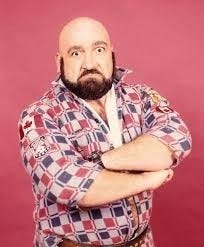
Standing 6 ft 1 and billed at around 280 pounds, he was famous for his crushing bear hug finisher, one-armed backbreaker, and strength demonstrations that blurred the line between kayfabe and reality. Over a career that stretched from 1968 to 1995, LeDuc captured 32 championships—15 singles and 17 tag team titles—while starring in promotions from Stampede Wrestling to the WWF. He died on May 1, 1999, at age 54 in Atlanta, Georgia, from complications of a lung infection following a shower fall, exacerbated by long-term diabetes and the physical toll of wrestling.
LeDuc’s early life was far from glamorous. His parents separated when he was young, and he spent time in orphanages and with relatives near a small village outside Montreal. Before entering wrestling, he trained in judo and worked as an officer with the Quebec Provincial Police. His dream of becoming a professional wrestler was sparked after meeting Paul LeDuc (born Paul Vachon, no blood relation) around 1965. Paul convinced him to pursue the business, and with training from Montreal promoter Jack Britton and later Stu Hart in Calgary, Michel Pigeon became Jos LeDuc. The pair adopted a kayfabe brother gimmick as Canadian lumberjacks—complete with flannel shirts and axes—modeled partly after the legendary Yukon Eric. They debuted together in 1968 in Stampede Wrestling, immediately winning the Stampede International Tag Team Championship on January 3, 1969.
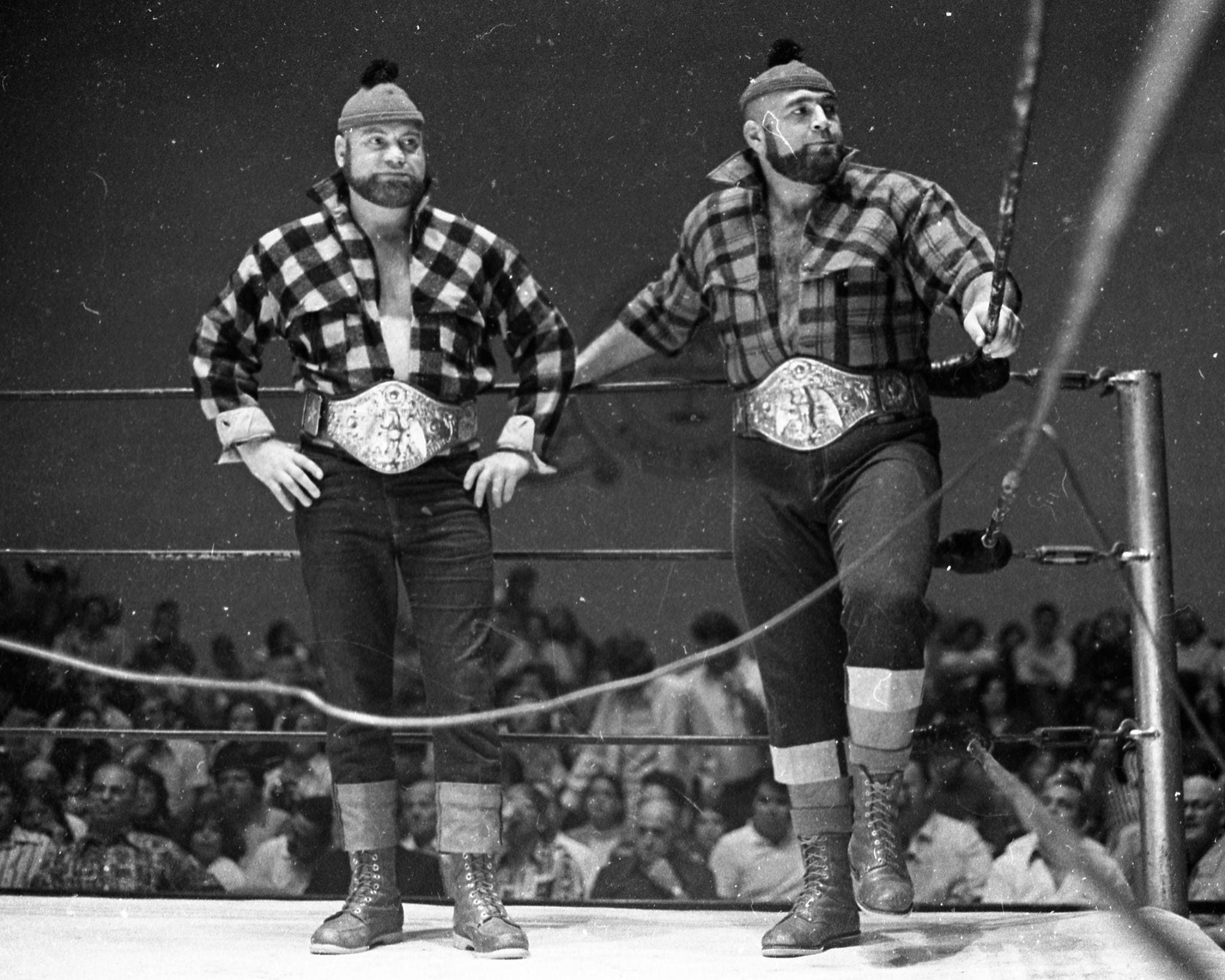
Pictured: Paul and Jos LeDuc NWA Florida Tag Team Champions
The LeDuc brothers quickly became stars in Canada. They moved to Montreal’s International Wrestling Association and Grand Prix Wrestling, where they feuded violently with the Rougeau family (Johnny and Jacques) and the Vachon brothers (Mad Dog and Butcher) alongside Killer Kowalski. In 1971, Jos defeated Johnny Rougeau for the IWA International Heavyweight Championship and teamed with Tony Baillargeon to win the IWA International Tag Team titles. The duo held the Grand Prix Tag Team Championship twice in 1972–1973. Their wild, bloody brawls made them superstars in Quebec, with fans buying into the illusion of brotherhood so completely that it persisted even after LeDuc’s death.
In 1973, the LeDucs headed south to Championship Wrestling from Florida (CWF). They captured the NWA Florida Tag Team Championship from Dusty Rhodes and Dick Slater on November 23, 1973, holding it for two months. Paul’s injury forced Jos into singles competition.
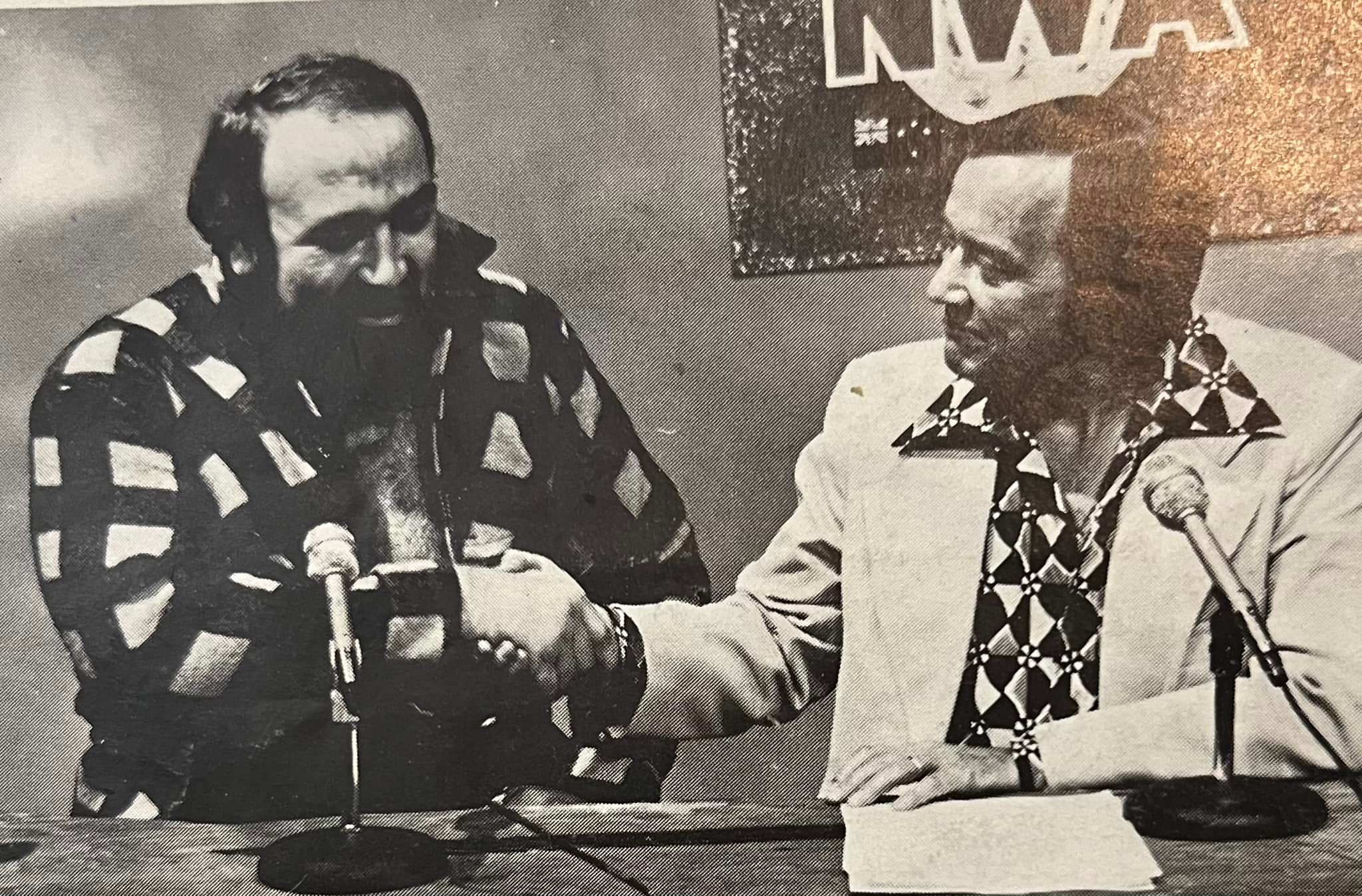
Pictured: Jos LeDuc (with hair) with Gordon Solie on Championship Wrestling from Florida
In early 1974, while working Championship Wrestling from Florida (CWF), Jos LeDuc found himself in a short but memorable program with the masked heel The Super Texan. The Super Texan was the ring identity of Mike McCord (who would later become a star as “Austin Idol”), a bearded, masked villain often aligned with or in the orbit of Dusty Rhodes (before Dusty’s lendary babyface turn later that year). LeDuc—fresh off winning the NWA Florida Southern Heavyweight Championship from Rhodes in February—was positioned as a tough, no-nonsense babyface singles competitor (sometimes still tagging with brother Paul). The feud played out across Florida armories and arenas in February and March, mixing singles bouts, tag matches, and escalating personal stakes.
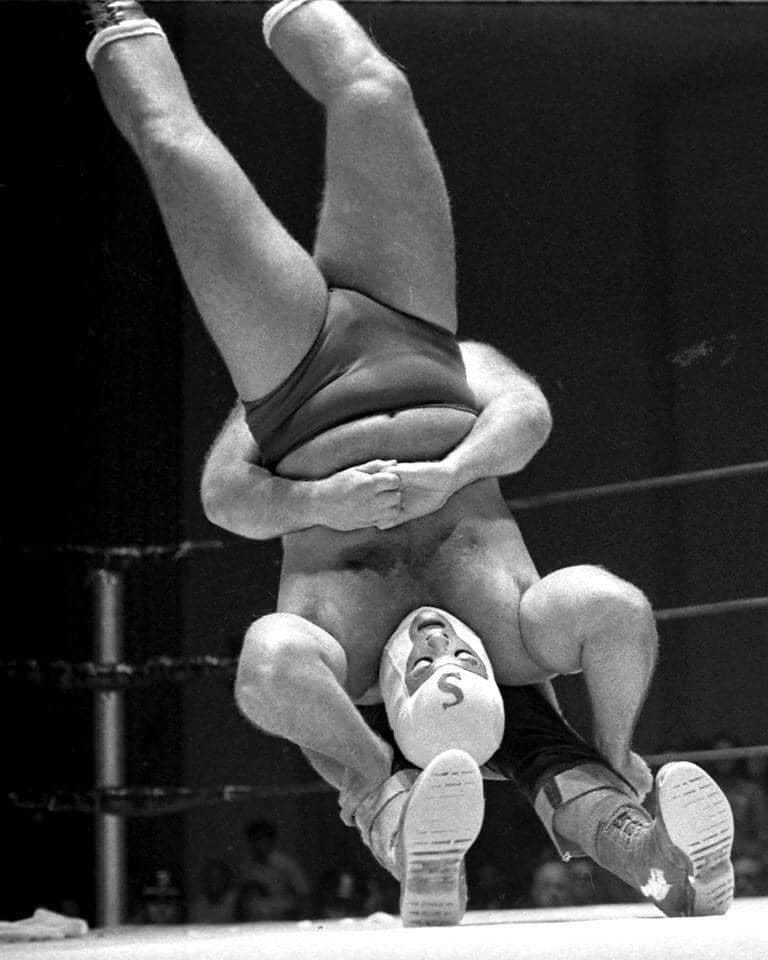
Pictured: LeDuc piledrives The Super Texan (Mike McCord) in Miami Beach on January 22nd, 1974
The program peaked on March 5, 1974, at the Fort Homer Hesterly Armory in Tampa with a high-profile Beard vs. Mask match. LeDuc defeated The Super Texan, forcing the unmasking and revealing McCord’s face to the crowd. There were follow-up encounters (including possible additional Beard vs. Mask stipulations and tag bouts) in cities like Tallahassee, Leesburg, and Miami Beach over the next few weeks, but the Tampa unmasking served as the blow-off. It was a solid mid-card storyline that helped keep houses busy while LeDuc’s bigger blood feud with Dusty Rhodes continued to headline. For McCord, losing the mask opened the door to working under his real name in Florida and Georgia later that year. In the middle of that he had also engaged in a series of brutal “death matches” with Rhodes, winning the NWA Florida Southern Heavyweight Championship in February 1974 before losing it back.
LeDuc also formed alliances and rivalries across the NWA territories, winning the NWA Florida United States Tag Team Championship three times with partners like Thor the Viking, Pak Song, and Don Muraco.
In late 1978/early 1979, while working Championship Wrestling from Florida (CWF), longtime babyface Jos LeDuc executed one of the territory’s most shocking and effective heel turns—targeting the up-and-coming Jimmy Garvin. LeDuc had been a popular “Canadian Freight Train” hero in the territory for years, known for his brute strength (pulling buses with chains, one-arm backbreakers) and solid tag work, including recent reigns as NWA Florida United States Tag Team Champion alongside partners like Thor the Viking and Pak Song. Garvin, still early in his career and positioned as a young babyface, was being interviewed by Gordon Solie on TV when he casually mentioned LeDuc as one of the veterans who had helped him. Garvin then dropped a bombshell: he accused LeDuc of secretly being “owned” by the hated heel manager Sonny King. LeDuc denied it vehemently… until Garvin rolled video footage proving the secret alliance.
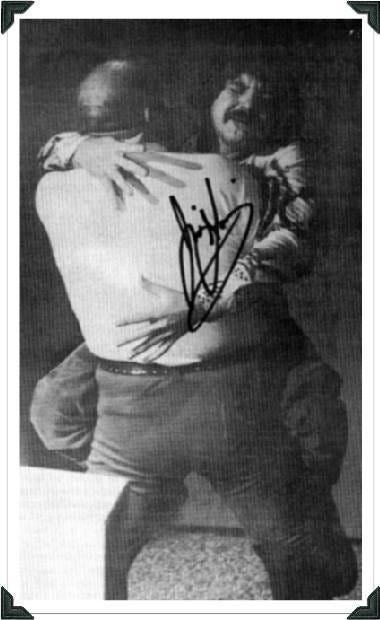
Pictured: LeDuc applies the bearhug on Jimmy Garvin on Floirda television
The turn exploded live on television. As Solie tried to keep things calm, LeDuc suddenly snapped. He grabbed Garvin in a crushing bear hug, slammed him into the concrete studio wall, and refused to let go while growling like a madman. Garvin screamed in agony, blood pouring from his mouth as he went limp and was left looking “completely lifeless.” Solie was frantic on the mic—“Joe… Joe stop it Joe… for God’s sakes Joe stop it man!”—but LeDuc only dropped his victim after making his point. From that moment forward, the wild-eyed, axe-wielding lumberjack became one of CWF’s most unhinged and despised heels, launching a new chapter that saw him align with Sonny King and terrorize the territory for months. It was classic 1970s territorial psychology: a trusted face betraying a sympathetic young wrestler on live TV, instantly flipping the crowd’s love into genuine heat.
Jos LeDuc’s legacy in Memphis is defined almost entirely by his epic, multi-year blood feud with local hero Jerry “The King” Lawler. Other storylines and tag partnerships existed, but the Lawler rivalry stood above all as one of the territory’s most violent and iconic angles.
LeDuc’s Memphis arrival coincided with a hot period for the CWA. He initially teamed with Bob Armstrong to capture the NWA Southeastern Tag Team titles in 1977 before shifting focus southward. By early 1978, LeDuc formed a heel tag team with Jean Louie (sometimes billed as John Louie) and immediately targeted Lawler and his partners. They feuded heavily over the AWA Southern Tag Team Championship (then under the CWA banner):
In May 1978, LeDuc & Louie defeated Bill Dundee & Lawler for the belts.
A no-contest with Lawler & Jimmy Valiant led to the titles being vacated, but LeDuc & Louie regained them shortly after and defended them in chaotic multi-man brawls.
They eventually lost the gold to Lawler & the Mongolian Stomper in September 1978.
The tag program quickly evolved into a brutal singles feud. LeDuc and Lawler clashed repeatedly in singles matches, no-disqualification bouts, and no-time-limit wars throughout spring and summer 1978. One of the most infamous moments occurred during a Mid-South Coliseum match when LeDuc hoisted Lawler overhead and hurled him over the top rope. Lawler crashed hard onto the edge of the ringside announce table (roughly nine feet away), legitimately breaking his leg and sidelining him from television for weeks. The spot became a staple in Memphis highlight reels and underscored LeDuc’s genuine toughness and danger.
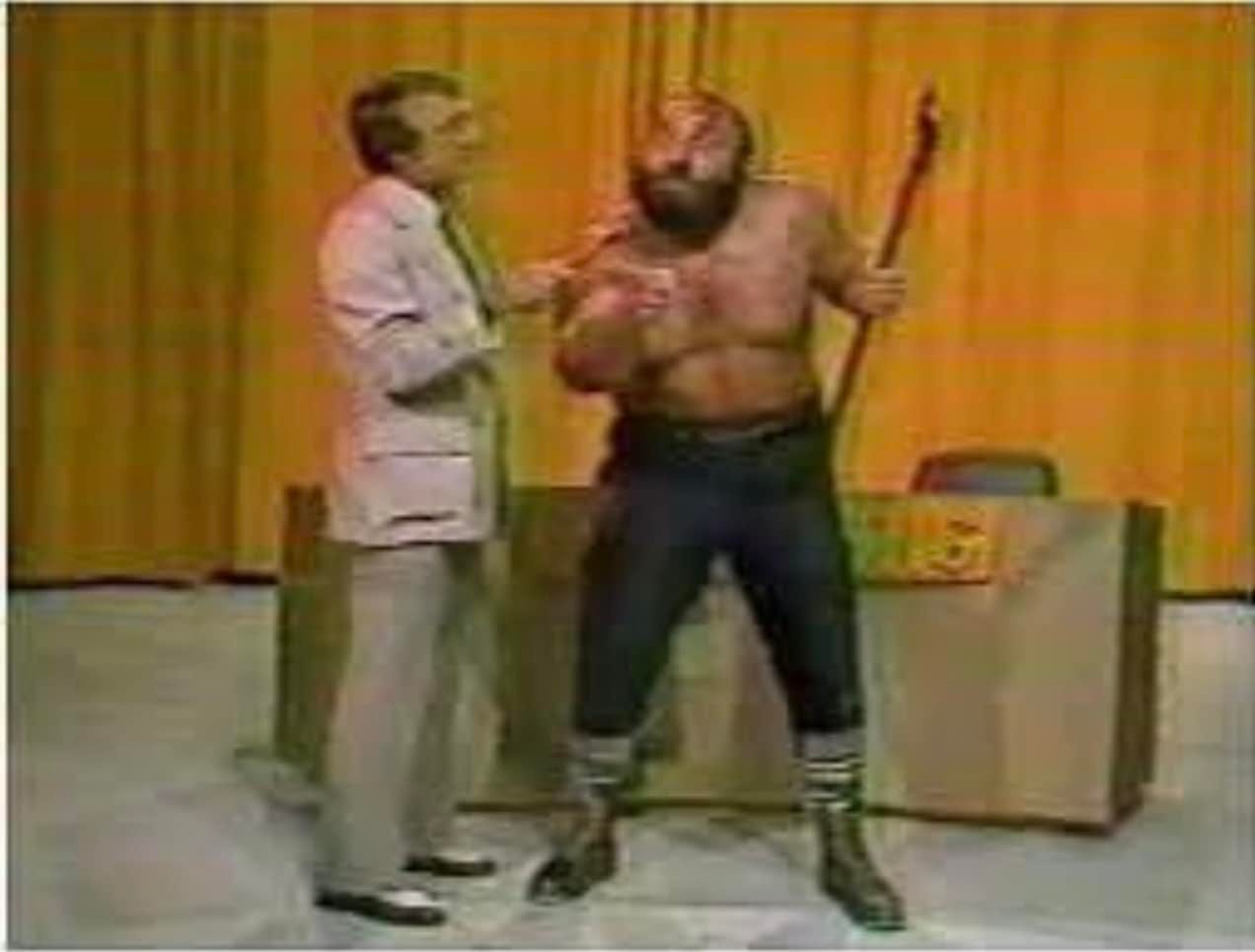
Pictured: LeDuc demonstrates the “Canadian Lumberjack Blood Oath” live on Memphis television with announcer Lance Russell, who is in total shock
The feud reached its legendary peak on August 5, 1978. After Lawler had split LeDuc’s head open in a prior match, the bloodied Canadian lumberjack stormed the WMC-TV studio during a live Saturday morning interview with Lance Russell. Brandishing a double-edged axe, LeDuc ranted about his “blood oath” to destroy Lawler. To prove his sincerity, he sliced his own forearm open on camera, howling in pain as blood poured down his arm. Russell was visibly shaken; the studio audience sat in stunned silence. The graphic, unscripted-looking stunt (it was real) became one of wrestling’s most shocking promos and cemented LeDuc’s “madman” reputation.
The very next Monday (August 7, 1978), LeDuc defeated Lawler for the AWA Southern Heavyweight Championship—the first man to hold the title under the new AWA affiliation after the CWA broke from the NWA. They traded the belt back and forth in subsequent weeks (LeDuc won it again on August 28), with matches often spilling into the crowd or ending in double disqualifications. LeDuc also teamed with heels like Sonny King, Don Fargo, and John Louie in multi-man wars against Lawler, Dundee, and Valiant.
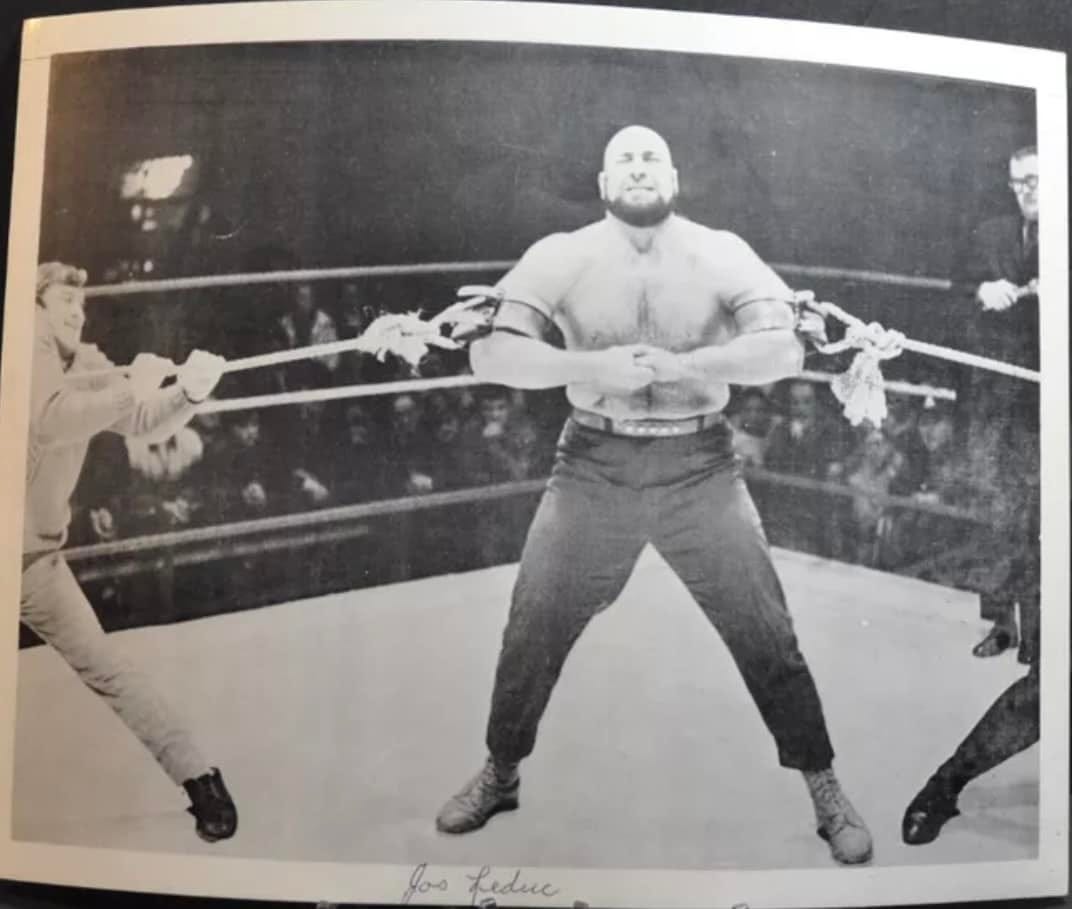
Throughout the late 1970s and 1980s, LeDuc bounced between territories, always drawing crowds with his intensity. He won multiple NWA Southeastern Heavyweight and Tag Team titles (often with Bob Armstrong or Robert Fuller), the NWA Mid-Atlantic Television Championship (twice, including a Lumberjack match victory over Dick Slater while in Oliver Humperdink’s House of Humperdink stable), and the NWA New Zealand British Commonwealth Heavyweight Championship twice in 1981. He toured Japan (described as “maniacal” by locals), Puerto Rico (where he held the WWC North American Heavyweight Championship in 1986), and even appeared in the 1989 Hulk Hogan film No Holds Barred. In 1988 he had a short WWF run as “Butcher LeDuc” or “The Headbanger,” managed at times by Frenchy Martin, losing to the likes of Tito Santana and Brian Costello.
LeDuc was known for genuine feats of strength outside the ring—pulling a bus in Minneapolis for AWA promos or holding a chain attached to a car while seated against blocks during a Grand Prix Wrestling stunt set to Quiet Riot’s “Metal Health.” His scarred forehead rivaled Abdullah the Butcher’s, and he produced some of wrestling’s bloodiest magazine covers. Fans and peers remembered him as one of the toughest and most dangerous men in the business.
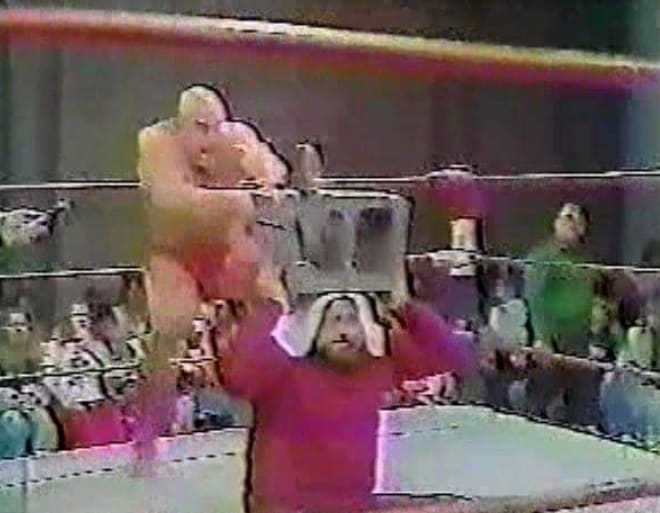
Pictured: The Mongolian Stomper breaks a concrete block on Jos LeDuc’s head with a sledgehammer on Southeastern Wrestling in Knoxville, Tennessee
LeDuc returned to Memphis in early 1984 for another explosive chapter. On March 12, he and Lawler—booked as uneasy partners—defeated the Zambuie Express (Elijah Akeem & Kareem Muhammad) for the AWA Southern Tag Team Championship. They held the titles for only seven days. On March 18, during a six-man tag match, LeDuc turned on Lawler, abandoning him alongside manager Jimmy Hart and J.J. Dillon. The titles were immediately vacated. This double-cross reignited their hatred and led to more fiery promos and matches. A memorable studio segment saw LeDuc challenge Lawler to an arm-wrestling contest to showcase his strength; Lawler responded by throwing a fireball in LeDuc’s face.
LeDuc had several additional runs in Tennessee including:
1981: Additional singles matches with Lawler, including a “10 lashes” stipulation bout involving Jimmy Hart.
1980–1983: LeDuc picked up several Southeastern Heavyweight and Tag Team title reigns (often with Robert Fuller or Bob Armstrong) while feuding with the likes of Killer Karl Kox, Terry Gordy, Jacques Rougeau Jr., and the Mongolian Stomper. These were secondary to the Lawler program but kept him prominent.
1986: After tours in Puerto Rico and Montreal, LeDuc returned to the CWA and teamed with Phil Hickerson as a bruising heel duo. They clashed with teams like Fire & Flame, while LeDuc also had a noted singles feud with Paul Diamond. His main Memphis spotlight, however, remained tied to the lingering Lawler aura.
By the early 1990s, years of knee and back surgeries, plus diabetes, slowed LeDuc.
LeDuc’s last Memphis appearance was on June 10, 1995, at the USWA’s “Memphis Memories II” nostalgia event at the Mid-South Coliseum. He had officially retired earlier that year but came back for one final match in the territory where he’d become a legend (especially for his wild, bloody feuds with Jerry Lawler in the late ’70s/early ’80s). LeDuc teamed with his longtime partner Phil Hickerson to face Jerry “The King” Lawler & Jimmy Valiant in a tag-team match. It was the first-round bout in a “Best of Memphis” tag tournament.
Lawler and Valiant pinned Hickerson and LeDuc in 11:00 minutes when Lawler pinned LeDuc, drawing 3,850 fans. That same night, LeDuc was inducted into the 1995 Memphis Wrestling Hall of Fame alongside Jackie Fargo, Eddie Gilbert (posthumously), Phil Hickerson, and Billy Wicks. LeDuc had three children—daughters Nadine and Michele, and son Robert—with his second wife; his first wife died in a 1981 car accident. He requested cremation with his ashes scattered to the wind. This match closed the book on one of Memphis wrestling’s most memorable rivalries. LeDuc’s “Madman”/lumberjack persona—complete with the axe and blood oaths on TV—had terrorized (and drawn huge crowds against) Lawler for years, and the 1995 bout was a fitting, low-key sendoff in front of the hometown crowd that had loved to hate him.
Jos LeDuc’s legacy endures as a symbol of the wild, bloody territorial era. He was never a national superstar like those in the WWF’s 1980s boom, but in every territory he worked, he delivered unforgettable violence, charisma, and authenticity. From Quebec arenas packed with screaming fans to smoky Southern armories and Japanese rings, the Canadian Lumberjack left an indelible mark—one axe swing, bear hug, and blood oath at a time.
One Thing I Learned About Sam Steamboat
After retiring from pro wrestling in the late 1970s, he became a major force in reviving and promoting outrigger canoe paddling in Hawaii’s public high schools.
He coached for clubs like Hui Nalu and Outrigger Canoe Club, personally built and donated dozens of canoes (many of which still bear his signature and are in active use today), and worked tirelessly to keep the traditional sport alive among kids. His efforts were a big reason paddling became an officially sanctioned high school sport in Hawaii around 2000. He was honored for his contributions at the state’s fifth high school canoeing championship just months before his death in 2006.
It’s a cool “second act” story for a guy who was already a multi-sport athlete and beach boy in his youth—showing how deeply tied he stayed to Hawaiian culture beyond the ring. (Bonus fun fact: his Hawaiian surname “Mokuahi” literally translates to “Steamboat,” a family nickname that went back generations.)
Thank You for Reading
I’m Tony Richards, Pro Wrestling Historian, Author and Storyteller. I share pro wrestling historical items in each issue of the Time Tunnel Pro Wrestling History Newsletter. Thanks for reading! If you enjoy my information on select events, matches and insights, please share it with folks you think might like to be a subscriber!
Remember, premium investors get access to exclusive and special content such as some special issues including a multi-part deep dives on wrestling territories, wrestler bios and championship title histories, special audio and video interviews on territory pro wrestling and more available in the Pro Wrestling Time Tunnel for Premium Investors.
Great breakdown of the Derby, Tony!
I do like to watch the Kentucky Derby. I love to see all the hats people are wearing. Do you dress up for the derby? I only watched Joe LeDuc in SE Championship Wrestling in Dothan, AL