


Happy Birthday to those who have passed on and to those great wrestlers still with us:
In Memoriam:
Ray Fabiani 1890
Brother Jonathan 1904
Glen Detton 1921
Great Kojika 1942
Happy Birthday:
Siva Afi (77)
Drew Gulak (58)
RIP Memorial: We stop & remember those who have passed on this day and gave themselves to the business for us, the fans. We salute you and thank you.
Lou Thesz 4-28-2002 at the age of 86

Chris Candido 4-28-2005 at the age of 33
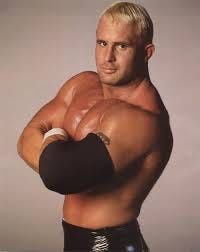
Paul Perchmann\Buddy Rose 4-28-2009 at the age of 56

Ashura Hara 4-28-2015 at the age of 68

Brazo de Oro 4-28-2017 at the age of 57

7 Stages of The Territory Era Review
40 Year Flashback
Stage of the Territory Era: Stage 7: Disintegration
Month 4 of Year 2: April-May 1986: The Four Horesemen Influence
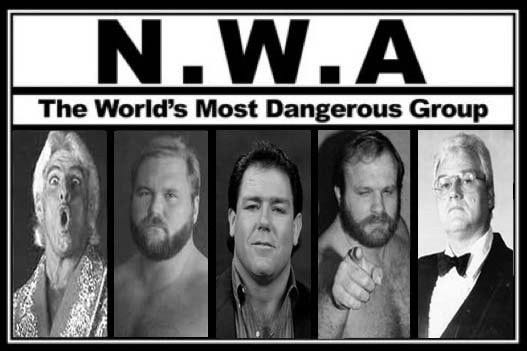
In the volatile landscape of April and May 1986—peak Stage 7 of the territory era—the Four Horsemen stood as the most potent symbol of NWA/Jim Crockett Promotions’ (JCP) counter-offensive against WWF national expansion. Formed in late 1985 as a loose alliance and solidified in early 1986, the group (Ric Flair as NWA World Heavyweight Champion, Arn Anderson as NWA World Television Champion, Tully Blanchard as NWA National Heavyweight Champion, and manager J.J. Dillon, with Ole Anderson as the veteran “enforcer” who was transitioning back from a brief Japan tour and injury angle) embodied aristocratic villainy, corporate dominance, and calculated brutality. Their dynamics were not mere booking filler; they were the narrative engine that generated white-hot heat, elevated babyface heroes, and illustrated the consolidation of power that both sustained JCP’s national ambitions and accelerated the old territorial system’s collapse.
Membership, Roles, and Kayfabe Psychology
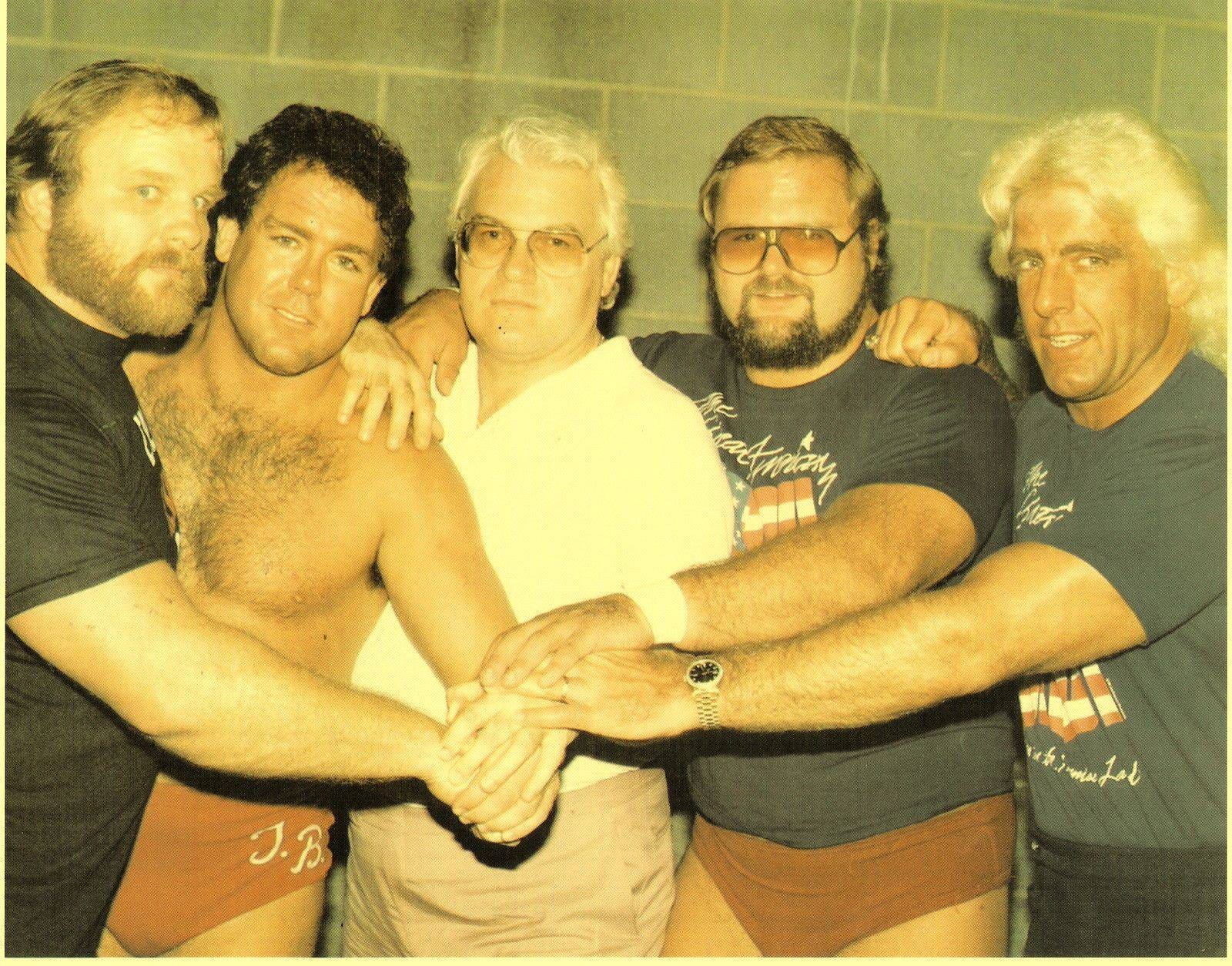
The Four Horsemen’s strength lay in their complementary personalities and in-ring styles, creating a self-reinforcing machine of heel psychology:
Ric Flair (“The Nature Boy”): The flamboyant, jet-setting figurehead and World Champion. Flair’s promos—boasting about limousines, women, and “Space Mountain”—painted the group as wrestling’s elite jet-set. He was the charismatic mouthpiece, the champion who could back up arrogance with technical mastery and the figure-four leglock. Flair’s role was aspirational villainy: fans hated him for living the high life they couldn’t touch.
Arn Anderson (“The Enforcer”): The cerebral, no-nonsense tag specialist and TV Champion. Arn’s spinebusters, gourdbusters, and methodical beatdowns made him the group’s tactical anchor. He and Tully formed one of the decade’s greatest tag teams, blending stiff psychology with double-team precision.
Tully Blanchard: The cocky, sneering National Champion and perfect foil for blue-collar babyfaces. His feuds often carried personal stakes (money, women, respect). Blanchard’s willingness to take shortcuts—foreign objects, manager interference—reinforced the Horsemen’s “win at all costs” ethos.
Ole Anderson: The grizzled veteran (Arn’s kayfabe uncle) and occasional wildcard. In April-May 1986, Ole was not yet at full strength after a worked injury and All Japan tour; his full on-screen reunion came in early June on World Championship Wrestling, where he helped reform the group during a Dusty Rhodes beatdown. Ole added legitimacy and old-school toughness, grounding the stable in NWA tradition.
J.J. Dillon: The Machiavellian manager and strategist. Dillon orchestrated interferences, cut scathing promos, and served as the group’s “brain.” His tennis-racket-wielding style (often loaned to allies) and suit-and-tie demeanor made the Horsemen feel like a corporate takeover squad.
Kayfabe dynamics emphasized unity through superiority. The Horsemen didn’t bicker internally (unlike later iterations); they presented a united front of “we control the NWA.” Promos frequently used collective language—“We can jump who we want, when we want, where we want”—to project inevitability. They held or challenged for every major title, creating the illusion of a monopoly. This arrogance was weaponized against babyfaces: group beatdowns (often post-match or in parking lots) made heroes look vulnerable until dramatic rescues (by Magnum T.A., the Road Warriors, or Dusty Rhodes allies). The psychology was simple yet brilliant: the more dominant the heels, the sweeter the comeuppance.
Real-life dynamics amplified this. Arn and Tully were genuine close friends whose chemistry translated to effortless tag work. Flair, already a proven draw, lent star power while benefiting from the group’s protection (he rarely jobbed cleanly). Booker Dusty Rhodes (a primary babyface antagonist) understood the value of a super-stable; the Horsemen allowed him to book multi-man wars without fragmenting the card. Ole’s real-life commitment issues (later used in 1987 to write him out for Lex Luger) were not yet a factor in spring 1986—he was positioned as the returning patriarch.
Major Storylines and Angles (April-May 1986 Context)
April-May 1986 was the Horsemen’s ascent to full dominance, directly tied to the Crockett Cup and Great American Bash buildup:
The Dusty Rhodes/Baby Doll Personal Feud: This was the emotional core. Baby Doll (Nickla Roberts) had managed Tully in 1985 before aligning with Dusty; lingering tension created layers of jealousy and betrayal. In April TV and house shows, the Horsemen repeatedly targeted Dusty, culminating in post-match gang attacks. Flair and Tully’s involvement turned it into a love-triangle/gang-war hybrid. By May, Rhodes’ promos about “taking back what the NWA took from me” resonated as blue-collar defiance against the elite.
Ron Garvin’s “Hands of Stone” vs. Arn Anderson: Garvin’s taped fist (worked injury) and gritty style made him a perfect foil for Arn’s TV Title. Multiple 1986 matches (including April bouts) saw the Horsemen isolate Garvin, only for his raw power to create hope spots. This angle highlighted the group’s bullying tactics.
Crockett Cup Tag Tournament (April 19): Arn & Tully advanced deep but were eliminated by the Fantastics in a heated match full of Horsemen interference. The tournament itself served as a showcase: the stable’s dominance across singles and tags proved they were the promotion’s backbone.
Road Warriors and Midcard Feuds: The Warriors’ power clashed with the Horsemen’s cunning; non-title brawls and six-man tags kept the midcard hot. The Rock & Roll Express and Magnum T.A. (U.S. Title buildup) provided fast-paced, sympathetic opposition.
These angles played out on WTBS and syndicated shows with long-form storytelling—promos, video packages, and escalating violence—that JCP used to differentiate from WWF’s cartoonier product.
Business and Territory-Era Impact
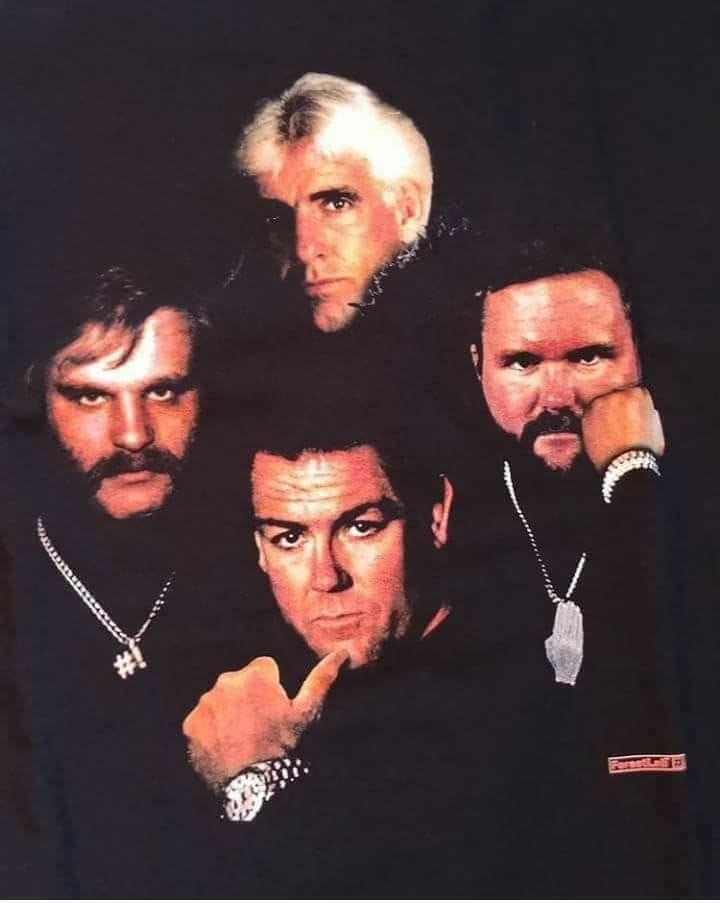
The Horsemen dynamics perfectly mirrored Stage 7’s disintegration. While WWF raided talent and nationalized markets, JCP used the stable to create a “super-territory” feel: one dominant heel faction that could feud with anyone, drawing consistent houses in the Southeast while smaller promotions (AWA, UWF, WCCW) bled stars and gates. The group’s success helped JCP absorb weaker territories and launch the Great American Bash tour, but it also concentrated power—talent, titles, and TV focus—under one umbrella. Fans in dying territories saw the Horsemen on national-ish TV and demanded the same spectacle locally, hastening collapse.
In-ring, their realistic, stiff style (no cartoon antics) kept NWA credible, yet the national expansion forced JCP to match WWF’s production scale, straining resources. By late 1986, the Horsemen held virtually all gold at points, symbolizing JCP’s temporary triumph—and the end of true territorial parity.
The Four Horsemen’s 1986 dynamics were pro wrestling’s perfect storm: four elite heels whose chemistry, arrogance, and gang mentality created must-see television. They didn’t just feud—they owned the narrative, turning personal grudges into wars that defined JCP’s resistance to Vince McMahon. For a brief window in spring 1986, they made the NWA feel invincible. That illusion, however, masked the deeper truth of Stage 7: the territories were disintegrating, and even the mightiest stable could only delay the inevitable shift to a national duopoly. Their reign remains the gold standard for faction dominance—unmatched in heat, cohesion, and historical impact.
Thank You for Reading
I’m Tony Richards, Pro Wrestling Historian, Author and Storyteller. I share pro wrestling historical items in each issue of the Time Tunnel Pro Wrestling History Newsletter. Thanks for reading! If you enjoy my information on select events, matches and insights, please share it with folks you think might like to be a subscriber!
Remember, premium investors get access to exclusive and special content such as some special issues including a multi-part deep dives on wrestling territories, wrestler bios and championship title histories, special audio and video interviews on territory pro wrestling and more available in the Pro Wrestling Time Tunnel for Premium Investors.