


Happy Birthday to those who have passed on and to those great wrestlers still with us:
In Memoriam:
Frank Gotch 1877
Happy Birthday:
Jeannine Mjoseth\Mad Maxine (67)
Oleg Prudius\Vladimir Koslov (57)
Johnny Devine (52)
RIP Memorial: We stop & remember those who have passed on this day and gave themselves to the business for us, the fans. We salute you and thank you.
Count Pietro Rossi 4-27-29179 at the age of 77

Jim Austeri 4-27-1987 at the age of 72

Kay Noble 4-27-2006 at the age of 65
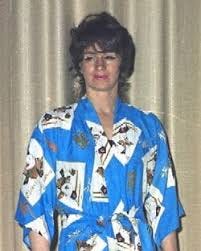
Verne Gagne 4-27-2015 at the age of 89

7 Stages of The Territory Era Review
40 Year Flashback
Stage of the Territory Era: Stage 7: Disintegration
Month 4 of Year 2: April 1986: The Month In Pro Wrestling
By April 1986, the territorial era of professional wrestling had entered its terminal phase—Stage 7: Disintegration. For decades, the National Wrestling Alliance (NWA) and independent regional promotions operated under an unwritten gentleman’s agreement: each territory respected geographic boundaries, exchanged talent and champions as needed, and protected local gates through limited national exposure. Vince McMahon Jr.’s World Wrestling Federation (WWF) shattered that model. McMahon syndicated WWF Championship Wrestling and All-American Wrestling into every available market, signed away top territorial stars with guaranteed money and national television exposure, and leveraged closed-circuit and emerging pay-per-view (PPV) technology to create a coast-to-coast brand. The result was a rapid talent drain, collapsing house-show attendance in smaller markets, and a forced consolidation or extinction among the territories.
April 1986 crystallized this collapse: WWF staged its most ambitious (and polarizing) spectacle yet, while the NWA’s strongest holdout—Jim Crockett Promotions (JCP)—mounted a massive counter-event, the AWA attempted one last stadium payday, and smaller groups like the newly rebranded Universal Wrestling Federation (UWF, ex-Mid-South) and World Class Championship Wrestling (WCCW) scrambled for relevance. The month’s major storylines, wrestlers, angles, and events illustrated both the glamour of national expansion and the accelerating disintegration of the old system.
The World Wrestling Federation (WWF)

The month’s marquee event was WrestleMania 2, held simultaneously at three venues—Nassau Veterans Memorial Coliseum (Uniondale, NY), Rosemont Horizon (Chicago suburbs), and Los Angeles Memorial Sports Arena—broadcast as a single PPV presentation. Combined attendance was roughly 40,000 across the buildings, with a reported 7.0 buy rate and about $5 million in revenue. The card mixed pure wrestling, celebrity crossovers, and novelty stipulations:
Los Angeles main event: Hulk Hogan (c) defeated King Kong Bundy in a steel-cage match for the WWF World Heavyweight Championship. The build stemmed from Bundy’s avalanche splash on Hogan during Saturday Night’s Main Event V (March 1), which “broke” Hogan’s ribs. Hogan’s escape after a big boot and leg drop capped a short, physical brawl that played to his monster-heel-slayer persona.
New York boxing match: Mr. T (with Joe Frazier and Haiti Kid) beat “Rowdy” Roddy Piper by disqualification after Piper bodyslammed him. This continued the real-life heat from WrestleMania I and Piper’s 1984–85 reign of terror.
Chicago 20-man battle royal: André the Giant last-eliminated Bret Hart to win, featuring six NFL stars (including William “The Refrigerator” Perry) alongside WWF talent. The match was a spectacle-heavy attempt to capitalize on football crossover appeal.
Other key results: The British Bulldogs (Davey Boy Smith & Dynamite Kid) dethroned the Dream Team (Greg Valentine & Brutus Beefcake) for the WWF Tag Team Titles in a strong 13-minute match; Randy Savage retained the Intercontinental Title against George “The Animal” Steele in a bizarre love-triangle angle centered on Miss Elizabeth; Jake Roberts DDT’d George Wells (with the post-match snake spot becoming infamous).
Critics called WrestleMania 2 a creative step backward from WrestleMania I—fragmented venues diluted momentum, the battle royal and boxing match felt gimmicky, and the main event was short. Yet it succeeded as business. McMahon’s three-city format and heavy celebrity involvement (Ray Charles, Ozzy Osbourne, Elvira, NFL players) proved the WWF could package wrestling as mainstream sports-entertainment. Nationally syndicated programming and Saturday Night’s Main Event on NBC had already eroded territorial TV windows; WrestleMania 2 accelerated that erosion by demonstrating that one promotion could dominate coast-to-coast attention and revenue. Territories watched their local stars (or future stars) appear on national TV while their own house shows suffered.
Post-WrestleMania TV tapings immediately pivoted to new angles: Adrian Adonis’s “Flower Shop” talk segment humiliated Piper and set up future feuds, while Paul Orndorff’s growing dissatisfaction with manager Bobby Heenan hinted at the “Mr. Wonderful” turn. Hogan’s unchallenged babyface supremacy remained the promotion’s anchor, but the roster was stocked with ex-territorial talent (Savage from Memphis, Steamboat from the Carolinas, etc.), further weakening regional rosters.
Jim Crockett Promotions\Primary NWA Territory
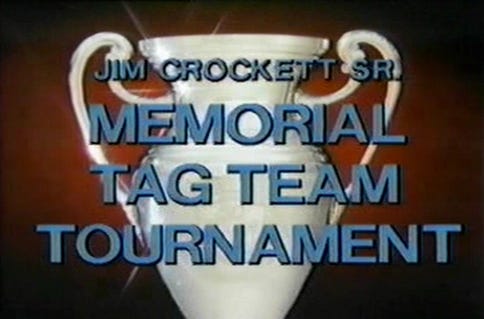
While WWF went national, JCP—operating as the de facto flagship of the NWA—countered with its own ambitious spectacle: the 1st Annual Jim Crockett Sr. Memorial Cup Tag Team Tournament at the Louisiana Superdome in New Orleans. Twenty-four teams competed across afternoon and evening shows for a reported $1 million prize pool (or at least heavy promotion of big money). The Road Warriors (Animal & Hawk) won the finals, pinning Ron Garvin after Garvin injured his taped hand on a punch. Seeded teams included the Road Warriors, Dusty Rhodes & Magnum T.A., Midnight Express, Ric Flair & Arn Anderson, and UWF representatives like Ted DiBiase & Steve Williams.The tournament was more than a one-night event; it served as the culmination of months of interlocking storylines that defined JCP television on WTBS:
The Four Horsemen empire: Ric Flair (NWA World Champion), Arn & Ole Anderson, Tully Blanchard (NWA National Heavyweight Champion), and manager J.J. Dillon dominated. Flair’s heel charisma, figure-four leglock, and “jet-flying, limousine-riding” promos made him the gold standard of territorial champions. The group’s collective arrogance—attacking Dusty Rhodes’ leg, mocking Baby Doll’s departure from Rhodes to align with Flair—created layered heat.
Dusty Rhodes & Baby Doll vs. Tully Blanchard: Rhodes’ emotional, blood-and-guts style contrasted sharply with the Horsemen’s polished villainy. Baby Doll’s turn and on-screen romance with Flair added personal stakes; Rhodes’ promos about “taking back what the NWA took from me” resonated with blue-collar fans.
Magnum T.A. vs. Nikita Koloff: The U.S. Title feud featured brutal Russian-chain and best-of-seven series matches. Magnum’s all-American babyface fire against Koloff’s Soviet heel gimmick kept mid-card intensity high.
Midnight Express vs. Rock & Roll Express and Road Warriors: Jim Cornette’s tennis-racket attacks and the Midnight’s cocky arrogance fueled one of the decade’s greatest tag rivalries. The Rock & Roll Express chased the NWA Tag Titles, while the Warriors positioned themselves as unstoppable forces.
JCP’s WTBS exposure gave it national reach without fully abandoning the territorial model. The Crockett Cup drew 13,000+ fans and showcased cross-promotional talent (UWF, international stars), proving the NWA could still mount a credible alternative. Yet the event also highlighted disintegration: JCP was aggressively buying smaller territories (Florida, Central States later in 1986), but the talent pool was thinning as stars eyed WWF contracts. House shows in the Southeast remained strong, but the writing was on the wall—regional promotions could no longer sustain themselves solely on live gates when national TV dictated star power.
AWA and other Territories That Remained
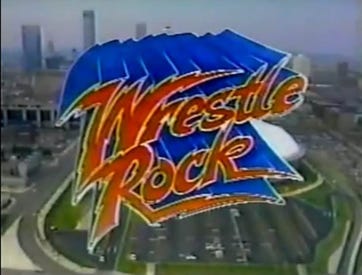
The American Wrestling Association (AWA), once a powerhouse under Verne Gagne, staged WrestleRock ’86 on April 20 at the Metrodome in Minneapolis (attendance ~23,000). It was the promotion’s last major stadium show. Key matches included Brad Rheingans vs. Boris Zukhov, the Midnight Rockers (Shawn Michaels & Marty Jannetty) vs. Buddy Rose & Doug Somers, and title implications involving Stan Hansen and Nick Bockwinkel. The AWA still featured solid in-ring talent, but it was hemorrhaging stars to WWF and struggling with creative direction. Gagne’s old-school territorial mindset clashed with the cartoonish national product; WrestleRock felt like a last gasp rather than a launchpad.

Bill Watts’ Mid-South Wrestling rebranded as the Universal Wrestling Federation (UWF) in March 1986 explicitly to compete nationally. By April, it aired syndicated programming and featured hot acts like the Fantastics vs. Sheepherders, Terry Taylor, Steve Williams, and Eddie Gilbert. The UWF emphasized hard-hitting, realistic wrestling—contrasting WWF’s glitz—but expansion into new markets proved costly. House-show attendance in its core Louisiana/Texas/Oklahoma territory suffered from economic woes and talent raids. WCCW in Dallas continued its Von Erich–Freebirds saga (Kerry Von Erich, Lance Von Erich, Bruiser Brody vs. Terry Gordy, Michael Hayes), with April house shows featuring One Man Gang, Rick Rude, and undercard talent. However, WCCW was already losing key personnel to the UWF and feeling the national squeeze; Kerry’s later motorcycle accident would compound its troubles.
Broader Effects of National Expansion on the Territory Era
April 1986 exemplified Disintegration Stage 7’s core dynamics:
Talent Drain: WWF’s deeper pockets and national platform lured mid-card and top stars. Territories developed talent only to lose it—Magnum T.A., Road Warriors, and others were hot properties that could command bigger guarantees elsewhere.
Television Erosion: Syndicated WWF programming and WTBS for JCP fragmented local viewership. Fans who once attended weekly arena shows now watched national stars on TV and demanded the same in their markets.
Financial Pressure: Big events like WrestleMania 2 and the Crockett Cup generated short-term revenue but highlighted the gap. Smaller promoters couldn’t match production values or celebrity tie-ins. House-show gates declined as fans saved money for PPV or traveled less.
Creative and Philosophical Shift: WWF’s sports-entertainment model (celebrities, music, larger-than-life characters) outdrew the territories’ traditional wrestling focus. JCP and UWF tried to blend realism and spectacle, but the national tide favored McMahon’s vision.
Consolidation or Collapse: JCP’s territory purchases were defensive moves to create a super-territory, yet they accelerated the NWA’s fragmentation. By year’s end, the landscape had shifted irreversibly toward national entities.
April 1986 was not the total death of the territories—that came later—but it was the month when disintegration became undeniable. WWF’s three-ring circus proved the power of national branding; JCP’s tournament showed the old guard could still draw when unified; and the AWA/UWF/WCCW efforts revealed the futility of fighting the tide without matching resources. Wrestlers like Hogan (the unstoppable champion), Flair (the aristocratic villain), Rhodes (the working-class dreamer), and the Road Warriors (unstoppable forces) embodied the era’s star power, yet their very success accelerated the system’s collapse. The territory era’s seven-stage journey—from post-WWII boom to 1980s fragmentation—reached its endgame. What emerged was a new era of national promotions, corporate ownership, and sports entertainment that would define wrestling for the next four decades. The territories had built the foundation; national expansion both honored and destroyed it.
Thank You for Reading
I’m Tony Richards, Pro Wrestling Historian, Author and Storyteller. I share pro wrestling historical items in each issue of the Time Tunnel Pro Wrestling History Newsletter. Thanks for reading! If you enjoy my information on select events, matches and insights, please share it with folks you think might like to be a subscriber!
Remember, premium investors get access to exclusive and special content such as some special issues including a multi-part deep dives on wrestling territories, wrestler bios and championship title histories, special audio and video interviews on territory pro wrestling and more available in the Pro Wrestling Time Tunnel for Premium Investors.