


Happy Birthday to those who have passed on and to those great wrestlers still with us:
In Memoriam:
Killer Karl Kox 1931
Larry Matysik 1947
Jerry Blackwell 1949
Happy Birthday:
David “Tank” Abbot (61)
Glenn Jaciobs\Kane (59)
Ron Reis (56)
Jonathan Figueroa\Amazing Red (44)
RIP Memorial: We stop & remember those who have passed on this day and gave themselves to the business for us, the fans. We salute you and thank you.
Len Stap\Fuzzy Cupid 4-26-1979 at the age of 50

Lee Marshall 4-26-2014 at the age of 65

Significant Debut
Kim Duk\Tiger Chung Lee 4-25-1968 at the age of 20
50 Year Flashback
Q2 Analysis (April-June) Championship Wrestling From Florida, Tampa, Florida Booking Office
The period of April through June 1976 exemplified the territory’s storytelling excellence: layered angles involving personal vendettas, masked wrestler reveals, bounty hunts, and rapid-fire championship turnover. Central figures included Dusty Rhodes, the Brisco Brothers, the Orton family (Bob Sr. and Jr.), Bob Roop, Steve Keirn, Mike and Eddie Graham, The Assassin, and visiting NWA stars like Terry Funk. Underneath it all ran the signature CWF style—realistic psychology, Solie’s authoritative narration, and angles that blurred kayfabe with “worked-shoot” realism.
April opened with Jack Brisco capturing the NWA Florida Heavyweight Championship on April 17 in St. Petersburg, defeating Pak Song to begin his eighth reign (lasting 38 days). Brisco, a polished technician and former NWA World Champion, represented the heroic establishment against a wave of aggressive heels. Pak Song, a stiff, imposing Korean heel, had briefly held the title after dethroning Thunderbolt Patterson in March.
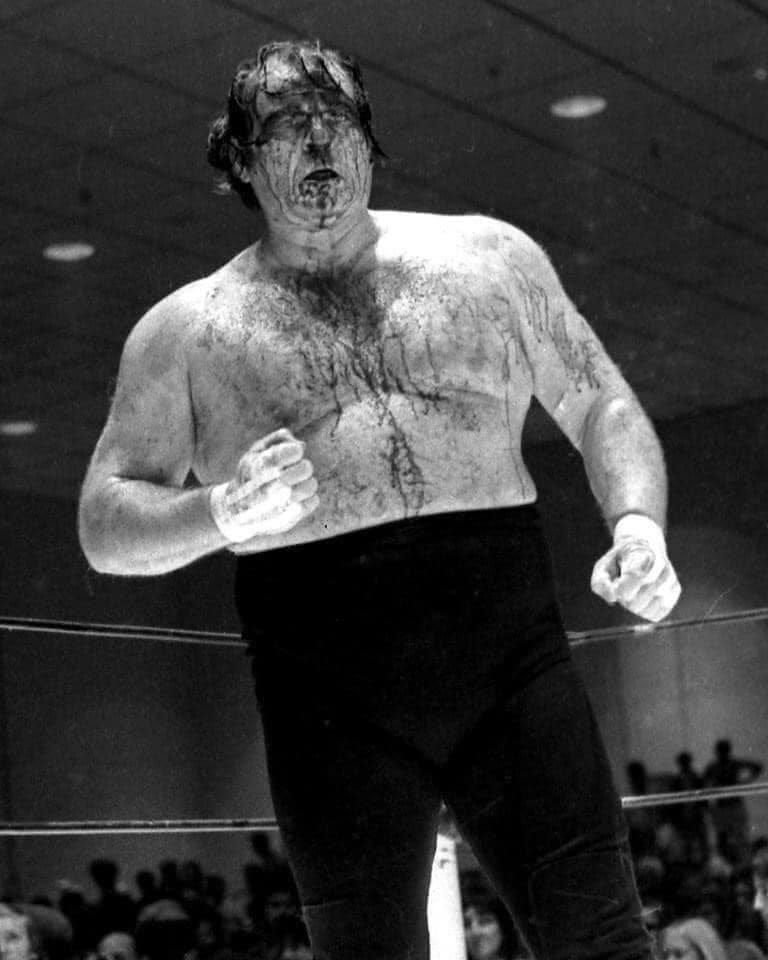
Pictured: A beaten and battered Missouri Mauler from a taped fist match with Dusty Rhodes
The month’s defining storyline centered on Dusty Rhodes’ dramatic recovery from a brutal attack. Earlier in the year, Rhodes had pinned NWA World Heavyweight Champion Terry Funk in a non-title match—one of the only men to do so—only to be targeted by Funk’s hired enforcer, the Missouri Mauler (brother of The Assassin), in a vicious post-match beating that left Rhodes with facial paralysis on his right side. Kayfabe medical drama ensued: Rhodes was rushed to the hospital, and the injury was portrayed with chilling realism. On the April 21 episode of Championship Wrestling from Florida (taped earlier), a somber Rhodes appeared on Solie’s set wearing sunglasses and a newsboy cap. Removing them, he revealed the paralysis, apologized for slurred speech, and vowed revenge on the Mauler, manager Rock Hunter, and the entire Funk family. He noted the Mauler had failed to collect a rumored $10,000 bounty by not fully sidelining him.
That same episode showcased the territory’s depth. Matches included The Great Mephisto (a white wrestler in Arab gimmickry) defeating jobber Tom Jones; a two-on-one handicap win for the massive Haystacks Calhoun over Jim Dalton and George McCreary; the Missouri Mauler (managed by Rock Hunter) squashing Bill Dromo with focused arm/shoulder work; a strong technical tag bout where Florida Heavyweight Champion Thunderbolt Patterson and Southern Heavyweight Champion Billy Robinson defeated Karl Von Steiger and “Nature Boy” Roger Kirby; a competitive tag where Jerry Brisco and Abe Jacobs fell to the brute force of Frank Goodish (pre-Bruiser Brody) and King Curtis Iaukea; and a duration match in which rising star Steve Keirn scored a DQ win over Bob Orton Jr. after interference from Orton’s partner Bob Roop.
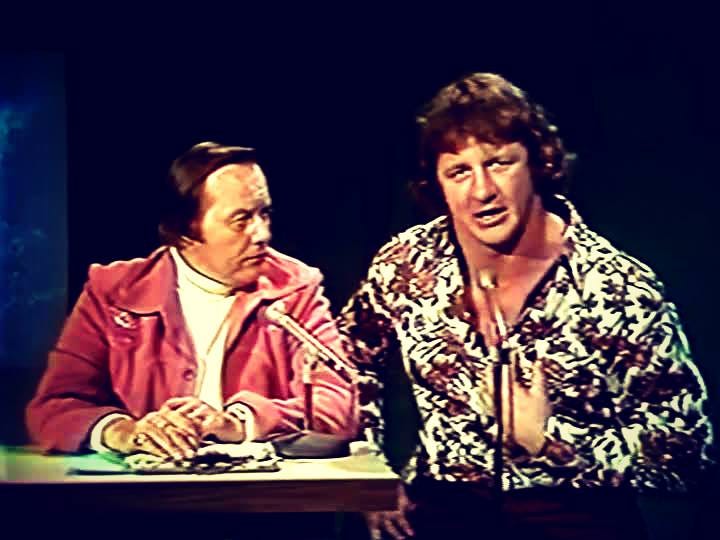
Pictured: NWA World Champion, Terry Funk with Gordon Solie
Post-match segments amplified the drama: Terry Funk appeared unapologetic, criticizing Rhodes’ resilience and confirming he had initially paid the Mauler. The Mauler defended his partial success (“I paralyzed half his face!”) while Funk dangled further payment. Solie revealed a counter-bounty on the Mauler’s head. Rhodes later returned to deny placing it himself, teasing deeper conspiracy. Meanwhile, house shows like the April 6 Tampa card featured Eddie and Mike Graham defeating The Infernos in tag action, with Bob Orton Jr. in undercard bouts.
The Orton/Roop/Graham feud simmered in the background. Roop and Orton Jr. had won the Florida Tag Team titles from the Grahams in January after a piledriver injury angle sidelined Mike Graham. Roop suffered a kayfabe career-threatening knee injury from Eddie Graham’s figure-four leglock in late March, leading to a temporary ban on the hold. A masked wrestler called The Gladiator soon debuted—using Roop’s shoulderbreaker finisher, drawing “ROOP!” chants from savvy crowds—and aligned with the Ortons.
May brought explosive title changes and the climax of the Gladiator saga. On May 4 in West Palm Beach, Dusty Rhodes defeated The Assassin to win his seventh NWA Southern Heavyweight Championship (Florida version), holding it for 35 days. The Assassin had claimed the title on April 13 in Tampa. Rhodes’ win fueled his babyface momentum amid the Mauler revenge plot. Bob Orton Jr. dethroned Jack Brisco for the NWA Florida Heavyweight Championship around May 17 (West Palm Beach) or May 25 (Tampa reports), beginning a 71-day reign. Orton Jr.’s victory marked a heel power shift; he was positioned as a cocky, technically sound antagonist backed by family and allies.

Pictured: Bob Roop and Bob Orton, Jr., NWA Florida Tag Team Champions
The month’s television highlight came on the final program of May: Eddie Graham, Mike Graham, and Jerry Brisco interfered in a Gladiator match, ripping off the mask to reveal Bob Roop. Roop, still “recovering” from knee surgery, claimed he had wrestled against doctor’s orders solely to keep the figure-four banned for the good of the sport. The unmasking—ranked among CWF’s greatest angles—united the “Bobs” (Roop, Orton Jr., and soon Orton Sr., who turned heel to join them) against the Grahams, Keirn, and Brisco. Orton Jr. relinquished his share of the tag titles (per NWA ruling) so Roop could regain co-ownership, with Orton Sr. stepping in as partner. The trio dominated tag defenses and non-title bouts against the Grahams, Keirn, and others throughout May.
House shows continued the momentum. The May 12 Miami Beach card saw The Gladiator and the Ortons defeat the Grahams and Steve Keirn. Midcard action featured Billy Robinson, Pak Song, and others in competitive bouts.
June saw heels consolidate power before babyface counterpunches. On June 8 in Tampa, The Assassin (also in position as the booker during 1976) regained the NWA Southern Heavyweight Championship from Dusty Rhodes, launching a longer 144-day reign. Rhodes, still nursing the lingering Mauler feud, shifted focus toward bigger prizes.
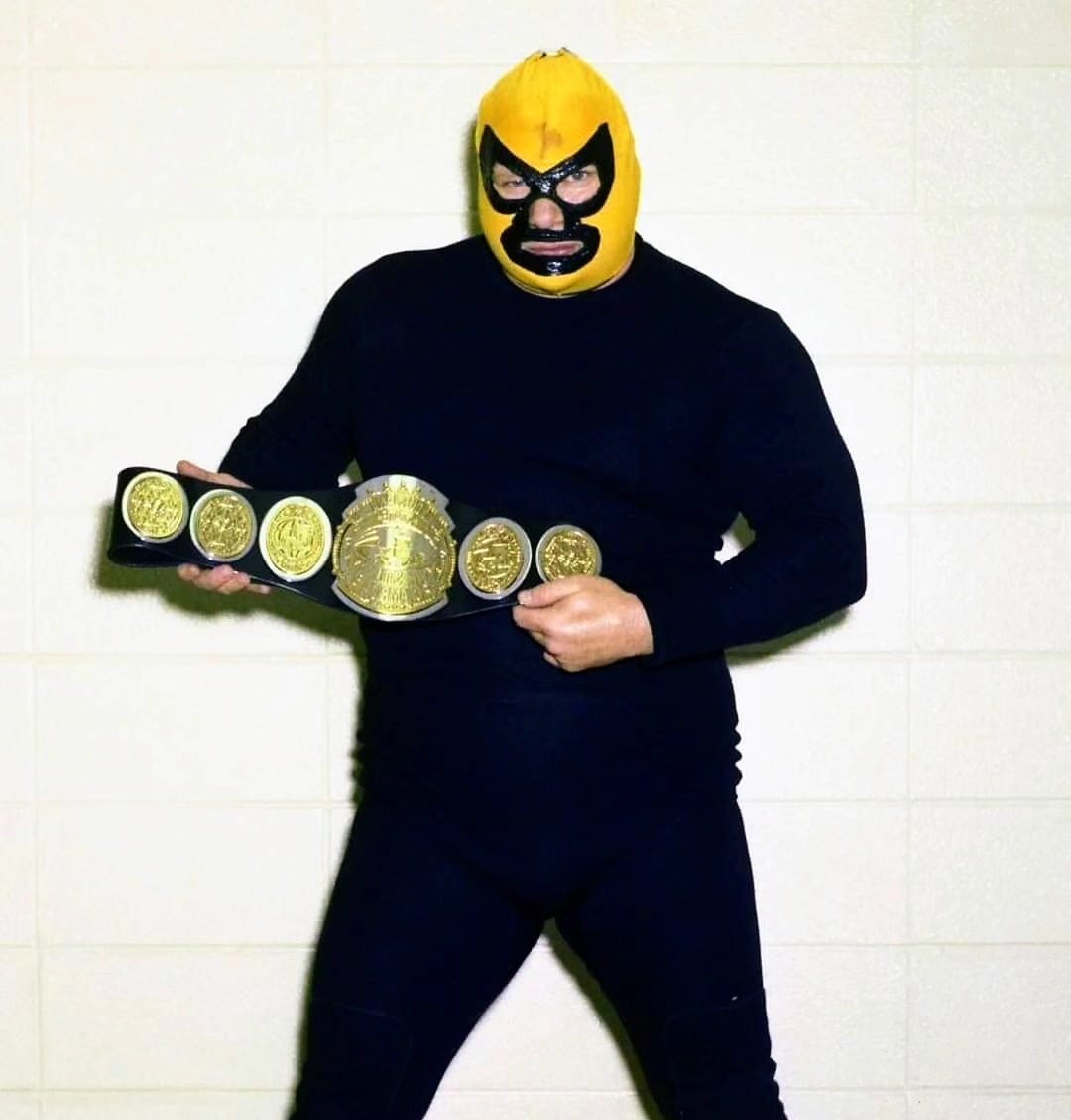
Pictured: The Assassin (Jody Hamilton)
The Florida Tag Team Championship picture clarified as the Orton/Roop alliance adjusted. By early June, Orton Sr. and Roop held the belts (Orton Jr. having prioritized the singles title). Steve Keirn and Bob Backlund emerged as the primary challengers in a heated program built on athleticism versus the heels’ cunning. On June 7 in West Palm Beach, Orton Sr. & Roop successfully defended against Keirn & Backlund, but the babyface duo finally dethroned them on June 29 (or around late June per varying reports), capturing the titles and setting up summer programs.
Feuds intensified across house shows. The Missouri Mauler continued as a featured heel, often in taped-fist or no-DQ matches. The Grahams and Keirn sought revenge on the unmasked Roop. Dusty Rhodes remained the territory’s top draw, his paralysis angle evolving into broader anti-heel crusades while he eyed a July Florida title shot against Orton Jr. NWA World Champion Terry Funk’s influence lingered through proxy attacks and promos.
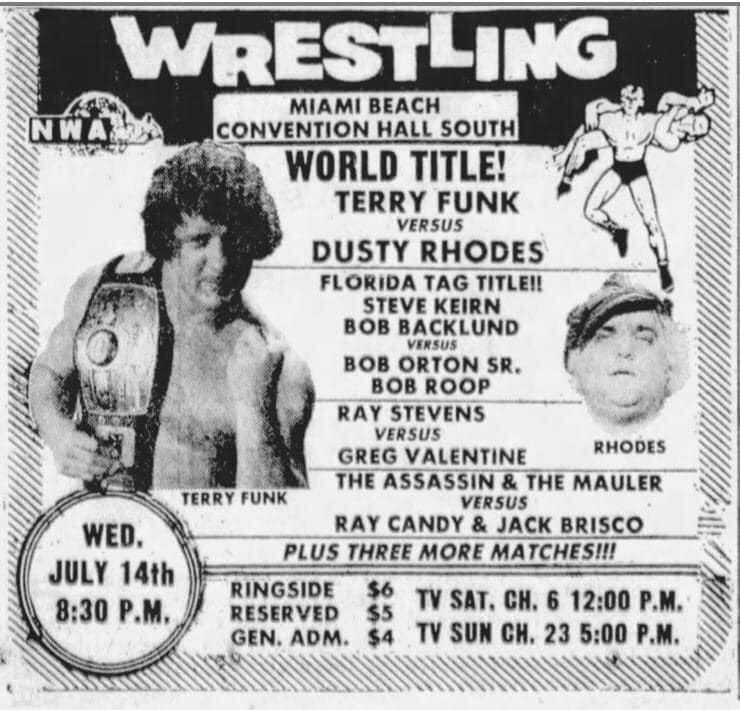
Pictured: July 14th, 1976 card for Miami Beach, Florida
April–June 1976 encapsulated CWF’s golden-era formula: personal, long-term storytelling that rewarded attentive viewers. The Dusty/Mauler/Funk bounty saga blended medical kayfabe with moral outrage. The Roop/Gladiator reveal and Orton family expansion created a multi-man heel powerhouse that felt organic and dangerous. Title changes—Brisco to Orton Jr. (Florida), Assassin to Rhodes to Assassin (Southern), and the impending tag shift to Keirn/Backlund—kept arenas buzzing without sacrificing continuity. Eddie Graham’s booking emphasized realism (figure-four bans, “injuries,” family betrayals), while Solie’s commentary lent gravitas.
These months built directly into July’s fireworks: Dusty Rhodes defeating Bob Orton Jr. for the Florida title on July 27 in Tampa (no-DQ with Don Curtis as special referee), further cementing his status as the American Dream. CWF’s spring of 1976 wasn’t just matches and angles—it was serialized drama that made Florida wrestling must-see television and live events, sustaining the territory’s reputation as one of the NWA’s most creative and profitable territories
Thank You for Reading
I’m Tony Richards, Pro Wrestling Historian, Author and Storyteller. I share pro wrestling historical items in each issue of the Time Tunnel Pro Wrestling History Newsletter. Thanks for reading! If you enjoy my information on select events, matches and insights, please share it with folks you think might like to be a subscriber!
Remember, premium investors get access to exclusive and special content such as some special issues including a multi-part deep dives on wrestling territories, wrestler bios and championship title histories, special audio and video interviews on territory pro wrestling and more available in the Pro Wrestling Time Tunnel for Premium Investors.