


Happy Birthday to those who have passed on and to those great wrestlers still with us:
In Memoriam:
Joe Garibaldi 1911
Walter Palmer 1912
George Gadaski 1930
Happy Birthday:
Carl Fergie (73)
J.T Smith (57)
Bay Ragni\Chubby Dudley (56)
RIP Memorial: We stop & remember those who have passed on this day and gave themselves to the business for us, the fans. We salute you and thank you.
Frank Gracey Robinson\Farmer Brown 4-25-1983 at the age of 65
(no photo available)
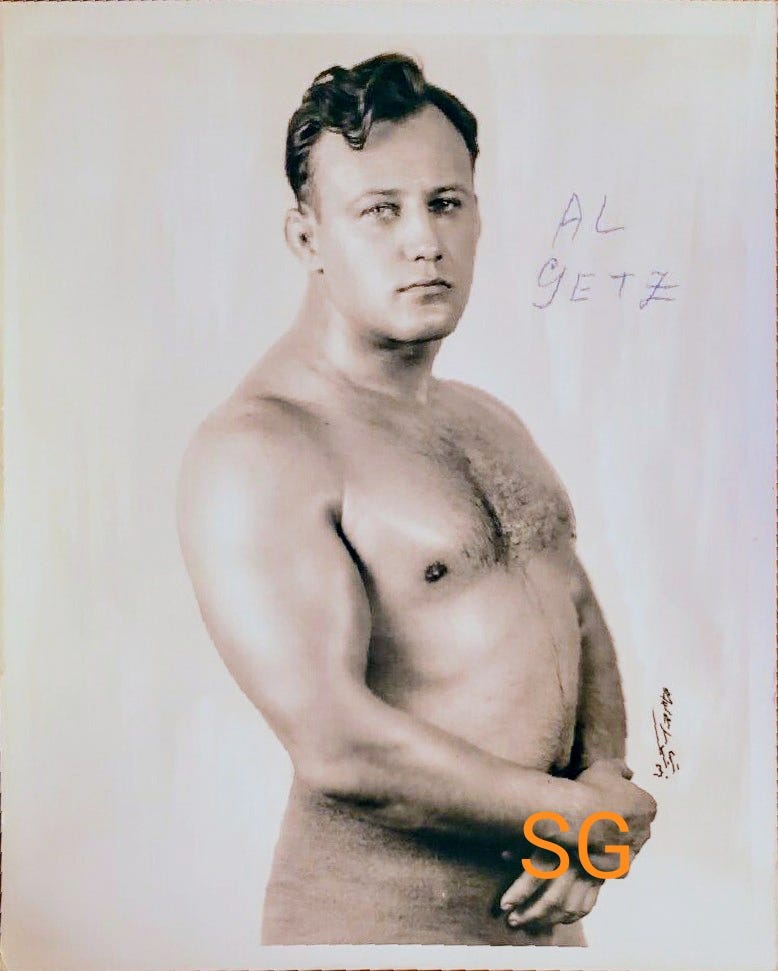
Al Getz 4-25-1992 at the age of 82
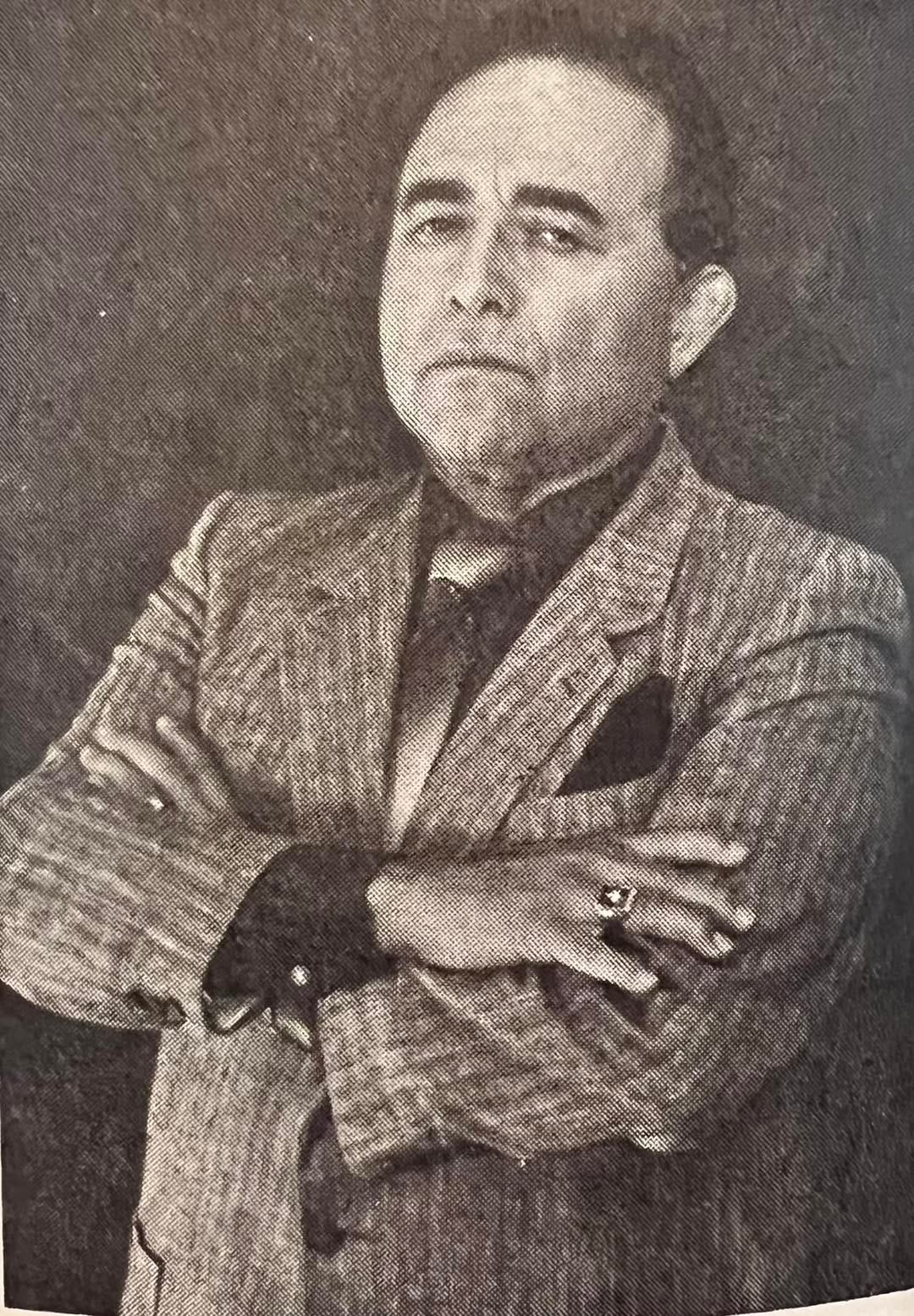
Tom Renesto 4-25-2000 at the age of 72
The Life and Career of Cora Livingston
She was born Cora B. Tubbs around 1887–1889 in Buffalo, New York, and she stands as one of the most significant figures in the early history of professional wrestling. Widely recognized as the first women’s world champion in the sport’s history, she helped transform women’s wrestling from a sideshow curiosity—often featuring untrained performers in circus or vaudeville acts—into a legitimate athletic competition during the early 20th century. At approximately 5 feet 5 inches tall and 138 pounds in her prime, Livingston combined serious training, technical skill, and a no-nonsense demeanor that earned her respect in an era when female wrestlers frequently faced skepticism, moral outrage, and even arrests for “indecency.” Her roughly 20–30-year career (debuting around 1905–1906 and retiring in 1925 or 1935) spanned tours across the United States and Canada, multiple title defenses, and a brief loss and regain of the championship. After hanging up her boots, she mentored future stars like Mildred Burke and assisted her husband, promoter Paul Bowser, in running wrestling territories. Her legacy endures as a trailblazer who legitimized women’s pro wrestling, with inductions into the Greater Buffalo Sports Hall of Fame (2022) and the Women’s Wrestling Hall of Fame (2023) cementing her place in history.
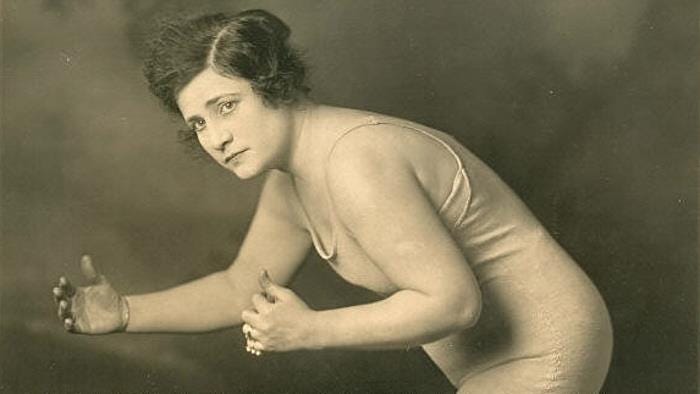
Livingston’s beginnings were marked by hardship. Her parents died when she was young, leaving her to be raised in a Catholic orphanage or convent school in Buffalo, where nuns oversaw her upbringing. Despite the challenges, she excelled as a youngster in track and field events, demonstrating natural athleticism that would later serve her well. Around age 16, she ran away from the orphanage to pursue a career in professional wrestling, initially joining the circus circuit—a common entry point for early wrestlers of both genders, where exhibitions and challenge matches were part of the entertainment.
Her first documented match took place on March 19, 1906, at the Lafayette Theatre in Buffalo. By this point, she had begun serious training under notable figures such as wrestlers and instructors Dan McLeod and Dr. Benjamin Roller, as well as fellow female wrestler Laura Bennett (who would become both mentor and rival). Some accounts suggest additional early influence or training from her eventual husband, Paul Bowser, or possibly a prior association with lightweight wrestler Carl Livingston (historical sources show some confusion over her marital history and ring name origin). Regardless, by the late 1900s, Cora had honed a catch-as-catch-can and Greco-Roman style that emphasized throws, holds, and submissions rather than the theatricality common in some contemporary women’s bouts.
Livingston’s breakthrough came in the 1910s. In 1910 (or 1913 according to some contemporary accounts), she defeated her trainer Laura Bennett in Kansas City, Missouri, at the Century Theatre, claiming recognition as the first Women’s World Champion. The title was not sanctioned by a major governing body in the modern sense but was widely accepted through journalistic and promotional consensus at the time. She defended it vigorously across the country, facing challengers in theaters, arenas, and other venues while billing herself as the undisputed championess.
Her early career included high-profile bouts that tested both her skill and the public’s tolerance for women’s wrestling. In 1908, she co-headlined at Detroit’s Avenue Theater, defeating Florence Hilton and Bertha Stark quickly while issuing open challenges. A 1910 match against Lou Harris at New York’s Empire Theater drew over 1,200 spectators but ended in chaos when police intervened amid illegal holds (including her signature strangle hold), leading to arrests for disorderly conduct. Newspapers like the Chicago Tribune decried the event as “disgraceful,” criticizing the wrestlers’ tights and aggression, reflecting broader societal discomfort with women engaging in contact sports. Yet other outlets, such as the Richmond Times-Dispatch in 1919–1920 coverage of her matches against May Wilson and Grace Brady, praised the technical expertise on display, equating it favorably to men’s wrestling.
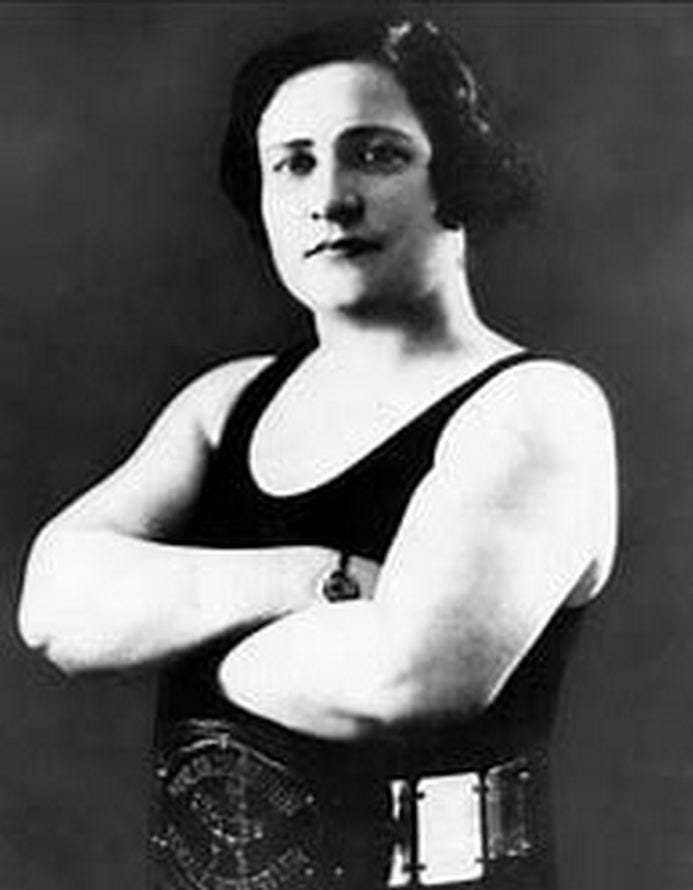
Livingston’s reign was not entirely undefeated in non-title contexts. For example, a September 1910 match against local favorite May Nelson in Buffalo ended prematurely when fans stormed the ring; in the rematch, Livingston suffered her first documented career loss (non-title). In 1923, on Thanksgiving Day, she lost the world title in an elimination-style context to Virginia Mercereau. Demonstrating resilience, Livingston regained the crown two years later by defeating Mercereau and held it until her retirement, achieving what some sources describe as a 22-year overall association with the championship.
Throughout the 1910s and 1920s, she toured extensively, defeating opponents including Bessie Farrar, Celina Pontos, Grace Brady, Lou Harris, May Nelson, Margaret Dunn, the Bothner Twins, Nellie Ludrig, May Kelley, and Hazel Parker. Her matches often featured legitimate athletic contests rather than predetermined outcomes, setting her apart from less credible performers of the era.
In 1913, Livingston married Paul Bowser, a wrestler and ambitious promoter who further refined her training and managed her career. Some earlier sources mention a possible marriage to Carl Livingston, with whom she may have performed, but the consensus points to her long-term partnership with Bowser. The couple’s professional synergy was evident; Bowser later became a major figure in New England wrestling promotion. Livingston maintained a disciplined regimen—gymnastics, a strict diet, and Turkish baths—to stay in peak condition, approaching the sport with “quiet seriousness and dignity” that contrasted with the era’s sensationalism. Women’s wrestling in the early 20th century faced significant obstacles: moral crusades against “unwomanly” behavior, inconsistent regional acceptance, police interventions, and media criticism. Livingston’s credibility as a trained athlete helped elevate the sport’s legitimacy, paving the way for later generations.
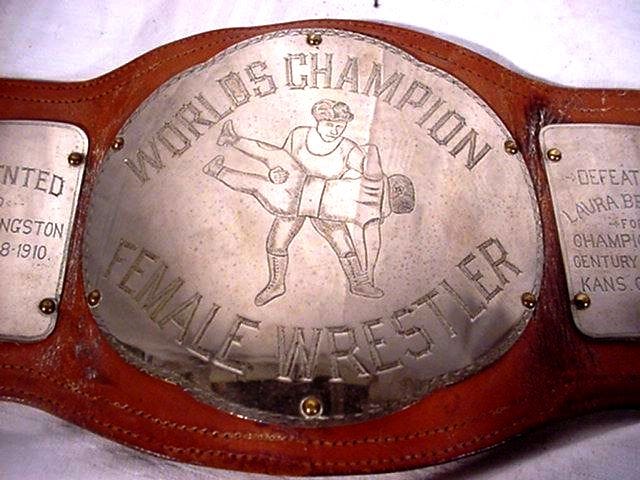
Pictured: Cora Livingston’s World Championship Belt
Livingston retired in 1925 or 1935 (sources vary, with some emphasizing she retired with the championship belt). She and Paul Bowser settled in the Boston area, where she assisted him in promoting wrestling in the New England territory. Post-retirement, she remained active as a trainer and mentor, notably guiding Mildred Burke—the future NWA Women’s World Champion—who credited Livingston’s influence during her early career in the 1930s. Livingston appeared at cards in support of Burke and helped train other aspiring female wrestlers.
Her prized Women’s World Title belt, a tangible symbol of her pioneering status, was auctioned on eBay in March 2004 for $1,677, underscoring ongoing collector interest in wrestling artifacts from this era.
She died on April 22, 1957, at New England Baptist Hospital in Boston at approximately age 70–71. Her husband Paul survived her by a few years. Obituaries, such as one in the Pittsburgh Post-Gazette, remembered her as a former mat champion who had won the women’s title before World War I.
Though largely overlooked for decades amid wrestling’s male-dominated historiography, Livingston’s contributions have been reevaluated in modern scholarship. Books like Sisterhood of the Squared Circle and articles in outlets such as Vice highlight her role in establishing women’s wrestling as a credible sport. Her inductions into halls of fame affirm her status as a foundational figure. In an era when female athletes fought not only opponents but also societal barriers, Cora Livingston’s career exemplified resilience, skill, and quiet revolution—proving that women belonged in the squared circle and setting the stage for the vibrant women’s contributions that followed.
One Thing I Learned About Farmer Brown
In the early 1950s, he and his wife Nancy Taylor Lewis (who wrestled as the hillbilly character Daisy Mae) used a delightfully quirky gimmick that involved bubble gum as a “secret weapon.”
Farmer Brown (also billed as Hillbilly Spunky or Hillbilly Stumpy early on) openly revealed in a 1961 interview that Daisy Mae would chew two sticks of gum during matches, blow an enormous bubble “as big as a basketball,” and then pop it right in her opponent’s face to distract or humiliate them. The couple worked mixed-tag and intergender bouts together on the road, often leaning into the Li’l Abner-style hillbilly comedy from Dogpatch, Kentucky. Their young daughter (future wrestler Patsy O’Neill) sometimes even came to ringside to hand out bubble gum to the crowd when they won—or run for police help when things went south.
Beyond the gimmick, Farmer Brown (from Pea Ridge, Kentucky) was a solid 6’1”, 240+ pound journeyman who wrestled across the U.S. in the 1950s–60s for promoters like Jack Pfefer. He and Daisy Mae also played a small but real role in women’s wrestling history: they helped train the legendary Fabulous Moolah (Lillian Ellison) during her early career, with Daisy Mae sparring with her in training sessions.
Thank You for Reading
I’m Tony Richards, Pro Wrestling Historian, Author and Storyteller. I share pro wrestling historical items in each issue of the Time Tunnel Pro Wrestling History Newsletter. Thanks for reading! If you enjoy my information on select events, matches and insights, please share it with folks you think might like to be a subscriber!
Remember, premium investors get access to exclusive and special content such as some special issues including a multi-part deep dives on wrestling territories, wrestler bios and championship title histories, special audio and video interviews on territory pro wrestling and more available in the Pro Wrestling Time Tunnel for Premium Investors.