


Happy Birthday to those who have passed on and to those great wrestlers still with us:
In Memoriam:
Duke Keomuka 1921
Ray Villmer 1912
Peggy Jones\Heather Feather 1949
Happy Birthday:
Mike Stark\Lord Humongous (76)
Ezekiel Jackson (48)
Dustin Howard\Chuck Taylor (40)
Andre Chase (37)
RIP Memorial: We stop & remember those who have passed on this day and gave themselves to the business for us, the fans. We salute you and thank you.
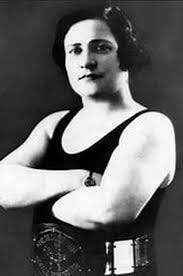
Cora Livingston 4-22-1957 at the age of 70
Richard Vest\Chief Big Heart 4-22-1993 at the age of 66

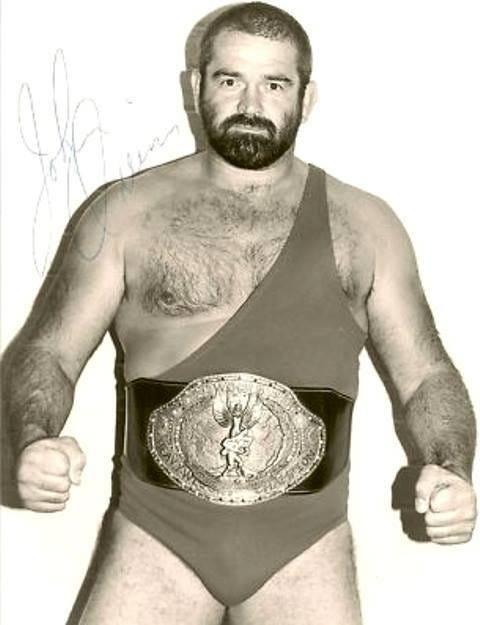
The Kentucky Butcher\”The Mighty” John Quinn 4-22-2019 at the age of 77
Significant Debut:
Masanobu Fuchi 4-22-1974 at the age of 20
Pro Wrestling Time Tunnel Community Update
Pro Wrestling Time Tunnel Territory History Show Episode 58: Florida 1976!
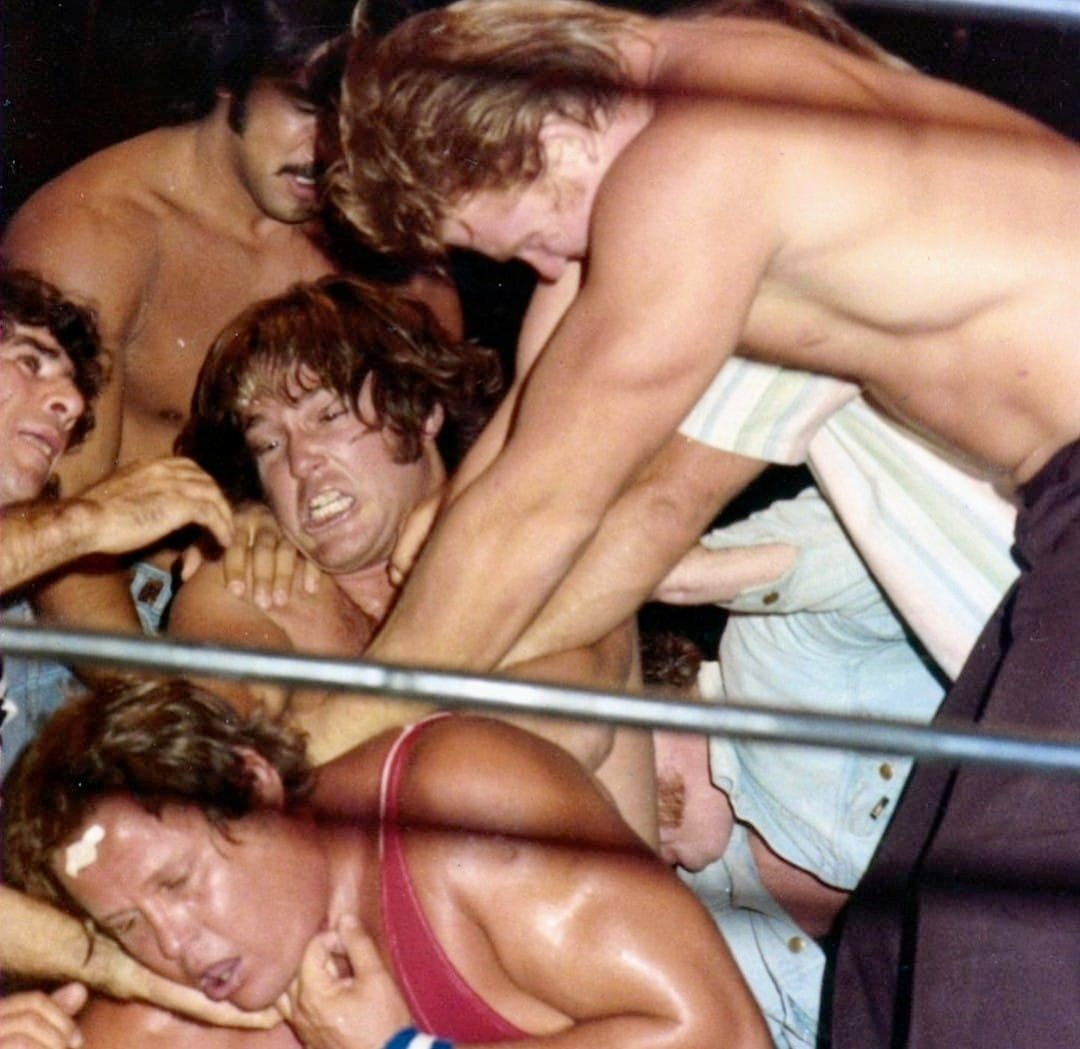
Pictured: Several wrestlers and ringside workers try to pull Steve Keirn off of Bob Roop at the Tampa, Florida Sportatorium during a TV Taping of Championship Wrestling From Florida in 1976
Today’s Episode 58 is a standout installment, reuniting regular Florida co-host Howard Baum—the territory’s foremost historian and analyst—with special guest Steve Keirn, the Tampa-born wrestler whose career was forever elevated during the pivotal period of late 1975 through 1976 in Eddie Graham’s Championship Wrestling from Florida (CWF). The episode masterfully chronicles Keirn’s rise from promising young babyface to a featured star, centering on his emotionally charged, business-boosting program with heel Bob Roop. What makes this discussion particularly compelling is how it intertwines real-life heroism, kayfabe heat, and the raw storytelling power that made 1970s Florida wrestling so unforgettable.
The episode opens with hosts Tony Richards and Howard Baum discussing the sports-based presentation of the Florida territory—its emphasis on realistic, athletic storytelling, credible in-ring action, and believable characters rooted in local pride rather than cartoonish gimmicks. Baum and Richards reflect on how that distinctive style ultimately disintegrated along with the broader territory model in the late 1980s and early 1990s, as wrestling became far more “corporate” than local. The national expansion of promotions like the WWF shifted the industry toward centralized creative control, syndicated television spectacles, and larger-than-life entertainment, eroding the community-connected, sports-like atmosphere that had defined CWF for decades. This thoughtful preamble sets a reflective, almost elegiac tone before the conversation pivots to the heart of the episode: Steve Keirn’s breakthrough year and the unforgettable angle that helped define it.
From there, the discussion shifts to setting the stage for Keirn’s early career momentum. By late 1975, the young Keirn—trained by the Funk Brothers, Brisco Brothers, Eddie Graham, and Hiro Matsuda—had already paid his dues in preliminary matches across the Sunshine State. A Tampa native with deep local roots, Keirn brought natural athleticism and an everyman charm that resonated with Florida fans. Howard Baum provides crucial context here, painting a vivid picture of CWF’s television product under Gordon Solie and the territory’s reliance on strong, character-driven angles to fill arenas like the Miami Beach Convention Center and Tampa’s Fort Homer Hesterly Armory. Baum’s encyclopedic knowledge of match results, attendance figures, and booking decisions complements Keirn’s personal recollections, creating a dynamic back-and-forth that feels both scholarly and intimate. Listeners learn how Keirn’s push intensified as the territory sought fresh faces to counter established stars and maintain momentum amid the NWA’s broader landscape.
The heart of Episode 58, however, is the in-depth exploration of Keirn’s explosive singles program with Bob Roop, a feud that ignited in the summer and fall of 1976 and became one of CWF’s most memorable storylines of the decade. The angle originated organically from a tag-team foundation: Keirn teamed with future WWE Champion Bob Backlund to challenge the heel duo of Roop and Bob Orton Jr. As the tag feud escalated, it transitioned seamlessly into a personal singles rivalry. Roop, cast as a smug, arrogant antagonist with a shooter’s pedigree and military background of his own, turned the heat nuclear by targeting Keirn’s family—specifically his father, Colonel Richard Keirn, a decorated U.S. Air Force veteran and prisoner of war.

Pictured: Bob Roop and Bob Orton, Jr, NWA Florida Tag Team Champions in 1976
The real-life stakes made the storyline electric and controversial in the best possible way. Richard Keirn had been shot down over Vietnam in 1965; his plane went missing, and for a year he was presumed dead before his captivity as a POW in North Vietnam became known. He endured nearly eight years of brutal imprisonment before his release—following an earlier eight-month stint as a POW in World War II. This was no fictional backstory; it was documented American heroism that Steve Keirn had lived through as a child, missing critical bonding years with his father. On CWF television, the heel Roop mercilessly mocked Colonel Keirn, questioning his courage for “allowing” himself to be captured and belittling his service in promos that dripped with calculated cruelty. The elder Keirn, by all accounts, was amenable to the angle, understanding its drawing power and even participating in ways that blurred lines between reality and performance. Steve, the proud son defending his father’s honor, became the ultimate sympathetic babyface. The result was white-hot crowds, sold-out houses, and a program that transcended typical wrestling feuds by tapping into patriotism, family loyalty, and post-Vietnam cultural sensitivities.
Keirn himself, in Episode 58, offers candid, never-before-heard (or rarely shared) anecdotes about the emotional toll and professional growth the feud demanded. He describes the psychological intensity of cutting promos where real pain fueled his fire, the physicality of working with Roop’s stiff, realistic style, and the backstage respect the angle earned from veterans like Eddie Graham. Baum interjects with precise historical breakdowns—citing specific television segments, arena sellouts, and how the program elevated Keirn alongside other 1976 pushes, including his NWA Florida Tag Team Championship run with Backlund and eventual Southern Heavyweight Title aspirations. The discussion highlights classic matches, interference spots, and the broader territorial booking philosophy that allowed personal, long-term storytelling to thrive.

Pictured: Steve Keirn and Bob Backlund, NWA Florida Tag Team Champions in 1976
Beyond the Roop feud, the episode contextualizes 1976 CWF as a year of transition and opportunity. Florida was still a premier NWA territory drawing strong crowds, yet the winds of change loomed with the eventual national expansion of other promotions. Keirn’s journey—from stretched-out rookie to featured singles star—mirrors the territory’s ethos of tough love and earned pushes. Richards, Baum, and Keirn weave in discussions of other key players (the Briscos, Dusty Rhodes, and the Graham family’s influence), television production values, and the fan demographics that made patriotic angles particularly potent in the bicentennial year of 1976. Keirn’s reflections on working with future legends and learning the psychology of the business add layers of authenticity that only a participant could provide.

In conclusion, Episode 58 of The Pro Wrestling Time Tunnel is more than a wrestling history lesson—it is a heartfelt tribute to the power of personal storytelling in the squared circle. By spotlighting Steve Keirn’s breakthrough year and the unforgettable Bob Roop program rooted in Colonel Richard Keirn’s real sacrifices, while framing it against the larger decline of the territory model, the episode underscores why territorial wrestling remains so enduringly compelling. Howard Baum’s analytical precision, my attemot at thoughtful moderation of the conversation, and Steve Keirn’s firsthand testimony create, what I hope is a rich, multi-generational dialogue that honors the past while educating new fans. For anyone fascinated by the golden age of regional promotions, this installment is essential listening: it humanizes the athletes, celebrates the art of the promo, and reminds us that the greatest angles are often built on truth. As the Time Tunnel continues to illuminate wrestling’s forgotten corners, Episode 58 stands as a shining example of why these stories must be preserved—for the wrestlers who lived them, the fans who cheered them, and the historians dedicated to keeping the tunnel open.
This Week in The Daily Chronicle, Issue 369 through Issue 375
The Daily Chronicle delivers another powerhouse week of meticulously researched features, historical analysis, and wrestling territory history content that bridges the past and present of professional wrestling. From sold-out stadium spectacles in Texas to the foundational builders of Championship Wrestling from Florida, this week’s lineup (Sunday Issue 369 through Saturday Issue 375) offers something for every student of the game—whether you crave blow-by-blow territory recaps, career retrospectives, or big-picture industry evolution.
Sunday’s Issue 369 (4/19/2026) kicks off the week with our regular Sunday feature: a comprehensive look back at April through June 1976 in the Dallas, Texas Big Time Wrestling territory. The spotlight shines brightest on one of the most ambitious matches of the decade—the huge Terry Funk versus Fritz Von Erich NWA World Title bout held inside the massive Texas Stadium. In an era when wrestling still felt larger than life and local, this open-air showdown represented everything that made the NWA territories electric: world-title prestige, generational clashes, and crowds that turned football fields into wrestling cathedrals.
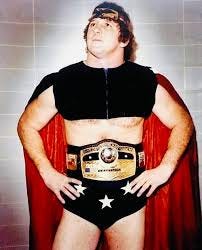
Pictured: Terry Funk, NWA World Heavyweight Champion in 1976
Monday Issue 370 (4/20/2026) keeps the momentum rolling with a doubleheader of territory insight. First, we revisit the 1986 AWA extravaganza WrestleRock—an ambitious outdoor spectacular that captured the promotion at a fascinating crossroads. Then, in our regular Monday feature, we examine April 1976 through the lens of my original 7 Stages of the Territory Era Model, focusing specifically on Stage 6: Disintegration. This analytical deep dive reveals the early warning signs of change that would soon reshape the entire wrestling landscape.
Tuesday Issue 371 (4/21/2026) turns biographical with “The Life and Career of George Grant”. Longtime fans of the territories will recognize Grant as the colorful wrestler who masterfully imitated the legendary Gorgeous George gimmick—complete with the flamboyant robes, arrogant strut, and heel heat that once defined an entire generation of wrestling entertainment. This feature explores how Grant adapted and updated the blueprint for new audiences while paying homage to one of the sport’s greatest showmen.
Thursday Issue 373 (4/23/2026) spotlights one of the true architects of Championship Wrestling from Florida. “The Life and Career of Duke Keomuka” profiles a foundational player who sat in Eddie Graham’s inner circle and helped build the Sunshine State territory into a national powerhouse. From his in-ring work to his behind-the-scenes influence, Keomuka’s story is essential reading for anyone who wants to understand how Florida became one of the most respected and profitable regions in the NWA during the 1960s and 1970s.
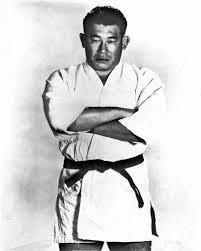
Pictured: Duke Keomuka
Friday Issue 374 (4/24/2026) heads south of the border for “The Life and Career of The Blue Demon”—a full chronicle of the lucha libre legend whose masked mystique, technical brilliance, and cultural impact made him a household name throughout Mexico and beyond. From his explosive rivalries to his enduring legacy as one of the sport’s most recognizable icons, this feature captures why The Blue Demon remains a cornerstone of Mexican wrestling history.
Saturday Issue 375 (4/25/2026) closes the week on an inspiring note with “The Life and Career of Cora Livingston,” honoring one of the genuine female pioneers who helped blaze a trail for women in professional wrestling during an era when opportunities were scarce and respect was hard-earned.
And for our Premium Subscribers, Friday brings the latest installment in The Evolution of Wrestling Series. Host Tony Richards explores the evolution of “the foreign heel” as a character archetype—tracing its roots, cultural significance, and how it has adapted across decades to remain one of wrestling’s most reliable and emotionally charged tropes.
Whether you’re a longtime subscriber or just discovering The Daily Chronicle, this week’s issues deliver the perfect mix of nostalgia, analysis, and storytelling that only the Territory Era can provide. Each feature is built on exhaustive research, rare insights, and a deep respect for the wrestlers, promoters, and fans who made the golden age unforgettable.
My Induction Into The Tennessee Pro Wrestling Wrestling Hall of Champions
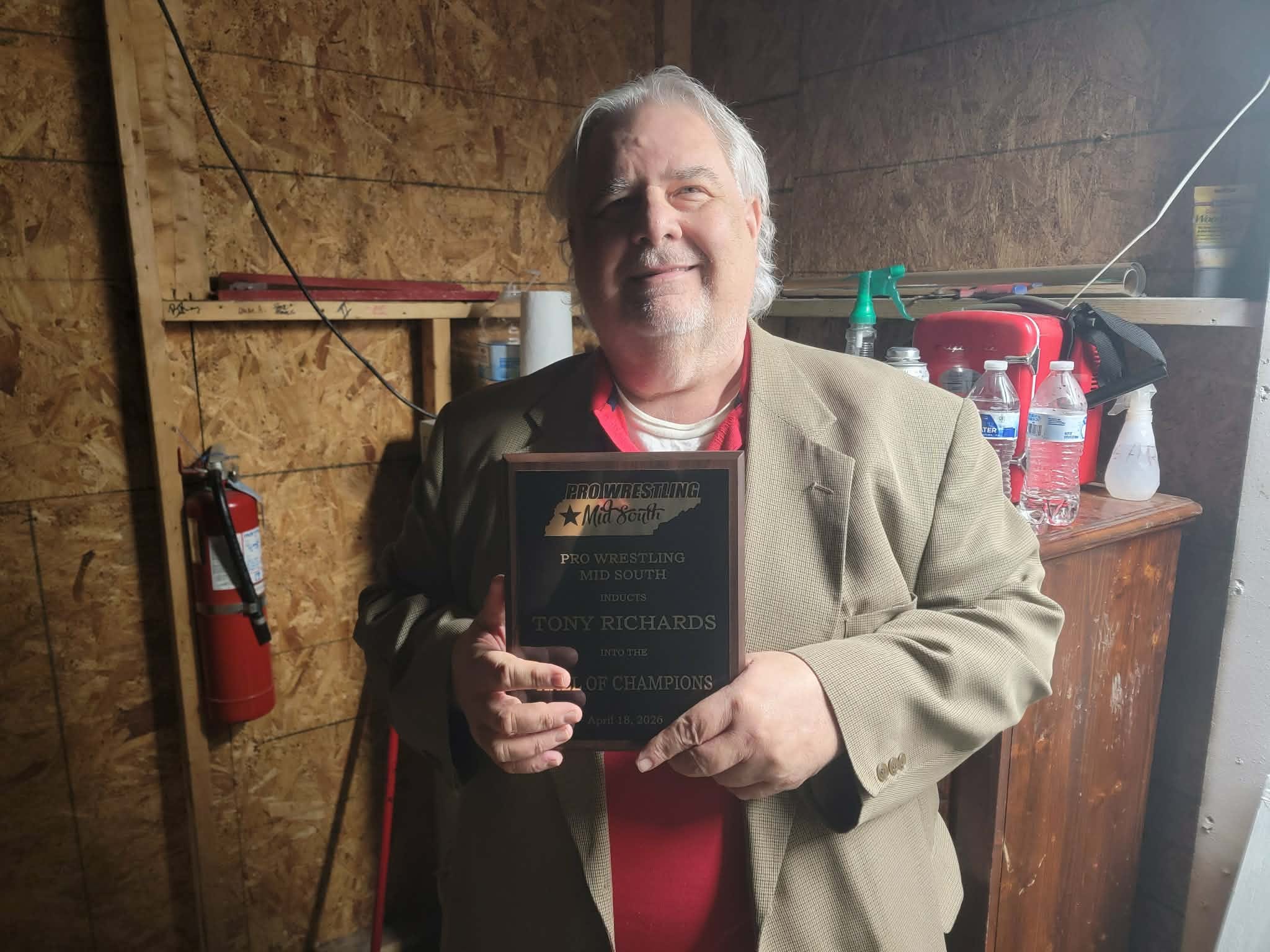
This past Saturday night, standing in the center of the ring at Ultrabrawl in Dyersburg, Tennessee, I had to pinch myself to make sure it was really happening. The lights were hot, the crowd was roaring, and the Tennessee Pro Wrestling Hall of Champions was placing that beautiful plaque in my hands. I was officially inducted. Me—the kid from Western Kentucky who first fell in love with this business in 1972—now being honored in the very state where it all began for so many of us. I’m still amazed. I’m still grateful. And I don’t know if I’ll ever find the right words to describe what this moment meant to me.
Dyersburg isn’t just any town on a Saturday night wrestling card. This is hallowed ground. This is where Roy Welch and the entire Welch family planted the seeds of professional wrestling across the South. Long before the national promotions rolled through, the Welches were building rings, drawing crowds, and creating stars right here in West Tennessee and the surrounding region. They turned empty armories and high-school gyms into cathedrals of Friday-night excitement. They made wrestling feel local, personal, and alive. And Pro Wrestling Mid South has picked up that torch and refused to let it go out. In an era when so many towns have lost their weekly cards, Mid South keeps live, local wrestling breathing in the very places where it first took root. To be inducted under their banner, on their show, in this town… it feels like coming full circle in the best possible way.
Fifty-four years ago, I was just a wide-eyed nine-year-old boy sitting in front of a black-and-white television set in Western Kentucky. That was 1972. I can still remember the first time wrestling came across the screen and grabbed me by the collar. The larger-than-life characters, the thunder of the crowd, the way the good guys fought for respect and the bad guys made your blood boil—it was magic. I had no idea then that wrestling would become my lifelong passion, my career, and eventually the subject of the podcast that’s become my way of giving back to the business. I certainly never dreamed that one day I’d be standing in a ring in Dyersburg, Tennessee, being recognized for a lifetime spent chronicling and celebrating the very territory system the Welch family helped build.
But here I am.
I looked out at the faces in the Ultrabrawl crowd—some of them longtime fans who’ve been coming to these shows for decades, some of them kids experiencing that same spark I felt in 1972—and I felt an overwhelming sense of gratitude. Gratitude to Roy Welch and his family for laying the foundation. Gratitude to every promoter, wrestler, referee, and ring announcer who kept the territorial flame alive through thick and thin. Gratitude to Pro Wrestling Mid South for proving that live local wrestling still matters, still draws, and still creates memories in 2026 the same way it did in 1972. And most of all, gratitude to every listener of The Pro Wrestling Time Tunnel and Stories With Brisco and Bradshaw who has ridden along with me through all these episodes, keeping the stories of the territories alive.
This induction isn’t just about me. It’s about every fan who ever cheered in an armory, civic center or old barn and every wrestler who ever took a bump on a plywood ring, and every historian who refuses to let those stories fade. It’s a reminder that the Welch family’s vision didn’t die when the national expansion came—it simply found new homes in promotions like Mid South that still believe in the power of community and live pro wrestling.
I left Dyersburg that night with the plaque carefully packed in my bag and a heart so full it felt like it might burst. Fifty-four years after a nine-year-old boy in Western Kentucky first fell in love with this crazy, wonderful business, I stood in the ring where the South’s wrestling roots run deepest and received one of the highest honors of my life.
To everyone at Pro Wrestling Mid South, to the Tennessee Pro Wrestling Hall of Champions, to the Welch family whose legacy made nights like this possible, and to every fan who was there or who has supported the work I do—thank you. From the bottom of my heart, thank you.
The tunnel is still open, the stories are still being told, and as long as there are rings in towns like Dyersburg and kids like I once was watching with stars in their eyes, this beautiful business will keep rolling on.
And I’m just grateful beyond words that I get to be part of it.
Tony
Thank You for Reading
I’m Tony Richards, Pro Wrestling Historian, Author and Storyteller. I share pro wrestling historical items in each issue of the Time Tunnel Pro Wrestling History Newsletter. Thanks for reading! If you enjoy my information on select events, matches and insights, please share it with folks you think might like to be a subscriber!
Remember, premium investors get access to exclusive and special content such as some special issues including a multi-part deep dives on wrestling territories, wrestler bios and championship title histories, special audio and video interviews on territory pro wrestling and more available in the Pro Wrestling Time Tunnel for Premium Investors.