



Happy Birthday to those who have passed on and to those great wrestlers still with us:
In Memoriam:
Angelo Savoldi 1914
Pepper Gomez 1927
Axl Rotten 1971
Happy Birthday:
Vicki Williams (70)
Ed Leslie\Brutus Beefcake (69)
Orlando Jordan (52)
Nikki Cross (38)
RIP Memorial: We stop & remember those who have passed on this day and gave themselves to the business for us, the fans. We salute you and thank you.
Black Angus Campbell 4-21-2005 at the age of 71

George Grant 4-21-2010 at the age of 86
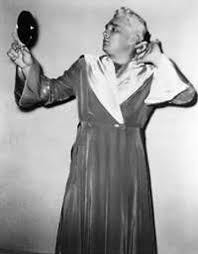
Ron Wright 4-21-2015 at the age of 76

Neff Maivia 4-21-2018 at the age of 9
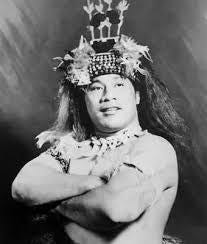
Hisashi Shinma 4-21-2025 at the age of 90

The Life and Career of George Grant
Dan Moody Sheffield, better known by his ring name George Grant or “Gorgeous George” Grant, lived a life that bridged the golden age of professional wrestling’s theatrical spectacle and the fervent world of Southern Baptist evangelism. Born on August 14, 1926, in the small town of Honey Grove, Texas, Sheffield grew up in an era when professional wrestling was transitioning from regional curiosities to a burgeoning form of mass entertainment. A U.S. Navy veteran of World War II, he entered the squared circle in the mid-1940s and carved out a niche as one of the most despised heels of the early television era. After retiring from the ring in 1971, he underwent a profound personal transformation, devoting the rest of his life to full-time ministry as a fire-and-brimstone preacher. His story exemplifies the colorful excesses of mid-20th-century wrestling and the redemptive arcs common among many athletes of that generation.
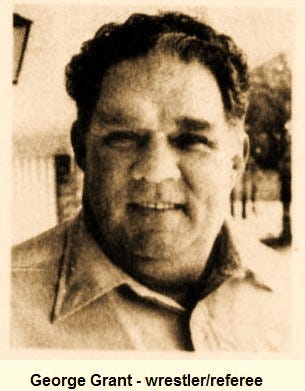
Sheffield’s entry into wrestling was modest and gritty. Some accounts place his very first match as early as 1939 in his hometown, where he earned a meager $1.25 for losing three falls to a traveling wrestler. After serving in the Navy during the war, he returned to the mat in earnest around 1945, initially playing second-fiddle to established stars like Daniel Boone Savage. Standing around 5’9” to 6’0” and weighing roughly 200-220 pounds in his prime (later listed up to 250 pounds in retirement), Sheffield was not a physical giant by wrestling standards, but he possessed natural athleticism honed by weightlifting and a keen sense for showmanship.
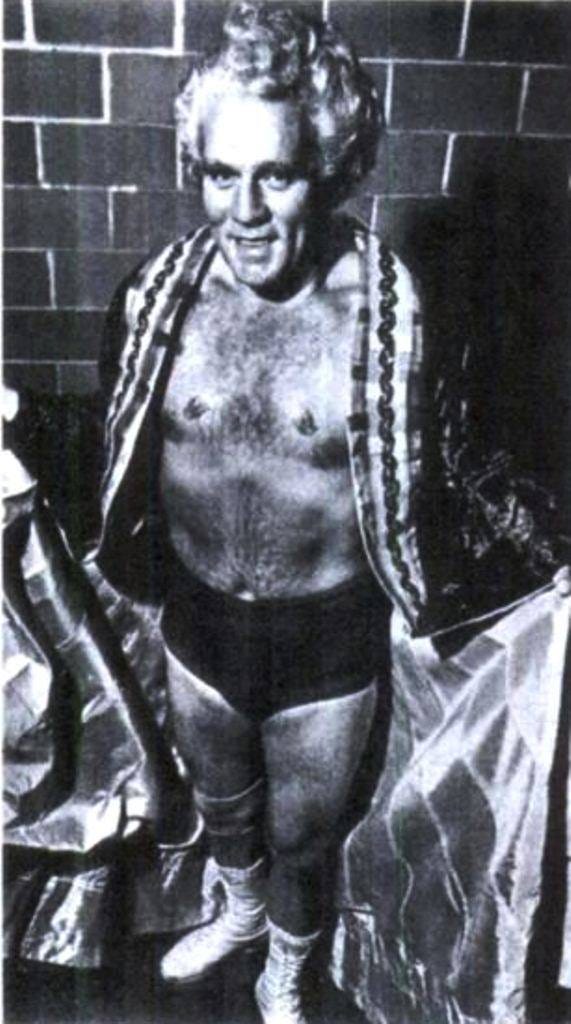
His breakthrough came in the early 1950s when notorious promoter Jack Pfefer handed him the “Gorgeous George” gimmick—a deliberate riff on the wildly popular original Gorgeous George (George Wagner), who had revolutionized wrestling with his effeminate, aristocratic persona in the 1940s. Sheffield embraced the role with gusto, dyeing his hair blond, curling it in ringlets, and entering the arena to the strains of “Pomp and Circumstance.” He wore feathered capes, sequined robes (often green with glittering “GG” initials), white boots, and skin-tight tights. Valets—sometimes including a midget known as “Diamond Jim” or “Pretty Boy” Tom Clark—would roll out a red carpet, spray him with perfume (reportedly the cheapest available for comedic effect), and present a silver tray with comb and brush. He tossed gold-plated bobby pins to the crowd, an act that enraged fans who viewed the entire presentation as an affront to traditional masculinity.
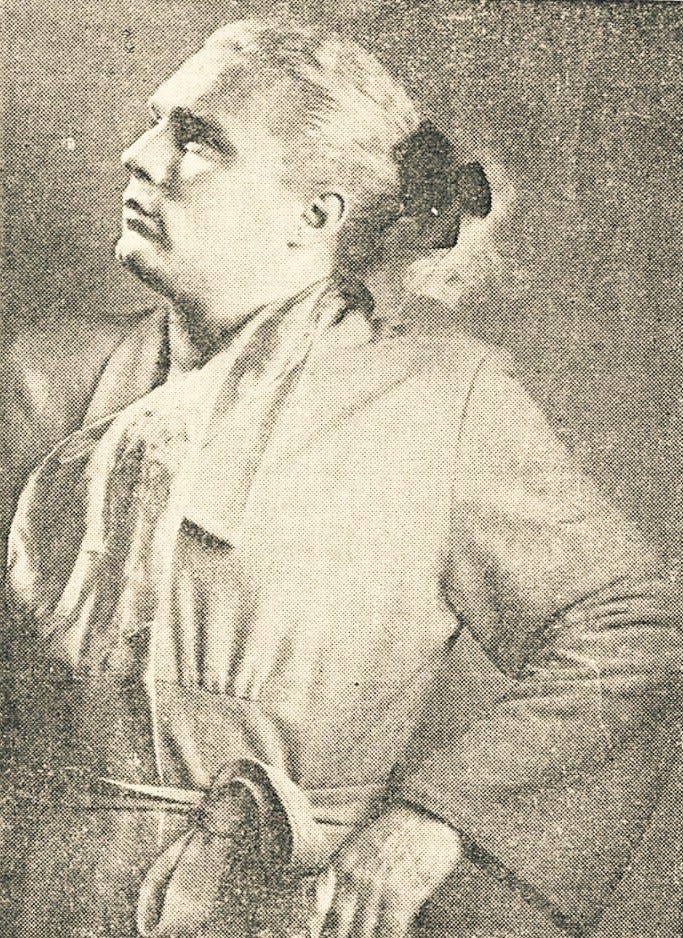
Pictured: George Grant as “Gorgeous George”
The core of the gimmick was unapologetic effeminacy and aristocratic vanity designed to enrage postwar American audiences who prized rugged masculinity. Grant (like Wagner before him) entered the ring with peroxide-blond hair curled into ringlets, often secured with gold-plated bobby pins he called “Georgie Pins” and tossed into the crowd like prized souvenirs. He wore extravagant sequined robes (frequently green with glittering “GG” initials), feathered capes, white boots, and skin-tight tights. Valets—sometimes including a midget known as “Diamond Jim” or “Pretty Boy” Tom Clark—rolled out a red carpet, sprayed the ring and opponents with cheap perfume (a comedic riff on Chanel No. 5, which Wagner famously called “Chanel #10: Why be half-safe?”), scattered rose petals, and presented a silver tray with comb and mirror so Grant could admire his reflection mid-match.
His entrance was pure pageantry: the orchestra (or record player) blared “Pomp and Circumstance” as he strutted down the aisle, recoiling dramatically if anyone touched him without permission and shouting his signature line, “Get your filthy hands off me!” In the ring, he was a classic heel—sneaky, rule-breaking, and cowardly when the odds turned against him—while maintaining the vain, prissy mannerisms that made crowds howl with rage. Fans in places like Marietta, Georgia, or Boston would pelt him with insults (“Sissy!” “You sweet thing!”) and sometimes objects. The heat was so intense that one 1952 match ended with Grant shaved and forced into an oversized women’s robe, sending the audience into a frenzy.
Grant always claimed he originated his own take on the gimmick and wasn’t just copying Wagner (the two even wrestled each other once, with Wagner as the babyface). But historians note it was a near-identical riff that worked because the original had already proven the formula: effeminate flamboyance + legitimate athletic skill = box-office gold. The character helped sell televisions in the early TV era and influenced everyone from Muhammad Ali (who cited the showmanship) to later stars who borrowed the “pretty-boy heel” blueprint.
The gimmick wasn’t just costume—it was a complete performance that made wrestling must-see entertainment. Grant kept the act alive well into the 1960s and early 1970s before retiring to become a Baptist evangelist, but the “Gorgeous George” persona remains one of pro wrestling’s most copied and enduring archetypes.
As a heel, Grant was masterful at generating heat. Crowds in arenas across the country—from Boston and Baltimore to Biloxi and Marietta, Georgia—booed him mercilessly, hurling insults like “Sissy!” and “You sweet thing!” One memorable 1952 incident in Marietta saw him defeated by the “Green Hornet,” shaved of his beard, and presented with an oversized women’s robe; the next night, the crowd reportedly “howled like a pack of wild dogs.” Grant later reflected that “blond hair [meant] instant money,” and the gimmick made him a pioneer of televised wrestling in the 1950s and early 1960s. He claimed to have wrestled the original Gorgeous George once (with Wagner as the babyface in Idaho) and influenced later stars like Muhammad Ali, who credited flamboyant showmen like Grant for teaching the value of charisma. Grant also worked as a referee in later years for Jim Crockett Promotions in the Carolinas.
Though never a major world champion, Grant was a consistent draw as a mid-card villain. In 1960, he lost a Luchas de Apuestas (bet match) in Estevan, Saskatchewan, putting his hair on the line against Gypsy Joe’s ringlets. His career spanned the pre-television barnstorming days through the rise of TV, a period when wrestlers like him helped popularize the sport nationally. He wrestled until around 1971, though he reportedly stepped back from full-time competition earlier. The life took its toll—broken noses, mashed knees, and separated shoulders were common topics at wrestling reunions he attended later in life.
The turning point came in 1965 while Grant was wrestling at the Hippodrome in Nashville. He and his wife attended a service at Grace Baptist Church with the family of fellow wrestler Don Greene. There, Sheffield felt a spiritual calling. He began studying the Bible seriously and, by the time he retired from wrestling in 1971, had transitioned into full-time evangelism. Settling in York, South Carolina, on a 10-acre estate, he became a roving Baptist preacher known for emotional, King James Version-only sermons. He preached from Maine to California, sold cassette tapes of himself reading the New Testament, and delivered memorable talks like “Seven Reasons Why Elvis Presley Didn’t Go to Hell,” using pop culture to connect with audiences while delivering fundamentalist messages on sin, salvation, and morality. In interviews, he remained outspoken—politically conservative, a supporter of the NRA, and unapologetically blunt on social issues—yet he described himself humbly as “a ham” still performing for God.
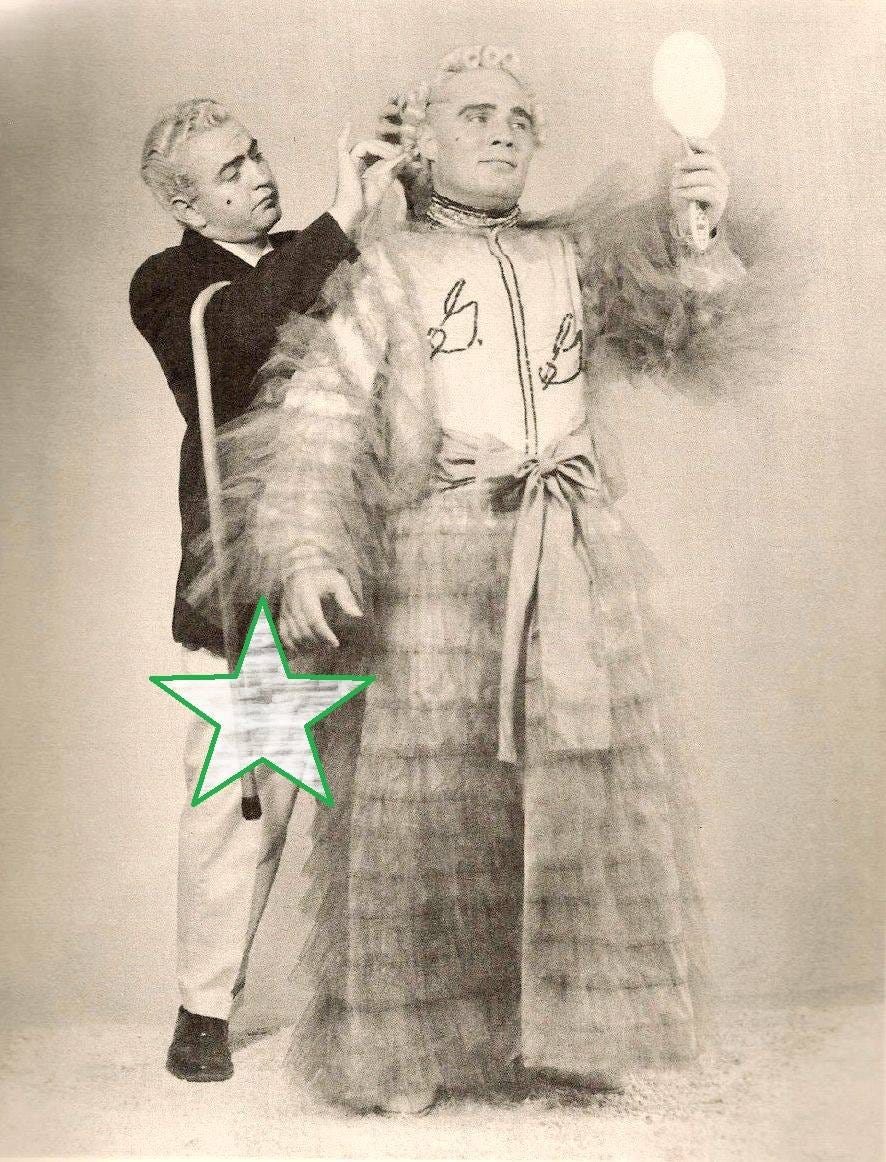
Pictured: George Grant as “Gorgeous George” and his valet
Grant remained active in ministry well into his later years. A member of Blessed Hope Baptist Church in York, he spoke at revivals, conferences, and even the York Rotary Club in 2002, where he was introduced as “The Liberace of Live Wrestling.” He underwent hip replacement surgery but stayed physically active, flexing biceps and joking about his artificial hips. By 2000, at around age 74, he was still driving a well-worn Chevrolet Caprice and attending wrestling reunions to swap stories with old colleagues.
George Grant (Dan Moody Sheffield) passed away on April 21, 2010, at the Dorn Veterans Hospital in Columbia, South Carolina, at the age of 83 (some reports listed him as 85). Survived by his daughter Melody and other family, he was remembered fondly in his adopted hometown of York. Former wrestlers and locals praised his storytelling and community presence. Mayor Eddie Lee noted that Grant’s “life was certainly interesting and he added to this community.”
George Grant was never the biggest star, but he was emblematic of its golden age: larger-than-life, unapologetically theatrical, and deeply divisive in the ring. His post-wrestling life as an evangelist revealed a man who channeled the same performative energy into a higher calling. From tossing bobby pins to hostile crowds to preaching salvation across the Bible Belt, Grant’s journey was one of transformation, showmanship, and faith.
One Thing I Learned About Vicki Williams
She was famously known as a “barefoot high-flyer” who regularly competed without boots—a rare and eye-catching gimmick at the time.
Trained by The Fabulous Moolah and standing just 5’3”, Williams used her agility to pull off signature moves like the flying headscissors while wrestling barefoot in an era when almost everyone else laced up boots. Fans and historians still remember her for it; she’s listed among the few notable barefooted wrestlers alongside names like Ann Casey, and vintage footage plus old reviews often highlight the “barefoot high-flyer” style that made her stand out visually and athletically.
This wasn’t just a one-off—it became part of her identity during her runs as NWA Women’s World Tag Team Champion (three times with Joyce Grable), UWA World Women’s Champion in Mexico, and top contender to Moolah’s title. After retiring around 1980, she stepped completely away from wrestling and hasn’t looked back, but that barefoot flair remains a quirky, memorable footnote in classic women’s wrestling history

Thank You for Reading
I’m Tony Richards, Pro Wrestling Historian, Author and Storyteller. I share pro wrestling historical items in each issue of the Time Tunnel Pro Wrestling History Newsletter. Thanks for reading! If you enjoy my information on select events, matches and insights, please share it with folks you think might like to be a subscriber!
Remember, premium investors get access to exclusive and special content such as some special issues including a multi-part deep dives on wrestling territories, wrestler bios and championship title histories, special audio and video interviews on territory pro wrestling and more available in the Pro Wrestling Time Tunnel for Premium Investors.