


Happy Birthday to those who have passed on and to those great wrestlers still with us:
In Memoriam:
Sheik Ali\Wadi Ayoub 1927
Tony Marino\Battman 1931
Bob Bruggers 1944
Happy Birthday:
Johnny Stromboli (49)
Brian Myers\Curt Hawkins (41)
RIP Memorial: We stop & remember those who have passed on this day and gave themselves to the business for us, the fans. We salute you and thank you.
Joe Malkewicz 4-20-1962 at the age of 65
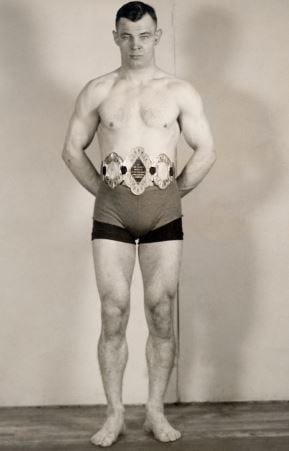
Rick Rude 4-20-1999 at the age of 40
Significant Debut:
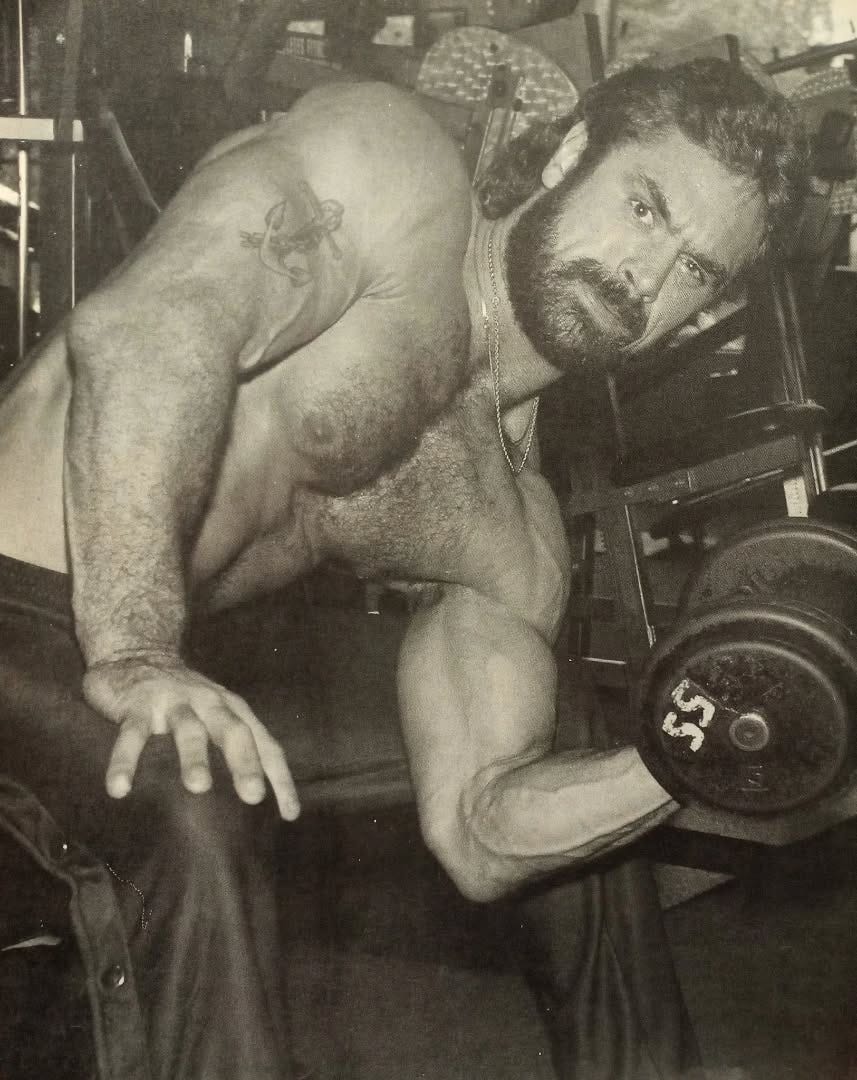
Greg Valentine 4-20-1970 at the age of 18
40 Year Flashback
4-20-1986: AWA Wrestlerock at the Metrodome in Minneapolis, Minnesota
Billed as a stadium supercard in the mold of the burgeoning WrestleMania phenomenon, the show drew a reported 23,000 fans and featured a marathon 16-match card heavy on star power, international talent, and steel-cage main events. Though it was a reasonable commercial success—outdrawing both of Jim Crockett Promotions’ Crockett Cup shows combined—it would prove to be the final stadium show in AWA history, marking the beginning of the end for Verne Gagne’s once-dominant Midwest territory.
By 1986 the wrestling landscape had changed dramatically. Vince McMahon’s WWF was nationalizing the sport with rock-concert production values and national television. The NWA was still a force through Crockett’s expansion, but regional promotions like the AWA were feeling the squeeze. Gagne, ever the traditionalist, had built the AWA on scientific wrestling and homegrown stars, but he recognized the need for a big splash. WrestleRock was heavily promoted for months on AWA television with a gimmick that perfectly captured 1980s excess: the “WrestleRock Rumble,” a music video parody of the Chicago Bears’ “Super Bowl Shuffle.” AWA wrestlers—including a very young Shawn Michaels and Marty Jannetty, Scott Hall, Curt Hennig, and even 60-year-old Verne Gagne himself awkwardly reading lyrics from cue cards—rapped about the upcoming event. The video was equal parts ambitious and cringeworthy, but it showed the AWA’s willingness to chase pop-culture relevance.
The Metrodome itself was both a blessing and a curse. Its sheer size gave the event a major-league feel, yet wide camera shots revealed large empty sections of seating, making the 23,000 turnout look smaller than it was. Ringside was packed, and the live crowd was enthusiastic for the bigger matches, but the cavernous venue contributed to an atmosphere that felt more like a big arena show stretched thin than a true outdoor spectacle. Commentary was handled largely solo by the reliable Rod Trongard (with Larry Nelson joining later), giving the broadcast a straightforward, old-school flavor.
The card was long—roughly four hours—and deliberately eclectic. It opened with solid but unspectacular undercard action: Brad Rheingans submitted Boris Zhukov; a midget tag team match saw Little Mr. T and Cowboy Lang defeat Lord Littlebrook and Little Tokyo under special referee Gary Lumpkin; Colonel DeBeers beat Wahoo McDaniel by disqualification; and the veteran heel duo Buddy Rose & Doug Somers defeated the up-and-coming Midnight Rockers (Shawn Michaels & Marty Jannetty). International flavor arrived with Tiger Mask (a young Mitsuharu Misawa) pinning Buck Zumhofe and Giant Baba scoring a quick win over Bulldog Bob Brown. Barry Windham & Mike Rotunda edged The Fabulous Ones, while Harley Race and Rick Martel fought to a double countout in a 17-minute match that showed flashes of quality.
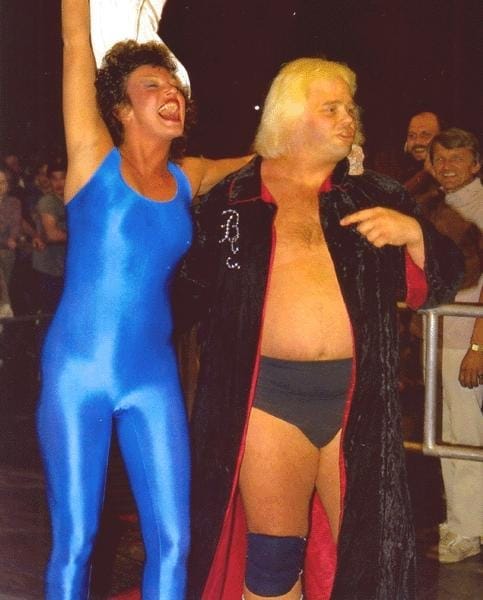
Pictured: Sherri Martel and Playboy Buddy Rose
Mid-card highlights included a 10-woman battle royal won by Sherri Martel, Sgt. Slaughter retaining the AWA America’s Championship against Kamala by disqualification, and the AWA World Tag Team Champions Scott Hall & Curt Hennig successfully defending against The Long Ryders (Scott & Bill Irwin) in a lengthy 27-minute bout. A martial-arts-style boxing match saw Scott LeDoux defeat Larry Zbyszko by disqualification with Larry Hennig as special referee. In the world title picture, Nick Bockwinkel challenged champion Stan Hansen and won by disqualification (Hansen retained the belt).
The show closed with three steel-cage matches that gave the event its marquee feel. Greg Gagne & Jimmy Snuka defeated King Kong Brody & Nord the Barbarian; Verne Gagne beat longtime rival Sheik Adnan Al-Kaissie in a short but bloody cage encounter; and the main event saw The Road Warriors (Hawk & Animal) defeat The Fabulous Freebirds (Michael Hayes & Jimmy Garvin) in a chaotic cage match that ended with the Warriors’ signature power moves.
Critics and fans alike noted the heavy reliance on disqualifications and countouts—standard AWA booking that protected talent but left many matches feeling inconclusive on a stadium stage. Still, the show delivered star power: future Hall of Famers, international legends, and rising talents all appeared together under one roof. After the final bell, country music icon Waylon Jennings performed a brief post-show concert, leaning into the “Rock” of WrestleRock and giving the evening a uniquely Midwestern flair.
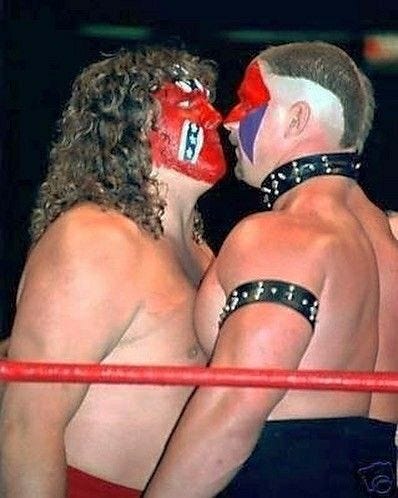
Pictured; Terry “Bam Bam” Gordy and Road Warrior Hawk have a stare down
Financially, WrestleRock was a win. Ticket sales exceeded $300,000, and the live gate was strong for the era. Yet it masked deeper problems. Many participants soon departed: Harley Race and Rick Martel headed to the WWF; the Road Warriors jumped to Crockett Promotions almost immediately, winning the first Crockett Cup; Scott Irwin retired shortly afterward due to health issues. The AWA’s refusal to embrace national expansion or pay-per-view, combined with ongoing talent raids, meant the promotion could never replicate the momentum. No further stadium shows were attempted. WrestleRock stood as Verne Gagne’s last major attempt to compete on the grand stage.
The full event is available on video, where modern viewers can experience both its charms and its flaws. The cheesy rap video, the marathon length, the DQ-heavy booking, and the undeniable star power all combine to make WrestleRock ’86 a perfect time capsule of 1980s territorial wrestling’s final flourish. It was never going to dethrone WrestleMania, but for one sunny April afternoon in Minneapolis, the AWA reminded the wrestling world that it could still fill a stadium and put on a show. In the end, though, the rock stopped rolling. The Metrodome lights dimmed on the last great AWA stadium spectacle, and an era quietly slipped away.
WATCH VIDEO
7 Stages of The Territory Era Review
50 Year Flashback
Stage of the Territory Era: Stage 6: Fragmentation
Month 4 of Year 2: April 1976: The Month In Pro Wrestling
In my seven-stage framework for the Territory Era of professional wrestling, April 1976 sits squarely in Stage Six: Fragmentation (1975–1985). Following the re-consolidation of the mid-1960s to mid-1970s, the National Wrestling Alliance (NWA) system remained the dominant model, but cracks were visibly forming. Territories operated with increasing autonomy. The NWA World Heavyweight Champion still toured, yet promoters prioritized local heroes, regional storylines, and house-show draws over strict Alliance unity. Individual offices built their own stars and feuds, often treating the world title as a prestigious visiting attraction rather than the sole focal point. Cable television had not yet shattered the map, but the groundwork for national expansion (and eventual disintegration) was being laid through stronger regional identities, talent poaching, and creative independence. April 1976 exemplified this transitional fragmentation: a thriving but decentralized landscape where the NWA champion Terry Funk crisscrossed the country while each territory told its own compelling, self-contained stories.
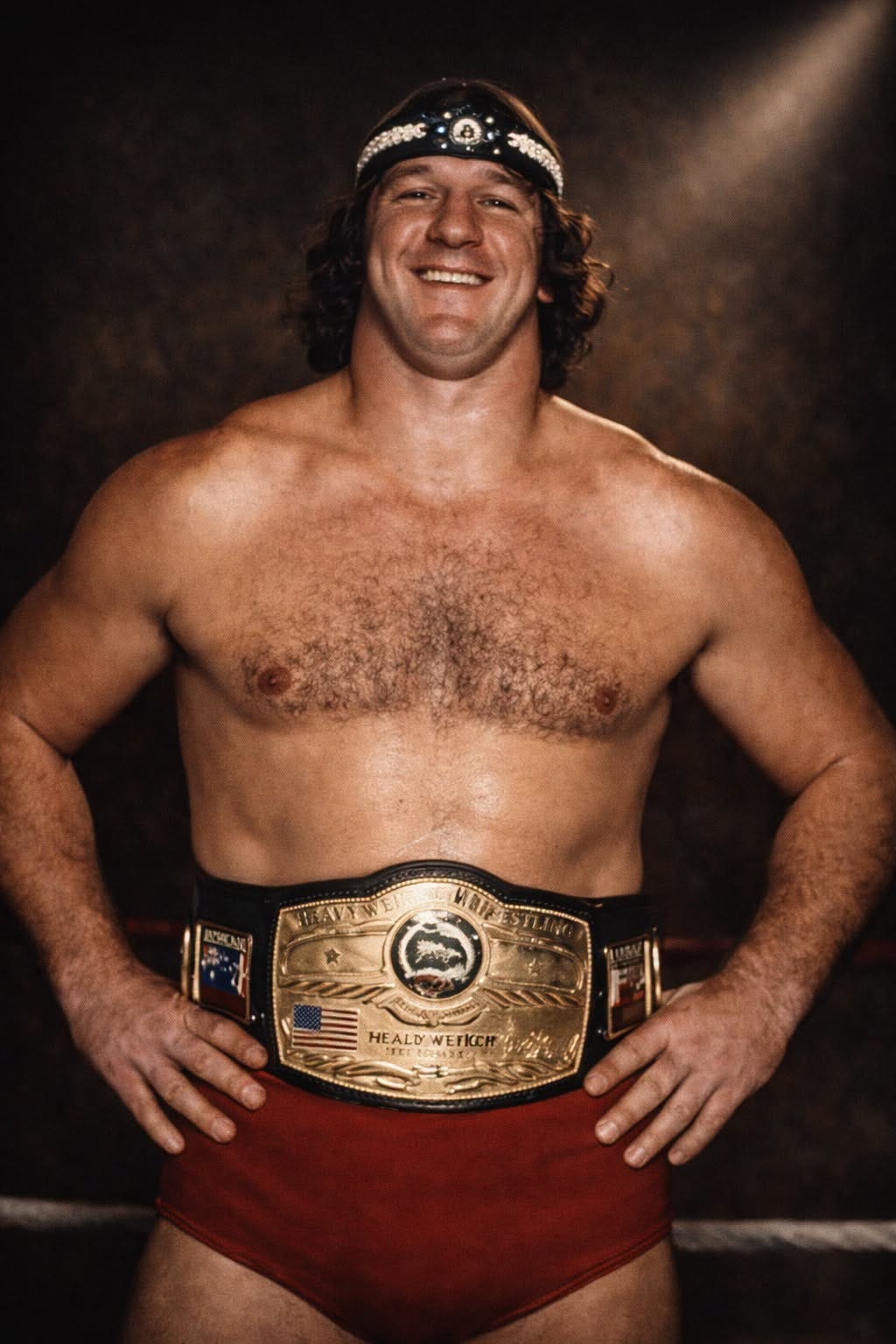
Pictured: Terry Funk, NWA World Heavyweight Champion
The way my seven-stage model of the Territory Era frames Stage Five: Re-Consolidation (1965–1975) as a period of renewed NWA stability. After the antitrust investigations and scandals of Stage Four (1955–1965), the Alliance reasserted control through stricter territorial boundaries, coordinated talent sharing, and a more centralized role for the NWA World Heavyweight Champion. Promoters cooperated closely to protect their maps, blackballing outsiders and quickly neutralizing any “outlaw” threats. By contrast, Stage Six: Fragmentation (1975–1985)—exemplified in April 1976—saw territories operating with growing autonomy, prioritizing local stars and self-contained programs over NWA unity. This loosening grip allowed outlaw promotions to emerge and sustain real competition, as seen with Lou Thesz’s Universal Wrestling Association (UWA) in Nashville and the scaled-down International Wrestling Association (IWA) in the Carolinas and Virginia. The comparison highlights how the system shifted from protective cooperation to competitive independence.
During the re-consolidation years (roughly 1965–1975), the NWA functioned more like a tight-knit syndicate. The World Champion—figures such as Dory Funk Jr. (1969–1973) or Jack Brisco (1973–1975)—served as a unifying presence, touring territories on a predictable schedule that reinforced collective strength. Promoters like Nick Gulas in Mid-America and Jim Crockett in the Mid-Atlantic respected each other’s borders, shared talent freely when needed, and presented a united front against interlopers.
Outlaw activity was rare and short-lived. Any non-NWA group attempting to invade a protected market faced immediate retaliation: denied access to top talent, blocked arena dates, and coordinated boycotts by NWA members. The most successful attempt was in Atlanta, Georgia by Gunkel Enterprises, which launch All-South Wrestling in late 1972 and it lasted until the end of 1974, but the incumbant NWA Office, along with the aforementioned NWA support was just too strong to allow any room for sustained operation.
In the Nashville/Mid-America region under Gulas-Welch, the 1960s and early 1970s were marked by stable house-show circuits and weekly TV built around homegrown stars like Jackie Fargo, Jerry Lawler’s early pushes, and reliable tag teams—no sustained outsider threat existed. Similarly, in the Carolinas, Jim Crockett Promotions enjoyed near-monopoly status in the early 1970s; any independent “outlaw” cards were isolated one-offs quickly starved of talent and attendance. The NWA’s re-consolidated power structure treated territorial integrity as sacred, making prolonged promotional wars almost impossible. April of any year in this stage would have shown clean, cooperative calendars: Gulas running unchallenged in Tennessee with no rival TV tapings, and Crockett drawing strong crowds in Charlotte without legal filings or invading promotions.
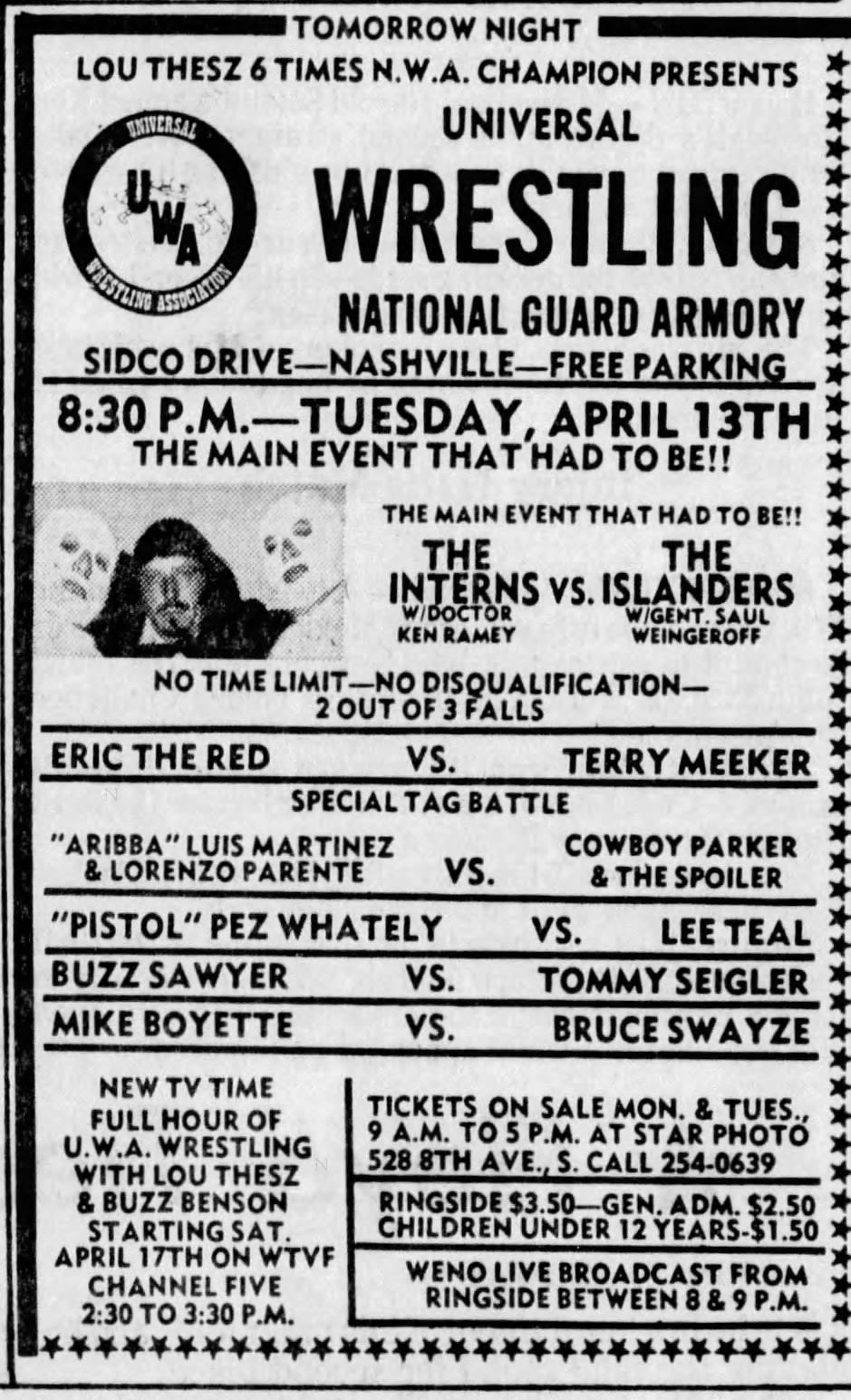
Pictured: April 13th, 1976 UWA card with former Gulas-Welch stars, The Interns with Dr. Ken Ramey and the Islanders with longtime Gulas-Welch associate Saul Weingeroff at the National Guard Armory in Nashville, Tennessee
By April 1976, the dynamics had changed dramatically. Territories were more self-reliant, the World Champion (Terry Funk) was a prestigious visitor rather than the daily focal point, and local feuds drove business. This autonomy created openings for outlaws—promotions that ignored NWA boundaries and directly challenged established offices. April 1976 thus captured the transition point. The outlaw presence in Nashville and the Carolinas was not yet fatal to the territorial map, but it signaled the end of the re-consolidated era’s stability. Where Stage 5 had rebuilt the NWA into a protective alliance, Stage 6’s fragmentation turned it into a looser federation of increasingly independent fiefdoms—setting the stage for the national expansions and eventual disintegration to come.
Terry Funk, who had dethroned Jack Brisco in late 1975, remained the NWA World Heavyweight Champion throughout April 1976. His reign embodied the fragmentation stage: he defended the belt in multiple territories but rarely dominated any single market long-term. In Florida on April 17 he beat Dusty Rhodes by disqualification in a non-title match setup that fueled local heat; days earlier in Amarillo, Texas, he went to a one-hour time-limit draw with Harley Race. Funk’s presence boosted gates everywhere, yet promoters used him to elevate their own talent. He even placed a $10,000 bounty on Dusty Rhodes in Florida after Rhodes pinned him in a non-title bout earlier—an angle that highlighted how territories could spin the world champion’s visits into weeks-long local programs rather than one-off title shots.
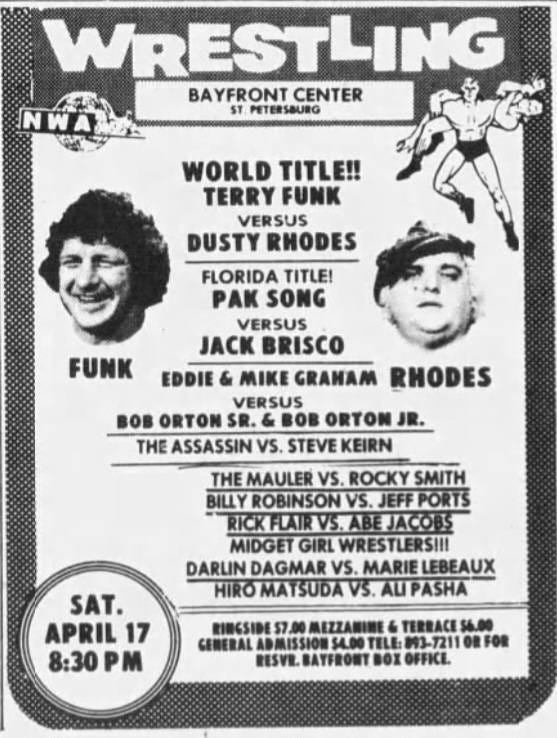
Pictured: April 17th, 1976 Card in St. Petersburg, Florida for CWF
CWF was widely regarded as the NWA’s top territory in 1976, and April showcased why. The central storyline revolved around “The American Dream” Dusty Rhodes. After a brutal encounter (sold as facial paralysis from an attack by the Missouri Mauler and Rock Hunter, with Funk’s bounty as the catalyst), Rhodes delivered fiery promos vowing revenge on the Funk family, the Mauler, and Hunter. Gordon Solie’s televised interview on April 21 captured Rhodes at his passionate best, promising fans he would return stronger with their support. Battle royals featuring Andre the Giant, Bob Roop, and Bill Watts added spectacle, while tag programs (Dusty teaming with Greg Valentine or Ray Candy) kept arenas packed. Fragmentation was evident: CWF thrived on its own stars and angles, with only very little NWA support.
Sam Muchnick’s St. Louis office, still a NWA cornerstone, exemplified the stage’s blend of tradition and emerging pushes. On April 23 at the Kiel Auditorium, Bob Backlund defeated Harley Race to win the NWA Missouri Heavyweight Championship—the key stepping-stone title. Muchnick and booker Pat O’Connor were clearly grooming the scientific babyface Backlund as a future world-title contender. Terry Funk defended the NWA belt against Dick the Bruiser (winning 2-1 with the final fall via DQ) and appeared in memorable tags with Backlund against heels like Gene Kiniski. Attendance hovered in the 7,000–10,000 range for big shows, proving that even in fragmentation, a strong local promoter could still draw with a mix of visiting NWA stars and homegrown momentum.
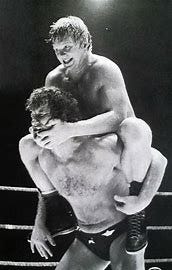
Pictured: NWA Missouri Champion, Bob Backlund vs NWA World Champion, Terry Funk at the Kiel Auditorium in St. Louis, Missouri
The JCP Carolinas and Virginia territory leaned into athleticism and emerging stars. Ric Flair, fully recovered from his 1975 plane crash, was a rising heel working programs with Wahoo McDaniel and teaming (for now) with his “cousins” Ole and Gene Anderson. A TV-title tournament final on April 14 saw Angelo Mosca defeat Tim Woods, keeping the mid-card hot. The Anderson brothers’ tag dominance and Flair’s flamboyant promos built long-term family-feud seeds that would explode later in 1976. Here, fragmentation meant Crockett’s office focusing on its own roster depth rather than relying solely on the world champion’s infrequent stops.
Leroy McGuirk’s NWA Tri-State territory continued its long-standing NWA affiliation while operating as a gritty, hard-hitting regional office centered in Tulsa. The promotion leaned heavily into its own roster rather than depending on the traveling NWA World Champion Terry Funk. Bill Watts was the unquestioned top babyface and North American Heavyweight Champion, anchoring the territory with his power-based style.
The marquee show of the month was April 19 at the Expo Square Pavilion in Tulsa. In the main event, Watts defeated Waldo von Erich in a hard-fought singles bout that played off von Erich’s arrogant German heel persona. Other key matches included Ken Patera going over Dick Murdoch, the Hollywood Blondes (Jerry Brown & Buddy Roberts) defeating a young Ted DiBiase & Jay Clayton, and additional undercard action featuring Buddy Roberts, Oni Wiki Wiki, and others. DiBiase, still early in his career, was being positioned as a rising scientific babyface.
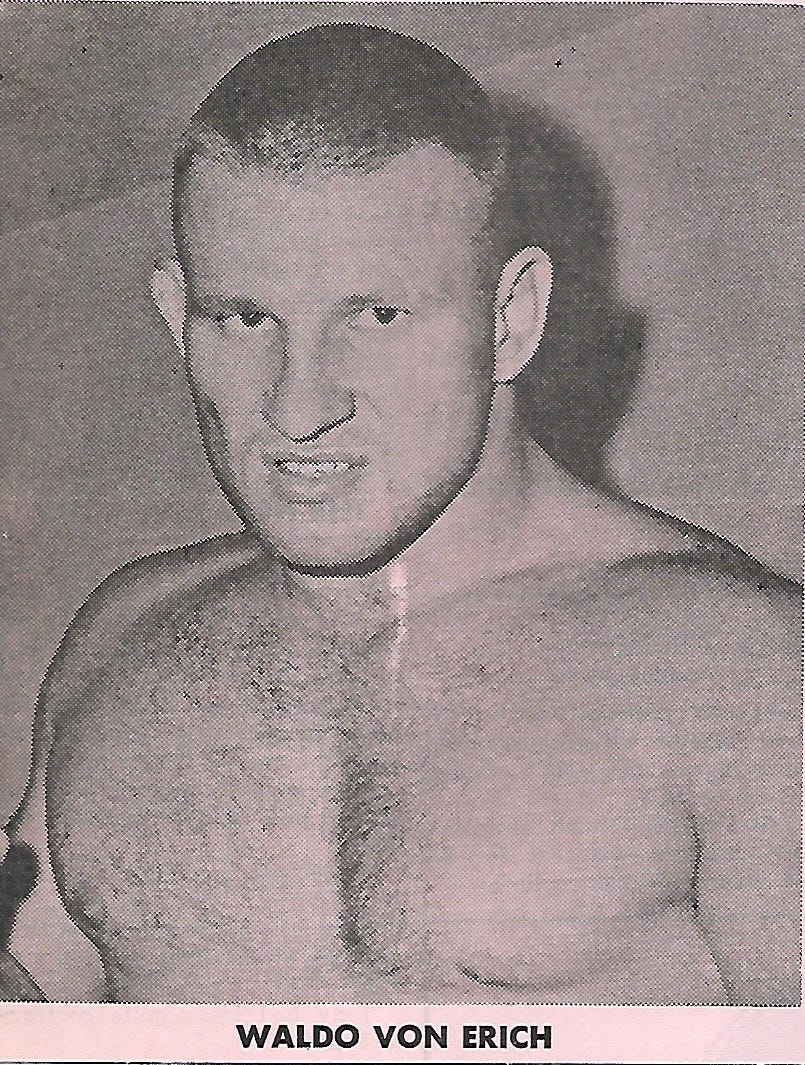
The tag-team division stayed hot. On April 28 in Fort Smith, Arkansas, Killer Karl Kox & Bob Sweetan captured the NWA Tri-State US Tag Team Titles. McGuirk also controlled the NWA World Junior Heavyweight Championship, which was vacant following Danny Hodge’s injury in March, keeping that prestigious belt in the background as a future program driver. Overall, Tri-State exemplified Stage 6 fragmentation: self-contained programs built around Watts as the regional kingpin, with visiting heels like von Erich and Kox providing the heat without national coordination.
Nick Gulas and Roy Welch’s Tennessee territory was one of the most TV-driven and tag-team-centric offices in the NWA. April 1976 centered on Jerry “The King” Lawler’s rising stardom and a furious Southern Tag Team Title rotation at the Mid-South Coliseum in Memphis. Lawler re=captured the NWA Mid-America (Southern) Heavyweight Championship on April 5 in Memphis from young Tommy Rich and immediately became the territory’s top draw once again. The tag scene was even hotter:
April 5: Bill Dundee & Big Bad John won the held-up NWA Southern Tag Team Titles.
April 19 Memphis (Mid-South Coliseum, ~7,000 fans): Lawler & Plowboy Frazier defeated Dundee & Don Anderson (or similar combination) to claim the Southern Tag belts in a non-title or title-vs-title style program that carried over multiple weeks.
April 17 cards in Chattanooga at Memorial Auditorium and Jonesboro, Arkansas at the American Legion Arena, featured the Masked Dominos, George Gulas & Dennis Hall, the Bicentennial Kings (Hickerson & Condrey), and undercard action with Jerry Bryant vs. Sam Bass. Nineteen-year-old Tommy Rich was being pushed hard on TV, cutting awkward but memorable Bicentennial Baby promos and teaming with veterans like Jerry Jarrett and Tojo Yamamoto. “Loser Leaves Town” matches and no-DQ bouts were common stipulations to keep the blood-and-guts Southern style alive. This was pure fragmentation—local heroes like Lawler and Rich driving weekly TV and house-show business independent of the world title.
GCW stood out as one of the NWA’s hottest and most athletic territories in 1976, with strong TV ratings on Gordon Solie’s shows and big crowds at the Atlanta Municipal Auditorium and Omni Coliseum. The central storyline revolved around the NWA Georgia Heavyweight Championship and the intense rivalry between babyface icon Mr. Wrestling II and heel champion The Spoiler (Don Jardine, managed by Gary Hart). Around mid-April (April 16 reports), The Spoiler defeated Mr. Wrestling II in a cage match to solidify his hold on the title (a reign that stretched from February into the summer). Stan Stasiak also worked programs involving unmasking attempts on Mr. Wrestling II, adding personal heat.
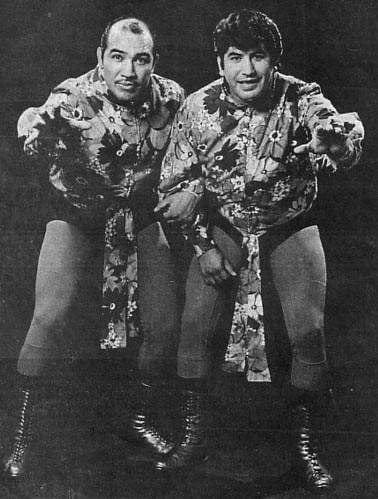
Pictured: The Red Devils (Gordman and Goliath), NWA Georhgia Tag Team Champions
Tag-team action featured the Red Devils (Black Gordman & Great Goliath) as reigning NWA Georgia Tag Team Champions (won March 19 and held through the spring). Dusty Rhodes remained a top babyface, often teaming with Thunderbolt Patterson or Ricky Steamboat; around late April/early May, the major angle kicked off when Rock Hunter arrived with Pak Song to target Rhodes in a brutal foreign-heel vs. American Dream program. Other regulars included Dick Slater, Mark Lewin, Moondog Mayne, Ken Mantell, Dean Ho, and a young Tony Atlas (working under a mask as Black Atlas later in the year).
GCW’s strength in April 1976 was its self-sustaining star power and long-term booking—Mr. Wrestling II’s mask and scientific style drew huge sympathy, while the Spoiler’s cage matches and Gary Hart’s interference created must-see TV. Visiting NWA talent appeared, but the territory thrived on its own feuds rather than relying on the world champion’s schedule.
On the West Coast, Roy Shire’s promotion remained profitable and fan-friendly. Mr. Fuji held the NWA United States Heavyweight Championship with an iron grip (a 371-day reign that spanned most of 1976), creating consistent heel heat. The tag-team division provided the biggest April storyline development: Pat Patterson (fresh off losing the US title to Fuji) teamed with Tony Garea to challenge for the local NWA World Tag Team titles, setting up their May victory over Don Muraco and Invader #1. Classic babyface vs. foreign-heel dynamics kept the Cow Palace strong.
Outside the NWA umbrella, fragmentation was even more pronounced. In the WWWF, Bruno Sammartino continued his record second reign as World Heavyweight Champion. Stan Hansen’s brutal lariat, which broke Bruno Sammartino’s neck and Superstar Billy Graham’s rising challenges kept Madison Square Garden and arena circuits hot. The Executioners held the tag titles under Captain Lou Albano and the Grand Wizard’s management, while Ivan Koloff and Bugsy McGraw provided colorful heel opposition. Bruno’s resilience against these invaders reinforced WWWF’s East Coast independence.
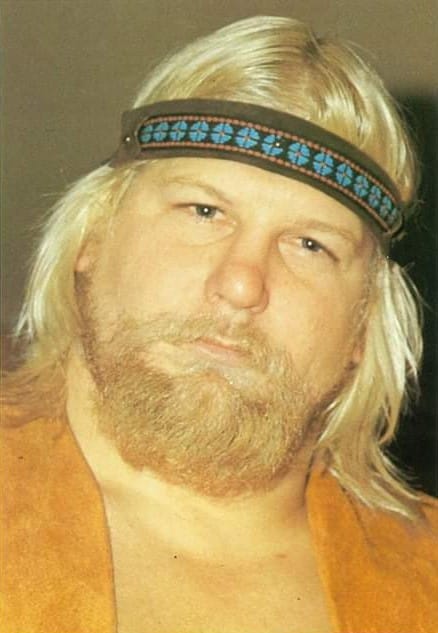
Pictured: Stan Hansen in 1976
In the AWA, Nick Bockwinkel defended the World Heavyweight Championship in a series of disqualification-heavy main events against Verne Gagne, The Crusher, and Heenan Family members like Larry Hennig. The promotion’s scientific style and Midwest strongholds remained untouched by NWA politics, another sign of the era’s splintering.
In my seven-stage model of the Territory Era, Stage Six: Fragmentation (1975–1985) was defined not only by the growing independence of established NWA offices but also by the rise of “outlaw” promotions—non-affiliated groups that directly invaded protected territories. These outlaw outfits exploited the NWA’s loosening grip, offering higher payoffs, flashier talent, and aggressive booking to siphon fans and arenas. April 1976 provided two textbook examples: Lou Thesz’s short-lived Universal Wrestling Association (UWA) in the Nashville/Mid-America region and the scaled-down International Wrestling Association (IWA) operating in the Carolinas and Virginia against Jim Crockett Promotions. Both represented the era’s creative and business tension—local wars that highlighted fragmentation without yet threatening the overall territorial map.

Lou Thesz, the legendary former NWA World Champion now in his late 50s and eager to step back from full-time wrestling, launched the UWA in early 1976 with financial backing from Nashville music agent Buddy Lee and entertainer Danny Davis. The explicit goal was to unseat Nick Gulas and Roy Welch’s dominant NWA Mid-America territory in Nashville, Memphis, Chattanooga, and surrounding areas. Thesz positioned the UWA as a “better wrestling” alternative, promising cleaner matches and stronger talent than Gulas’ often-criticized product.
By April 1976 the promotional war was in full swing. The UWA ran weekly house shows in National Guard armories and high-school gyms across Tennessee and Kentucky, frequently scheduling cards the same night or night before Gulas events to create direct competition. Television was the key weapon: a major taping on April 14, 1976 at the Nashville studio produced an episode that aired on WTVF-TV on Saturday, April 24. Commentated by Thesz himself alongside Buzz Benson, the show featured the promotion’s signature hard-hitting Southern style.
Central to the UWA’s April programming was the explosive tag-team feud between babyface main eventers The Islanders (Afa and Sika)—managed by the flamboyant Dr. Saul Weingeroff—and the heel trio The Interns, led by Dr. Ken Ramey. Matches often went to no-time-limit, no-DQ, two-out-of-three-falls stipulations to maximize blood and drama. Key April house-show highlights included:
April 6, Nashville — A seven-team tag-team tournament featuring The Spoiler & Cowboy Ray Parker, The Interns, and The Islanders.
April 13, Nashville — Islanders vs. Interns in a brutal no-DQ main event.
April 20, Nashville National Guard Armory — Continued Islanders/Weingeroff vs. Interns/Ramey action, plus appearances by The Spoiler, Cowboy Ray Parker, Bruce Swayze, and young prospects.
April 26–28, Chattanooga/Nashville — Mr. Wrestling (15-year-old Terry Gordy, working under a mask) and Ted Atlas in featured bouts.
Supporting talent rounded out the roster: young Pistol Pez Whatley (pushed heavily as a scientific babyface), veterans like Nelson Royal, Wild Bull Curry, Mike Boyette (as The Hippie), Mr. Moto/Tor Kamata, Eric the Red, Luis Martinez, and Al Costello (managing The Spoiler). Thesz occasionally refereed or appeared in angles but largely stayed behind the scenes. Storylines emphasized personal heat—hospitalizations, manager interference, and “real wrestling” promos—tailored to Southern crowds who wanted blood over pure mat work.
Despite the energetic start, the UWA struggled. Gulas was enjoying one of his strongest years, with stars like Jerry Lawler, Tommy Rich, and Jackie Fargo drawing big at the Mid-South Coliseum. Thesz’s promotion folded by September 1976 after roughly nine months, a classic casualty of an outlaw war against an entrenched NWA territory.

Farther east, the International Wrestling Association offered a different flavor of outlaw challenge. Founded in 1975 by Eddie Einhorn and Pedro Martinez as an ambitious (if ultimately failed) attempt at a national promotion, the IWA had by April 1976 shrunk dramatically under new booker Johnny Powers. Operations focused almost exclusively on Virginia and North Carolina, running sporadic arena and armory shows in direct opposition to Jim Crockett Promotions’ Mid-Atlantic territory.
The IWA’s lingering presence in April 1976 was defined by the lingering fallout from its biggest 1976 angle: the invasion of The Mongols (Bolo and Geeto Mongol). The Mongols had been IWA World Tag Team Champions when they jumped to Crockett territory in January 1976, bringing the IWA belts with them and billing themselves as “International Tag Team Champions.” This created a months-long promotional war with NWA World Tag Team Champions Ole and Gene Anderson. The program climaxed in Charlotte with two high-profile matches:
March 29, 1976 – Charlotte Coliseum — Andersons vs. Mongols (no decision).
April 5, 1976 – Charlotte — Andersons defeated the Mongols (newspaper ads awkwardly billed it as a “United States Tag Team Championship” match to avoid legal issues).
By mid-April the Mongols’ program with the Andersons had largely concluded (a final six-man tag on April 12 in Charlotte wrapped the immediate storyline), but the IWA continued limited operations. Johnny Powers remained the top star and booker, drawing with a roster that included Bulldog Brower, Killer Karl Krupp, Big Bad John, The Crusaders, Eric the Red, Nelson Royal, and Don Fargo. Occasional shows still popped up—such as a reported April 15 card in Wilson, NC—while the promotion kept pushing its own titles (IWA World Heavyweight, North American Heavyweight, and Brass Knuckles belts) on smaller venues.
Behind the scenes, the IWA waged an antitrust lawsuit against Jim Crockett Jr., accusing him of blocking arena access (most notably the Winston-Salem Coliseum). The legal battle dragged on and was ultimately lost, further weakening the outlaw group. By spring 1976 the IWA was a fading but still visible thorn in Crockett’s side—proof that even a diminished outlaw promotion could force the NWA office to respond with stronger booking and talent.
The UWA and IWA in April 1976 perfectly captured Stage Six dynamics. Both were born from disputes with established NWA promoters (Gulas and Crockett) and attempted to carve out space through superior payoffs, invading TV markets, and talent raids. Neither succeeded in toppling the territories they targeted—the UWA lasted less than a year, and the IWA limped on until 1978—but their existence signaled the territorial system’s growing vulnerability. Local fans in Nashville and the Carolinas could now choose between “official” NWA product and outlaw alternatives, while promoters on both sides scrambled to protect gates.
These short-lived outlaw experiments foreshadowed the national expansion wars to come. In April 1976 the map still looked intact, but the cracks—visible in WTVF studios, Charlotte armories, and courthouse filings—were widening. The Territory Era was still vibrant, yet unmistakably entering its most unstable and competitive phase.
April 1976 captured the Territory Era at its most dynamic yet fragile. The NWA World Champion toured, but every office—Florida, St. Louis, Mid-Atlantic, San Francisco, and the independents—ran its own self-sustaining programs. Local feuds (Dusty vs. the Funks/Mauler, Backlund’s Missouri push, Flair’s rising star, Fuji’s heel dominance) drew money without needing constant national coordination. This was fragmentation in action: the map was still divided into protected fiefdoms, but each fiefdom increasingly marched to its own drum. The golden age of territories was far from over, yet the forces that would lead to national expansion and eventual disintegration were already stirring beneath the surface.
In short, pro wrestling in April 1976 was alive, regional, and fiercely competitive—exactly what Stage Six of the Territory Era was all about.
Thank You for Reading
I’m Tony Richards, Pro Wrestling Historian, Author and Storyteller. I share pro wrestling historical items in each issue of the Time Tunnel Pro Wrestling History Newsletter. Thanks for reading! If you enjoy my information on select events, matches and insights, please share it with folks you think might like to be a subscriber!
Remember, premium investors get access to exclusive and special content such as some special issues including a multi-part deep dives on wrestling territories, wrestler bios and championship title histories, special audio and video interviews on territory pro wrestling and more available in the Pro Wrestling Time Tunnel for Premium Investors.
Excellent piece once again.