


Happy Birthday to those who have passed on and to those great wrestlers still with us:
In Memoriam:
Antonino Rocca 1921
Manuel Rivera\Dr. Wagner 1936
Stan Stasiak 1937
Diane Von Hoffman 1962
Robert Horne\Sir Mo 1967
Happy Birthday:
(none)
RIP Memorial: We stop & remember those who have passed on this day and gave themselves to the business for us, the fans. We salute you and thank you.
Hot Gilliam 4-13-1970 at the age of 67
(no photo available)
Don Duffy 4-13-2015 at the age of 80
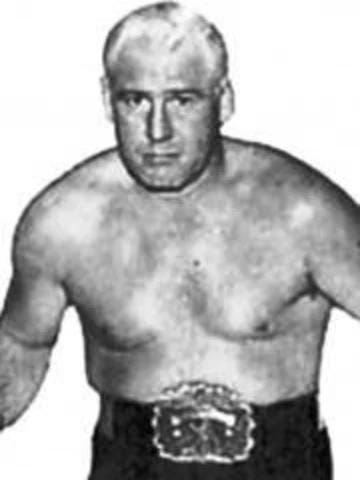
Significant Debut:
Scott Norton 4-13-1989 at the age of 27
7 Stages of The Territory Era Review
60 Year Flashback
Stage of the Territory Era: Stage 5 Re-Consolidation
Month 4 of Year 2: April 1966: The Month In Pro Wrestling
Stage 4—Investigation (1955-1965)—marked a turbulent decade that broke the business apart. Antitrust scrutiny, high-profile congressional hearings into wrestling’s monopolistic practices, the fracturing of the National Wrestling Alliance’s once-unified world title control, and the rise of autonomous powerhouses like the WWWF (which seceded from the NWA in 1963) and the AWA created fragmentation, rival claims to world championships, and eroded the centralized authority that had defined earlier eras. Promoters operated in survival mode, with talent raids, territorial invasions, and legal battles threatening the entire ecosystem.
By contrast, Stage 5—Reconsolidation (1965-1975)—represented the deliberate process of putting those pieces back together. The NWA reasserted the world title as a touring ambassadorial prize that elevated (but never undermined) regional stars; autonomous groups like the WWWF and AWA stabilized their strongholds around unbreakable babyface anchors and brutal, repeatable feuds; and the territory system flourished through high gates, protected champions, and stipulation-heavy violence designed for repeat business rather than national dominance. April 1966 stands as a textbook snapshot of this reconsolidation: no revolutionary title changes or invasions, but sold-out arenas, consistent defenses, and the quiet machinery of territorial harmony humming profitably after the prior decade’s chaos.

Pictured: Gene Kiniski, NWA World Heavyweight Champion
The NWA World Heavyweight Championship, now in the hands of Gene Kiniski since his January 7 victory over Lou Thesz, embodied the reconsolidation ethos perfectly. Kiniski’s April schedule showed the champion as a globe-trotting heel who drew money without ceding territory power. On April 1 in St. Louis, he pinned Fritz Von Erich in the third fall before a sold-out Kiel Auditorium crowd of 12,844—reinforcing the Von Erich family’s Texas draw while preserving Kiniski’s credibility. Eight days later in Atlanta, Kiniski retained against Klondike Bill. By April 16 in Winnipeg, he defeated Whipper Billy Watson by count-out in a classic NWA-style non-finish that guaranteed return business. These defenses—personal, physical, and never clean-cut—reconsolidated fan investment in the NWA umbrella without risking the regional autonomy that Stage 5’s investigations had nearly shattered.
In the Northeast, the WWWF under Vince McMahon Sr. operated as its own reconsolidated powerhouse around Bruno Sammartino, whose unbreakable reign continued to anchor gates. While Bruno spent much of mid-April on a successful Australia tour—defeating Waldo Von Erich on April 15 in Sydney, Killer Kowalski on April 16 in Melbourne, and again on April 23, plus additional defenses against Art Nielson and others—the Northeast house-show grind kept the machine running. Feuds with monsters like Baron Mikel Scicluna, Curtis Iaukea (The Beast), Dr. Bill Miller, and Smasher Sloan filled cards in West Hempstead (April 1), Camden (April 2), Trenton (April 4), Hagerstown (April 5), Philadelphia (April 8 and 12), Pittsburgh (April 15), and Harrisburg (April 29). Tag-team action featured U.S. Tag Team Champions Johnny Valentine & Antonio Pugliese defending against the Beast & Iaukea or the Miller Brothers in multi-fall bouts. These matches—often ending in disqualifications or time-limit draws—built heat through blood and near-falls without ever jeopardizing Bruno’s aura, exactly the kind of stabilized, repeatable storytelling that Stage 6 demanded after the fragmentation of the prior era.
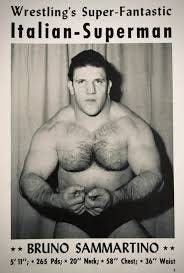
Pictured: Bruno Sammartino, WWWF World Heavyweight Champion
The AWA mirrored this pattern with Mad Dog Vachon as its protected world champion and a tag-team war providing the undercard fireworks. April 2 in Omaha saw Vachon win a Texas Death Match over Haru Sasaki; on April 9 he defeated Big Luke Brown and Mighty Igor Vodik (by DQ); and April 12 in Sioux City brought another DQ retention over Igor. Meanwhile, AWA World Tag Team Champions Larry Hennig & Harley Race traded disqualifications and non-finishes with The Crusher, Verne Gagne, Reggie Parks, and others in Moline (April 5), Chicago (April 16), Milwaukee (April 23), and Denver (April 29). Cage matches (like Crusher over Chris Tolos on April 30 in St. Paul) and special-referee stipulations added the violent, personal edge that kept fans returning—reconsolidating the promotion’s identity after Stage 5’s splintering.
As one of the NWA’s flagship territories—and with Muchnick serving as NWA president—the St. Louis Wrestling Club promotion ran a rock-solid operation out of Kiel Auditorium, The St. Louis Wrestling Club, delivering sold-out gates, protected champion defenses, and personal, stipulation-ready angles that kept fans returning week after week in the post-investigation landscape of territorial harmony.

Pictured: Fritz Von Erich
The April 1 card at Kiel Auditorium delivered a textbook example of Stage 5 booking. NWA World Heavyweight Champion Gene Kiniski—still early in his reign after dethroning Lou Thesz in January—headlined in a best two-out-of-three-falls match against Fritz Von Erich before a sold-out crowd of 12,844. Kiniski took the first fall by disqualification, Von Erich evened it in the second, and Kiniski pinned the Texas icon in the third to retain. The non-clean finish protected both men’s credibility while extending the heated personal feud, guaranteeing return business without risking the world title’s prestige or the territory’s autonomy. Supporting action featured stars like Dick the Bruiser, Dory Funk Jr., Ernie Ladd, Moose Cholak, Johnny Powers, and Pat O’Connor in tag and singles bouts that built long-term heat through blood, interference, and multi-fall drama.
Two weeks later, the April 15 Kiel Auditorium show (9,859 fans) continued the reconsolidation blueprint. Ernie Ladd headlined by defeating the masked Great Goliath in a decisive unmasking match that revealed the big man as Moose Evans—classic territory storytelling that paid off a months-long angle while elevating Ladd as a top babyface draw. Dick the Bruiser defeated Dory Funk Sr. in a brutal singles encounter, Pat O’Connor & Bobby Managoff topped Johnny Powers & Fritz Von Erich in tag action, and Moose Cholak battled Cowboy Bob Ellis to a draw. These matches emphasized physicality and personal rivalries (Von Erich family programs, Bruiser’s Midwest monster aura, and the Funk lineage) without clean title changes or inter-promotional invasions. Weekly “Wrestling at the Chase” TV tapings on April 2 and April 16 further reinforced the promotion’s identity, giving fans free glimpses of the same roster and angles to drive live attendance.
The regional booking office in Amarillo, Texas, promoting as Western States Sports, run by majority owner and booker Karl “Doc” Sarpolis, with veteran wrestler Dory Funk Sr. and his sons Dory Funk Jr. and the recently debuted Terry Funk playing integral roles on the roster, the promotion delivered a classic West Texas product: tough, personal feuds, time-limit draws, multi-fall bouts, and stipulation-ready violence across Texas and New Mexico that kept gates steady and fans loyal in the post-investigation era of territorial harmony.
The April 10 card at the Civic Auditorium in Albuquerque, New Mexico, exemplified the reconsolidation blueprint. Dory Funk Jr. defeated Jack Brisco in a featured singles match, reinforcing the young Funk’s status as a top babyface draw while protecting Brisco’s credibility for future returns. In a mixed tag that highlighted the territory’s willingness to blend styles for variety, Terry Funk (just months into his career) teamed with Jean Antone to defeat Don Jardine & Betty Niccoli in 17:00. Dutch Savage scored a win over Wahoo McDaniel, and the main event saw Rocky Mountain Heavyweight Champion Ricky Romero battle Mike DiBiase to a full 60-minute draw—classic protected-champion booking that extended the personal rivalry.
Just two weeks later, the April 25 show at the Fair Park Auditorium in Abilene, Texas (900 fans), continued the same repeatable formula. Alex Perez defeated Ray Gordon in three falls to open the card. Kay Noble and Verne Bottoms fought to a double disqualification, spilling the expected “real” heat into the aisles. Don Jardine pinned Haystack Calhoun with his claw hold in a monster-versus-monster clash, and Calhoun later won a six-man battle royal, also featuring Jardine, Perez, Ray Gordon, Jack Donovan, and managerJack Cain. These mid-card brawls and non-finishes built long-term storylines without clean resolutions, guaranteeing return business across the circuit.
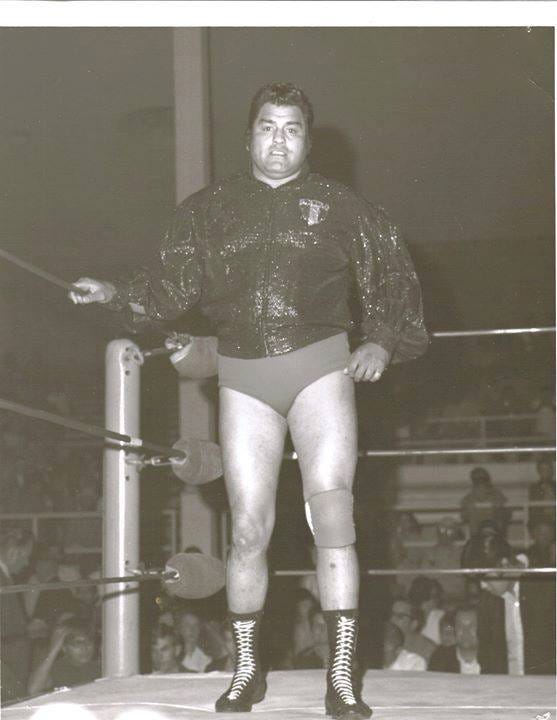
Pictured: Ricky ROmero, Rocky Mountain Heavyweight Champion
The April 28 card back in Amarillo itself followed suit with the same reconsolidation ethos. Jack Brisco and Ricky Romero worked to a time-limit draw in a high-profile singles encounter that protected both men’s drawing power. Dan Miller defeated Kurt Steiger in 14:11, and the show closed with a best two-out-of-three-falls main event typical of the territory’s emphasis on endurance and drama. No major title changes occurred; instead, the focus stayed on elevating local anchors like the Funks and Romero while hosting credible touring heels. The circuit—Amarillo, Abilene, Albuquerque, Lubbock, and surrounding towns—thrived on house-show revenue rather than quick payoffs. Babyfaces like Dory Jr., Terry Funk, and Ricky Romero reasserted dominance through moral victories and crowd-pleasing comebacks, while heels like Jardine, DiBiase, and Savage toured as money-drawing threats. The NWA North American Heavyweight Championship (Amarillo version) and regional tag titles remained stable, allowing the undercard to drive the weekly narrative.
Across the Lone Star State in Dallas, the Big Time Wrestling office, run out of the iconic Sportatorium by veteran promoter Ed McLemore (who held the booking office reins through September 1966), the promotion delivered a classic Texas product: personal, stipulation-heavy feuds, multi-fall tag warfare, and protected babyface anchors like Fritz Von Erich that kept gates steady and fans loyal.
The April 5 card at the Dallas Sportatorium set the tone for the month’s reconsolidation blueprint. Killer Karl Kox defeated Fritz Von Erich in a heated two-out-of-three-falls main event (with Duke Keomuka in Fritz’s corner), using count-outs and underhanded tactics to protect the local hero’s drawing power while extending their personal rivalry. Supporting bouts featured The Destroyer beating Duke Keomuka by count-out, Billy Red Lyons & Golden Terror (subbing for Prince Pullins) topping Luke Graham & Mark Lewin, The Ox over Jerry Miller, and Amazing Zuma over Indian Joe. These multi-man tags and non-finishes spilled “real” violence and interference, designed not for clean resolutions but for guaranteed return business across Dallas and Fort Worth.
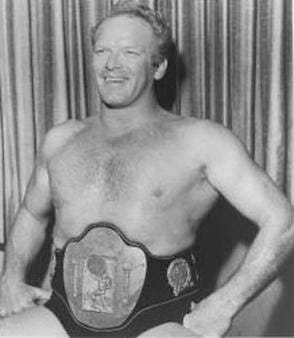
Pictured: Billy Red Lyons
Just days later, the April 11 show in Fort Worth continued the repeatable formula. Killer Karl Kox battled Billy Red Lyons to a time-limit draw, The Mummy drew Prince Pullins, The Ox pinned Indian Joe, Mark Lewin defeated Luke Graham, and The Destroyer & Golden Terror topped Amazing Zuma & Pepe Gomez. The following Tuesday, April 12, back at the Dallas Sportatorium, Billy “Red” Lyons & The Ox defeated Killer Karl Kox & Mark Lewin in two-out-of-three falls, The Destroyer beat The Mummy, Golden Terror pinned Danny McShain, “Crazy” Luke Graham & Zuma worked to a draw, and Pepe Gomez defeated Indian Joe. These cards emphasized tag-team depth and protected finishes that built long-term heat without risking the territory’s stable hierarchy.
By April 19 in Dallas, the pattern held firm. Billy “Red” Lyons defeated The Destroyer (the heel suffering a worked leg injury to sell the loss and set up future sympathy angles), while Killer Karl Kox & Mark Lewin continued their undercard presence in tag action. Fritz Von Erich & Duke Keomuka—still reigning as recent NWA Texas Tag Team Champions from their March title win—anchored the roster as credible local babyfaces without needing to drop belts or escalate into national conflicts. No world-title defenses or inter-promotional invasions disrupted the schedule; instead, the focus stayed on repeatable, blood-soaked rivalries with heels like Kox, Lewin, The Destroyer, and masked monsters.
Houston Wrestling, the Gulf Athletic Club territory in April 1966. Longtime promoter Morris Sigel—still at the helm of the historic Texas booking office he had run since the late 1920s—operated out of the Sam Houston Coliseum, delivering a classic Texas product: personal, stipulation-heavy feuds, multi-fall tag warfare, and protected babyface anchors like Fritz Von Erich that kept gates steady and fans loyal in the post-investigation era of territorial harmony.
The April 1 card at the Sam Houston Coliseum exemplified the reconsolidation blueprint. Killer Karl Kox and Mark Lewin anchored the undercard in separate bouts against Amazing Zuma and Golden Terror, respectively, while Luke Graham clashed with Pepe Gómez and Benny Matta faced Danny McShain. The main event was a best two-out-of-three-falls affair typical of the territory’s emphasis on endurance and drama. These matches featured count-outs, disqualifications, and interference-heavy finishes that protected the top stars’ credibility while extending heated personal rivalries—classic booking designed to guarantee return business without clean resolutions or title risks. Fritz Von Erich, already a massive local draw in Houston, headlined or semi-headlined throughout the month in programs that reinforced his unbreakable babyface status without needing to drop any regional belts.
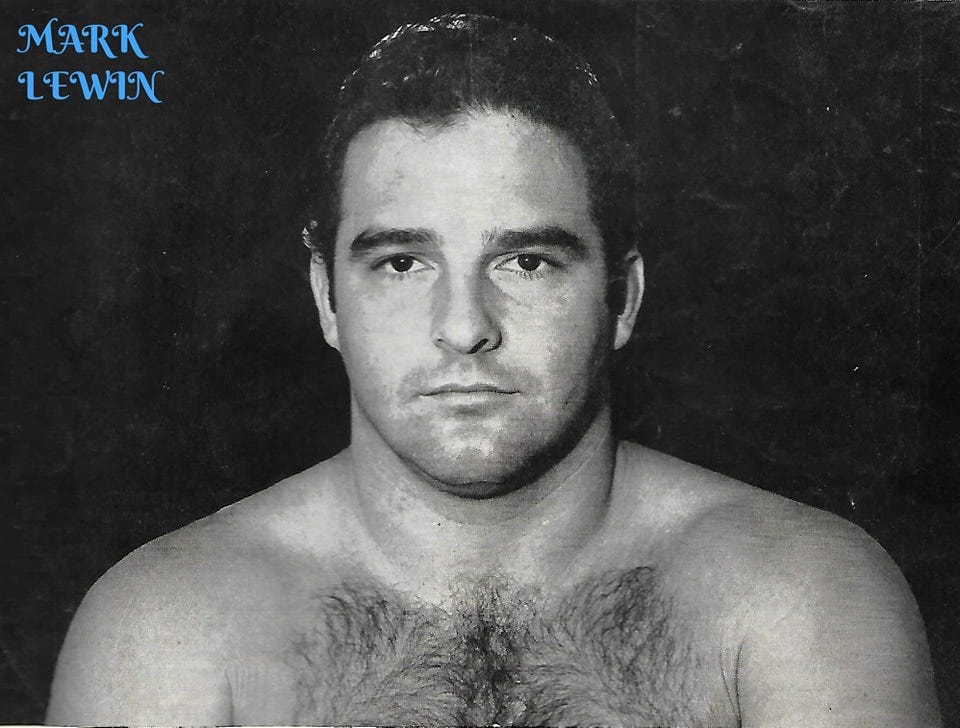
Pictured: Mark Lewin
The April 8 show continued the tag-team depth and monster-heel presence that defined Gulf Athletic Club cards, with the same core roster (Kox, Lewin, Graham, and touring talent) spilling “real” violence through blood and near-falls. No major title changes disrupted the schedule; instead, the focus stayed squarely on building long-term heat in the NWA Texas territory. Morris Sigel’s office maintained cooperative talent flow with the Dallas promotion under Ed McLemore (the formal split between the two would not occur until September), ensuring a deep roster without overlap conflicts or invasions.
The Los Angeles Wrestling Office, the WWA (World Wrestling Association) territory in April 1966 was promoted by Mike LeBell out of the historic Olympic Auditorium, the promotion delivered a classic Southern California product: high-attendance cards built around protected world and tag champions, monster-heel programs, and stipulation-ready violence that kept gates strong.
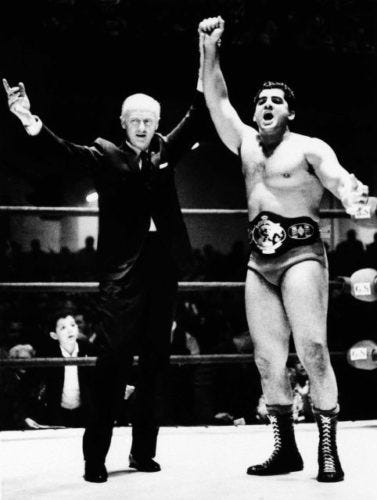
Pictured: Pedro Morales, WWA World Heavyweight Champion
The April 6 card at the Olympic Auditorium set the reconsolidation tone with a mix of technical draws, tag-team power, and undercard depth. Jack Lanza battled Alberto Torres to a time-limit draw in a featured singles match, protecting both men’s credibility for future returns. Buddy Austin & El Mongol scored a decisive victory over Don Savage & Rick Renaldo in tag action, building momentum toward their eventual April 18 capture of the WWA World Tag Team Championship from Alberto Torres & Thunderbolt Patterson. Nikita Mulkovitch defeated Rick Renaldo, while other bouts featured established WWA regulars like The Mighty Atlas and Art Michalik. These non-clean finishes and tag focus spilled “real” violence and interference, engineered not for one-night payoffs but for guaranteed repeat business across the weekly Olympic schedule.
Later April dates continued the same repeatable formula. The promotion’s flagship shows routinely drew 10,000+ fans (including multiple near-sellouts around the 10,400 mark), with WWA World Heavyweight Champion Pedro Morales anchoring the main events. Morales worked a high-profile time-limit draw against El Mongol (splitting falls in a best two-out-of-three structure), reinforcing the champion’s credibility while extending the personal monster-heel rivalry without risking the belt. Supporting action included Texas Death Matches featuring Gorilla Monsoon (who had captured the WWA Brass Knuckles Championship the previous month from El Mongol and was now positioned as a protected touring threat), draws involving The Butcher (Don Jardine), Lonnie Mayne, Mr. Moto, and Jack Lanza topping mid-card heels like Art Michalik. Women’s action saw Judy Grable defeat California Women’s Champion Linda Carroll to win the title, adding variety to the arena cards.
The Olympic Auditorium circuit thrived on house-show revenue rather than quick resolutions. Babyfaces like Pedro Morales, Alberto Torres, and Jack Lanza reasserted dominance through moral victories and crowd-pleasing comebacks, while heels like Buddy Austin, El Mongol, Gorilla Monsoon, and The Butcher toured as credible, money-drawing threats. The WWA World Heavyweight Championship (held firmly by Morales until August) and the newly won WWA World Tag Team Titles remained protected, allowing the undercard and secondary belts like the Brass Knuckles Championship to drive weekly narrative momentum.
Other territories followed suit. Detroit’s Big Time Wrestling and the Pacific Northwest continued their reliable house-show circuits with stars like Bobo Brazil and Ernie Ladd. Georgia Championship Wrestling (GCW) in April 1966, now operating under a stable three-way partnership in Atlanta between Ray Gunkel, Buddy Fuller, and Paul Jones, with Fred Ward independently but cooperatively promoting the key central-Georgia towns of Columbus, Augusta, and Macon. This structure—co-ownership in the flagship city paired with trusted local promoters elsewhere—embodied the era’s return to territorial harmony, high gates, and long-term storytelling without the chaos of the previous decade.
The Atlanta, Georgia NWA office, the heart of GCW, was now run as a three-way partnership: Ray Gunkel (wrestler, booker, and co-owner), Buddy Fuller (wrestler and shareholder, also known as Ed Welch), and Paul Jones (the public-facing promoter and longtime ABC Booking veteran). This arrangement provided operational stability and shared financial risk after the investigative turbulence of Stage 5. Paul Jones was credited as promoter on weekly Atlanta Municipal Auditorium cards, while Gunkel and Fuller actively wrestled and influenced booking. Meanwhile, Fred Ward— a veteran central-Georgia promoter—handled the Tuesday-night circuits in Columbus, Augusta, and Macon, creating a seamless statewide operation under the GCW/NWA banner. This division of labor was pure Stage 6: no invasions, no title wars, just a reconsolidated ecosystem designed for consistent house-show ticket sales and revenue.
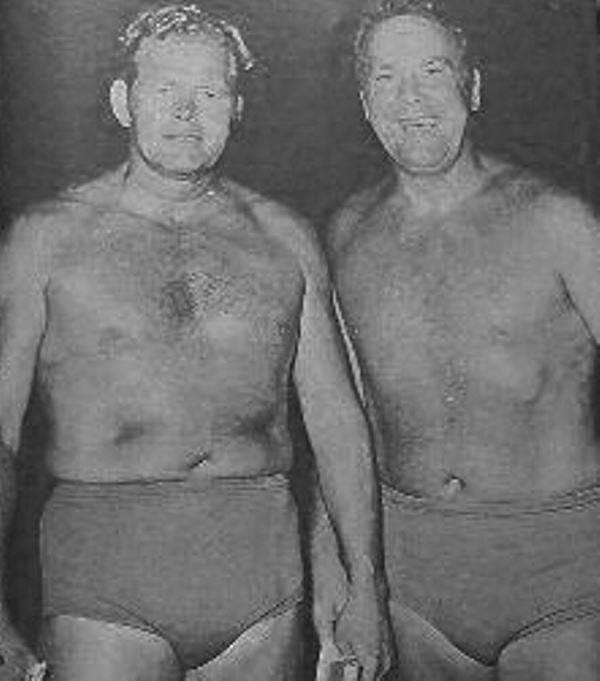
Pictured: Buddy Fuller and Ray Gunkel
The April 8, 1966, card at Atlanta Municipal Auditorium perfectly captured the reconsolidation formula. Gene Kiniski, fresh off dethroning Lou Thesz in January to become NWA World Heavyweight Champion, headlined in a non-finish style defense, pinning Klondike Bill (managed by Freddie Blassie) before a packed house. The semi-main event was a World Tag Team Title bout (Georgia version) featuring reigning champions the Mysterious Medics against Ray Gunkel & Enrique Torres; it ended in a no-contest, protecting both the titles and the ongoing feud while guaranteeing return business. Under-card action included Mario Galento over Tony Nero, Bobby Shane over Pancho Villa, the Infernos (managed by J.C. Dykes) beating Swede Karlson & Chief Crazy Horse, and Louie Tillet over Chin Lee. These matches—technical brawls, masked heels, and interference—fed the personal, stipulation-ready storylines that defined the era. Buddy Fuller, still reigning as Georgia Heavyweight Champion (a title he had held since the prior year), remained a protected babyface anchor, further solidifying local draw power.
Similar patterns played out in Fred Ward’s towns. While detailed results from April 1966 in Columbus, Augusta, and Macon are sparse in surviving records, the circuit operated on the same reconsolidation blueprint: mid-week shows featuring touring NWA talent, local favorites like the Torres brothers or Mario Galento, and tag-team chaos that built toward Atlanta returns. Ward’s long-term control of these markets ensured the partnership’s statewide reach without overlap or conflict—exactly the kind of cooperative territorial model that Stage 6 demanded after the investigative fractures of the 1950s and early 1960s.
Storylines in April 1966 Georgia were textbook Stage 6: violent, personal, and engineered for repeat attendance rather than quick payoffs. The Medics’ ongoing tag-title reign (won from the Von Brauners on March 25) versus Gunkel/Torres-style challenges spilled into blood and no-contests. The Infernos’ masked menace, managed by the charismatic J.C. Dykes, generated heat week after week. Kiniski’s touring heel presence elevated every card without risking the regional titles. Babyfaces like Fuller, Gunkel (when not in tag action), and Tillet reasserted dominance through disqualifications and returns, keeping fans emotionally invested. No promotion tried to break out nationally; instead, the reconsolidated Georgia office thrived on its own terms—sellouts in Atlanta, steady mid-week gates elsewhere, and a roster deep enough to support both main events and undercards.
Championship Wrestling from Florida (CWF) in April 1966 was operating as a stable NWA territory out of Tampa under wrestler-promoter Eddie Graham (with longtime owner Cowboy Luttrell still nominally involved), CWF exemplified the era’s return to territorial harmony. The April 19 card in Tampa delivered one of the month’s signature moments of reconsolidation. Eddie Graham—already a proven territory draw and future NWA president—teamed with veteran Bob Orton Sr. to defeat the masked heel duo The Medics in a key two-out-of-three-falls match, capturing the NWA World Tag Team Championship (Florida version). This title change was classic Stage 6 booking: it elevated a popular local babyface combination (Graham & Orton had chemistry and credibility), protected the Medics’ heat for future returns, and guaranteed ongoing tag-team warfare without undermining the broader NWA ecosystem. The reign was short but purposeful—Graham & Orton held the belts only until May before a programmed vacancy, keeping the undercard fresh and fans invested in weekly returns across Tampa, Miami, Jacksonville, and the rest of the Florida loop of towns.
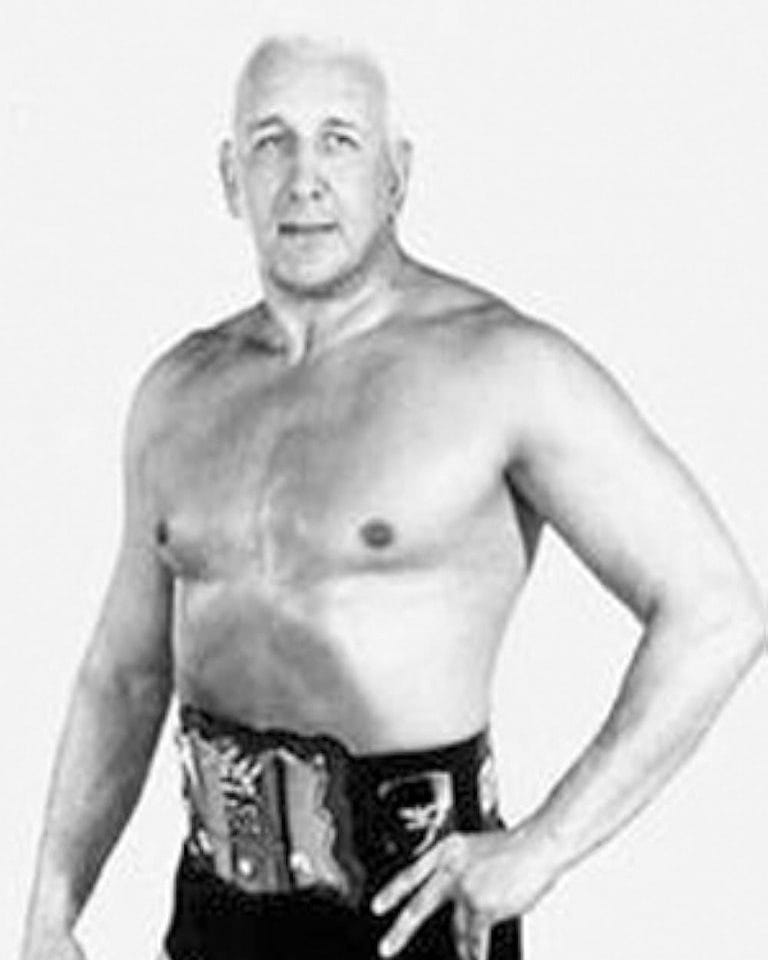
Pictured: Bob Orton, Sr. NWA Southern Heavyweight Champion
Just one week later, the April 26 show at the Tampa venue continued the reconsolidation blueprint. Lester Welch opened with a win over Pedro Godoy, establishing mid-card babyface momentum. A time-limit draw between George Drake and Sam Steamboat showcased technical wrestling that built long-term rivalries without clean finishes. The main event featured Eddie Graham & Bob Orton (fresh off their title win) in tag action against heels Tarzan Tyler and Sputnik Monroe—a brutal, personal clash typical of the era’s stipulation-ready storytelling. These matches spilled “real” violence through blood, interference, and near-falls, designed not for one-night payoffs but for sustained gates in a territory that thrived on weekly house shows rather than national television dominance.
CWF’s overall April 1966 operation reflected the quiet efficiency of Stage 6. Eddie Graham, splitting time between the ring and booking duties, anchored the promotion as both champion and promoter figurehead—exactly the kind of stable local leadership that replaced the investigative-era chaos. No rival promotions invaded Florida; instead, the territory cooperated with the NWA umbrella, hosting touring talent while protecting its own stars. Feuds with The Medics, Tarzan Tyler, Sputnik Monroe, and others (plus supporting players like Boris Malenko, José Lothario, and Hiro Matsuda on the roster) created personal, blood-soaked angles that drew repeat crowds without risking the fragile post-Stage 4 peace. The NWA Florida Heavyweight Championship remained in a transitional phase (unrecorded in detail until Lester Welch’s tournament victory later in August), allowing focus on tag-team and mid-card drama that kept arenas filled without overexposing any single belt.
Storylines in April 1966 Florida were pure Stage 5: violent, repeatable, and engineered for long-term loyalty rather than quick resolutions. Tag-title programs emphasized teamwork and betrayal, with babyfaces like Graham & Orton reasserting dominance week after week while heels like the Medics, Tyler, and Monroe toured as credible threats. Disqualifications, time-limit draws, and multi-fall bouts spilled into the aisles, building heat for return matches across the state. No promotion attempted a national takeover; the ecosystem thrived on coexistence, with CWF’s Tampa-centric circuit feeding steady revenue and fan passion in a post-investigation landscape that had nearly torn territories apart.
Operating as a flagship NWA territory out of Charlotte under veteran promoter Jim Crockett Sr., JCP ran a reliable circuit across the Carolinas and Virginia, emphasizing tag-team warfare, protected regional champions, and high gates through stipulation-ready violence—exactly the stable, profitable model that replaced the investigative-era fragmentation.
The promotion’s April schedule showcased the quiet efficiency of Stage 5. On April 7 in Greensboro (5,355 fans), Missouri Mauler (Larry Hamilton) defended the NWA Southern Heavyweight Championship (Mid-Atlantic version) in a key program match, defeating Rudy Kay while maintaining his credible heel aura. Mauler had captured the title the previous month and was booked as an unstoppable force who drew consistent heat without ever being cleanly pinned in important bouts. Just three weeks later, on April 28 in Greensboro (6,718 fans), top babyface Johnny Weaver challenged Mauler in a best two-out-of-three-falls main event. Weaver scored the moral victory by winning the third fall via disqualification, but the title remained with the Mauler—classic protected-champion booking designed to extend the personal feud and guarantee return business across the territory.
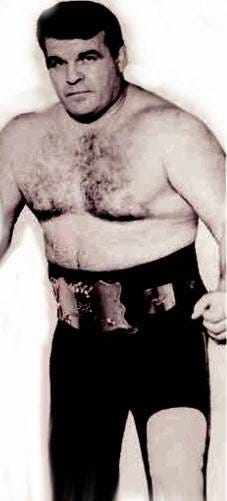
Pictured: The Misosuri Mauler, Larry Hamilton
Tag-team action formed the backbone of every card, reflecting JCP’s long-standing reputation for multi-man mayhem. George Becker & Johnny Weaver (or combinations with the Scott Brothers) regularly clashed with established heel teams like Brute Bernard & Skull Murphy or Aldo Bogni & Bronko Lubich (often with manager Homer O’Dell in their corner). These bouts routinely went to multi-fall finishes or disqualifications, spilling “real” violence through blood, interference, and near-falls that kept fans emotionally invested week after week. Rip Hawk & Swede Hanson (the Blond Bombers) continued their role as top-tier heels, adding to the stipulation-heavy undercard chaos that defined the era. Occasional appearances by international stars like Karl Gotch (who tangled with Kurt von Stroheim on the April 9 Lexington, NC card at the YMCA Gym) or other touring NWA talent further strengthened the roster without disrupting local hierarchies.
JCP’s overall April 1966 operation reflected the reconsolidation ethos perfectly. Jim Crockett Sr. ran a well-oiled machine with no rival invasions, no world-title controversies, and no attempts at national expansion. The circuit—Greensboro, Charlotte, Richmond, Norfolk, Hampton (April 27 card), and Lexington—thrived on repeat attendance rather than quick payoffs. The NWA World Heavyweight Champion Gene Kiniski made occasional defenses elsewhere in the territory, but the focus remained squarely on JCP’s own Southern Heavyweight Title and Southern Tag Team Title programs. Babyfaces like Becker, Weaver, and the Scotts reasserted dominance through moral victories and crowd-pleasing comebacks, while heels like the Mauler, Hawk, Hanson, and the various managed duos toured as credible, money-drawing threats.
The April cards at the Cow Palace in NWA San Francisco exemplified the reconsolidation blueprint. NWA San Francisco United States Heavyweight Champion Bill Watts—fresh off his February 19 victory over Kinji Shibuya—anchored the main events as a credible, protected babyface draw. Watts’ reign (which would last over a year) was booked with time-limit draws, disqualifications, and moral victories that extended heated rivalries without risking the title’s prestige or the territory’s autonomy. In tag-team action, the long-reigning AWA San Francisco World Tag Team Champions The Blond Bombers (Pat Patterson & Ray Stevens) continued their dominant run (held since April 1965) against top babyface combinations like Bobo Brazil & Bearcat Wright. These matches routinely went to multi-fall time-limit draws after swapping falls, spilling “real” violence through blood, interference, and near-falls designed not for clean resolutions but for guaranteed return business week after week.
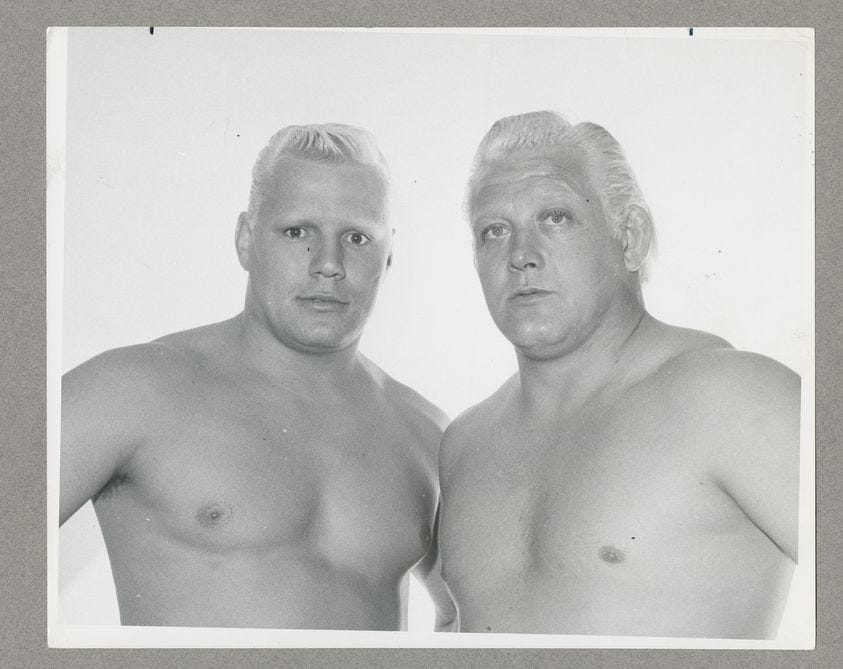
Pictured: The Blond Bombers, Pat Patterson and Ray Stevens
Supporting bouts featured established roster depth with stars like Gorilla Monsoon, The Destroyer, and mid-card heels in stipulation-heavy undercard clashes. No major title changes or inter-promotional invasions disrupted the schedule; instead, the focus stayed squarely on building long-term heat in Shire’s well-oiled machine. The Cow Palace crowds remained robust, reflecting the territory’s post-Stage 5 stability and Shire’s emphasis on “action, high spots, and realistic matches” that had already made San Francisco one of the hottest draws in the NWA ecosystem.The Bay Area circuit—centered on the Cow Palace with surrounding towns—thrived on house-show revenue rather than quick payoffs. Babyfaces like Bill Watts, Bobo Brazil, and Bearcat Wright reasserted dominance through crowd-pleasing comebacks, while heels like the Blond Bombers, Monsoon, and touring monsters served as credible, money-drawing threats.
The Gulas-Welch Tennessee Territory, run by the veteran partnership of Nick Gulas and Roy Welch, the promotion delivered a classic Southern product: high-attendance cards built around protected babyface anchors like Jackie Fargo, stipulation-heavy tag warfare, and personal junior-heavyweight programs. The April 28 card in Nashville (typically at the Fairgrounds Coliseum or War Memorial Auditorium) delivered a textbook example of Stage 6 title booking. Karl Von Brauner defeated Al Costello to capture the NWA Southern Junior Heavyweight Championship in a decisive singles main event. The change elevated the credible Von Brauner family heel without undermining the territory’s overall stability, creating immediate storylines for return matches while protecting the new champion’s heat. This kind of measured belt shift—personal, violent, and designed for long-term gates rather than one-night payoffs—was pure reconsolidation strategy.
Jackie Fargo, the territory’s unbreakable top babyface and perennial draw, anchored programs with heated feuds against touring heels and masked teams such as the Medics or members of the Von Brauner contingent. Tag-team action formed the backbone of every card, with combinations like Len Rossi & Mario Milano (recently active in Southern Tag Team Title programs) clashing in multi-fall bouts against established heel duos. Matches routinely featured time-limit draws, disqualifications, count-outs, and post-match brawls that spilled “real” violence in the towns and arenas.
LeRoy McGuirk’s NWA Tri-State Wrestling (also known as Championship Wrestling) was one of the National Wrestling Alliance’s most respected regional promotions in the 1960s. Operating primarily across Oklahoma, Arkansas, Louisiana, and parts of Missouri and Texas, the territory was headquartered in Tulsa, Oklahoma. McGuirk, a former wrestler who had held the NWA World Junior Heavyweight Championship and multiple light heavyweight titles earlier in his career, ran the promotion with a focus on athletic junior heavyweights, strong tag team divisions, and clean-cut babyfaces versus dastardly heels. By April 1966, Tri-State was in a stable “golden era” phase—pre-dating the more nationally ambitious Bill Watts era of the 1970s—drawing consistent crowds to venues like the Tulsa Assembly Center, Oklahoma City’s civic venues, Joplin Memorial Hall, and Little Rock arenas. The promotion emphasized weekly house shows, a syndicated television program called Championship Wrestling, and loyalty to NWA championships while booking its own regional titles.
The April 1966 roster featured a mix of established NWA talent and local favorites. Headlining was Danny Hodge, the Oklahoma native and former amateur wrestling standout who served as the territory’s top babyface draw. Hodge was a multiple-time NWA World Junior Heavyweight Champion and a massive crowd favorite for his technical prowess and resilience. Opposing him was Joe McCarthy (real name Albert Joe Criswell), the reigning NWA World Junior Heavyweight Champion, a rugged heel who had captured the belt on February 12, 1966, in Oklahoma City by defeating Lorenzo Parente. McCarthy’s reign (which lasted until May 3) centered much of the month’s action.
The tag team situation revolved around The Assassins,who were positioned as top villains. They frequently clashed with Hodge and his partners, including Tiny Smith. Other active workers included Big Boy Brown and various undercard talents filling out multi-man tags and preliminary bouts. The roster was relatively compact compared to larger territories, relying on strong local draws like Hodge to sell tickets while McGuirk coordinated NWA talent exchanges.
April 1966 was defined by two primary angles: the ongoing NWA World Junior Heavyweight Championship feud and the fallout from the NWA United States Tag Team Championship (the Tri-State version) being vacated.
The Hodge vs. McCarthy Junior Heavyweight Feud: This was the promotion’s marquee storyline. McCarthy defended the NWA World Junior Heavyweight Title against Hodge in a series of high-profile matches throughout the month. Known results include:
• April 15, Oklahoma City: Hodge vs. McCarthy ended in a disqualification (McCarthy retained).
• April 16, Joplin, MO: Another disqualification finish with McCarthy retaining.
• April 18, Tulsa: Direct title match (outcome not specified in available records but part of the build).
• April 19, Little Rock, AR: Continued the program.
• April 21, Frederick, OK: McCarthy retained once more.
These bouts typically featured disqualifications or time-limit draws to keep the championship in McCarthy’s hands while building heat for a potential title switch (which occurred on May 3 in Little Rock when Hodge regained the belt). The rivalry highlighted Tri-State’s emphasis on junior heavyweight excellence—McGuirk had long controlled the booking of this NWA title—and played into Hodge’s role as the heroic Oklahoma underdog.
The NWA United States Tag Team Championship (Tri-State version) had been unrecorded since September 1963 and was officially vacated no later than April 1966 for undocumented reasons. This created a vacuum that fueled tag team storylines. The Assassins were heavily featured as aggressive challengers, facing Hodge & Tiny Smith in multiple tag matches:
• April 4 and April 11, Tulsa.
• April 23, Joplin.
• April 25, Tulsa (part of early tournament-style action leading into May’s formal crownings).
The Assassins’ heel tactics—masked anonymity, rule-breaking, and brutality—contrasted with the scientific style of Hodge and partners, building toward May 9–10 tournaments in Tulsa and Little Rock where new champions would be determined. This angle kept tag division interest high while the singles title feud dominated main events.
Tri-State enjoyed steady success in 1966. McGuirk’s long-standing NWA membership (he had served as an officer) ensured talent flow and territorial respect. Attendance was reliable in core markets like Tulsa and Oklahoma City, supported by Hodge’s star power and the promotion’s reputation for athletic, story-driven wrestling rather than gimmickry. The territory avoided the promotional wars plaguing some NWA areas, focusing instead on consistent weekly programming. Economically, it thrived on a mix of gate receipts and local TV sponsorships. While not the largest NWA outpost (compared to New York or Chicago), it was viewed as a well-run, family-friendly promotion that launched or sustained careers of future stars.
McGuirk produced the weekly Championship Wrestling (or Leroy McGuirk’s Championship Wrestling) TV show, taped primarily in Tulsa or Shreveport and syndicated across the territory. It featured in-ring action, interviews, and promos to hype house shows. Programming likely recapped the Hodge–McCarthy feud with highlight packages, Assassin promos, and undercard matches to drive ticket sales. The show was a key revenue and fan-engagement tool, airing on local stations and helping maintain the promotion’s visibility.
Storylines in April 1966 were pure Stage 5: blood-soaked, stipulation-driven, and engineered for long-term gates rather than quick resolutions. Texas Death Matches, steel cages, chain bouts, and disqualification-filled tag wars spilled “real” violence across regions, allowing babyfaces like Bruno, the Funk family, Brazil, and Gagne to reassert dominance week after week while heels like Kiniski, Vachon, Scicluna, and the Bruiser toured as credible threats. The era’s quiet profitability—sellouts in St. Louis, steady Northeast crowds, and packed Midwest arenas—proved the territories had successfully put themselves back together.
Thank You for Reading
I’m Tony Richards, Pro Wrestling Historian, Author and Storyteller. I share pro wrestling historical items in each issue of the Time Tunnel Pro Wrestling History Newsletter. Thanks for reading! If you enjoy my information on select events, matches and insights, please share it with folks you think might like to be a subscriber!
Remember, premium investors get access to exclusive and special content such as some special issues including a multi-part deep dives on wrestling territories, wrestler bios and championship title histories, special audio and video interviews on territory pro wrestling and more available in the Pro Wrestling Time Tunnel for Premium Investors.