


Happy Birthday to those who have passed on and to those great wrestlers still with us:
In Memoriam:
Freddie Knichel 1912
George Culkin 1926
Mighty Inoue 1949
Happy Birthday:
Tony Anthony (65)
Cibernetico (51)
Damain Hernandez\El Terrible (50)
Jackie Redmond (39)
RIP Memorial: We stop & remember those who have passed on this day and gave themselves to the business for us, the fans. We salute you and thank you.
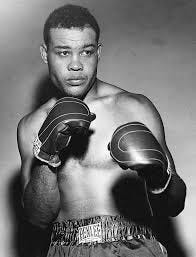
Joe Louis 4-12-1981 at the age of 66
Mike Von Erich 4-12-1987 at the age of 23

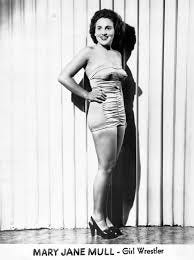
Mary Jane Mull 4-12-1999 at the age of 70
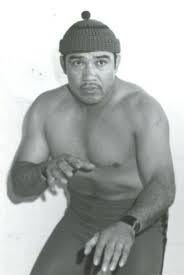
Pablo Crispin\Great Goliath 4-12-2004 at the age of 69
Balls Mahoney 4-12-2016 at the age of 44

Joe Pedicino 4-12-2020 at the age of 70

50 Year Flashback
Q2 April-June Territory Analysis
San Francisco Office, Big Time Wrestling (San Fran) Territory
In the spring and early summer of 1976, Roy Shire’s Big Time Wrestling (also known as NWA San Francisco) remained one of the NWA’s most consistently profitable and fan-friendly territories, centered on the legendary Cow Palace in Daly City. Shire, the former wrestler turned promoter nicknamed “The Professor,” had built the promotion into a powerhouse since 1960 by emphasizing athletic, high-impact matches, strong television exposure on local stations like KTVU and later KTXL, and monthly blow-off spectaculars at the Cow Palace that routinely drew thousands. Q2 1976—April through June—captured the territory in solid mid-card form: a dominant heel champion at the top, a hot tag-team division, and a roster blending established locals with traveling talent. While complete week-to-week TV taping results from the era are fragmentary, surviving records, championship histories, and contemporary references paint a clear picture of the key wrestlers, matches, angles, and storylines.

Pictured: The Cow Palace, Daly City (San Francisco) California
The singles division revolved squarely around the NWA San Francisco version of the United States Heavyweight Championship. On February 7, 1976, the Japanese heel Mr. Fuji (often teamed with Mr. Saito early in his run) dethroned longtime babyface hero Pat Patterson in San Francisco to claim the belt. Fuji carried the title throughout all of Q2 1976 and well into 1977—an impressive 371-day reign overall.
Fuji’s persona—arrogant, rule-breaking, and backed by Saito’s martial-arts kicks and nerve holds—made him the perfect heat magnet. Patterson, the territory’s top draw and a master of the figure-four leglock and high-flying offense, was positioned as the perennial chaser. Their feud spilled into multiple Cow Palace main events and TV segments throughout the spring, with Fuji using every dirty trick (eye rakes, foreign objects, and Saito interference) to retain. These matches were classic territory-style psychology: Patterson would dominate with babyface fire, only for Fuji to steal the win via shenanigans, keeping the angle alive for months. Other top faces like Pepper Gomez (the high-flying “Mexican jumping bean”) and Peter Maivia (high-impact Polynesian powerhouse and grandfather of The Rock) were also fed to Fuji in title defenses or non-title grudge bouts, building sympathy and future title shots.
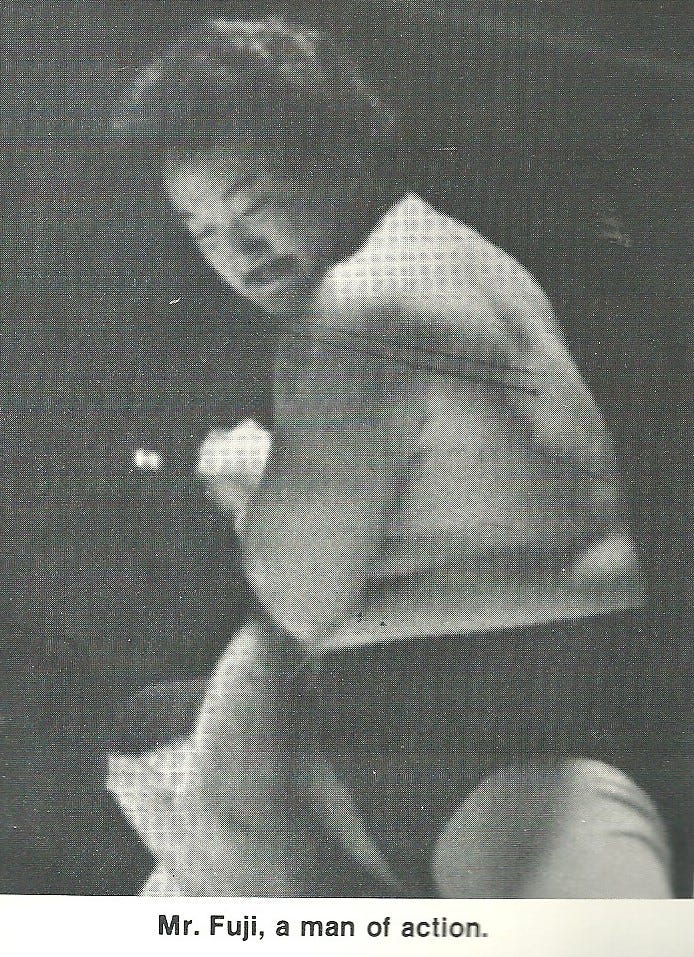
Pictured: The Great Fuji, NWA United States Heavyweight Champion
The tag scene provided the biggest storyline development of Q2. Pat Patterson, fresh off losing the US title, teamed with New Zealand’s Tony Garea (a polished, scientific worker) to challenge for the NWA World Tag Team Championship (San Francisco version). On May 15, 1976, in San Francisco, Patterson & Garea defeated the heel duo of Don Muraco and Invader #1 in a best-of-three-falls match to win the belts.
This victory was a major feel-good moment for fans. Patterson’s star power and Garea’s technical excellence made them ideal transitional champions who could carry the division with exciting, fast-paced bouts. Throughout late May and June they defended against a revolving cast of challengers, including combinations featuring Ray Stevens (Patterson’s longtime rival-turned-occasional-partner), the masked invaders, and mid-card teams. The tag titles added depth to the monthly Cow Palace cards, often serving as the semi-main or co-main to Fuji’s US title defenses. The angle also planted seeds for later 1976 drama: by September, the Australian duo The Royal Kangaroos (Lord Jonathan Boyd and Norman Frederick Charles III) would dethrone Patterson & Garea, injecting international flavor and stiff, hard-hitting action into the division.
The undercard and mid-card were packed with reliable territory talent and visitors who kept the weekly TV shows and smaller arena loops engaging:
Ray Stevens — “The Crippler” — continued as a versatile veteran who could work heel or face, often clashing with Patterson or teaming with him in six-man tags.
Pepper Gomez and Peter Maivia — Provided explosive, crowd-pleasing athleticism; Gomez’s dives and Maivia’s headbutts were TV highlights.
Moondog Mayne — The wild, unpredictable brawler added chaotic energy in street-fight-style matches.
Visiting talent such as Sgt. LeBeouf (a military heel), Rock Riddle, and others filled out the cards. A documented June 12, 1976, Cow Palace bout saw Sgt. LeBeouf defeat Rock Riddle, illustrating the steady stream of enhancement and mid-card feuds.
Shire’s booking style favored blood-and-guts angles, chain matches, and no-holds-barred stipulations when feuds heated up. While no major hair-vs.-hair or mask-vs.-mask blow-offs are documented specifically for April–June 1976, the territory’s reputation for “realistic” violence (worked stiff but believable) meant that Patterson–Fuji and tag-title programs likely featured plenty of post-match beatdowns and television promos that built to the next Cow Palace spectacular. TV tapings (usually at smaller venues but edited into the Friday-night or Saturday-night shows) kept fans invested week-to-week, hyping the big monthly Cow Palace gates.

Pictured: Inoki makes a kick strike to the back of Ali’s leg, June 26th, 1976
Like many NWA-affiliated booking offices, Roy Shire participated in the promotion of the mixed boxer-wrestler match of Muhammad Ali and Antonio Inoki by presenting the closed circuit feed along with a partial live card event. he bout itself took place on June 26, 1976 (June 25 U.S. time due to the time difference) at Nippon Budokan in Tokyo. Vince McMahon Sr., Bob Arum, and a network of NWA territorial promoters coordinated the U.S. closed-circuit distribution. Local offices like Shire’s were responsible for selling tickets, promoting the event on their TV shows, and running live wrestling cards to fill the arena before or after the satellite feed. San Francisco was one of several major markets (alongside Atlanta, Los Angeles, Houston, Chicago, Detroit, etc.) that hosted both the closed-circuit broadcast and a supporting live card.
At the Cow Palace, Big Time Wrestling ran the closed-circuit showing of Ali vs. Inoki and followed it with several live matches featuring the territory’s regulars. Documented bouts on that night included:
Pat Patterson defeating Mr. Fuji in a three-falls match, a continuation of their ongoing U.S. Heavyweight Championship feud, but Fuji retained the title, was a bloody mess and was carried out of the ring after the match.
Don Muraco & Masa Saito defeated Pedro Morales & Tony Garea in a tag-team match pitting the heel duo (Muraco, the tough Hawaiian brawler, and Saito, the stiff-kicking Japanese martial-arts stylist) against two popular babyfaces. Morales was a former WWWF champion making a tour stop, while Garea was Pat Patterson’s tag partner and a polished scientific wrestler. This was a solid mid-to-upper card clash that highlighted the territory’s strong international flavor and ongoing rivalries.
Contemporary accounts, photographer recollections from Cow Palace events, and historical wrestling databases note that the live portion ran after the closed-circuit feed concluded. Fans who attended expecting a thrilling “superfight” were disappointed by the actual 15-round draw (Inoki spent most of the match on his back kicking Ali’s legs under restrictive rules), and some reports mention refunds or complaints in San Francisco and other markets. Still, Shire used the high-profile event to draw a crowd and keep his promotion in the spotlight.

Pictured: San Francisco Booking Office Owner and NWA Member: Roy Shire
Roy Shire was not happy with the event at all. “I blew a bundle and I learned a lesson. I’ll never promote another Ali mixed match. I’ll never touch him again. I won’t get the chance. No promoter would be crazy enough to to match ali against another wrestler after what happened in Tokyo”. He added other remarks negative toward Inoki as well. “I’m a former wrestler, and Inoki is the only guy I ever saw get mat burns on his backside.”
There was concern at the time among wrestling promoters that the event would hurt wrestling ticket sales after the event was such a debacle. Shire never flinched. “I’m not worried. In 16 years of promoting the Cow Palace wrestling I’ve only had two bad houses. My gates have always been around $25,000. Last January, we topped $70,000 for the Battle Royal.”
Also, In late June 1976, Roy Shire’s Big Time Wrestling in San Francisco welcomed a fresh international threat when the Australian duo Lord Jonathan Boyd and Norman Frederick Charles III—billed as The Royal Kangaroos—made their territory debut. Inspired by the legendary original Fabulous Kangaroos (Al Costello and Roy Heffernan) of the 1950s and ’60s, the new team adopted a similar “Ultra-Australian” heel persona complete with boomerangs, bush hats, and arrogant aristocratic swagger. Fresh from successful runs in the Pacific Northwest, they arrived as vicious rulebreakers designed to inject global flavor and stiff, hard-hitting action into the tag division.
Their first documented match in the territory came on June 29, 1976, in Stockton, California, where the Royal Kangaroos defeated Jerry Monti and Tony Garea. This quick, decisive victory immediately positioned them as dangerous contenders to the recently crowned NWA World Tag Team Champions (San Francisco version), Pat Patterson and Tony Garea. Over the next several weeks the Kangaroos built heat through television promos and arena bouts, clashing repeatedly with Patterson & Garea in six-man tags and non-title encounters. Their style—emphasizing stiff kicks, double-team maneuvers, and unapologetic heel tactics—contrasted perfectly with the scientific babyface approach of the champions.
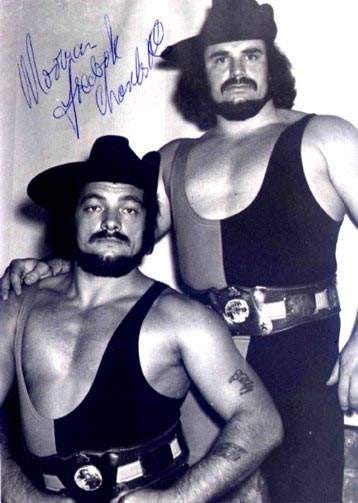
Pictured: Jonathan Boyd and Norman Frederick Charles III, The Royal Kangaroos
The late-June arrival of the Royal Kangaroos proved to be a textbook Shire booking masterstroke: a new heel team with instant credibility, a built-in legacy connection to wrestling history, and a ready-made program against the territory’s top babyface combination. They helped keep the tag division vibrant during Mr. Fuji’s long United States title reign and gave Bay Area fans a memorable summer of international grudge matches at the Cow Palace.
By mid-1976, Big Time Wrestling was still riding high on the formula that had made it a cash cow for Shire: strong local TV, a loyal Bay Area fanbase that loved its heroes (Patterson, Gomez, Maivia) battling foreign heels (Fuji, Saito, invaders), and the prestige of the Cow Palace as the “Madison Square Garden of the West.” Attendance at the big shows remained healthy, though the territory was beginning to feel subtle pressure from the changing national landscape (the WWWF’s expansionist ideas were still years away, but talent raids and shifting NWA politics loomed). Shire’s hands-on, sometimes controversial style—emphasizing payouts based on house draws while maintaining kayfabe discipline—kept the product tight and profitable.
April through June 1976 exemplified Big Time Wrestling at its territorial peak: Mr. Fuji’s iron grip on the US title created the central heel heat, while Pat Patterson & Tony Garea’s May tag-title victory gave fans a heroic counterpoint. Supporting stars like Ray Stevens, Pepper Gomez, and Peter Maivia rounded out a balanced roster that delivered athletic main events and wild undercard brawls.
Thank You for Reading
I’m Tony Richards, Pro Wrestling Historian, Author and Storyteller. I share pro wrestling historical items in each issue of the Time Tunnel Pro Wrestling History Newsletter. Thanks for reading! If you enjoy my information on select events, matches and insights, please share it with folks you think might like to be a subscriber!
Remember, premium investors get access to exclusive and special content such as some special issues including a multi-part deep dives on wrestling territories, wrestler bios and championship title histories, special audio and video interviews on territory pro wrestling and more available in the Pro Wrestling Time Tunnel for Premium Investors.