


Happy Birthday to those who have passed on and to those great wrestlers still with us:
In Memoriam:
Buddy Wolfe 1941
Ken Dillenger 1938
Harley Race 1943
Pak Song 1943
Happy Birthday:
Dustin Runnels\Dustin Rhodes (57)
Jonathan Rechner\Balls Mahoney (45)
RIP Memorial: We stop & remember those who have passed on this day and gave themselves to the business for us, the fans. We salute you and thank you.
Billy Sandow 4-11-1953 at the age of 40
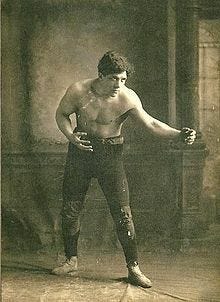
Ernie Dusek 4-11-1994 at the age of 85
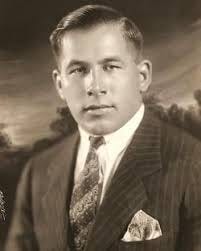
Stanley Weston 4-11-2002 at the age of 82

Larry Sweeney 4-11-2011 at the age of 30
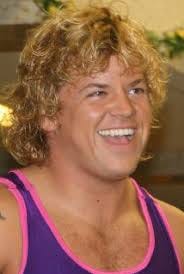
The Life and Career of Stanley Weston
Stanley Weston (né Weinburger; September 25, 1919 – April 11, 2002) stands as one of the most influential figures in the history of professional wrestling media. As a publisher, sportswriter, artist, and photographer, he built a magazine empire that entertained generations of fans by treating pro wrestling’s scripted drama as legitimate sport. Through titles like Pro Wrestling Illustrated, The Wrestler, and Inside Wrestling, Weston kept kayfabe alive in print long after television exposed its secrets. His “creative journalism”—fabricating quotes, headlines, and storylines—blended fact and fantasy to sell millions of copies, shaping how fans understood and enjoyed the sport in the pre-internet era.
Born Stanley Weinburger in the Bronx, New York, Weston moved with his family to Long Island, where he became neighbors with Nat Fleischer, legendary publisher of The Ring magazine (the self-proclaimed “Bible of Boxing”). At age 10, his father brought home a copy of The Ring, sparking a lifelong passion. In 1937, the 18-year-old Weston was hired by Fleischer as a copy boy. He quickly proved his artistic talent by colorizing black-and-white portraits with oils and painting 57 covers for the magazine, including the December 1939 issue featuring Billy Conn. Weston also worked as a writer and photographer, developing skills that would define his career. He served in the U.S. military during World War II and the Korean War, rising to the rank of officer, though he rarely adopted a commanding style in civilian life.
After his military service, Weston transitioned from employee to entrepreneur. Operating initially from his Long Island home—where the bedroom served as the art department and the basement as a darkroom and filing area—he launched his first publication, Boxing & Wrestling (later Boxing Illustrated/Wrestling News), around 1953 (or 1958 per some accounts). This hybrid magazine competed directly with The Ring. Building on its success, he introduced dedicated wrestling titles. In 1959, he launched Wrestling Revue, which quickly became the world’s best-selling wrestling magazine. At its peak, Weston sold the title to Bert Sugar, Lew Eskin, and Norman Kietzer, then re-entered the market under his new company, G.C. London Publishing.
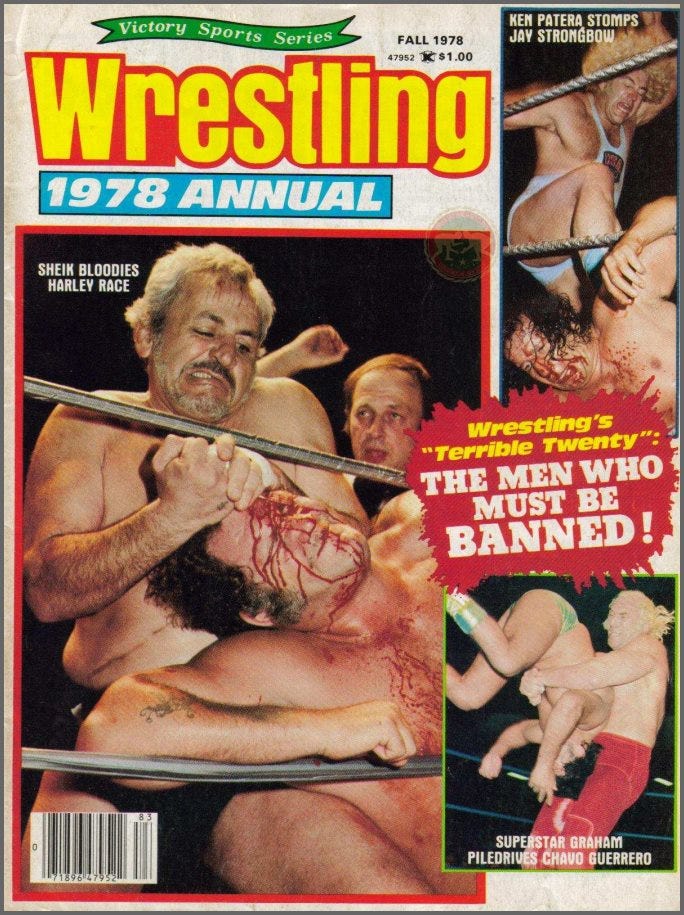
Pictured: The Fall 1978 edition of the Wrestling Annual magazine published by Stanley Weston’s Victory Sports Series
Under G.C. London, Weston’s output exploded. Key titles included The Wrestler (launched 1966), Inside Wrestling, Wrestling Yearbook, Wrestling Annual, Sports Review Wrestling (1972), and—most famously—Pro Wrestling Illustrated (PWI, founded 1979). He also published boxing magazines such as World Boxing and Boxing International. By the early 1990s, his portfolio encompassed five boxing and nine wrestling titles with annual sales exceeding $13 million. In 1989, he even purchased his old employer, The Ring, completing a full-circle career move. Weston hired talented staff, notably photographer and editor Bill Apter in 1970, who built strong relationships with wrestlers and helped produce iconic content.
Weston’s magazines were renowned for their “creative journalism.” Writers invented quotes, backstage drama, and feuds on the spot to maintain kayfabe—the industry’s code of presenting wrestling as real. One staffer recalled being handed photos and told to fabricate wrestler interviews, as actual quotes were unnecessary and sometimes impossible to obtain. Features like Sports Review Wrestling’s “Apartment Wrestling” series—posed photos of bikini-clad models in mock matches—drove sales but sparked controversy. Wrestlers and promoters objected, yet Weston famously declared, “We’re going to make a fortune out of this, I don’t care what the promoters say.” He defended such sensationalism as giving the public what it wanted, embracing wrestling’s carnival “freak show” appeal, as his daughter Toby Weston Cone later noted in reference to stars like André the Giant.

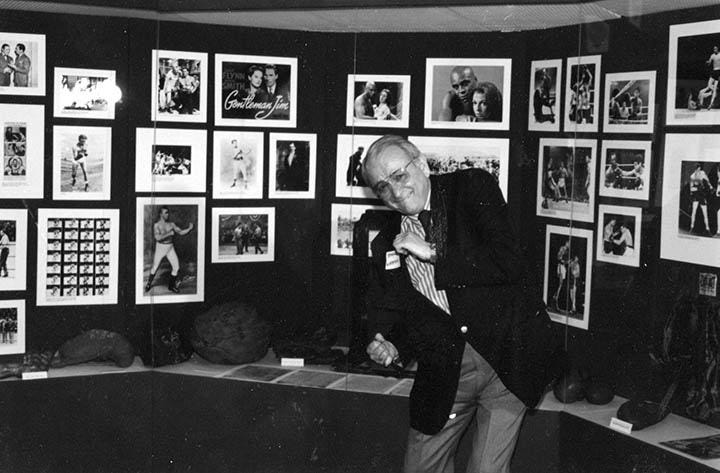
Pictured: Stanley Weston and Mil Mascaras
Kayfabe is the foundational code of professional wrestling: the deliberate portrayal of scripted matches, feuds, characters, and storylines as genuine athletic competition. It is the suspension of disbelief that transforms predetermined “works” into perceived reality, while anything authentic or unscripted is a “shoot.” Derived from carnival slang—likely Pig Latin for “be fake” or a corruption of phrases meaning “keep it quiet”—kayfabe originated in the early 20th-century sideshow exhibitions where promoters fixed bouts to boost entertainment value and ticket sales. Wrestlers were expected to live their gimmicks 24/7: babyfaces (heroes) and heels (villains) traveled separately, avoided public socializing, and even refused autographs out of character to preserve the illusion. For decades, this code extended far beyond the ring into all forms of wrestling media, creating a closed world where the “family secret” remained protected.

In print media, kayfabe reached its creative zenith through the “Apter Mags”—the influential wrestling magazines published by Stanley Weston and his team, most notably Pro Wrestling Illustrated (PWI), The Wrestler, Inside Wrestling, and others under G.C. London Publishing (and later T.V. Sports Inc.). These publications treated wrestling’s predetermined angles as legitimate news, employing what staffers openly called “creative journalism.” Writers were handed photos of wrestlers and instructed to fabricate quotes, interviews, backstage drama, and entire feuds on the spot. There were no real wrestler quotes needed; the goal was immersion. Columns appeared under pseudonyms like the heel writer Dan Shocket, who delivered sensational “confessions.”
Features such as the notorious “Apartment Wrestling” series posed models in mock matches to blend sex and spectacle. Even when reality intruded—deaths like Bruiser Brody’s stabbing or the Von Erich family tragedies—coverage balanced genuine reporting with kayfabe storytelling to keep the fantasy alive. Bill Apter, the legendary photographer and editor hired by Weston in 1970, emphasized that “keeping the family secret is what [kayfabe] really meant,” likening it to magicians protecting their tricks. Staffers like Steve Farhood and Gary Morgenstein recalled inventing heartfelt Ric Flair columns or “behind-the-scenes” humanizing pieces (e.g., Larry Zbyszko cooking alone or Harley Race pondering his rule-breaking) purely from imagination. These magazines were the pre-internet equivalent of national wrestling television, connecting regional fans and selling the larger-than-life mythology that made stars like Hulk Hogan household names.
Television amplified kayfabe through in-character promos, announcers selling every match as life-or-death, and promoters shielding the business from scrutiny. Rivalries were protected off-camera; the 1987 arrest of supposed enemies The Iron Sheik and “Hacksaw” Jim Duggan (caught together with cocaine) was a rare public slip that threatened the code. Wrestlers and promoters fiercely enforced it to maintain the sport’s legitimacy—and avoid athletic commission oversight or taxes on “real” competitions.
The kayfabe magazine empire faced its greatest challenge in the late 1980s and early 1990s from Vince McMahon’s World Wrestling Federation (WWF, now WWE). McMahon restricted outside journalists’ access to events and gradually broke kayfabe, undermining the very storytelling that made Weston’s magazines thrive. Sales declined sharply. In 1993, Weston sold his entire portfolio—including The Ring—to Kappa Publishing Group. PWI continued under new ownership and remains in print today.
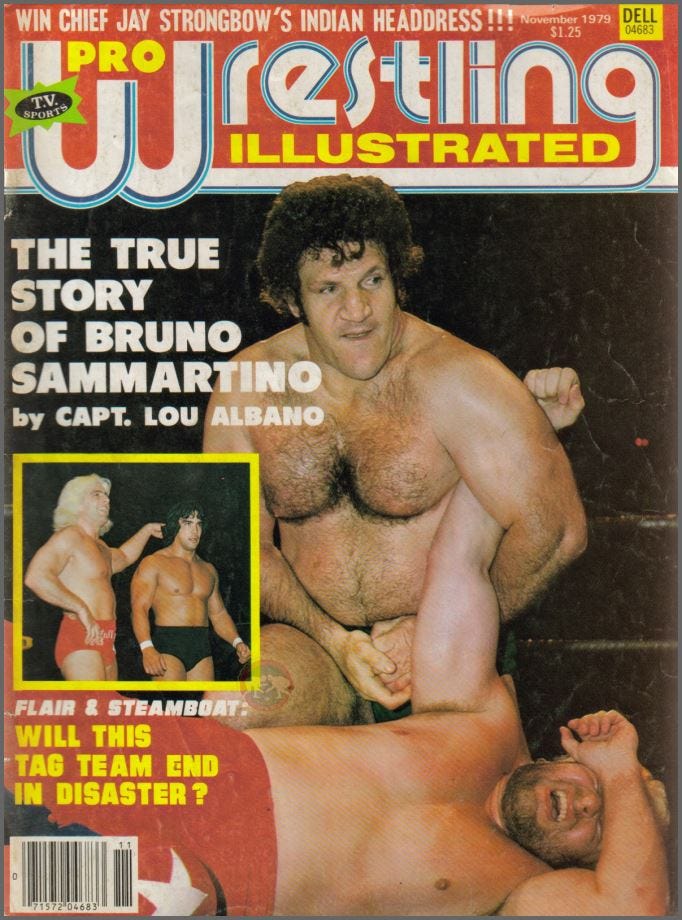
Pictured: Pro Wrestling Illustrated November 1979
The public breaking of kayfabe began in earnest in 1989 when Vince McMahon testified before the New Jersey State Senate that WWF (now WWE) events were “sports entertainment,” not legitimate athletic contests. The admission was pragmatic—to dodge state athletic commissions, medical requirements, and sports-event taxes amid the steroid scandal and expanding national expansion. While the scripted nature had long been an open secret (hinted at as early as 1934 in Chicago), McMahon’s court statement officially ended the era of total denial. This shift coincided with the rise of “sports entertainment” branding and allowed more overt storytelling, but it also eroded the magazines’ core product. Weston’s empire faced declining sales as McMahon restricted outside media access and centralized control. By 1993, Weston sold his portfolio (including the purchased The Ring) to Kappa Publishing; PWI survived but eventually transitioned away from pure kayfabe.
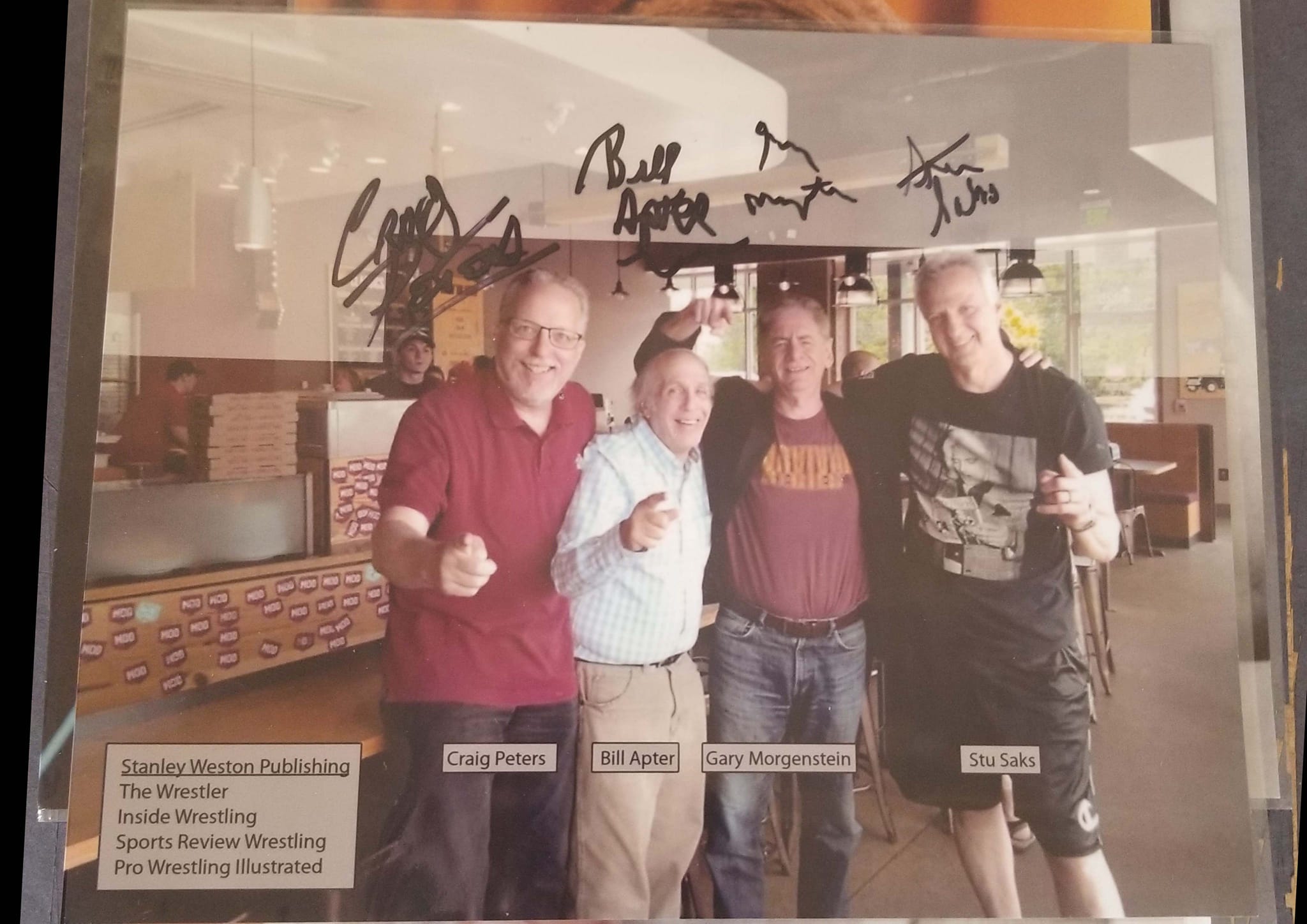
The Stanley Weston “Liutenants”: Craig Peters, Bill Apter, Gary Morganstein and Stu Saks
The internet delivered the decisive blow. Dirt sheets like Dave Meltzer’s Wrestling Observer Newsletter, online forums, and leaked results shattered the illusion for “smart marks” (knowledgeable fans). High-profile breaches—the 1996 “Curtain Call” at Madison Square Garden (where wrestlers broke character publicly) and the 1997 Montreal Screwjob—exposed backstage politics. Shoot interviews, autobiographies (e.g., Mick Foley’s Have a Nice Day), and documentaries proliferated in the 1990s and 2000s, pulling back the curtain further. Social media and podcasts turned kayfabe from a protected secret into a participatory game. Wrestlers now blur lines intentionally: posting in-character content, engaging in worked shoots (like CM Punk’s 2011 “Pipebomb”), or using real-life drama (injuries, contracts, departures) to fuel meta-storylines.
Today’s era is often called “neokayfabe” or “kayfabe 2.0/meta-kayfabe.” The old strict illusion is largely gone—WWE and AEW openly acknowledge the business side in documentaries like Dark Side of the Ring—yet suspension of disbelief remains essential during live events and TV tapings. Modern kayfabe is bidirectional and managed: wrestlers curate social media personas to build parasocial bonds, fans debate “real” alignments (who’s truly a “good guy” backstage?), and promotions like AEW have used meta-elements such as the Elite’s “Executive Vice President” titles or post-show videos (e.g., Britt Baker celebrating a scripted loss) to layer reality onto fiction. Storylines can bleed into real life, and vice versa, giving audiences complicity in the spectacle. While traditional kayfabe is “dead” in the old sense, this evolved version allows compelling characters in a transparent world—fans know it’s a work but still invest emotionally.
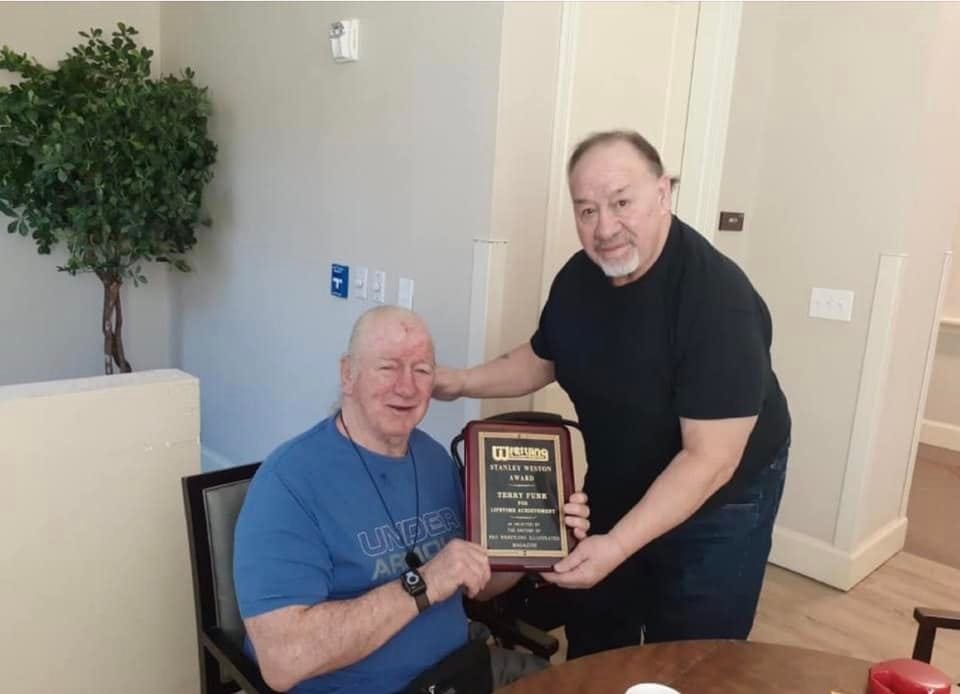
Pictured: Terry Funk receives the “Stanley Weston Lifetime Achievement Award” from The “Ragin Bull” Manny Fernandez
Beyond magazines, Weston authored several boxing books, including History of the Heavyweights, The Heavyweight Champions, The Best of The Ring, and The Ring: Boxing the 20th Centu
ry. He amassed one of the world’s largest collections of boxing memorabilia. Personally, he was married to Hope Patrick for 38 years until her death in 1980. The couple had two daughters, Toby Weston Cone and Barbara Harris, along with four grandchildren and five great-grandchildren. Colleagues described him as a generous millionaire who drove a modest Ford Tempo, possessed a quirky “twilight zone sense of humor,” and was an extraordinary storyteller who watched every penny yet gave freely.
Stanley Weston died on April 11, 2002, at his Long Island home after a battle with pancreatic cancer. He was 82. His legacy endures. In 1992 he received the PWI Editor’s Award; beginning in 2003, it was renamed the PWI Stanley Weston Award for lifetime achievement in wrestling. He was inducted into the International Boxing Hall of Fame in 2006 as an Observer and the Wrestling Observer Newsletter Hall of Fame the same year. Stu Saks, a longtime editor, captured Weston’s unique character: “There was, in fact, very little about Stanley Weston that could be considered traditional. He was a writer who never read a book… [yet] the most generous soul I have ever met.”
One Thing I Learned About Billy Sandow
One fascinating but little-known fact about Billy Sandow is that he patented and helped create wrestling’s first custom training gadget: the “headlock machine.”
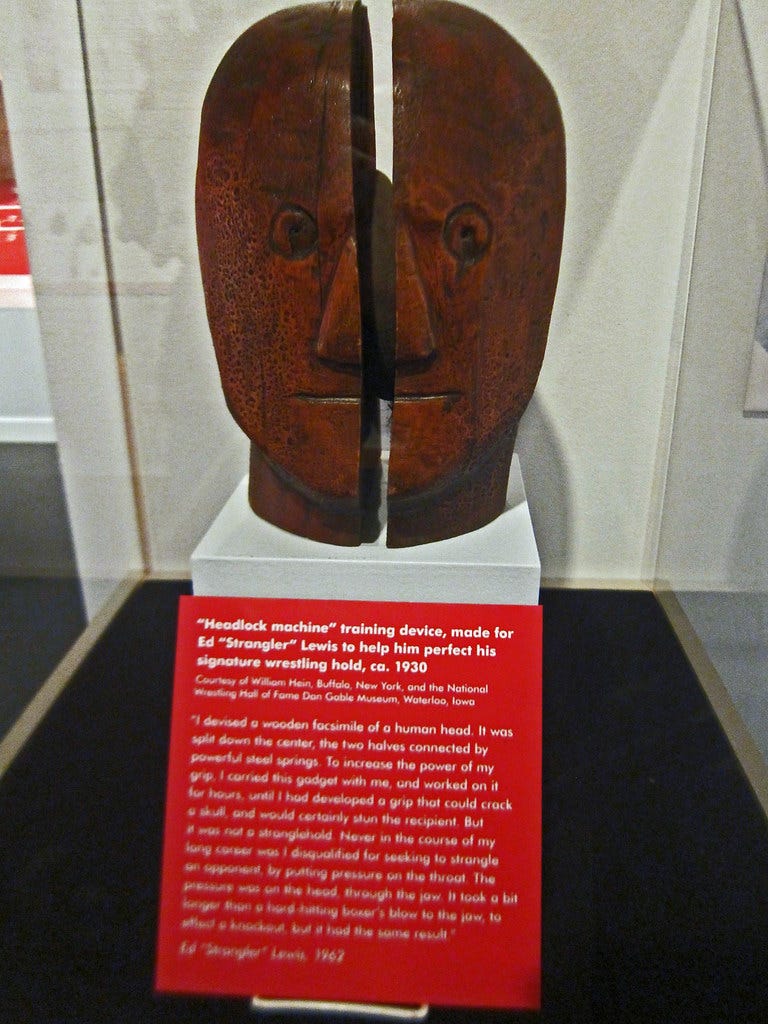
Sandow, longtime manager and business partner of heavyweight champion Ed “Strangler” Lewis, wanted to turn Lewis’s signature headlock into a legendary, crowd-drawing weapon. So he had his brother Alexander build a wooden dummy head split down the middle and connected by powerful railroad springs. Lewis would clamp down on it for grueling training sessions to build insane grip and forearm strength—and, for maximum showmanship, Sandow sometimes had Lewis haul the contraption into the ring before matches to demonstrate the hold live, squeezing the springs until the “head” practically collapsed.
It wasn’t just a prop; it was part of Sandow’s genius for blending real athletic innovation with pure carnival hype. The device helped cement Lewis’s “Strangler” persona and became one of the earliest examples of a wrestler using a custom gimmick tool to sell his finisher to skeptical fans.
Have a great weekend,
Tony
Thank You for Reading
I’m Tony Richards, Pro Wrestling Historian, Author and Storyteller. I share pro wrestling historical items in each issue of the Time Tunnel Pro Wrestling History Newsletter. Thanks for reading! If you enjoy my information on select events, matches and insights, please share it with folks you think might like to be a subscriber!
Remember, premium investors get access to exclusive and special content such as some special issues including a multi-part deep dives on wrestling territories, wrestler bios and championship title histories, special audio and video interviews on territory pro wrestling and more available in the Pro Wrestling Time Tunnel for Premium Investors.
When I was younger I think I had always assumed that the promotions had fed the story beats to the magazines, and whilst the photographers may have picked up snippets it is fascinating to read how this really worked.
The publication demands and the often fluid nature of plans shows that the magazines and promotions had a mutually beneficial relationship without necesarily coordinating. The creative content of the magazines in turn influencing indirectly the wrestlers and promoters.
It's a lovely example of complementary businesses in the same industry supporting and reinforcing each other without direct control. The magazines need the wrestling, but the magazines do a lot of the hard work away from the ring, as fans build up growing narratives and imagining these wrestlers lives as so much bigger than they were.
Fascinating when you think about it