


Happy Birthday to those who have passed on and to those great wrestlers still with us:
In Memoriam:
Johnny Doyle 1909
Pampiero Firpo 1930
Peter Miavia 1937
Happy Birthday:
Tiffany Million (60)
Brian Adias (66)
RIP Memorial: We stop & remember those who have passed on this day and gave themselves to the business for us, the fans. We salute you and thank you.
Dr. Sam Sheppard 4-6-1970 at the age of 46
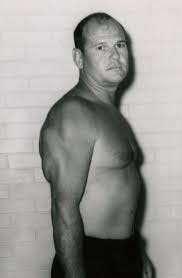
Roberto Cruz\El Solitario 4-6-1986 at the age of 39
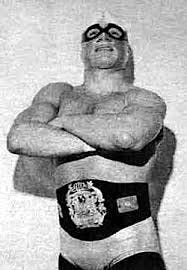
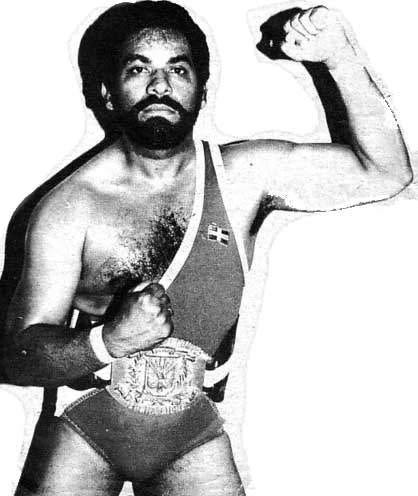
Jack Veneno 4-6-2021 at the age of 79
70 Year Flashback
April 1956: The Month In Pro Wrestling
Stage of the Territory Era: Investigation
In my framework of the seven stages of the Territory Era of professional wrestling, April 1956 sits squarely at the dawn of Stage Four: Investigation (1955–1965). This phase marked the transition from the unchecked post-war boom of Stage Three (Innovation and Expansion, 1945–1955) into an era of external legal scrutiny, internal power struggles, and the first cracks in the National Wrestling Alliance’s monopoly-like control. The NWA, forged in 1948 as a cooperative of regional promoters who recognized a single world champion while protecting territorial borders, was now under active investigation by the U.S. Department of Justice for alleged antitrust violations—blackballing wrestlers, blocking competition, and restraining trade. The resulting 1956–1957 Consent Decree would force concessions that subtly reshaped booking practices without immediately collapsing the territorial model. Yet on the ground, April 1956 still looked like business as usual: packed arenas, rapid title activity, cross-territory talent exchanges, and the ongoing world-title program built around the new champion, Whipper Billy Watson. The month exemplified the stage’s core tension—territorial prosperity thriving under the shadow of federal oversight.
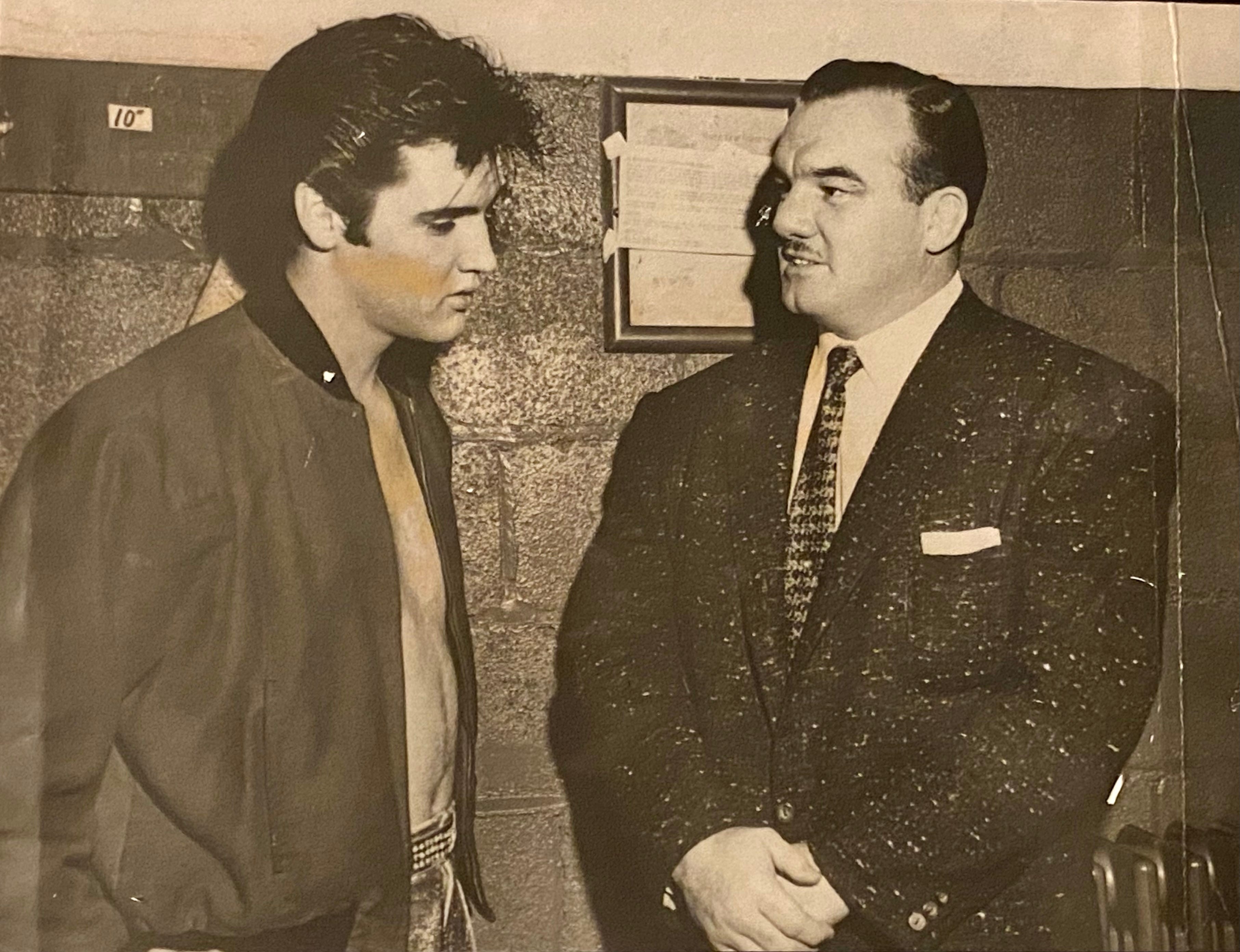
Pictured: Whipper Billy Watson, NWA World Champion chats with “The King of Rock and Roll” Elvis Presley
Whipper Billy Watson had dethroned Lou Thesz for the NWA World Heavyweight Championship on March 15 in Toronto via count-out (with Jack Dempsey as special referee and a sell-out 15,000 at Maple Leaf Gardens). In April, the program shifted to a series of grudge rematches designed to keep heat alive without clean finishes—classic NWA booking to protect both men while selling tickets.
April 6, St. Louis (Arena, 12,000 attendance): Watson defeated Thesz by disqualification in the main event after Thesz “continually put the boots to” the champion. The card also featured Dick Hutton over Aldo Bogni, Pat O’Connor over Lord Layton, and a women’s bout with Ethel Brown over Millie Stafford. Sam Muchnick’s St. Louis office—always a bellwether for NWA health—drew strongly despite the non-finish, proving the angle’s drawing power. clippings framed Thesz as unable to contain his aggression, positioning Watson as the resilient hero forced to endure “unfair” tactics. Thesz was DQ’d for excessive roughness, continuing the “Thesz can’t control himself” storyline that justified Watson’s controversial reign
April 10 – Dallas Sportatorium (Ed McLemore’s territory): Watson (c) defeated Ray Gunkel in a best-of-three-falls match (won first, lost second, took third). Gunkel was positioned as the local favorite, but Watson’s victory reinforced the champion’s supremacy while giving the Texas crowd a competitive main event.
April 28, Canton, Ohio: Watson defeated Bobo Brazil in a non-title main event, extending the champion’s visibility into smaller markets while giving Brazil a rub as a credible challenger
These matches kept the world title “hot” without risking a clean job, a hallmark of Stage Four booking where promoters balanced kayfabe integrity with the need to draw in an increasingly TV-savvy audience.
Pictured: NWA World Champion, Whipper Billy Watson
Watson’s first full month as champion perfectly captured Stage Four’s core tension: territorial prosperity coexisting with regulatory threat. The DQ-heavy Thesz program was pragmatic NWA genius—protecting both men, sustaining word-of-mouth heat, and giving TV interviews endless fodder (“Thesz is out of control!”). Watson, at 38 and already a proven draw in Canada and the Midwest, was never positioned as a long-term “superstar” champion (Thesz would reclaim the belt by count-out in St. Louis on November 9). Instead, he served as an effective transitional figure: a credible hero who boosted regional business (especially Tunney’s Ontario circuit) while the Alliance navigated the antitrust probe.
Structurally, April showed the territory model firing on all cylinders. Watson’s travel—St. Louis to Dallas to Ohio to Toronto—illustrated the NWA’s efficient talent-exchange system. No clean losses occurred, preserving the champion’s aura. Attendance spikes in key markets (12k in St. Louis alone) underscored that fans still paid for the live experience despite growing TV exposure. Yet the DOJ shadow loomed: Watson’s reign occurred exactly as regulators examined the very practices enabling such seamless booking. The Consent Decree would later force minor concessions, but April 1956 proved the system remained profitable and fan-pleasing in the moment.
Watson’s April was quiet but effective—exactly what Stage Four demanded. It kept the world title “hot” without controversy, rewarded loyal territories, and maintained the illusion of legitimacy amid external scrutiny. For one month, the first Canadian NWA champion embodied the territorial ideal: week-after-week, town-after-town excellence while the legal storm gathered on the horizon.
April saw brisk activity across multiple NWA territories, illustrating the cooperative exchange system that defined the era, the biggest title change for April of 1956 was Verne Gagne’s NWA United Staates Title loss.
Pictured: New NWA United States Heavyweight Champion, Wilbur Snyder
On April 7, 1956, at Chicago’s Marigold Arena, Verne Gagne—long-reigning NWA United States Heavyweight Champion (Chicago version) since being awarded the belt in September 1953—dropped the title to Wilbur Snyder in a 19:40 impromptu main event that stunned the local wrestling scene. Gagne had held the championship for 947 days, more than two and a half years, establishing himself as the territory’s top babyface draw and a cornerstone of Fred Kohler’s Chicago promotion. The switch was not part of any long-term angle; it was a classic territorial scramble. Original opponent Bill Melby was injured and unable to appear, so Kohler made the last-minute decision to insert Snyder (already a solid mid-card veteran and former football player) and have him capture the U.S. title on the spot. The same card opened with an undercard tag where Gagne and Snyder actually teamed together to defeat the Lisowski Brothers (Reggie and Stan) two falls to one—adding an ironic layer to the evening’s booking.
The loss was presented as a major upset rather than a clean, decisive beatdown. Snyder, positioned as a credible but underdog challenger, capitalized on the chaos of the substitution to pin Gagne and begin his first reign of 195 days. No elaborate storyline had built to the match; instead, it exemplified the flexible, seat-of-the-pants decision-making that defined Stage Four NWA booking amid the ongoing DOJ antitrust investigation. Promoters like Kohler could pivot on a dime to protect house-show revenue without derailing the larger cooperative system. Chicago crowds—already accustomed to Gagne’s athletic, scientific style—reacted with the mix of shock and heat that kept weekly television and arena business humming, even as the territory navigated the same regulatory pressures affecting the entire Alliance.
In the broader context of April 1956, Gagne’s title change served an immediate business purpose: it refreshed the Chicago U.S. title picture, launched a heated feud between Gagne and Snyder (they would trade the belt multiple times over the next two years), and gave Snyder a career-making push without sacrificing Gagne’s star power. Gagne remained the promotion’s top attraction and continued drawing strong gates in rematches and tags. The incident underscored how the territorial model thrived on adaptability—last-minute substitutions and quick title flips kept fans engaged week after week while the NWA’s cooperative structure absorbed minor disruptions. Far from a setback, the Marigold Arena surprise helped sustain Chicago’s status as one of the NWA’s most reliable markets during a transitional spring when the world title was also circulating under Whipper Billy Watson.
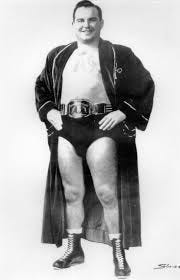
Pictured: New NWA World Junior Heavyweight Champion, “Irish” Mike Clancy
“Iron” Mike DiBiase—fresh off a strong run in the NWA Tri-State and Central States territories—briefly captured the NWA World Junior Heavyweight Championship by defeating Ed Francis earlier that spring. The former University of Nebraska standout, known for his amateur pedigree and rugged, no-nonsense style, held the belt only long enough to generate interest in the junior-heavyweight division before dropping it in a key title switch. On a house show in Little Rock, Arkansas (exact date within April not specified in contemporary logs but widely reported as part of the month’s activity), DiBiase lost the NWA World Junior Heavyweight Title to Mike Clancy in what was presented as a straightforward, competitive bout. Clancy, an Irish-born veteran making waves in the Midwest, pinned DiBiase cleanly to begin his 350-day reign, one of the longer junior-heavyweight runs of the era.
The loss was not built around a heated personal feud or stipulation match; instead, it reflected classic Stage Four NWA booking—quick, logical title changes designed to reward reliable workers, refresh divisions, and keep smaller-market crowds engaged without overexposing the world heavyweight program. DiBiase was already busy that month: just days earlier (April 10 in Topeka), he had dropped the NWA Central States Heavyweight Championship to Richard Brown, illustrating how the Alliance moved belts fluidly across territories to maintain momentum. The Little Rock switch gave Clancy a credible victory while allowing DiBiase to pivot back to tag-team and mid-card programs with partners like Danny Plechas, where he continued to draw solidly.
DiBiase’s title loss exemplified the cooperative yet pragmatic nature of the NWA under DOJ investigation. Promoters like those in Tri-State used the junior division as a developmental showcase for up-and-coming talent, and Clancy’s win provided a fresh face without damaging DiBiase’s long-term value. DiBiase would go on to reclaim the World Junior Heavyweight Championship in 1959 (defeating Angelo Savoldi in Oklahoma City for an 84-day reign), proving the 1956 switch was simply one stop on a successful career path rather than a setback. For fans in Arkansas that night, it was another example of the territory system at work: titles changed hands town-to-town, keeping the product exciting in an era when live gates still drove the business.
Other significant matches and title changes took place in other countries outside the United States as Professional Wrestling was becoming poopular on a global level.
Montreal (Eddie Quinn Promotions): April 18 marked Edouard Carpentier’s debut, defeating Angelo Savoldi before 8,000 fans—an early sign of Quinn’s push for international-style talent that would later create disputed-title angles. On April 25 at the Forum (10,000 attendance), local champion Yvon Robert beat Killer Kowalski by DQ in the main event, with Carpentier also appearing.
International Crosspollination: On April 26 in Tokyo’s Sumo Hall (13,000 fans), NWA World Tag Team Champions Ben & Mike Sharpe defeated Rikidozan & Kokichi Endo, strengthening JWA ties and exposing Japanese audiences to NWA stars.
Mexico (EMLL): Arena México officially opened in April, quickly becoming the “Cathedral of Lucha Libre.” Jalisco Gonzalez won the vacant Mexican National Welterweight Championship on April 6. This expansion into a major new venue underscored the global reach of the territory model even as U.S. regulators watched.
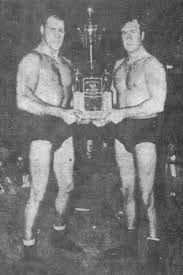
Pictured: Ben and Mike Sharpe, NWA World Tag Team Champions
Undercard staples—tag-team matches, women’s bouts, and gimmick finishes—filled house shows from Dallas’s Sportatorium to smaller Midwest loops, maintaining the grind that kept territories profitable week after week.
Concrete gate figures remain fragmentary, but available numbers paint a picture of robust health amid looming trouble:
St. Louis: 12,000 on April 6.
Chicago: 9,522 on April 6.
Montreal: 8,000 (Carpentier debut) and 10,000 (April 25).
Tokyo: 13,000 for the Sharpe/Rikidozan tag match.
These crowds reflected the post-war TV boom’s tail end: weekly syndicated programming (Capitol Wrestling’s shows expanding under the McMahons in the Northeast) drove live attendance, while the NWA’s cooperative booking minimized risk. Promoters shared talent and title dates, ensuring stars like Watson, Thesz, and Gagne could draw in multiple markets without overexposure. Yet the DOJ investigation—initiated in earnest by 1955–1956 over monopoly allegations—hung like a cloud. Allegations centered on blackballing, territorial exclusivity, and restraint of trade. The Consent Decree (finalized later in 1956–1957) would require the NWA to loosen some controls, allowing promoters to exit and independent groups to form. April 1956 thus captured the stage’s essence: record territorial cooperation and strong gates coexisting with the first regulatory threats that would eventually erode the system.
Within the seven-stage framework, April 1956 perfectly illustrates Investigation. The territorial system was at its operational peak—cooperative world-title programs, frequent local title switches, international exchanges, and new venue openings like Arena México—all while external forces (DOJ scrutiny) began probing the Alliance’s structure. Watson’s reign, built on count-out and DQ finishes, preserved the illusion of legitimacy without damaging top stars, a pragmatic response to TV growth and fan demand for drama. Business remained strong because the model still delivered: fans paid to see their local heroes challenge touring champions in blood-feud angles that carried across territories.
Yet the seeds of future fragmentation were visible. Carpentier’s Montreal push and Quinn’s independent streak foreshadowed disputed-title angles; the antitrust probe signaled that the NWA’s closed-shop practices could no longer operate in secrecy. April 1956 was not flashy—no single “super card” or national scandal—but it was efficient, profitable, and quietly defiant of the regulators circling overhead. In the broader arc of the Territory Era, this month stands as a snapshot of resilience: the Alliance at full strength, even as the investigation that would help define Stage Four gathered momentum.
Thank You for Reading
I’m Tony Richards, Pro Wrestling Historian, Author and Storyteller. I share pro wrestling historical items in each issue of the Time Tunnel Pro Wrestling History Newsletter. Thanks for reading! If you enjoy my information on select events, matches and insights, please share it with folks you think might like to be a subscriber!
Remember, premium investors get access to exclusive and special content such as some special issues including a multi-part deep dives on wrestling territories, wrestler bios and championship title histories, special audio and video interviews on territory pro wrestling and more available in the Pro Wrestling Time Tunnel for Premium Investors.